
The Hidden Cost of “Religious Unity” in Indonesia
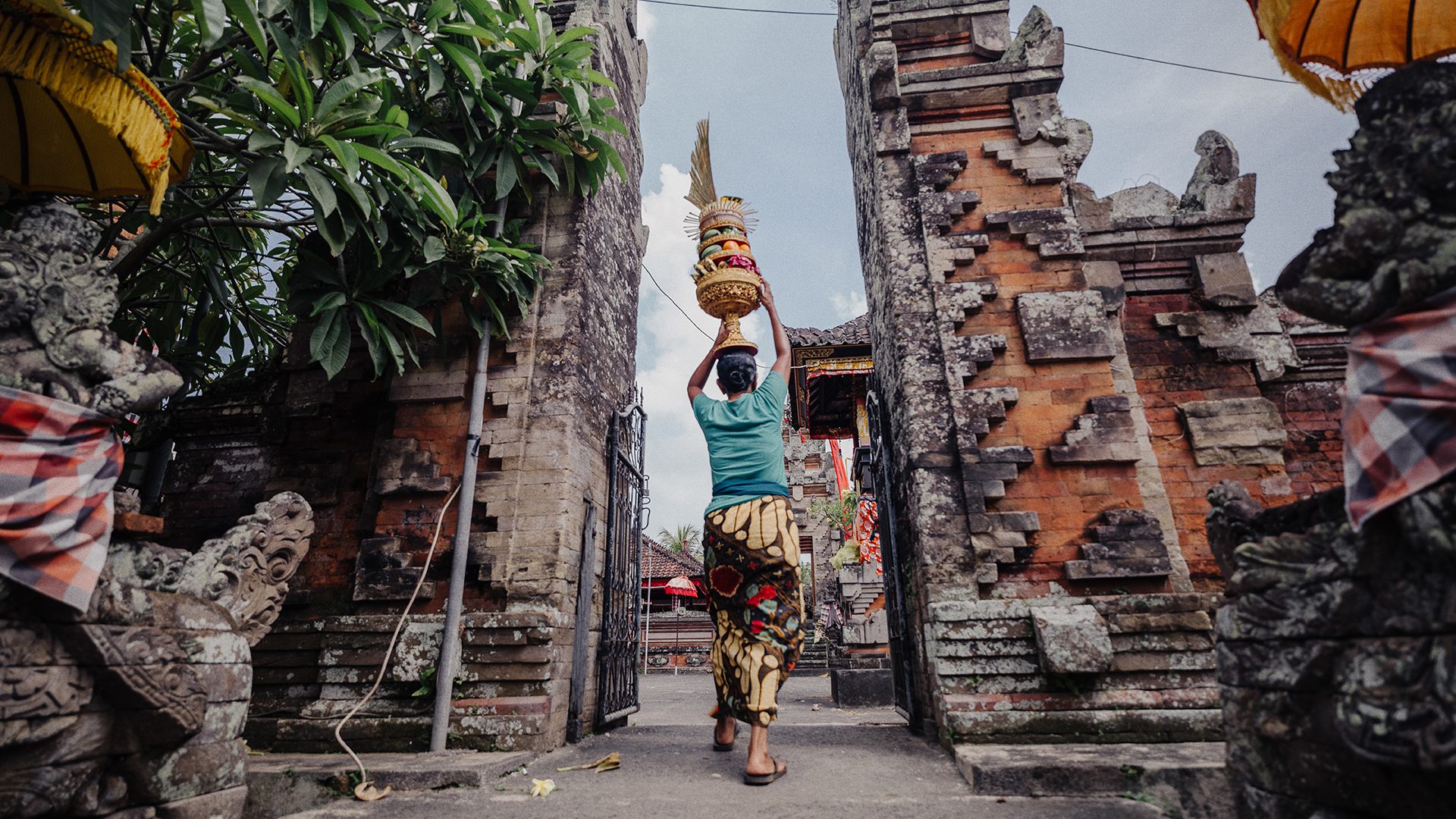

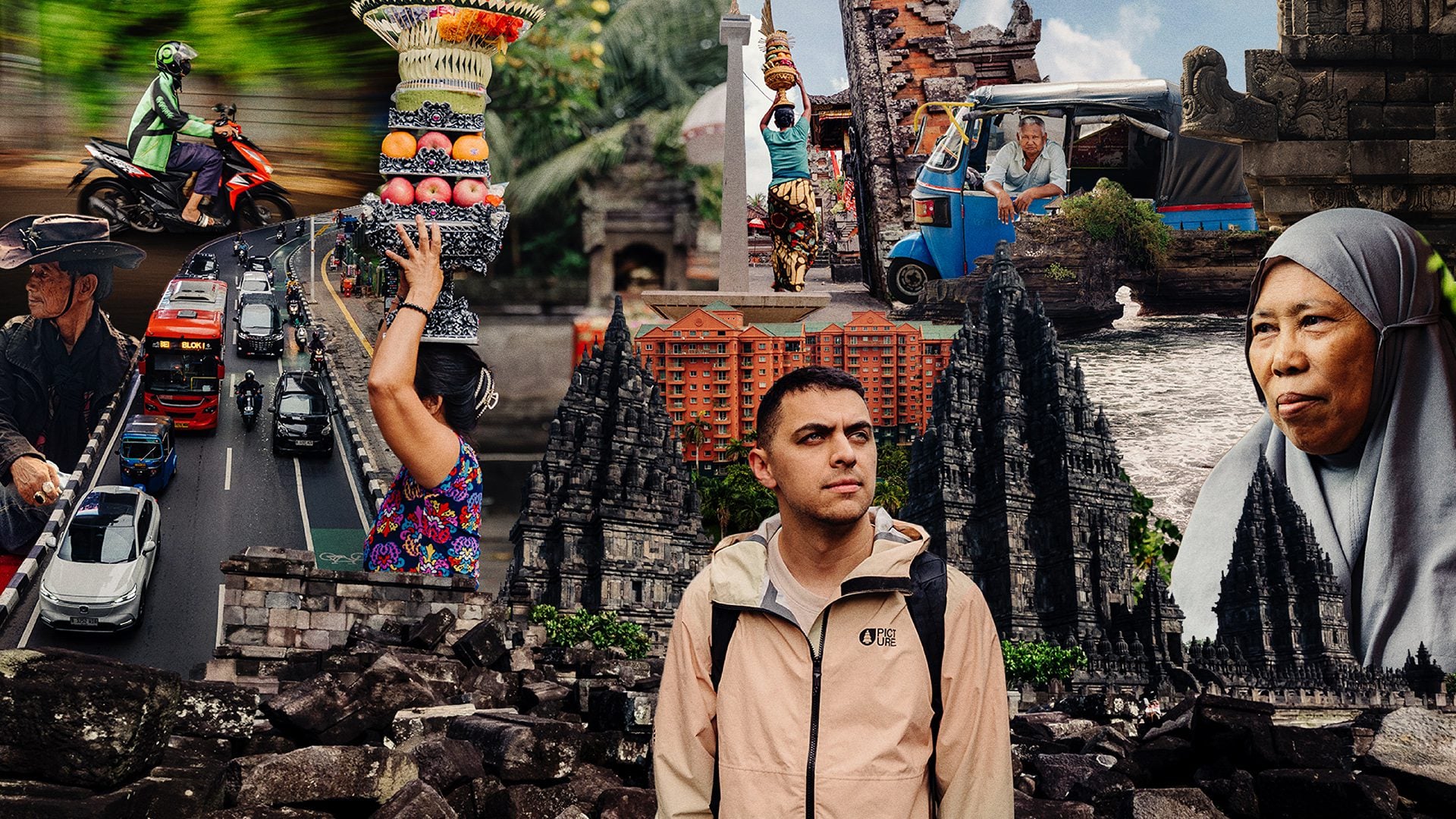
Jakarta is a city of nearly 30 million people, and it can feel like a city of 30 million contrasts. Shopping malls rising next to street vendors. Luxury cars sitting next to motorbikes. High-rise offices overlooking slums. Every corner reveals another flavor, another story. But stirring beneath all the contrasts, one force shapes everything: religion.
In Indonesia, religion shapes culture, law, family life, social norms—what you eat, where you worship, who you marry, and sometimes who you fear. For Christians, this creates a difficult tension: Stand out too much, and risk rejection or opposition. Blend in too quietly, and risk losing the truth that defines your faith. In a nation where unity is prized above nearly everything else, what happens when following Christ sets you apart?
To answer this, we have to go back to Indonesia’s beginning as a modern nation. And the place to visit is Merdeka Square.
UNITY IN DIVERSITY, BUT WHAT ABOUT TRUTH?
Merdeka Square is the symbolic heart of Indonesia’s independence movement. The National Monument rising above it commemorates the country’s victory after nearly 350 years of Dutch rule and the birth of a new national motto: “Unity in Diversity.”
The motto makes sense: With more than 17,000 islands and hundreds of ethnic groups, Indonesians needed a way to forge a shared identity and bind their people together. The idea of unity was foundational in the country’s Constitution, as part of the five guiding principles of the nation’s philosophy: Pancasila.
The first principle of Pancasila is perhaps the most striking: “belief in the one and only God.”
On paper, it sounds like monotheism. But the idea less that there’s one true religion, and more that there’s one God, and many ways to reach him. Indonesia actually officially recognizes six religions—Islam, Protestantism, Catholicism, Hinduism, Buddhism, and Confucianism.
So, the goal is unity, but for true believers in Christ, it creates an obvious tension: They believe Jesus when he says, “I am the way, the truth, and the life. No one comes to the Father except through me.”
But it also raises another question: Who are true believers?
RELIGION ON PAPER, BUT WHAT ABOUT THE HEART?
Though nearly every Indonesian claims one of the officially recognized religions, there’s often a more pragmatic reason: The Indonesian government requires it. On their national identity cards, Indonesians must literally check a box indicating their religion. Most choose the religion of their parents.
That means millions of Indonesians claim to be Muslim or Christian without ever really understanding the Qur’an or truly hearing the gospel of Christ.
For pastors and church planters, evangelism and discipleship of self-identified Christians often begins at the most foundational level: Who is Jesus? What is the gospel? What does it mean to belong to Him?
Reaching Muslims is even more complex. Encouraging a Muslim to consider Christianity can be misunderstood as disrupting cultural unity, or more seriously, asking someone to reject their Indonesian identity.
Family identity is deeply tied to religious belief, and conversion is often seen as rejection, not of doctrine, but of one’s own bloodline. Leaving Islam is not illegal, but the social cost can be high. Still, some do just that.
TRUE FAITH, BUT WHAT ABOUT THE COSTS?
Anisa was raised in a devout Muslim household. Her family taught her to respect any Christians she met, but they also taught her that Christian doctrine didn’t make sense. Anisa embraced Islamic teaching and learned to keep her distance from believers.
She says that worked until her own life began to unravel. She started having difficulties in her job and in her private life. She was lonely and unnerved: “I wondered, ‘God, what are you doing?’”
When a Christian friend kept showing her kindness, even when she didn’t return it, she found herself drawn not to arguments about Christianity, but to Christ himself.
“I was seeing Jesus in him,” she says about her friend. “Suddenly I was thirsty for the truth. I can’t explain it, but my heart started seeking. Who is this Jesus? What is this gospel?”
One night, alone in her small apartment, she read the books Matthew and Mark in one sitting: “I realized ‘there is so much grace here.’ Finally, one night I was in my little apartment and I said, ‘God, I need you. Jesus, I need you.’”
She poured her heart out. I told God, “I can’t live my life without the Savior. My good credits cannot save me from hell. You’re the final Savior, and I confess it with my heart and with my mouth.”
The costs she thought she might face came swiftly. Her family rejected her. She lost nearly every relationship she had known. And yet, she says, “I don’t regret it because he’s for all eternity.”
Indonesia’s spiritual complexities—its legal pressures, cultural norms, nominalism, animism, and Muslim majority—make outreach challenging. But challenging doesn’t mean impossible. The gospel is still reaching hearts in quiet neighborhoods, remote villages, and the crowded streets of Jakarta. It is still calling people to follow Jesus even when it’s costly.
If Jakarta is a city of about 30 million people, it also feels like a city of about 30 million choices. So many things to see and do and eat. It’s this crazy mix of cultures and peoples and backgrounds. There’s a lot of wealth, but there’s also a lot of poverty. And one of the reasons for why Jakarta is this melting pot, is because for most people in Indonesia, this is the place to live. And while unity is a big part of Indonesia’s identity, religion is where the differences can’t be ignored. In a country where faith shapes culture, law, and daily life, what you believe isn’t just personal, it can define everything. For Christians, this creates a tension that’s hard to navigate. Standing out can be dangerous, but blending in can mean losing the very thing that makes Christianity true. So the question is in a place where unity is everything, what happens when your faith sets you apart?
To understand Indonesia’s concept of unity and how it relates to religion, we have to go back to Indonesia’s independence. This is Merdeka Square, the perfect place to look at that, and particularly the National Monument. If it looks like I’m sweating a lot, it’s because I’m sweating a lot. It’s really hot.
The National Monument at Merdeka Square commemorates Indonesia’s long struggle for freedom. In 1945, Indonesia declared its independence after nearly 350 years of Dutch rule. It also declared its national motto, unity in diversity, and you could see why that would be important in a country with thousands of islands and hundreds of people groups with distinct cultures and languages pursuing unity would be key to thriving as an independent nation. They even wrote it into the Constitution. Unity is one of five principles in the country’s governing philosophy, known as Pancasila. And Pancasila is still a big deal. There’s a national holiday to celebrate it.
The five principles of Pancasila include civilized humanity, national unity, democracy, and social justice. But the very first principle is what catches my attention the most, that Indonesia would be built into a sovereign state based on a belief in the one and only God.
Now, belief in the one and only God. Where have I heard that before? Oh, yeah, that sounds a lot like monotheism, which is interesting in a country that officially recognizes six religions: Islam, Catholicism, Protestantism, Buddhism, Hinduism, and Confucianism. It’s why there can be a Protestant megachurch in the same city as a huge mosque, because even though the majority of Indonesians identify as Muslim and Islam has a major influence, Indonesia is not an Islamic state. It’s definitely a big country with a lot of Muslims. But the point here is that Indonesia recognizes the importance of religion in general more than the importance of just one religion. And this first principle isn’t so much saying that there’s only one true religion. The idea is more like there’s one God with different ways to reach Him, and you can see how that could start to get problematic depending on what your own religion teaches.
So how does this all work out in reality? Well, it depends on where you live in Indonesia, but it’s not something Indonesians can ignore because there’s something else really important that you need to know about religions here, and it’s that you have to pick one. Indonesians must declare one of the officially recognized religions on their national ID card. Just leaving it blank can make it difficult to access government and financial services. That means that while there are certainly devout Muslims and Protestants and Catholics and Hindus, there’s also plenty of nominalism, people just checking the box of the religion of their family or region, whether they truly follow it or not. For churches, that means outreach often looks like reaching out to people who identify as Christians but have never actually heard the gospel. Discipleship here looks like starting from ground zero. And perhaps there’s no better person to ask about how that plays out on a local level than Indonesian believers themselves and those working among them.
Tazer: We have a name for them. It’s called Christian KTP, which means it says Christian in your KTP card, in your ID card, but they haven’t really encountered a saving relationship with Christ. They’ve sort of heard the gospel spoken and it’s kind of in the periphery of their minds growing up, but never really clicked, although they did grow up in a churchy environment.
Hector: I was born in this, I can say, Christian tribes, so I was thinking that I’m a Christian until I moved to Jakarta. I was thinking that before, okay, I was born into a Christian family, and I was thinking that I’m a Christian, and then started to study the Bible more seriously, and all about the gospels, how the gospel can influence our hearts and our perspective, and start from there. I started seeing that not too many Christians realize their main purpose of becoming Christians.
So if reaching out to “Christians” is a challenge, what about reaching out to Muslims, the group that makes up more than 80% of the population, and how do they respond?
Tazer: People get upset, not necessarily because you’re imposing your worldview on them, which could be part of their anger, but a lot of it’s also that you’re betraying this thing, Bhinneka Tunggal Ika, which means different, but one, diverse, but united. Everyone’s trying to honor that. So when you try and impose your worldview on someone else, it feels like you’re betraying this thing, this glue that’s kept us all together. So we have to do it sensitively. We have to offer the gospel as a beautiful thing that hopefully people would want to know more about. And then we’re more in the responsive end with kind of responding to people’s questions.
Hector: Here in Indonesia, we have our government demanding that each of the religions live in harmony, and that means being tolerant. For me personally, it kills the great commissions because we should share the gospel with the people, and then the government’s like, “No, you have to be tolerant.” Yeah, as a Christian, we have to express our faith to others. And then some non-believers will start to argue something like, and then the conversation normally will end up with, “Oh, you’re not being tolerant.”
Well, it’s not illegal to change religions, but leaving Islam to follow Christ can be really difficult. Social and family pressures can be hard to endure in a culture where family identity is really important. It’s not so common for a Muslim to just walk into a church, so maybe the church has to go to them.
Henry: They may be out there, but I haven’t met a Muslim who is a Muslim because of the joy that Islam brings to their life. Every Muslim I’ve met is a Muslim because they’re afraid of what will happen if they leave it. The only thing that’s going to compel them to leave it is having something better that’s worth it, something that is more beautiful, more compelling, more powerful.
In 2020, the Indonesian government built a 28-meter tunnel in central Jakarta connecting the massive Istaklil Mosque with the city’s most famous Catholic cathedral. They call it the Tunnel of Friendship, and it’s intended to be a symbol of religious harmony, but things aren’t always so harmonious. Churches face government restrictions, especially when it comes to building.
And though much of Indonesia is definitely known for more moderate forms of Islam, the northern province of Aceh on the island of Sumatra enforces Sharia law, making Islamic code part of civil and criminal law. In other parts of the country forms an extreme Islam break through. In 2002, a series of attacks by an Islamist terror group in Bali killed 202 people. Other attacks followed, including the 2018 bombing of three churches in Surabaya. The simultaneous blast killed 13 people on a Sunday morning before worship. It’s a reminder that dangers do exist and that opposition can take lots of different forms, and it’s a reality that can make it hard to reach some populations in Indonesia, but the reality of the gospel means it’s not impossible. We see this in the story of Anissa. For security reasons, we can’t show you her face, but her story tells the truth of how the gospel can change a life.
Anissa: I was born into a very traditional Muslim family. Some of my relatives were leaders in the mosque. When I was a teenager, I decided for myself to wear the hijab. As I grew up, I sometimes encountered Christians, but I was taught their doctrine didn’t make sense.
Henry: And a lot of Christian Indonesians, let’s face it, Christian anybody don’t have that compelling of a vision of Christ and the gospel as well. And so they’re not willing to risk, and they’re afraid.
Anissa: My family told me to show respect to Christians, but not to get too close. I was happy with my life until I started having difficulties. I wondered, God, what are You doing?
Henry: Because there’s the Christian space, there’s the Muslim space, and it’s very hard for a Christian to go to the Muslim space and try to have a witness there.
Anissa: One of the Christians I knew tried to help me, and he kept being my friend even when I treated him harshly. I realized I was seeing Jesus in him, and suddenly I was thirsty for the truth. I can’t explain it, but my heart started seeking. Who is this Jesus? What is this gospel?
Henry: We’re called to reach them. So number one, it’s not up to you. We’re commanded to make disciples of all nations, and we now know which ones still need to be reached. So there’s not an excuse.
Anissa: I reached out to one of the other Christians I knew. I asked her, “Would you want to do a Bible study with me?” She had tears in her eyes. “Of course,” she said. I also started reading on my own. One night, I read the entire books of Matthew and Mark because I was just thirsty for God and God’s Word. I realized there is so much grace here. Finally, one night I was in my little apartment and I said, “God, I need you. Jesus, I need you.” And then I just poured my heart out. I told God, “I can’t live my life without the Savior. My good credits cannot save me from hell. You’re the final Savior, and I confess it with my heart and with my mouth.”
Henry: By and large persecution is going to happen. It’s mainly from the local community, and that starts with the family, right? So if the family has a problem, there’s going to be immediate persecution against an individual who decides to believe something different.
Anissa: God changed my life, but it wasn’t easy. One of my family members died. The rest of my family rejected me because of my faith in Christ, and I lost them, too. It’s true that I left everything for Jesus. I lost everything, but I don’t regret it because he’s for all eternity. I finally have a relationship with God. That’s what I was missing all these years before. I’m going to walk with Him until I die. And then, I’m going to meet Him face to face.
Anissa’s story is a living example of how the Spirit is at work in places we don’t expect, and how Jesus is able to save anyone, no matter how hard it seems to us. And it’s also a reminder that Indonesia needs believers to keep reaching out, even if it means going to remote ends. And even if it means answering this question, what if the unreached don’t want to be reached at all?