
The Mission Field Is Outgrowing Us


When you read Jesus’ command to go and make disciples of all nations, do you ever wonder: Where do we start? Where do I start?
Of course, we start where we are.
We share the gospel and make disciples among the people all around us. But Jesus also clearly commands us to make him known among all nations. The two aren’t mutually exclusive.
But in a world of more than 8 billion people, it’s a big job. It’s actually even bigger than we realize.
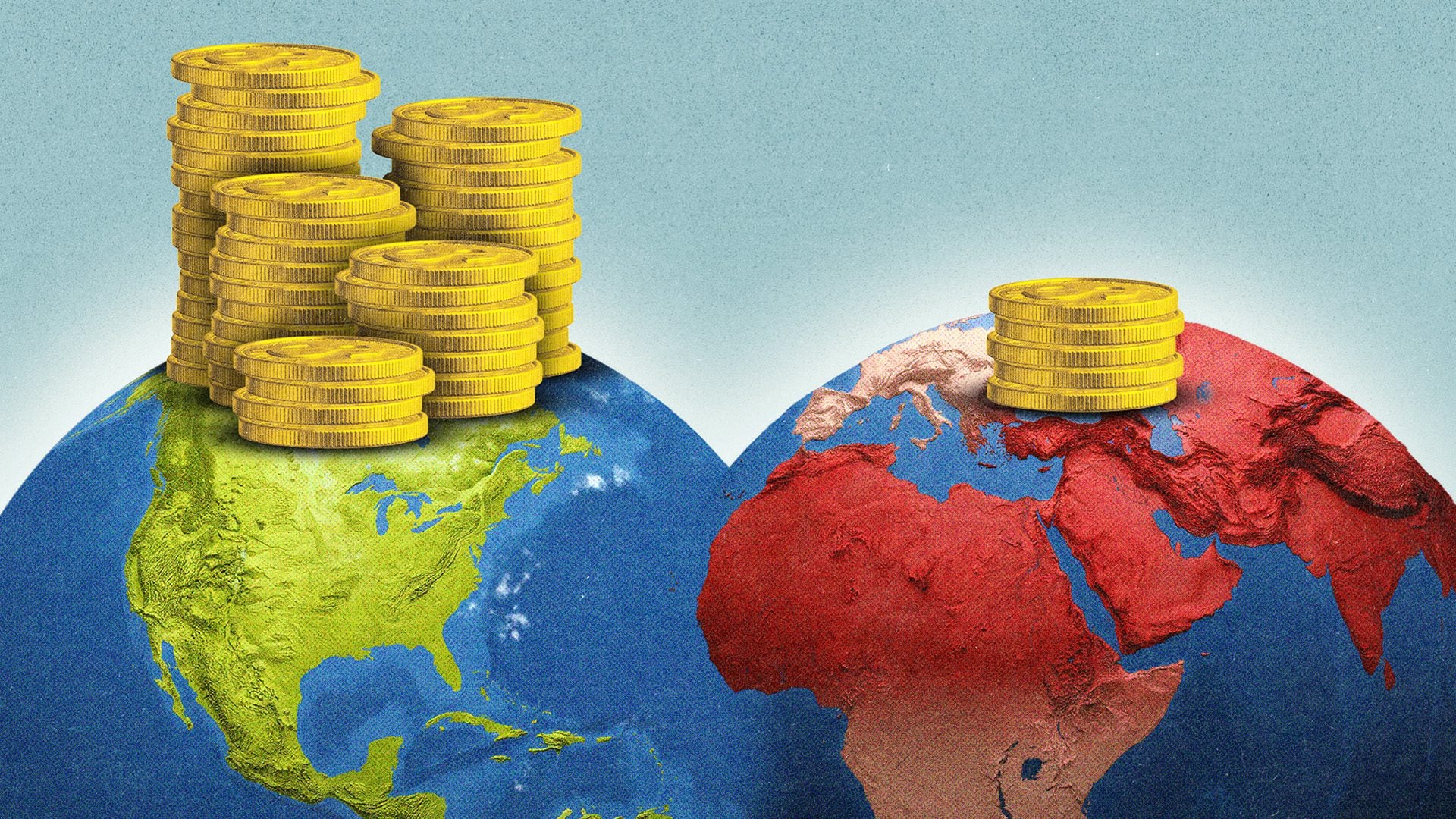
Right now, the U.S. sends out more missionaries than any other country in the world—about 135,000 on the field. But that’s a tiny number compared to the overall need. The reality is churches in North America send less than 0.1 % of their own to the mission field.
And the mission field keeps getting bigger than the places from where traditional missionaries are being sent.
For example, consider Pakistan: It has a population of about 255 million people—nearly 88 million less than the U.S. But in 2025, Pakistan welcomed 6.9 million new babies.
The U.S. had about half as many births.
Next door, India has a population of 1.4 billion people and roughly six times as many births as the U.S. each year.
That’s a lot of people, but to get the true scale, you have to widen the lens.
The U.S. and Europe, from where most missionaries have been sent over the last century have a little over a billion people combined. The areas of the world still hardest to reach with the gospel stretch through the Middle East, North Africa, and Asia.
The total population of those regions is about 5 billion people.
So, the entire population of the U.S. is roughly one-fifth of the population of the regions that need the gospel most. And that’s before we’ve considered how many of those Westerners are Christians, and how many of those Christians might actually go be missionaries in a foreign country.
Even if we could double the actual number of missionaries going out, the need among the nations would vastly outnumber the pool of available workers.
But there’s still another problem: A lot of the places that need the gospel most are places we can’t go.
GETTING SHUT OUT
Governments have continued to clamp down on Christianity in many nations across the Middle East and Asia, and many missionaries have been forced out. (Consider India, Pakistan, China, Russia, Turkey, and Kazakhstan as just a few examples.)
And, of course, there are places where most foreign missionaries have been banned for decades. Think North Korea, Iran, Afghanistan, Saudi Arabia, Yemen.
Even if you were willing to leave for the mission field tonight, if you’re a Westerner, you’d be unlikely to get into many of these countries. And if you did, you probably couldn’t stay very long.
So, what do we do? Give up? Stay home?
THINKING BIGGER
We certainly don’t give up. Jesus’s command still stands, despite the difficulties. And we don’t all stay home. God is still calling some Christians to go.
But what if instead of only thinking about the places where most missionaries have come from in the past, we look at the bigger map? Because that map has already changed, whether we realize it or not.
A century ago, more than 80% of the world’s Christians lived in Europe or North America. Today, it’s only about 25%. Christianity’s center of gravity has shifted south and east toward Africa, Latin America, and Asia.
That means there are more than a billion Christians much closer to the places that are hardest to reach. And some of those Christians can be sent to reach others. Many of them are already doing it.
You see, sending isn’t one straight line from the West to the rest of the world.
It’s more like a global relay—churches strengthening other churches, believers crossing nearby borders, and each part of the body together carrying the gospel farther than any one of us could take it alone.
The Great Commission was never given to one country or region, or just to missionaries. It was given to the whole church in the whole world.
Some of us will still go to other countries to share the gospel. For others of us, making Jesus known may look less like crossing an ocean, and more like putting our prayers, money, and skills behind someone who can go farther than we can.
So the question is: What am I doing to make Jesus known where he’s not known? How can I use my own life—my church, job, knowledge, finances, family, friendships, to reach those who haven’t heard.
How can I do my part to make Jesus known everywhere?
So what exactly is our plan to make disciples of all nations? You’re probably not going to be a missionary in Sudan, right? Or maybe to any foreign country. Truth is, most Christians aren’t packing up their lives to be missionaries in foreign countries. Churches in North America alone send less than 0.1% of their own to the mission field. But even if a lot more Christians did sign up to go, it still wouldn’t be enough to match the needs of the hardest to reach places because the truth is that most Christians are staying right where they are. And the needs of the world, well, they’re exploding in size.
Take Pakistan, a country with a population of about 255 million people. That’s nearly 88 million less than the population of the US. However, in 2025, Pakistan welcomed 6.9 million new babies. That’s more than all of Europe combined. The US, on the other hand, only had about half as many births. Next door, India has a population of 1.4 billion people and roughly six times as many births as the US each year. This means that while these places might not look massive on a map, some are actually growing much faster than we may realize. In other words, the mission field keeps getting bigger than the places from where traditionally missionaries are being sent. Just widen the lens and see.
The United States and Europe, from where most missionaries have been sent in the last hundred years, have nearly 1.1 billion people combined. Now, the areas of the world still hardest to reach stretch through North Africa, the Middle East and Asia. And the total population of those regions is about five billion people. Meaning for every one person living in the US or Europe, there are five living in the regions of the world where the gospel is needed most. And that’s before we’ve even talked about how many of those Westerners are Christians and how many of those Christians might actually go be missionaries in a foreign country.
You see, out of the 1.1 billion people in the US and Europe, at most about 118 million identify as evangelical Christians. That dramatically shrinks the pool of potential missionaries. And right now, the US sends the most missionaries of any country in the world, about 135,000. But again, that’s less than 0.1% of Christians. And even if we somehow double that number overnight, 0.2% of Western Christians going overseas still wouldn’t be enough to reach the billions of people who need to hear the gospel today. And there’s still another obstacle. A lot of the places that need the gospel most are places where access is restricted.
Just over the last decade, door after door has been closing in a slew of hard to reach nations. India, Pakistan, China, Russia, Turkey, Kazakhstan, and Uzbekistan are just a few of the places where governments have clamped down on local believers and where many foreign missionaries have been forced out. And then there are the places where missionaries have already been shut out for decades, places like Iran, Afghanistan, North Korea, Saudi Arabia, and Yemen. Even if you raised your hand right now and said, “I’m willing to take the risk to take the gospel to these nations,” you probably couldn’t get into many of them. And even if you did, you probably couldn’t stay very long. So what do we do? Is the Great Commission over for Christians in the West?
Well, God is still calling people to go to the nations all over the world. He doesn’t want us to go any less. But what if instead of only sending and going from these places, we looked at the whole map? For a long time, when Western Christians pictured missions, the arrows mostly pointed in one direction from Europe and North America out to the rest of the world. But the map has changed as Christianity’s center of gravity has shifted south and east toward Latin America, Africa, and Asia, and that changes what’s possible. As the population in these regions grow, so does the church, and believers there can often go where we cannot, in ways we cannot.
Some of these Christians already speak the language. They get the culture. They share a border. They have passports that don’t raise suspicion. They can get into villages, neighborhoods, and countries, and they can share the gospel. And many of them are already doing it.
This means sending isn’t one straight line from the West to the rest of the world. It’s a global relay. Churches strengthening churches, believers crossing nearby borders, and each part of the body together, carrying the gospel farther than any one of us could take it alone.
Now, maybe you’re thinking, “Yeah, but didn’t Jesus tell us to go? Doesn’t obeying the Great Commission mean leaving my comfort and living in a foreign land?” Well, the question of the Great Commission is not, “Am I moving to a different country?” The question is actually, “What am I doing to make Jesus known where he is not known?” You see, the Great Commission was never given to one country. It was given to the whole Church in the whole world. All of us go, but going can take different shapes. God still calls some to cross cultures, learn languages, and build their lives among people who have never heard.
But for many others, going will look less like getting on a plane and more like investing time, prayer and resources into those who have greater access, timely opportunities, and relationships beyond your own. It will look less like leaving your job and more like asking how your job could help fuel the mission of the church around the world. Less like crossing an ocean and more like crossing the street to share the gospel with your new neighbor. So ask God, how can I use my life, my church, my job, my knowledge, my finances, my family, and friendships to reach those who have never heard? How can I do my part to make Jesus known everywhere?