Hard to Reach: Nepal
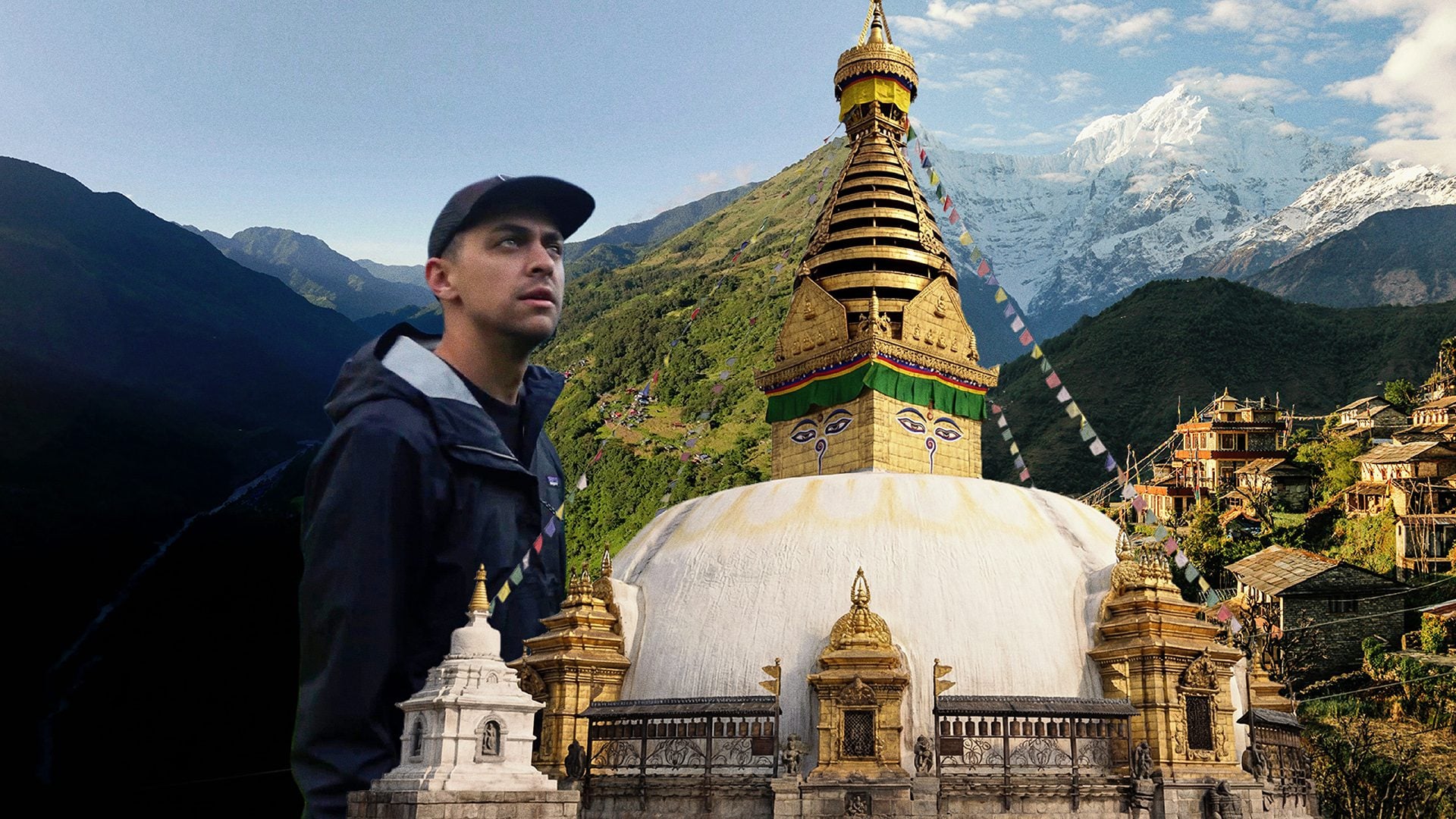

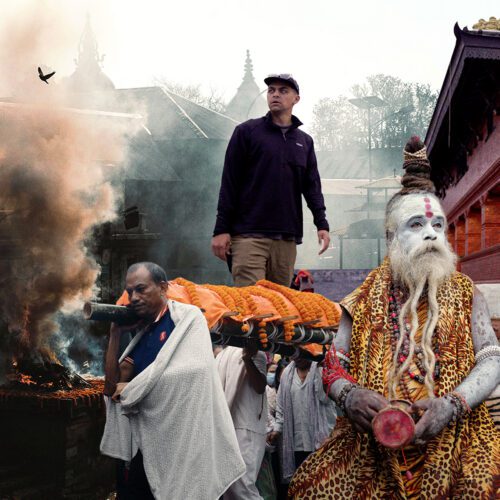
On the banks of the Bagmati River in Nepal, devout Hindus arrive 24 hours a day to burn the bodies of their dead. After a lifetime of striving and struggling and searching for hope in a religion without a Savior, it all ends here.
The funeral pyre is lit, and the mourners wail over the corpses of loved ones. Nearby, scavengers stand in the river with shovels, waiting to dig for whatever gold or jewelry might fall from the bodies of the dead drifting into the water.
This place, and the nearby Pashupatinath Temple, is considered one of Hinduism’s most sacred sites for pilgrimage. It’s supposed to be a high point for Hindus traveling here from around the world.
But in many ways, it’s hard to imagine a lower place.
That’s what our team discovered when they traveled to film our new documentary, Hard to Reach: Nepal. At one of the most famous religious sites in the world, they found the depths of despair. People in desperate need of the gospel.
But in other parts of Nepal, they also found high places.
In a nation where most people claim Hinduism or Buddhism, or a mixture of both, others have claimed Christ alone. That’s not easy in a place like Nepal: It’s not easy for the people who receive the good news, and it’s not easy for the people who deliver it. But as our team found out, both sides say it’s well worth it.
WHY NEPAL IS LITERALLY SO HARD TO REACH
Nepal is actually famous for high places. The South Asian nation of 29 million people is home to eight of the world’s tallest mountains. That includes the very tallest: Mount Everest soars to 29,000 feet along the border of Nepal and Tibet.
Over the years, these peaks have drawn thrill-seekers determined to conquer the highest places on earth. But Nepal has also drawn spiritual seekers, looking to conquer the restless parts of their souls.
They come looking in spiritual corners: More than 80 percent of Nepal identifies as Hindu. About 8 percent identify as Buddhist. But if outsiders imagine that such a spiritual place leads to a serene peace, the Hindu cremations at the Bagmati River testify to a different reality. A sense of unburdened enlightenment isn’t where the journey ends for many.
In fact, Western ideas of Nepalese spirituality often oversimplify a deeply complex mixture of multiple religions and beliefs. Ask five Hindus in Kathmandu to explain Hinduism, and you may get five very different answers. Ask a Nepalese if he’s Hindu or Buddhist, and he might say he’s both.
No one seems certain of anything, except that nothing is certain.
Imagine trying to share the exclusive claims of the gospel of Christ in a place like this. It’s hard. But the example of one missionary couple shows what can happen when believers decide to go to the hardest places with the best of all news.
WHY HARD TO REACH DOESN’T MEAN IMPOSSIBLE
Our film crew retraced the steps of Olavi and Marja Vesalainen, a pair of Finnish missionaries who brought the gospel to a remote perch of the Himalayan mountains of Nepal in the 1970s. It was hard enough for our team to get there in 2025, but they were amazed at what the trip must have been like for these first believers to reach the village of Chepuwa nearly 50 years ago:
Imagine setting out on a journey that would take you straight uphill by foot for nearly a week. Crossing a raging river at dizzying heights across wooden planks. And having no idea how the news you’re bringing will be received by people you’ve never met.
But you are sure of at least one thing: Jesus died to save people from every nation, tribe, and tongue. And so you go.
It’s not a spoiler to tell you the gospel did take root. Our crew found a joyful church still meeting in this remote village, and a second generation of Christians following Jesus, despite what can be a high price for believers, who make up less than 3 percent of the population.
Though most Nepalese Christians can gather and worship, they still face discrimination. That’s especially true for Hindus converting to Christianity: anti-conversion laws can make that a costly decision for both new believers and the Christians who share the gospel with them.
Converts to Christianity also face rejection by family and community in a place where those social connections are basic to surviving. And yet, Nepalese do still come to Jesus. In the shadow of hundreds of false gods and the wake of civil unrest, people are still searching.
And Nepalese believers are still sharing. Noah Lohmi, whose father was one of the first believers in the Chepuwa village, says believers in Chepuwa have been inspired to take the gospel to even more remote and harder-to-reach places in their region.
All because a missionary couple went to one of the hardest places they could have chosen. “Because Olavi and Marja chose to go to one of the hardest places that they could pick, we have a Bible in our own language, says Noah. “And the church is sending people to even harder places that most people can’t go.”
They’re following the pattern of Jesus: “This is literally what God does. He does hard things.”
Steven:
There’s no fast or easy way to get to Nepal, but that’s the reason to go in the first place.
Josh:
Istanbul, about to meet with the rest of the crew, I guess.
Steven:
Kathmandu, nice and rainy morning, 6:00 AM.
Only 35 hours later, but we made it.
Noah:
We made it, I think.
Steven:
It’s okay. Let’s go. Sometimes the hardest places to reach are hiding the most unexpected stories. And it turns out this story wasn’t just about a place. It was about a person.
Noah:
I remember this being way bigger than it is.
Anthony:
The hotel?
Noah:
No, this road.
Anthony:
Oh yeah. Because you were little.
Steven:
I met Noah last year by accident, or so I thought. But as I got to know him, the curtain pulled back on something God had been doing long before I arrived in a place where spirituality is often misunderstood.
Noah:
From the West, the way we see Buddhism is very intellectually on a brain level, right?
Here it’s very mystic, especially the Buddhism in my area, worship the trees, the nature. It’s a lot of ancient religions mixed with Buddhism. For example, in our background, our tribe within our tribe has our house gods. But then within our own tribe, they have a different kind of house God. Lots of ancient Shamanism mixed with Buddhism. So there’s different kinds of Buddhism. But from outside, it’s just Buddhist. Depending on who you talk to, generally you might get a slightly different answer.
Steven:
Okay. In order to understand just how religion works in Nepal, it’s really important to unpack what Noah just said. The truth is religion is way more layered than what you might expect. Yes, today about 81.2% of Nepal identifies as Hindu. Around 8.2 identify as Buddhist, and smaller percentages identify as Muslim, Kirat, Christian, and other minor religions. But those clean pie chart categories, they don’t really capture how people actually live their religion.
Let’s rewind. Hindu traditions in Nepal trace back more than two millennia. Hindu Arian groups migrating into the Himalayan foothills in the first millennium brought vedic religious traditions, rituals, sacred texts, ideas about karma and rebirth, and those blended with Indigenous tribal and animus traditions already present. In other words, what we now call Hinduism in Nepal grew out of that long process of blending, adapting, and passing traditions down through generations. By 400 A.D., during a time known as the Licchavi period, stone inscriptions in the Kathmandu Valley show that Hindu kings were officially supporting and funding temple worship. Things were getting official for Hinduism. So what is it exactly?
Well, Hinduism doesn’t have one single founder or one single book. It’s a family of traditions that developed over thousands of years, but many Hindus believe in a supreme reality called Brahman, expressed through different deities like Vishnu, Shiva, or Devi. There’s the idea of karma that actions have consequences and samsara, the cycle of rebirth. The ultimate goal? Moksha, liberation from that cycle.
Daily life might include temple worship, home shrines, festivals like Dashain or Tihar, and rituals passed down for generations. And for centuries, Nepal would officially identify as a Hindu kingdom. In fact, and this surprised me, Nepal remained the world’s only official Hindu state until 2008, when the monarchy was abolished and the country declared itself a secular republic. But in Nepal, secular doesn’t mean pushing religion out of public life. It means protecting the many religions and traditions practiced by its people.
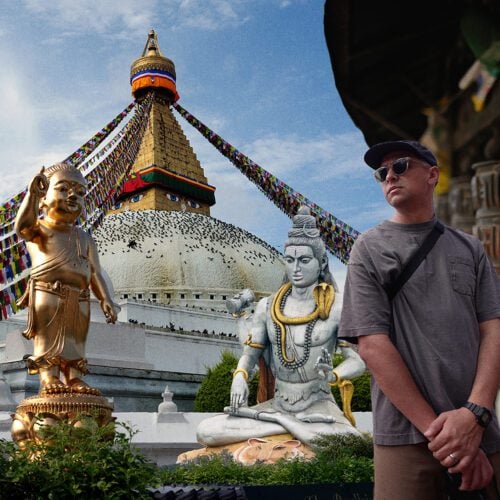
Now, this is where the story takes a turn. About 2,500 years ago, a prince was born into a ruling family of the Shakya clan. His name was Siddhartha Gautama. Today, the world knows him as the Buddha. And to understand what his life and teachings would do to the religious world around him, especially Hinduism, we have to go back to where it all began, to the borderlands between India and Nepal, to a place called Lumbini.
Going to Lumbini, birthplace of Siddhartha Gautama. Buddha. We’re going to go see where he was born. We’re going to go see where he was enlightened, or how this religion went from being this small regional thing to just blowing up the way that we see it today.
Yeah, Lenduk really wants a coffee, so we’ve got to get a coffee.
Lenduk:
Okay, so what would you like to have?
Josh:
Ah, pizza.
Steven:
We’re currently holding up our flight because we ordered two pizzas, and there’s only 10 minutes left before we take off, but our guide somehow convinced the airline to wait.
We made it 30 degrees warmer. We’re in Lumbini.
After arriving, our guy took us to the remains of the palace where Buddha grew up. Legend has it here’s where his father tried to protect him from the outside world.
Raj:
Buddha’s father worried. Then Buddha’s father decide to him lock him inside the palace. Give him luxury. And the first time when he moved outside, he saw the reality. Sick people, dead people, old people, so much suffering things.
Steven:
This is what Buddhism calls the four sights, four encounters with human suffering that left Siddhartha Gautama wrestling with the same questions many still asked today. Why do we suffer? And is there a way out?
Raj:
And then mid of night, he left eastern gate and cut the hair and wearing the monk face and he start to practice.
Steven:
The story goes that Siddhartha went to study under respected teachers and practice extreme fasting and self-denial. Some accounts say he pushed his body to the edge of death, and then he stopped. He rejected both indulgence and extreme aestheticism, what he later called the Middle Way. And seated beneath a fig tree, what tradition calls the body tree, he meditated. And according to Buddhist teaching, he awakened. He attained enlightenment. That moment, Buddhists believe, marked the discovery of a path from suffering to liberation.
It’s incredible to see just the history behind so many of these stories and just seeing how the story has changed over so many years and what people are living. Today was influenced by what happened thousands of years ago, right here.
The next morning we visited Buddha’s birthplace to meet with someone who had dedicated his entire life to his teachings and to ask him. If Buddhism rejects a lot of what Hinduism teaches, then why do so many Nepali people claim to believe in both?
This is a Buddhist monk visiting from Thailand. We’re going to get an opportunity to speak with him. And many people seek out his wisdom because he came here from so far to meditate here right behind me to the site of Buddha’s birthplace. Is it okay if we record?
Dhammiko:
Yeah. Please take a seat.
Steven:
Thank you.
Dhammiko:
Hindu and Buddhist, so much different. Buddhist teaching is a way of life. But people, they think they’re Hindu and Buddhist together because now in Nepal, they do not really have monk to teach them the real way for Buddhist. I study a lot. I see not the same. Many, many countries, they say they are Buddhist. They are not. This is a really big problem in the world now.
Steven:
Dhammiko raises a crucial question at the heart of understanding religion in Nepal. Are Buddhism and Hinduism compatible or are they fundamentally different? People often say, “Well, Buddhism broke away from Hinduism.” And that’s kind of true, but it’s not the whole story. In the Buddha’s time, religion in this region was shaped by what we now call Hinduism, priests and rituals and sacrifices, sacred texts, and a strict caste system. But the Buddha challenged that world. He taught that freedom from suffering doesn’t come through birth or ritual, but through ethical living, meditation, and personal awakening. So in that sense, yeah, Buddhism pushed back against all the things Hinduism was made up of. But here’s the catch. Back then, there wasn’t one clear religion called Hinduism. It was already a mix of traditions developing over time, and Buddhism didn’t grow outside of that world. It grew inside it. It kept ideas like karma and rebirth, but redefined them.
Now zoom in on Nepal. Instead of staying separate, Hindu and Buddhist traditions began to blend. One figure could take on multiple identities. Avalokiteśvara, a Buddhist symbol of compassion, became linked with the Hindu deity Matsyendranātha, and even older local gods like Bungadyah. Same figure, different meaning, but it all depends on who you ask. So why does this even happen? Well, because Hinduism is incredibly flexible. It doesn’t center on one founder or one exclusive truth. It absorbs new ideas, treating them as different expressions of the same ultimate reality. In Nepal, everything starts to layer and sometimes this blending goes even further. Some Hindus and Buddhists see Jesus not as the only son of God, but as a teacher, a guru, or even an avatar, one more expression of the divine. This is syncretism, a religious world that grows by blending beliefs, which is why on paper, the pie chart may look clean, but in real life, it’s not.
It’s just like Noah said. Nepal isn’t just Hindu. It isn’t just Buddhist. It’s layered. And what you actually believe and how you practice it may differ from person to person. It just depends on who you ask. And right on cue, as we wrapped up with Dhammiko, a Hindu man who’d been listening stepped in with a completely different take.
Hindu Man:
We are Hindus, but we follow all the rules and regulation of Buddhism. I pray for the Buddha and I follow most of the Buddhist rules and regulations. There are lots of things similar to Buddhism and Hinduism. This all the Pancasila system and these Pancasila are inside Hinduism also.
Raj:
If you can ask Nepal and India, Hindu people, “You are Buddhist? You are Hindu?” They are confused about what I can say because they both are faithful and accepting. They accept Hindu, they can accept Buddha.
Steven:
So what do you personally believe?
Raj:
Because I’m practicing philosophy and practice meditation, that’s I don’t believe any religion.
Steven:
You don’t believe in any?
Raj:
No. Like I say, I don’t follow belief. I believe all religion. I don’t follow any religion because I’m practiced to meditation, so that’s for me, every religion is the same.
Steven:
This is the reality of spirituality in Nepal. A belief system that tries to absorb everything where every path is right means that no path is truly followed.
Raj:
If you read the Ramcharitmanas, it is very good. If you read the Quran, it is good. So that’s Buddhism and Hinduism and the Christianity all about understanding how you read. If you read yourself, you got your answer. For my opinion, it is all similarity. If you read your own, you find all this is your similarity.
Steven:
Yeah. There are some similarities for sure. Absolutely. But yet they’re making very different claims, whether in Christianity saying there is no other God, and there’s no other name. Like what you’re saying, you have to read, you have to go in there. It seems like a superficial understanding of what these religions are claiming to claim.
Raj:
We don’t argue about religion. This is not religion. Religion, word is make war. When we need to word religion, Christian, Muslim, Buddhist, Hindu, this is make war. We are human. We need to happy. We need to right path.
Steven:
I agree. But the answer that another religion like Christianity would give you for that evil, for that badness, the bad that is happening in your heart that is coming out as bad actions would be very different because they wouldn’t say the answer is inside of yourself.
Raj:
Yeah, of course.
Steven:
They would say-
Raj:
Say in Buddhism also like say, if you think bad, if your own reflection, if you all are thinking bad, just something doing for bad, it is reflection. If you feel the good, you went to see the good, you get the good.
Steven:
Christianity says there is no good. No one is good, except for God.
Raj:
No, I not agree.
Steven:
Oh, that’s what I’m saying.
Raj:
I’m not agreeing.
Steven:
That’s why I’m saying it’s different, right? It’s not the same belief.
Raj:
Jesus say this is not good. You are like the kind of Bibles.
Steven:
Yeah. The heart is deceitful above all things.
These conversations can be challenging. Our views on spirituality are worlds apart, but beliefs are just one thing. What do they actually look like in everyday life? To find out, we went back to Kathmandu. We’re on our way to go visit a very well-respected Buddhist lama or teacher and very well respected because he’s been reincarnated five times as a lama, allegedly. I’m really interested to talk to him.
Thank you.
But we stopped by the little corner store on the way in. You’ve always got to bring a present anytime you meet somebody new, a gift. Especially to someone like a Buddhist lama to honor them. I didn’t really quite see what we got. From what I can tell, it’s like…
Josh:
Milk.
Steven:
Juice. So it works out.
As we stepped into the residence, we found an older couple already seated across from the Rinpoche, a title that means “precious one,” used for highly respected teachers in Tibetan Buddhism, often believed to be reincarnated spiritual leaders. They’d come with a question about their son who was living abroad. They wanted to know what his future would hold. Would he finish his studies? Would he find a good job? Would things turn out well for him? And as we listened, it became clear this wasn’t a search for enlightenment. It was a search for reassurance.
This is what everyday Buddhism often looks like here. You come to a teacher, you bring an offering, you ask for a blessing, and you hope that someone can speak clarity into the uncertainty of your life. But this isn’t what Buddhism originally set out to be. The Buddha taught a path toward awakening toward freedom from suffering. What we’re seeing now feels very different because when your life is shaped by unanswered questions about your future, your family, your fate, you keep coming back, asking again, hoping again. And over time, it can begin to feel less like freedom and more like a cycle you can’t quite step out of.
Lenduk:
Go this way.
Steven:
This is what Buddhist life can look like in Nepal, but how is Hindu faith actually lived out? To find out, we went to a place many Hindus journey to on pilgrimage, Pashupatinath. One of the most sacred Hindu temples in the world dedicated to Shiva. It sits along the Bagmati river where rituals, prayers, and even funeral cremations happen in full view of the living. I have never been to a cremation, and yet the Hindus here in Kathmandu have a whole temple dedicated to that, a place where they can come mourn their dead.
Guide:
This is one of the best pilgrimage destination like Islam go to the Mecca, Christian go to the Vatican. And Hindu once in a lifetime, they must become in a Pashupatinath to worship Lord Shiva, which is called Mahadeva. So the cremation is 24/7. All the day, all the night is never stopped. The river Bagmati, it joined to the India Ganga in Varanasi. If someone passed away, must be same day have to use to cremate it. Same day.
Steven:
The morning bring their dead and clean their bodies and then lay them on top of these stacks of wood and hay and burn them. And I just can’t help but feel the weight of lostness. Like these people spend their whole lives passionately devoted to the worship of these false gods who demand so much, and deliver nothing.
Hindu Man 2:
The body may perish, but something remains. There is certainly another birth. What form that birth takes, I cannot say. I am human now, but I cannot claim I will be born human again. It depends on my actions. If I commit sins, I may be born as an ox, forced to toil in the fields, because I failed to live righteously. But if I act with dharma and awareness in this life, I may be born human again and move closer to liberation.
Steven:
And it all ends here. It all ends here with your body burnt, cast in the river and people digging through the water to grab all the gold that was left of your jewelry. And it just feels utterly hopeless.
Lenduk:
They believe in reincarnation, but not sure. It might be the animals. It might be the bird.
Steven:
Imagine spending your whole life trying to earn your way into a better next life, never knowing if you’ve done enough. This is the hopeless reality of Hinduism when it’s actually lived out, and that kind of hopelessness runs deeper than we can see. Places like this are darker than we expect, and truth be told, we weren’t prepared for how real that darkness would feel. Not even Lenduk who’s from here could shake it that night.
Lenduk:
It’s very in a darkness place. It’s very in a demonic place.
Steven:
Have you ever experienced something like that before?
Lenduk:
Not like this. Not like this kind of experience. I felt that one. I felt that one. Very difficulty I slept yesterday because of spiritually strong place that this kind of thing is, because they worship idols. They worship the spirit of bodily spirit, and we should have pray for this kind of thing. We should pray. That’s, I realize.
Steven:
Moments like this remind us what’s at stake here. We’re not just talking about different beliefs. This is a spiritual battle, and millions are still living in the dark, waiting for the freedom that can only be found in Jesus.
Steven:
The 1970s hit Nepal like a wave. Young Westerners, backpacks, guitars, long hair, pouring into Kathmandu along what became known as The Hippie Trail.
They came chasing something, meaning, freedom, enlightenment, and Nepal felt like the place to find it.
But underneath that search for enlightenment, there was another reality at play. The streets of Kathmandu, especially around Freak Street, became famous for open hashish shops, Ganja cafes, and a culture fueled by drugs.
It was a strange kind of spirituality, people chasing meaning while trying to escape reality.
So how did Nepal even get on the map for Western seekers in the first place? Well, part of the answer goes back centuries. Hindu and Buddhist traditions had already fascinated Western travelers, scholars, and spiritual teachers. By the 1960s and ’70s, those ideas, karma, meditation, enlightenment, start spreading into Western culture. And today you see it everywhere.
Alan Watts:
When the wrong man uses the right means, the right means work in the wrong way.
Steven:
What once felt exotic is now mainstream. And this spiritual search isn’t just something from the past, it’s still happening today. And to understand why so many travelers are drawn to Eastern religions, we went to a place where that search often begins. Pokhara.
Man in the street:
Nepal is a very special place in one sense, I feel, because we are doing a spiritual pilgrimage because we are practicing this Krishna consciousness. You’ll see them on the streets, chanting Hare Krishna and all that. But at the same time, because here this country is a Buddhist country, our Krishna consciousness teaches us that God has many names. His other name is Buddha. And now Christian, they call him Jehovah and then the Muslim call him Allah. So it’s a very, I would say, a wonderful journey for us.
Patrick:
I’m Patrick from Sweden. I left all my belongings to find what my heart is searching for beyond the 8:00 to 5:00 jobs. And I am exploring my heart here in some ways in Nepal. I chant Hare Krishna, I chant Radha, I chant so many mantras. This is what I do during the days, and I just let myself be carried without plans. It doesn’t matter if it’s five minutes on earth or 100 years, it’s we are here and we are existing here, and that matters.
Steven:
And all this traces back to the ’50s, ’60s, and ’70s, when thousands of Westerners were coming to Nepal searching for enlightenment. And yet, at this same time, there was one couple who arrived seeing something completely different, not spiritual awakening, but spiritual darkness. And they believed the answer wasn’t hidden in the mountains. It was something the people of Nepal had never truly heard. Their names were Olavi and Marja. A missionary couple from Finland, they left everything behind to bring the gospel to the Lhomi people in a remote village called Chepuwa.
Olavi:
The Lord began to speak about the need of Bible translation. I knew that I was heading for Nepal.
Marja:
I didn’t exactly know even where Nepal is, but I had already promised God that if you want to send me, go ahead.
Olavi:
There were so many languages in the world that didn’t have the Bible.
Noah:
This missionary from Finland wanted to translate the New Testament into Lhomi language.
Olavi:
I met some Lhomis already on the way on the trail. I can see that there was a clear leading of the Lord there.
Noah:
They tried multiple people that could help in the language translation, but there’s a huge gap of literacy and comprehension with just even Nepali.
Olavi:
So we began to record the stories in order to analyze them later for grammar purposes and also to learn the language. The obstacles and all kinds of hindrances were so formidable that I was despairing how in the world can we learn the language here? I was tired in many ways also, and so I didn’t have faith in the future.
Noah:
Most Lhomi people were completely illiterate. We are very close to Tibetan language, but we’re not in Tibet. We don’t know how to read and write Tibetan. So nobody knows how to read. What they did was they learned Nepali first for years because that was the only medium to communicate with everybody, right?
Olavi:
To translate earnestly, my language was good enough. And it was at that time that we began to work on the Gospel of Mark.
Marja:
It was my task to put it into Devanagari script. And I was able to do it even with the kids. I think both of us were thinking, “We can never finish this,” but we don’t stop now. We just go crawl ahead and go a little bit further.
Noah:
But throughout this laboring process of the Bible transition, Olavi was sharing the gospel through being able to talk a little bit. And in the village, it was the first early converts for a couple years until other people started becoming believers like us.
Marja:
There was this little gang of young men who were the first believers In that unit the group grew and…
Olavi:
The Lord performed miracles and healed people, so that was one way. The Lord rewarded their trust and faith in him.
Steven:
As the Bible was being translated in their language, the gospel began to take root among the Lhomi people. Olavi and Marja shared the gospel and their lives and God moved. There were miracles and people began to believe. Just a few at first, but enough to know something was happening. One of the first believers was a Lhomi man named Dorchi. He and his wife chose to follow Jesus and to build a family around him. They had children, and one of them was a kid named Noah. We’re back to Noah. There’s a few things you should know about him and why he matters in this story.
Noah:
I grew up in Chepuwa, which is a pretty remote village in Nepal, and it was a great childhood. Hanging out a lot outside, outdoors. No electricity, no water, no roads. It was probably some of the best memories I have. I have my parents and I have an older brother and older sister. My dad, he’s the second-oldest convert from our Lhomi people to become a Christian.
Steven:
Noah was among the first second generation believers in the Lhomi people. Years later, he would move to Kathmandu and eventually to the United States where we met. But it all traces back here to a remote Himalayan village and a missionary couple who believed the gospel was worth bringing this far.
Noah:
We’re so thankful. The Lhomi people, our story doesn’t start unless without the family, the Vesalainens. It wouldn’t start without them, right? So the hardships that Olavi and Marja could go through. Marja was like, “The Lord asked Olavi to go there, I followed Olavi and the Lord showed up.”
Steven:
To understand just how difficult it is to reach remote villages with the gospel, places like Chepuwa, just as Olavi and Marja once did, we decided to make the journey ourselves. Noah left a few days ahead of us to spend some time with family he hadn’t seen in years. After all, getting to places like this isn’t easy. And over the next few days, we were about to find out just how hard it really is.
Lenduk:
Today, you can take taxi from this hotel to airport.
Steven:
We’re already late for our flight. If you want to know the difference between Nepali, Strength, and a Westerner American Guatemala thing, look at the size of our backpacks. It’s embarrassing. We were late, but the flight was delayed, so we were actually on time. Lhomi time.
Lenduk:
And you have a flight to Biratnagar, which is the border of India. It might be hot.
Steven:
The ride has a ride.
Lenduk:
And then you have to drive about 10 hours off road.
Josh:
About.
Lenduk:
About. I said about.
Steven:
In Nepal, like much of the world, time is flexible. A 10-hour drive might be 12. A two-day trip might be four. If you’re going to survive out here, it’s important you don’t fight it. Just get in and enjoy the ride. We drove late into the night through thick fog until we reached a small town called Num, where we stopped for the night and prepared for what was still ahead.
Anthony:
5:30, 6:00 AM sun’s coming up. It’s beautiful, as always, in Nepal. We are getting ready to get back in the Jeep with this big baby.
Steven:
We’ve got another drive ahead of us today, about six hours. It was closer to eight hours.
Josh:
How have the plans changed?
Tenzing:
As I talk with the driver, it might be a better drive and we’re going to have our breakfast.
Anthony:
Hungry.
Tenzing:
So please expect the unexpected. So are you guys excited for the view?
Anthony:
Yay.
Steven:
We have another major security checkpoint up today before we are going to hit a landslide so we’ll have to get down. It’s been days to get here and we’re still days away. We’ll walk with our stuff and then find another Jeep on the other side that would take us the rest of the way until we get to the starting point where the rangers are at where we can begin our hike. We’re not going to get to Chepuwa today. We’re going to get to …. What’s the name?
Tenzing:
Cembum.
Steven:
Within the first hour, it was clear this wasn’t going to be a normal hike. Along the trail, people stopped us to share their stories and asked for prayer. Many were searching for answers they still hadn’t found.
Anthony:
What’s your name?
Tenzing:
Potimaya.
Anthony:
Why did she ask me about the pain in her knee?
Tenzing:
Oh yeah. She was expecting, “Do you have some medicine?”
Anthony:
Oh, medicine. No, but I have something better than medicine. Father, we just pray for Potimaya.
Steven:
Potimaya had climbed the mountain to bring an offering to a Buddhist priest, hoping for a miracle. When we ran into her, she was coming back down the same trail, still in pain, still waiting. Anthony and Tenzing quickly became a powerful evangelism team. They stopped for everyone listening, praying, never rushing. It was a gift to hike with them and capture it all as it unfolded.
The trail wasn’t easy, and this was just the beginning. We are about an hour and a half into this hike, and almost done with the first leg of the hike. Is that right?
Tenzing:
Yeah.
Steven:
I think they’re just saying that it is to make me feel better.
Josh:
How much time do you think you took Olavi and Marja get here when they were coming?
Anthony:
You know, you saw how far we rode in the Jeep? They walk all of that. All the way. You walk. Noah’s father told us is everyone just used to walk from here. I guess they walked six or seven days.
Steven:
This is what it takes to reach remote regions with the gospel. And we got to see it firsthand as we hiked through brush and narrow fields of corn and rice step by step as the trail winds through one Buddhist village after another.
We were told that the villagers built this flagpole to keep demons and bad spirits out of this place. I think it’s actually a beacon for them.
We pressed on long until after the sun went down, until we reached our rest stop for the night.
Tenzing:
Seven hours to reach from Tumarak to Namuchi. Actually, we had a good opportunity to share our things.
Josh:
Things. Yes. Yes. And pray for the woman.
Tenzing:
She allow us to touch our knee and we pray and praise God in his name. She will know Christ as her savior and the Lord.
Anthony:
I thank you that you promised Jesus that when we stand before kings or when we’re in situations that you would give us the words to speak. We thank you for those words today. We thank you for your prayers today. We thank you that without you, we can’t do anything. Apart from you, we do nothing. It’s your power. It’s your provision. It’s your glory. In Jesus’ name we pray. Amen.
Steven:
The next morning, we woke up to a clear view of Mount Makalu, another full day of hiking in front of us. But not long after, we happened to hike past the home of a faithful believer who rarely gets visitors. His name is Pasan Norbu.
Tenzing:
He’s the oldest believer in this village. He start to believe like Christ as a savior. The miracles bring people in Christ. “It’s been six years, I believe in Christ. Now I’m in peace.” Even though whole villagers speak bad thing about Jesus, or even though they try to persuade him, like he said, “I’m peace in heart because Christ is in my heart.”
Steven:
Pasan Norbu told us there are only a handful of Christians in his village and because of their faith, they’re rejected and mocked by those around them.
Tenzing:
Please pray for this Namuchi village. It is like spiritual darkness in this village.
Steven:
It’s been, I feel like a time of communion with the Lord like no other. We’ve just come across villagers, some believers, some not, who live in these mountains. They want to talk and we talk and Anthony here’s gotten an opportunity to share the gospel a couple times. There is interest. There is a question, there is a seeking of, “This Buddhist thing is not answering my questions, it’s not solving any of my problems. None of my prayers have been answered.” And being able to enter that space and granted like this is a hard space to enter just by the nature of the hike. And in the last 40 years, only 300,000 people have checked through at this checkpoint, which means out of 8 billion people in the world, only 300,000 have come to this place and up to these mountains even less. But if you do it, if you get there, you will find people who are willing to listen.
I can’t even begin to imagine what Olavi and Marja must have experienced back in the ’70s.
Anthony:
How mentally and emotionally exhausting it must have been to wonder if anyone would even receive the gospel here.
Steven:
And it’s wild that even now 50 years later, we can climb up the same mountain and this time we’re coming across some Christians. We’re coming across with brothers and sisters who know who Jesus is and they pray to him every day. We kept hiking because, well, what else could we do? But not long after, we were met with one of the most incredible views of the Arun Valley. This is the Arun Valley, and this is what Olavi and Marja saw when they came over 50 years ago, looking for a place where God was calling them to serve and translate the Scriptures. You can see Chepuwa right there underneath and Lingam above. And that’s where we’re going now.
But we weren’t there quite yet. Chepuwa would have to wait one more day. We have another hike up tomorrow morning where we’ll finally get to Chepuwa. But for tonight, we’ve made it to Pastor Toshi’s house here in the village of Rukuma. You can see Chepuwa on the other side of the valley. We’re so grateful to be here.
Josh:
Day number…
Anthony:
What day is this?
Steven:
This is day number four of trekking the Chepuwa and we’re still at Pastor Toshi’s house and he’s made us pancakes.
Josh:
The best smile in town.
Steven:
Pastor Toshi grew up here in Rukuma, but when he was young, he crossed the valley into nearby villages to go to school. And that’s where he first heard the gospel and became a believer. It’s not easy being a Christian out here, but despite pressure and persecution, today Pastor Toshi is taking the gospel to more villages even further away in the region.
We are 30 minutes away from Chepuwa, which means we’re about an hour away from Chepuwa. Maybe we’re going to make it on time for church.
Anthony:
We are. We come to the elders of the church. Lay their hands on and pray. God will give us anything we ask for. Father in heaven with us.
We love you. We thank you. We believe in you, God. In the name of Jesus, we pray. Amen.
Tenzing:
Amen.
Anthony:
He just came to ask us if we had some medicine for a cough, but we didn’t have any. Sometimes people, they think, “Hey, they have medicine.” And we put our trust in that medicine and we believe God as a miracle working God. You, every story of a believer converting in this village that we’ve run into, every single one starts with a miracle. Starts with God doing something that everyone else thought was impossible. So we’re just going to keep up with what God’s doing and see if he’ll do a little more.
Tenzing:
After watching this, after seeing this and everything, like how great our God is, how our amazing God is. And at the same time, it’s always encouraging to share gospel to the people. Yep.
Steven:
After four long days of hiking through the Himalayas, we finally made it to Chepuwa.
Anthony:
We’re in the village.
Steven:
I don’t know if you can see the little old lady sitting out there on the deck. That’s Tenzing’s mom. She hasn’t seen Tenzing in over a year, so if I could witness the sweet moment, family reunion.
Tenzing:
Hey
Tenzing’s mom:
[foreign language 00:46:47]
Steven:
This is a reminder. Call your mom. Call your dad. We don’t know when you’ll see him next. Lhomi hospitality is a very real thing, so we had to stop at several houses on our way into the village, eating good food, drinking tea, and catching up with friends.
Noah:
I’m glad you guys are all right.
Steven:
Until finally, we made it to church.
Noah:
For one second. How is it? He’s my dad.
Steven:
Where we were welcomed by our Lhomi brothers and sisters with more food and even a dance. It’s not easy to reach places like Chepuwa, but if you’re willing to go, you’ll find God is already at work doing more than you ever expected.
Tenzing:
It’s been a long journey to get here, but this is what it means to reach Chepuwa. It’s hard to get here, but it is worth it. I can’t imagine the price Olavi and Marja had to pay to reach our Lhomi people. Our Lhomi home, my home.
Steven:
When we arrived in Nepal, the country was still recovering from unrest. Just two weeks earlier, protests against corruption broke out in Kathmandu. I quickly learned that political instability has long shaped Nepal’s story. Most notable in recent history, the Maoist Rebellion.
The Maoist rebels were a group fighting to overthrow Nepal’s monarchy and create a new kind of government based on communist ideas. Many of them came from poor rural areas and believed the system left them behind. And it was often here in the mountains and villages far from the headlines where violence, fear, and pressure went unseen. And that pressure reached everyone, including the Christians in Chepuwa.
It was 2002. The New Testament had been translated into the Lhomi language and Olavi and Marja had returned to Finland, but the church hadn’t slowed down. It was growing. And with it, anticipation was building because Christmas was coming to Chepuwa. Inside the small church, the youth rehearsed songs and families prepared to celebrate the birth of their Savior. There was anticipation, joy, a sense that something good was near. But then in a moment, things took a turn. Maoist rebels arrived at Noah’s home demanding to see his father Dorchi, the church’s treasurer, and it quickly became clear why they were there. They weren’t just looking for him. They were coming for all the leaders of the church and for everything they had.
Noah:
A group of the rebel army, Maoist group came and took my dad in front of my eyes. They had guns, they had military attire. As a kid, that’s very scary because it’s like a nightmare unfolding in your own eyes, right?
Dorchi:
[foreign language 00:50:46]
Noah:
He was saying when they caught him, they were basically surrounding the house so that he wouldn’t run away. And then after that, he got caught and then he started walking basically. And then the Maoist group, they took him to the church.
Lakba:
Suddenly we heard loud and frightening noises. And I recognized that voice that sounded like my dad saying, “Open the door. Open the door.”
Steven:
This is Lakba. Noah’s older brother and one of the young voices rehearsing for the Christmas program that night.
Noah:
So when all of that commotion happened, he actually fled. He jumped off that edge right there to the other side and then ran away. So he was running this way, Norbu, one of the other elders, because they heard the commotion, he actually came here. They saw him and they fired a gun and it went by his ear. And then he saw my dad running, so they met at his house and then they walked down the village avoiding main trails and they crossed through the woods to Lingam so that they can warn Guru.
Steven:
Dorchi and Norbu were able to get away to warn the other church leaders, but they didn’t expect the Maoists to turn against the youth who were still in the church.
Lakba:
They stormed into the church and demanded, “Where is your God? Show us.” And there was a table at the front with two jars on it, and then they came in and broke those jars. They completely destroyed everything inside the church. Three of us were standing in the line. We didn’t know that already one of them had struck Kiza Ridar, and he was unconscious on the ground. Another Maoist hit me in the mouth with the top of a gun. Even today, whenever I speak about this persecution, I can still remember the sounds.
Looking back now, we understand that this persecution had a greater purpose. If it had never happened, then maybe we would have never scattered and we would’ve never grown and learned.
Noah:
All I can remember was fear. While everything was unfolding, me and my mom, we didn’t really know what to do. So I think under our storage kind of thing where we keep hay and whatever, just hiding under that, she snuck me. She made a hole around the hay and she snuck me in there. It’s a very clear view from where we were hiding at the church and all we could see was just things getting thrown out of the building. Obviously we knew what it was. It was books, the Bibles, all the new translation Bibles, and then eventually you just saw fire lit up there and just in flames. And I was just watching the church basically burn down through that peephole, could hear the commotions and everything. And I was just basically watching through it all night. Didn’t know if my brother was alive, didn’t know if my dad was alive, but all I can remember is just staying there forever.
It was like one of the longest nights of my life. It just felt like it never ended. We were just watching and helpless.
Steven:
But one question lingered. Why were the Maoist rebels targeting the church leaders? Was it just about money or something more? To get answers, we sat down with someone who once stood on the other side, a former Maoist rebel.
Kingsang:
The misconception in their minds was that Christians destroyed churches, temples, and monasteries. That rumor had spread among some of the Maoists, but then some of my comrades went there and attacked the Christians. It happened because of personal issues and revenge. I knew a little about Christianity, although I was not a Christian. I knew that they helped the needy and the poor.
Noah:
The Maoist’s commander for this region didn’t even know that this happened. And then my brother, Guru and Ridar Kiza, was summoned for the event and they had to answer on with these masses of Maoist. The commander of that time actually had a pistol ready to shoot him. And then that’s when Kingsang stepped up and the 14-year-old commander of the region stepped up and basically saved them. Most of the people that were believers whose life were in danger left, they just left.
Steven:
The reasons for persecution aren’t always clear, but here we can see how misconceptions about Christianity often lead to suffering for its adherence. This event led to the scattering of Lhomi Christians to other villages, and even as far as Kathmandu. We walked through Chepuwa past Olavi’s home where it all began and met some of the first converts to Christianity. Some remained faithful in the midst of persecution, but not every story here ends in faith. Tenzing’s father walked away, not because he never heard the gospel, but because the cost of following it was too high.
Noah:
He got persecuted, so he was a believer actually for a long time. During my dad’s time, he helped with Bible transitions, really loved the Lord a lot. There’s pictures of him and my dad like Jabu, helping with the Bible transitions and all of that. It’s hard to be a believer when your family just consumes every part of your life. You have social aspects, you have family dynamics and everything is so intertwined that if you want to survive, sometimes you just give it up.
The sacrifice that these older generations have made, being outcasts in a community where you have to live together to survive, looking back, they’re so thankful that they were able to persevere through it. There has been a lot of people that have walked away from it because obviously some couldn’t persevere through it. The ones that held onto it because of their faithfulness today, we have thriving churches all across this region.
Tenzing:
Friends and families are very important in our life. I have a family who are completely strong Buddhists and believe in Christ, my family, they used to call me, “You need to come back to Buddhism.” Mentally, I feel so pressured. So slowly after truly knowing Christ, I could able to battle with them. And I feel like that is a spiritual battle.
Lenduk:
Nepal is the hardest place because it’s full of darkness and temples, monasteries. This place is not the freedom to the religions. It’s hard to share the gospel. Publicly, the government don’t allow to share the gospel.
Noah:
What we gain outweighs everything that it costs. We are able to know Christ as our Lord and savior because of Olavi’s faithfulness and people like our pastor, my dad, Guru, our elders of our church because of their perseverance. Today we have a church that stands still very strong through multiple years of persecution.
Lenduk:
If you are facing this persecution from society, from family, be bold, keep your heart to God, heart to Jesus.
Tenzing:
Jesus Christ has came to this world and died for our sin. And he has written, whoever follows me, you will be resected by your family, you will be resected by your own people. And as do the same Christ was also rejected by his own people.
Noah:
The gospel is needed in places that are hard to reach because not a lot of people show up to the hard places. Because even to this, even like present day, I’m just like, why would somebody want to go to Chepuwa?
Steven:
It was now time for us to leave Chepuwa, including Noah. He embraced his family not knowing when or if he’d see them again. There’s a lot we learned on this journey, but maybe what stuck with me the most was that remote regions of the world, like far off villages in the Himalayan mountains aren’t just hard to reach because of the trek it takes to get there. They’re also hard because of what it costs to stay faithful once you do. It’s not an easy path to follow Jesus, especially when everyone, even those you love, try to pull you away. And yet it’s worth it. It’s worth the cost.
Noah:
Because Olavi and Marja chose to go to one of the hardest places that they could pick, we have a Bible in our own language. The church being even when burned down is thriving even more. And the same church is sending people to even harder places that most people can’t go. This is literally what God does is he does hard things.