

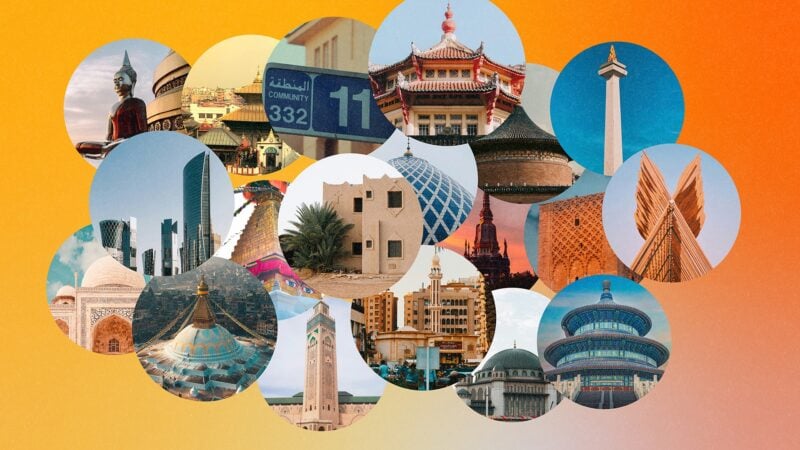
Is Nepal Hindu or Buddhist? The Answer Is Complicated
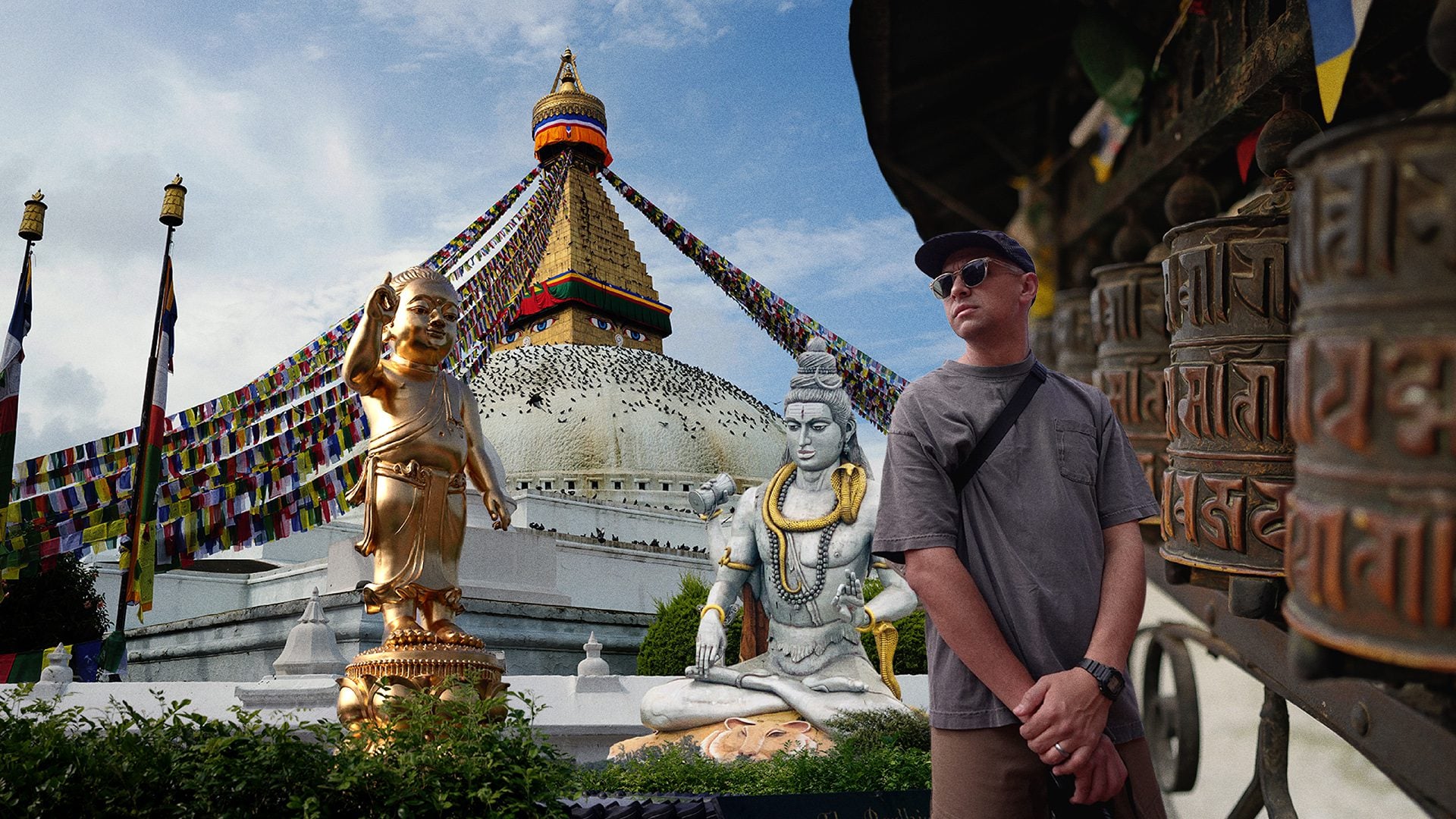

Ask someone in Nepal if they’re Hindu or Buddhist, and you might expect a straightforward answer. But often, the answer you’ll hear is: “Both.”
That doesn’t mean everyone believes the same thing. Religious beliefs often are shaped by each individual rather than fitting neatly into a single category.
And depending on who you ask, Hinduism and Buddhism are either two completely different religions, two similar paths up the same mountain, or something so blended that separating them feels impossible.
So, how did this happen?
Answering that question requires going back to the world where Buddhism was born, where Hinduism had not yet been named, and where the question is not just, “What do you believe?” but “Who gets to define it?”
THE BEGINNINGS OF HINDUISM
Today about 81.2% of the population in Nepal identifies as Hindu. Around 8.2% identify as Buddhist. Smaller percentages identify as Muslim (4.9%), Kirat (3.2%), Christian (1.8%), and other minor religions. But categories don’t really capture how people actually live their religion.
Consider Hinduism.
Hindu traditions in Nepal trace back more than two millennia. Indo-Aryan groups migrating into the Himalayan foothills in the first millennium brought Vedic religious traditions, and those blended with indigenous tribal and animist traditions already present.
In other words, what we now call “Hinduism” in Nepal grew out of the long process of blending, adapting, and passing traditions down through generations.
By 400 AD, during a time known as the Licchavi period, stone inscriptions in the Kathmandu Valley show that Hindu kings were officially supporting and funding temple worship. Things were getting official for Hinduism.
So, what exactly is Hinduism?
Hinduism doesn’t have one single founder or one single book. It’s a family of traditions that developed over thousands of years. But many Hindus believe in a supreme reality called Brahman, expressed through different deities like Vishnu, Shiva, or Devi.
There’s the idea of karma: actions have consequences. There’s also samsara: the cycle of rebirth. The ultimate goal is Moksha: liberation from that cycle.
Daily life might include temple worship, home shrines, festivals like Dashain or Tihar, and rituals passed down for generations.
For centuries, Nepal officially identified as a Hindu kingdom. In fact, Nepal remained the world’s only officially Hindu state until 2008, when the monarchy was abolished and the country declared itself a secular republic.
But in Nepal, “secular” doesn’t mean pushing religion out of public life. It means protecting the many religions and traditions practiced by its people.
So, where does Buddhism fit in?
THE RISE OF BUDDHA
About 2,500 years ago, a prince was born into a ruling family of the Shakya clan. His name was Siddhartha Gautama. Today, the world knows him as the Buddha.
Born into royalty near the border of modern-day Nepal and India, Siddhartha Gautama was raised behind palace walls, protected from suffering and surrounded by comfort. But when he finally stepped outside, what he saw changed everything: an old man, a sick man, a dead body. And finally, a wandering ascetic who seemed at peace.
This is what Buddhism calls the “Four Sights,” four encounters with human suffering that left Siddhartha Gautama wrestling with the same questions many still ask today: Why do we suffer? And is there a way out?
So he left his home in search of an answer.
The story goes that Siddhartha went on to study under respected teachers and practice extreme fasting and self-denial. Some accounts say he pushed his body to the edge of death.
And then he stopped.
He rejected both indulgence and extreme asceticism. What he later called the “Middle Way.” Seated beneath a fig tree that tradition calls the Bodhi tree, he meditated. And according to Buddhist teaching, he awakened. He attained enlightenment.
That moment, Buddhists believe, marked the discovery of a path from suffering to liberation.
So all this leads to the question: Are Buddhism and Hinduism compatible belief systems that can be held at the same time, or are they fundamentally different?
People often say that Buddhism broke away from Hinduism. There’s some truth to that statement, but it’s not the whole story.
In the Buddha’s time, religion in the Nepali region was shaped by what we now call Hinduism—priests, rituals, sacrifices, sacred texts, and a strict caste system. But the Buddha challenged that world.
He taught that freedom from suffering doesn’t come through birth or ritual, but through ethical living, meditation, and personal awakening. In that sense, Buddhism pushed back against all the things that comprised Hinduism.
But there was also a catch.
At the time, there wasn’t one clear religion called “Hinduism.” It was already a mix of traditions developing over time. And Buddhism didn’t grow outside of that world; it grew inside it. It kept ideas like karma and rebirth, but redefined them.
Instead of staying separate, Hindu and Buddhist traditions began to blend in Nepal. One figure could take on multiple identities. Avalokiteśvara, a Buddhist symbol of compassion, became linked with the Hindu deity Matsyendranātha, and even older local gods like Buṅgadyaḥ.
THE BLENDING OF SYNCRETISM
Same figure, different meaning, and it all depends on who you ask. So, why does this happen? Because Hinduism is incredibly flexible.
It doesn’t center on one founder or one exclusive truth. It absorbs new ideas—treating them as different expressions of the same ultimate reality. In Nepal, everything starts to layer.
Sometimes this blending goes even further. Some Hindus and Buddhists see Jesus not as the only Son of God, but as a teacher, a guru, or even an avatar. One more expression of the divine.
This is syncretism. A religious world that grows by blending beliefs. Which is why, on paper and charts, religious categories may look clean, but in real life, they’re not.
Nepal isn’t just Hindu. It isn’t just Buddhist. It’s layered. And what you actually believe and how you practice it may differ from person to person. It just depends on who you ask.
THE DIFFERENCE OF THE GOSPEL
In a place where religion is layered, it can be tempting to say every faith is telling the same story in a different way, or that each one is trying to climb the same mountain by different paths.
But Christianity cannot be folded into that same story. Because Christianity does not teach that we climb our way up to God through ritual, wisdom, morality, meditation, or spiritual effort.
It tells us that God came down to us. He has not left us alone to find our own way to him. He came near to us in Jesus, entered our suffering, and ultimately gave his life on a cross so that we could be brought back to God.
And that makes all the difference.
Steven Morales:
In Nepal, if you ask someone, “Are you Hindu or Buddhist?” you might expect a straightforward answer, but often the answer you’ll actually hear is both. That doesn’t mean everyone believes the same thing because religious beliefs are often shaped by each individual rather than fitting neatly into a single category. And depending on who you ask, Hinduism and Buddhism are either two completely different religions, two similar paths up the same mountain, or something so blended together that separating them almost feels impossible. To understand why this happens, we have to go back to the world where Buddhism was born, where Hinduism had not yet been named, and where the question is not just, what do you believe, but who gets to define it?
If you look at religion in Nepal today, about 81.2% identify as Hindu. Around 8.2 identify as Buddhist, and smaller percentages identify as Muslim, Kirat, Christian, and other minor religions. But those clean pie chart categories, they don’t really capture how people actually live their religion. Let’s rewind. Hindu traditions in Nepal trace back more than two millennia. Indo-Aryan groups migrating into the Himalayan foothills in the first millennium brought Vedic religious traditions, rituals, sacred texts, and ideas about karma and rebirth, which blended with indigenous tribal and animist traditions already present. In other words, what we now call Hinduism in Nepal grew out of that long process of blending, adapting, and passing traditions down through generations. By 400 AD, during a time known as the Licchavi period, stone inscriptions in the Kathmandu Valley show that Hindu kings were officially supporting and funding temple worship. Things were getting official for Hinduism.
So what is it exactly? Well, Hinduism doesn’t have a single founder or one single book. It’s a family of traditions that developed over thousands of years, but many Hindus believe in a supreme reality called Brahman, expressed through different deities like Vishnu, Shiva, or Devi. There’s the idea of karma, that actions have consequences, and Samsara, the cycle of rebirth. The ultimate goal? Moksha, liberation from that cycle. Daily life might include temple worship, home shrines, festivals like the Sai or Teej, and rituals passed down for generations. And for centuries, Nepal would officially identify as a Hindu kingdom. In fact, and this surprised me, Nepal remained the world’s only official Hindu state until 2008, when the monarchy was abolished and the country declared itself a secular republic. But in Nepal, secular doesn’t mean pushing religion out of public life. It means protecting the many religions and traditions practiced by its people.
Now, this is where the story takes a turn. About 2,500 years ago, a prince was born into a ruling family of the Shakya clan. His name was Siddhartha Gautama. Today, the world knows him as the Buddha. Born into royalty near the border of modern-day Nepal and India, Siddhartha Gautama was raised behind palace walls, protected from suffering and surrounded by comfort. But when he finally stepped outside, what he saw changed everything. An old man, a sick man, a dead body, and finally a wandering ascetic who seemed at peace. This is what Buddhism calls the four sights, four encounters with human suffering that left Siddhartha Gautama wrestling with the same questions many still ask today. Like, why do we suffer and is there a way out? So he left his home in search of an answer.
The story goes that Siddhartha went to study under respected teachers and practiced extreme fasting and self-denial. Some accounts say he pushed his body to the edge of death and then he stopped. He rejected both indulgence and extreme asceticism, what he later called the middle way. And seated beneath a fig tree, which tradition calls the Bodhi tree, he meditated.
And according to Buddhist teaching, he awakened; he attained enlightenment. That moment, Buddhists believe, marked the discovery of a path from suffering to liberation. So all this leads to the question. Are Buddhism and Hinduism compatible belief systems that can be held at the same time, or are they fundamentally different? People often say, “Well, Buddhism broke away from Hinduism.” And that’s kind of true, but it’s not the whole story. In Buddhist times, religion in this region was shaped by what we now call Hinduism: priests and rituals and sacrifices, sacred texts, and a strict caste system. But the Buddha challenged that world. He taught that freedom from suffering doesn’t come through birth or ritual, but through ethical living, meditation, and personal awakening. So in that sense, yeah, Buddhism pushed back against all the things Hinduism was made up of. But here’s the catch. Back then, there wasn’t one clear religion called Hinduism.
It was already a mix of traditions developing over time, and Buddhism didn’t grow outside of that world. It grew inside it. It kept ideas like karma and rebirth, but redefined them. Now zoom in on Nepal. Instead of staying separate, Hindu and Buddhist traditions began to blend. One figure could take on multiple identities. Avalokitesvara, a Buddhist symbol of compassion, became linked with the Hindu deity Macchendranath and even older local gods like Bunga Dya. Same figure, different meaning, but it all depends on who you ask. So why does this even happen? Well, because Hinduism is incredibly flexible. It doesn’t center on one founder or one exclusive truth. It absorbs new ideas, treating them as different expressions of the same ultimate reality. So in Nepal, everything starts to layer, and sometimes this blending goes even further. Some Hindus and Buddhists see Jesus not as the only son of God, but as a teacher, a guru, or even an avatar, one more expression of the divine.
This is syncretism, a religious world that grows by blending beliefs, which is why on paper the pie chart may look clean, but in real life it’s not. Nepal isn’t just Hindu. It isn’t just Buddhist. It’s layered. And what you actually believe and how you practice it may differ from person to person. It just depends on who you ask.
Tour Guide:
If you ask Nepal and India, Hindu people, you are Buddhist, they are Hindu, they confuse. What I can say is that they both accept. They accept Hindu; they can accept Buddha.
Buddhist Monk:
Hindu and Buddhist are so much different, so much different, but they can stay together now. Buddhist teaching is a way of life.
Nepali Man:
This is a big difference. Hindu and Buddhist, enlightenment. That is not Buddha. Therefore, we have a very much similar belief from Hindu and Buddhist.
Buddhist Monk:
They do not really have a man who teaches them the real way for Buddhists. I study a lot. I see not same. It’s not the same. Different, really, really, big different.
Hindu Man:
There are lots of similarities between Hinduism and Buddhism. We are Hindus, but we follow all the rules and regulations of Buddhism.
Tour Guide:
Buddha’s teaching is the same, but they are followed in a different way.
Man in the Street:
God has many names. One of his names is Krishna, and his other name is Buddha. And now Christian, they call him Jehovah, and then the Muslim call him Allah.
Steven Morales:
So are Hinduism and Buddhism the same? In Nepal, it depends on who you ask. For some, they are separate religions. For others, there are different paths but leading up the same mountain. And in a place where religion is often layered, it can be tempting to say that every faith is really just telling the same story but in a different way, but Christianity cannot be folded into that same story because Christianity does not teach that we climb our way up to God through ritual, or wisdom, morality, meditation, or spiritual effort. It tells us that God came down to us. He has not left us alone to find our own way to him. He came near to us in Jesus. He entered our suffering and ultimately gave his life on a cross so that we could be brought back to God, and that makes all the difference.