
The Cost of Leaving Islam for Christ
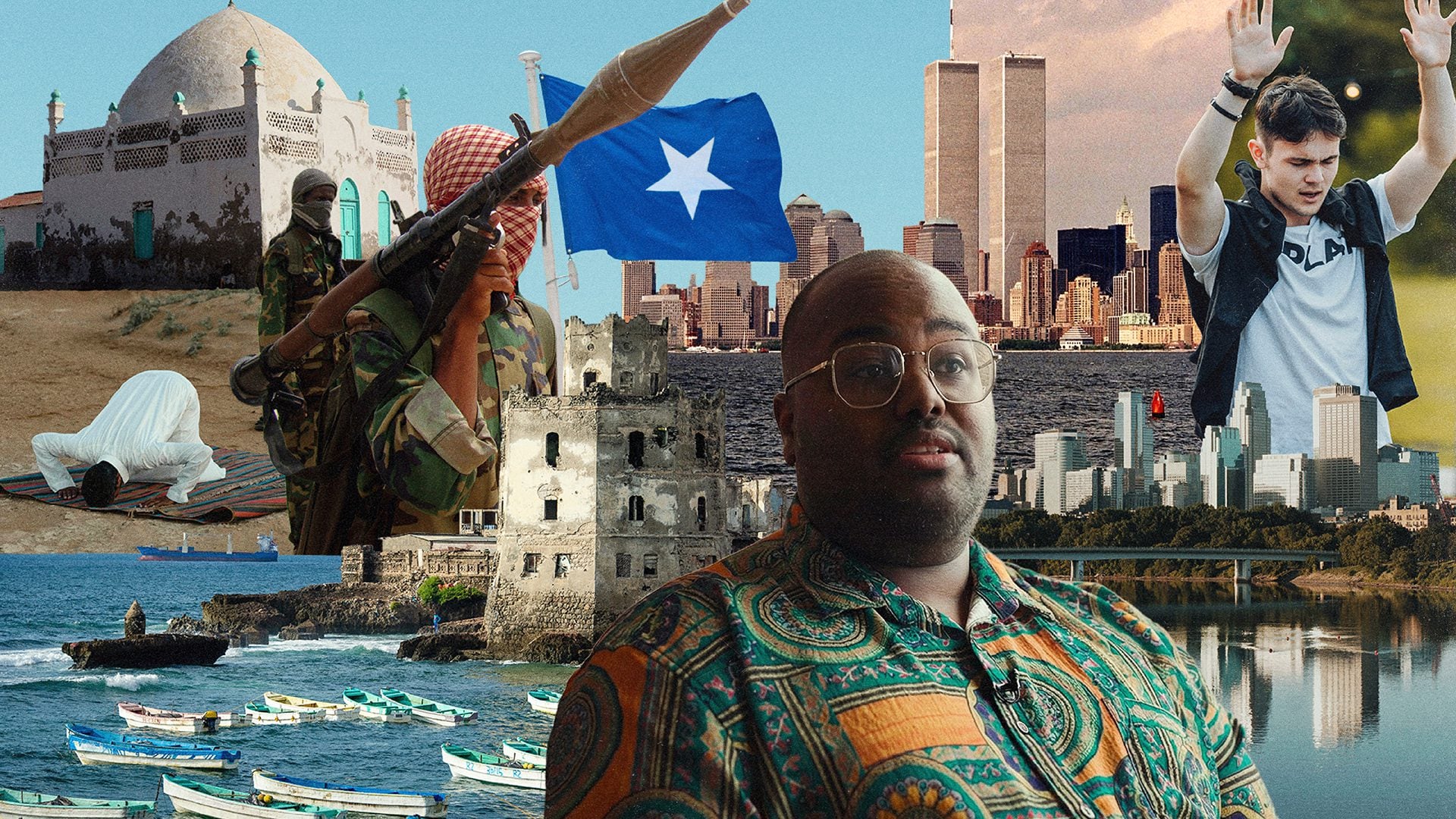

Sometimes the biggest changes start with the smallest invitations.
When a Christian teenager in Minnesota invited his Muslim friend to youth group, he probably didn’t realize he was inviting his friend to come and die.
But also, of course, to come and live.
That’s what happened to Osman a decade after his family fled war-torn Somalia—a nation where Christians are rare and conversions carry a death sentence. In a failed state where life expectancy for males is 51-years-old , the persecution of Christians is second only to North Korea.
Nik Ripken, a missionary who served in Somalia in the early 1990s, wrote: “Mogadishu at that time reminded me of an Old Testament world that did not know Jesus and had never been exposed to the Son of Man or His message. Baal, Goliath, and Nebuchadnezzar would have been right at home in this world.”
That’s the world Osman was born into. But a different world awaited him, and Jesus was pursuing him.
After his family gained refugee status and eventually settled in Minneapolis, Osman settled into a rhythm of school, sports—and Quran school. Every weekend, his parents paid for him to spend hours with an imam, memorizing the Quran.
The work was difficult, but it led to a free trip to Saudi Arabia for the Hajj, one of the five pillars of Islam. Osman met Muslims from all over the world and he came back with a new passion: He wanted to reach his unreached friends with the message of Islam.
WHEN THE TABLES GET TURNED
Osman’s zeal came during a tough moment for Muslims trying to promote Islam. It had only been a year since the 9/11 attacks. Osman found himself explaining why he didn’t believe in a violent form of Islam, but also excited that people were willing to talk about religion.
“I grew up in that era of, it’s okay for me to talk about my faith openly, and I’m not going to offend people, because people are already offended and they’re already asking,” he remembers.
“And so that made it easier for me to have conversations with my best friend who was a Christian.”
When Osman’s friend, Adam, invited him to attend his youth group at a Christian church, Osman saw the perfect opportunity to proselytize Christians with the message of Islam.
Except, the script flipped.
Osman found himself drawn to the warmth of Christian fellowship and intrigued by their prayers: These Christians were talking to God like a Father who loved them, not a master to be feared.
He started reading the Bible, tearing out pages he disagreed with, but unable to dismiss the message he saw running through it: Jesus really is God. He really is the only one who can save people from their sins.
Osman went to Adam’s dad and told him he had questions: “That began a three year journey.”
The journey eventually led Osman to a cold Minnesota lake on a Sunday afternoon. He had embraced Christ as Savior and wanted to be baptized, but feared his family learning about his conversion from Islam. Osman was still attending church secretly.
So, he asked to be baptized at a lake, away from the church. Four hundred church members showed up.
“So the adoption into the family of Christ had a physical representation for me. And that was beautiful,” he says. “What I thought was going to be a lonely moment in a Minnesota lake ended up being a beautiful moment.”
But hard moments were ahead.
WHEN YOU REALIZE YOU’RE BOTH DEAD AND ALIVE
When Osman’s family found out about his Christian faith—and that he was serious about it—their message was swift and direct: “They said, ‘Take whatever you want, you’re never coming back,’” he remembers.
“So, I got my passport and my social security card. And then my whole extended family called that summer and told me I’m dead to them in their eyes. I died in 2008.”
But Osman was also more alive than he’d ever been.
New life in Christ brought him freedom from guilt and sin and eternal death. And it’s brought him a desire to share that good news with as many people as he can, including Muslims who are interested in learning more about Jesus, but afraid of the cost of following him.
“So, I share my own personal story of how I thought I was losing nine people, but I didn’t realize I was gaining 400 and even more than that,” Osman says. “And so when I broadened my scope of what my family Christ looks like, that loss seems so minuscule. It doesn’t mean it doesn’t hurt, of course, but it gave me better clarity.”
Osman hopes his story will also give other Christians clarity about sharing the gospel with people they might think are too hard to reach.
“A lot of people think it’s difficult to reach to Muslims,” he says. “One, I don’t think they understand how powerful God is to transform hearts. And a lot of the times they’re just waiting to hear the gospel.”
Often, that can start in simple ways: Be a friend. Extend an invitation to dinner. Be curious about others. Welcome them in.
That’s how it all started for Osman.
“Christ said how we love one another is what makes us disciples of his,” he says. “And so we need radical obedience to God’s word, but also our radical love for others is what will draw people in.”
Steven Morales:
In the early 2000s, four teenagers from the same mosque got on the plane and headed to Saudi Arabia for the Hajj. They weren’t on vacation. They were on a pilgrimage, the pilgrimage, Mecca, one of the five pillars of Islam. If you’re Muslim, this is something you’re expected to do at least once in your life. And these guys, they were doing it in high school. Today, three of those teenagers are imams. And the fourth, well, he actually became a Christian, and that’s significant because of where he was born.
There’s not a lot of Christians from Somalia and for good reason. For many Muslims, especially Somalis, leaving Islam for Christ can cost you everything.
Osman:
My parents said, take whatever you want, you’re never coming back. So I got my passport and everything, my social security card. And then a whole extended family called that summer and told me I’m dead to them. In their eyes, I died in 2008.
Steven Morales:
To understand how Osman got to this place, you actually have to go back three decades, back to when things got dark in Somalia.
Osman:
I left when we were five. And so the sad reality is Somalia’s government imploded and it just crumbled. And in that vacuum, warlords came in. There’s a really, really, really good movie depiction of what my childhood looks like and that’s Black Hawk Down. And so because of just the conditions of how worse and worse it was deteriorating, my family made the decision we have to leave. We had three choices. So you can either go through the country and try to make it to the Kenyan border.
You can try going up to Somaliland and across to Yemen, Oman, or Saudi Arabia, which a lot of Muslims or Somalis did. And then your last choice is what we did was stay by the coast on a boat and then try to make it to Kenya that way. We got on the boat. It was this three day journey. Second day, we hit choppy water, which caused the boat to flip over. My dad grabbed my mom who grabbed my younger brother, and then my two older sisters grabbed me and my younger sister, and that left my twin brother out. And he sadly drowned and died that day.
Jamie Dean:
What was your brother’s name?
Osman:
Muhammad. He was older.
Steven Morales:
Despite this huge loss, the family had to keep moving. First, they went to a refugee camp in Nairobi, then to a friend’s home in Cairo, then to an aunt who lived in Paris. When the refugee status came through for the US, they eventually ended up in Minnesota, which was a pretty big adjustment.
Osman:
When we moved in, a blizzard had started. And what was funny is we didn’t have a word for snow. So I kept telling my parents white devils are falling from the sky.
Steven Morales:
But the family settled into a pretty regular life. Dad went to work. The kids went to school, competed in sports, got part-time jobs. But also twice a week, the siblings took Quran lessons, 11:00 AM to 4:00 PM every Saturday and Sunday, memorizing the Quran.
Jamie Dean:
You must have memorized a lot of the Quran.
Osman:
Yeah, all of it.
Jamie Dean:
You memorized all of the Quran?
Osman:
Mm-hmm. Two hours and 36 minutes for my restitution. I made two mistakes, one at the beginning, and then I made one three pages from the end, so I had to start over. Yeah, I got a free trip to Saudi Arabia out of it.
Steven Morales:
And that brings us back to the Hajj and the four guys from the same mosque embarking on their pilgrimage.
Osman:
Yeah. So I did my normal Hajj. I did walk them around the Kaaba. So it was really, really eye-opening to see how big the faith that I was professing was. But my desire coming back was I had a best friend who was a Christian who kept inviting me to a thing called youth group. And so I figured the best way that I can influence Islam was to go and reach them and proselytize them.
Steven Morales:
But it wasn’t the easiest time for Muslims to proselytize in the US.
Osman:
So I grew up in America when 9/11 happened. And so I saw the anger that a lot of my friends were experiencing, but in America, it was the hostility towards Muslims started to rise. And so there was a lot of anger to respond that that’s not us, that’s not what we believe. People would be like, “Well, if you don’t agree with what they did, what do you believe?” Kind of conversations are starting to happen. So I grew up in that era of it’s okay for me to talk about my faith openly and I’m not going to offend people because people are already offended and they’re already asking.
Steven Morales:
But there was a catch. Osman didn’t tell his parents or his imam that he was planning to go to church, and that would be a really big deal later on. But for now, he starts going to youth group with his friend, Adam. They do a service project, go on a scavenger hunt, and then he gets talked into going to this thing called See You at the Pole.
Osman:
God was using that moment to open my heart and my mind to a personal relationship with him because I kept referring to him as father, which was blasphemous in my opinion as a teenager. But the language was a child talking to their dad, and so it really was off in my heart. And lo and behold, I take the Bible home. I read it cover to cover. I have a lot of questions. The first thing I do is take it to the mosque and ask my imam. I’ve never been struck in the face by my imam until that moment when I brought a Bible. And so I figured I can’t get an honest response from my imam, so I’m going to do the best thing that I can do. And that is to take it to Adam’s dad to ask him, “I’ve read this cover to cover. I’ve ripped out pages because I don’t think they’re accurate until I got to Jesus and I have a lot of questions. Can we meet?” So yeah, that started a three-year journey.
And then once I started to look at Islam with more criticism and as a neutral party rather than this is my cultural identity, there’s a lot of flaws that start to come up. It ultimately started with me starting to attend church secretly. But what that did for me was it exposed me to worship, which is unique in Christianity, and then also preaching for the first time where someone was explaining the connections between the Old and New Testament. So I just wanted to know, if I were to sum up Christianity in a simple statement, what is it? It is a love story of God desiring to redeem his people back to him. And so what is that redemption story? And so my own conclusion is I want to follow Jesus.
I was ready to give up control, trust God to take the lead and to set the track before my life, and I don’t control it. And what was beautiful for me was I have a family of 10 and I thought I was losing all of them and I was going to be alone. But on my baptism, there were 400 people who came to see me be born again as a new child of Christ. And so the adoption into the family of Christ had a physical representation for me and that was beautiful. What I thought was going to be a lonely moment in Minnesota ended up being a beautiful moment. So yeah. Yeah, so for me, I accepted I was going to be dead. To apostate in Islam comes with death sentence. If you live in a Muslim majority country, so at that point I already accepted if I die, it’s worth it.
Jamie Dean:
So did you think they might literally kill you?
Osman:
Mm-hmm.
Jamie Dean:
You really did?
Osman:
Mm-hmm. Yeah.
When people ask, that seems so radical, why would a family kill their child? That makes no sense. Let me give you context. The way that Islam teaches is that you have an angel on your right side and an angel on your left side. And the angel on the right side writes everything good you do, and then the one on the left does everything bad you do. If you notice Muslims praying during their prayer service, when they end it, they literally look to their right and their left and give each of the angels a blessing. These two books are put on a scale and which whatever one you’ve done more good or bad, that’s where the scale goes.
So to my parents, I’ve been alive for 18 years and I’ve been living righteous and I’ve just made a decision to leave Islam. If I die in that moment, they have a better certainty that I will not be separated from Allah and in damnation that all the good could be outweighed. Versus if they let me keep living, I have opportunity to continue to sin and follow and literally go to hell. So to them, that is the most loving thing they can do is stop me from going to hell and die so that I could have at least heaven for now. So what a lot of people think is a radical belief system is actually what they consider to be the most loving thing to do, which is such a broken religion that a parent would kill their child thinking it’s the most loving thing to do.
Steven Morales:
Osman’s parents didn’t choose to kill him, but when they found out he had become a Christian and when they saw he was serious about it, it did lead to a kind of death.
Osman:
My parents said, “Take whatever you want, you’re never coming back.” So got my passport and everything, my social security card, and then my whole extended family called that summer and told me I’m dead to them. In their eyes, I died in 2008.
Jamie Dean:
And so you lost everything essentially?
Osman:
Yeah. Two parents, seven siblings, 50 relatives.
So in Christianity we teach that we are a family in Christ, and I took that literal. And I tell people who want to minister to Muslims, like really count the cost because you are asking potentially this person not only to potentially lose their life, but lose everything. A lot of people think it’s difficult to reach to Muslims that one, I don’t think they understand how powerful God is to transform hearts, and a lot of the times they’re just waiting to hear the gospel. There’s three things that Muslims wrestle with before they come to Christ, and there’s three things that they wrestle with after they become a new believer. And the three are, one, the divinity of Christ. How can you be both man and God existing in the same being?
Two, the substitution. How is it that my sins are being accredited to someone else and their righteousness accredited to me? And lastly, it’s the cost. I will lose something in order to believe this doctrine. And so they can accept his divinity because there’s proof of it in the Quran. They can accept his substitution. Of course, if he is God, then of course he can take sins away. But the cost will be like, okay, this is going to cost me too much, so they’ll turn away. And then there’s the aftermath of when they become a new believer is the one, the fear of I was once going to heaven, now I’m going to hell. And there’s two, I was part of a tribe, now I’m alone. And three, the guilt of, I made a decision, now my family will be shamed by my community because of my choice.
So I share my own personal story of I thought I was losing nine people, but I didn’t realize I was gaining 400 and even more than that. And so when I broadened my scope of what my family in Christ looks like, that loss seems so minuscule. It doesn’t mean it doesn’t hurt, of course, but it gave me better clarity. I long for and I pray for my family to come to know Christ and one day he may restore that, but if he doesn’t, that doesn’t mean he’s not perfect and he’s not loving. It just means that this is the cost of my testimony where others may have their emotional stake, finances or substance abuse, that that’s their story, mine is my family. So yeah.