The Untold Story of Christianity in Morocco
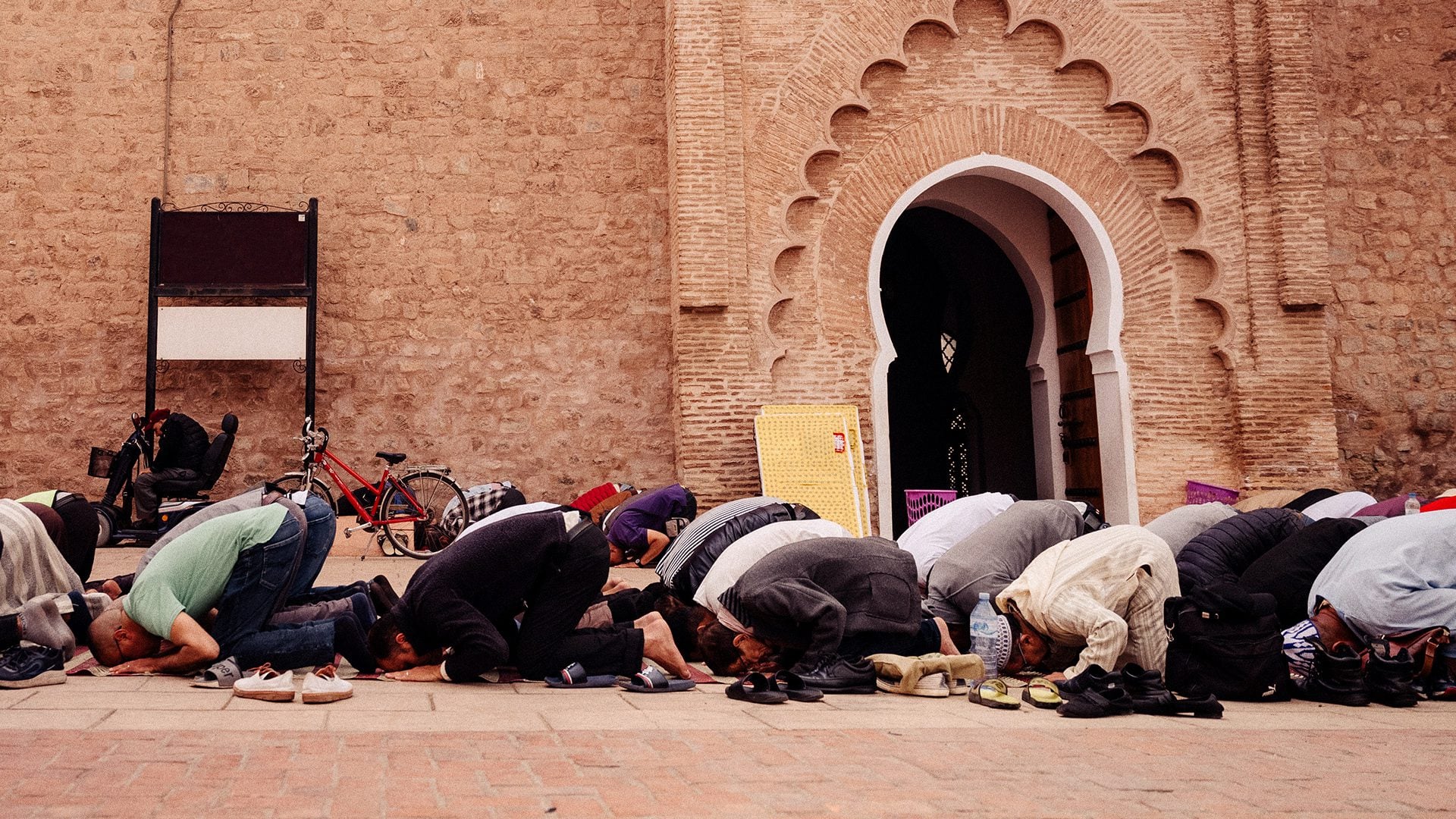

Believe it or not, Morocco was not always Muslim. Although roughly 99 percent of the population today identifies as Sunni Muslim, history tells a far more layered story. Understanding that past is essential to seeing how the gospel is quietly reshaping lives in Morocco today—not only among Christians, but among Moroccans as a whole.
Morocco sits at the northwest corner of Africa, bordered by both the Atlantic Ocean and the Mediterranean Sea. It occupies a literal crossroads—between Europe and Africa, sea and desert—and it has long functioned as a cultural, religious, and political meeting point.
Long before Arab armies arrived in the seventh century, this land was inhabited by the Amazigh people, whose name means “free men.” For thousands of years, the Amazigh lived with their own languages, customs, and religious practices. Judaism also arrived early, as Jewish communities fleeing persecution found refuge throughout North Africa.
Christianity followed soon after. When Morocco was part of the Roman Empire, the gospel reached Amazigh communities around the second century A.D. As Christians lived among them, many Amazigh—particularly slaves and rural farmers—willingly embraced faith in Jesus.
All of this predates Islam by centuries.
When Arab Muslim armies expanded outward from the Arabian Peninsula, they brought not only a new culture but a new religion enforced through conquest. By the early eighth century, Morocco had fallen under Islamic rule. Amazigh populations were absorbed into Arab-led expansion efforts, including campaigns into Spain. Over time, it became clear that Islam demanded submission not only to God, but to a new religious and political order.
Gradually, Christianity, Judaism, and indigenous Amazigh religion were pushed to the margins. Conversion to Islam became a matter of survival. By the seventeenth century, Morocco’s identity as an Islamic state was firmly established under the Alawi dynasty, which still rules today and claims lineage from the prophet Muhammad.
That legacy continues in the present. Morocco’s constitution declares Islam the official religion of the state. There is no meaningful separation between religion and government, making life difficult for Moroccan followers of Jesus. Christian organizations are routinely denied legal recognition. Churches cannot officially exist for Moroccan believers. Surveillance is common, and pressure is constant.
And yet, the gospel continues to move.
Moroccan Christians who came to faith decades ago describe watching the church grow quietly under increasing scrutiny. One believer explained that while control has intensified through phones, cameras, and social monitoring, it has not stopped the spread of the gospel. In many cases, pressure has produced curiosity. Islam discourages questions, he said, but Christianity invites them—and that invitation has proven powerful.
Some estimate that more Moroccans have come to Christ in the last thirty or forty years than in the previous thousand.
Migration has played an unexpected role. Morocco has long served as a transit point between Africa and Europe, and nearly a million Moroccans now live in Spain. As people move, so does the church. House churches form and dissolve. Communities scatter. Yet believers can now be found in every major Moroccan city.
I once stood in Jemaa el-Fna, one of Morocco’s most famous public squares—alive with music, markets, and color. In its midst stand the remains of an unfinished mosque, abandoned centuries ago. Locals call it the Ruined Mosque. The image lingers.
History shows that when religion is built through coercion and force, it eventually collapses. Christianity itself has failed whenever it traded peace for power. But that is not the way of Jesus.
The gospel does not erase cultures. It redeems people within them. It does not demand submission by force—it offers freedom through grace. And that is why, even in a land long shaped by conquest and control, the quiet growth of the church in Morocco should not surprise us.
Not everyone in North Africa is Arab.
Not everyone is Muslim.
And not everyone is far from the gospel.
Steven Morales:
Believe it or not, Morocco was not always Muslim. And even though the population of the country is 99% Sunni Muslim, history tells us that there’s more to this place than just its majority religion. Islam came to this part of Africa during the era of conquests in the seventh century. And the past just might be the key to understanding how the gospel is changing the lives, not just of Christians, but all Moroccans today.
So Morocco is located in the northwest corner of Africa and it’s bordered by the North Atlantic Ocean and the Mediterranean Sea, which means it’s not just at the crossroads between Europe and Africa, but also between the ocean and the desert sands. And that’s what we’re going to go check out right now.
Does this landscape remind you of anything? How about now? In Dune, the people of Arrakis are called the Fremen, and many believe that the author of Dune was heavily influenced by the original inhabitants of this land, the Amazigh, which means free men. For thousands of years before the Arabs arrived, it was the Amazighs who inhabited North Africa, and they still make up a large part of the population in Morocco today. But when the Arabs arrived, they didn’t just bring their culture or a new people group with them, they brought and forced their religion.
We’re in Fes. It’s an ancient city here in Morocco, and that right there is Al-Karaouine, the oldest university in the world. And so you’d think if the oldest university in the world is Muslim, then Morocco must be a Muslim country from the beginning, right? Well, we actually have to look a little further back. Long before the Middle East and North Africa became known as the Muslim world, there was actually a Christian population right here in Morocco among the Amazighs after the Gospel came to the country around 2 A.D. when it was part of the Roman Empire. Before that, Jews had fled to Morocco in search of safety. And on top of that, the Amazighs have their own polytheistic religion based on the Phoenician and Punic deities.
As Christians settled in Morocco, Amazigh communities witnessed their faith and many became Christians in return. In particular, when Amazigh slaves and farmers in rural areas of Morocco heard the gospel, they willingly and eagerly placed their faith in Jesus. Then a few centuries later, Muhammad grew a following and started building an empire, leading to the Arab conquests, which is when Muslim Arab armies from Saudi Arabia invaded countries in Central Asia and Africa, and they even reached Spain. During the conquest, Arabs took over land in peoples like Morocco of the Sasanian and Byzantine Empires, who were already weakened and had their resources exhausted after decades of war with one another.
The zeal for conquering neighboring lands had always been interwoven with Islam since the start. So in the early eighth century, the Amazighs actually joined the Arabs in their conquest to take over the Iberian Peninsula, expanding Islamic control into Europe. But this didn’t go exactly the way they thought it would. The word Islam literally means submission to God, and the Amazighs would quickly learn that Islam is a religion that forces its people to submit.
As a result of the Arab conquest, many of the cultures and religions they conquered were wiped out, including that of the Amazighs. Persecution followed, forcing the people to give up Christianity, Judaism, and any other religion and turn to Islam. Furthermore, identities shifted from Amazigh and Moroccan to Muslim. By 1666, Morocco’s identity as an Islamic nation became firmly established with the Alawi dynasty, and this Islamic monarchy still rules today. The Moroccan royal family is even said to be descended from the prophet Muhammad himself.
Even though some efforts to bring back the original cultures have been made, starting with small things like street signs not just being in Arabic but also including the Amazigh language, Morocco is still closed off to Christianity. According to the constitution, Morocco is a sovereign Muslim state, making Islam the nation’s official religion. There’s no separation between religion and state here, which makes things difficult for anyone who isn’t Muslim. The Moroccan Association for Religious Freedom committed to defending religious freedom through change in Moroccan legislation. And they were inhibited from registering by the Ministry of the Interior, claiming that the association prejudices Islam. The Ministry of the Interior also refused to register the Moroccan Christian, Shiite, and Ahmadi associations. And yet the Moroccan Constitution grants everyone freedom of expression, thought, assembly, and the state guarantees every individual the freedom to practice their religion. So where does that leave Christians?
Hidden Christian in Morocco:
When I came to the Lord in the ’90s, we were called by the police many times. We couldn’t have big or small meetings. We were followed everywhere. The control is now, I think, worse than before because there’s control via phone, cameras, and neighbors. They can put trackers in the car and follow you. Everything is controlled. But Morocco is very open compared to the other Islamic countries. Tourists can come, brothers and sisters can visit, but only as tourists, not as Christians. But this is not going to stop us. Many believers are freely sharing their faith and asking people not to follow what their grandparents or fathers were following. The hearts of people are changing, and we are praying for restoration.
Anonymous Christian:
As more pressure is coming, more people are asking questions. The official religion here have been designed to don’t do questions. You do not ask about the reasons of your faith, as it is, for example, in the Christian faith. Real Christianity opened the door for a kind of intimacy with the Creator of all things that none other religious expression is able to offer.
Steven Morales:
This is a friend who has seen God’s work firsthand in Morocco. And there are many signs that things for the church are finally starting to shift.
Anonymous Christian:
So that is becoming very effective for many. Maybe more Muslims have come to Christ during the last 30 or 40 years than during the previous 1,000 years.
Steven Morales:
Morocco has always been at a crossroads between Europe, Africa, and the Middle East. Throughout history, we can see that Arab conquerors weren’t the only ones to come to Morocco. During the Spanish Reconquista, Jewish and Muslim refugees fled here to escape persecution. In the 20th century, French and Spanish Christian immigrants came when France and Spain both established protectorates over Morocco. Morocco has been a melting pot of cultures and religions for centuries. Today, Morocco has close to 100,000 foreign citizens. It’s home to immigrants, many who traveled through Morocco through the Strait of Gibraltar, which connects the Atlantic Ocean and the Mediterranean Sea, separating Africa and Europe by only about eight miles of ocean between Morocco and Spain. And it’s not just immigrants from other countries traveling through Morocco. About 900,000 Moroccans have emigrated to Spain, making the Moroccan community the largest group of immigrants in Spain.
But it’s not just a matter of changing the population. Immigration in Morocco is changing the church.
Anonymous Christian:
There’s a growing impact. Everybody wants to live and have a chance because they are trying to cross the Mediterranean, looking out for new opportunities in Europe. One of the consequences of the large number of immigrants is that sometimes you have some house churches in some place in this country and sometimes half of the congregation disappear. And that wasn’t because persecution. So that might affect what’s going on with the church. But even though you are going to find followers of the Messiah in this country in every one of the most important cities of the nation, there’s still a pretty well-organized pressure coming from the authorities. As more pressure is coming, more people are asking questions. But even though, the church is growing. Silently, but growing,
Steven Morales:
This is one of the most well-known spots in Morocco. There are monkeys, henna tattoo artists, instruments. You can pretty much find everything in this vibrant and busy market that represents the beauty and culture of Morocco. But it’s also known for something not so beautiful, a mosque that was never finished.
During the late 16th century, Sultan Ahmad al-Mansur embarked on constructing a mosque here in the middle of this square, but was forced to abandon the project. It’s called Jamaa el-Fna, or the Ruined Mosque. And it kind of paints a picture of what Islam did here.
You see, when we look back at the past few centuries, wherever Islam goes, it imposes its beliefs through coercion and sheer force. Submission through pressure and power is at the heart of Islamic teaching, and here it’s no different. Christianity and other religions have dwindled to a tiny minority. Now, that’s not to say Christians have a perfect record or that we haven’t done the exact same thing.
Historically, the church has seen many cases were too often people traded peace for power and caused a world of pain for others, all in the name of Christ. But trying to build something by force will always lead to ruin. And anytime the church has enforced submission through power, they’re not acting in line with Jesus’ teaching, but sorely against it. And that’s the beauty of the gospel. True Christianity doesn’t oppress, it sets us free. It doesn’t wipe out peoples or cultures or places. It enters into every culture and wipes out sin, welcoming all people who believe in Jesus to find new life in Him. We have good news to share, and while we do it, it serves us to remember that not everyone in the Middle East or North Africa is Arab and they’re not all Muslim. What’s more, not all Muslims are far from the gospel.