

Q&A with a Missionary in Japan

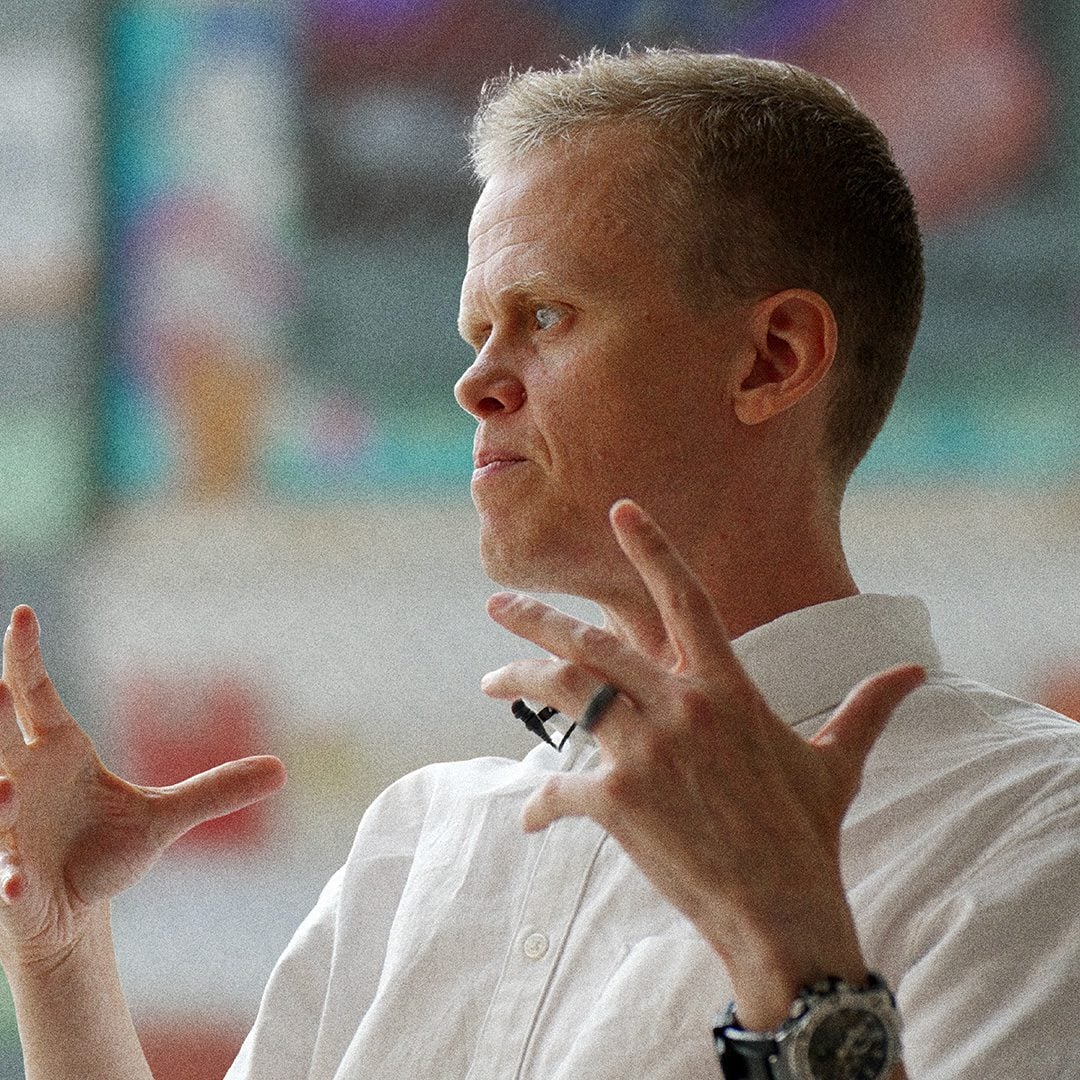
Chad Farmer has lived in Japan for nearly a decade. For most of his life, he never imagined that would be true.
Growing up in church, Chad formed an early picture of missionaries that quietly repelled him. In his mind, missionaries were people who did not quite fit—those who failed to build meaningful lives at home. Chad wanted the opposite. He wanted stability, belonging, and a future that made sense where he was. Though he did not come to genuine faith until his early twenties, even then missions felt distant—respectable, perhaps admirable, but never personal.
That perspective began to change as Chad grew in his understanding of God’s purposes. Scripture revealed a God whose glory extends beyond individuals and borders—a God whose name is meant to be known among all nations. Still, Japan remained outside Chad’s missional imagination. His connection to the country was relational, not theological. His wife, Hiroko, is Japanese, and his visits were shaped by family, culture, and familiarity—not calling.
Everything changed in March 2011.
When a massive earthquake and tsunami struck Japan, Chad and Hiroko awoke to frantic messages and missed calls. Hiroko’s family was safe, but the weight of the crisis quickly spread. At the church where Chad was serving in Texas, people began asking how they could respond. Chad helped organize a prayer gathering—simple, quiet, mostly himself and Hiroko, inviting others to intercede for Japan.
As he prayed, something shifted. Japan stopped feeling merely familiar and began to feel spiritually urgent.
While reading Romans 15, Chad encountered words that unsettled him deeply—Paul’s resolve to preach Christ where He had not been named. The passage pierced him. He wept and asked God why it affected him so strongly. In a way he describes as unusually clear, Chad became convinced: there were people in Japan who did not know Christ—and they would. And his family would go.
He texted Hiroko immediately. They prayed together, weighing the cost. They had a young child, a strong church community, a home, and a future they loved. Leaving was not appealing. But Chad became convinced that God was unmistakably leading them to Japan.
After moving, the scale of the need became impossible to ignore. In Tokyo alone, millions of people pass each other every day—on trains, in offices, in neighborhoods—yet statistically, the vast majority will never hear the gospel in a meaningful way. Many describe themselves as “not religious,” while still participating in rituals, prayers, and ancestral customs, often without asking whether anyone hears them or whether eternity exists.
For many, religion is associated with manipulation, control, or danger. The memory of destructive cults continues to shape public perception. As a result, Christianity often feels threatening before it is ever understood.
That reality shaped how Chad learned to engage people. He discovered that his role was not to argue people into faith, but to open doors—sometimes literally. Conversations about forgiveness, marriage, suffering, or meaning became natural bridges to Scripture. At times, that bridge lasted only moments—reading a single verse in an elevator. Chad trusts that God’s Word is living and active, even in thirty seconds.
The vision guiding his work has remained simple but costly: plant churches and equip believers to make disciples. Chad has watched people wrestle seriously with faith in a culture where standing out can fracture relationships. Following Jesus can bring family tension, social loss, and genuine sacrifice. Yet he has also seen the gospel save, transform, and multiply.
In Chad’s view, Japan is not unreachable—it is underserved.
He is convinced that the scarcity of Christians in Japan is not due to a weak gospel, but to an unheard one. God works through messengers, and there are too few.
That conviction explains why Chad is there—and why he plans to stay.
Steven Morales:
How did you end up as a missionary in Japan?
Chad Farmer:
Well, my name is Chad Farmer and in two days I will have lived in Japan for nine years. I remember I was like four or five years old and we sent out this family as missionaries. And I remember then thinking like, of course they go to Taiwan. They’re socially awkward and it’s difficult to make friends with them or something. And growing up in church and not really believing honestly till my early twenties, but I always just had in the back of my mind that kind of idea that missionary meant you were just different and not in a good way. You couldn’t cut it here kind of thing. And so I was all about trying to cut it here and trying to fit in here and trying to make a name for myself here. And so growing in my faith over the years, I started to learn a little bit more about God’s heart.
It’s not limited to Chad. It’s not limited to the United States. It’s this God who rightly seeks after his global renown and glorification to the ends of the earth and the heavens declare, right? The universe beholds the majesty and glory of God. And I’m learning these things and growing in my faith. And in March 2011, my wife Hiroko and I wake up to all these messages and missed calls and things that’s like, for people that are not cool like us, that’s abnormal. Something was jarring with that. And is Hiroko’s family okay? Are they doing all right? And so my wife who grew up in Chiba here outside of Tokyo, that’s how we found out about the earthquake that happened in March 2011. Thankfully her family was all right. I work at this church in the Dallas area that’s really well known. And so it gets a lot of questions.
Hey, what are you guys doing for Japan? What’s happening? And so myself and a couple other pastors who were there at the time, let’s just start a prayer group. And so it was mostly my wife and I, first Saturday or something of the month, inviting people from all of the campuses of the church at the time and whoever had an interest in praying for Japan to come and pray for Japan. This interesting thing started happening. I have taken many trips to Japan over the years because of my wife and family connection. In fact, my first international trip ever was here to Japan. But it was never coming as this like, it’s an unreached place.
Something should be done about this. It was always, it’s awesome. It’s fun. It’s clean. People are super friendly. It’s great to get around. There’s public transportation. My family lives there. But what started to happen as I prayed was a change of my heart. Let me just open to Romans 15, but Paul writes in Romans, “I make it my ambition to preach the gospel where it hasn’t been heard unless I lay on someone else’s foundation.” But after that, he says, “As it is written, those who haven’t heard will know him, those who haven’t seen will understand.” And I am weeping upon reading this. And I remember just praying like, “Lord, I think I’ve read this before. I don’t know. Why am I reacting this way to this scripture?” And I think as clearly as I’ve ever heard God speak, he said, “Japan. There’s people there that don’t know me who will, and you’re going to Japan.” And I didn’t know what to do.
I texted my wife and I said, “Hey, something really profound just happened in prayer. I think we’re supposed to move to Japan. Would you come up here and pray with me?” And so she left the house with our then not even year old daughter. And we prayed about our family moving to Japan and we both felt this peace of… She never wanted to move back here, honestly. I mean, the community we had at the church, we bought a house, we had the small group in that. We envisioned growing old with one another, raising our kids together with this community of faith that we were growing with, repenting of sin with, all these things. But it took a really profound act of God through his word to help us realize this is where he wants us. And so there’s a lot more I could elaborate on that, but those are the high points of kind of how I personally wound up here.
Steven Morales:
What was it initially like being a missionary in Japan?
Chad Farmer:
It was like I’m around all these people, and I know that as we look out this window, or if you’re on top of a high building, you can look in every bus, every car, every person, even below the ground, there’s people. Every window, every office building, 99% statistically are on their way to a Christless eternity. And daily when you’re around that, when you’re going to buy groceries next to people, I mean, when you’re going to the post office and running in the neighborhood, it impacts you. And suddenly I’m like, I’m wanting to tell people, “I’ve got some good news.” But it became like this tangible desire for me to make disciples. I’d never been a pastor in my life.
I felt like I was still learning Japanese. And so it was a very daunting and intimidating thing. This might be a question you’re asking that’s in the lineup of questions, but we want to plant churches in Japan. And so our vision and hope is to plant 12 churches in the 12 largest cities of Japan. And we’ve said, “Let’s try to do that by 2025.” And so in part of that vision, Tokyo is one of those cities, right? It’s actually four churches in the Tokyo area that we want to plant, 37 million people. There’s actually three, maybe more, depending on how you want to define city, but cities of a million people or more, or four rather.
And so knowing that, knowing my wife’s from the area here too, things started to happen. And it was at a friend’s wedding, a roommate of mine in college who had a wedding here in Tokyo that I came to and I sat in and someone asked me, “Hey, what do you do for a living?” And I was like, “Well, I’m a pastor in a church.” And they’re like, “Really? Tell me more about that.” And it was like, I’ve got this relational clout with a person I’ve never met because we have a mutual friend to where I can enter into a meaningful conversation way quicker than kind of the traditional, I’ve got to just get to know you a little bit that would help in those conversations.
And so I think in my mind, the vision of like, “Wait, could we live in Tokyo maybe?” Started to be a reality. And so my wife, having grown up in this area too, never envisioned raising kids here in the middle of a big city and that stuff. And so we really didn’t see eye to eye on it at first, but uncharacteristically of me, and I would attribute it to the work of the spirit and my heart, I felt a peace to wait and pray and talk and give it time. And when we moved here, I think she was even more on board than I was by that time.
And so we moved to Tokyo in December of 2019. The date we circled on the calendar to plant Mustard Seed Christian Church Tokyo, March 2020. We had that on the calendar for a while. Eric, caught up with you, didn’t it? Yeah. And so we moved here and then the world shut down.
Steven Morales:
What is the religious landscape in Japan?
Chad Farmer:
Your average person here that I think you could meet, if they were to answer you about the question of religion, they would say, “I’m no religion. I just don’t have any religious beliefs.” And to my eyes though, it’s like, “Well, what do you do on the first day of the year?” “Well, I go to the temple and I put in money and I pray.” “Okay, but you’re not religious. Okay. What do you do every October at Obon this holiday where we visit, people visit the graves of ancestors?” “Well, I go to these graves and I pray to my ancestors where we we talk to them.” “But you’re not religious. Okay.”
And so it’s seriously, I’ve tried to use helpful analogies in this. It’s almost like we do this because Japanese people do this. It’s not seen as a religious thing. It’s just seen as like me, who I am, what my people do, therefore we do it. And there’s this separation in the mind of like, this is not religious, it’s Japanese. There’s a difference there. And it’s interesting because I often think of Paul’s sermon where he says, “Men of Athens, I see religious in a great deal of ways.” Whereas here it’s like, “No, I don’t think that’s accurate. I’m not religious even though you did see all these temples and these gods and these shrines and these things, this isn’t religion though.”
And so if you were to ask someone, “Do you believe, for example, that someone hears your prayers?” Or something like that. I think that question probably hasn’t crossed a lot of people’s mind. It’s not like a, “No, I’ve never thought about that. Have you ever thought about eternity?” No, that thought’s never crossed my mind. Deeply religious things often don’t cross people’s minds. And so cultural customs that are very religious are seen not as religious or as religious things. And so entering into a religious thing can be very intimidating. It can be very wrought with fear, right? I mean, there are hundreds of thousands of cults I’m convinced here in Japan. And so I think if the typical Japanese person, it’s only so fair, especially in a really international place like this to do these real broad brushstrokes, right?
But your typical Japanese person would see religion and that idea as oppressive, as brainwashing, as manipulative, as money grabbing, as fill in the blank on cults is what I’ve seen a lot of. I remember I talked to a college student who told me that when he was younger, he watched the news when there were these Tokyo sarin gas attacks by a cult and his mother told him, she said, “Pay attention to this. This is what religion is and this is what religion does. It’s harmful and it’s hurtful.” And so he’s saying this to the Christian missionary guy having a breakfast with him on some weekday morning to be honest with me about his fears and trepidations about religions or opening a Bible with me. It was a really eye-opening experience for me to hear that and even hear embedded in the history. It made me think of Timothy McVeigh and seeing the news and it impacted me and the psyche of America of the Unabomber’s mugshot or something. It felt really similar to that, honestly.
Steven Morales:
How can you share the gospel in Japan?
Chad Farmer:
What I have personally found to be helpful is every situation possible to bring up things about myself, God, or most importantly, the Bible. And so I remember I was talking to this young college student we where getting to know and she said to me, “Hey, your wife said you guys met 13 years ago or so at the time and that must be why you guys have such a good marriage.” And I was like, “Actually, as a Christian, we know that we’re not perfect and we actually fight. We get in arguments and disagreements. And as Christians, we believe in a God that has forgiven us and so we should forgive others. Have you ever thought about the importance of forgiveness?” So I’ve just tried to give a little idea with some scriptural context, hopefully, and invited them into thinking about that.
I remember I wrote the elevator with someone at the church building in Nagoya and she was like, “Oh, I often see this door open and it’s a church.” And I was like, “Yeah, door open.” I was like, “Do you want to see it?” She’s like, “Could I?” So she came in and there was a Bible-
Steven Morales:
A literal open door conversation.
Chad Farmer:
Yes. And so she noticed my tattoo and she asked me, “What does that mean?” And so I told her, “Well, it’s from this book called the Bible. Have you heard of the Bible?” “I think I’ve heard of that. Yeah.” “On the Bible, there’s this book called the Gospel of Matthew, in the sixth chapter, verse 33. In fact, there’s a Bible right here. Can I open that and just read that to you?” And so I read to her Matthew chapter 6:33 in Japanese and she pauses and she goes, “That is deep.” One verse, provoking this deep thought that I think felt overwhelming to her.
We’re talking about righteousness, we’re talking about the kingdom of God, that’s a lot to think about so quickly and have a nice day. But here’s the thing, I know and believe that the word of God is living, it’s active. I know that it’s able to equip the believer for every good work. And so if it’s an elevator ride that’s 30 seconds and I get the chance to share the word of God with someone, that’s a good work that I trust that God’s equipping me for through his word to do. And if I want someone to take something from me, it’s not Chad’s words, it’s the word of God. And so how can I get people to engage there? How can I get people to hear that, that message of the word of God and what Christ has done?
That’s what I want to do. So I found the helpful techniques being like, well, as a Christian, there’s like this little bit of kindling I can do to lay a groundwork of understanding for you of Christianity that you might be perceiving as religion, but there’s going to come a point I pray and hope where you’re going, “This feels a little different.” And with some people, it’s like, “I’m going to jump right into this. ” Like the guy who tells me, “I went to a Christian kindergarten.” “Oh, well then you know the gospel, which is, right, but you knew that. “It’s like, “No, I didn’t know that.” God did what now?
Or just the approach I want to cater differently to different people, right? And this is what we see in Acts too, right? You see going to the synagogue, we’re going to open the scriptures. We’re going to talk about the Messiah who they’ve been waiting for. Going to Athens, we’re going to talk about these things we’ve seen and correlate that to the God who doesn’t live in temples made by human hands. We’re going to talk to these farmers and go, “Hey, you know that your crops, how they grow. You ever wonder why that happens? God. Let me tell you about him.” There’s this approach that we can change and cater to the person. And so that’s what I want to do, but centered in the word of God, right?
Steven Morales:
Do Japanese people know about Jesus and the gospel?
Chad Farmer:
People have a general understanding of Christianity, may have heard the word Jesus, may have seen a Bible, may have read once or twice, but much like the Ethiopian eunuch would say, “Well, how am I supposed to know what this says unless someone guides me?” And so there’s that for sure. But I think if we’re to say in general, I think it said that something like in the upwards of 80% of Japanese people are likely to never meet a Christian. At the church in Osaka, there’s a story of a man who came to church and at the end of the sermon, his mid to late 60s who was in tears. And so pastor who preached that sermon at that church, I think rightfully knew if you see that, it’s probably a good time to go talk to someone. And so he went and talked to this man who said a lot of things, but I think the most impactful thing that he said was, “My whole life, I knew there was a God and I’ve been trying to find someone to tell me about it,” and he’s in tears because he heard this.
And so we’ve tried to say, I’m diverging from your question, sorry, but we’ve tried to say, “How much longer do people have to go an entire life, lifetime into their late 60s before they ever come in contact with a believer?” This guy, Buddhism, cults, Jehovah’s Witnesses, he tried everywhere, but something wasn’t right. And so he sat and he heard the word of God being preached and he heard the gospel and he’s in tears because he said, “Finally, in my late 60s, finally, how many more people need to go their whole lives without hearing?” And that’s a real burden that we have is just to increase the number of messengers here. You and I have been given by the grace of God a non-negotiable mission in Matthew 28, right? Go therefore and make disciples of all nations baptizing them in the name of the Father and the Son, teaching them to observe all that I’ve commanded.
Well, one of those commandments was just to go make disciples, right? And so we want to equip people here to make disciples. I’m convinced that the reason, one of the primary reasons, I think there’s a lot of reasons, cultural, spiritual and things, but one of the primary reasons why Japan has so few Christians is because people have never heard. They’ve never heard the gospel. They’ve never heard a message to which they could respond and repent in faith. They’ve never been invited to repent and believe in something and be baptized. And don’t get me wrong, there are significant cultural hindrances and barriers that are real and are real difficult, but none of those are more powerful than the gospel of grace through faith in Jesus Christ. I’m convinced of that.
And so these cultural reasons why we, and anywhere in the world, that we give for, “Well, I can’t share Jesus because those absolutely exist here too.” And so how can we help people grow and teach them to observe all that Jesus commanded and share Christ with people?
Steven Morales:
What are the biggest challenges for Christians in Japan?
Chad Farmer:
There are many. We have experienced and seen so many people counting the cost of coming to faith here. So much of Japan and the culture is just built and defined by relationship, right? And so the way I communicate with you, the language I use with you, the amount of eye contact I give you, I mean, there’s really fine minutiae to it too. It’s all dictated by our social distance or our kind of social standing with one another.
And so the way I interact with the president of the company is going to be very different than the way I interact with my brother, which is normal, I get. But here there’s this really pronounced and stringent and strictness to it to where I think to the outsider, it feels like, man, that’s real strict, but it’s a sense of like being really comforting. I know the rules based on any situation I’m in, like I don’t have to guess. I know what we say and how we say it. And I think it’s still stressful and difficult, but you can expect it, right? And so being removed from your group, being removed from that is a very fearful thing that the expression of the nail that sticks furthest out is the first that gets hammered down is it’s a Japanese expression, right? And so think about the impact of being hammered by a nail that’s abusive, it’s hard.
There’s a lot of force there and blunt trauma. That’s like if we stick out from the group, if we do… When you look at how people are dressed, right? Very few people are wearing colors that make you notice them. I see one neon green bag across the street, some red pants behind her, but we’ve got whites, blacks, denims, very much very similar, right? You don’t stick out, you don’t do things different because that’s normal and expected. There’s peace, there’s harmony in that. And so for me to come to the point of making a decision of something that’s distinctly different, something that I know that I’ve heard is actually going to make it so I have to tell my family, I actually might not be able to enter into that temple with you on New Year’s. I know a girl who stands outside every year for over 15 years now.
She still goes, she visits, but she says,” I’m not going to go in. “And our family still doesn’t like that. You’re going to talk to Yumi and Michael Creed, who Yumi’s mom to this day, I think really doesn’t like what they’re doing and she’ll tell you stories about her mom going to the church even. And so it’s like being the cause of stress, of dissonance is a very difficult thing to even consider and think about. It’s a real challenging thing to think through.
A young woman who’s been coming to our church off and on for several months now is from Kyoto. She says one day, “My family works in temples and so I don’t know about this. I believe that God sent his son to die for my sins. I believe that it’s through faith alone that I’ll be saved. I don’t think I could be baptized though because I think yeah, my family really wouldn’t like that.” And so talking to her about that, listening to her in that, trying to lead her in truth in that, trying not to say the silly idea that’s in a lot of places right now of you can have them both. You can have Buddhism and Jesus. You can have Shintoism and Jesus. Jesus says, “No, I alone am the way, the truth and the life. No one comes to the Father through me.”
The exclusivity of Jesus is offensive to many people here. You heard it from Asami that how arrogant are you to believe that you know truth? Who’s to say anybody could know that?
Steven Morales:
Why is Japanese culture so attractive to the world, yet so challenging for the Church?
Chad Farmer:
The more you look at Japan, the more you look at church history here, the more you study the culture here, you see so much unique aspects to it that on this really interesting global scale cause a lot of allure even. Have you ever heard someone tell you like, “Man, I’m just really into Swedish animation. I just got it.” The exports from Japan, like the culture of the-
Steven Morales:
It’s a global…
Chad Farmer:
Yeah, right. And so there’s this real uniqueness to it and I think a real spiritual darkness at the same time that yes, while it is safe, while there’s not violent oppression, we have to ask, “Well, what’s reported as crime?” For many, many years until maybe in recently age of consent being 13. So it’s not a crime that you married this 14 year old, so not reportable on the global scale, we’re safe. What is it in the eyes of God that’s offensive, I think is the more important question to ask or what is breaking God’s law? That’s the most more important thing to ask. And so again, yes, while I think these things are significant and have to be looked at, have to be thought deeply through, have to be addressed with love and care that the Bible commands us all as believers to do. I think I’m convinced that by and large, the reason for the lostness of Japan is because the Christian population here is a flip.
And so God has chosen the foolishness of preaching, this message that we’ve been tasked to share with people and to give with people, how many messengers are here? The work of sharing and of telling is just immense. And so we’ve tried to say, how do we just get the gospel to as many people as we can? How do we get as many people as we can to engage in it? And so I think the prevailing… I mean, we heard it all the time in our support meetings before coming over here. There was always the surprise that people would hear that Japan is so unreached. I had no idea. Hundreds of times, I think I’ve heard people say this and yeah, it really is. But also like, oh, I’ve heard that’s the missionary graveyard. I’ve heard seven years before you’re no longer an impediment to the locals.
I’ve heard all these things, right? And we have instead chosen to say, chosen to believe God’s word more than that, that the gospel really is the power under salvation to those who believe. And so let’s get the gospel to people. Let’s equip the church to get the gospel to people. And we have seen the gospel save people. We have seen by God’s grace alone, people come to faith, repent, believe, and be baptized and grow and share. And honestly, bro, I think to me, that’s the thing. We need more messengers. We need more people telling. We need more people loving Jesus, growing in their faith, being a part of the local church and sharing the gospel of Jesus. We need more churches.
Steven Morales:
What are the challenges of being a foreign missionary in Japan?
Chad Farmer:
Well, it’s an interesting question for the middle class white American, right? What’s it like being different? If you would’ve asked me that when I first moved here, I would’ve been like, “My answer probably would’ve been very different.” It’s interesting. I actually feel like I’ve been able to, as I’ve been here and seen people I love around the world go through struggles that are race-based or the history of racial oppression and things like this. I’m not claiming I get it, but I get it more. I do. I understand what it’s like to be a minority for nine years. I understand what it’s like to struggle in a language.
I understand the temptation that I think missionaries have of placing their value in their abilities because oftentimes missionaries are rightfully sent out because of spiritual maturity, because of acumen, and if they’re coming from places like I was where that’s really praised and even at your neighbor, “Oh, that’s the young man that works at the church. Bless his heart.” Kind of silly, but also makes me feel kind of good. And so when you’re removed from that, no one cares where I used to work here. No one cares who I know. No one cares that I met this person at this conference and I needed that. I needed that. I needed to be brought to a place to where my pride and my ability to make people laugh, my pride and my ability to problem solve.
And when faced in the challenge of doing that in a different language, in a different culture, the Lord needed to show me my grace is sufficient for you. My power is perfected in weakness. I needed to really understand what that meant because this is the will of God for your life and my life, your sanctification, right? 1 Thessalonians 4, that you would look more like Jesus. And he does this by pruning us and taking these things away. And so for me, being the foreigner in Japan, it’s been a journey of humility, a journey of inadequacy of feeling like, what am I doing? I mean, we’ve lost a child while we’ve been here. We’ve gone through terrible hardships and how do you bury a child in this culture? Having to ask and answer these questions when we didn’t see this coming.
All the while being able to say by the grace of God alone that his grace has been sufficient for me. And so I’ve tried to remember that I’m a learner. I never want to say I’ve arrived in speaking Japanese. I never want to say I’ve arrived in learning the culture because I think that’s when the temptation’s going to enter into to stop striving and seeking to be all things to all people in order that I might win some. I know the prideful tendencies of my heart that have derailed me at times and led me to dark places that I needed to confess and repent of.
And so at the same time, there’s this leverage I think I have as a foreigner to endear myself in unique ways to a Japanese person. So remember I was talking to you about the rules of engagement and conversation, right? I can intentionally mess that up, or it’s accidentally most of the time, don’t get me wrong, but to where I actually think it helps someone let their guard down a bit like, “Oh, this is a little bit different. Okay, I can enter into this conversation in a little bit different way.” I heard one missionary use this analogy of like, it’s really, if the faith is like a house, it’s super easy for a foreigner to invite someone from Japan into the living room.
I can walk right out and I don’t know you and just say, “Hey, I’m Chad, what’s your name?” It’ll catch someone off guard for sure. But Japanese people don’t do that to one another, but they’ll be like, “Oh, this foreigner doesn’t get the rules. This is my name.” Or my neighbors, it’s very common to give the greetings in the morning and I could say, “My name’s Chad. We moved here at this time. You may have seen my kids playing. I’m so sorry they’re noisy. What’s your name?” And that’s more so than like, “It’s hot today, isn’t it? See you later.” But I think as a foreigner, I’m given a little bit of a pass for these things and there’s some graciousness that goes in that is helpful for me to be aware of, helpful for me to not abuse and helpful for me to leverage for the sake of relationship and inviting people to take steps towards giving the gospel hearing.
Steven Morales:
What are the unique challenges missionaries face due to Japanese culture?
Chad Farmer:
I think a lot of people struggle with when they get here is the schedule of life in Japan. It’s September 11th today. October 26th was when we had a barbecue set up with some friends who’ve been coming to the church for a while. That’s over a month away. It just got pushed back another week actually. But in nine years, I’ve gotten a little more used to that idea or even Asami knowing that to tell her, “Hey, we got this thing.” Even though she quit her job, even though she’s at home, I got to give her a few weeks notice at least because so schedule-oriented and all those things. So take someone from the context of like, “Just get in your car and go.” Because it’s Thursday, everyone does that. People can feel like I have no community. I have no one here that cares about me.
I have all these struggles and hardships that I don’t think they have the lens to see this is actually because I brought into this a cultural understanding of the outworkings of obedience to the scriptures that don’t necessarily apply in the same way here, but it’s the scriptures that are the same. That’s why my advice is always the same. Abide in Jesus. Abide in his word. You have to be rooted there so that by his grace we can see these things and understand these things and understand how to contextualize in this place and bring the maturity that God has given us, not the maturity that’s been affirmed in us by everyone else. Though that’s nice, don’t get me wrong. I miss it. It’s cool to be told I’m awesome, but I’ve learned over the years that’s actually a detriment. That’s actually a downfall for me. We often know what our idols are when we get frustrated because they’re gone. That’s when we realize, oh dang, that’s an idol. That’s my story.
Steven Morales:
How would you encourage someone who is considering going to Japan?
Chad Farmer:
First and foremost, it’s to prioritize your relationship with Jesus Christ. Read your Bible every day. Pray every day. Repent of sin. Don’t get the priority of the importance of abiding in Jesus Christ, apart from whom you can do nothing out of whack. Because it’s going to derail you when you move somewhere else. And all of these temptations, all of these stresses, all of these difficulties come your way. You have to abide. You have to abide. You have to be reminded to abide when you’re tempted to run away and you forget. I’ve been there. And if you are not now cultivating the habits and the spiritual disciplines of the graces that God’s given you, then you need to. And so I would say prioritize that first and foremost. Your walk with Jesus Christ is the most important thing. Beyond that, start to meet people from the place you want to go.
Chances are they’re around you. Even people from another culture. I find that often I was one of these people too. And in America, I think we don’t seek out opportunities to sit with and understand and get to know people from different places or different cultures. Even though we’re the melting pot, right? Even though there’s still a lot, it’s so segregated. And I realize even in my own life, it was just suburbia stayed in my bubble. I did all these things. And so branching out to meet people, to just ask questions, to invite them to your home for a meal, just getting reps of what it’s like to sit, to listen, to engage with someone from another culture, I think is something that’s really helpful and beneficial, honestly. There’s college campuses, it’s common, right? Student ministries that do international focuses or things like that. I think those are all really great and helpful things.
Find out about work that’s being done in the places that you’re going. Do good homework. Seek wisdom from people who know you and who know your giftings, your contributions to the body and to the church and see where those two things might align. My giftings are this. It’s been affirmed by these believers who know me at a deep level and I’m finding out about this place that could fit. That could help the church there. That could help the impact of the gospel there. I think when you do that sort of thing, it’s really helpful for longevity. But again, there’s going to be dark nights of the soul. There’s going to be deep loss. There’s going to be times when you need to go to the house of someone who just lost a child. There’s going to be these moments and times to where you need to abide and you need to realize all I have is all I know and that’s Jesus. And so if you’re not prioritizing that, I’d say you’ve got your priorities out of whack.
Steven Morales:
What does the West get wrong about Japan?
Chad Farmer:
How many times, dozens, if not hundreds of times I’ve heard, “Really, Japan, I just never knew. I just always assumed.” I’ve just always assumed. I’ve heard that so many times. And so it’s caused me to go, why are we assuming this? What are we equating Christiandom with? Is it billboards? Is it a 401(k)? Is it a two car garage? Is it this? Affluency anywhere in the world doesn’t equate to Christian impact. It doesn’t. In fact, I think Jesus spoke against that a lot. We tend to have this idea that … And I think there’s probably a lot of reasons for this, right? It feels good to meet felt needs, doesn’t it? That’s a reality of just being a human. I helped this person in need. It feels good.
But are we conflating that with actual evangelism? Are we mixing that up with actually telling people, hell is real. Eternity is real and your sin is real. My sin is real. And Jesus dying for our sins is real and his resurrection is real and we need to believe and we need to repent of our sins and follow Jesus. That doesn’t equal… We’ve all got cars, we’ve all got great public transportation, but I can’t help but wonder, and I don’t think it’s unlike a frontal lobe, like conscious level, but I can’t help but wonder if there’s some sort of conditioning or just… I mean, if you think about the flyers that come to your mailbox for people in need or for global missions, right? It’s just unfortunately, and fortunately, don’t get me wrong, because the impact has been helpful in some of these places, right?
But it’s the impoverished child. It’s the, at least according to the United States, the racial minority, it’s like these sorts of things that from a marketing standpoint, from a, where can we get the most bang for our buck? These very uniquely Western and American cultural ideas and incentives are driving to where actually there’s places in the world where slow is okay, where you don’t have to always strive after efficiency. It’s not valued in the culture as much. And so I think there’s this conflation with quick results, quick impact, felt needs being met. Like if I can’t dig the proverbial well, is there really anything I can do there? Well, Jesus didn’t say, “Go dig wells,” though we should.
Where’s the well you need to dig here? And so learning the language here too is hard, right? Learning the cultures. It’s expensive here, man. It is expensive to do ministry in the world’s largest city. That’s just a fact. And so it’s harder. And so ease is something that we seek after a lot, right? Like, “Man, I got a headache. I got that Advil. I got that. This brand of ibuprofen, this brand, this brand, pick your lineup, right? This is just embedded into our culture. Ease is to be sought after. The path of least resistance is to be sought after. Get it real quick.” When you’ve got to raise a million dollars for a space you might only be in for a few years, it’s harder to pitch that. And that’s just the reality. And so the misconception of speed, of ease and all that stuff.
Steven Morales:
If it’s costly to go to Japan, why should we even consider going?
Chad Farmer:
Americans, man. We love money, and there’s so much of it. And if we look at the rest of the world and we look at what does even being wealthier rich mean, right? There’s these websites you can look at with your wealthiness indicator according to the world. And it’s like if you make statistics, right? 73% are made up on the spot. But it’s like, if you were to say, “I make $40,000 a year, congratulations.” You’re in the upper echelon of humanity now in your wealth, but we don’t see it that way as Americans. We don’t see that way often in the West. And so I am convinced, and I’m convinced about wealthy Japan in the same way too. But if God would unleash generosity that crosses denominational lines, that crosses church polity, that says like, “I’m going to reach across this table to you because we both believe in the same Jesus. The same gospel is what unites us.”
Our view on baptism might be different. Our view on the end times might be different. Our view on even, gosh, the council of scripture might be different yet Jesus has saved us both. And so we are brothers, we are sisters, we are the church, and so we’re going to be generous. I would hope that more people catch a vision for the global church, for these people who are, because of the blood of Jesus Christ, more connected to you than your neighbor next door, because for eternity, we’ll be worshiping the same Jesus together. And that’s important and that’s good. They are family. And if more people could understand that, I can’t help but wonder, could more people be more generous? I mean, even in this time that we are in literally right now, and so the economics around the world, the exchange rate is phenomenal to help the church in Japan from US dollars, from a lot of currencies.
These things that I think the church could even take advantage of to say, how can we help fund pastors in Japan? How could we help fund churches that need space? All these things I think is what I would say to people that find it too hard. Did Jesus, though he prayed to the point of nearing death, consider the cross too hard? We serve a God who through unimaginable difficulties for the joy set before him endured the cross. Can we not also endure less Starbucks? Could we not also endure not seeing that movie on Friday night because I’m being intentional with my money to give it to a place that’s desperately in need so that the kingdom of heaven, so that my brothers and sisters could share the message of salvation with a place that really, really needs it? God has given me so much. Could I not give what he’s given me?
Steven Morales:
How are you encouraged by the Japanese Church?
Chad Farmer:
In a really cool and unique way in Japan, I feel like I’ve seen different denominations sit at the same table and pray together. And there’s almost this… I don’t have an answer for this honestly. Is it the desperation? It says like, yes, these things are important, but people are dying. And so can we work together on this? And the desire that I’ve seen in churches to support one another, to pray for one another, to love one another, that I realized after I left a lot of denominational bubbles in the States was really refreshing and really encouraging to my heart. Some say I follow Paul, some say I follow Apollos, but neither are anything, right? Like this idea of like, what if we celebrated what we have in common? What if we celebrated Jesus together first? I love that. And I love doing that and I love encouraging that. And I love it when I get to experience that. And I feel like I’ve experienced that in some really cool and unique ways in Japan.
Steven Morales:
How can we pray for missionaries in Japan?
Chad Farmer:
The answer I always like to give, because I think it will always be an answer no matter when anyone asks that question is, would you pray for opportunities and open doors for my family, for the members of our church, for people in Japan to share the gospel with their neighbors, with their coworkers, that someone would invite someone and they would accept that invitation to church, a church where they would hear the gospel of Jesus Christ and pray for those opportunities, pray for that because this is how the church grows, this is how the church multiplies by people believing and coming to faith.
Purity of the church, this culture where the ideas of God ordained, God created beauties of sex and of marriage and of these sorts of things are just not understood and known. I heard a story of a new believer reading Sermon on the Mount in a Bible study. Jesus talks about lust and this new believer says, “Wait a minute. And so even lustful thoughts, I had no idea. I’ve got to repent. There’s been no historical familial understanding of these things.” And so as the church is growing and being sanctified, I think there’s these issues that come up of following Jesus means I must stop and I’ve got to repent and turn from this. And so prayer for the church in Japan to be growing in its love and obedience to God’s word, I think is really needed and good at any time to pray for. So open doors for evangelism and a growing love and obedience to the word of God.