

A Model For Modern Missions
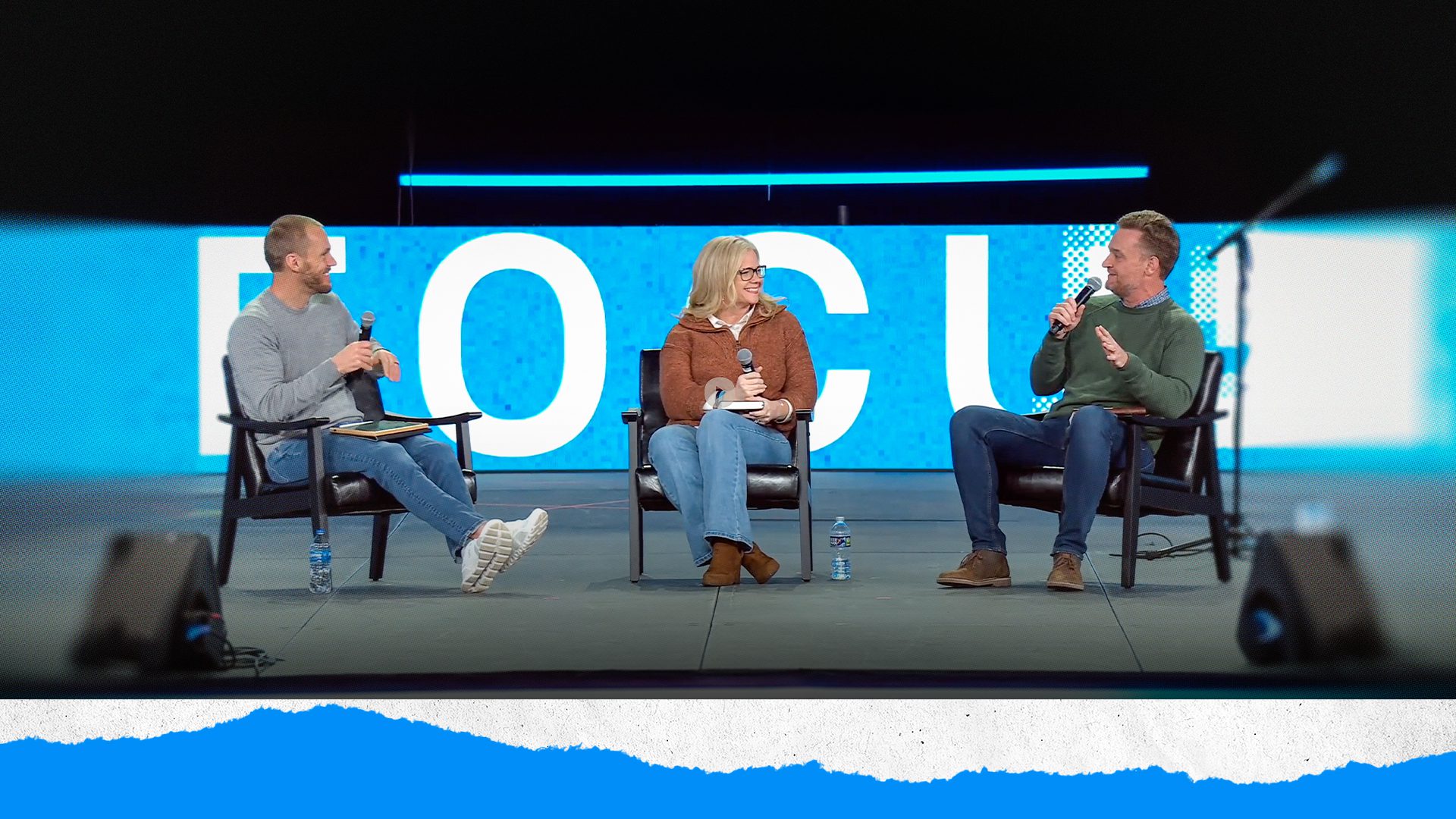

This article expands on key themes from the panel discussion in the video above.
Getting the gospel to the unreached often requires years of learning a new language and adapting to a new culture. This kind of ministry will always be necessary. But did you know there are churches around the world that have the opportunity to minister to people from a multitude of unreached people groups—and they can even do it in English?
Josh and Jenny Manley have served in one of these “international churches” for years, and in this panel discussion at CROSS CON25, they share their story with David Platt. The Manleys had great political ambitions while working on Capitol Hill, but through a series of events and the ministry of their local church, the Lord led this couple from Mississippi to a strategic ministry location in the Middle East.
Josh serves as the Pastor of RAK Evangelical Church, an English-speaking church in the United Arab Emirates. The story of this church is a reminder of the creative and strategic ways God is at work in the world for the spread of his gospel.
A Unique Opportunity
In God’s providence, a ruling prince in the UAE granted land for the building of RAK Evangelical Church, a nearly unprecedented move in this region. People from all over the world flock to this area for better opportunities in business and education, including individuals from some of the world’s hardest to reach people groups and places. And since English is the trade language in this area, there are fewer barriers to sharing the gospel and discipling new Christians.
A Privilege and a Stewardship
Josh and Jenny talk about the amazing privilege of getting to proclaim the gospel to those who have never heard it. They have also been encouraged by their interaction with believers who are originally from persecuted areas. In both cases, their hope is that the church’s influence would reach far beyond its immediate area, particularly given the transient nature of the general population. When those who are evangelized and discipled return home, they may be in a better position than English-speaking Westerners when it comes to spreading the gospel among the unreached.
Josh is also intentional about leveraging the church’s strategic context for other purposes. He wants to serve pastors from the region, many of whom have little access to good biblical reaching and resources. The church can also serve as a training ground for Christians who aspire to be missionaries in the future. It’s rare to find cross-cultural opportunities to minister in English in the context of a healthy church.
It Hasn’t Been Easy … But it Has Been Worth It
While serving in an international church has certain advantages, the Manleys are honest about the challenges. They have had to leave behind comforts and former career ambitions, and the expectations for their kids’ education and sports involvement have had to be adjusted. The loneliness has been painful at times. And while the Manleys have not faced intense physical persecution, Jenny describes the sacrifice as “death by a thousand paper cuts.”
Yet through it all, the Manleys have seen God’s faithfulness. “I know God in ways I would have never known him by walking this path” Josh says. Jenny admits that she was not initially enthusiastic about moving to the Middle East, but God has patiently taken care of her. Her encouragement for those who are struggling with what God has for them is to do what she did— trust him and take small steps forward.
How Might the Lord Be Leading You?
While the story of the Manleys and RAK Evangelical Church is unique, God’s work in and through his people should encourage every follower of Christ. All Christians are encouraged to leverage the opportunities God has given them for the spread of his gospel. Not only are there other international churches in major cities around the world, but there are also many opportunities for Christians to pursue education and work in places where there is little gospel access.
The Glory and Patience of God
Regardless of how the Lord leads, Josh’s closing exhortation is relevant for all who are considering how the Lord might use their life:
I hope you leave here with a massive vision of the glory of God, because for decades that will sustain you and that will fuel you in whatever way you go in life. … Missions is absolutely urgent, and I also want to say: be patient, be in your church, be under elders— formation needs to happen. Be trained theologically. … The Lord is a patient God, and he has been about this work since the creation of the world.
David Platt:
I want to introduce you to Josh and Jenny Manley, who serve Ras al Khaimah Evangelical church. RAK Evangelical Church. And I want to set the stage as you think about how this conversation might, in God’s providence, play out in your life in the days to come. So we’re about to talk about a church, an international church in an unreached part of the world, and one of the things we were praying for together back here is that God might raise up some pastors from this room who will go and either plant or pastor international churches in unreached places around the world. So that’s one potential way God, in his Spirit might use this. Then there are scores of others who God might lead you to take a job overseas, where the gospel has not yet gone, an unreached part of the world.
And you want to be a part of a healthy church in that place. So God may lead you to be a part of a church like this and to be built up and to be involved in building up a church like this as you’re living in an unreached place and working there. So it’s a little bit of a different picture than what we heard last night. It’s the beauty of God’s creativity that he will lead different people in different ways. Last night we heard about going, learning different languages, going to a totally unreached people group, an unreached language group, learning that language, and spreading the gospel to them. May God raise up multitudes to do that, and may God raise up others to do this. And then there’s about a million other ways, God, by his Spirit might lead through this conversation.
But I just want to set the stage. So would you welcome Josh and Jenny Manley with me? All right. They’re married with five children, ages 17 down to six. Originally from Mississippi. So let’s start there. How about Mississippi? Where’s Mississippi in the room?
Jenny Manley:
Our people.
David Platt:
All right, so Mississippi to the Middle East. How’d that happen? Well, how did this happen? Just a little quick question, how did you guys meet?
Jenny Manley:
Well, we grew up in Mississippi an hour apart from each other, but we met when we were both working in the US Senate, pursuing a career in politics. We met and got married, thinking we were going to continue in politics for all of our lives.
John Manley:
We were the first people to the office on our first day of work, and it was magic ever since that day.
David Platt:
Is that the way you remember it?
Jenny Manley:
Mostly. Mostly.
David Platt:
Really.
John Manley:
The Lord was gracious to us. We both had great ambition. We both loved politics. We might still love politics. We went to Washington DC to work in politics. We worked in the US Senate. And in those years, I mean, a guy from Mississippi, Jenny’s much more qualified than I, we make it to the US Senate. We’re working there as aides, and I had a lot of ambition to do something important, do something impressive, make a name for myself in some way, and the Lord used those years in ways I wasn’t expecting, the ways I think Jenny wasn’t expecting to make us rethink ambition, help us to see what good and godly ambition is. And as he took away and stripped away worldly ambition, I was in a good local church. We were growing in the gospel, being able to wrestle with ambition and even maybe desires for ministry in a healthy, good setting under good elders.
I started to see that this impressive world of Capitol Hill and Congress and powerful people, people you’ve heard of that would come through, is stuff that’s very passing and temporary. And I started to see more and more where the action is in the local church. That’s where God is at work, that’s where his glory is seen, that’s where power is. And so eventually we decided to leave our jobs to go train for ministry, and one thing led to another. We got the opportunity to go to the United Arab Emirates. A dear friend of ours, John Fulme,r who spoke earlier at a Global City’s Breakout, called us and told us that land was being given in the northern part of that country by the ruling Sheikh of the Emirate. Maybe I shouldn’t get into all that yet, but that’s a short-
David Platt:
No, it was great. Go for it. Well, yeah, I mean, you did just jump-
John Manley:
I did do that.
David Platt:
… from-
Jenny Manley:
Mississippi to the Middle East.
David Platt:
… to the Middle East, yes. Yeah. But I mean, I love it when you said, “One thing led to another.” I’m sure that it didn’t feel like that in the moment. What are we doing?
Jenny Manley:
It didn’t. But the Lord was slowly working in our lives in this pretty dramatic way that we didn’t realize, but slowly, one step in front of another, we were being sanctified, we were growing less. Our desire to make the Lord’s name instead of ours was growing more. But simultaneously on the other side of the world, the Lord was forging a friendship between an international attorney and a Crown Prince of a Northern Emirate in the United Arab Emirates, so that these two tracks are happening at the same time that this international attorney asked this… Well, the Crown Prince becomes the ruling Sheikh. He’s friends with this attorney. The attorney ends up asking, “Would you give land for evangelicals to have a church building in your land when you are in power?” And he agrees to it. And so that’s happening at the same time we’re doing this, and in seminary, so that paths cross and we end up there. Is that fair?
David Platt:
Oh, good. The sovereignty of God, just yes. I love the way you put that, just orchestrating all of this. And I’m just thinking about all the ways the Spirit might be using, even this conversation, to reorient our understanding of ambition and power and what matters most, which was a total reorientation for you guys.
Jenny Manley:
Yeah. Total reorientation.
David Platt:
And even a redirecting of passion and zeal. And at the same time, may he bring some people’s paths across each other so that to be able to do that together. Then, while the thought, as you were just talking, I was thinking, God, what are you doing right now in this unreached part of the world that’s preparing for what you’re doing right now in this room, in this person’s life that’s going to intersect? That’s a pretty awesome thought. So, all right, so the Sheikh says, “Here’s land for a church”? That’s what happened? Like, “We want a church”?
John Manley:
A modest Evangelical church. We’re given land. We were given the deed. Just so you understand, you can’t buy land for this on the Arabian Peninsula. So think Saudi Arabia to Kuwait, Qatar, UAE, Oman, there are eight Protestant evangelical churches at this point, buildings, on the entire peninsula. So we saw this when we found out about the opportunity. Here’s a place with unreached peoples, and essentiall,y you’re being allowed to establish a beachhead for the gospel. The building is important in that part of the world. It gives you legitimacy, it gives you legality, it gives you visibility, it gives you staying power, and it facilitates a lot of ministry for which we’re very grateful. And we looked at our lives, we really did believe that God’s glory is seen in the church and God’s committed to his glory being known among the nations. And when we received this opportunity, we thought this was a stewardship from the Lord. Establish a place, a church, where we can preach the gospel where there’s no gospel witness. Why wouldn’t we do that? Why don’t we go and try that and see what the Lord might do with it?
David Platt:
Okay, preach the gospel. We heard last night about some places where, in order to do that, you’ve got to learn a language, even bring a language into written form. Just many different challenges with that. How do you preach the gospel? In what language?
John Manley:
It’s a great question. I think Brad Buser is one of the funniest people I’ve ever listened to in my life. I thought to myself, if he did not become a Christian, he would give Nate Bargatze a run for his money. He’s absolutely hilarious. That was excellent. And we need people who are learning a language to go to the frontier, pioneer places where there is no English; you’ve got to learn a foreign language. There are a lot of places in the world where trade languages are spoken. So English is the language of trade and education in the United Arab Emirates.
Jenny Manley:
I think it may be helpful to explain that in the United Arab Emirates, it’s not just the local people that live there. So from the entire Middle East region, there are people who come to the UAE to work or to go to school. So much so that in a city like Dubai, the local people are like 10 to 15% of the population. The other 85 to 90% are from all over the world. So when Josh references people who are from unreached people groups, that’s who’s there.
John Manley:
Yeah. So, where we are, the language of trade, commerce, and education is English, and you can go there, and you can doa wonderful ministry, a gospel ministry in English amongst people that have never heard the gospel, never heard that Jesus Christ was raised from the dead.
David Platt:
And you’re able to, somebody could do that tomorrow.
John Manley:
They absolutely could.
David Platt:
Assuming they speak English, even Mississippi English.
John Manley:
Absolutely.
Jenny Manley:
The best English.
David Platt:
Yes.
John Manley:
And Georgia.
David Platt:
Yes, good call. All right, so tell us the makeup of your church. What does the church look like then?
Jenny Manley:
Yeah, our church looks a lot like the local population. We have, I don’t know how many different countries, but dozens and dozens and dozens of different countries, people from all over the region. I could probably start naming countries, but-
John Manley:
Yeah, the Lord has blessed us with people from India to Ethiopia to Egypt. I wish I could tell you stories. We’ve seen people come to faith from Syria and South Sudan. We’ve seen Afghans come into our church and thrive and grow in the Lord. We’ve seen people come from all over our region and either come to faith or grow in their faith in our church. I’m just thinking of a young lady from Kazakhstan who came to faith in our church and is thriving in the Lord, and her family comes from a majority religion background in the United Arab Emirates. So the Lord’s just been very kind to us to allow us to see the nations in our church.
David Platt:
Do you know the percentage of Americans who are in your church, approximately?
John Manley:
Approximately, probably 20%. In recent years, there was an English-speaking school that uses American curriculum that opened, and we had a number of Americans come to teach at the school.
David Platt:
And then-
John Manley:
Wonderfully.
David Platt:
… are some working there or living? And a lot of these, yeah, a lot of people from different nations are coming to your point, that the marketplace has opened up doors for them to be there.
Jenny Manley:
Education and the marketplace. So people come because they can make more money. A lot of times, people cometo make money and send money back to support their families back home, or it’s just a better economic situation for them to come to the UAE and work, and they bring their families. And then there are Americans who are coming who often, honestly could make more money in America than they could in Ras al Khaimah. But they’re coming to serve the population there.
David Platt:
And some when they’re working, and then even more so, I’m assuming when it comes to education, may be going back to their countries as well. So there’s a transient nature to some of the population?
John Manley:
Very transient, and that’s a great opportunity for the gospel. In a lot of these kinds of cities, people come for a little bit of time. You can pour the gospel into them, see them built up in faith, and the gospel impact spreads as they go back to countries, a number of which we can’t go to, we would not do well in that they can go back to and make a gospel impact.
David Platt:
One side note, just practical application, particularly for university students in the room to steward the influence and the opportunity that God has given on that campus with people from the nations who come, international students who come for a short period of time, sometimes from places where there is little to no gospel access and they’re in a class next to you or in a dorm room next to you, maybe steward those opportunities to reach the nations right across the hall or across the room. So how does that play out sometimes, even with so many locally led or indigenous churches? How does the relationship look between a church like you guys and that picture of ministry?
John Manley:
I think it’s a great question. My hope would be for an international English-speaking trade language church that would be a home, just like any church, to faithful Christians who want to grow in Jesus Christ. I also hope to see our opportunity as a stewardship for the work of the gospel in the wider region that we can pour into and invest in the indigenous church. So hopefully we can establish a church that’s biblically sound, gospel-proclaiming, and it might even be a model to missionaries as they think about church planning that perhaps want to grow in their understanding of good biblical ecclesiology, but also pour into men from the region.
So we are committed to bringing in men from our side of the world and training them, training them up for church planting and pastoring. And we’ve had men from Afghanistan, Pakistan, Nepal, India, Ethiopia, Egypt, on and on come for training, men that want that, not necessarily, most of which cannot get access to the West, to be trained theologically in preaching and ecclesiology that we hope will go back and church plant for the long haul, the long hard slog of ministry in their countries where the need is obviously so great and where they make so much more sense than I do or you do.
We desperately want to see the church of Jesus Christ established in strength in the 10/40 window. And so we labor and invest to that end. I even think about the last few years we’ve been investing through an organization called Simeon Trust in preaching workshops. So whatever you hear about the Middle East, the greatest need in the Middle East is not a peace plan. It’s not the wisdom of the United Nations. The greatest need in the Middle East is the preaching of God’s word. And the preaching of God’s word is more powerful than nuclear bombs or anything. And that’s what can change the Middle East. And so we are investing in more and more preaching workshops, trying to train more Arabic speakers, indigenous speakers to faithfully handle and preach God’s word in a region where there is a scarcity of it.
David Platt:
I love that. Well, I would love to hear who some of the faces or the people are that come to your mind when you think about that picture, the ministry in Ras al Khaimah, and then the effect of that ministry in other places? I’d just love to… Who are the people that come to your mind?
John Manley:
There are a lot of people that come to mind. Zebi comes to mind; he’s from Eritrea. He came to the United Arab Emirates because Eritrea has an economic or a treaty, a cooperation agreement with the UAE, where some of their best students, very few, that’s a very close country, get to leave Eritrea. And they’re brought, they’re dropped off at the Dubai airport, and at that point, it’s a very few, maybe 50 students, 50 to 100, they’re dispersed throughout the UAE. In God’s providence, Zebi on that first day was plucked out and picked to go to Ras al Khaimah. He shows up at our church. He keeps attending. Very young in his faith, unformed, has grown immensely. I cannot tell you the incredible ministry he’s carrying out among Muslims these days. A strong, bold witness to Jesus Christ.
I think of Afghanistan. I think of a brother named Luke. His real name is Nasser, came to faith. He’s the first convert from the Amok people. So if you pray through the Joshua Project, he was the first convert from that people. I think that you pray for that peoples in December of each year. He faced persecution in his own country. He was able to, long story short, he was able to come to the United Arab Emirates, and the Lord brought him there. And then through him and his connections to the house church in Afghanistan, we were able to start to invest in brothers and sisters from the Afghan house church, teaching them things like the Old Testament, systematic theology, and biblical theology. And I can’t tell you what it is for me to preach and to see faces like that in your congregation. You feel you’re, I’m not worthy of this. So it’s such a privilege to serve folks like that.
Jenny Manley:
Well, and through the Afghans, I remember you, through Luke, who was leading an effort to raise up house churches in Afghanistan, but he himself had to flee because the persecution was too great. But he’s in our city from our church, still leading the effort to train these men. So he’s training, he’s pulling these house church leaders out for a week at a time to train them and bringing them here, and Josh and others are training them. I remember you specifically teaching them Revelation, right? And you are saying how powerful it was to teach these men who faced such persecution a book like Revelation, and how powerful that was. They then go back into their house churches. And through that, that led to a longer relationship with the Afghan house churches. And when the Taliban took over, helping some of them get safely out.
And now that a lot of the leaders are out now helping raise up a new generation of leaders in that country, identifying who the new leaders are, how do we train them and equip them to pastor these churches, these young men who face such persecution. They know they’re up against the Taliban. They know what happens when they get arrested and get caught, but they want to serve the Lord Jesus. And so we need to help equip them. So now that’s the direction the ministry has gone, and now that the Lord has provided to us is training up these men and strengthening the Afghan house church. All of that has come about because Luke came to our international church. So to debunk some of the myths about the international church only serving the Western community, this is a prime example of that’s not true.
John Manley:
Yeah, we’ve been able to-
David Platt:
The Lord has opened up, and I know there’s more that you can’t share from other countries, but opportunities to serve the persecuted church in ways you never could have dreamed or planned.
John Manley:
Never could have planned. And it’s a privilege you can’t put a price tag on. I can’t believe the privilege to know and to be able to serve and to see the faith of persecuted believers who have gone to prison or been near death for the name of Jesus, and that they press on, and that you get to serve them in Christ.
David Platt:
Wow. One thing before I forget that Josh mentioned is in December, those of you pray for through Joshua Project, if you don’t have the Unreached of the Day app, I would just encourage you, it’s a simple app, you could just download it very easily and every day there’s an unreached people group that pops up just to pray for, to intercede for. That’s a valuable use of 60 seconds on this device amidst the other hours we spend there to just intercede for unreached people. It’s just a way you can pray. And how awesome is that, God’s answering in salvation? So do you think this can play out in a variety of places in the world?
John Manley:
I do, and it is. And I also would say I don’t, and it isn’t. It is playing out in other parts of the world. So we have an association of churches called Ecclesia International. There are healthy biblically, faithful gospel preaching churches that are in the Middle East, central Asia, Arabian Peninsula to the far east, North Africa that are trade language where the Lord has opened doors for these kinds of churches to be in these cities. And I know that some of you have heard that you’ve got the opportunity, if you want to, even to go to a university and study in these cities in English. They want English speakers to come to their universities and study, and you would have access to unreached peoples when you’re studying at those universities.
So yes, this can absolutely play out in other cities, and it is playing out in other cities. And no. You know what you were hearing last night from Brad about Papua New Guinea? Can’t happen there. There’s no trade language. We need people to learn language and culture to be able to faithfully contextualize in those ways to make the gospel clear. You cannot do this in Afghanistan, North Korea, and Iran. We need brothers and sisters who will labor in those countries, and often it’ll be underground and in secret, but it can, and it can happen. But where it can happen, this is a strategic way to advance the gospel, and we want to steward it.
David Platt:
Another thing Josh just mentioned makes the connection. I don’t know if you’ve explored, but those of you who are either going to college or in college, have you explored opportunities for study for a semester, even or a summer, in an unreached part of the world? Don’t bypass some of the God-given avenues, pipelines that he’s made available for you to go to the nations right where you are that will, yeah, could bear fruit in ways again, far beyond what you could plan or imagine.
John Manley:
And there are agencies here that are wonderful, but what if your company was your agency or the university was the agency that got you over there, and you had a good church?
David Platt:
And some of those universities will help fund that. Will give… I mean, there are countries in the world that will pay you to come spread the gospel there. Now, don’t put that on your visa application, but the reality is that you’re a Christian, this is what you do. You live for the spread of the gospel as you’re studying. Of course, that’s what you do. And in many parts of the world, they actually expect you to share the gospel with them because they expect you to live out your faith.
Jenny Manley:
I will say, just that is another thing about openly being where we are and what we’re doing. When I meet the women from my neighborhood or at our school, or I’m in the community and they ask, “What are you here for?” Because there are so many different people here. I say, “My husband’s the pastor of the evangelical church. Do you know what Christians believe?” And they very much expect that conversation to happen. So I’m not secretly trying to do any, I’m just sharing what I believe, like I would expect that they would share with me. But it’s led to numerous great conversations, friendships, and relationships. And yeah.
David Platt:
Good. All right. We’re talking about, and we’re getting near the end here, but I want to make sure to hit this because we’re talking about all the awesome things God has done beyond what you could have dreamed or planned. I know it’s not been easy along the way. What are some of the challenges that you guys have experienced from the beginning of the journey to now that you’ve seen God’s faithfulness through?
John Manley:
The Lord has been so faithful. Sitting here right now, it’s grace upon grace that God has shown to us. He’s been faithful to us in more ways than we can count. Jenny and I very much thought we would live and work somehow in politics in Washington DC for our entire lives. And the Lord, at an early age gave us some unique and very good opportunities. And I would just say thinking about Garrett’s talk to us all, sermon to us all the very first night, some of the costs that we count. I would say to you, and I know that many missionaries have said this, that I gave up nothing. And I would say in one sense, absolutely, the privilege to serve in labor for the gospel, we give up nothing. On the way there, though, you are going to feel what you’re going to give up.
So I’d say just initially walking away from things that I had dreams about, whether it was to do something impressive or be prestigious in some way, or maybe a financial future that you would’ve loved to have seen be there in the career paths that we were on. But as you walk away, you find freedom in it in so many ways, and the Lord meets you in more ways than you can count in his faithfulness. Loneliness was a real thing. Loneliness has been terribly real at times for us, especially in the early years. And yet I can say on the other side of it, not just that the Lord has been faithful, but I know God in ways I would’ve never known him by walking this path. Jenny.
Jenny Manley:
Yeah, I think there have been times where we’ve known more intense seasons of suffering, times of loneliness or loss of family members that we weren’t there for when they were sick, things like that. But I think a lot more of it is for us has been like death by a thousand paper cuts, just it’s uncomfortable. It doesn’t feel good to live here a lot of times. It’s inconvenient. We’re missing the comforts of living in the West. We have five children, and the opportunities that we thought they would have when we were having children in America. I mean, this seems so silly in comparison to great suffering, but you have these ideas of what your children’s lives will look like, and it includes playing sports and the things that, going to college in America, whatever it may be.
And then you walk away from that. And that sometimes hurts worse than you realize because you’re now asking them to make sacrifices when they didn’t ask for that. So that can sometimes that has sometimes been hard for us. Although on the flip side of suffering as it always is, there’s such a great reward in that as well. And I think our kids would say the same thing about that.
David Platt:
So good. I’m going to ask you guys just one closing encouragement. We’re about to come near the end of this conference, closing part of this conference. Just based on your own journey and our conversation now, but just whatever the Spirit might lead you to say, I would just want to make sure to point out what they shared. We’ve talked a lot about the fruit of the gospel in Afghanistan, in Eritrea, or just in different people’s lives. But I love that both of your answers just pointed to the reward you’ve found in God. The loneliness that’s driven you to him, the thousand paper cuts that have driven you to him. Yeah, he’s the goal. He’s the goal. So what’s one closing encouragement you might give to the brothers and sisters, 18 to 25 plus year olds in this room?
Jenny Manley:
Yeah, when I was 18 to 25, I wouldn’t have been in this room. So it’s so encouraging to see 15,000 of you who are thinking well about missions. I am so deeply encouraged by that. But I have to imagine there are a lot of people here who are super confused and aren’t sure about what this means. And I think you’re my people. I think you’re the people that I really have a special heart for because I didn’t go with enthusiasm. I don’t know that we really covered that. But I went somewhat reluctantly, and I went just plotting one step in front of another. I’m going to trust the Lord for this next day, and I’m going to trust the Lord for the day after that when it comes. And the Lord met me in abundance, in abundance. So much so that I would say I would never want to be doing something else than what I’m doing now.
John Manley:
I’ve had a chance to meet some of you and have conversations. I hope that you leave here this week, and it’s such an intense few days, with a massive vision of the glory of God, because for decades that will sustain you and that will fuel you in whatever way you go in life. But I hope that you leave here with a massive vision of the glory of Go,d and that sets you on a trajectory in your life to labor in whatever you do for God’s glory in the gospel of Jesus Christ.
And as I say that, because I agree with Jenny, I’m sure there’s a lot going on in a lot of your hearts. Missions are absolutely urgent. And I also want to say, be patient. Be patient. Be in your church. Be under elders. Formation needs to happen. Be trained theologically. There are great training opportunities here. You want to go equipped. The Lord is a patient God, and he has been about this work since the creation of the world. He can wait on you. I should take that back. He’s not waiting. He’s actively working, as you think that you’re waiting. So be patient as you wrestle with all that’s going on in your hearing this week.
David Platt:
I want to pray accordingly. But I think one of my, maybe my favorite phrases from this whole conversation was, one thing led to another. Like Mississippi, passion for politics led to DC, led to just so happening to come to work early, and the magic happened, which led to a relationship forming, this local church, which led to seminary, which led to Sheikh saying, “Here’s some land”. Which led to supporting the Afghan church. Only God can write these scripts. So let’s walk in step with the Spirit. One thing leads to another. You may not know the step for 10, 20, 30 years from now, but just the next step, next step…