

Hard to Reach: Japan – Full Documentary
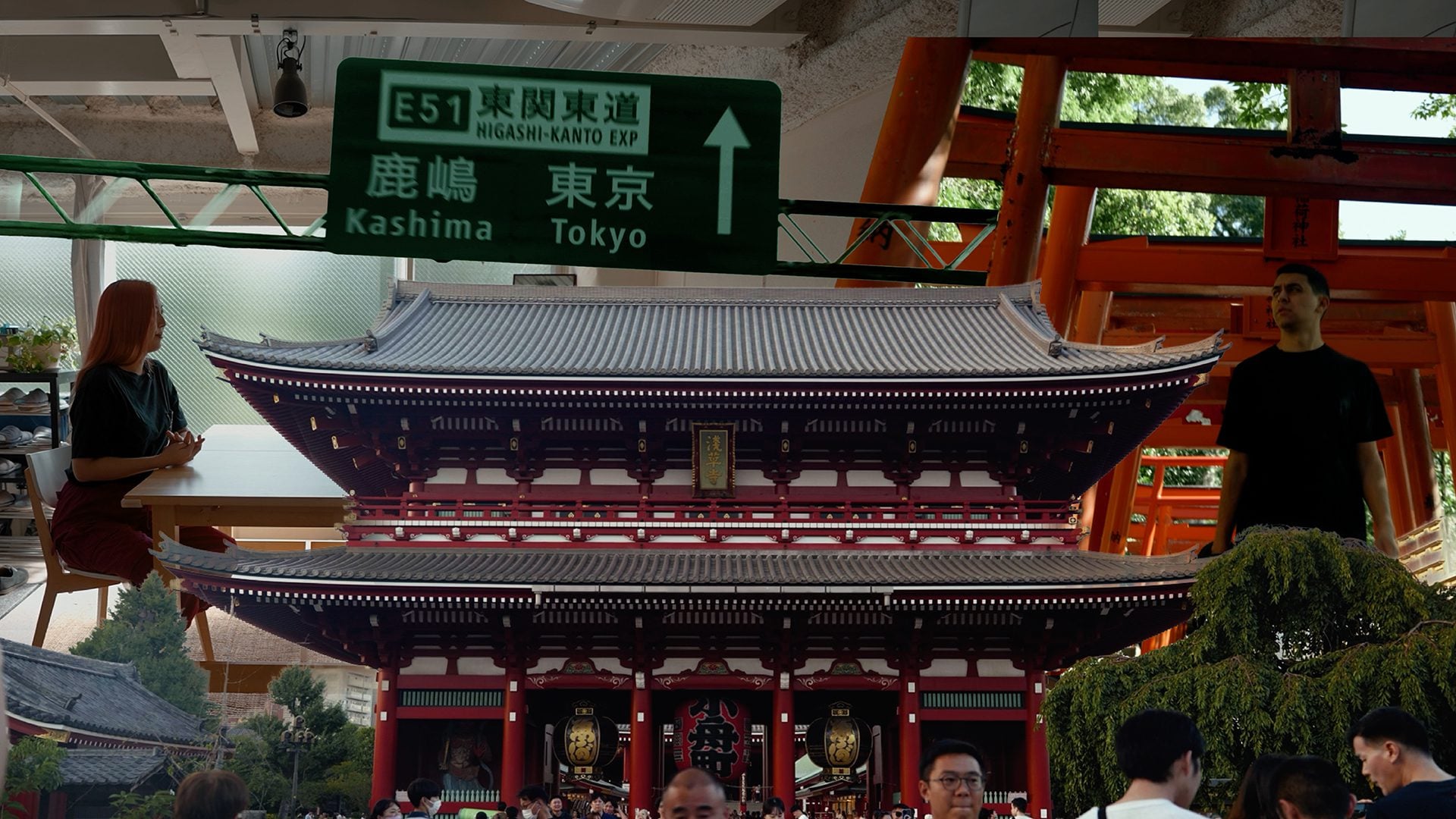

I still remember my first time stepping off the plane in Tokyo. As someone who’s spent most of his life in Latin America, I thought I knew what a bustling city looked like. But nothing prepared me for Japan. The efficiency. The cleanliness. The sheer order of it all. Trains arrived and departed to the second—without me, of course, because I was still on Guatemalan time (10 mins late). Trash bins were rare, but somehow, there was no trash. No one shouted. No one jaywalked.
It was the collision of history and modernity that stunned me most—ancient wooden temples tucked between LED-lit skyscrapers, a culture with thousands of years of ritual standing firm in a nation racing ahead in robotics and technology. I stood in Shibuya Crossing surrounded by more people than I could count—and none of them bumped into each other.
And then there was the ramen.
Don’t get me started on the ramen. Creamy, salty, steaming bowls that tasted nothing like the Ramen that comes in a styrofoam cup. It quickly became a daily ritual.
But somewhere beneath the beauty and brilliance, I began to sense something else.
One might be married in a Shinto ceremony, buried in a Buddhist ritual, and live in between without ever naming a god.
In conversations with locals—especially younger people—I heard stories of pressure, anxiety, loneliness, and spiritual emptiness. I learned that despite the cultural advancement, Japan has one of the highest suicide rates among developed nations. I learned how hyper-sexualized entertainment contributed to rising rates in loneliness. For all of Japan’s remarkable advancement, there was an unmistakable sense of spiritual emptiness beneath the surface.
In Japan, a country of 125 million people, less than 1% are Christians. Surprisingly, it’s not because Christianity, Bibles, or the gospel are outlawed. It’s something deeper. Something harder. Something quieter.
The real story of Japan isn’t just about sushi, skyscrapers, or Shinto shrines. It’s about a silence. A spiritual silence. One that speaks volumes.
Geography is Destiny
To understand Japan’s spiritual terrain, one must start not with shrines or cathedrals, but with silence. Japan is a nation where silence is not emptiness, but presence. This silence, deeply woven into its culture—from greeting with a subdued bow to riding in silence on the metro—reflects a spiritual landscape where religion is less about dogma and more about duty, heritage, and harmony.
For Christianity, it is both the challenge and the context.
Geography is destiny, as the saying goes—and Japan’s geography has isolated it just enough to shape a spiritual identity distinct from its continental neighbors. An archipelago of over 6,800 islands, with mountainous terrain cutting off communities from one another for centuries, Japan developed a syncretic blend of Shinto and Buddhism.
Shinto, indigenous and animistic, views divinity as immanent in nature—rivers, mountains, trees. Buddhism, imported from China and Korea, added layers of ritual and philosophical depth. The result: a culture where one might be married in a Shinto ceremony, buried in a Buddhist ritual, and live in between without ever naming a god.
This spiritual fluidity is precisely what makes the Christian message feel so alien.
Christianity’s Violent Arrival and Long Silence
Christianity arrived in Japan in 1549 with the Jesuit missionary Francis Xavier. For a moment, it seemed as if the gospel might take root. Tens of thousands converted. Daimyo warlords flirted with the faith, sometimes embracing it, often for political gain. But the momentum was short-lived. Christianity came to be seen as a destabilizing foreign influence—especially by the Tokugawa shogunate, which would rule for over 250 years. By 1614, the faith was outlawed. Believers were tortured, crucified, burned. Japan became one of the bloodiest mission fields in Christian history. And then… silence.
To become a Christian in Japan is to risk becoming an outsider in a culture where being inside—belonging—is everything
The silence lasted centuries. When Japan reopened to the world in the mid-19th century, missionaries returned, hopeful and eager. They built schools, hospitals, and churches. Yet the ground remained hard. Today, less than 1% of Japan’s population identifies as Christian—one of the lowest percentages in the world, and astonishing given Japan’s modern, open, democratic identity.
Why?
The reasons are not only spiritual, but social and structural. Japanese society values group cohesion, consensus, and conformity. Faith, especially one that asks for personal allegiance to a single, exclusive God, runs against the grain. To become a Christian in Japan is to risk becoming an outsider in a culture where being inside—belonging—is everything. Evangelism, even when compassionate and respectful, is often perceived as culturally aggressive. Religion, like many other things in Japan, is expected to be private, inherited, and non-disruptive.
There is also the matter of memory. Japanese Christianity bears the weight of history—both the persecution of early believers and the later association of Christianity with Western imperial powers. American GIs carried Bibles during the post-war occupation, and many Japanese today still see Christianity through that geopolitical lens: as a foreign religion, linked to a foreign past.
Not Rejected—Just Never Heard
And yet today’s spiritual silence isn’t just the result of past trauma or cultural pressure. As many missionaries will tell you, the greater challenge is not rejection—but ignorance.
Chad, a pastor at Mustard Seed Church in Tokyo, explains: “It’s not that most Japanese have heard the gospel and rejected it. It’s that they’ve never heard it—not even once.”
Watch our full interview with Chad Farmer, pastor of Mustard Seed Fellowship Church in Tokyo.
When Christians say “God,” Japanese people may think of kami—the millions of Shinto spirits. When they hear “church,” they may associate it with cults. Or when they’re told that Jesus died for sin, they may ask, “What is sin?”
Missionaries in Japan often describe it as starting from negative ten, not zero. You can’t assume anything. You have to build the framework for belief before you can even introduce the story of Christ.
In such a context, aggressive evangelism often fails. But love, hospitality, and patience begin to shine.
Pastor Yoshito, who grew up in a Christian home in Tokyo, says that the gospel in Japan grows through relationships and presence—through meals shared, questions answered, prayers whispered over years. “People need to see the gospel, not just hear it,” he says. “They need to feel that they are loved, even before they understand what love is.”
His church has seen fruit—sometimes slowly, sometimes miraculously. One elderly man paralyzed by ALS came to faith through blinking responses after weeks of being cared for by Christians. Others take decades to come around.
“But that’s what it means to follow Jesus here,” Yoshito says. “Like a farmer waiting for the seed to sprout.”
Whispers of the Gospel in Japanese Culture
Japan is a nation of quiet seekers. Shinto and Buddhism provide ritual, but not always meaning. Many Japanese participate in religious festivals but report no personal belief. There is a spiritual vacuum—and in that vacuum, a longing.
You see it in the literature. Murakami’s surreal novels, echoing with metaphysical questions. Anime and film that often flirt with resurrection, sacrifice, and salvation. The popularity of Christmas (albeit commercial) and gospel music hint at a culture both fascinated by and disconnected from the Christian story.
To be clear, the Japanese are not irreligious. They are spiritually cautious, culturally conservative, and historically wounded. But caution is not the same as rejection.
The challenge for Christians, then, is not merely translation of language, but of tone. Not proclamation only, but presence.
The challenge for Christians, then, is not merely translation of language, but of tone. Not proclamation only, but presence. The gospel must be lived with a patience as slow and deliberate as a Japanese tea ceremony, and a beauty as compelling as sakura in bloom.
There are signs of hope. Quiet church plants in Tokyo and Osaka. Young artists and musicians exploring the faith. Small communities choosing Jesus—not as a Western import, but as the Savior who steps into their silence with grace.
Geography shapes identity. History shapes memory. But neither has the final word. As Christians in Japan will tell you, the seed may lie buried for a long time… but it is never truly dead.
Remember Japan
As Christians, we believe that the gospel is powerful—not only in places where it’s welcomed, but also in places where it feels foreign, forgotten, or fragile. And so we pray—not because it’s a last resort, but because it’s our first and best act of love.
If Japan is hard to reach, then let’s reach with open hands lifted in prayer.
Here are some ways you can pray:
1. Pray for gospel access.
That every Japanese person would have the opportunity to meet a follower of Jesus, hear the gospel clearly, and respond with faith.
2. Pray for Japanese believers.
Many are the only Christians in their families. Ask God to strengthen their faith, encourage their hearts, and surround them with gospel community.
3. Pray for churches in Japan.
That existing churches would grow in boldness, unity, and clarity as they proclaim Christ—and that new churches would be planted in unreached cities and neighborhoods.
4. Pray for missionaries and pastors.
For endurance in a slow and often discouraging mission field. That they would not lose heart, but be filled with joy, love, and perseverance.
5. Pray for the youth of Japan.
That those wrestling with loneliness, pressure, and identity would discover their worth in Jesus—the One who sees them, knows them, and calls them by name.
6. Pray for revival.
Ask God to pour out His Spirit on Japan. To break through centuries of spiritual resistance with a fresh movement of faith, repentance, and joy.
7. Pray for laborers.
That more Christians from around the world would hear God’s call to go—not because it’s easy, but because Christ is worthy and the harvest is ready.
Steven Morales:
There are places in the world where there are hardly any Christians because of persecution, or ideological oppression, or because it’s outlawed. And then, well, then there’s Japan. People aren’t forbidden from learning about Jesus, Christianity, it’s not illegal, and Japan has had religious freedom for at least the last 150 years, but there’s still hardly any Christians. And I want to know why. I want to know why most people in Japan will likely never meet a Christian. Yeah, there’s some stuff online in Japanese, but why will the majority possibly never actually meet a Christian or a church before they die? Why are there hardly any Christians in Japan?
Okay. One quick 14-hour flight later, and we’re here. I’m heading now to the busiest pedestrian intersection in the world, 3,000 people can cross it at once. And you’ve probably seen it in movies, it’s called Shibuya Crossing. This is right in the heart of Tokyo, which has more than 37 million people in the metro area, making it the most populous city in the world. And Tokyo is known for a lot of other things too, history, art, beauty, culture, technology, sushi, anime… But one thing Tokyo’s not known for is churches. In fact, the most populous city in the world is in a country considered one of the most unreached by the gospel. Japan is a nation of 125 million people, less than 2% identified as Christian. And being part of that 2% isn’t easy. There’s a well-known Japanese proverb that says the nail that sticks up gets hammered down.
Japanese culture values conformity, you don’t just abandon your beliefs for something new. And for the few believers who do, life can be difficult. But here’s the thing, it wasn’t always this way. In fact, when one of the first missionaries landed in Japan nearly five centuries ago, he called Japan, “The country and the orient most suited to Christianity.” At first, it seemed like he was right. In one generation, as many as 300,000 Japanese people claimed Christianity. So, what happened? How did such a huge spark get almost completely snuffed out? And what happened to the few Christians who remained?
Okay. To understand better how Christianity once flourished in Japan, we’re actually going to have to leave Tokyo and fly 600 miles west to a much smaller coastal city, whose name you’ll probably recognize, Nagasaki. This is the spot where an atomic bomb detonated over Nagasaki on August 9th, 1945. That morning, at 11:02 AM, a blinding light flashed, and tens of thousands of people died. It was actually the second atomic bomb the US dropped over Japan within three days to end World War II.
Harry Truman:
It is an atomic bomb, it is a harnessing of the basic power of the universe.
Steven Morales:
To this day, it’s the only time nuclear weapons have been used in combat. But I want to talk about something else that took place here. Nagasaki isn’t just ground zero for the atomic bomb, we’re also standing near ground zero for the persecution of Christians in Japan. Nearly 400 years before World War II, the first Catholic missionary landed south of these shores, as Japan began opening up for trade with other countries. Japan was known as the end of the Silk Road, and some considered it the end of the earth, sort of a fitting name for a spot where missionaries soon arrived. It didn’t take long for Spanish missionary, Francis Xavier, to report that things were going well. Japanese people were embracing Christianity. Some people’s understanding and practice ran deeper than others, but the Christian faith even spread hundreds of miles away to Kyoto, the capital of Japan at the time.
But trouble was on the horizon. Eventually, Japanese rulers grew suspicious of outside influence. They told missionaries to leave the country, and they showed what could happen to Japanese Christians who didn’t leave the faith. This is Martyrs Hill. This monument honors 26 Christians publicly executed here in 1597, just about 50 years after the gospel landed on these shores. Authorities arrested and marched 20 Japanese Christians and six foreign missionaries, hundreds of miles from Kyoto until they arrived here, where 26 crosses were already waiting for them. One account tells us of a Christian boy who upon arriving told his captors, “Show me my cross.”
And this was only the beginning. In 1614, an official edict banned Christianity in Japan, and authorities enforced it on pain of death. They even devised a way to publicly test villager’s loyalty here in Nagasaki, demanding every person step on an image of Christ to reject any claim to him. These images are called Fumi-E, and they were basically a bronze image of Jesus or Mary mounted on a wooden frame. Stepping one was a symbolic act, and it became a way to force Christians to publicly renounce Christ. Some wouldn’t do it and faced hellish torture. They were slowly drowned, they were burned, they were hung upside down over pits of corpses, and if they still didn’t relent, they were killed. Eventually, some did relent. Actually, many did. So many trampled on the image that the Fumi-E started to become smooth.
There’s a movie from Director Martin Scorsese about this time in history called Silence, it’s really worth watching. This ushered Japan into a 200-year period of isolation from the outside world. Any remaining Christians went into hiding, they became known as Kakure Kirishitan, or hidden Christians. In 1873, the Japanese government lifted the ban against Christianity, missionaries returned, and Japanese who still claimed Christianity began emerging from hiding. Many returned to the Catholic Church, and some eventually built a cathedral near the site where so many were once persecuted. Things seemed stable enough for Christians in Nagasaki until decades later, when an atomic bomb detonated within a few hundred meters of the cathedral, burying everyone inside.
You can still see the facade. This event was catastrophic for Japan and for Japanese Christians. Can you imagine being persecuted mercilessly for so long, then finally attaining religious freedom, seeing some progress, only to then experience one of the most destructive events in human history, and to think that this kind of destruction happened twice. Similar to Nagasaki, there’s a lot of parks and memorials and museums dedicated to remembering the destruction that happened here in 1945. I’m standing in front of one of the only buildings still remaining from the blast. It’s crazy to think that at one point, the entire city looked like this. An estimated 80,000 people died in the initial blast, and tens of thousands died later from radiation exposure. This is Hiroshima Peace Memorial Park, and if the people of Hiroshima stand for anything, it’s peace. It kind of sounds like the message for a church here too.
Yumi:
So, growing up in Japan, I think I was raised in a typical Japanese family. They practiced Buddhism teaching, but I’m not sure how much my family actually believe in it, but I never knew about Jesus. I heard about it, I guess in school, from textbook, but nothing about church, or Jesus, or the Bible.
Steven Morales:
This is Yumi. As is the case for most Japanese Christians, she was the first in her family to become a believer. Christianity and its teachings are so foreign to Japanese traditional beliefs that it’s fair to say that Yumi and her husband, Michael, feel like they’ve lost their home, and are living in a different world.
Michael:
And so, the main idea here is that it’s not that most people have heard the gospel and rejected it, the main idea is that they haven’t heard the gospel even once.
Yumi:
I always believed there is God since I was a small girl, but I didn’t necessarily believe that God of Buddhism is the God, or is the only God, I just always wondered who is this God that I think he exists, but just didn’t know.
Steven Morales:
Coming to Christ can be a tough experience in Japan. Leaving your family’s religion can be like leaving your family. And although Yumi had such a small chance of hearing the gospel in her home country, God opened up an opportunity when she studied abroad in the United States.
Yumi:
I went to the church because I wanted to make friends, I just wanted to do something, and I just wanted to be connected to a community. So, I started meeting with Christian, and I realized that I always felt there’s something missing in my heart, and I felt like those people had that thing that I don’t have, I’m missing. And I started comparing, like, how can I be like them? What is the thing that they have that I don’t have? And I figured out that’s Jesus.
Steven Morales:
God was at work in Yumi’s heart to bring her into a community of loving brothers and sisters, and to reveal to her the nature of the true creator God. At the same time, he was also calling Michael to share the gospel in Japan.
Michael:
In 2011, huge earthquake in Northeast Japan, in the Sindhi region, and the Tokai region, and there’s a whole testimony there, but God allowed me to leave Georgia for the first time, and get on an airplane and go to Northeast Japan and volunteer there to do disaster relief. And through that, met so many Japanese people who had just recently lost their whole families and had lost their whole livelihoods. And at that time I didn’t know any Japanese or couldn’t speak Japanese fluently or anything, but I knew I wanted to share the gospel with them. And I knew I wanted God to allow me to live in Japan, and to share the gospel with as many people as I possibly could.
Yumi:
I was learning about the Bible, I was attending church, and my Bible study leader was there too. And she spoke to my friend, who is from India, and my Bible study leader told her that the reason why you are loved is not because of what you do, but because of who you are, you are so loved. No matter what you do, God loves you. That moment was when I knew that, oh, if this God loves a girl from India, he must love a girl from Japan too. So, I guess in my mind, because I came to know Jesus in a foreign country in the United States, I somehow thought this God is a foreign God.
Michael:
The idea that anyone could become a Christian, that it’s not defined by your location or your culture or your language is pretty mind-blowing to the typical Japanese person, who thinks that, “Oh, we Japanese are Shinto and Buddhist, you Westerners are Christian. That’s great, but we Japanese are not, right?” And so, they define their religion by their nationality.
Yumi:
The last people group I wanted to reach out was Japanese. I didn’t want to be with Japanese because I knew how difficult for me to speak to them about spiritual things, about faith in Japanese, in a Japanese context. And I was so comfortable living in The States, that’s why I thought I would just live in The States the rest of my life and find somebody and get married, and live there happily ever after. That was my American dream.
And until God took me to this conference, and somebody shared a scripture, it was Esther 4:12-14. It says, “Do not think you are alone in the king’s palace, you’ll be saved. A deliverance and assurance might come alive from another place, but you and your father’s house will be punished. Who knows, but you have come to this place for such a time as this.” And when I heard it, I just knew that my palace is the United States, I had everything I wanted that’s very comfortable for me. My church, my friends, my school to go. And also I knew that God is the one who took me to the place so that I can learn about him. And God is a sovereign God, who can bring deliverance and assurance from another place, with my help, to my people in Japan, to my Japanese people, but there might be some people, like my father’s family, my family, my own family, who might perish without knowing Christ. So, I was very challenged. Yeah, I cannot be silent now.
Michael:
Living here in Japan, I realized that, yeah, most of these friends had never even heard of a creator God. Yes, generally people in Japan feel closed off to the gospel.
Yumi:
Yes, Japan is such a hard ground, somebody say Japan is a graveyard of the missionaries, and that might be true.
Michael:
1 Corinthians 15:58, just memorize that verse and just remember that, “God in him, in Christ, our labor is never in vain, and we should always abound in the work of the Lord. It’s a beautiful work here.”
Yumi:
Because it’s hard, I want to encourage people to come to see how God is stronger, and God is better, and God can do anything that we think it’s possible in heartland, that’s where you can taste the goodness of God.
Steven Morales:
Where are the most religious places in the world? You might say the Vatican in Rome, the Western wall in Jerusalem, or Mecca in Saudi Arabia, but you probably don’t think of anywhere in Japan. So, walking around the city, I was surprised to learn how religious Japan really is. There’s a difference between being religious and having saving faith. And the truth is that the reason Japan is so hard to reach with the gospel is because they believe so hard in something else. And that belief isn’t just a matter of spirituality, it’s directly linked to their cultural identity. And I want to understand it.
Okay. Before we go any further, let’s talk about Shintoism. Most Japanese people identify in some way with both Buddhism and Shintoism. But while Buddhism isn’t indigenous to Japan, Shintoism is very Japanese at its origin, and its roots go back to the beginning of Japanese culture. So, what exactly is it? Well, I’m at a Shinto shrine to find out. This is called a torii, and it’s how you know you’re standing just outside a Shinto shrine. Shintoism is actually hard to define, it doesn’t have a founder, or a set of sacred scriptures, or a fixed dogma that’s easy to pin down. There’s no concept of original sin and there aren’t weekly worship services at a Shinto shrine.
People come and go whenever they want, whether that’s every day or a couple times a year. But the basic idea is rooted in devotion to Kami. In Shintoism, Kami are spirits or forces connected with the natural world. There’s this idea that sacred spirits take form in nature, in wind, or rain, or mountains, or rivers, and that certain animals serve as messengers for Kami or stand guard against evil spirits. And Shintoism says that humans can communicate with Kami, and that’s why they come to a shrine like this, to pay respects, or ask for help with something like good health, or a good job, or even good results on exams.
When people come into the grounds, they wash their hands and mouth at a basin as part of a purification ritual. Then, at the main hall, they throw a few coins into an offering box, then bow at a slight angle and pray. A lot of Japanese families even keep little Shinto altars in their homes, often right next to a small Buddhist altar. The two religions coexist in Japan, a lot of times literally side by side. Shintoism has played a huge part in Japan’s history and cultural identity, and even if a lot of Japanese people aren’t really devoted to Shintoism at a deeper level, they often still see it as a part of being Japanese. For many, it has less to do with trying to be connected to the spiritual world, and more to do with being connected to their cultural heritage and national identity. That’s what makes it so hard for many people to embrace the good news that there’s actually only one true God that they can know personally through Jesus.
But there’s another major religion in Japan you should know about. Buddhism. Even though it didn’t begin in Japan, Buddhism is the most prominent religion here. About 70% of the Japanese population claim some connection to Buddhism. It’s huge here. So, what does that actually look like? Well, I’ll explain it in a second, but first, a quick tour. This is Kaminarimon Gate, it’s one of the entrances and it means Thunder Gate. This is the marketplace, it’s been here for centuries, it stretches 200 meters, and you can find anything, kimonos, art, snacks, anything. This is a giant bronze incense burner, people come from all over to burn pink sticks and waving smoke over their clothes for good luck. But this is the main attraction, the five-story Pagoda and main hall, the Sensō-ji Temple, beautifully and intricately made.
Sensō-ji Temple is the oldest temple site in Tokyo, and it’s been rebuilt a bunch of times since its founding in the 600s. And as is the case with most historical religious sites, it’s now part tourist attraction, part market, but why is this place so significant? Well, it’s complicated. For many, Buddhism is closely tied to Japanese identity, and that makes it hard to imagine rejecting it. Even if it’s not really a part of everyday life, leaving Buddhism constrain or even break family tithes. One missionary said, “To be Japanese means one is Buddhist and Shintoist. It’s an inseparable part of the culture.” But even though most Japanese people embrace some form of Shintoism or Buddhism in their lives, these or really any religious belief is reportedly being declined. And today, anywhere from 30 to 39% of the population identify as convinced atheists. Some surveys even report that up to 70% of people don’t truly follow any religion.
It’s complex when cultural and traditional and religious beliefs are all mixed together, but functionally, some consider Japan the most religious and atheist country in the world. So, where does that leave Christians? How do we talk with Japanese people about the gospel? Where can you even find Christians in Japan?
Asami:
I was born and grew up in Kanagawa, which is next to Tokyo, and when I was a high school student, I was staying in New Zealand for almost a year, except for that I have lived in Japan in my whole time.
Prami:
I was born in Yokohama, and I raised in Hachioji, Tokyo, and I lived in Japan all my life.
Steven Morales:
This is Asami and Prami. Neither of them grew up Christian, but their stories tell us how against all odds they came to know Jesus through the kindness and vulnerability of other believers.
Asami:
My teacher who was in charge of taking care of students from abroad, she took me to church, and I went there for one year, but I never understood what people were saying or what the pastor said. I saw people hugging each other when they were going through difficult times, and cry for each other and praying. They always welcomed me, they hugged me. And one old lady, she came to me and kissed my both cheek, and I was so surprised and happy, I never felt welcomed like that before, so.
Prami:
I took a class of Bible study in the university, and there is a pastor named, his name is Steven, and he invite a student to his church, and I just went there to get a point, advanced point, because he told the student, “If you go to the church, you will get the point.” Well, the first time I came to SOMA, the wife of Steven, she do her testimony, and she cried. And I was so surprised because it’s really rare to see someone crying after we grew up. So, I was really interested in what made her cry. And at first they’re so kind, and it’s not just kind, but they’re like real family. They help each other, they pray for each other, they truly care about each other.
Steven Morales:
While Japan is hard to reach, it’s not impossible to reach. That’s why I want to meet Yoshito Noguchi, pastor of SOMA Church. SOMA is a network of churches around the world, but there’s something a little different here about Pastor Yoshito. He’s sort of a rare example of a Japanese Christian who grew up in a Japanese Christian home.
Yoshito Noguchi:
Yes. When I was small, my parents assisted with church planting work as businesspeople. Growing up in that environment, I naturally experienced that the concept of a church was truly something wonderful, like a special remedy when I heard about it. Our living room often had various people coming over, sharing meals, opening the Bible, and celebrating with various people, having fun times together. Growing up like that, I truly learned to love one another and walk while hearing the good news of Jesus.
Steven Morales:
Yoshito knew firsthand the joys of growing up in a Christian community, but that’s not the norm for people in Japan.
Yoshito Noguchi:
Loving Jesus and living out that love in their daily lives. Loving Jesus, walking with Him, and loving one another–people need to see, experience, and learn these things. To follow Jesus because they really love Him. Not many people open their homes and invite others to have a meal. However, when you are invited to share a meal in this way, you truly feel like something special, and little by little, you come to realize that you are loved. About 50 years ago, some missionaries and a few Christians from America used to gather in this house. Actually, one of those Christians was my mother. My mother, along with the missionary, used to hold home gatherings, teaching the gospel through the Bible while holding me as a baby in this house. That sister, about 50 years ago, heard the gospel and heard it multiple times. However, they lost contact and hadn’t seen each other for about 50 years. They didn’t meet again, but a few years ago, that sister once again encountered the Christian community and began attending church gatherings. Last year, her daughter was baptized, and this year, she and her husband came to believe in Jesus. It took over 50 years for this one person to come to know the love of Jesus and say, “Yes, I will follow Jesus.” It took 50 years. So, even though Japan may seem firm and unyielding, I believe that the people of this country are loved, and we must continue to work in prayer for this important work in the great mission of Japan.
Steven Morales:
So, what does your life look like when every day you’re surrounded by an intense spiritual need for the gospel?
Chad Farmer:
I’m around all these people, and I know that as we look out this window, or if you’re on top of a high building, you can look in every bus, every car, every person, even below the ground, there’s people. Every window, every office building, 99% statistically are on their way to a Christless eternity. And daily, when you’re around that, when you’re going to buy groceries next to people, when you’re going to the post office and running in the neighborhood, it impacts you, right?
Steven Morales:
This is Chad Farmer, a pastor planting a church in the heart of Shibuya. As an outsider who has lived here for some time, he has seen the need for gospel workers in Japan.
Chad Farmer:
At the church at Osaka, there’s a story of a man who came to church, he sat and he heard the word of God being preached, and he heard the gospel, and he’s in tears because he said, “Finally, in my late 60s, finally, was my whole life. I knew there was a God, and I’ve been trying to find someone to tell me about it.” Paul writes in Romans, “I make it my ambition to preach the gospel where it hasn’t been heard unless I lay on someone else’s foundation.” But after that, he says, “As it is written, those who haven’t heard will know him, those who haven’t seen, will understand.” And to me, that’s the thing. We need more messengers, we need more people telling, we need more people loving Jesus, growing in their faith, being a part of the local church, and sharing the gospel of Jesus. We need more churches.
Steven Morales:
Sharing the gospel in Japan can sometimes involve thinking outside the box, and that can be difficult in a culture that really values the box. But just because most Japanese people don’t believe the gospel doesn’t mean they wouldn’t consider it if they met a Christian friend who could explain it to them. The gospel is only effective when it is shared, could it be that some of us are called to do just that?
Asami:
So my husband took me to this church, and at that time, he was only a friend. And when I first came to this church, I remember that Pastor Jay and my husband explained “Trinity” or “Triune God”. Yeah, they explained it to me. At that time, I was really shocked. These people are so kind, friendly, and wonderful, but on the other hand, they believe in something so incredible. I had that feeling, and I thought I might not want to get involved too much. Honestly, I felt like I might not want to get too close. More than those people, it was a feeling of wanting to keep some distance from that way of thinking.
Prami:
It’s quite difficult for people to be open about believing in God or loving others. Japanese people aren’t very open about believing in God or loving others. When I mention church, some imagine a grand building, and there are many places where the name “church” is associated even with dangerous new religions. So, there’s a huge disconnect with Christianity in Japan.
Asami:
Japanese people, in particular, have a very strong sense of caution when it comes to religion. When they hear about religion, I believe they are extremely wary when they hear “religion”.
Prami:
The Japanese don’t know how to love each other, maybe. It’s really rare to say I love you. Some people feel embarrassing thing to tell love to someone, each other. So, I want you pray that all Japanese can accept the love of Jesus, to be loved. Maybe this is the first step to know about Jesus.
Asami:
I sometimes feel that people distance themselves when I talk about the Bible and Christianity. Clearly, I’ve been told by my family not to evangelize them. I’ve been told that by my family and friends. And, well, I’ve been told that by friends. What’s really at the core of myself, my faith in Jesus, I can’t really share it with my close family, friends, or anyone. It’s a challenge in my faith, prayers, and so on. I really feel lonely not being able to do those things.
Prami:
There are many difficulties to be a Christian in Japan, but even if I am denied by someone, I can’t stop believing in Jesus because he loves me and he saved me. He saved me in many ways. So of course, there are many difficulties and someone will leave me because I’m a Christian, but being Christian and believing in Jesus and listening to his words is much more valuable.
Steven Morales:
Even though Japanese culture can emphasize conformity, it doesn’t mean it’s boring. Unity is everywhere. Japan is an eclectic blend of future and past, digital and analog, gundam and samurai. But this level of creativity isn’t just about what you can see, it’s about the stories they tell, stories of brokenness and stories of redemption. Okay. So, I can’t really talk about Japanese storytelling without talking about anime. Anime is not the first or only form of Japanese art. In fact, Japan has been making art for thousands of years. Paintings, sculptures, even the way they serve tea is an art form. But anime and manga are also a lot older than you might think, they go back as far as 1907. And today it’s had a massive global impact, especially in the US. It’s estimated that 60% of animated series made today are of Japanese origin. Some of the most critically acclaimed stories today are told by Hayao Miyazaki.
Spirited Away, Princess Boramoke, Howl’s Moving Castle, just to name a few of his movies. And these aren’t just kids’ cartoons. Sure, there are those as well. The many anime series explore complex themes around pain and suffering. And as is the case with most art, a lot of Japanese art is born out of struggle, loss, and hurt, and Japan is no stranger to hurt. Just think about the atomic bombs in Hiroshima and Nagasaki, or even more recently, Japan’s natural disasters. Japan sits on the western edge of the Ring of Fire, and on March 3rd, 2011, the whole country was shaken.
News Anchor 1:
8.9 magnitude. Now we know that’s a big number, it was the fifth-largest earthquake in history.
News Anchor 2:
Catastrophic tsunami rising out of the Pacific, it’s huge waves sweeping away everything in its path. A massive wall of water that rose as high as 30 feet swallowing up parts of Japan.
Steven Morales:
The tsunami wiped out entire villages and displaced nearly half a million people from their homes. It also caused explosions at the Fukushima nuclear power plant, that led to the evacuation of 150,000 people from the area. The whole disaster was so devastating, Japanese people call the day 3/11. And all of this comes on top of even deeper needs. Many struggle with shame and loneliness, as many as 1.5 million people are considered Hikikomori, which means they isolate themselves from the pressures of the outside world.
News Anchor 3:
Hirohito Shinmasu is one. His bedroom has been his universe for the best part of 20 years, he’s now 40 years old. Hirohito spends most of his day touching the world through this screen. His downward spiral began when he couldn’t live up to his family’s and society’s expectations.
Steven Morales:
Japan’s suicide rate is high, and it grew higher during the pandemic. One pastor told me that everyone is one degree of separation away between knowing someone who has committed suicide. In October 2020, Japanese authorities reported 2,100 suicides during that month alone. Fewer people had died of COVID in Japan during the whole year. Meanwhile, the birth rate in Japan is dropping, and the number of elderly people is rising. Japan is the only country in the world where adult diapers outsell infant diapers. Officials worry about how they’ll provide social services, and many older people wonder who will care for them. Human trafficking is also a problem, and the US State Department reported that Japanese authorities continue to demonstrate a lack of political will to criminally investigate and prosecute cases of labor trafficking and child sex trafficking. Just this year, Japan raised the age of consent for sexual activity to 16. Before that, the legal age of consent was 13 years old.
But even with all this brokenness, there’s still so much beauty in Japan, and maybe that’s partly because art is often born out of trauma, and also because a search for beauty points to a search for the creator of beauty. To better understand this search, I visited a friend. Her name is Ayaka. She also lives in Tokyo, and she’s an artist who sees the hand of the creator all over Japan.
Ayaka:
Crushing mineral, and the fact that… So, this white one, this is oyster shell, you buy it like this, and you have to crush this into really, really fine powder. And then you mix it with the glue into a little dough, and they call it 100 pounds. So, you literally pound it down to the ground, get the air out, and my teacher was saying, “If you are lazy, it shows up in your color.” So, the more that you pound and more that you crush, that your white actually becomes purer. You do this thing to check your heart. And she always says, “You never paint something to conquer the subject.” And she said, “Come under. Come under what you’re painting, and your art will always be better.”
And even those times, I’m like, oh, it’s like reading the scripture, we want to come under the word of God. Yeah, I just find that this process of crushing, it truly feels like a worship because contrite spirit, God doesn’t despise. So, I just wanted to paint a restful scene, and I started painting it. And probably two month in after this, I discovered my husband’s 10-year affairs, and a lot of lies came to light, and it was just so shocking that the colors left my eyes. I can’t paint this anymore, and I actually need to stop all of it because my heart just left. So, then I took a break, I came back to this piece, and I actually washed off all the layers of what I had painted, and then I re-layered different type of blue over it.
And I kept layering, kept laying with blue. And I thought that it would just look like just a blue square, but you can actually see all the rocks through it. And then my teacher was saying, “Oh, it’s because you washed it, it’s because of your tears that you can see what’s under.” And then I realized, oh, wow, how… It’s almost like God sees my grief, and even though I try to cover it cover it, it’s still there.
Steven Morales:
There’s this guy named Roger Lowther, he’s an artist and a missionary in Tokyo. His book, The Broken Leaf, describes how much brokenness and beauty are tied together in Japan. Look at the art of the tea ceremony. For the aroma and flavor of tea to come out, the leaf must be broken. Look at Kintsugi pottery, where craftsmen repair broken bowls using gold. You can still see the cracks, but now they’re golden. And he says, “Somehow these vessels were more beautiful and more invaluable for having been broken.” It all points to a world broken by sin, and people broken by sin, but it also points to the gospel.
Ayaka:
I have to embrace light and dark at the same time, I have to embrace grief and joy at the same time, and the life is never that clean cut. So, I was like, oh, in the moment of grief, there can be joy. In the moment of sadness, there can be rest. I actually share with my classmates about when I was finally able to embrace my weakness and sadness, and I was vulnerable about that before the Lord, I found peace. I found rest. And maybe that’s what this bushel on sin is like. In the midst of the battle, not when you’re pretty, not when you’re put together in your perfect armor, and wash off all the blood, but no, you’re bloodshed, you’re exhausted, and you just saw death, and that’s when you soak, naked before the Lord, and that’s when you find rest.
Steven Morales:
There’s something that Lowther said in his book that stuck with me. “A broken world is healed by a broken Christ on a broken tree.” That’s our hope, that’s Japan’s hope, that all of the brokenness will point to the beauty of being made whole again in Christ, who is broken for our sin. There is hope when we remember that hard to reach doesn’t mean impossible to reach, whether it’s sharing the gospel with a Japanese student in your old neighborhood, or going all the way to the nations, we have a mission to carry out. So, let’s pray that the beauty of the gospel will once again shine brightly in the land of the rising sun.