


Faith & Tech–Living out Christ in the Workplace
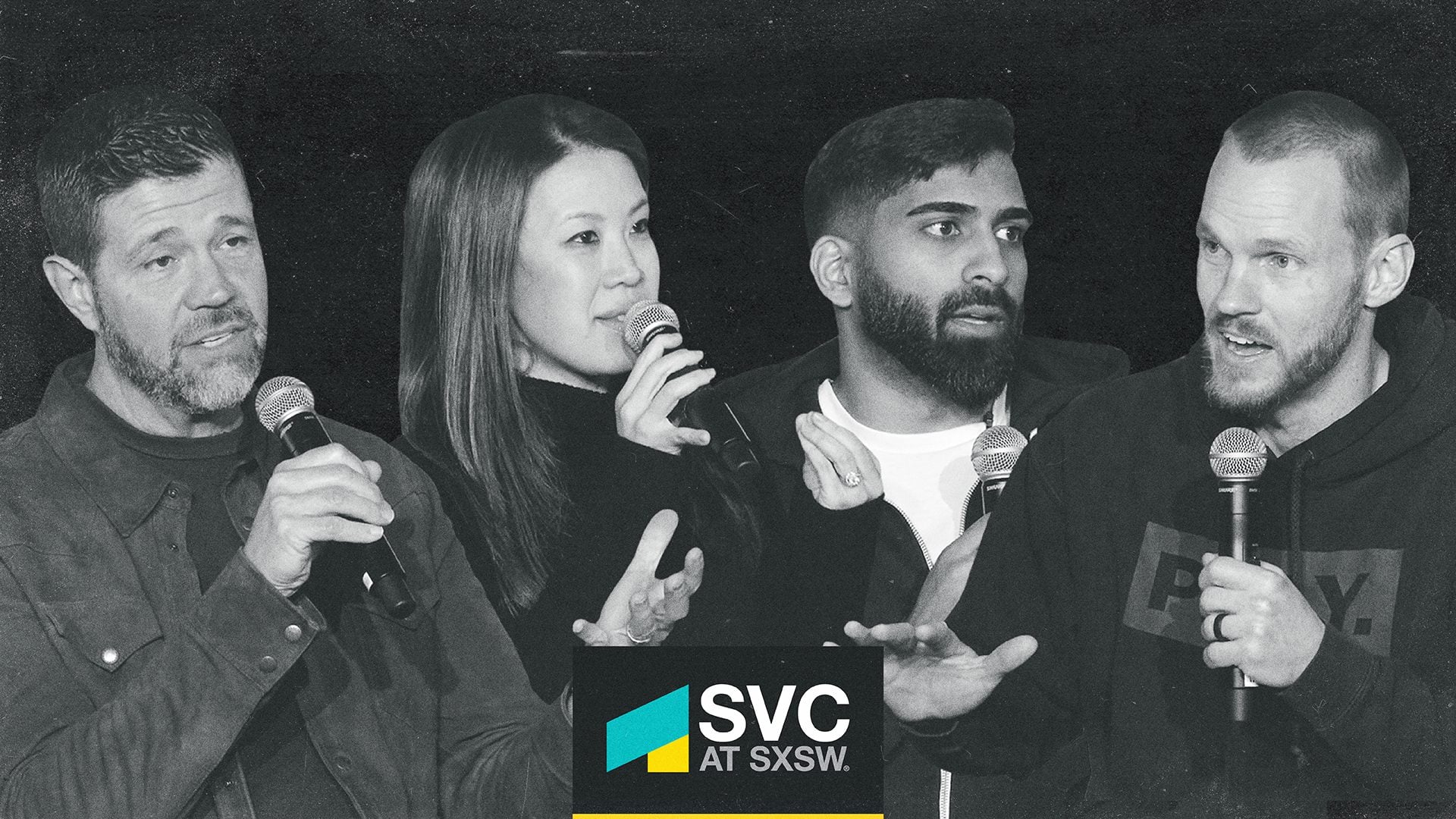

In this panel discussion from SXSW (South by Southwest) 2025, David Platt hosts a conversation with Christians who work in tech and creative industries.
Matt Ferguson (Chief Innovation Officer for Storyland Studios), Ilaria Chan (Chairperson for Tech for Good), and Renji Bijoy (Founder and CEO of Immersed) help us understand how Christians can live out their faith in the workplace and leverage their vocations for the sake of God’s glory.
David Platt: All right, well, let me do this. Before we dive in, I just want to pray that God by his Spirit would lead our conversation. It would miss the whole point if we do any of this in the flesh, whether hear or speak. And so will you pray with me? God, we praise you as the Lord over everything, as the Lord over every detail in our lives, our families, and our work. We praise you as the Lord over the arts and the Lord over business, a Lord over tech. We are so thankful that you are sovereign over everything. We find total rest in you, and we want to work and speak out of the overflow of that rest and trust in you want to work by faith and to steward the grace you’ve entrusted to us for your glory.
So we pray that you would lead, guide, direct by your Spirit, even our conversation right now toward that end, to draw us closer to you. God, we pray that we would be closer to you a few minutes from now as a result of this conversation than we are right now, and that you would help us to know how to glorify you in the work you’ve given us to do. In Jesus’ name we pray. Amen.
All right, well, so my role up here on this panel is to just tee up these two brothers and sister in Christ to share out of the overflow of their experience. So my name’s David, I pastor a church in Metro D.C.
And I mentioned that specifically because, as a pastor, some of the things that these brothers and sister do, I don’t even understand the words I’m using as I’m introducing them. So I just want to give that disclaimer from the very beginning. So let me do a quick intro of them, and then maybe I’ll ask them to share a little bit more about what they do in the first question I ask them. But Matt Ferguson, starting on the farthest side of the stage. Matt Ferguson is the Chief Innovation Officer for Storyland Studios. So basically, helping tell stories in three dimensions, strategic, spatial, digital storytelling.
So it’s a team of former Disney and Pixar professionals bringing multiple talents from multiple disciplines to that space. So that’s Matt Ferguson. And then in the middle, we have Ilaria Chan. So Ilaria is a chairperson for Tech for Good Institute, a nonprofit Thinktank that was founded by Grab, and I could list a number of other things she’s done in tech and social spaces, including being a freelance singer, concert pianist, food critic and restaurant judge, culinary school graduate, actress, and scuba diver. So I often say nobody has all the gifts, but you actually do have all the gifts, by God’s grace. So this is Ilaria Chan, and then immediately to my right is Renji Bijoy. Renji is the founder of Immersed and CEO of Immersed.
So Tech Star startup partnered with Facebook, building VR, Facebook and others, Microsoft, HTC to build VR offices. Yeah, visor.com. So I tell you what, I’ve given a brief introduction. Let me ask you guys then to maybe give any more color that would be helpful to know, based on what you are doing or have done, but specifically in the context of when did you see your work as a calling from God to glorify him? Did that click in the very beginning? Was there a point along the way that clicked for you? So how did that perspective in you form? So let’s start down here with you, Matt.
Matt Ferguson: Yeah, it happened pretty early on when I entered the workplace. I was already a person of faith and I didn’t necessarily come into work every day with the burst of the day or anything like that, but I just let my faith shine through and pretty soon people just kind of figured it out that I was a Christian and it just opened up some opportunities when they were going through some things just to be able to talk about what’s going on in their lives. And pretty early on in my career, in my twenties, one of my coworkers came to Christ. So I really did see God move, and I would just encourage anybody who has a job, even in the secular world, that you are in a mission field, and if you’ll live out your faith, God will give you that opportunity to be able to share your faith.
David: That’s good. Ilaria, when did it click, all these things that God’s entrusted by his grace to you are part of his calling in your life for his glory?
Ilaria Chan: I became a believer in college, and right after colleg,e I took a job that any obedient Asian girl took was a Wall Street job with Goldman Sachs, and I did not know how to be a Christian in that place. And I think I really struggled through that part, the first, the 10 years on Wall Street, even though there’s a lot to learn at work, but it was very hard to actually live a loud faith there. There are Christian gatherings, but once you go back to work, it’s work. And I was junior, so actually I talked a bit about it the last two days is actually there’s a huge organization phenomenon. When you’re kind of junior, you’re trying to survive in the place. You also want to live out your faith. You are not too vocal, and you can’t be too vocal either in your decision-making there.
Later on, I had a wilderness stage, which was when I did all the culinary stuff and volunteering work and later on went onto tech and then co-founded the Thinktank when Grab went public in 2021. That was different because the CEO founder of Grab is not only a good friend but also a fellow believer who really believes in shaping that company with God’s culture. And when then when you’re older, when I was older and was able to also be more sure of myself, then you become more unapologetic. And now I guess whether it’s work with the Thinktank, a company, or in geopolitical work or other humanitarian work, you live it out by how you treat people, for me anyways, because I’ll be flying to China in May to meet with government officials there. They probably don’t want me to talk at them about my faith, but they probably will notice if I treat them differently.
And when we work with orphans in one of the humanitarian organizations that I’m on the board of, I hope that when I go to Thailand and I reach out to people in the villages who are taking on children of their own, that they will feel love and care that we’re not treating them like they’re the means to an end, that we actually are there because we want to invest in their future. And I think it’s just a little bit one thing at a time. I hope I treat my son, my two-year-old son, in a way that when he grows up, he thinks mom’s different, and then he wants to know Jesus that way. And for me, is like that.
David: Renji?
Renji Bijoy: Yeah, for me, so I became a believer when I was 19. Right around that time is when people started making their LinkedIn profiles, and I kind of flippantly put in the description as I was thinking about what should I even put on this thing. I’m 19 years old, I don’t have anything on my resume anyway, I was a busboy. And I remember writing, “I don’t care how good or bad this profile will eventually become over the course of time,” in the description I wrote, “I am nothing without the Lord Jesus Christ. I’m defined by his purpose for me. Wherever he leads me, I will follow.” And I didn’t know how much crap I would get for that from mentors and people in the following years throughout undergrad, as I got a software engineering internship or my first software engineering job, or even before that, I was applying to med school because I thought I wanted to be a doctor.
Then, as I started climbing the software corporate ladder, or was trying to get into the PhD program at Georgia Tech, or when I was starting to start up and trying to pitch VCs for investing in my company, I could never bring myself to go to my profile, edit that description, and remove Jesus’ name from there. Because it reminds me of when Peter spent three years with Jesus and when people said, “Aren’t you the guy who would hang out with the Nazarene?” And he denied him three times. I know that the removal of that description of Jesus’ name from my profile would be me denying him. And so I know that I already do that with my sin. I do that in person when I decide not to share about the Lord with someone where I feel like I should, but I instead want to be the Peter who sees Jesus on the shore, and I jump out of the boat and swim to my resurrected Savior.
And so when I think about does it ever occur to me, should I share my faith in different contexts, whatever context the Lord puts me in, I’m going to just be the believer that he sent me, created me to be. And when it comes to the times when I don’t obey, it just feels like I’m just not being who the Lord has called me to be. So I almost see all those things. I think, sure, you can call it the good Christian answer, but I think it’s more if you really, like you were saying, seek Jesus’ face, and he’s the person who gave you purpose. If you love him, if you have a deep, intimate relationship with him, it’s not a question of, can I muster up the willpower, or do I have the courage to share about him? It’s do I love him? That’s my conviction. That’s how I see it, but yeah.
David: I love it. As I’m listening to all three of you, it’s just a natural, but I would say supernatural overflow of Christ in you; this just affects who you are in whatever realm you might find yourself in. So let’s hone in on some of those realms. So storytelling, Matt, you work in a space where, okay, stories shape culture. So how do you see storytelling uniquely opening doors for faith in ways that some in traditional ministry vocations might not have the opportunity to do?
Matt: Yeah, the reason why we believe so much in story is that we’re just wired as humans to be moved by story. That’s how God has created us. And a lot of us came from a Disney background, former Disney Imagineers and marketeers, and we really learned that lesson from Disney. They do storytelling about as well as anybody in the world. And our studio was really founded on the idea of helping the Church and Christian nonprofits tell their story better because we realized we’re the keepers of the greatest story ever told. And yet too often the churches and Christian organizations aren’t doing a great job of telling that story. And so that’s really our passion, and along the way, we continue to get hired by the Disney’s and Universal’s and Legos of the world just because of our background, and that actually helps fund some of the work that we’re able to do for nonprofits.
But even in that secular work, our sort of lens that we look through before we take on a client is we want to tell stories that lift the Spirit, and we capitalize Spirit on purpose because we know who the Spirit is. But it gives us an opportunity to be able to tell redemptive stories. Even when we’re working for secular companies, we’re starting to do a lot of work in the Middle East, which is opening up that society. And so we’re able to kind of slip in these redeeming stories into some of the attractions and experiences that we’re building over there, while at the same time we might be helping a church with their architecture or their kids’ space or their website, et cetera. So we have this interesting blend of being able to help the secular and the sacred with their storytelling.
David: So good. So good. All right, so tech, that looks different, but I’m guessing there are some similarities. How have you seen, Ilaria, Tech for Good, or your faith, Christ in you, transforming the way you think about tech and the way you lead in tech and innovation? And it doesn’t have to just be tech. You’ve obviously done a variety of different things. So, yeah.
Ilaria: In the countries we operate in Southeast Asia, aside from Singapore, it is basically a region where you have Slumdog millionaires next to crazy rich Asians. So Singapore is crazy rich. The rest of the seven countries we operate in are still developing countries, and you see a huge gap in, rich-poor gap. Technology for us anyways for Grab, and then also the Thinktanks work in trying to facilitate dialogue is to empower livelihood. So I’ll give you an example. In America, having Uber increases the convenience and seamlessness. You don’t have to stand on the street in the snow in New York in the winter to wait for a cab. When it translates into Malaysia, 10 plus years ago, when it happens, it might define whether a driver gets murdered or not because he has cash in his car at the end of the day from all the rides, or there is a seamless cashless way to do it.
So it eliminates that risk of having all this cash in his car at the end of the day, in a country where there are people very poor and they really feel like they need to rob to get money. There’s also many people who are unbanked, something that we probably all take for granted here. There are a lot of people who wish they had bank accounts so they can have access to credit lending to have a better life, but they’re denied because it is a cash economy, and people do not have credit history to convince the banks to give them bank accounts. One of the things that actually Grab’s founders have done is because they were convincing banks to help the drivers open bank accounts at the early days of the company start, and having that app proof that these drivers have regular income, there’s a credit proxy to allow that to be a record that they take to the bank to say, “Can we open bank accounts?”
Hence, if I want to borrow money to buy a second motorbike, to make enough money to open a chicken farm so I can send my daughter to college, they could do it. And then the cycle of prosperity can actually happen for people who are underserved, unbanked, and invisible to the everyday economy. I think those are two examples. There’s many more, but I realize seeing how technology in the hands of people who want to empower people’s lives and use it for good in a way that shapes everyday people’s life and empowering their basic needs, and you do it in a dignified way where you teach them how to use it, you don’t try to structure profit margins so that you’re ripping them off because lending in that part of the world, loan sharks can make a lot of money from charging crazy interest rates from people who are not educated about financial facts. When we do it in a dignified way that cares for the future of these people, it can be very life-giving. That is really the heart of God, I think, in empowering tech entrepreneurs to make those decisions.
David: So good. There are all kinds of thoughts going through my mind, but I want to hear you first. So, AR-VR space, faith in that space, what does that look like? Yeah, Christ in you leading in that area?
Renji: Yeah, I mean, I think that a lot of people, when they think of VR and, honestly rightfully so, they think about kind of VR mole people who are just living in their mom’s basement, who want to live a second life because they don’t like their real life. And that’s what it used to be years ago. I think that companies like Meta and Apple and others have started to make this a little bit more of a, not mainstream, but a little bit more broader type of technology that everyday people, probably most people here… If you don’t mind, show of hands, how many people here have tried a VR headset before? That’s a lot more than I expected actually. And so it’s cool that there are companies who are trying to turn that into the next generation of computing that comes post-desktopped and laptopped and smartphone someday, glasses.
And for us, I think that especially my team, not a single person on my team has come from the VR world, including myself. I didn’t start in VR before I started in Merse. I just thought this technology could be really applied in an effective way to solve the problem that we’re trying to solve, which is multiple screens, so I can work in the headset, have my remote coworkers in the same space, whiteboard together, code together, et cetera, sort of a virtual office. And it’s been cool to see how millions of people have started using that as their primary use case for these headsets. And so, one thing is kind of broadening the use case for more than just living a second double life, which I’m not supportive of, and then also simultaneously my team, and then bringing other believers into that space to be a light as well, because there are people there who need Jesus, too. We can’t just be like, “You guys can go to hell, but the rest of us, we need Jesus.” If that makes sense.
David: Man, that last line.
Renji: My bad.
David: No, no, what I’m thinking about as I’m processing, just listening to all of you guys is the text that’s coming to my mind is Matthew 5:13– 16 is just a picture of salt and light in a decaying dark world where story, tech, VR, AR can be used for more decay and more darkness in the world, to have followers of Jesus with the Spirit of God in you saying, how can we steward these spaces in ways that bring good in the world in a way that shines and ultimately brings glory to God?
I know there are different people in different areas to think through that kind of lens, how can I steward and leverage this unique place God’s put me in for good, knowing there are opportunities to leverage all these things for evil, which are happening? I mean, you mentioned, I appreciate you, just something as simple as not promoting lending that leads to poverty, that’s going to, instead, how can we create the cycle of prosperity? So what challenges have you guys faced along the way? And I’ll just, yeah, any of you guys, when it comes to putting your faith into practice, living as a follower of Jesus in these spaces. I know it’s not always easy. What challenges come to mind, yeah, have you guys experienced that you might be willing to share?
Ilaria: Why don’t you go first this time?
David: Go for it, Renji.
Renji: Sure.
David: Can I use this mic and then just give this to Renji? And give this to Renji? That way they can-
Renji: He said no.
David: Okay.
Renji: He was like, no.
David: I’ll start talking. I’ll hand it off if it works out.
Renji: Okay. So your question was what-
David: What challenges? What challenges as far as putting your faith into practice in these spaces, being a follower of Jesus in these spaces?
Renji: Yeah, I would say broader in tech in general. Historically, it hasn’t been very welcomed. Oftentimes, people would be confused as to how a tech founder of this type of thing would be dumb enough to follow Jesus, if that makes sense, right? Because oftentimes in Silicon Valley, a lot of people, you probably know this a lot too, a lot of people, when they look at you, if they find out you’re a Christian, they think you just have a low IQ, because you are not smart enough to realize there is no God. And I feel like that’s been actually shifting quite a bit in recent years, which is really cool. And I think that at the end of the day, one thing that’s been really cool is the number of people the Lord has actually used just by me being who he calls me to be and them being just curious and confused and then doing, digging on their own, where years later I’ll find out they came to the faith because they were just confused by my existence.
And I was like, praise the Lord. I didn’t do anything to bring them to the faith. Clearly, the Lord worked in their hearts directly, but I’m just thankful that the Lord has created me. I guess I’m kind of born without that thing in your mind where you care what people think about you. And so I’m okay when people in the tech world think it’s weird. I’d rather be authentic than fake, if that makes sense. And I think they also appreciate that, too. I think when times get tough for them, they do want to have conversations with the person who feels like they have purpose in life. And so oftentimes they do come to me and have those types of conversations. As far as I would say in the AR/VR space, I think that it’s no different from what I’ve seen in other contexts, whether it be gaming or just technology in general.
It doesn’t have to be just in AR/VR. I think that, similarly for them, I’ve already been kind of infamous in AR/VR. I’m not one of the, there’s all the AR/VR founders, and then there’s Renji. So I’m like, I’m not very well-loved in this space to begin with, just to be real, because I’m not promoting the kind of second-life type culture. And so I’m kind of okay with that, because we have been bringing a whole new audience to the space, and so there are other people who really support the mission that we’re on who aren’t historically from this space.
And people who, I would say, even candidates that we interview or people we end up hiring, the option is a person who says they follow the Lord, or a person who probably believes in survival of the fittest and will probably step on their head to get to the top. Oftentimes, all the time, I have candidates who say, “I’m just going to come to your company instead, because I feel like I trust you more.” I don’t necessarily believe that stuff. I’m probably going to trust you a little bit more than I trust these people. So it’s been cool to see how the Lord, in creative ways, in ways I didn’t anticipate, really uses the fact that I am a follower of Jesus as actually an advantage in the space.
David: That’s good. Can I use this? Nope. Okay, go for it.
Ilaria: Two things from me. First, one of my favorite passages is James 2, when it’s about God telling us not to show favoritism and kiss the gold ring, because I think in Wall Street, and I guess big tech, and actually even in nonprofit and in the Christian ministry space, it is all about kissing the gold ring. Who’s going to be your biggest donor? Who’s going to be your biggest investor? Who is going to promote you so that you go from making tiny amounts of salary to a few million dollars a year? It’s all about identifying the target of the most powerful person in the room that you can cozy up to. And because that is the case, it takes a lot to fight that because it’s at the expense of being productive and successful at work. And everything is about fast and viral these days.
So how do you do that, not do that, and actually just see people as people? And more than that, how do we make the deliberate effort to invest and care for the people that may not be immediately commercially useful to you? That you love them instead of using them, that you cultivate someone that has no value to you right now, immediate value that you think of, but you know that’s the right thing to do. That’s a daily challenge for me because whether it’s on a board, then someone says, “Okay, we need to fundraise.” Then I basically start looking at people in terms of dollar signs. Who’s going to give me money? If I’m doing my Thinktank work, okay, am I talking to the prime minister? Am I talking to a nobody? Even that sentence is disgusting to me, but that’s how people talk. The second part is actually the part about labels.
So I am on Stanford’s US-China Advisory Council, where it’s promoting academic exchange within the US and China, and people love labeling you, you’re Chinese. Oh, no. Wait, you speak like an American, do you stand for China or America? I’m like, I’m neither. I’m a British citizen. I was born in Hong Kong, but I’m married to an American. How’s that for a confused identity? But I was two years ago in Spain, with a neglected group of people, and in our group that we had a discussion about China, which included a US senator, and she’s lovely, but the whole discussion was trashing China. And they’re very strong about that, and they have very good reasons to. Everything that you see on TV, they use those arguments. But then, when it came to me, I realized I needed to stop pulling out facts from the textbook or from the Wall Street Journal to engage in this conversation.
I just asked this lady, I was like, “Have you ever been to China?” And the answer is, “Oh, I haven’t been in 15 years.” And my next question is, I was like, “My family has a home there. Would you like to come stay with us in Shenzhen? I would cook you some homemade meals, and you can take a look and see if you actually think China is that bad.” And actually I realized that shifted everything because I don’t no longer label her as a US senator who is hostile against China. She no longer labels me as someone who’s trying to sell China to her. And we just became human to human. And I think that’s actually how Jesus did it, right?
He wasn’t labeling people; it was soul to soul. And she just wants to invite you in as a fellow person who is complex, but also simple. We want to be recognized and loved and appreciated. So, anyway, it’s a daily fight. I haven’t got to figure it out, by the way. I’m terrified every time I’m in rooms like that, where I have to pick an identity or define the value of whether I should talk to you or not, because I have to run home. And that is the battle, the tension we carry probably as believers until the day we see our Lord.
David: So good. Before you answer, Matt, I just want to interject here on a, maybe just like a pastor shepherding level. I think the way you described that in the end it’s a fight. I just don’t know how you could engage in it, I can’t even talk. Maybe I’m not supposed to say what I’m supposed to say. Matt, go ahead. I might come back to it. We’ll see.
Matt: All right. I think one of the biggest challenges, if you’re in a secular position, the secular role is to think that what you’re doing doesn’t matter for the kingdom. And the Lord has been teaching me a lot about the ships of Tarshish lately, and the ships of Tarshish are mentioned about nine times throughout Scripture. And in general, they symbolize the sort of creativity and innovation of man. It can also symbolize the arrogance of man that we think we’ve got it all figured out. But one thing is that in the end times, you see the ships of Tarshish coming into the new Jerusalem, the New Kingdom, and Heaven, and a lot of theologians say that shows that the secular work that we do here on this earth matters for eternity.
And that is such a great thing to grasp ahold of because too many people think, well, if I’m not in full-time ministry, then what I do on a day-to-day basis doesn’t really impact the kingdom, and it couldn’t be farther from the truth. It’s not just about you collecting a paycheck and giving that paycheck away to the Lord and serving you to church on the weekend. It’s a mission field, what you do five days a week throughout the day. So I would encourage you guys who are in these secular professions to think about that.
David: It’s good. And that actually leads to what I was going to say, so I think I’m going to try it one more time. And you mentioned, Ilaria, the fight. I just don’t know how you can exalt Jesus and show the character of Jesus without your mind being transformed by his Word every morning, his Spirit, every day because it’s so in a Romans 12 kind of way, it’s so easy to be conformed to the pattern of this world to start seeing people as useful instead of as people. To start. I mean, just all the things that you guys are talking about, just to me, shout in any space like this, but we need it. I need it in my life too. We’ve got to be with the Lord, being transformed in our minds, our hearts being completely transformed by his Word and his Spirit on a daily basis.
Otherwise, we will become the world or even just a, yeah, we won’t be the salt and light we’re supposed to be if we’re not doing that out of the overflow of intimacy with him. So maybe to shift a little bit, what are some of the biggest shifts happening in tech, entrepreneurship, creative spaces that you think the Church and by that followers of Jesus should be paying attention to that would be helpful for followers of Christ to know when they look out at the world and even ways to pray for those who are leading in those areas?
Renji: I definitely want to chime in here. So there’s something we actually talked about a couple of days ago, I think today’s Sunday, right? On Friday, and we were sort of talking about how, in general, the church is oftentimes fairly late to the game in a lot of new technological innovations or even in culture, different movements. Oftentimes, the church is resistant initially for about 10 or 15 years, and then inevitably, they adopt certain things. For example, the illustration I gave before was 15 years ago. I was on Facebook every day, and my mom would tell me, “Get off that thing, you’re addicted.” And then fast-forward to today, I never use Facebook. My mom uses it every day. Or you think about how the Church first would say, “The computers are evil, the Internet’s evil, social media’s evil.” But then, eventually it’s like, “Oh, hey, make sure you go online and give or make sure you follow us on IG.”
And it’s like these are things that the Church could have gotten ahead of and help sort of guide and course-correct culture, as opposed to us being mere consumers of what the world has built and trying to make it redemptive. It’s like, well, we could have also been there 15 years earlier and built it in a way that was more God-glorifying to begin with, and honestly, got ahead of a lot of the damage that was caused over the course of time for our kids and our kids’ kids.
Ilaria: Technology has allowed a lot of things to be more efficient and cheaper. And so I think for believers, we have no excuse when it comes to saying, why are you not going out of your way to connect and get to know someone from a different country, a different socioeconomic background, someone who speaks a completely different language? Because now we have something called natural language processing, where there’s simultaneous translation on your cell phone. So if someone completely doesn’t speak your language, you can actually have the help of technology to try to communicate with them. We can do a better job in researching about other people’s lifestyles, background habits, culture, history, what they struggle with, people who are called to do evangelism, or just people.
A lot of people are called to, there are so many international people here who live from different parts of the world. It’s very daunting when you know nothing about a country. But now we can actually move to a country and learn everything about this new nation of people at our fingertips. We can just talk to Perplexity. I was like, tell me everything about someone who lives in Malawi. Tell me something about people in Jakarta. How are they different from people who live in Kalimantan? They’re all, these are very hard things for us, even like 10 to 15 years ago. But now it’s become very easy.
And so there is no excuse because these are tools for us to just understand others better and show them we care better by researching about what they are about, what they care about, what they struggle with. And it is up to us to go in and fill in the gap, try to serve them, or just try to be friends with them. Also, air travel, something that is quite amazing that it is no longer crazy expensive now to go to another country. And I think now in the world of AI and tech, we absolutely need more live human interaction, live friendships, conversations with no tech interference, just person-to-person. So I get to know you for who you are.
Matt: That’s good. Well, no surprise, I’m going to preach about storytelling. We use technology a lot, and the things that we do, but my recommendation would be to start with the story. I would argue that the reason you guys are changing the world with your tech companies is that you’ve intersected with the story of the people that you’re serving. You’re helping people who are looking to have an office so they can take it anywhere and have a lot more flexibility, and you’re changing lives in ways that you talked about earlier. So the technology should always be in service of the story. There’s a great book out there called Creativity Inc. Probably a lot of you have read that.
It’s written by Ed Catmull, who was basically the president of Pixar and Walt Disney Animation. And he pointed out that when Toy Story came out, it was revolutionary. It was the first ever computer-animated, feature-length movie. But all the critics that talked about it talked about the story, the characters, and the richness of the storytelling. “And oh, by the way, the technology’s amazing”. So I think if the technology can be in service of the story, that’s when it really works. That’s when it really has its place. And technology can be good or evil; it can be used for good or ill, but it’s really the story that decides whether it is or not.
Renji: And one thing I want to add to that is when we think about the stories that influence culture today, like when we think about the future, most movies like Blade Runner 2049 or Ex Machina or iRobot or whatever, it’s very dystopian, but it’s produced by the world. What do you expect? They don’t have hope the way that we have hope. And so if it were believers who were getting ahead of these things, telling stories, creating technologies, getting involved with AI, humanoid robotics, the next movies that are coming out, these are things that I feel like can give the world a lot more hope. The world doesn’t really know where to place AI because it’s a new thing. It’s like, well, the robots might think that we’re the parasites on Earth, and so to take care of the Earth, they need to kill all of us. And it’s like if that’s the perspective that the world is bringing, obviously, it’s just a fearmongering type of narrative, as opposed to if the Church was involved with these types of things and got ahead of it, we could tell a totally different story.
And then when it comes to how these things actually play out as far as how AI and humanoid robotics and future movies that influence culture, these are all things that the Church can really help really lay a more fertile soil for the gospel to take root in and plant seeds in hearts. So people start thinking about, well, man, the movies that I’m watching, the AI that I’m interacting with, these robots that are serving me, all these things, even creation created by us, who essentially the Lord uses us to create these things. These things can glorify God more than just being sort of mere things that we don’t really pay much attention to or detail to, if that makes sense. These are things that really can matter and cause us to worship, I believe.
David: That’s good. Let me ask you guys this. We’re running out of time, but I want to, as you are working for good as salt and light in these spaces, how do you process at some point speaking the gospel to people around you, the good news of who Jesus is, what Jesus has done as you’re doing good in a variety of different ways, actually speaking the gospel, do you struggle with that? Does that come naturally to you? What are challenges you’ve experienced along those lines in the workplace or just what encouragement would you give to others in similar spaces or even next generation looking to go into these spaces, how to navigate just actually speaking the good news about Jesus and who he is and inviting people to follow him, like evangelism in the workplace, just anything along those lines that would be helpful for others.
Matt: Well, working with both churches and secular organizations, obviously, when we do something for a church, it’s pretty easy to directly express the gospel. But then, when we work with secular organizations, it’s a little bit different. But I look to, we get an opportunity to work with Dan Cathy, the chairman of Chick-fil-A, on a film studio that they’ve built and designed in Atlanta. And just being around Dan is like a lesson in evangelism through work and servant leadership. And if you look at just the, you walk into a Chick-fil-A, you’ll see their mission and vision on the wall about basically serving God through serving people.
And a lot of people enjoy their chicken, but a lot of people have been evangelized through that experience because when they encounter the employee saying, “My pleasure,” and they really mean it, it’s like something is different here. So we’re basically doing the same thing at this town and this movie studio in Atlanta called Trillith, where we’re creating a culture that takes care of the storytellers, and if we can take care of the storytellers and give them a better life, then they will tell better stories. They will tell more redemptive stories.
So that’s just one firsthand example that I’ve seen from one of the great mentors out there on how to live your faith. And Dan’s such a humble guy. The first meeting I ever went to with him, we’re sitting there, we’re having a pretty intense discussion about some design stuff that we’re doing, and it was a lunch meeting, so of course we had Chick-fil-A brought in, but I looked up, and here’s Dan, multi-billionaire, bussing our tables. He’s just a servant leader. So the gospel just exudes, overflows out of him. And there are so many great examples of how that can happen day-to-day.
Ilaria: For me, it’s a lot messier, because I’m just a more chaotic person, and 20% of my life these days is doing Christian stuff with Christians in organizations or humanitarian organizations that speak this language. 80% of my life is completely the opposite is people who actually couldn’t care less. And it’s really about money, tech, and politics. For me is I will speak and be completely who I am wherever I go. However, I try to be careful too about not embarrassing people. So I know that the person I’m going to talk about now is not here. So she will not be embarrassed, but I’ll use her as an example. There’s this really outstanding lady that I’ve met in the past few years at the Forbes, the Milken, and the Davos conferences. So our topic of talking has always been about just money and how to advance your organization.
For some strange reason though, because I do spend a little bit of a time doing, speaking in places like this, and some of them end up going online or people end up posting about it, she somehow found out that I was a Christian and then Randomly she would text me one day, this was two months ago, and told me that, “I was just baptized as a Christian,” and she reached out to me and says, “I want to learn more about how you get more, be deeper into community. How do you grow your faith more? How do we go from here?” And yesterday at lunch, we had our first proper lunch, where it’s not about how do you raise funds? How do you get into more of these Forbes front covers? She was crying, she was telling me her testimony, she was telling me how she came to faith.
And the whole conversation was about how do you get closer to the Lord in this crazy marketplace? I don’t know how she found out that I’m a Christian. I asked her, and she also can’t remember. She said, “I saw it somewhere and I heard it from someone that you’re a Christian, that somehow I know you are, and I want to come to you.” And that was just such a beautiful lunch because we’re just two minutes away from here having this lunch, and I just can’t believe what I’m hearing from this lady. So I guess my answer is, there’s no formula for me. I’m just living faithfully every day, but speaking out when I should speak out. But during moments where I shouldn’t talk at people to turn them off, the idea of being preached at, I try to just be that person for them that might let them think that actually I can trust you. So when there’s a moment of vulnerability that I want to come to you, I want to learn about your faith, and I want you to walk with me hand-in-hand as friends from here on. Yeah.
Renji: Yeah, I would agree with that. I think that, well, if a person doesn’t look at my LinkedIn profile and found out I was a Christian somehow, another way. I’ve been told a couple of times that it’s because of some of the language that I subconsciously use. If I say things like, Lord willing or by God’s grace or things like that, because of Romans 12:2, just reading Scripture. It’s just the way that we think now. And then people, when times get tough, they come to you, and then sometimes it comes to the faith, sometimes they don’t, but at least they know where to look if they’re looking for an answer. One person did come to the faith probably two years ago at the company just because it wasn’t through me, it was just through other coworkers because we were, some of us were doing Bible studies at the end, I think it was Tuesday or Wednesday nights every week.
And she was interested, and I guess she was having a hard time, and it was really cool to kind of see her come to the faith. Another guy, for example, again, he’s now on our team, but he was kind of confused why I had that label. He went and read the Bible on his own, and the Lord brought him to the faith through that. And so the Lord doesn’t always use me directly. I would say I think that, but also simultaneously, people know when they come and talk to me about it, I’m going to be very unapologetically direct about it. I would say also outside the context of my company, I feel like the Lord has given some of the guys around us, and myself included,d favor with a lot of the, I would say, influential tech billionaires here in Austin. It’s been really cool to see them.
We don’t have a big exit yet. We’re still kind of on our startup journey. And for whatever reason, the Lord has given us favor to play basketball with them consistently once a week or play poker once a week. It’s something that we get to have a lot of touch points with them, and they keep us around because they think we’re fun. And yeah, I mean, they know I’m a Christian. They’re not shocked by it. They’re not turned off by it. They enjoy having me around, and I like having fun with them. We see each other’s brothers, and they trust me with their families. I play with their kids, play basketball, shoot hoops with Elon’s son, things like that. It’s like, still there’s security outside still just in case. But it’s something that I’m really thankful for that the Lord has created, I would say a newer environment. I was talking to Mark McClain. I don’t know if he’s here.
He’s talking about how the past 20 years have been a lot. I would say it sounds like it was a lot harder. It almost sounds like there was a lot of hostility towards Christians and the gospel. And in more recent years, it seems like things have been sort of loosening up a bit sort of. Because with all of this kind of inclusivity talk, I’m also asking, “Can you include me too? And so is it okay? Is it okay if I follow God? Am I allowed to be a believer? Am I allowed to be authentic? Can I be my real self? And if so, then yeah, just let me be me and I’ll love you. If you want to have the conversation, let’s have the conversation. You know who I represent, and I’m not going to deny him.”
David: That’s good. The picture that’s coming to my mind as I’m listening to you all, I think about actually very hostile context. I think about some business leaders I know in a Middle Eastern context where it would be illegal to share the gospel, but the way they described it, and it was so helpful for me, I actually wrote a little book just based on it called Gospel Threads. But the way they described it was, we want to, in the fabric of our conversations, of our workplace, weave threads of the gospel into everything we do. So just think threads like truths of the gospel, who God is, or we want to talk about God as someone we know. It’s just natural. It’s who we are. We talk about, we don’t talk like atheists. We talk like people who actually believe, trust in God, and the depravity of man.
We talk about ourselves with humility, not like always boasting about ourselves. We talk about our struggles, our need for God’s grace, and our dependence on God. And we talk about Jesus. We tell stories about Jesus. My favorite story about Jesus is this, or this is where Jesus has been helpful. I think we all know when you’re in a conversation, God talk goes to a whole other level of awkwardness once Jesus is actually mentioned. But to specifically talk about Jesus, and these are Muslims whom they work predominantly with, but they know these are followers of Jesus.
So this is how they talk about Jesus and then what it means to trust in him and what matters for eternity. So to weave, and then they way to described it as we’re praying that God will open eyes around us to this tapestry of grace that’s been woven in front of them, and that we’ll have opportunities to bring those threads together over a lunch like you just talked about. So I just would encourage you, one of my biggest takeaways, even from listening to these brothers and sister, is to naturally/supernaturally out of the overflow of Jesus in you. Be who Jesus has created you to be in these spaces and to be bold with the gospel as you are salt and light in all kinds of ways that have been illustrated here. So can you praise God with me for his grace and these brothers and sisters specifically?