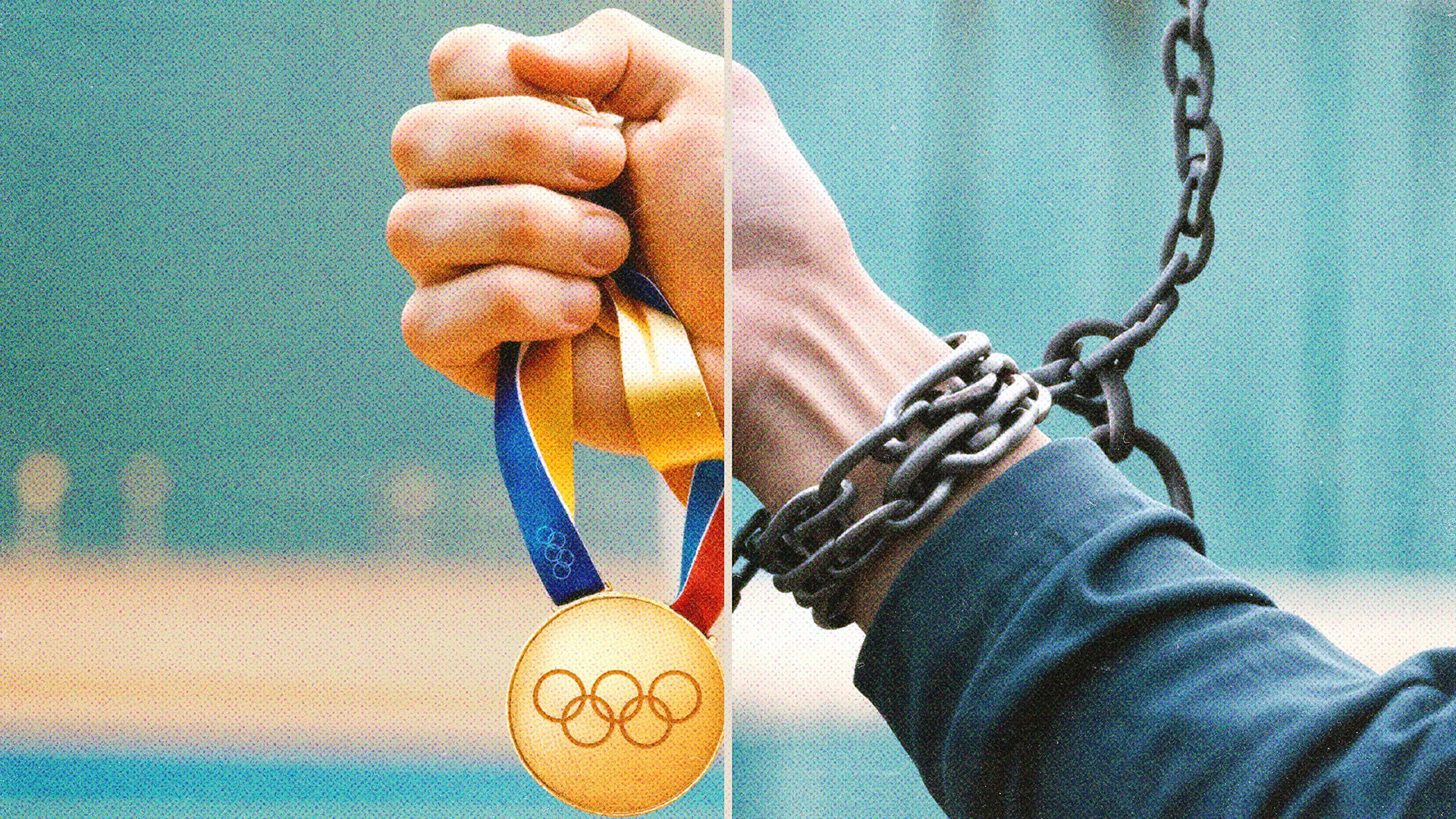
This Olympic Champion Died in a Prison Camp

The 2024 Olympics begin next week, but much of the conversation has centered on an unexpected focal point: the Seine River.
For the first time in Olympic history, the opening ceremony will not take place inside a stadium. Instead, it will move through the heart of Paris, floating down the Seine past some of the city’s most recognizable landmarks. More than 300,000 spectators are expected to line the riverbanks, with millions more watching around the world.
But there are parts of Paris most viewers will never see.
While the city prepares to welcome millions of visitors for the Summer Olympics, it is also home to thousands of refugees year-round—part of a national population of more than half a million displaced people living across France. Their presence reflects global realities shaped by war, persecution, and instability. And history shows that this quieter story has always existed alongside the Olympic spectacle.
A century ago, Paris hosted the 1924 Olympics in the aftermath of World War I and in the shadow of another war yet to come. That same year, one athlete competed whose legacy would extend far beyond medals or national pride. His name was Eric Liddell.
A Secular Stage
France is a deeply secular nation, shaped by laïcité—a political philosophy that enforces the separation of religion from public life. Religion is permitted, but intentionally marginalized. Public officials are not sworn in on Bibles. Religious symbols are restricted in public institutions. Today, only about one percent of France identifies as evangelical Christian.
Paris is also home to Europe’s largest Muslim population, with nearly two million Muslims living in the city. Many arrived as refugees from Afghanistan, Syria, and North Africa. Their presence has brought both compassion and tension, especially following events like the 2015 terrorist attacks.
It is into this complex, secular, and spiritually crowded landscape that the Olympics return once again.
Trading Gold for Glory
If you have seen Chariots of Fire, part of Liddell’s story is already familiar. At the 1924 Paris Olympics, he was favored to win the 100 meters. But when his qualifying heat was scheduled on a Sunday, Liddell refused to run, convinced that the Lord’s Day was meant for worship and rest.
Instead, he entered a different race on a different day—and won gold, setting a world record.
Yet that moment was not the defining achievement of his life.
After the Olympics, Liddell did not pursue fame or another Olympic campaign. He returned to China, where he had grown up as the son of missionaries, and devoted himself to gospel work. Less than twenty years later, he died in a Japanese internment camp during World War II.
The man who won gold in Paris ultimately gave his life for the sake of the gospel.
Why That Story Matters Now
As this year’s Olympics approach, Liddell’s story raises deeper questions. What does glory truly mean? What happens to the gospel in nations shaped by secularism, suffering, or persecution? And how does God continue to work in places like France, Scotland, and China today?
Those questions led us to create a new narrative podcast called Glory Road. The series retraces Liddell’s journey—from Scotland to Paris to China—while introducing believers who are living out the gospel in those same places today. Their stories reveal that God’s glory often looks different than we expect, and that faithfulness frequently leads away from applause and toward sacrifice.
The Olympics celebrate human achievement.
Glory Road tells a story of a different kind of glory—one found not in winning medals, but in losing everything for Christ.
Glory Road, featuring Jamie Dean, is available now wherever you listen to podcasts.
The Olympics kick off next week, but the only thing people seem to be talking about is the Seine River.
They’re cleaning it, swimming in it. For the first time in Olympic history, the opening ceremonies won’t begin in a stadium, they’ll sail down the Seine. More than 300,000 spectators plan to line the banks of the Seine River in Paris and millions around the world will watch while Olympic athletes float by Paris’ most iconic monuments, but there are other parts of Paris you probably won’t see on TV.
While the city will host millions of visitors for the summer Olympics, it’s also home to thousands of refugees year-round. That’s just a fraction of more than half a million refugees living in France. Now, these numbers point to the conflicts and wars that are raging all over the world and driving people from their homes. Of course, that’s not really new. A century ago Paris hosted the Olympics in the shadow of two world wars, but that same year there was at least one Olympic event that shaped not only the 1924 games, but the life of one man whose greatest glory wasn’t winning a gold medal, but losing his life for the sake of the gospel and the joy of the nations, including some of the nations streaming into Paris next week.
A Secular Nation
Just a few oran des mans away from the wealthy neighborhoods around the Seine River, many immigrants live in impoverished conditions.
In the run-up to the Olympics, controversy has loomed over how hundreds of migrants and homeless people have been evicted from Paris suburbs to prepare the city for millions of visitors. Many of these immigrants are Muslim. In fact, France is home to the largest immigrant Muslim population in Europe. 1/3 of that population is concentrated in Paris, home to almost 2 million Muslims. Many came to France fleeing brutal conditions in their home countries, including Afghans, who fled after the Taliban takeover. While France has often been open to immigrants and refugees, sometimes that welcome has been met with real tension in the face of real tragedy.
In the aftermath of the 2015 Charlie Hebdo attacks, anger, fear, and resentment grew. That’s just one part of France’s complicated relationship to religion. France is a secular nation with a unique approach to secularism called Laïcité, but it’s basically the idea of separation of church and state. It’s not a form of state atheism or outlawing religion. Instead, Laïcité aims to keep religion out of public affairs. The French president isn’t sworn in on a Bible. Marriage isn’t legal if it’s only celebrated in a place of worship. And for the upcoming Olympics, France banned French athletes from wearing hijabs, something already banned in French public schools. Even beyond these laws, France has been a largely secular nation for a long time. Today, only about 1% of France identifies as evangelical Christians.
Trading Gold for Glory
That actually brings us back to the 1924 Olympic Games. The Paris games in 1924 were pretty low-key in comparison to today, but those games are still remembered a century later because of one athlete. If you’ve seen the movie Chariots of Fire, you might be familiar with the story of Eric Liddell. Liddell was a Scottish University student and runner favored to win the 100 meters, but there was one big hurdle. His heat was scheduled on a Sunday and Liddell believed that the Lord’s Day was reserved for worship and rest, and he couldn’t run in good conscience. Despite a lot of pressure, he decided to run a different race on a different day, and he didn’t just win, he set an Olympic record.
What was next for Liddell? After the Olympics, Liddell didn’t start training for the next games in Amsterdam. Instead, he headed to the mission field in China. Less than two decades later, the man who won gold in Paris lost his life for the sake of the gospel in China. It’s an amazing story, and this year’s Olympics are a perfect time to revisit it. Liddell’s story made us wonder what’s happening with the gospel today in countries Liddell new best, like Scotland, where he grew up, in France where he ran in the Olympics, in China where he lived and died as a missionary. We decided to head to those spots and tell those stories in a new narrative podcast called Glory Road. We’ll learn more about Liddell’s story and we’ll meet Scottish and French and Chinese Christians along the way, all in the run up to this year’s Olympics in Paris.
If you’ve enjoyed the stories we’ve told here on our YouTube channel, you’re not going to want to miss out on this podcast. It’s available now wherever you listen to podcasts, so check it out.
Glory Road, featuring Jamie Dean
I want to tell you a story about glory, but what if I told you the story begins with Olympic victory in Paris and ends with missionary death in China? Does that sound like glory? Well, it depends on where the road leads. Before we hit the road, we need to glance in the rearview mirror. That’ll help us map out where we’re headed, and what we see might surprise us. The Olympics are really religious.
My name is Jamie Dean. I’m Lead Writer for Radical, and I want to invite you on a journey. Think of it as a road trip to the Olympics and beyond, and here’s where we’re headed. This summer, Olympic athletes will compete on the same field in Paris that a Christian athlete named Eric Liddell made famous during the 1924 Olympic Games. The Scotsman won a remarkable Olympic race, and then he laid down a running career to take up a gospel calling that ended with his death in China. We’ll see that gospel glory sometimes looks more like losing than winning, at least at first, because God is at work in some of the places and some of the people we might least expect. Sometimes people might be easier to reach than we think, especially if we are willing to reach out.
From the team at Radical, this is Glory Road.