

Sanctity of Life

We live in a world where the value of life is often determined by convenience, circumstance, or personal choice. But how should Christians respond when vulnerable lives are threatened? And what does Scripture call the church to do in the face of abortion?
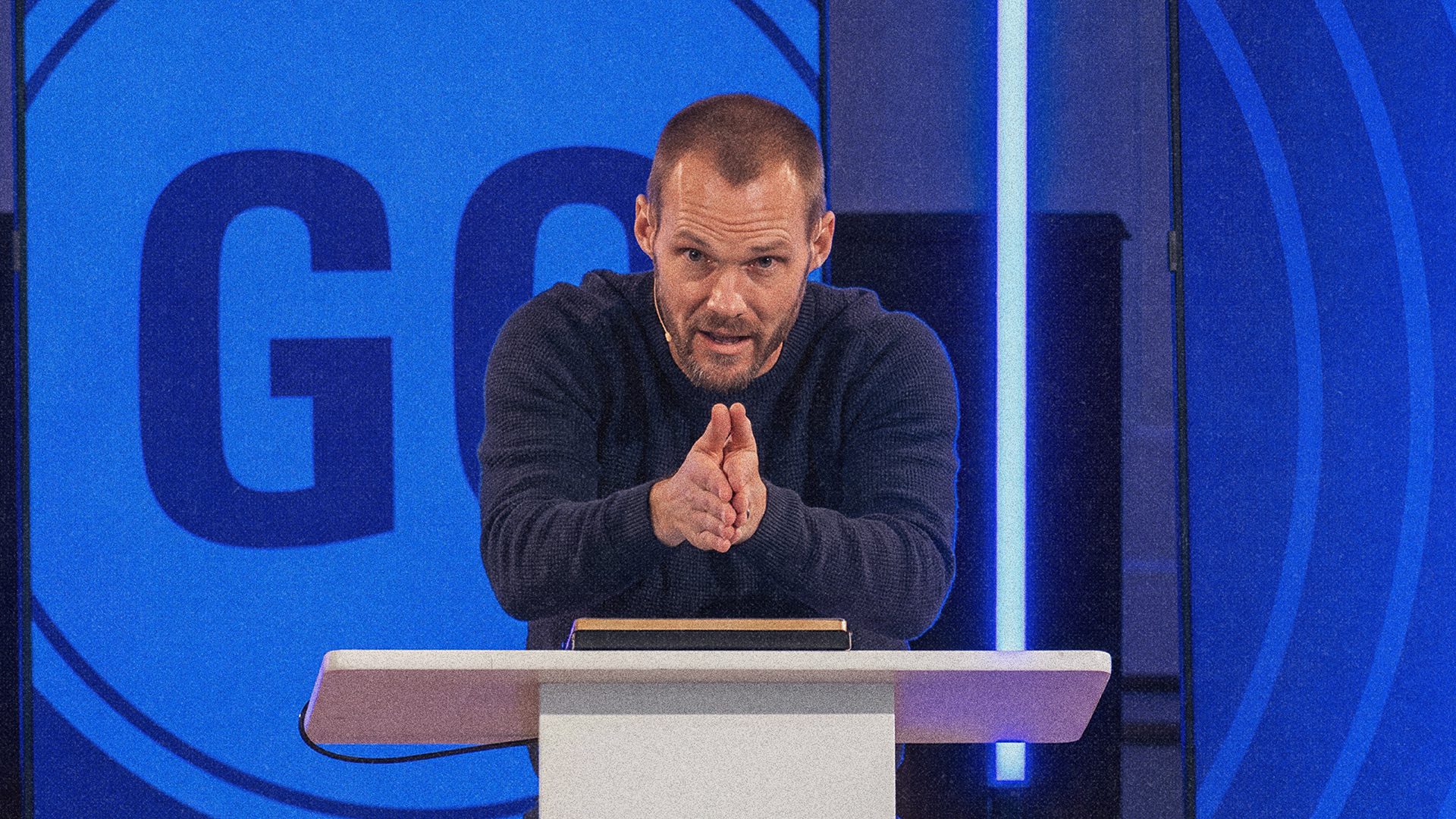
In this message from Psalm 139 delivered at Southeastern Baptist Theological Seminary, David Platt calls the church to see abortion not merely as a political issue but as a biblical one. Because God knows, forms, and values children in the womb, Christians are called to proclaim the value of unborn life with conviction and without compromise. But biblical faithfulness involves more than defending life—it means demonstrating God’s good design for sexuality, marriage, fatherhood, and motherhood.
Platt also reminds us that the church must do justice, love kindness, and walk humbly as we care for children, mothers, fathers, families, and those who need support. Rather than treating political opponents as enemies, Christians are called to honor all people and come alongside those facing difficult circumstances. And ultimately, our primary mission is not to win political elections but to make disciples of Jesus, trusting God to transform hearts.
In this episode:
- Why the value of children in the womb is clearly affirmed throughout Scripture.
- How Christians can uphold biblical conviction about abortion without compromise.
- Why abortion is connected to God’s design for sexuality, marriage, fatherhood, and motherhood.
- How the church can support women, children, fathers, and families in difficult circumstances.
- Why Christians should honor and love people across political and ideological differences.
- How the Great Commission must remain the church’s primary mission.
Are we giving as much attention to leading people to Jesus and helping them live according to his Word as we give to political battles over abortion?
Well, if you have a Bible—and I hope you or somebody around you does who you can look on with—let me invite you to open with me to Psalm 139. If you’re taking notes, I want to give you a picture of the reality and our response.
So the reality is going to be first—specifically, four realities when it comes to abortion in our day. And then I’m going to give you a picture of our response—specifically, four ways God calls us in his Word to respond to these realities.
The Reality
So let’s dive in first to the reality. By that I mean, I just want to start with some facts, some data. So to be clear, we’re not looking at God’s Word at this point. We’re looking at data in the world that paints a picture of abortion from four different perspectives.
Abortion and the World
So first,abortion and the world. And here are the facts. So here’s the reality. Approximately 73 million abortions occur each year in the world. That’s approximately 200,000 abortions per day. Seventy-three million babies in the womb killed through induced abortions each year; life taken from 200,000 vulnerable children today. That’s almost three babies per second.
I did a little math just to put it in perspective. So estimates range anywhere from one to three million people who died due to COVID during the first year, 2020. And the world turned upside down to stop that. That same number of people died from abortions the first two weeks of this year, and the world has totally ignored that and done nothing to stop it. So that’s the reality we are living in, in the world. That leads to abortion in the United States.
Abortion in the United States
So approximately one million abortions occurred last year in this country, and that number had decreased progressively from 1990 down to 2017, at which point it began increasing every year. The point is—to come back to the picture—the number had decreased progressively from 1990 to 2017, at which point it began increasing every year. So it’s increasing right now. That leads to the third reality: abortion and politics.
Abortion and Politics
As of today, neither of the two major political parties in the United States affirm that unborn children have a fundamental right to life. That’s the current political reality. Many of you know that language used to be in the Republican Party platform, but it was removed. And the reality is, since the Dobbs decision overturning Roe in 2022, 16 states have voted on constitutional amendments regarding abortion. And abortion rights advocates have prevailed in 13, or 81%, of those states. So in the states that have voted on abortion rights, they’ve been granted, or efforts to curb abortion have been defeated, in 13 of those 16 states, 81% of the time.
People are voting right now to keep the right to abortion in varying degrees, not to keep the right to life for unborn children, for the most part. That leads to a final reality regarding abortion and the church.
Abortion and the Church
Care Net did a study and they found that approximately 40% of women and 50% of men were attending church at least once a month at the time of their first abortion. In other words, about half of the people who have abortions are attending church, much like Sarah just alluded to. So if you do the math, with about a million abortions happening last year in the United States, that means approximately 400,000 babies lose their lives each year because church attendees abort them.
If you take the map one step further—an abortion costs around $500 typically, which means church attendees spend approximately $200 million a year taking the lives of their babies.
So these are the realities of the world, and of the country that you and I live in.
And just to make this personal, I think about one Sunday when I was preaching on abortion in our church family. And in between our two morning services, I was out in the lobby and there was a guy in tears saying, “I wish I had heard this sermon last week, because I just took my girlfriend this week to get an abortion.” So we would be fooling ourselves to think that is just about other churches—those churches. This is our churches.
So what is God calling us to do in his Word? That leads, the reality leads, to our response.
Our Response
To be sure, there are many things God is calling us to do all over his Word. I’m just highlighting four of them today.
Our response: number one …
1. God is calling the church to believe and proclaim his word about the value of children in the womb with conviction and without compromise.
This is Psalm 139. It’s the text I was reading one day, years ago, when I was convicted as a pastor that I had seen abortion as a political issue that I was passive about and not preaching on. And I realized, just reading the Bible, before this is a political issue, this is a biblical issue that I, in order to be faithful, must preach on.
Verses 13–16. Follow along:
“Your eyes saw my unformed substance; in your book were written, every one of them, the days that were formed for me, when as yet there was none of them.” (v. 16)
Oh, so writing down Scripture, we got Psalm 139:13–16 that makes clear that the womb contains a person—seen, formed, known, loved by God himself.
And it’s not just here in Psalm 139. It’s Job 31:15. God fashioned us in the womb. Job 10:8–11. God’s hands fashion and make and mold us like clay. He clothes and knits us together. Part of me wants to just dive into the intricacies of our bodies and our cells and our blood vessels and all the beauty of how God makes these bodies work.
He is … Psalm 22:10 … our God from our mother’s womb. Luke 1:15 makes clear that John the Baptist was filled with the Holy Spirit from his mother’s womb. God tells Jeremiah … Jeremiah 1:5 … “Before I formed you in the womb I knew you.” Before you were born, I set you apart. You hear that? God knows us before the womb.
And just in case you’re not convinced yet, the very word that the Bible uses for a child in the womb is the same word used for an infant or a toddler outside of the womb. In other words, God’s Word makes no distinction between a child inside a womb or outside a womb. And it’s not just God’s Word that makes this clear.
The more science reveals what’s happening in the womb, the more even abortion advocates realize this is no glob of cells, but a living being. It’s undeniable, and we must proclaim the value of this living being, this image-bearer being intricately woven by God himself with conviction and without compromise. And this is one of the places where I think we see, most see, the danger of what happens when pastors and Christians abdicate their voice for the value of life in the womb to politicians and crowds.
In 2012 the Republican Party and candidate for president opposed all abortions except in cases of rape, incest, and the life of the mother—all of which could lead us into more discussion based on what we just read. But even with those exceptions, that would make 97% of abortions illegal. But today, so just a little over a decade later, the Republican president and Republican party leaders are advocating for anything from a six-week ban to a fifteen-week ban on abortions. And according to the most recent CDC statistics, a fifteen-week ban would make 96% of abortions legal—not illegal, but legal.
In other words, the only party that used to defend the right to life for an unborn child has statistically flipped and is yielding almost all the moral ground; and in the process allowing for 96% of babies, millions of them, to be aborted.
That position is unconscionable for a follower of Jesus who believes the Bible. At what point do people who believe Psalm 139 say it is right to kill a child in a womb? At no point do people who believe Psalm 139 say that.
And even as I’m speaking right now, and I obviously don’t know what’s being said, but the nominee to oversee this issue of abortion in our country, to lead the Department of Health and Human Services, Robert F. Kennedy Jr., has defended abortion on demand during all nine months of pregnancy. And there are, as of yesterday, pro-life advocates cheering him on. This is what happens when the standard-bearers in the world for image-bearers in the womb become politicians who are catering to the whims of the crowds. You lose all conviction.
Pastors, church leaders, Christians—we must believe and proclaim God’s Word about the value of children in the womb, with conviction and without compromise. It is not right to take the life of a child in the womb. We don’t have time today to dive into those exceptions that are often referenced, but that baby is biblically clearly valuable to God, regardless of the circumstances of his or her conception and birth.
And yes, there are pre-term deliveries that are necessary due to preeclampsia or eclampsia for the health of a mother, but those are not abortions. Neither are ectopic pregnancies or situations where a woman has already miscarried and a child in the womb is no longer viable. But people who believe the Bible value the baby in the womb clearly and without compromise based on conviction.
Roland Warren, who I mentioned earlier, he talks about Frederick Douglass’s impact on Abraham Lincoln. Roland, who’s African-American himself, describes how Lincoln was willing to say he believed slavery was wrong, but he wasn’t going to take the step to stop it in the South. But Douglass held to his convictions that slavery must be stopped everywhere, and eventually Lincoln realized Douglass was right and changed his position.
So pastors and Christians, let us not pander to politicians. Let us be steadfast in biblical clarity, conviction, and moral commitment to the value of all children in the womb, no matter what week of development they may be in. Psalm 139, and all the Scripture leads us there.
That kind of biblical conviction without compromise leads to response number two …
2. God is calling the church to declare and demonstrate his good design for sexuality, marriage, fatherhood, and motherhood.
So we would be foolish if we thought the issue of abortion was not intricately connected to our understanding of sexuality, marriage, fatherhood, and motherhood in our culture—all of which Scripture clearly speaks to. In Genesis 1:26–28—God’s creation of man and woman in his image—to Genesis 2:24—God’s institution of marriage between a man and a woman for the purpose, Ephesians 5:22–33, of displaying the gospel and a husband’s selfless sacrificial love for his wife and a wife’s submissive respect and love for her husband; which leads to Ephesians 6:1–4 and a father and a mother loving their child in a way that reflects the love of God for that child.
There’s so much we could talk about here. But just to bring the data to bear on why this is so important: do you know what percentage of women seeking abortions are unmarried in our country? Approximately 86%. So almost nine out of ten women in our country who seek abortions are unmarried.
We in our culture have decoupled sex from marriage, and the effects are tragic for children in the womb. The devilish fruit of sexual immorality is the death of millions of boys and girls. And do you know who’s the most influential person in a woman’s decision to have an abortion? Research shows it’s the father of that baby. There’s not even a close second. And most fathers are at best abdicating that decision, if not encouraging it. And abortion advocates prefer it that way because they want him out of the picture. This is her body, not his.
When the biblical reality is, think about it, this is totally counter to the narrative our culture sells. But because life begins at conception, biblically that means motherhood and fatherhood also begin at conception. God has designed a child from his or her first days in formation to need a mom and a dad protecting and loving and caring for him or her. And God knows what he is doing in his design—his good design of sexuality, marriage, fatherhood, and motherhood.
So, brothers and sisters, singles, let’s pursue gospel-shaped marriages and flee sexual immorality, all sexual immorality, outside of that. Husbands and wives, let’s nurture gospel-shaped marriages. Let’s cultivate sexual intimacy in them with a view toward having children, not seeing them as burdens, like our culture would paint them as, but as blessings, like God’s Word tells us they are.
And moms and dads, let’s protect and love and care for children in the womb from conception. And let’s all spend our lives leading others with conviction, without compromise, and with joy to see God’s good design for sexuality, marriage, fatherhood, and motherhood—for family, knowing that we live in a world of sin and separation and divorce and death and oppression and injustice.
Which leads to the third response …
3. God is calling the church to do justice and love kindness with humility and honor for all people, including children, unborn and born; women and men; orphans and widows; and individuals with any disability or from any political party.
That’s a mouthful, but just let it soak in. So this language coming straight from God’s requirement of his people in the Old Testament in Micah 6:8—”to do justice, and to to love kindness, and to walk humbly” with God—is clearly echoed in the New Testament command from Jesus, the second of all commandments, to love our neighbors as ourselves, Matthew 22:39.
Even more than ourselves, as we look to the interests of others, Philippians 2:4, and lay down our lives for them, 1 John 3:16–18, following the example of the one who, 1 John 3 and Philippians 2 makes clear, emptied himself and gave his life for us. So this is what we’re supposed to do for all of these people—for children, for their parents.
So it’s interesting: do you know the reasons why people say they abort their babies? When you look at the data, and I want to be really careful not to oversimplify this—and certainly not to assume that I know the exact reasoning going on in any woman or man’s heart and mind when it comes to having an abortion—but simply looking at the feedback from those who have abortions, there seem to be two primary reasons. And here’s how I would describe them. The first is love of self, and the second is lack of support, in no particular order. And I would just say, notice neither of those is because someone thinks the baby in the womb is not a person.
So we just mentioned, even science has clearly shown this is a living being. Many of us have thought if we just show the viability of a baby, if the mother could just hear a heartbeat, it would change everything. But people are still choosing abortion. So why? Love of self, and I sincerely don’t mean that to be judgmental or harsh. But I do mean to point out the prevailing mantra of our day, which in a sense has been the prevailing mantra ever since Genesis 3.
Carl Trueman, in his book Strange New World, How Thinkers and Activists Redefined Identity and Sparked the Sexual Revolution, talks about expressive individualism. He defines it as the belief that each person has a unique core of feeling and intuition that should unfold or be expressed if individuality is to be realized. Then he writes, “The impact of expressive individualism on how we think about life and liberty has been dramatic. Old notions, such as the sanctity of life and importance of freedom of religion and speech, have been transformed, even inverted by this new modern self. And all of this is because the notion of happiness with which we now intuitively operate is one where a sense of personal, psychological well-being is central. We might say that happiness is for each of us, first and foremost, an individual thing, resting upon us being independent. All other relationships must serve the end or be seen as oppressive.”
So you follow that. Even a baby in the womb becomes an oppressive threat to a woman’s happiness. So one pro-choice advocate published an article entitled, “So What If Abortion Ends a Life?” And she writes how she “never wavered for a moment in the belief that I was carrying a life inside of me. I believe that’s what a fetus is, a human life. And that doesn’t make me one iota less solidly pro-choice.” In other words, all your arguments about life beginning at conception, I’m with you. But I still desire an abortion.
“Because,” she continues, “a fetus can be a human life without having the same right as the woman in whose body it resides. She’s the boss. Her life and what is right for her circumstances and her health should automatically trump the rights of the non-autonomous entity inside of her. In other words,” she writes, “all life is not equal.” And she concludes that she “would put the life of a mother over the life of a fetus every single time, even if I still need to acknowledge my conviction that the fetus is indeed a life, but a life worth sacrificing.”
I trust we realize we’ve seen this logic play out before. All life is not equal, so I put the life of a mother over the life of a fetus every single time. Just replace “mother” and “fetus” with “Nazi” and “Jew,” or “slave owner” and “slave.”
Expressive individualism, the love of self, is subtly deadly. And we’re swimming in it.
But it’s not just love of self, although that is, in a sense, the sin that plagues every single one of our hearts. But lack of support is a significant factor that contributes to abortions.
We often think people want abortions because they don’t want children. One study showed only 3% of women cited not wanting children as the reason for their abortion. You know what the most common reasons were?
- 40% said they were not financially prepared
- 36% said it was not good timing
- 31% said there were problems with their partner
- 29% said they needed to focus on their other children
And one thread runs through all those responses. They needed support. Did you know that approximately 75% of women seeking abortions are living near or below the poverty line? In one recent survey of a thousand women who had abortions, over 75% of them said they would have preferred to parent had their circumstances been different. So it’s easy to say you would always choose life when you have stability and security and support around you.
But church of Jesus Christ, this is where we come in. This is where we are called to die to ourselves; to lay down our lives and our families; to come alongside children and women and men who need support—to help them live. Not just live, but thrive.
And church, this is what we are designed to do, to fill this whole gap in here. And not just can, but we are called by God to change this. How does God help and protect the fatherless? He does it through his people. We’re made for this.
So, yes, of course, we work for just laws and vote for just leaders, but the church itself is designed to do justice, love kindness with humility and honor for all people, including orphans and widows. I don’t think it’s a stretch to include in focused care for single parents who need support in parenting.
Orphans, widows, those with disabilities—I trust we realize a disturbingly disproportionate percentage of children, for example, with Down syndrome are aborted, usually in the name of “quality of life,” even though people with Down syndrome, including some in the church family I pastor, are known to be some of the most happiest people in the world.
As the church, we must be serious about caring for individuals and families with special needs on a regular basis. Does your church have a way to care for individuals and families with special needs so that they and their families can be a full participant in your church family week after week?
All this leads to the last phrase I put here, “people of any political party.” So 1 Peter 2:17: I just put it there … “with honor and dignity.” First Peter 2.17: “honor everybody,” and just in case you didn’t get the memo on everybody, that includes the emperor who’s persecuting you. And this is really important. If we see abortion primarily as a political battle, then we’ll see people in other political parties different from ours as enemies to be defeated. But that is the way of the world, and it is not the way of God’s Word. It’s not the way of the people of this book.
The word of Jesus is to love those whom the world—and maybe you—would label enemies, and to pray for them and to serve them and to care for them as you honor them.
Let’s love, care for, come alongside, work together to defend the unborn.
All that leads to last response number four …
4. God is calling the church primarily to obey his Great Commission, not to win our political elections.
Without question, with the grace God gives, we work wisely for just laws and just leaders and policies and practices—what we could call just systems, or structures, on behalf of the unborn and women and men. And at the same time, we know our main aim as the church is not ultimately new laws, as good as they may be. Our main aim is new hearts.
It’s what we say at the end of every one of our worship gatherings. Go “make disciples of all the nations.” Go tell people about the God against whom we have all sinned, who has come to us miraculously as a baby in a mother’s womb—that was totally unplanned—to show us how to live with love and kindness and perfect obedience, to trust in God’s Word. Then he died on a cross to pay the price for our sins, the sins of anyone who will trust in him. He rose from the dead, conquering that sin so that all who trust in him will not only be forgiven of their sin, but restored to God, filled with his Spirit to lead us to entirely new, abundant life.
Yes, Jesus is the greatest need in our country. Jesus is the greatest need in the world. All people need to be reconciled to God through faith in Jesus, to walk in his ways, not the ways of this world. And this is what we have been commanded to do, to make disciples of Jesus.
So yes, I think about the Dobbs decision. We praise God for work over almost 50 years to bring about that change in our country. Yet I trust we realize in an even greater way on this issue, human hearts are still the same. And people are choosing abortions and voting to allow abortions. And abortion pills are becoming all the more easy and accessible to get in all kinds of ways. And we will continually invent new ways to do evil. So what are we supposed to do over the next 50 years? The same thing we need to have primarily been doing the last 50 years—making disciples of Jesus, leading people to life in him, then helping one another to live according to his Word, not the ways of this world.
And I use the word “primarily” there very intentionally. We need to ask ourselves, do we give the same level of energy to the Great Commission that we give to political efforts and arguments? Do we feel the same levels of emotion when it comes to leading people to Christ that we feel when it comes to supporting a particular position or posting a particular opinion?
So many of us have done so much in the social and political realm. The question we all need to ask is, who have we led to Jesus in such a way that they’re now leading other people to Jesus? That’s the commission Jesus has given to us.
Even on this issue, our aim is not merely for abortion to be illegal in government. Our aim is for abortion to be unthinkable in people’s hearts and minds. And only God, by his grace and the work of his Spirit in human hearts, can bring that about through disciples of Jesus making disciples of Jesus in all the nations.
We’ve talked a lot about the U.S., but there are 72 million others among the nations. So let’s make disciples of all the peoples so that all people have access to life on this earth and in eternity.