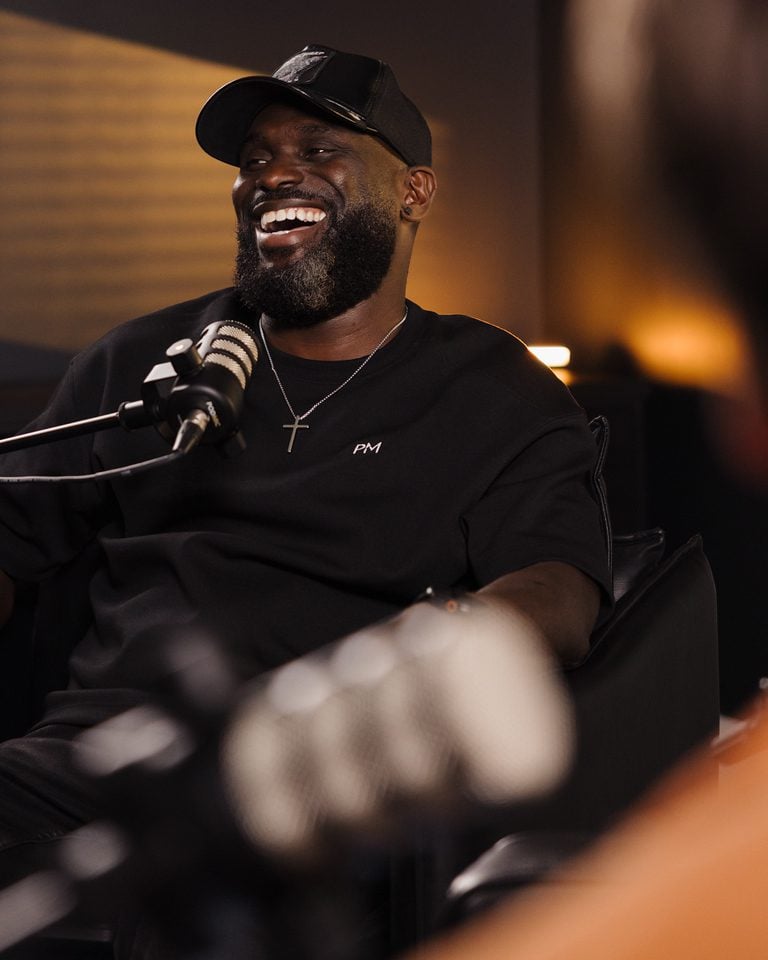


Philip Anthony Mitchell Opens Up About the Battle Behind His Ministry
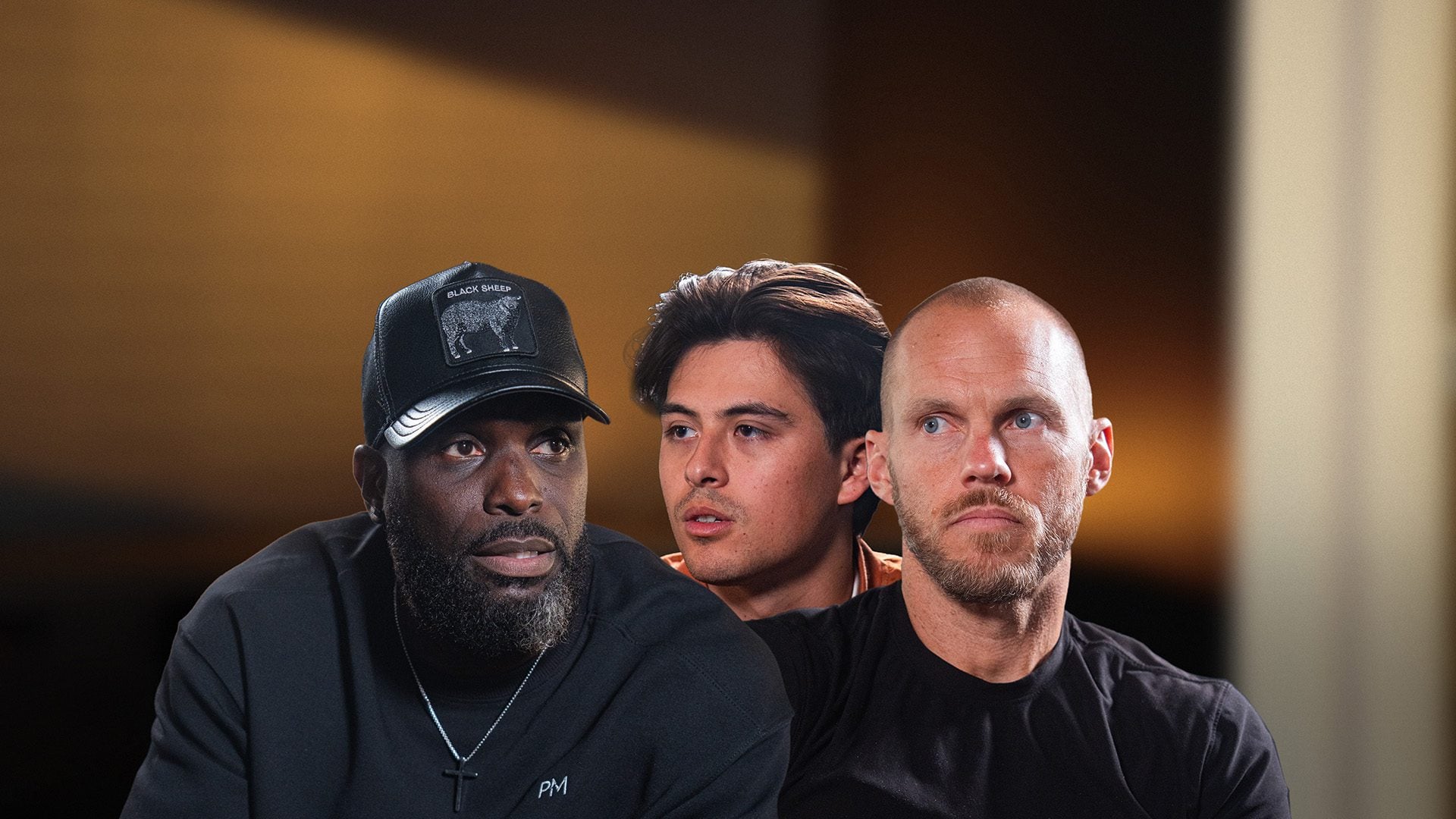

What does it look like to contend for the gospel in a culture increasingly hostile to biblical truth without losing your own soul in the process?
In this episode of Everyday Radical, David Platt and Austin Huang sit down with Pastor Philip Anthony Mitchell for a deeply personal conversation about prayer, faithfulness, suffering, and the urgent need for Christians to contend for biblical Christianity.
Philip shares why prayer has become the foundation of his life and ministry, tracing that conviction back to hearing his immigrant parents cry out to God in their basement when he was a boy. He reflects on his own conversion at age 24, when God met him at one of the lowest moments of his life, and how a simple commitment to prayer eventually grew into Access, a movement calling thousands of people to seek God together.
The conversation also explores the dangers that come with influence, platforms, and worldly definitions of success. Philip shares lessons God has taught him about viewing ministry as a stewardship rather than something he owns. Together, they discuss why Christian faithfulness cannot be measured by followers, recognition, or visible results. The goal is ultimately to hear, “Well done, good and faithful servant.”
But contending for the faith is not only an external battle against false teaching and cultural compromise. Philip explains why Christians must also contend internally, preaching biblical truth to their own hearts in seasons of pain, doubt, discouragement, and suffering. Drawing from his own experiences with criticism and public attacks, he shares how suffering has deepened his intimacy with Jesus and changed the way he understands hardship.
This conversation is a call to a Christianity rooted in prayer, saturated in Scripture, willing to suffer, and determined to remain faithful. In an age of false gospels and spiritual complacency, Philip challenges Christians to contend for the faith while keeping their eyes fixed on Jesus.
Key Questions
- Why are prayer and dependence on God essential for faithful Christian ministry?
- How should Christians define success, influence, and faithfulness?
- What does it mean to contend for the faith both externally and internally?
- How can suffering deepen our relationship with Jesus rather than destroy our faith?
In This Episode
- How Philip Anthony Mitchell’s childhood, conversion, and parents shaped his commitment to prayer
- Why ministry platforms, influence, and visible success are poor measures of Christian faithfulness
- What it means to contend for biblical Christianity in a culture of false gospels and compromise
- How pain, persecution, and suffering can draw believers into deeper intimacy with Christ
How to Respond
- Cultivate a deeper life of prayer and dependence on God instead of relying on your own strength.
- Measure your life by faithfulness to Jesus rather than influence, recognition, or visible results.
- Contend for biblical truth in the world while continually preaching the gospel to your own heart.
- Bring your pain honestly before God and trusted believers, allowing suffering to draw you closer to Christ rather than pushing you away from him.
Everyday Radical—honest conversations about following Jesus with courage, clarity, and compassion in everyday life.
Austin Huang:
Welcome back to Everyday Radical. I’ve been very, very, very expectant for this one because today we have Pastor Philip Anthony Mitchell.
David Platt:
Brother, thank you, well, for being on this podcast, but for the way you are contending for the gospel, calling the church to bold proclamation of the gospel, to prayer.
Austin Huang:
Yeah.
David Platt:
I was looking at the Access Guide to Prayer, and at the end it had Why Revival Tarries by Leonard Ravenhill. He said, I remember you said in that book, “The pastor who is not praying is playing.”
Philip Anthony Mitchell:
Playing, yeah.
David Platt:
How much are we playing in the church today?
Philip Anthony Mitchell:
First, just, thank you. Thank you, guys, for having me on the platform. I want to give you your flowers while you’re alive. I want to just thank you for being a bold proclaimer of God’s Word for all these years, for being faithful to the gospel, for the work you’ve done across the United States and around the world, for your stance for truth, for not shying away from truth and for everything you’ve done through Radicals. I just want to thank you even for the impact you’ve had on my life. So I just want to say that first.
I may be known for proclamation in the US and outside the US, but proclamation is not the strongest part of my ministry. The strongest part of my ministry is what people don’t see. It is my prayer life. I feel that the battle is won or lost first in the prayer room. And I think that if we are not praying before we preach or before we do any form of ministry, if we’re trying to do ministry or proclaim God’s word apart from praying, I think we drift to a place of almost self-reliance on ourselves. And so I think prayer is critically important. I think Jesus modeled that for us. And I think that our churches will be stronger and Christians will be stronger to the degree we develop a deep, intimate, personal relationship with the Lord Jesus Christ through our prayer life.
David Platt:
When did that conviction start for you?
Philip Anthony Mitchell:
Yeah, man, it started for me when I was a young boy. I was raised in Queens, New York and I had immigrant parents. I have immigrant parents from the nation of Trinidad. My father went on to be with the Lord. But when I was young, I would get up in the middle of the night and I would sit on the stairs and I would hear my parents in the basement. They had a prayer room in the basement and my mother had this old wooden cross and I would hear her banging that cross on the floor and calling my name before the Lord. I would hear my father down there praying, calling my name before the Lord. I would hear them praying for other people and praying for my sisters and my brothers. And this would happen so often. So for years, they never knew I was just sitting at the top of the stairs listening to them pray. And I had no relationship with Jesus for myself. I knew no scriptures except for Psalm 23. They forced me to memorize that.
But I would just listen to them pray and something about that intrigued me. And so I guess I saw it modeled first in my parents and I saw my parents, who struggled through poverty and great challenges economically just depend on God and prayer, man. They would pray for everything from just help, food, strength, grace, wisdom, humility. I would just hear them crying out to God all the time. And so I think a seed was sown indirectly, and when I came to know the Lord Jesus Christ for myself at the age of 24, I think that seed came alive in me. And so prayer has always been the foundation of my life and my ministry. It’s at the foundation of our church and everything that we do. We start every meeting with prayer. We end every meeting with prayer. We pray over the auditorium before people come into gatherings. We pray over everything, and that’s why we’re trying to call the nation a prayer right now through Access.
Austin Huang:
Come on. Access started in your parents’ basement, didn’t it?
Philip Anthony Mitchell:
It did. Access started in my parents’ home. When I moved to Georgia, my wife and I was living in a small home, like 800 square feet, and my parents moved to Georgia. They followed us here. My father was sick. He was dying with cancer at the time. So he was about two doors down from me. At that same time, I was getting ready to plant a church from scratch, which was probably one of the most difficult undertakings in my entire life. And it was a dichotomy for me that was really difficult to deal with because on the one end, something was birthing in terms of ministry, but down the door for me something was dying. And my wife and I and my kids and my mother, we would gather at my parents’ home on Wednesday nights. We would come around my father’s bed and we would just pray, ask God if he would be so inclined he would heal him. And we did this every Wednesday night.
And three months after I planted our church, my father went home to be with the Lord. So he is healed now in glory, but he did not see healing in this life and he never got a chance to see what I would become. But one of the things he said to me before he died, it was one night we was in prayer he said to me, “I want you to keep prayer going some way, somehow. I want you to keep this. No matter what happens, keep a time of prayer going.” And so we did that. And so after he passed, we continued to gather at my mother’s home on Wednesday night just for prayer. And one day I was reading through the book of Acts and stumbled on that account when Peter and John went up to the temple for an hour of prayer, and something about that really gripped me. And so I told my family, “When we come together to pray, we’ve been here a long time, I’m going to cap it at one hour like Peter and John.” And then so we continued to do that.
And then when we founded our church, we carried that into the church and every Wednesday night we would have an hour of prayer. And we did that for 13 years. And during some point in time I gave it a name. I just called it Access, our ability to connect with God through Jesus Christ. And then I had this vision, man, is it possible that we can take this outside of our church and call the nation to prayer? And so we did that for the first time last year at State Farm Arena where 40,000 people showed up to pray for an hour.
David Platt:
And not just in the arena, they’re out on the streets.
Philip Anthony Mitchell:
Yeah, man.
David Platt:
Because they can’t fit in that arena.
Philip Anthony Mitchell:
No, it was 20,000 people inside the arena. It was another 20,000 next door at the Georgia World Congress Center, and probably thousands more in the street. They took over our Centennial Park. So they turned the streets into a secret place. And there was some drama around that because there is a group of people that really hate me and they came to protest and all the things. But man, 40,000 people descended on State Farm Arena to prayer. And the president of the arena said it was the largest gathering in State Farm Arena’s history.
David Platt:
Wow.
Philip Anthony Mitchell:
So I’m just thankful that Jesus has that title, I mean at a basketball game.
David Platt:
So good, man.
Austin Huang:
Yeah, let’s go.
David Platt:
Bro, I’ve got to share this quote with you.
Philip Anthony Mitchell:
Yeah, man.
David Platt:
It’s from Eugene Peterson.
Philip Anthony Mitchell:
I love Eugene Peterson, man.
David Platt:
He’ll wreck you on some of these things.
Philip Anthony Mitchell:
Yeah, man.
David Platt:
Because this so encapsulates what you’re talking about. He said, “Pastors who imitate the preaching and moral action of the prophets without also imitating the prophet’s deep praying and worship so evident in the Psalms, are an embarrassment to the faith-
Philip Anthony Mitchell:
Jesus.
David Platt:
… and an encumbrance to the church.”
Philip Anthony Mitchell:
Jesus. Jesus.
David Platt:
Well, I’ll just be honest, when I read that a few months ago, I was like, that’s too true of me. Yeah, as a pastor and just preaching in ministry, I’ve tried to be bold in proclamation of God’s Word, but I’ve not imitated the prophet’s deep praying and worship like I know he’s inviting me to. It’s caused some really significant changes in my life, but I just want to affirm God’s grace in you in that way. And unfortunately, I think it’s pretty rare in our church culture. It used to be common what Martin Luther, like, “I have so much to do, I can’t get on with a day without spending three hours in prayer.” Charles Simeon four hours every morning with the Lord.
Philip Anthony Mitchell:
Yeah.
David Platt:
And I think today, the average pastor prays like 15, 30 minutes a day.
Philip Anthony Mitchell:
You know something, bro, but I want to affirm something in you though, because when I listen to you proclaim, I hear a depth of love for the Lord Jesus Christ and a depth of love for people, and a depth of love for the scriptures. And sometimes when I listen to you proclaim with that depth, I felt a sense of insecurity around when I hear men like you proclaim. I know that you have a PhD. I don’t have that type of education, that type of seminary training, and I’ve wept over that. And to me, it’s made me feel insecure at times. Sometimes it makes me feel a little unworthy to be behind that sacred desk. So I think there’s things that we all struggle with that we can do better. I think I could do better in study. I could do better in reading.
And so I just want to affirm in you, although God is doing something in you as it relates to that quote, how’s it affect you at prayer, I want to know on the other end, you know what I’m saying? Your depth of study, your depth of knowledge, of God’s word, your depth of theology. Man, it’s been a blessing to the body of Christ for decades, and so I want to just affirm that in you, bro.
David Platt:
I appreciate that and receive that.
Philip Anthony Mitchell:
Yeah, man.
David Platt:
And am spurred on toward you and the way we’re talking about today.
Austin Huang:
Yeah.
David Platt:
So yes, maybe in a Romans 1 kind of way just mutual-
Philip Anthony Mitchell:
Yeah, man.
David Platt:
… edification in the faith. But yes, let’s go deep in both.
Philip Anthony Mitchell:
Yeah, man. Deep in both, man.
David Platt:
In the Word and in prayer-
Philip Anthony Mitchell:
And deep in prayers.
David Platt:
… let’s devote ourselves-
Philip Anthony Mitchell:
Yeah, man.
David Platt:
… to these two things. That’s pretty amazing, right? Acts 6, we don’t even have time to care for widows who are starving. Not that we don’t care for those widows and not that we don’t need to address that, but there’s a need for devotion to prayer-
Philip Anthony Mitchell:
Yeah, absolutely.
David Platt:
And we’re alongside caring for needs around us that we cannot neglect.
Philip Anthony Mitchell:
Yeah, absolutely.
Austin Huang:
And I think both of y’all, what y’all just said is, it’s our desire as a young person who’s … I look at both of you, number one, I thank God for what he’s done in both of y’all’s lives and how your ministry has impacted mine. And number two, if I’m honest, I don’t know if jealous is the right word, but I can see your desire for prayer, your desire for the Word. And as someone who is an aspirational leader to my generation, I can feel bad that I don’t have this burning desire necessarily. I was telling you this is what spurred on that Eugene Peterson quote. I can feel, I don’t know, I don’t have the desire to cultivate a prayer life, cultivate a time in the Word every day, and I feel like I can just perform without inviting the Lord into it. So both of y’all, what are some of the key ingredients to cultivating a life that is saturated in prayer and in the Word?
Philip Anthony Mitchell:
Well, man, I want to just say to you, I want to just affirm you to say even though you may feel that way about yourself, I feel a hunger coming off of you. I could just sense, even though you and I have met twice, once in Mexico and once again today, I can feel hunger coming off of you. And I think there are a lot of people in your generation who are so ambitious and prideful, they will not have the humility to want to learn from those who have gone before them. And what I see in you is a humility to want to learn. And I want to say to you and to those who may be watching of your generation, that there’s nothing wrong with having admiration for those who have gone before you. That is different from idolization. And I think oftentimes in our generation, we throw the word around, idolization around. Sometimes the devil uses that to rob us of just having a genuine admiration for people that God has set before us.
Austin Huang:
Really good.
Philip Anthony Mitchell:
And I think we have to be careful about that. So I want to affirm your hunger. And I think in your hunger, I think it’s beautiful when you can acknowledge the gift of God in men who has gone before you and learn from those men of God. I have this saying, I say, “I think only a fool learns everything by experience, but those who are wise, they will learn from those who have gone before them, both successes and failures.” So I think a gift to your generation is a David Platt, right? A gift to your generation, maybe one day they might say is a Philip Anthony Mitchell. One day I might make it on the David Platt list.
David Platt:
Stop it. Stop it.
Philip Anthony Mitchell:
You know what I mean? I might make it on that list one day. But when you have gifts like that that are alive, it’s a blessing to be in their presence or to learn from them vicariously and glean from them. And so the things that we may be lacking and we can see it in another man, admire that another man and pray as God, “Lord, would you help me to have a prayer life on fire like this brother? Lord, would you help me to have a hunger for the scriptures like this brother?” And I don’t think there’s anything wrong with that. I don’t think that’s idolization, I think that’s wise, right?
Imagine, think about this, think about some of the best theology we have from the Lord Jesus Christ was a result of him answering questions from the disciples. Imagine that day when the disciples said to them, “Lord, teach us to pray.” Why would they say that? They saw something in him that they admired. He would slip away often to go and be alone with the Father. And at some point in time of watching that consistency in his life, something inside them was like, “Teach us how to do that.” And so they saw something in Jesus that sparked in them maybe a sense of, “I don’t have that, but I see that in you. I want that. Teach us how to do that.” So I think that is wise. I think it is humble. I think it is good that you would express that, so that you will learn from men like David about depth of study, and maybe from men like me about depth of prayer.
And so I think it begins with just hunger, humility and coachability, and willingness to learn from others. I think if you can learn in 20 minutes what it took somebody 20 years to learn, it helps you to go much further faster.
Austin Huang:
That’s so good.
Philip Anthony Mitchell:
Yeah, man.
Austin Huang:
Thank you.
Philip Anthony Mitchell:
Absolutely.
Austin Huang:
That’s huge.
David Platt:
Man, there’s so much there. I think about, well, the people, the men who have shaped you, I’m hearing you talk about your dad, I really look forward to meeting your dad.
Philip Anthony Mitchell:
Me too. I look forward to seeing him again.
David Platt:
Yeah, I really-
Philip Anthony Mitchell:
Yeah, man.
David Platt:
… look forward to meeting him, and brother, just celebrating with him the fruit of God’s grace, not just in his life, but in his family and specifically in his son.
Philip Anthony Mitchell:
Man, thank you for that, man.
David Platt:
What a picture. I just picture the elation on your father’s face and in the glory of that, and to our Father’s glory.
Philip Anthony Mitchell:
Yeah, man.
David Platt:
So who are the other people who’ve shaped … Or either people or moments that have really shaped who you are?
Philip Anthony Mitchell:
That’s a great question. I’ve been shaped more by men who are dead, who probably I’m not sure if your generation even acknowledged. So I’m going to just list a few and then I’ll talk about a couple that’s alive. So men like Whitefield, Wesley, Billy Graham. Graham, Spurgeon, men like that. Men who, from their writings, they just had this sense of this depth of calling, where it’s like something about them they knew, and the way that they proclaimed and lived that they were set apart for a purpose that was much bigger than themselves. Men like that inspire me. Revivalists who have gone before me really inspire me. So a lot of people who are dead have inspired me. And men who are alive. Yourself. Matt Chandler, who’s a brother of mine. Men who are serious about gospel proclamation. Men who have had fidelity to the Word of God. Men who I’ve seen walk with a type of fear and reverence for God, where it’s like they tremble before that Word. They don’t want to add to it, thy don’t want to take away from it. Men like that have really impacted my life.
And then in terms of moments that have marked me the most, three I can think about. The first one is when the Lord Jesus met me in a bathroom when he saved me when I was suicidal and empty at the age of 24, when I had all the trappings of worldly success but I was empty on the inside, no peace. And crawled into a bathroom and started yelling at God, and God saved me in that bathroom.
David Platt:
Praise God.
Philip Anthony Mitchell:
So the gospel came to me in that bathroom. So that moment means a lot to me because I think that in the generation we live, there’s so much materialism that has infected the body of Christ that the cross is not enough, that we need God to perform to make us be thankful. If he doesn’t give us the job we want or the house we want or the car we want or the spouse we want, it’s like he has to keep doing back flips to make us be thankful. I don’t need that, bro. I just need to get a glimpse of the cross and remember what Christ did for me there.
And I oftentimes think about that moment in the bathroom and I think about all the times I could have died before that moment and where I would have been. I think about the bullet that grazed my ear. I think about the foolishness I did in the streets. So for me, that moment is a moment that I relive in my life all the time and it makes me have gratitude for salvation apart from God doing anything else. So that moment, that’s number one for me.
The second moment for me would be I had an encounter with God at The Garden Tomb in Israel in December of 2018 when I was in ministry, but I was feeling like I didn’t have a clear sense of identity and a handle on the gospel and I was just searching, and I felt like, “Man, I’m going to Israel.” And my wife, I dragged her with me and we toured the whole nation from the northern parts of Israel and the Golden Heights, all the way to the southern parts of Israel. And I remember I was fasting and praying during that trip and just asking God to speak to me, and I heard nothing. Nothing, bro. Absolutely nothing. And on the last day, it was December 8th, the day after my birthday, I go into The Garden Tomb. I come out The Garden Tomb, I hear singing off to my right. And it was a language I did not know, but I could feel God’s presence and I just slipped into the gathering. I was the only Black dude in the gathering, so I couldn’t hide.
And I’m standing back there and I could feel God’s presence, and the man leading the gathering, he pointed to me and he motioned to me to come to the front and he started speaking to me in a language I did not know. And by God’s divine providence, one of the gentlemen on my tour bus spoke the language of the man who was speaking, was Portuguese. And so he’s speaking, the brother who’s with me is interpreting, and this is what he said to me. He said to me, “Young man, I’ve been to your nation. I see how the church is dying.” And he’s talking about compromising the church and all these things. And he says, “Do you want to go back to your nation and do something about it?” I burst into tears. I said, “Yes.” I fall down on my knees. And then that company of believers all from Brazil, they lay their hands on me, they pray for me, and a woman on the bus captures the whole thing on her phone, by God’s grace. So I have it on video.
And that moment marked me. That moment marked me because, David, I felt like while I was on the floor praying, I felt like I had an Isaiah 6 moment, where for me, having spent 10 days in Israel, it was like in that moment I had this clear revelation of the supreme nature of God’s holiness. I was acutely aware of my sinful nature and there was like this reverence came into my heart for God that wasn’t there before. So I was preaching, but I didn’t have a depth of reverence. And I was pastoring, but I didn’t have this depth of reverence. And I had saw in Israel a type of respect for God and for the scriptures that I had not seen in the United States. And so in that moment, all of that converged in that moment and that marked me. And I felt like God gave me a charge to come back to the United States and cry aloud and spare not. So that was that moment.
And the last one was when I went to Turkey in January ’24 and realized that a part of the world that was once dominated by Christianity is no longer dominated by Christianity. I shed tears in Turkey. And it was that moment in Turkey that gave birth to this book that I wrote called Contend. So those three moments specifically, I feel like have been markers in my life.
Austin Huang:
Whoa.
Philip Anthony Mitchell:
Yeah.
Austin Huang:
Man, Isaiah 6, I was just in there last week.
Philip Anthony Mitchell:
Come on, man.
Austin Huang:
And I loved how … I mean, you got this picture of this prophet called by God. He’s walking into this, he sees God and he says, “Oh my gosh, I’m a sinner. I’m a wretched sinner.” And then what does the Lord immediately say? “Who’s going to go for us?” Does he keep wallowing in his self-pity and shame? But like you, in that instance in Israel, when the Lord said, “Will you go?” You got up and now you’re producing that fruit.
Philip Anthony Mitchell:
Yeah.
Austin Huang:
So I’m just so grateful that you didn’t hear that and say, “Man, I’m just a sinner,” because I think that’s what a lot of people get caught up in, thinking, “Oh man, I am so sinful compared to someone like Pastor Philip Anthony Mitchell, someone like Pastor David Platt. I could never amount to how God has used you guys.” But I think that’s the key, is that in your sinfulness, in your wretchedness, God will meet you and he’ll call you out of that. And if you have the boldness and the courage to say yes, he’s going to do crazy things.
Philip Anthony Mitchell:
You know what’s powerful about what you said too, and something David said earlier that I think is very important when David talked about his personal conviction, that he wants to go deeper in prayer, what’s beautiful about this moment, connection to something David was saying, was that I think when people have influence and when they’re admired, we rob people of hope when we put on a veneer of perfection. Because when you admire someone and they seem to have this veneer of absolute perfection, there’s something in younger generation that look to that man, look to that woman and think, “I can never get there. This person is too holy, too far. I will never get there.”
So I think it’s beautiful sometimes when people who have influence have the humility, like you just did, to just peel back the curtain just a little bit to invite people into their humanity. And in so doing, it gives other people hope. Well, man, if David, who is known around the world for gospel proclamation can say on a couch, “Man, I want to do better in my prayer life,” immediately people listen and have hope. Or if a PAM could say he feels insecure because he doesn’t have a seminary degree, he needs to be a better student of the Word, it gives people hope. And this is why I don’t want to get into a Bible study here, but this is why I love when the Apostle Paul says, “I boast all the more in my weaknesses, that the power of Christ may be displayed in me.” So I think we help people by allowing them to see some of our humanity.
Everybody can’t handle all of your humanity, but I think when we do that every now and then, it gives your generation hope. Like, “Man, PAM struggles with insecurity, yeah. And he struggles with feeling unworthy, yeah. And David Platt wants to have a stronger prayer life, yeah.” And immediately, you know what you feel? Hope. You know what you feel immediately? You feel encouraged. This is why I love the back half of Romans chapter 7. You know what I’m saying? I love-
David Platt:
We were just talking about that.
Philip Anthony Mitchell:
Bro, stop playing, right?
Austin Huang:
Like, are you serious?
Philip Anthony Mitchell:
Come on. I know Christian men-
I know, exactly, right?
That’s what I’m saying, this is love the back half of Romans chapter 7.
Austin Huang:
Wow.
Philip Anthony Mitchell:
The Apostle Paul, man.
David Platt:
Yes.
Philip Anthony Mitchell:
Come on, man. The man who wrote almost two-thirds of the New Testament talking about his wrestle between his sinful nature and the spirit of God, although he doesn’t get into details, man, but that gives people hope, man. Hope, brother.
David Platt:
Yes. He’s a wretched man, we’re wretched men.
Austin Huang:
We’re wretched men.
David Platt:
And women. Who will rescue us from this body of death?
Philip Anthony Mitchell:
Thanks be to God.
David Platt:
Amen.
Philip Anthony Mitchell:
Lord Jesus Christ, man.
David Platt:
Yes. Yes.
Philip Anthony Mitchell:
I think that’s just wonderful, man.
David Platt:
No condemnation.
Philip Anthony Mitchell:
No condemnation.
David Platt:
We are free. Yes.
Philip Anthony Mitchell:
Yes, man.
David Platt:
Oh, man, that’s-
Philip Anthony Mitchell:
That’s why I love the back half of Romans 7.
David Platt:
Yeah, to the extent of which you’re comfortable answering this question, when I wrote Radical, for example, years ago, so this book about taking back your faith from the American Dream, and then it sold a lot of copies and I start getting invited to do all kinds … I found myself surrounded by the American Dream in a way I hadn’t had before. It was disorienting. So I mean, by God’s grace, he’s giving you influence based on prayer and proclamation of the gospel. How are you wrestling with the disorienting nature of … I think about even, I can’t remember the exact quote, but it’s another Ravenhill quote, but it’s like, “Man, the early church knew all about persecution and imprisonment, and we focus today on personality and popularity.”
Philip Anthony Mitchell:
That’s what he said.
David Platt:
Man, there’s a system that if we’re not careful, can war against the very things that God’s doing in our hearts. Anyway, just-
Philip Anthony Mitchell:
Yeah, man. Man, I mean, you had great influence from a very young age. I mean, on Wikipedia, you’ll always be remembered as the youngest megachurch pastor.
David Platt:
There you go.
Philip Anthony Mitchell:
At 27, you use a powerful word, man. You use the word disorienting. Man, what a powerful word, man. That’s how I feel. I can be fully transparent. Man, I’ve been preaching in the dark, let’s say obscurity for over a decade. Nobody cared about what I was doing, whatever the case may be. And I’m a normal dude, David, bro. I’m so normal. I’m a homebody. I like being at home with my wife and my kids. I swim. I eat fried chicken. I watch sports. When we launched 2819 in January ’23, we had 183 disciples in an empty auditorium. And as sure as God is my witness as He’s above us, I had no desire for a platform. I had no desire to be known. I had no desire for a large church. I had no desire for a big Instagram following. I had no desire for any of that. So everything that I’m experiencing now, I did not ask for. I had no desire. And so everything happened so fast, and it is to this day still disorienting.
And then dealing with public warfare and dealing with a life now where everyone has an opinion about everything that you do and they don’t know your heart. And dealing with the fact that I have adult children and teenagers who have access to social media and they see people say things about their father and all that stuff. So it’s also tough on my family. It’s disorienting for them too. And for me, to be honest, man, there is a fear in all of it for me, but not a fear of men. I don’t fear men. The fear for me is can I steward what God is doing well without getting lost in the process? And that fear really, I was awakened by that fear maybe about two years ago. Maybe I’m not a good pastor for this, bro, but I don’t look at our attendance report every Sunday and I don’t look at our finance report. I just don’t do it. And maybe I need to be a better pastor, but I just don’t do that.
David Platt:
I don’t think that makes you a bad pastor.
Philip Anthony Mitchell:
Okay, man. I don’t do it, man. I don’t know if I need to do it, but I just don’t do it. And it was maybe about two years ago, one of our directors brought me an attendance report and the attendance report showed that we had over 2,000 people show up for the gatherings that Sunday. I had never preached to 2,000 people before and we was in a high school. And I started feeling myself for a second, David. I was like, “Oh snap. Yo, 2,000 people showed up to hear the gospel preached in the high school.” And I went home and I was ruminating over that, bro, and I was up at night, like, “Man, 2,000 people. Does that mean we’re a megachurch now?” And I’m having all of these worldly thoughts. And when I woke up in the morning, my heart was so grieved, like, “Yo, what’s wrong with you Philip?” I told Lena that afternoon, I said, “Yo, I got to bounce. I got to leave.”
I grabbed a jug of water from my pantry, a legal yellow pad and my Bible, and I went and got a hotel room for five days. I fasted, I prayed, I wept, I wrung out that sin from my heart. Pride, arrogance, feeling myself. Man, I dealt with me. And I read the whole New Testament. And I remember coming to the passage when the Apostle Paul wrote to the church in Corinth, “Neither the one who plants or the one who waters is nothing, but only the one who brings the increase.” And that word nothing, when I got there, the Holy Spirit stopped me. Nothing. And I had to wrestle that word down to the floor and deal with that pride that was in my heart. I had to wring out that sin from my heart and I had to remind myself, “Hold on, all that is happening right now, God is not doing that for me per se. He’s doing that to bring glory to Himself and I get to be a part of that. And if I don’t learn how to steward this, it’s going to ruin me.”
I say all that to say, the fear and anxiety and all of it for me is not like the fear of men and all this stuff. It’s with what God is doing, can I stay low enough and sober enough to steward it without it ruining my head? And that’s what I’m trying to do. So I’m very careful to not take credit for things that God is doing and to try to deflect all the glory to Him and to lead 2019 like a steward and not like an owner. My last church I led it like an owner, like this church belongs to me. It’s mine. I made every final decision. Nothing is done without my approval and blah, blah, blah, blah, blah, and it wasn’t good.
And so I see 2019 as belonging to Jesus. I see Access as belonging to Jesus. I see our crusade, the very first one we did and everything we’re doing as belonging to Jesus. It’s all for His glory. It’s to make Him known. And by His grace, I get a chance to be a part of it as a steward, and I want to finish well. I think about men like you’ve been on the battlefield for decades since you was in your 20s, so with everything that’s happening right now that’s disorienting, you think about how many people God has raised up and then they got ruined. And so what really is success? Is success platforms? Is it a large following? Is it increased finances? Is it speaking at conferences around the country and around the world? For some.
For me, because all of it is disorienting and because this is new, for me success would be if I’m in my 40s, if I can make it to the end of my life, whatever age God determines that will be, and I could say with the Apostle Paul in the last letter he wrote before he was executed that I kept the faith and that I ran my race. I finished my race. I kept the faith. I fought the good fight. If I could say that with the Apostle Paul, then for me I would have survived the disoriented nature of everything that’s happening right now. And then that, for me, would be success for me would be to say that and then be able to take the crown I’m going to receive and lay it at the feet of the Savior.
If I can get there, David, with my character intact and my soul intact and not allow all of what God is doing to ruin me in the process that I become a reproach to the body of Christ and men like you who maybe may admire where I am, get turned away because like, “Dad, we thought that was a real one. And now look.” If I can escape that and make it to the end, then I would have survived the disorienting nature of everything that’s happening right now.
David Platt:
Yeah. Brother, well, I just want to speak a couple words into you.
Philip Anthony Mitchell:
Yeah, man.
David Platt:
One from that chapter after 1 Corinthians 4.
Philip Anthony Mitchell:
Yeah, man.
David Platt:
I love the way you use steward, what is required of us as servants of Christ and stewards of the mysteries of God. And I really believe this is the Holy Spirit defining success. What is required of you as a steward that you be found faithful? That’s the word. And faithfulness means you, Austin, sharing the gospel on the streets of Austin, Texas where you live and abiding in Jesus and living out of the overflow and loving your local church.
Philip Anthony Mitchell:
Yeah, man.
David Platt:
And faithfulness for Philip Anthony means shepherding a church to love Jesus more, calling people to pray. Access. We have access to God. Let’s gather. And stewarding the social media and whatever, the books, the opportunity, faithfulness. And it’s going to look different for every single person, but that’s success. But then he goes on and he’s like, I don’t care what you say about me. I don’t even care what I think about me. All I’m focused on. I’m not even my own judge. You’re not my judge. I’m not my judge. Jesus is my judge.
Philip Anthony Mitchell:
Yeah, man.
David Platt:
And so then the second thing I would … And this is how the overflow of some things that God’s been doing in my own heart, because I’m totally with you in the sense of, man, I just want to hear, “Well done-
Philip Anthony Mitchell:
Well done.
David Platt:
… good and faithful servant.”
Philip Anthony Mitchell:
Good and faithful servant.
David Platt:
So I’m not saying this is a challenge for you. Where it’s been a challenge for me and what God’s been uncovering in my heart the last few months is, I have viewed God a lot through the lens of that Parable of the Talents. He’s given me so much. I just want to steward it well, which is true. At the same time, he’s reminded me fundamentally our relationship, His relationship with me is not master to servant. That’s true. He’s Lord, I’m servant. But it’s father and son.
Philip Anthony Mitchell:
Gosh, bro.
David Platt:
So if I could just speak that into you, I think the key to you hearing well done on that day is you just abiding a servant on that day is you abiding as a son today and tomorrow and the next day. And don’t even in a sense think about tomorrow, just today, abide as son and the father. Because what it started to develop in was a fear, to your point, not necessarily of what others … Like a fear of I’m going to let God down, a fear of letting others down, a fear of letting my family down, whatever. And it’s like, “Well, if I’m experiencing any fear, that’s not coming from Jesus.”
Philip Anthony Mitchell:
Yeah.
David Platt:
That’s coming from somewhere else. That’s coming from an adversary. But if I’m just abiding in the son, resting in him today, my eyes fixed on him today, crucifying the flesh today, living in the son, in the spirit. And I just want to affirm, I see that in you. I see you abiding in Him, and that’s the key, just enjoying life as the son.
Philip Anthony Mitchell:
Man, let me tell you something, bro, I am blown away that you would say that, bro. I’m blown away that you would say that because this is only something I’ve learned in the last three years. I’ve been walking with the Lord for over 21 years. I’m almost embarrassed to say maybe for the first 17 years of walking with the Lord, I almost seen him like a boss, like a taskmaster. And I probably had a fear of God that was not healthy. And so a lot of my laboring was laboring with fear, but not understanding. And when I would go into prayer, I wouldn’t even never use the word father. I would always just say God. And it was only in the last three years, and maybe pain pushed me to this place because of all the persecution I deal with. Pain made me start going into the secret place and changing my language and sitting there saying, “Father, they persecute me on account of you.”
And I would be praying Psalm 86 a lot dealing with public persecution, and I started calling Him Father. And it was difficult for me because I just struggle to understand God’s love as a father. I think I’m still learning it. I don’t even know. Can we talk about this really? I think I’m still-
David Platt:
Yes.
Philip Anthony Mitchell:
Yeah, I think I’m still learning.
David Platt:
Bro, we just go all in. I feel like I’m at the same spot and I feel like I’ve been a Christian up until now, but I feel like I was blind, but now I see.
Philip Anthony Mitchell:
Yeah, man.
David Platt:
I am experiencing the love of the Father in my life in a way I’ve never experienced.
Philip Anthony Mitchell:
Man, I’m learning that right now, bro. To be honest, in real time, I’m really encountering and experiencing God as a father and trying my best to relate to Him as a son and not as a servant only or as a taskmaster. So this is something that is still being worked out in me. Even it’s crazy too, I shied away from this because YouVersion had asked me to do a devotion on Psalm 100:5, talking about the steadfast love of the Father, of God. And the morning I was supposed to record for YouVersion, I was supposed to record at 8:00 in the morning, at 7:55 I was texting my assistant. She sitting right over there. I was texting my assistant and I wrote the text to say, I was saying, “I want you to contact YouVersion and tell them I’m not going to do this.
Austin Huang:
That’s crazy.
Philip Anthony Mitchell:
At 7:55. Yes. I’m not going to do this because I don’t have enough conviction in me that I can talk about the love of God like this.”
Austin Huang:
Wow.
Philip Anthony Mitchell:
And I don’t want to be a phony, so I’m not going to do this.
Austin Huang:
Wow.
Philip Anthony Mitchell:
And as I’m about to hit send, the Holy Spirit first convicts me and then gives me this supernatural download about … And this was the download I got in the moment, “You have experienced hurt at the hands of fallen men who have not demonstrated the love of God. But God’s love is perfect and pure,” this is what I’m hearing on the inside, “and it will never fail you. And you can’t project your hurt from men on Him.” It’s almost God like saying, “Don’t project the hurt you’ve had from men on me.” And I just sat with that and I wept, and that was 7:57. I pull out my phone and from 7:57 to 7:58, I write down what I’m hearing on the inside.
Austin Huang:
Yo.
Philip Anthony Mitchell:
At 7:59, I get up and I sprint to the office.
Austin Huang:
Yes.
Philip Anthony Mitchell:
I walk in here a little bit late, 8:02 or 8:03 or whatever because I don’t live that far. And I said, “All right, let’s go. Let’s do the recording.” And so I don’t even remember all what I said, but whatever I said I had just got a few minutes before. But I was going to shy away from doing it because of the whole love of a father. And it’s like, can I talk about His love? When people talk about it, it sound all cushy and bougie and His love, and I thought I didn’t have the wherewithal to talk about that, but the Holy Spirit convicted me. Reminded me, “Don’t project.” God would say, “Don’t project your hurt on me. My love is perfect. It will endure forever. It will not scar you the way you’ve been scarred by the hands of men.” And I just talked about that to some degree. I don’t even know if I got that out right on that day.
David Platt:
You got to get it out in three minutes for the YouVersion.
Philip Anthony Mitchell:
Yeah, it was like two minutes for You Version.
David Platt:
Yes.
Philip Anthony Mitchell:
And it was Psalm 100:5, about the steadfast love of the Lord. And so I say all that to say, is I just thank you for bringing that up, because even right now in real time I’m learning to just connect with, enjoy, and receive from God as a father and not just as a boss. So I don’t have a handle on that because I’m still learning that in real time. So I appreciate your affirmation. That means a lot to me, man. It means a lot to me, man.
David Platt:
I trust that’s … Yes. Well, God, I know it’s straight from His word saying to you and to me, to us, “You’re sons. I delight in you.” I just got finished reading John Owen, Communion with the Triune God. And he goes to Isaiah 62:5 and he talks about, “As the bridegroom rejoices over the bride, so your God rejoices over you.”
Philip Anthony Mitchell:
Come on, man.
David Platt:
And he talks about how for a married man, the height of ecstasy in his life is his wedding day where he is uniting his life with his bride. And then he says, “Every day is like God’s wedding day with you.”
Philip Anthony Mitchell:
Wow, Jesus.
David Platt:
When I first read it, I was like, “That sounds so flowery.”
Philip Anthony Mitchell:
Yeah, it does.
David Platt:
Until I realized, “Well, this is in a 400-page theological tome on the Trinity.”
Philip Anthony Mitchell:
Yeah, man.
David Platt:
And it’s true.
Philip Anthony Mitchell:
Yeah.
David Platt:
He actually does rejoice over me as a bridegroom rejoices over his bride, every day. He is rejoiced over me with loud singing. I mean, He is a father who delights in me as a son.
Philip Anthony Mitchell:
But you know what’s so crazy about that though, David, as you’re saying that? As you’re saying that, what’s so powerful is that, man, that reminder is so necessary for people like me and people who may be watching who struggle with insecurities or feelings of shame. Or maybe they disobeyed God in some past season and they feel unworthy of that level of adoration or love from God. I even talk about this in my book. There is a chapter in my book, chapter five, where I write extensively about a five-year battle I had with depression. It was so embarrassing. I never talked about it from the pulpit. And I’m going somewhere with this in connection to what you just said.
David Platt:
This is great, man.
Philip Anthony Mitchell:
And I spent a whole chapter writing about a five-year battle with depression while preaching. And I felt so embarrassed because here I am, I’m preaching on Sundays, but in the dark I’m struggling with depression. I had to see a counselor, I had medication, I had all these things. I say that to say it’s because it’s like, there are a lot of people who, let me call them silent sufferers, who are walking with the Lord Jesus Christ, but feel so unworthy, so broken, so insecure that it’s almost like they can’t receive His love or don’t want to receive His love. They almost feel unworthy of love. You have some women that have been so badly abused and hurt by men, they feel even unworthy to be loved.
And then you have so many men who have never been loved by a father. They’ve never heard a father say, “I love you,” or, “Son, I’m proud of you.” So we’ve dealt with so much brokenness in our human nature that when we come into a relationship with God, some people can’t connect with Him as a father. The devil did a number on so many of us, it’s hard to connect with God as a father. When we hear the word father, we think trauma. We hear father, we think abandonment. We hear father, we think rejection, we think abuse, we think whatever the case may be. So we know that Jude in the first century, somewhere around AD 60s, around there, called the body of Christ and all those who would come, because he said his letter was for those who were called, kept, and beloved.
So if anybody can ascribe to those three, the message is for them. So we know that Jude called believers to contend for biblical, Christianity, obviously in all of our spheres of influence. But what I add to the book is that I add a chapter about contending on the inside, because I feel that for a lot of us, we need to also contend for the faith on the inside. And this is times when, a good example of this would be like we’re struggling with feelings of depression. We feel far away from God. And instead of dying in that dark place, we pick up the Psalms and we bury our heart in the Psalms. I can’t tell how many tears I’ve shed over Psalm 143. Or when I feel like I’ve messed up, I go back to Psalm 51.
And so my Bible is stained with tears, especially in the Psalms. And as we’re reading the Psalms and encouraging ourselves through the writings of the Psalmists, we’re actually contending for the faith on the inside. We are almost in a sense preaching to ourselves.
David Platt:
“Why are you downcast, O my soul?”
Philip Anthony Mitchell:
Why are you downcast, O my soul?” Preaching to ourselves.
David Platt:
Yes, we are literally talking to ourselves. Yes.
Philip Anthony Mitchell:
And so I think there is a contending that we do obviously in culture.
David Platt:
Hear that.
Philip Anthony Mitchell:
We know that because we’ve been called to do that. But one of the things I added to the book, which is what you was talking about, so important, is a contending we have to do on the inside, which we have to say, “Yes, God is loving.”
David Platt:
Yes.
Philip Anthony Mitchell:
He is kind. He is a father. And when we talk to ourselves like that based on the truth of scripture, we’re actually contending now on the inside for the faith on the inside.
David Platt:
Yes.
Philip Anthony Mitchell:
So I think there’s a contending on two fronts. That make sense what I’m saying?
David Platt:
It makes total sense. And just the tie them together, because then when you’re really experiencing the gospel, then of course you’re driven to contend for the gospel on the outside.
Philip Anthony Mitchell:
Naturally.
David Platt:
But if you are living a defeated, quote, unquote, “Christian life” where you’re just feeling beat down and like you’re never enough for God, then what good news do you have to share to contend for?
Austin Huang:
Yeah. Yeah.
David Platt:
So it’s got to be at both end. Yeah, I love that you did.
Philip Anthony Mitchell:
Yeah. I talk about that too, in the book. I write about the fact that if we are so depleted on the inside, it’s going to be hard to contend on the outside.
David Platt:
Yes, yes.
Philip Anthony Mitchell:
So I think you can’t separate the two. I think it is a symbiotic nature between contending on the inside that also makes us better contenders on the outside.
Austin Huang:
Can I say, that was my favorite part of your book.
Philip Anthony Mitchell:
Really?
Austin Huang:
That was my favorite part.
Philip Anthony Mitchell:
That chapter?
Austin Huang:
That chapter, because I had, following your ministry for a couple years … Not that I had seen everything else because you got some stuff in there that I hadn’t seen. But that specific chapter, I was like, “Whoa,” because I see you and I see you proclaiming the gospel with boldness and passion. And then I saw that and I read your chapter on the battle within contending internally, and I was like, “I didn’t know he struggled with all of that.” And so my question to you now is, there were some people who you leaned on in that time.
Philip Anthony Mitchell:
Yeah.
Austin Huang:
But we only see you as this public proclaimer of the gospel. Who do you go to that gets to see your private life?
Philip Anthony Mitchell:
Man, wow. The Lord. So my secret place is my vice. And when I’m hurting, badly bruised from just the world of warfare, I find solace in my secret place. My wife, Lena, I lay my head on her lap more often than not and shed tears in her lap. And she’s very loving, kind, and gracious and she’s a good listener. And sometimes she doesn’t have the answers, and I feel like she’s sometimes just a good ministry of presence. And so my wife. I have a small group, very small group of friends, a small group of friends who are not impressed with my ministry at all. They’re not impressed at all. They know me for who I am. They knew me before 2019. They’re not impressed with any of that stuff. They love me for me and not for platforms and these other things.
And with them, they are like shoulders, I should say, for me, where I feel safe to go and confess my sins to them and tell them I’m hurting. Cry on the phone. Some of them have flown down and sat with me in my home and they would always listen. They would always encourage. They would gently correct. And so, a small group of men. And then maybe a smaller group of men above me, I would call accountability, who they can rebuke me, tell me I’m seeing this wrong. And I think all of this is important because you know how the scripture says, “The heart is deceitful above all things, who can know it?” And I think emotions are good gauges, but they could be dangerous gods if they’re not checked by the Word of God. And so I think when we are dealing with very, what’s a good word, intense emotions, I think we are wise to run those emotions through filters outside of ourselves so that we don’t get led astray by some of the things that we feel.
And this is why I think when we are hurting, we have to have agents to lean into that pain with us. Pastors, counselors, brothers and sisters, community, spouses, godly men and women that we invite into those painful places with us. I think that’s very important. And then also not being afraid to invite God into those painful places. You know when the psalmist said, he says, “Search my heart and see if there’s any …” Let’s just paraphrase, “See if there’s any garbage in there and get it out of me.” So I think because the heart can lead us in so many different directions, I think when it’s hurting, we got to have filters outside of ourself. And when it’s out of order, we got to have filters outside of ourselves. So those are my filters, bro.
Austin Huang:
Yeah, man, I love how you said that, because I’m reminded by your vulnerability and leading in that, that when I do feel super heavy and I do feel the tendency to pull away from other people, from Christian community, from God, that that is the result of sin in me telling me to do that. And you had put somewhere in that chapter that you were afraid of looking weak in your faith during that time.
Philip Anthony Mitchell:
Yep.
Austin Huang:
I’m assuming that’s died, but is there anything in you that’s … During that five-year battle with depression, what part of the old Philip had to die during that time?
Philip Anthony Mitchell:
The part of me that was more concerned with image than authenticity, that was more worried about what men had to say about me than what Jesus had to say about me. I just thought it was kind of embarrassing to be preaching on Sunday and then be struggling with depression. I thought it was embarrassing to be preaching faith to others and dying on the inside myself, and I felt like a hypocrite. I felt like a fraud. And then even when I started taking counseling, man, I would reject counseling. And my wife was the one telling me, “Honey, you need to get help, bro. This is bad.” Or even taking medication. And so the part of me that had to die was a part of me that was more concerned about appearance than reality. And I think if that part of me didn’t die, I don’t know if I would have survived that season.
And maybe there’s somebody watching right now or listening who’s in that same place. I don’t know you. You’re on the other side of the camera, on the other side of the microphone, I can’t see you and you’re there. Maybe you’re a leader in the church, a layman, a pastor, a business professional in the marketplace, and you’re a silent sufferer. Just Austin and myself and David just want to take a second to encourage you to not die in that place. Don’t let your pride cost you everything. Get the help that you need. If you’re just struggling with mental health, I know there’s a lot of stigma around that in the body of Christ, get the help that you need. If it’s counseling, get that. If it’s medication, get that. Get the Word, get community, get honest with Jesus and whatever agents He wants to use to help you.
For me, it was Himself, it was my wife, it was counseling, it was medication, it was community. Whatever agency He wants use to help you, allow Him to do that. But don’t die in that dark place, my brother, my sister, whoever you are. Don’t let your pride cost you everything. We’ll take a second to just pray for the silent sufferers, right?
David Platt:
Yes. Let’s do that.
Philip Anthony Mitchell:
Eternal God and ever wise Father, we thank you that by your grace and the power of the Holy Spirit, you led Austin and David and I to this moment in our conversation where we are talking about those who are suffering in the dark and in silence, men and women, and maybe even teenagers who are listening and watching and who are dying on the inside. We pray for them right now that you would meet them right where they are, that you would encourage them, that you would strengthen them in their inner man with might by the power of the Holy Spirit. I pray you would rob them of the lies of the devil and the stigmas by men that make them feel ashamed to get the help that they need. We pray right now you would give them the boldness, the humility, and the courage to seek you out with all of their heart, to not sanitize their prayers, but to just be honest with you in the secret place of prayer, to listen to those who love them, to seek out help from pastors and shepherds or counseling.
And if it takes medication, God, whatever are the agents you want to use to help them, I pray you would make them open to those agents. We pray you would keep them from unaliving themselves, for those who have been pushed to a place of hopelessness, and that you would bring many brothers and sisters out of that dark night of the soul and bring them back to a place of just restoration of joy and peace and wholeness. I ask this Lord and the things I’m not smart enough to pray in the mighty and the majestic and the matchless name of our Lord and savior Jesus Christ. Amen.
David Platt:
Amen. Amen. I’m so glad, well, one, that the Lord led this conversation that direction, but that you included that in this book. There is the need for the contending of the gospel without and within.
Philip Anthony Mitchell:
Yeah.
David Platt:
I want to ask you if there’s anything else in particular, I mean you’ve got a whole book, but that you would really like to dive into for a couple minutes in this conversation. And so think about that, but as you’re thinking about that, I want to, if I could, speak another word into you that’s been on my heart as I’ve just been listening to you.
Philip Anthony Mitchell:
Please, man.
David Platt:
Because I don’t know. I’m kind of out of it on a lot of social media stuff and whatever, so I don’t know all when you say the persecution and the challenges and some of the pain of the last few years and that in your life and your family, but I do know … Well, and you know this, but I just want to speak this, yes, in your life, and I do believe this has application for everybody who’s going to contend for the gospel. It’s going to get harder, not easier. The persecution is promised. The challenges will come. Jesus made that clear. He didn’t give us any illusion. The more we contend for the gospel, the harder it will get in this world and the more we will be attacked by the adversary in different ways. Blessed are those-
Philip Anthony Mitchell:
I appreciate that, man.
David Platt:
… who contend for the gospel, persecuted because of righteousness, and when people slander you and say all kinds of evil falsely against you on my account, rejoice and be glad.
Philip Anthony Mitchell:
I appreciate that.
David Platt:
Which feels to me like a very, well, an impossible command to do. How do you rejoice? How do you receive criticism? Luke’s account says, “Leap for joy.” How do you leap for joy when you do … There’s no way. The only way you can do that is if your eyes are fixed on Jesus and the reward that He has for you. And I just want to encourage you, man.
Philip Anthony Mitchell:
Man, I appreciate that, bro. That means a lot to me, man.
David Platt:
Jesus and His reward are more than worth it.
Philip Anthony Mitchell:
I appreciate that, man. I’m learning that.
David Platt:
Yes.
Philip Anthony Mitchell:
And I try to hang on to that, man.
David Platt:
That’s a fight. I think about one moment for me, I was actually over in Nepal and I couldn’t sleep at night and I woke up. So I was just laying there. So instead of just laying there in bed, I got up just to spend extra time with the Lord, and I was having just, it was one of those times with the Lord … I don’t know, I don’t rank my quiet times, but if I did, this would be like top five ever. And it was just the Lord just pouring out His love on me. And I was a couple hours into that. I get a text from somebody back here telling me that a slanderous attack, really a big one had come. And I just smile, because if I’d have slept, I’d have woken up to that text and it’d have sent me in a tailspin.
Instead, the Lord woke me up and was just covering me with His love. And I just started weeping, like, “Thank you, Lord.” And then I started praying, “Lord, I would love this kind of fellowship with you without that text. That would be even better.” But then it was like the Lord told me, “Yeah, that’s coming. It’s called heaven. Unhindered communion, no chat, nothing coming at you. But while you’re here, it’s actually those kind of texts that lead you to this kind of communion.” And so if I could encourage you with that. And I would say, bro, now I feel like I’m experiencing … That used to be top five, now it’s like every day. But there is an intimacy with the Lord that actually doesn’t come apart from that kind of attack.
Philip Anthony Mitchell:
I was laughing because I think you’re one of the first people that shared a story like that with me, that just it resonated so deeply. I had a similar moment like that. It might have been in 2025. In 2025, we had just left a high school and moved into a facility. And on this particular Sunday, it was my first time on that platform, first time hearing the sound. And I was agitated by a lot of stuff. I hadn’t slept the night before. And I preached three times on a Sunday. And on this particular Sunday, it was 8:00. And I mean, this is widely known now. It was our 8:00 gathering and I was telling a story about an encounter I had with a cop in New York who put a gun to the back of my head. And because I’m sleepy, I’m tired, I’m frustrated, I framed that story in a way that caused offense to a lot of people.
And in the gathering after that and the one after that, our second and third gathering, I was able to frame that story right. But before I even made it to the second gathering, I was already getting text messages and people was already saying, “Man, this is bad on social media.” And it was starting to spread all over the country and it was really bad. And I had to take responsibility for that. So I had to make a public apology. I want to say this. It seemed like in that moment half the country was trying to hang me on a cross. But this was happening during Holy Week, so it was between Palm Sunday and Resurrection Sunday. And the persecution was so bad and I was so depressed, I left my wife and my kids and I went to an undisclosed location alone by myself. And I sat on the floor for four days and I wept. Did not eat, did not move.
I was so depressed and so overwhelmed by the social media attacks. And this was new for me. And I even seen celebrities, people in Hollywood, very well-known people were … It was really bad, bro. It was really bad. I’m like, “Man, I didn’t even know y’all knew I existed.” It was bad, bro.
David Platt:
“And I kind of wish you didn’t.”
Philip Anthony Mitchell:
Yeah, it was even people I admired, watched their movies. It was really bad.
Austin Huang:
Yeah, that’s hard.
Philip Anthony Mitchell:
And I was on the floor for four days. I did not move. I was crying. I was weeping. And I remember when it was on Thursday night, I got a text from my two daughters and they text me and they said … They call me father. They don’t call me dad anymore. I don’t know why they do that. And they said, “Father, we know your character, we know your heart, and we love you. And we can’t wait to see you on Sunday.” It was that text from my daughters and another text from Matt Chandler that got me off the floor. And when I got up from the floor and I sat down and I kind of came to myself, this thought came to me. This is unfolding during Holy Week. In the beginning of this week, it was like, “Man, people really love me. And now halfway through the end of this week, people really hate me.”
And then this thought came to me, “Man, Lord, this is what it felt like for you to be rolling into Jerusalem in the same week we commemorate where you have people throwing branches on the floor saying hosanna, and then by Friday there’s another crowd inside the city that’s saying, ‘Crucify him.’ In one week, you knew what it felt like to be lauded with love and then pummeled with hate.” And then this thought came to me, David, I said to myself, I said, “Lord, man, you’ve in this moment counted me worthy to suffer in the way that you suffered. This is what this felt like for you.”
And then what was tears of sorrow was almost tears of, I don’t know if I could say tears of joy, but tears of you’ve counted me worthy to suffer the way that you’re suffering. And now this is deeper than me reading about this week in your life. I will always remember this is what it felt like for you in this week of your life. And now I am more identified with my savior, not on a mountaintop, but now in the valley of his suffering. And I felt like in that moment I was even more united to the Lord Jesus Christ through my suffering. And so I never forgot that in my suffering, and then I start to see suffering almost like a gift, like the way Paul describes it when he writes to the church-
David Platt:
Yes. Yes.
Philip Anthony Mitchell:
… in Philippians. Philippians 1. He uses the word suffering and grant in the same sentence.
Who does that?
David Platt:
Yes.
Philip Anthony Mitchell:
Right? And here’s the thing, I feel like there’s times when God has done more in the shaping of my character and intimacy with Him through suffering than through mountaintops. These mountaintops, they’re so fleeting. You enjoy for a moment, you celebrate, there’s confetti, but then you go right back down into another valley of reality of life. And the beauty in this too, David, is, it’s God’s kindness that He allows us to suffer like that and just suffer in life, because if God allowed men to have utopia down here, we would have no longing for eternity. So when Jesus said, “I went to prepare a place for you,” why would we care about that if we had utopia here? But there’s something about suffering in this life that makes us remember. He said, “Where I’ve gone to prepare, there is no more tears and there is no more sorrow-
David Platt:
Yes. Yes. Yes. Yes.
Philip Anthony Mitchell:
… no more death, no more sickness, no more pain. My father’s perfectly healed there.” And so if everything was perfect now and cushy now, why would we even long for that place? Something about suffering trains the heart to remember this is not the end all, at least for the believer, we should say. This is not the end all, and there is a beauty in suffering for the person who’s conscious to keep pointing us towards the thing that is coming that is better.
Austin Huang:
Come on. Pastor Philip-
Philip Anthony Mitchell:
Yeah.
Austin Huang:
… when you started saying that, the Lord brought me to Romans 8, which David could just spout out because he’s got it all memorized, but Romans 8:14-
Philip Anthony Mitchell:
David Platt, you got Romans 8 memorized?
Austin Huang:
He’s got all of Romans 1-8, is that right?
Philip Anthony Mitchell:
Oh my gosh.
David Platt:
Let’s just read the text, bro.
Philip Anthony Mitchell:
Oh my gosh.
David Platt:
Just read the text.
Austin Huang:
Man, when you were saying that I think this is kind of like a pretty little bow that the Lord brought from the beginning of this conversation to the end, starts in verse 14, “For all who are led by the spirit of God are sons of God.”
Philip Anthony Mitchell:
Sons of God, yeah.
Austin Huang:
“For you do not receive the spirit of slavery to fall back into fear, but you have received the spirit of adoption as sons by whom we cry, ‘Abba, Father.’ The spirit Himself bears witness with our spirit that we are children of God. And if children, then heirs, heirs of God and fellow heirs with Christ, provided we suffer with Him in order that we may also be glorified with Him.” So I just thought that was an awesome little full circle moment. But Pastor Philip, I know we don’t have really any more time.
Philip Anthony Mitchell:
But before you move from that text though-
Austin Huang:
Yeah, yeah.
David Platt:
Come on.
Philip Anthony Mitchell:
… I think we just have to just parent that-
David Platt:
We got time. We got time for Romans 8, bro.
Philip Anthony Mitchell:
Hold on, hold on, before you move from the text-
Austin Huang:
Let’s just sit with it.
Philip Anthony Mitchell:
Hold on.
Austin Huang:
Yeah.
Philip Anthony Mitchell:
Can we just sit with the text for one minute?
Austin Huang:
Let’s do it.
David Platt:
Yes, we can.
Philip Anthony Mitchell:
The fact that he takes sonship juxtapose suffering and then brings them together.
David Platt:
That’s right.
Philip Anthony Mitchell:
It’s almost like you are illegitimate if you have not suffered for the Lord Jesus Christ. I mean, that is assumed in the text.
David Platt:
Yes.
Philip Anthony Mitchell:
It is a safe assumption for us to make of the text. It is a safe presumption to make of the text. He’s saying if you have not suffered for Christ, there’s almost like an illegitimacy there. You know what I’m saying? So there’s an identifying with Christ and a feeling the pain of this life, and they’re married together. You know what I’m saying? And so I think that’s so powerful in the text. I don’t know, I just wanted to kind of point that out there. I think that’s very important, man. You know?
David Platt:
Yes. Yes. This is part of what it means to be in the son-
Philip Anthony Mitchell:
Yeah. And I think if we text later, we could find joy to some degree-
David Platt:
Yes.
Philip Anthony Mitchell:
… in our suffering. If we see it right through to God’s word … Hold on, we need to make one disclaimer here. There’s a difference between suffering for foolishness and suffering for righteousness.
Austin Huang:
That’s good. Yeah, that’s really good.
David Platt:
Yes. That’s right.
Philip Anthony Mitchell:
We’re not, at least I’m not, we’re not talking about suffering-
Austin Huang:
Yes, that’s right.
Philip Anthony Mitchell:
… because of bad decisions-
David Platt:
That’s right.
Philip Anthony Mitchell:
… and sinful behaviors and licentiousness. That’s not what we’re talking about.
David Platt:
Yes, yes, yes.
Philip Anthony Mitchell:
We’re talking about suffering-
David Platt:
That’s good.
Philip Anthony Mitchell:
… for righteousness and for the gospel.
Austin Huang:
Yeah.
Philip Anthony Mitchell:
And then in that we can say, yes, I’m more identified with my savior. So I just think we need to throw-
Austin Huang:
Yes, yes.
Philip Anthony Mitchell:
… that out there. Yeah.
David Platt:
And all right, just to make the connection with how it just continues on, and all these things we know are God is working together for good. And what is the good? The good is, those He predestined, He predestined to be conformed to the likeness of His son.
Philip Anthony Mitchell:
Yeah.
David Platt:
So actually, yes, it’s making us look more like the son.
Philip Anthony Mitchell:
Yeah.
David Platt:
All the things, everything we’re walking through in life is making us look more like Jesus, which is our highest good.
Philip Anthony Mitchell:
And which is the end goal of Christianity.
David Platt:
Yes. Yes.
Philip Anthony Mitchell:
Not to be rich or famous or get a bag. It’s that when we die, we’ll look more like the person who saved us. And I think pain and suffering, all the things work so much stuff into our character that conforms us more into the image of the son.
Austin Huang:
Come on. Come on.
David Platt:
What then shall we say in response to that?
Philip Anthony Mitchell:
Man, come on, man.
David Platt:
Come on, bro. “If God is for us, who can be against us?” We are more than Congress who loved us.
Austin Huang:
Yes.
David Platt:
Death nor life, angels nor demons, present, future, any powers, height or depth, anything else in all creation-
Austin Huang:
Nothing.
David Platt:
… can separate us from the love of God our Father-
Philip Anthony Mitchell:
Come on, man.
David Platt:
… in Christ Jesus, the son.
Philip Anthony Mitchell:
Man, I got to get my game up. I got to memorize.
Austin Huang:
Come on, man.
Philip Anthony Mitchell:
I got to memorize Romans.
Austin Huang:
Romans 8 is solid.
Philip Anthony Mitchell:
I got to get my game up. Hey, I’m not on David platform yet.
David Platt:
Stop it. Stop it.
Austin Huang:
Ain’t nobody is.
Philip Anthony Mitchell:
Yeah.
David Platt:
Contend: Standing Boldly for Biblical Truth While Winning the War Within.
Philip Anthony Mitchell:
Yeah, man.
David Platt:
Brother, thank you for the labor that goes into this-
Philip Anthony Mitchell:
I appreciate that.
David Platt:
… in ways that will bear fruit. I pray that as you are on a date night with your wife, multitudes of people will be reading this. And while you’re on a date night with your wife, they’ll be drawing closer to Jesus and learning to contend for the gospel within and without.
Philip Anthony Mitchell:
It’s important, man. We know we we’re living in a time with a lot of false gospels leading a lot of people astray, a lot of people to destruction, and damaging the witness of Christ. And I think probably the greatest threats of the church is the pulpit and the people who stand behind it who are not true servants of Christ. And we have to contend in this hour, or our children, our grandchildren are going to suffer the cost of our complacency. And so I just want to stick that in there.
Austin Huang:
Yeah. Could you pray us out for-
David Platt:
Toward that end.
Austin Huang:
… both external and internal
David Platt:
You pray and then I want to pray too.
Austin Huang:
Let’s go.
Philip Anthony Mitchell:
Maybe I just let David pray.
David Platt:
No, no, no. Nah, I just go for it, brother.
Philip Anthony Mitchell:
Eternal God and ever wise Father, I thank you for this time you allow me to spend with my brothers as we’ve talked about your word and exalted the son and talked about contending the message you put in the heart of Jude in the first century and the message, Lord, that has come alive again in the book that you’ve put in my heart. I just want to pray in this hour you would awaken the body of Christ. I want to pray that you would pull away, God, from the detours and demonic delusions. I want to pray you would deliver her from the antics and the shenanigans and the apathy and the lethargy and the foolishness that is infiltrating the Church. Deliver us from false gospels and false messages that are packaged well, but are heretical in nature. Give us a deep love for the scriptures and a deep love for your presence, and give us a burden for the church. Let us be like the sons of Issachar who rightly discerned the times and knew what to do about it.
And I just pray, God, you would set the church on fire to stand boldly for biblical Christianity in this hour. And I pray for my brothers that you would bless their podcast, bless this platform through Radicals, and it will continue to be a blessing in this generation as they stand boldly for the gospel and for your son. I ask this in the mighty and the majestic and the matchless name of our Lord and savior Jesus Christ. Amen.
David Platt:
Amen. And Father, our Father in heaven, we are so glad to be your sons and daughters.
Philip Anthony Mitchell:
Yes.
David Platt:
We’re so glad to be your bride, Lord Jesus, that every day it’s like your wedding day with us. We clearly don’t deserve that. We praise you. We praise you for all the stories for how you met Pastor Philip on a bathroom floor and you changed his heart. You regenerated and you brought him from death to life. We pray for anybody who’s not had that moment that even this moment would be that moment. Please, God, please save, save from sin and self and death. Bring from death to life through you, Jesus. Not through works, not through effort, through faith, through trust in you, by your grace-
Philip Anthony Mitchell:
Yes, Lord.
David Platt:
… and what you have done, Jesus, who you are, what you’ve done for us, your life, your death, your resurrection.
Philip Anthony Mitchell:
Yes, Lord.
David Platt:
We praise you, Jesus.
Philip Anthony Mitchell:
We praise you, Lord.
David Platt:
… as Lord, savior.
Philip Anthony Mitchell:
Yes, God.
David Platt:
And then, oh God, triune God, Father, Son, Holy Spirit-
Philip Anthony Mitchell:
Yes, God.
David Platt:
… for the invitation you’ve given all of us to join with you in your work in this world.
Philip Anthony Mitchell:
Yes, God.
David Platt:
Making your love known, building up your church. Oh God, thank you. Thank you for that invitation in Austin’s life, in my life, in Pastor Philip’s life. And every single person who’s listening to this, that they would just in a fresh way feel the wonder of your invitation to join with you in what you’re doing. And we just pray 1 Corinthians 4 over each other, “As servants of Jesus, stewards of the mysteries of God and sons and daughters of yours, may we be found faithful only by your grace.” God, only by your grace is that possible. We pray. We are weak.
Philip Anthony Mitchell:
Yes.
David Platt:
You alone are strong, Jesus.
Philip Anthony Mitchell:
Yes, God.
David Platt:
So we pray that by your grace, we would abide in you.
Philip Anthony Mitchell:
Abide.
David Platt:
And you would abide in us-
Philip Anthony Mitchell:
Abide.
David Platt:
… as you promise.
Philip Anthony Mitchell:
Yes, Lord.
David Platt:
We would rest in you, in the yoke with you, and Jesus lead us. We pray that over Pastor Philip. Lead him in the yoke with you. Keep his eyes fixed on you, walking, resting, running the race that you have set for him today and tomorrow and the next day. And we pray with him that he would abide in you, you and him, day after day after day until the day when he sees your face-
Philip Anthony Mitchell:
Yes, Lord.
David Platt:
… and lays crowns at your feet.
Philip Anthony Mitchell:
Yes, God.
David Platt:
We pray for your favor, for your blessing, for your grace. Psalm 67, be gracious to him, bless them. Cause your face to shine upon him, his wife, his children.
Philip Anthony Mitchell:
Yes, God.
David Platt:
His church family.
Philip Anthony Mitchell:
Yes, God.
David Platt:
The ministry you’ve entrusted to him.
Philip Anthony Mitchell:
Yes, God.
David Platt:
Those who serve alongside him.
Philip Anthony Mitchell:
Yes, God.
David Platt:
May your favor rest on them so that your ways may be known on the earth.
Philip Anthony Mitchell:
Yes, God.
David Platt:
And your saving power known among the nations-
Philip Anthony Mitchell:
Yes, God.
David Platt:
… through them. So that, Jesus, you might be exalted.
Philip Anthony Mitchell:
Yes, God.
David Platt:
You becoming greater, they becoming less in every way. And we pray that over each other, all of us. God, may it be so. We love you, God.
Philip Anthony Mitchell:
We love you.
David Platt:
We love you.
Philip Anthony Mitchell:
We love you.
David Platt:
We praise you, triune God.
Philip Anthony Mitchell:
Yes, Lord.
David Platt:
We pray all this in the name of Jesus, the Lamb of God who takes away the sins of the world.
Philip Anthony Mitchell:
Yes.
David Platt:
Amen.
Austin Huang:
Amen.
Philip Anthony Mitchell:
Amen.
Austin Huang:
Amen.
Philip Anthony Mitchell:
Amen.