
Worship Songs Are Discipling You. Sing Wisely.

Songs shape our theology—often more than sermons do.
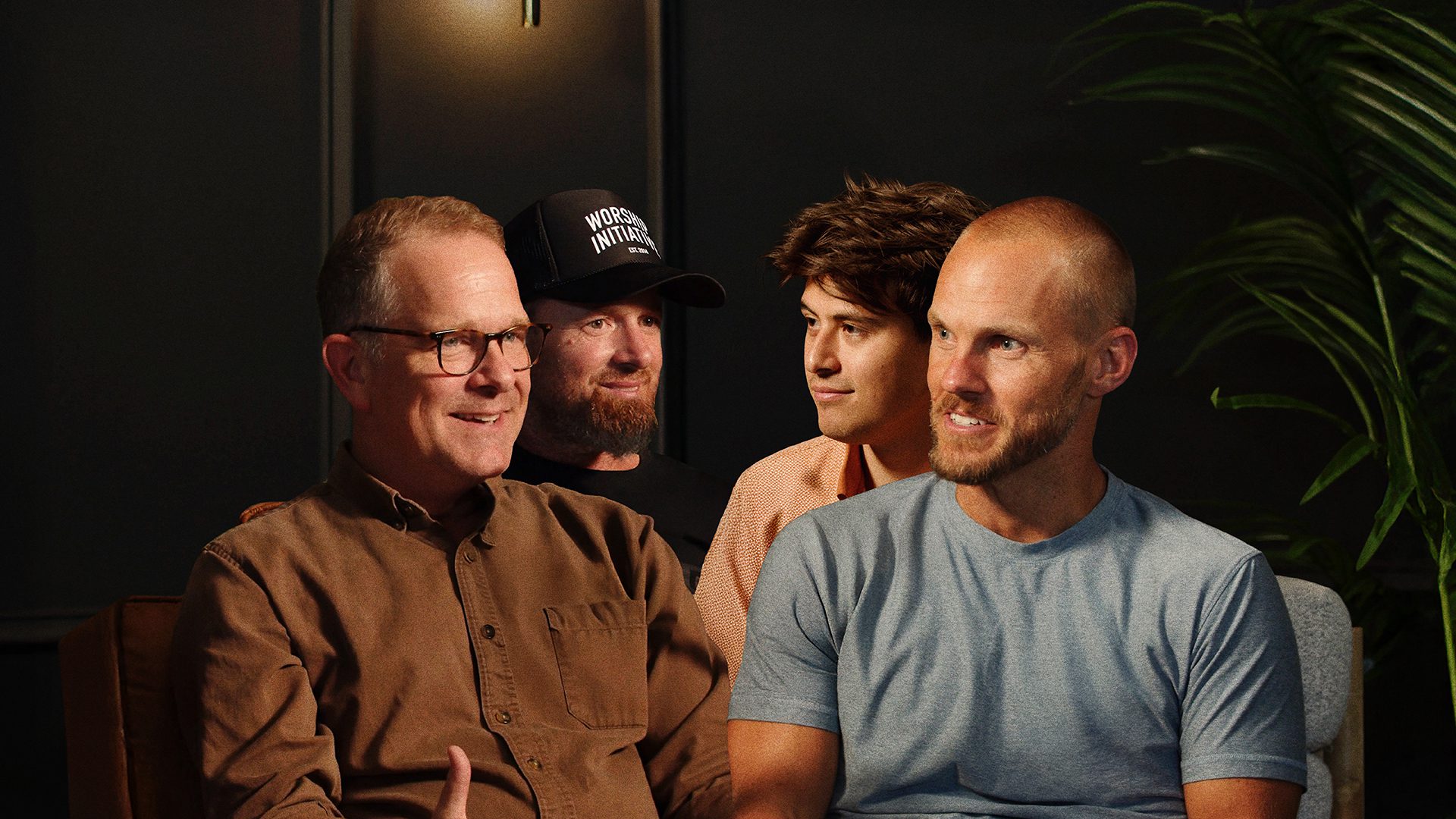
In this episode of Everyday Radical, David and Austin sit down with Shane Everett and Robbie Seay to talk about the power and responsibility of worship. They explore how lyrics can form our view of God, why creativity must serve clarity, and what it means to write and sing songs that are rooted in Scripture.
From TikTok trends that twist Bible stories, to the pressure modern worship leaders face, this conversation challenges all of us—whether we sing, write, or listen—to keep Jesus and God’s Word at the center of our worship.
In this episode:
- Why songs shape what we believe about God
- How worship can disciple us—for good and bad
- Why singing Scripture matters
- Practical wisdom for pastors, worship leaders, and songwriters
Whether you lead worship or just love to sing, this episode will help you rediscover the purpose and power of songs that are true, biblical, and centered on Christ.
Join us every Tuesday for Everyday Radical to have honest conversations about how to live out the gospel with courage, clarity, and compassion—and how to help others do the same.
Austin Huang:
Most Christians might forget last week’s sermon, but they won’t forget the songs that we sing. This means that our songs are shaping our theology, sometimes even more than our preaching does. So what responsibility do worship leaders and songwriters have when it comes to putting songs on our lips that we reflect God’s truth with? And what does it mean for us to write songs that Heaven might sing?
David Platt:
And for that conversation, we have Robbie and Shane.
Robbie Seay:
Robbie and Shane.
David Platt:
I just want to say how thankful I am for these brothers and on so many levels. We’ve been in a variety of different places together. I love worshiping Jesus alongside you guys, in part because of the opportunity to walk with Jesus off the stage with you guys and just to know your heart, and yes, your love for Jesus, and your just joy to be around. So just, I’m thankful for you guys, and I was telling them earlier, my quiet time every morning, I’ve got in my ears. I’ve got a quiet time playlist, and I don’t know what percentage of the songs are Worship Initiative, but it’s a high percentage of songs that are Worship Initiative.
Robbie Seay:
That algorithm. Let’s go. We’ve got a lot of them. I think we might have 50% of the songs in.
David Platt:
Well, in my quiet time playlist, it’s probably that, and so it’s always on shuffle. So the reality is, yes, you guys just fuel my time with the Lord every morning. So thanks for being a part of this conversation, and you guys leading out in this. So yeah.
Austin Huang:
Absolutely. Awesome. Well, the first question, we can just jump right in.
Robbie Seay:
Yeah.
Austin Huang:
Why do songs have such a unique power to shape our theology?
Robbie Seay:
Well, it’s an awesome question. There’s a documentary about Alzheimer’s, and I don’t know about you guys, if you’ve had anybody in your family with Alzheimer’s. I’m forgetting the name of it. But basically the premise that this filmmaker was chasing was the idea that you remember songs even after you forget the name of your spouse or your loved ones. And so he’s filming. Have you seen this?
Shane Everett:
I haven’t seen it.
Robbie Seay:
He’s filming these. They’re closing in on death. Dementia’s taken over. They don’t know who any of their loved ones are, but they would press play on a song that they learned from their childhood. I mean, it was specific to songs that they learned when they were teenagers or even younger. And immediately body started to move, lips started to mouth words. I think, to your question, God wired us this way. All of us, when we are born, our brains are wired differently. When we hear a song, it goes to a different place in the brain. And so we tell worship leaders all the time, it’s like, “Hey, no pressure, but the songs that you’re about to lead, and especially the songs we’re going to teach high school students, college students, they’re going to remember them.” They’re going to remember the words that God designed us to remember, songs uniquely in that way. And so to your question about, man, why is it powerful? That’s pretty powerful.
David Platt:
By God’s design. It’s so interesting even thinking about that. So yeah, different than the research and the video you’re talking about, but the other day, I was with my youngest kids in the car, and I found some songs that I was trying to find, just stuff for them to listen to. And I found some songs that I haven’t heard since I don’t think I was five years old, but I was like, I knew them all.
Robbie Seay:
You knew them.
David Platt:
I totally knew them all.
Robbie Seay:
Yeah.
David Platt:
So what a stewardship then. Yeah, because nobody is doing that with the sermon I preached this last Sunday, and I want to be careful not to dog on sermons just to make it clear. There’s value in preaching, but when it comes to memory and really lodging in and the meditation that’s involved in that, music is so powerful.
Robbie Seay:
It doesn’t devalue the preaching of God’s Word, but it definitely just says to the worship leader, “You better be preaching as well”.
Shane Everett:
Well, what Spurgeon said, if I had the option between a song and a sermon, I’d pick a song for the edification of the body.
Robbie Seay:
Yeah. Luther talked about the songs that he translated compared to his ministry at large. And it’s like there may be more value in that because of the way that people remember these.
Shane Everett:
I’ll say this, I don’t think the Church at large believes that. I think that might be a new thought for a lot of people listening, because I think there’s probably a pretty good population or part of the population who sits in a pew on a Sunday morning or will podcast their favorite teachers or theologians, but don’t feel like singing has inherent value.
And so I think we’ve seen that. We do a daily devotional where we sing every day. And a guy caught me a few months ago who kind of got into the rhythms of singing, and he pulled me aside. We were at a little performance where our daughters are in this program together. He pulled me aside. He said, “Man, I’ve been singing with you guys every day, and can I tell you something? I didn’t think it was for me because I have a horrible voice. I run for myself when I sing.” But he started. He got into the daily rhythms of singing by himself. He said, he’s like, I don’t want to distract anybody, but he goes by himself, and he began to sing. And then that Scripture we talk a lot about in Colossians 3:16, that it’s like the Word of Christ began to dwell richly in him. As he was singing psalms, hymns, and spiritual songs with gratefulness to God in his heart.
And so this brother, who would, and he said, he’s been going to church for a long time. We go to church with him. He would sit in the back, and he would wait for the songs to finish. He didn’t think it was for him. He was like, he’d see people raising their hands or closing their eyes or singing passionately. And he’s just like, I just didn’t get that gift. And he was okay with it until he started to flex that muscle, and something changed. And so I just, to say to your point, I think there’s something special. So if you’re listening to this podcast and maybe you’re a deep thinker and you haven’t been a deep feeler in the things of the Lord, I just, why don’t you try it? Try it. I mean, try it. And maybe you’ll be like, that wasn’t for me. Or maybe you might be surprised, and you might say, “I do like to sing.” That the Lord has given that. Piper said it’s a means of grace. It’s a means of grace for us as His kids.
David Platt:
Well, I think about it, though. We are commanded to do this.
Shane Everett:
It’s true. There is a place.
David Platt:
So there is a place where it’s like, “Oh yeah, sing”, because, and even just, yeah, singing Psalms, hymns, and spiritual songs to one another. That’s a practice we all should engage in. And yeah, sign me up with the list of people who don’t need to be singing into a microphone. But man, yeah, I love singing. I just turn you guys up loud so I can’t hear myself.
Shane Everett:
Come on. Yeah, but the thing is, I mean, we say this all the time, but every one of us who is not mute has a texture, a tone, a timbre, a volume for a reason.
David Platt:
Yeah, that’s good.
Shane Everett:
It’s a reason. And I would say the reason is to glorify Jesus with it. To sing to the Son, to sing about Him, to sing about the wonderful deeds of our Lord on the Earth.
Austin Huang:
Let’s go.
David Platt:
Let’s do it.
Robbie Seay:
And we can move on after this, but one other thought.
Shane Everett:
We haven’t gotten to another question.
Robbie Seay:
One other thought is we were with this guy Jeff Mathena, who’s like a vocal coach, and I’m asking him all like, “You can get better at this, right?” I mean, a lot of us just kind of go, “Well, I sing how I sing,” and I’m like, “I am not a golfer.” I love golf. I follow golf, but you know what? I can get a little bit better when I actually swing the club. And so his point’s like, look, I get it. You’re not a singer. Don’t put a microphone in front of me. But you can actually get better if you do it. And that’s, to your buddy’s point, it’s like, man, sneak away. If you do this enough, you may actually find that I enjoy it and I’m not half bad.
Shane Everett:
I mean, I’ll tell you what, that was my story.
Robbie Seay:
Uh-uh.
Shane Everett:
Oh, yeah. I mean, that’s my story. The thought of trying to make your voice sound good and sing was like, I mean, my house, the house I grew up in. Let me just say the arts weren’t a high value.
David Platt:
Other values.
Shane Everett:
Other values. We just had different values. If you couldn’t throw it, hit it, shoot it.
David Platt:
Yes.
Shane Everett:
We didn’t do it.
David Platt:
It was not valued.
Shane Everett:
No, no. We weren’t doing a lot of reading or picking up our pens in my house.
David Platt:
Not a lot of instruments.
Shane Everett:
Not much painting. No, none of that. But then, right before my junior year in high school, I needed an arts credit, and my option was choir.
David Platt:
There you go.
Shane Everett:
So they put me in choir, and that was the first time I’d ever, and they’re like, “Okay, and now you have to do a recital.” Okay, so my mom and dad came to this performance, and somehow they got hold of…
Robbie Seay:
What song are we talking about?
Shane Everett:
She’s like The Wind, Patrick Swayze, R.I.P.
Austin Huang:
Okay.
Shane Everett:
I don’t know if you’ve ever heard that song.
David Platt:
I don’t think I have.
Shane Everett:
She’s like the wind. I still remember it. Through my tree.
David Platt:
Did you do a solo?
Shane Everett:
Oh, I did a solo.
David Platt:
You did a solo?
Shane Everett:
It was a recital.
David Platt:
Okay.
Shane Everett:
It was part of the choir. You had to do a recital. Everybody had to do their solos.
Robbie Seay:
What kind of choir did you all have?
David Platt:
I thought, choir, you had other people around you?
Shane Everett:
Long story short, my dad somehow got a VHS camcorder, like a massive one
Robbie Seay:
You put it on your shoulder.
Shane Everett:
Evening news style. And he’s recording it. And then I start singing, and my dad’s like, “Wait, he can sing.”
Robbie Seay:
You can hear him say that.
Shane Everett:
And oh, you can hear him say it on it. I was wearing blue Nike and overalls.
Robbie Seay:
Yes.
Shane Everett:
Oh yeah, living the dream.
Robbie Seay:
We’ll get that video too.
David Platt:
We’d like to just clip it in right now.
Robbie Seay:
We’ve got to get that video. Link that.
Shane Everett:
What I’m saying is you don’t know. The Lord might have something special that you might not know. You might not know.
David Platt:
That’s good, man. Put on your overalls.
Shane Everett:
Put on my overalls, one strap off. You know what I mean?
David Platt:
Just try She’s Like the Wind.
Shane Everett:
Dude, She’s like the Wind, Patrick Swayze, baby. It’s good.
David Platt:
That’s so good, man. Yeah. Well, I do think there’s a word there. This is for everybody.
Shane Everett:
Yeah. It’s for everybody.
David Platt:
At particular levels, and can be improved. And I think even to go back to where we started, and it’s going to shape you. What you sing and the music you listen to will shape you, will stick with you. That’s huge.
Robbie Seay:
David, there was a guy recently who said, “Man, I get it. Y’all are all about singing. Worship Initiative. It’s what it’s all about, yeah”. Yeah. He’s like, “Man. But honestly, sometimes just getting outside, I’m not a great painter. I do love to paint. I like to worship that way.” I’m like, yes, that also is worship. But the 50 commands in Scripture to sing are not there just by happenstance. And I do think they’re actually linked to the way that our minds are forming, the renewing of our minds with the truth of God’s Word and the way that He worked, kind of back to how we started. That’s not by accident.
David Platt:
So, can I just jump in there? I know it’s like, okay, the first question, and we were just like, I think maybe these questions all we get to.
Shane Everett:
He’s like, I got more questions.
Robbie Seay:
We’ll get to them.
David Platt:
But so man, you guys are writing songs that are going to shape people. So how do you process that? Yeah, because not everybody’s a songwriter, but there are a ton of people who lead in songs. Yeah. Just anyway. But from your perspective, how do you process it?
Robbie Seay:
Well, one, we just kind of plagiarize the Scriptures.
David Platt:
That’s so good.
Robbie Seay:
You know what I mean? As I said, we made a career out of not writing anything, you guys.
David Platt:
Yes. I mean, it’s really not a lot original.
Robbie Seay:
You know what I’m saying? Here’s another one we wrote called Psalm 23. I hope you enjoy this one.
David Platt:
So good, man.
Shane Everett:
No, but seriously, I mean, this is a reality. Whether you’re teaching or preaching or singing or putting words in God’s children’s mouths, it’s like you are going to write something on a page, and your kids are going to sing. And it’s kind of like we all have kids here. If you don’t have kids, you are a kid. But something special happens in your heart when you see someone caring for your children. When someone loves your child well. They encourage them. They give them a nugget. They notice something that they’ve done. I don’t think, as a dad, there’s something so special about that. And we’re writing things down. We’re saying words that are going into the children of God’s mouths and hearts. It’s a big deal. What are you going to say?
David Platt:
Yeah, man.
Shane Everett:
What are you going to say?
David Platt:
Wow.
Shane Everett:
What are you going to fill their mind with? What are you going to point them to? What do you want them meditating on? So, man, let’s try not to be confusing. Let’s try to stick to the Word. Let’s try to run it through people, run it through Scripture, run it, test it, say, Is this me? Is this good? Does this make sense?
Robbie Seay:
Yeah, man.
Shane Everett:
Because it’s a big deal. It’s a big deal because, just like we talked about earlier, it’s just the things that are sticky. You want the things that stick in the mind, stick in the mouth, stick in the heart to be true. And it can be powerful. It can be powerful.
Robbie Seay:
Yeah. There’s an author named Robert Morgan, and I heard him lecture on the history of the singing church. I mean, how has the Church gathered to sing over centuries? And he kind of walked through. So I’m not a church historian, so I’ll probably mess this up, but there was a period where a decision was just made. No more singing because most of the heresy and misleading misconceptions about who God is were coming through song.
And I think about that often because, to your point, okay, how do you guys do this? Number one, we ask the question, is it true? Of course, we have the source of truth. I mean, God has spoken and is speaking, but not vaguely from a distance. And so we look to God’s Word, and we say, is it true? Could we hold this up to the truth of God’s Word? And of course, to Shane’s point, the more that we can actually just sing God’s Word, we need more of that, not less of that, in the Church.
But I think the second question, and Shane touched on this, was, is it confusing? I actually think this is the predominant question of our day for worship songwriting, because, to be honest, we don’t hear a ton of songs that are just blatantly heretical. Like, Oh, stamp it out. That’s heretical”. And I’ve written some. Some of the songs I wrote early on, I’m like, I don’t even know what I’m saying. We’re misleading when we’re not careful with what we’re saying. And I do believe we’re in a season right now where if we don’t address this, we’re going to look up and most of the misunderstandings of who God is and then who I am as a son, in light of what Christ has done, most of the misunderstandings will have come through the songs that we sing.
So with great, as Shane B will say often, we had better approach this with fear and trembling. I mean that this is, we take this seriously around here. One more thought. If we have any kind of legacy here, if God chooses for people to remember what Worship Initiative was one day, I think it hopefully will be twofold by the grace of God. Number one, that we were very serious about singing. Let’s sing together these commands. And then secondly, that we’re not just singing vaguely about the one true God. That we’re singing specifically because we have a deep concern about God’s Word. So yeah, we think about it a lot. I mean, it keeps us up at night, to be honest with you.
Shane Everett:
And it is kind of like this prayer. It’s just that our creativity would serve clarity.
David Platt:
Yes, yes, yes.
Shane Everett:
It’s just like, man.
David Platt:
That’s so good.
Shane Everett:
Just like let’s be as creative as we can to drive home clear thoughts, clear pictures, clear truths about the Lord. And so it’s like, let’s not say it in a way that’s not creative. Let’s be as creative as we can. Let’s be as poetic as we can, but let’s drive towards clarity in the truth.
David Platt:
That’s so good. I love the way you put that creativity is the servant, not the lead. That clarity is the lead. Truth is really the lead and clear truth, but creativity is a servant of that. I think about that in preaching. I mean, it would not be good. I mean, yeah, it might be memorable and a variety of other things if creativity were a lead, but if what I was saying was not clear, then I’m not serving the people of God well at all. So man, for creativity to be an important part of the picture, but as a servant.
Austin Huang:
And in that way, it’s just a motivational speech at the end of it. If there’s no clarity, there’s no depth, there’s no actual Bible, there’s no God’s Word in it. It’s just a motivational speech. And to all of you guys’ points, we basically answered the first three questions naturally by the grace of God.
David Platt:
That’s great. Perfect.
Austin Huang:
But I was just thinking as you guys were speaking about how this is not even a foreign concept to the world. The world sings songs. The world spends hours upon hours every single day shuffling through the same songs that are discipling them, go on social media. You’re hearing sound bites of certain songs. They’re taking those out of context. What is the danger of that, specifically within Christian music? What’s the danger of taking a song and flipping it or even just making lyrics mean something other than what they do?
There was a example that David and I were talking about earlier where it’s this song about Mary of Bethany pouring her oil out on Jesus’ feet, and people have been taking that and making a trend on TikTok about, you don’t know the cost of the oil that I’ve lived through this and this struggle, and this is how I am now, and I worked my way through it. It’s like, no, the context of that verse is Mary pouring her oil on Jesus’ feet, getting Him ready to go and die for our sins. And you’re making this about how you overcame X, Y, or Z. What is the danger of that, especially for our generation?
Robbie Seay:
Yeah, man, it’s a great question, I think, and not to have the same answer, but when we look to God’s Word, when we look to the Psalms, especially, there’s not a lot of danger when we sing God’s Word, when we sing the Psalms, when we put the gospel in song. And I think that whatever’s on top of mind or whatever feeling I’ve got, that doesn’t last. I mean, the Word of God will not return void. What I have to say and think, it will, and I was even thinking early when we were talking. I remember this will date me a little bit, but the old Amy Grant song, like Thy Word is a lamp unto my feet and a light unto my path. I remember being younger, and I knew the song, and then I saw it in the Word, and I got excited.
David Platt:
Yeah, totally.
Robbie Seay:
Psalm 119. Oh, oh my goodness. I know that. And of course, I think our goal is that people would hear songs that we lead and they’re in God’s Word, and they go, “Oh, I’ve heard that. I know that. I’ve sung that”. Because outside of that, to your point, oh man, we could run thousand different directions and mislead people. Help us, Lord. Help us not do that.
Shane Everett:
Yeah. Well, I mean, it’s like to take that story out of context, not cool. That was not good. It was not good. I think the Word says some things about that, but I think you’re right. To properly handle the truths that the Lord has given us. It’s big.
Robbie Seay:
But also part of what Shane and Shane have done, part of what the Worship Initiative cares deeply about, is that worship leaders would be great worship teachers. I think about the early days of me leading worship, I was like, I wasn’t teaching anybody much. I had not spent the proper amount of time in the Word.
Shane Everett:
Exactly.
Robbie Seay:
And so it is, yes, sing what’s true, sing what is clear and true about God, but also teach the people. If it means taking 30 seconds, 60 seconds, your pastor will be fine. He’ll let you remind people of the context of what you’re about to sing. Great worship leaders should be great worship teachers, and that’s a big part of our mission.
Shane Everett:
They should. I mean, that’s part of, I mean, just like you said, why we do this here, because I think biblical illiteracy in the Scriptures is massive, and so it’s just like, man, it’s almost like people aren’t encouraged to test it. It’s like you should test it, and it should not smell right when it’s not. I mean, that’s another Piper quote, but it’s just something about it that just doesn’t smell right. It’s like something about this, I don’t know, but it’s the way that you can discern that is just by filling your mind and your heart with truth. And so it’s just like, so whether or not you’re a songwriter, a pastor, teacher, layperson, it’s just, know the Scriptures so you can test it, and we need to be doing that. It’s just like whatever church, whatever. If you’re sitting in a seat, you’re sitting in a pew, you’re listening to a song, it’s just like, man, men are fallible. Full stop.
David Platt:
Yes.
Shane Everett:
Full stop.
David Platt:
So, apparently, just because it’s on the screen doesn’t mean I need to be saying it.
Shane Everett:
Don’t trust me. Don’t trust the screen. Test it by the Word of God and pray for a discerning spirit. Read the Word, know the Word, be steeped in the Scriptures in a way that you can test. And it’s just like certain things are confusing. We talk about where does the Holy Spirit dwell? I mean, the Spirit’s everywhere. It dwells in the heart of the believer, high and holy hill. Where does He dwell? It’s just like the presence is there because believers are there. It’s just like, man, there you are. He’s here. You know what I mean?
David Platt:
Yes.
Robbie Seay:
I’m curious with your thoughts, David, because we chat about this some, and again, kind of going back to this guy’s talk that just kind of floored me out in the history of the singing church. The moment that we’re in right now, this is probably the most pressure or weight that has been put on the song leader to deliver a liturgy and a prayer to the people that is fitting for that moment. And his point was, historically, the Psalms have done that on a pretty regular rhythm, and the song leader is looking to the songbook, got 150 of them. Usually, in most liturgies, they were on a certain rotation. Now I’m left to try to pick and find the perfect songs to communicate the gospel in just the right way and to do so. And he’s like, it’s a lot of pressure on mostly untrained men and women. We didn’t have to go to school for this. If you can strum, you got hired. I’m curious if you’ve thought much about that. Just the weight that we put on our leaders sometimes.
David Platt:
I’ve not thought about it in the historic way you’re talking about until this moment, which is really fascinating to consider. Even just when you talk about a hymnbook, I’m sitting here as you’re talking, I’m thinking about all the times a song would be sung and tested in the Church before it gets put into a hymnbook that’s going to persist through centuries in some cases. And so the difference between that process and I wrote something last night, and I’m putting it out today, and it goes viral tomorrow, and whoa, it wasn’t tested. It wasn’t all these different things. What a different dynamic that is? Which I mean, there’s a lot of good that comes with that with opportunity, but man, to make sure we’re stewarding that and being wise in that both in writing, for those who write, and for those who listen to make sure we’re not passing on that which is not true and not clear and not even soaking it in the same way. We’ve got to. That’s really, really important.
Robbie Seay:
Well, and this is a place where, I mean, we’re talking about songwriting. We’re talking about songwriting for the Church. Man, let us; we’re not the only ones. There’s a lot of really great work, but let this be a place that worship leaders and songwriters for the Church feel like they have a safe haven that receives some training, some encouragement, some resourcing, and the constant reminder of God’s Word. That is why we exist, but there is some pressure on these men and women to deliver the perfect, the perfect setlist.
David Platt:
This is a little different, but I know we’re running out of time, man, but I just want to, one other thing I’m thankful for you guys for specifically, as we’re talking about this, is the different Psalms and different truths that Scripture gives us to sing instead of just picking certain truths and singing those over and over again. Like, songs of lament, that’s clearly a priority of God in His Spirit-inspired songbook. So we need to be singing songs of lament, songs in the middle of suffering. So ,just the whole counsel of God informing what we sing instead of just a few different places or a few different themes in the Bible informing what we’re seeing. That’s going to affect our spiritual maturity for sure. So are the songs that we’re seeing reflecting truths from all over the Bible, a variety of themes that we see in Scripture? That, I think, is a really important question.
Robbie Seay:
The best news is that the Psalms give us that road.
David Platt:
Yeah.
Robbie Seay:
We’re not just kind of going; I hope I get this right.
David Platt:
Got it figured out. Yeah.
Robbie Seay:
I mean, Luther called it the mini Bible in a sense, and then Calvin said, It’s like looking into a mirror. All parts of my anatomy, everything that I have felt in my soul, I see reflected back at me. I’m not left without words to pray to God and man; that’s good news. Otherwise, I’m scrambling to try to say something to God, say it in the right way. Now I’ve got it. Even when I don’t have the words to say, the Psalms speak for me.
David Platt:
So good. That’s part of what I love about preaching. I don’t have to create anything for this Sunday.
Robbie Seay:
Absolutely.
David Platt:
I just have to say what’s there. It really is true for songwriting.
Robbie Seay:
Absolutely.
David Platt:
I mean, I need to do some work to create as a servant, the work to communicate it effectively, but I don’t have to create anything.
Robbie Seay:
I say one encouraging thing too, and again, the Shanes have led the way in this. We are seeing a resurgence in songwriting from the Psalms and from God’s Word. It’s happening from churches big and small. Remember this kid in Iowa who sent us a song? He’s got a church, about 75 people, and we said, “Send your songs.” We got like 500 songs from all over the country. We’re like, “Oh my goodness, what are we going to do with these songs?”
Shane Everett:
That was in a day.
Robbie Seay:
But I remember listening to this one song written from, I don’t remember which Psalm it was. I just thought the Lord is giving songs from His Word, and we get to fan that flame and ask the Spirit to be the One who inspires and reveal the truth of the words that He inspires. We’re seeing it. And so be encouraged.
David Platt:
One last thing on this note, another too, so singing the Psalms. Yes, I mean, Spirit-inspired lyrics in ways that point to Jesus at the center. So just not to leave Him in the Old Testament, and I love that. I mean, you guys do that in all these different songs that you are writing based on the Psalms. It just continually points to Jesus. So to make sure we don’t leave them in the Old Testament.
Robbie Seay:
I mean, we can go through Psalm 90, the Psalm of Moses, with our staff. That’s a tough Psalm if we don’t read it in light of Christ. It’s an incredible Psalm.
Shane Everett:
It’s an amazing Psalm.
Robbie Seay:
When it is Christ-centered, and you go teach us to number our days, give us a heart of wisdom. Return, oh Lord. We are now waiting for His return. So yeah, you make sure we have Christ at the center of these Psalms.
David Platt:
Yes.
Robbie Seay:
It’s just like Moses prays two prayers that we get to see a fulfillment of.
David Platt:
It’s awesome.
Robbie Seay:
It’s crazy how that is.
David Platt:
We’re singing these Psalms with even, we got it better.
Robbie Seay:
We’re on the other side of history, where it’s kind of like, golly, what were his two prayers? It’s just like, how long will you make a way?
Shane Everett:
Yeah. Return. How long?
Robbie Seay:
How long? Return, oh, Lord. It’s just like He returned, and then the second prayer was like, Satisfy me in the morning with your steadfast love. So it’s just like those two prayers. It’s just.
David Platt:
That’s so good. I just picture Moses. You don’t have to sing it like I did because you got it better.
Robbie Seay:
It’s just, yeah, there’s a lot of brevity to life, and there’s a crushing weight because you have fallen away. You know what I mean?
Shane Everett:
By the way, we have a buddy who has a countdown clock. I mean, he’s like, Look, I don’t know if I’ll live to be 75, but Moses says 70 to 80. So he set it to 75, and it’s counting down, and he messaged our whole team, and he just said, “It says 190 weeks are left of my life.” Now again, how many died before that? But I’m going to live my life.
Robbie Seay:
That’s so good. Teach me, oh Lord, to number my days.
Shane Everett:
Number my days.
Robbie Seay:
I may gain a heart of wisdom.
David Platt:
So good.
Austin Huang:
I’m just encouraged by that, guys. I mean, I haven’t personally thought so deeply into creating worship music because I’m personally not a musical worship leader, but I’m encouraged by the fact that you guys would bring that into it; it’s about the Word of God. It’s not about any thoughts that we can create. What does Hebrews 4 say? The word of God is living and active. It’s sharper than any two-edged sword. When I think of that, I just think of preaching or evangelism. I’ve seen it when I share the gospel, someone just breaks down. I’m seeing the living and active Word of God at work, but even more so in music. I’ve heard so many stories of like, “Man, this song saved me,” and “This song saved me.” And because it is so rooted in Scripture. So I’m just, I’m blessed by what you guys are doing. I guess the final question that we have is, how can local churches raise up songwriters who write out of Scripture the way that you guys have been talking about this whole episode? How can they raise them up, not just out of culture, but out of Scripture?
Robbie Seay:
Well, look, we definitely don’t think that every church has to write songs and sing songs. We don’t want to put the pressure on these churches. At the same time, I think this goes to pastors. What are your expectations? Are you inviting your team to just consider, “Hey, would God give us a song?” I can tell you this right now. Any worship leader who leads a song that is written from their congregation, even if it’s not amazing, I’ve written a few of the not amazing ones. If the church, the church loves it. They just know. And so, man, but this starts with a pastor that they would have eyes for this, vision for this, and go, “Man, I think this would bless our team.” By the way, we always say songwriting is such an intimate, it’s such an awesome thing to do together, and even if the songs aren’t great, it’s worth it. So I would say that to a pastor, anybody who’s got some leadership in a church: cultivate that. Invite your musicians. You got three, four, or a hundred musicians, whatever you have, invite them to participate in this. It’s really, really powerful.
Shane Everett:
And I would say worship leaders to engage your pastor. Don’t wait for your pastor to come to you.
Robbie Seay:
That’s good. Yeah.
Shane Everett:
It’s just get in the room and just like, What’s God saying to you? I mean, what’s happening this week? Who knows? Something might happen. You might be like, Man, we should sing that and write a song with your pastor. I mean, it’d be awesome. Why not? Usually, I’m not saying always, but most pastors like to hear themself talk.
Robbie Seay:
David, is that true?
Shane Everett:
Not David. I’m not saying that it’s you.
David Platt:
This whole conversation started with saying it’s preaching, but then there’s music, and then pastors, they just like to listen themselves.
Shane Everett:
But I think you’d be surprised. I think as a worship leader, just say, “Hey, I love, I love how you put words together.” I mean, you do it every Sunday. You said this two Sundays ago, and it just really stuck in my head, man. I mean, I put a little melody to this. I think either you’re a pastor or a worship leader. I think bridging that gap, I mean, it’s like they don’t speak each… We’re finding that a lot. It’s like they don’t speak each other’s language. You’re a pastor who loves your worship leader, or you’re like, I don’t know what that dude does all day.
Robbie Seay:
The foreign language.
Shane Everett:
I don’t know what he does. What does he do all day? We’ve given him two jobs. I mean, what’s this guy doing?
Robbie Seay:
Where were we when we said it was like the alien in the room? Worship leaders, like an alien just walked in.
Shane Everett:
Yeah. But engage. I think, as I mean, if you’re like, hey, man, as a pastor, you’re going to have 45 minutes on stage, 30 to 45 minutes on stage, and your worship leader’s going to have 20 to 30 minutes on stage. Like, man, you guys, this.
David Platt:
Let’s work together on this.
Shane Everett:
Let’s work together on this deal. And sometimes that works. Sometimes it doesn’t work. But I’d say try it because it’s like, I think we’ve all got things that we can learn. We got things we can learn from one another.
David Platt:
Yes, for sure.
Shane Everett:
And so be encouraged with that. I mean, most churches, these worship guys are lay leaders, and they’re in multiple vocations and working hard to be there and spending their evenings and working overtime, and we see that all the time. It’s just like, man, love on your team.
David Platt:
That’s good. That’s good. As you’re talking, I’m just thinking about, yeah, I’m so thankful for the brothers and sisters. I get to partner together with in leading these people to worship, but some who are on staff who are, man, just picturing their faces, they’re amazing. And volunteers who are just as amazing. Whose job is, I’m always fascinated to learn, whoa, this is what you actually do. I just picture you here singing. But using those gifts, but us working together as partners and leading people in worship, that’s pretty awesome.
Robbie Seay:
I think there’s a big caution just as we wrap that question up. It’s like a really big caution because the commercialization, a commercialization of worship music, is just real. And we have no interest in saying to somebody at a local church, “Man, send us your song so we can somehow make you famous.” I don’t think that’s actually the heart of most of our leaders that we interact with, but we just remind them it is local first. If you’re going to write a song, it is for your local body. Now, the Lord does amazing things, and sometimes He chooses songs, and they get sung, and it’s a mystery, and trust me, guys that have been doing this for a long time, we’re still like, “I have no idea how any of that works.”
Shane Everett:
We don’t.
Robbie Seay:
The Lord does what the Lord wants to do. But if we’re going to encourage anybody to write a song, it is for your local body.
David Platt:
That’s good.
Robbie Seay:
Ask the Lord to use it in your local body.
David Platt:
So good.
Shane Everett:
And if you need help, worshipinitiative.com, here we are.
David Platt:
Yes.
Shane Everett:
Here we are. So, to answer your question.
David Platt:
We totally commend you.
Shane Everett:
We have a spot for you.
David Platt:
That’s good.
Robbie Seay:
Come see us.
Shane Everett:
Come see us. Yeah.
Robbie Seay:
On our site, Writers Well is what we call the resources for local leaders to write for their local church.
Shane Everett:
That’s right.
Robbie Seay:
Come on.
David Platt:
So good.
Austin Huang:
Let’s go. All right, well, thank you guys so much.
David Platt:
So grateful for you, brother.
Shane Everett:
Thanks for having us.
Robbie Seay:
Likewise.
David Platt:
And the whole team. Worship Initiative. Yes. You’re serving the church really well.
Robbie Seay:
The likewise brother.
David Platt:
And you’re serving my quiet time really well.
Robbie Seay:
Come on.
David Platt:
So just super thankful for you guys.
Robbie Seay:
We love you, man. Lovingly grateful.
David Platt:
It’s mutual.
Robbie Seay:
Thanks.