Steven Morales on Giving a Voice to Christians the World Ignores

Why do so many Christians know so little about the persecuted church?
In this episode of Everyday Radical, David Platt and Austin Huang talk with Steven Morales, Senior Content Director at Radical and host of the Hard to Reach documentary series, about persecution, storytelling, and what it means to remember suffering believers as though we were there with them.
About This Episode
Many Christians know persecution exists, but few know what it actually looks like on the ground. This conversation helps listeners think more biblically about Hebrews 13 and the call not merely to be aware of suffering, but to remember persecuted brothers and sisters in a way that shapes how we pray, care, and respond.
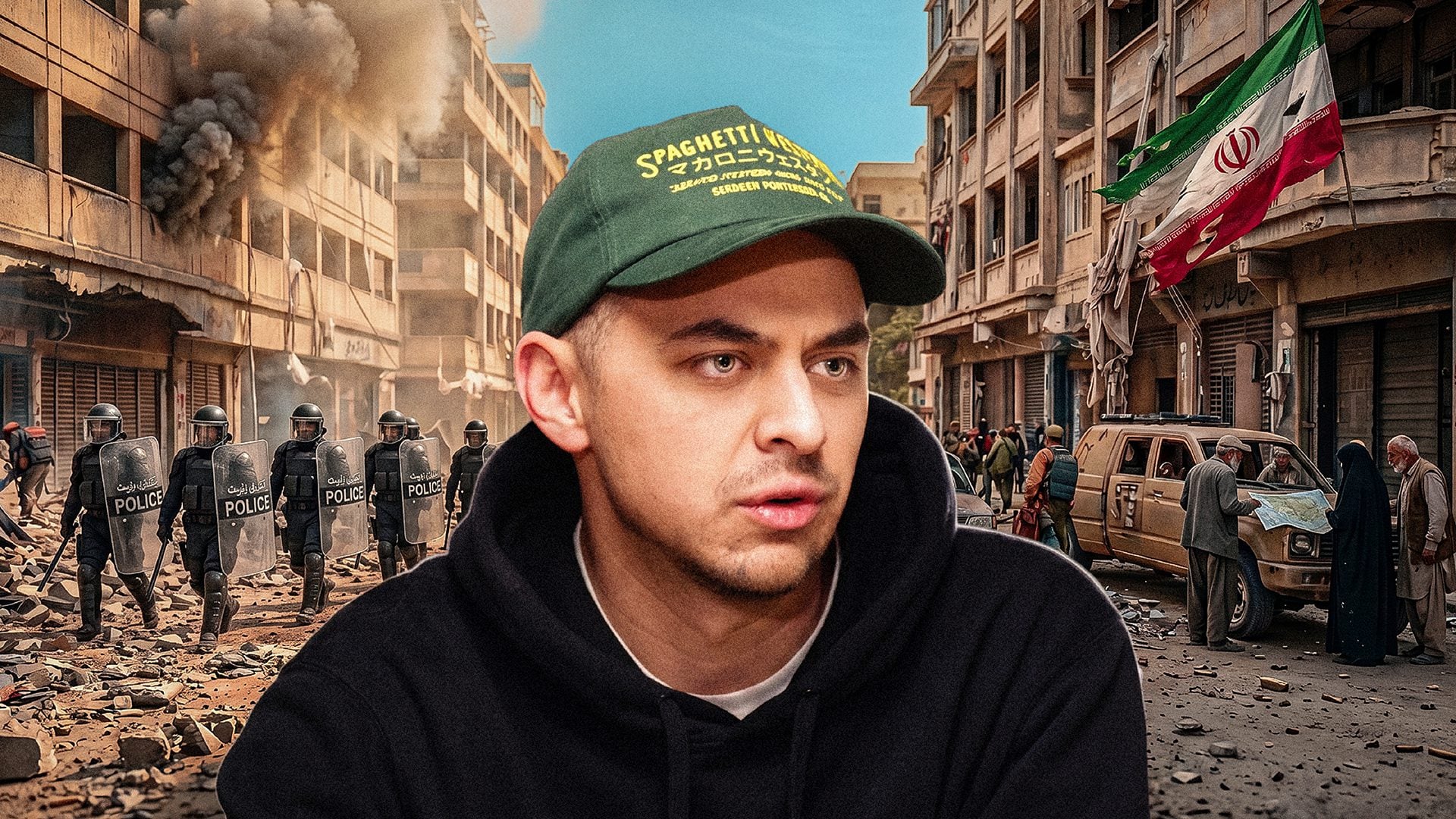
Steven shares stories from filming in places like Iran and reflects on what it means to step into complex, painful realities with humility. He talks about the tension of telling stories faithfully without sensationalizing them, the responsibility of using media to serve suffering believers rather than exploit them, and the way these stories can awaken Christians to a bigger vision of the church and God’s mission among the nations.
This episode is both convicting and clarifying. It calls believers to lift their eyes beyond what is directly in front of them, to care deeply about the global church, and to steward stories in ways that help the body of Christ suffer together and stand together.
Key Questions Discussed
- Why do so many Christians struggle to engage with the persecuted church?
- What does Hebrews 13 really mean when it says to remember those in prison as though we were there with them?
- How do we tell stories about persecution truthfully without sensationalizing suffering?
In This Episode
- Steven Morales’s experience filming in Iran during national unrest and government oppression
- Why Radical creates content to help Christians move from awareness to action
- Why humility and truthfulness matter when sharing complex stories of suffering
How to Respond
- Ask whether you have settled for awareness when Scripture calls you to deeper remembrance.
- Pray for persecuted believers with the urgency and compassion you would want if you were suffering alongside them.
- Learn about one place where Christians are suffering and let that shape your prayer and perspective.
Everyday Radical—honest conversations about following Jesus with courage, clarity, and compassion in everyday life. New episodes every Tuesday.
Related Resources:
Steven Morales:
Man, I remember when we went to Iran and that experience. We have kind of the pattern that every time we’re about to go to one of these countries to film one of these documentaries, usually the week before, it’s just like all hell breaks loose. There are protests, there are riots, something happens in the news, something happens in the government. And that happened in Iran the week before. I don’t know if you remember everything that went down with Mahsa Amini, this woman who was in police custody and was killed, and it just sparked all these riots around head coverings and things like that. And we were scheduled to go that week.
And so we prayed about it, talked about it with other people, and felt like, “No, it’s still all right. The country’s still open. We’re still able to travel.” And so we went, and it was one of the first times that I felt getting on the plane of like, oh, I’m going to a place where I had to leave a lot of stuff behind in order to get in to get there. We didn’t bring any electronic devices outside of our cameras because of government surveillance just being so intense. We were told you can’t take your computers, you can’t take your phones, something like that. We had to buy a burner phone in Istanbul, which sounds really like Jason Bourne. It wasn’t that crazy, but-
David Platt:
That’s Steven Morales.
Steven Morales:
Yeah.
David Platt:
I don’t even know your name.
Steven Morales:
Yes, my real name. But yeah, and so we did bring a Nintendo Switch now that I think about that. There was no personal information on that.
David Platt:
Bro, you’re talking about all the things you had to leave behind.
Steven Morales:
But-
David Platt:
You’re like, “But we brought Mario Kart.”
Steven Morales:
Well, you told us. So talking with people there, though, and it’s a curfew after six o’clock, and you’re going to have to stay in a hotel. So we’re like, “What are we going to do from 6:00 P.M. until the next day?” And so we brought that. It was fine.
David Platt:
That’s a whole other person. I did not know that until this moment. So the thought, that documentary video to think that you guys were filming that during the day and-
Steven Morales:
Risking our lives.
David Platt:
Racing with Luigi.
Steven Morales:
Yes. I mean, it wasn’t interesting… So we got there, and we went through security, went through all that. It was all perfectly, perfectly fine. It was actually pretty easy to get into the country. We didn’t even have to go through an X-ray machine or anything. So it was just-
David Platt:
Which, I mean, pause there, would not be the case, I don’t think, for me, if I was going to Iran with my passport. You going with a Guatemalan passport was helpful.
Steven Morales:
Yeah.
David Platt:
Yeah.
Steven Morales:
But praise the Lord, we were able to get in, get connected. When you travel to places like Iran, you have to travel with a government-issued tour company. And so we traveled with this guy, and we were able to visit a lot of places and a lot of people that we had been in contact with. And so it was just a crazy experience. To be in a country where the government had shut down the internet for a few weeks, including while we were there. So we were not able to get in contact with our family; even though we had the phone, it was just so hard to connect online. And to be in a place where there were riots happening throughout the day, I particularly just remember one moment walking down the streets of Tehran, and we were walking with our guide, and we walked past this group of women who had removed their head coverings, and they were chanting in the streets, and they were marching.
And we kind of were walking a little faster. So we walked past them. But in the direction that they were heading in, and a few blocks ahead, we saw all these police just in riot gear gearing up. And we’re like, “Man, there’s about to be an encounter there in a few minutes that is not going to be pretty.” And being in places like this where there are people who are being oppressed by a regime and not because they were Christian- these were just regular Iranian citizens who were being oppressed for not falling in line with the agenda of the Islamic regime. And you can read about these things in news headlines and in books, but actually being there really just opened my eyes to the reality of, particularly in Iran, that there are people who are not… I guess let me rephrase that. We often look at these places and just go, “Oh man, this is all just the Arab world or the Muslim world or the Middle East or things like that.”
And we think that they’re all on one side, and we tend to just kind of blanket cover these places and just say, paint with a broad stroke and say, ‘This is what they are.’ When in reality, it’s much more complex. There are people who are suffering at the hands of totalitarian governments who are so open actually to hearing other perspectives and hearing other worldviews and who are searching for truth and are searching for peace and want to just be able to live their lives normally and yet can’t because of outside forces. And I used to think that was just a religious thing. There are Christians being persecuted, but it’s actually much, much bigger. There’s definitely religious persecution, but often those things are exacerbated by greater powers that are not just doing that towards Christians, but to people in general across the country.
David Platt:
Well, man, I think about, and I’m not sure exactly when this is going to air or be released, but yeah, what’s happening right now as we’re having these conversations. We’re watching more headlines coming from Iran specifically, more than I think about Northern Nigeria and persecution of the Church there, yes. And also, Muslims. We had that conversation with Arllen where he was, I mean, they’re doing trauma-
Steven Morales:
Counseling.
David Platt:
With both Christians and Muslims in some places. But it is, as you’re talking, I just think about Hebrews 13:2, “Remember those who are in prison as though in prison with them.” And certainly if that’s true for those who are in prison, remember those who are oppressed. Remember those who are being persecuted in a variety of different ways. And that’s obviously talking specifically about the followers of Jesus. But it is helpful. I mean, you have a perspective on that that’s very different, having been on the streets of Tehran and having experienced that more like what it’s like to be with them. And I think that’s part of the value of what you’re producing.
Steven Morales:
Yeah. So even that passage in Hebrews 13, what you just read, remember them as if you were there with them. This is more than just being aware. In ministry, nonprofit space, we’re always talking about raising awareness for different causes. But the biblical mandate here is not just to be aware of our persecuted brothers and sisters, but to remember as if we were there with them. And I know that if I were in prison, it would be really hard to think about anything else. That would be at the center of my prayer life and my conversations with the Lord. And every time I open the Bible, and every time I talk to anybody else, it would be about that. That would be the main experience that I’m living all these things through and living on my faith. And so there has to be a greater approach towards our persecuted brothers and sisters than just being aware that they’re there.
And I think, yeah, to talk a little bit about what we do at Radical, I think that is really the heart behind a lot of what we do. I think most Christians are aware that there are some places around the world that are not very Christian and where Christians are not welcome. But how much do we actually know about those places? About those places in general, and then how much do we know about Christians in those places and the trials and the suffering and the pains that they’re suffering in these places?
I would venture to say, not too many. At least that was my experience. I remember years ago hearing you talk, David, about the unreached and the Great Imbalance and all of these places around the world where there’s persecution and things like that. And you put a map on a screen, and I was looking at that map, and I just went, “Man, I really don’t know anything.” I mean, I can probably list some of the countries and maybe the capitals or something like that because I had to learn some of that in school, but I could not tell you anything about what Christians are facing in those places.
David Platt:
That’s significant. Yeah, we have a conviction and part of why we wanted to have this conversation is to, I think, help people see, yeah, we need to be not just aware, but know what it’s like on the ground and be able to step into those shoes as best as we can, which is why we’re creating documentaries like Hard to Reach: North Korea, Hard to Reach: Iran, Hard to Reach these different places. Because of all people, Christians, if we have been created for the spread of God’s glory among all the nations, we should know what’s happening among nations. We should not just be aware of your point, but be able to identify, especially with our brothers and sisters there and with the need for the gospel in those places, because this is what we’re on the planet for. So this is not just for fun, a cool thing to watch. It’s like, no, it’s really a part of what it means to be a Christian who lives for the spread of God’s glory among other nations.
Steven Morales:
Yeah. I mean, I was going to say, 1 Corinthians 12, we suffer, “If one of the body suffers, we all suffer.” And thinking of Colossians 4, and Paul is writing with his own hand. He says, “Remember my chains.” I mean, Proverbs, even in Proverbs, where it talks about speaking up for those who can’t speak up for themselves. My experience, I mean, people will ask, because we’ll go to these countries and tell these stories, and they’ll go like, “Man, aren’t you ever just afraid for your life? And isn’t it dangerous and risky?” And at most, we’re there for a couple weeks or a few days or things, but the real danger is for the people who actually live there.
And the reality is God has gifted Radical with this platform where we’re able to speak, be it through your teaching or through online, social media, and everything. We’re able to reach a lot of people and speak to a lot of people and have a captive audience that our brothers and sisters, persecuted brothers and sisters, don’t have that voice. And so we can use our platform to talk about, I don’t know, write a bunch of books that are going to sit on a shelf, or we can actually be a voice for those who don’t have that voice, whose faces we can’t see for their own safety. And we can share their stories.
Austin Huang:
And the stories are so impactful to the point where it’s, yes, identifying with the brothers and sisters who are persecuted. But it’s also, I’m hearing, we’re at CROSS CON right now, and I’m just standing next to Steven, and people were just coming up to him, “Man, that Neighborhood & Nations video is what really, for me, helped make that shift. I need to go and be in the nation.” So I don’t know, I just think that’s a really cool thing from when I first saw the videos that you guys had made. And before I came onto the team, I’m like, nobody else is telling stories about the persecuted church the way that Radical is. So it’s a blessing.
Steven Morales:
And it is challenging because I think the more that I go to different places and talk about this, the more that I hear people say, other pastors or leaders or speakers will say, “Man, every time I talk about persecution, it’s like engagement just goes down.” I don’t know, David, you’ve spoken in a lot of different places. For sure. Why is it that we don’t really engage with the persecuted church?
David Platt:
Oh, man. That’s a good question. Why is that? Well, the same’s true when you start talking about global mission. I think maybe it’s part of our version of Christianity that is so focused on what I can see right around me and what I’m carrying in my life right around me, that it’s hard to lift your eyes and see one, the bigger picture you’re a part of. And two, yeah, I think there’s an adversary who doesn’t want us to do Hebrews 13, that doesn’t want us to be a part of what God’s doing among the nations and doesn’t want us to step into one part of the body suffers, the whole body suffers.
So I think this is where, yeah, it’s a part of our discipleship that our muscles are not strong along these lines and we need them to grow. And that’s why I think that’s what we’re hopeful that these documentaries will help, but in an engaging way. I mean, I remember for me, it was when I was a student; we did, and this is part of how Secret Church came about, it was called Secret Saints. So this is my youth group.
Steven Morales:
Is that who you plagiarized Secret Church from?
David Platt:
I guess so, maybe. So Greg Bennett, my youth minister, who had an invaluable, indelible impact on my life. But we did this thing; I think he created it, or maybe he got it from somewhere else. But we’d all gather at our church building in the youth area on a Friday night, and it’d be like, “Guys, Christianity has been outlawed.” They would come in, they’d tell us, “Christianity has been outlawed, and there’s a secret meeting tonight, but in order to get there, this is the only clue you’ve got.” And so they would give us each of us a clue. We’d all split up into different cars, and different leaders were driving us. And we would have to drive to a Waffle House, a restaurant or something like that.
And we’d have to find somebody in there and give a code word. And then they would look back at us, and they’d give the next code word, and that would lead to the next clue. And so we went to three or four places. Then we’d get to some woods, and they would be like, “Drop off at this point.” So we would get off at that point, and then we would go down into this path in the woods, and then there were people in the woods coming after us. And so it was like, you got to get past all the-
Steven Morales:
How many people were involved in this?
David Platt:
Yeah, because our youth group probably had about 150 people that were doing this. And then you had all these people who would run after you, and then you’d get to this kind of bonfire eventually, and then you’d have this worship service, and somebody would share a story about persecuted church. So yeah, even as I’m remembering that, it was very… I remember, I’ve just described that for you. That was 30 years ago in my life that this was happening. And I remember it like it was last night. It was very, “Whoa, this is real. And this is not just a game for real brothers and sisters in Christ around the world.” And then we’d hear these stories about persecution. And that’s where my heart for the persecuted church, I mean, that’s where it all started in my own life in ways that led to Secret Church or whatever. But that’s where I want to, and as a church, we need to think of ways to… Yeah, certainly we don’t even be talking about our persecuted brothers and sisters in Christ and then yawning and moving on to the next thing.
We need to, all that we’ve been talking about in Hebrews 13, step in and feel that with them. And then with technology today, with the opportunities to create things that can bring the church in North Korea right in front of us, that’s where we want to be good stewards of the opportunities we have to put not just images, but stories and images, and help people feel like they’re there so that we can carry out what Scripture’s calling us to do.
Steven Morales:
Yeah. Yeah. And I think on the flip side, there’s also the reality that, unfortunately, there is a temptation from the Church to sensationalize stories, to fabricate some stories, to just make things seem awesome or focus on the wrong things. And even to that end, kind of manipulate Christians into believing these kinds of crazy, creative stories. And in doing so, really take advantage of the people who are really dishonoring the people who are suffering, people who are experiencing persecution. I mean, that’s been a challenge as we’ve gone around and told stories. And not everybody really wants to share their story because the reality is we just live in a world where everyone’s looking for donations, fundraising, things like that. And if you got a good story, you can do that. And we’ve just experienced that, seen that.
David Platt:
That’s one of the things as I’ve watched you specifically interact with brothers and sisters in Christ in some of these different places. Well, I’m just thankful for your humility in that. I’ve seen people sit down with a persecuted brother or sister and just ask all these leading questions to try to get the story that they kind of want out of it as opposed to just listen and let’s honor what’s actually happening in this story. And the layers, the complicated layers that are sometimes or complex layers that are sometimes involved in that. And that’s a way to honor our brothers and sisters and be faithful with the way we steward that story that they’ve entrusted to us. Anyway, I appreciate the way you did that.
Steven Morales:
No, I appreciate you saying that. I mean, I think there have been moments where we’re like, “Man, it would be really nice if we could just tie up that story with this bow, and then they live happily ever after, or then God did this amazing thing.” Whether that person had a Saul-to-Paul conversion, when the reality is many times that doesn’t happen. And we could try to twist the story into a certain way or tell it, leave out some information that makes it sound more positive than it is. But I mean, recently I was talking to someone about persecution stories, and they were like, “Can you share with me one moment where a huge prayer was answered?”
And all that could come to mind were unanswered prayers. It’s just like, “Oh man, I just actually talked to someone on our team who’s talking to people in the Middle East who are currently in prison, and we haven’t heard from them in 10 days and things like that.” And I’m just like, “That’s all I can really think about right now. I wish I could present to you a better story.” But the reality is when we tell these stories, we want to tell them in such a way that the person that that story’s about or that place is about, people from that place would go, they would watch it, and they would go, “Yep, that’s exactly-”
David Platt:
How it is. Yeah, yeah.
Steven Morales:
That’s what we’re-
Austin Huang:
And too, to that point, it’s for them, but it’s also for the person who is on the other side of the screen watching it to not just watch a, because people go to entertainment sources just to, “I’m going to watch a good story, and then I’m going to move on with my life.” The point of what we are making is to inspire people to make Jesus known everywhere. And so I love that we get to do that in a way that tells a real story and also inspires someone to be like, “Oh, if the need is not yet fulfilled, then let me see how I can be a part of helping.”
David Platt:
Man, well also, I just think that’s huge for our formation, our discipleship. I’m sitting here thinking about, okay, Acts 8, Stephen’s been stoned, the Church’s scattered, Saul’s ravaging the Church from house to house. You tell the story at that moment. And then later on, Acts 11:19, those who had scattered are preaching the gospel to Greeks, and the Church of Antioch is founded. Or Acts 13, now you’ve got an even more beautiful bow because you got Paul who was doing the ravaging here, being sent out as a missionary from the church that started because of… But if you just tell the story here, and this is, I think, the reason I say it’s part of our discipleship, and I think this is part of what you were hitting on, Austin, we want in our own lives when it comes to suffering, when it comes to challenges, hardships, we want quick fixes, we want it to be over.
And I always think about Joseph. He was in prison for a decade. It takes us 30 seconds to read the chapter and to go from being in prison to he’s leading the country. And it’s like, it didn’t happen that way. It took a long time. And so a lot of these stories we’re stepping in. Yeah, I’m thinking about a conversation last night about some of the work that Radical’s doing in a really, really hard place that got busted up. And it’s just in disarray right now. It’s not come together. And only the Lord knows how long until the next really good kind of development that story is. But I think it’s good to tell the story at this point too, to say, let’s press in with our brothers and sisters, and it’s hard, and it’s in disarray right now. Everybody wants the bow, but that’s not… We live in a fallen world, and so it’s good to tell this story of Acts eight and Acts 11 and Acts 13, and just keep going.
Steven Morales:
Yeah. I think there’s bigger ideas behind these stories of what God can teach us, yes, through his Word, but through his Word lived out in some of these places where it’s very hard to be a Christian and just the reality. I mean, I think we live in a culture that is a little bit more dominated by comfort and cultural Christianity and one that expects following Jesus to be kind of a regular, normal part of life, that there’s not really restrictions or any pushback. And so the idea of there being places where it’s actually really hard to be a Christian, where there’s actually so much pushback that there’s more steps backwards than there are forwards, where it takes years and a lot of funding and a lot of money for seemingly very little fruit is just kind of something that you don’t even want to engage with.
The ROI seems like, “Oh man, this feels terrible. This seems impossible.” But we end up believing in having this stunted view of God, who is the God who is the God of comfort over here, the God who does this kind of regular, normal life things rather than a God who actually does really hard things, who can accomplish impossible things that seem impossible to us. And sometimes I feel like we are okay with this version of Christianity that is comfortable. And, I don’t know, I don’t know what the word would be to describe it, but we would rather have this than a view of God where we actually have to do- a God that calls us to do really hard things.
David Platt:
Over long periods of time.
Steven Morales:
Over long periods of time.
David Platt:
Yeah. I always think about the one statement that one brother in Christ who’s spent his life in hard places doing hard things has said to me, and he’s just like, “Most Christians and churches in the United States specifically,” Which is where he was from, he said, “Don’t have the stomach to stick around through the hard, through years, through decades to see the work come to pass and the fruit come about.” And that’s where we all need that in our own lives. Again, just our own personal discipleship, trust. We all need to learn to wait on God and to trust and work in the waiting and trust that he’s working in the waiting. And certainly our brothers and sisters need that from us, to come alongside them and patiently endure with them.
Oh man, even as I say that, I just think about John 1 when he writes, “I, John, your partner in the tribulation and in the patient endurance that are in Jesus.” It’s like, “Oh, that’s what we want to be to our brothers and sisters in Christ, partners alongside them in the tribulation and in the patient endurance.” And not like, “Yeah, well, let’s find a place that’s more fruitful, that can get better ROI on our money that we’re sending.” I mean, that’s part of why we end up giving as the Church far less resources to the hardest places because the ROI takes a lot longer.
Steven Morales:
Yeah. And in that sense, I think the way we think about missions is very similar actually to the way we think about just our own spiritual growth. I think we would all love the version of spiritual growth that from one day to the next, suddenly I’m much more mature. I don’t struggle with those sins anymore. Or we win, I mean, I remember hearing one guy describe it as a spiritual lottery. I scratched my ticket and boom, from one day to the next, I’m this. And what is so attractive about that idea is not just being in a new position, but doing it super quick. Just like winning the lottery. I didn’t have to go through, take that long road. I didn’t have to do all the work. I just got it instantly. And spiritual growth and missions, the advancement of the gospel, it does not work that way. It’s not a lottery. It’s an investment. It takes time, and just slow. Psalm 1 just described growth as a tree that gives fruit in its time.
It’s not something that’s immediate. And the picture that we often get of sanctification and growth is something that is, it just takes time. And the fruit will come in its time, but it’s not something that you can rush. It’s not something that you can anticipate in thinking like, “Well, Jesus is going to come back by this year and so we got to get all the work done.” We don’t know when Christ is coming back. We just know what we’re supposed to do until he gets here. It’s good. And so I hope all of our content, obviously not just documentaries, but what we’re doing here with this podcast and everything else, is just a means to that. And of being obedient to God’s call on our lives and to, whenever Jesus returns, doing what we’re supposed to be doing; he’ll find us faithful.
David Platt:
Yes, I do. I want to commend, for anybody who’s not watched or listened to it, either on your own with your family, with a small group, church group, whatever, friends, and to pass it on obviously through social, but not for clicks of Radical content; that is clearly not the goal here. But for us to be global Christians, for us to be followers of Jesus who are living to make him known everywhere. And so these are the things we think about. These are the things that affect the way we pray. These are the things that affect the way we, yes, use our resources. These are the things that affect what we dream about in the world. And so yeah, whether it’s Hard to Reach series, whether it’s Neighborhoods & Nations, and just to make sure everybody knows where they can get all that, where can they get all that?
Steven Morales:
Probably on the same website or YouTube channel that they are on.
Austin Huang:
They’re watching.
Steven Morales:
They’re watching this right now.
David Platt:
There you go. Okay. It’s all there. Yes.
Yeah. But the whole goal is to help equip us and to mobilize us to be the global Christians God has designed all of us to be. And I do think that’s where you asked earlier about the persecuted church: people kind of disengage. Mission, people kind of disengage as if, “That’s not for me.” And that’s just not; that is for us. It’s for all of us. It’s for all of us. That’s what we’re trying to communicate.
Austin Huang:
Yeah. Well, Steven, would you mind praying us out and just honestly, just praying encouragement over anyone who’s ever watched the videos that you have had a hand in creating, that they would have this fresh stirring of faith and knowing that they are also a part of making Jesus known to the ends of the earth?
David Platt:
And before you pray, I just want to honor you, bro, and the whole team, including behind the scenes right now and the whole team. You guys, brothers and sisters, are super gifted and just super thankful for how y’all are stewarding God’s grace in your lives in ways that are equipping all of us. So anyway, we don’t take that for granted. So on behalf of a lot of people, from those who are being equipped to mobilize with this content to those who you’re meeting on the ground in those places, thank you.
Steven Morales:
Yeah. Well, if I can, bounce that honor right back to you and just thank you for writing a book that eventually turned into a ministry that you built not around your name and all the things that you could do and all the things that you do, but give a voice to persecuted brothers and sisters and the unreached around the world and championing this message that yeah, not a lot of people want to take that on. And we recognize that as well. And I mean, we wouldn’t be able to do what we’re doing without your leadership and just willingness to do this call.
David Platt:
Amen. Let’s do it. Let’s do this.
Steven Morales:
Let me pray. Lord, we thank you, not just for those of us here in this room at this table, Lord, that are making this content and recording podcasts and videos, Lord, but thank you that you have reconciled to yourself a Church, a people that you’ve given just so much value to Lord, not because we are good, not because we are perfect or sinless, but because you love us in spite of our imperfections, in spite of our sin. You have made us yours. You’ve adopted us, you’ve reconciled us, you’ve saved us, Lord. And so I thank you, Lord, that you don’t just give us new standing and give us a new family, but you promise us that there will be people from all over the world who will join that family, who will be your children.
And so I pray, Lord, that you would use us just as you told us you will, to take your name, not just to the people in the places who are closest to us, but to those places that are often forgotten and go unseen, where there are not churches on every corner, where there are perhaps no churches at all. There’s never been a church. There’s never been a believer. I pray that you would make Hebrews 13:3 just a reality in our lives, Lord, that we would remember those who are being persecuted for their faith now, Lord, that we’d remember them as if we were there as well. Just as you did not forget us, Lord, when we walked away from you, when we were in rebellion and in sin, you remembered us. So Lord, help us remember as well those who have not heard your name, who don’t know you.
And I would pray that you would just move around everything in our lives so that we can serve you to that end, that our lives would not be about ourselves, about our comfort, about the things that we can gain in this life, but rather, Lord, give us what we need so that we can take up our cross and follow you, Lord, and follow you to the point of persecution, to the point even of death, Lord, if that is what you require. I just think about a brother in Nepal, Lord, who experienced persecution. And when I asked him if it was worth it, he said, “If God has called us to suffer for the sake of his name, then when persecution comes to our door, we will suffer it.” I pray that you would give us that same resolve today, Lord.
For anyone who is hearing this, for anyone who is asking themselves just what their role in this might be, I pray that you would confirm in their hearts that they have a role, that we all do, that you have called all of us to make your name known in all the nations in whatever way that may be. So I pray, Lord, that you would just bring clarity and wisdom and discernment to people’s hearts as they navigate through the decisions and how they spend their money and how they spend their time and how they follow you and where they live and the opportunities that you present, Lord. We know that you have prepared works before us to make your name known. And so do that work in us, Lord, so that we may do that work for you, for your glory and for our good, Lord. We love you because you loved us first, Lord.
David Platt:
Amen.
Steven Morales:
We pray in your name. Amen.
David Platt:
Amen.
Austin Huang:
Thank you so much for watching this episode of Everyday Radical. We pray that it encouraged you to follow Jesus more faithfully and make him known everywhere. Be sure to hit that like and subscribe button, and we’ll see you in the next one.