

Why Go Overseas When There Are Lost People Here?

What does it actually mean for someone to be “unreached”? And why does it matter for every believer—not just missionaries or pastors?
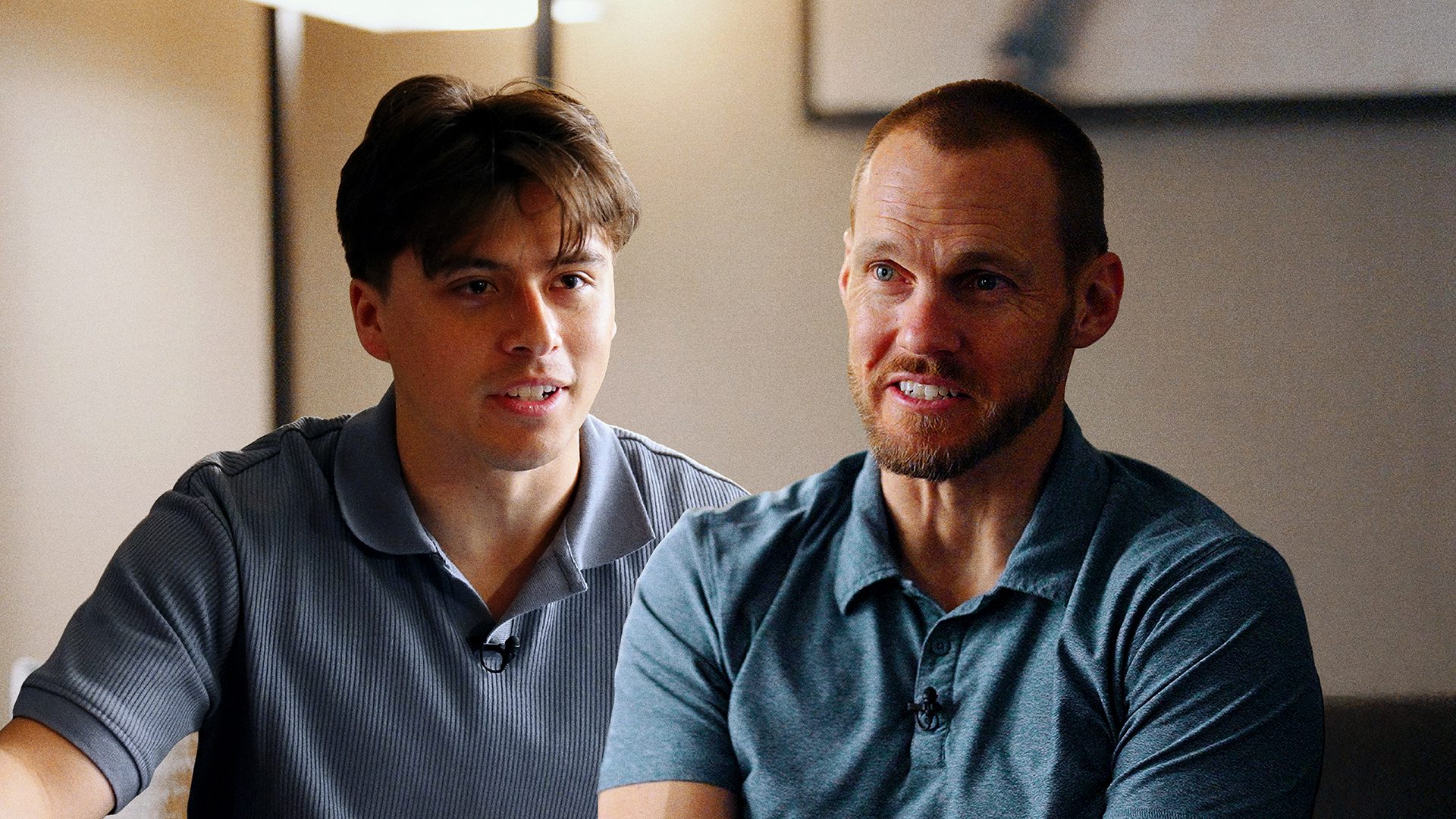
In this episode of Everyday Radical, David Platt and Austin Huang dive into one of the most urgent and often misunderstood topics in global missions.
Drawing straight from Scripture, they unpack the difference between being lost (needing salvation) and being unreached (having no access to the gospel at all). With more than 3 billion people still unreached today, this is not just a statistic—it’s a calling for the whole church.
They discuss how God uses ordinary believers to carry out an extraordinary mission, why his sovereignty fuels—not replaces—our going, and how prayer connects you to what God is doing around the world in real time.
Whether mission work feels familiar or brand new, this episode will deepen your understanding of the Great Commission and help you see your place in God’s global mission.
In this episode:
- The difference between “lost” and “unreached”
- Why 3 billion people still lack access to the gospel
- Why the Great Commission won’t be finished without the whole church
- Practical next steps to pray for and reach the unreached
Whether you’re discerning a calling, wanting your life to count, or simply curious what “unreached” really means, this conversation will equip you to join God in what he’s doing among the nations.
Everyday Radical—honest conversations about living out the gospel with courage, clarity, and compassion. New episodes every Tuesday.
Austin Huang:
So David, this topic is a big one and it revolves around the question that some people ask, why should I go overseas if there are lost people in my neighborhood or even closer, my family, my friends? I mean, let’s talk about why prioritizing the unreached actually matters. But first of all, can we just define that? Can we throw a definition out there for what unreached actually means?
David Platt:
Yeah, that’s good. And I think it’s critical to define that in order to kind of dive into this topic because there is a difference between lost and unreached. So thinking biblically like lost, Jesus says, “I came to seek and save those who are lost.” And even just parable of the lost sheep, lost son. The reality is all of us in our sin are separated from God. And if we die in this state of separation from God, we’ll spend eternity and judgment due our sin. We’re lost. We need the gospel to save us. So that’s lost and that’s for everybody in the world who’s born. And then people are saved by grace through faith from their sin.
Unreached is not just lost. It’s lost plus, here’s the differentiator, you don’t have access to the gospel message that can save you, meaning you don’t have a Christian around you who can share the gospel with you. You don’t have a church that’s celebrating the gospel. So people in metro Washington, DC for where I live are not unreached because they have access to the gospel. It doesn’t even mean that everybody’s heard it, but it does mean there are Christians and churches who are relatively close by that can share the gospel with you.
When we talk unreached and three billion unreached people in the world, we’re talking people who don’t have a Christian or a church near them who can spread the gospel to them. And what that means practically is if nothing changes, that person is going to be born and live and die. And the likelihood is not only will just they die lost, but they will have never even had access to the gospel, never even heard it from somebody else, the good news about how they could be saved from their sin. So think biblical picture of unreached would be Romans 15 when Paul says, “My ambition is to make Jesus known where he’s not known.” Where they don’t even know about him. They don’t even have access to the good news about who he is and what he’s done.
Austin Huang:
Well, how do we know if a place is unreached? Is there a way for us to look up a map and see, okay, this part of America is, we’re good, but this part of Asia is not. Is there a way, how do you…
David Platt:
Yeah. So I mean, there’s a ton of research that people do of all these places in the world to see where the percentage of Christians or churches in particular places. And so the map we often point to, well, one would be stratus.earth. Another one would be Joshua Project who works on compiling all this different research, where the world kind of generally categorizes into three areas, like green zones, yellow zones, red zones. Green would be there’s access to the gospel. Again, doesn’t mean everybody’s a Christian there, but if you were to look at a map like from Joshua Project or Stratus, you would see a lot of green in the United States. Doesn’t mean everybody’s a follower of Jesus, but it does mean there’s access to the gospel in most places in the United States.
But then yellow is kind of in the middle, but red would be the places where there’s the least access to the gospel. And that would be, if you look, it’s been often called the 10/40 window, just latitude and longitude lines, the lines between 10 and 40, and so picture North Africa, the Middle East, Central Asia, really a lot of Asia, South Asia. That’s where most people in the world who have the least access to the gospel live.
Austin Huang:
Okay. Well, that makes sense. Breaking it up into the different categories. How would I explain, I guess switching gears a little bit, how would I explain to someone who thinks local evangelism or just even like, “Hey, want to come to church with me?” Is not enough. How do I explain that, “No, we have to go to the red zones where people haven’t heard and they don’t have access to the gospel.” If that’s not clicking for them, how do I explain the urgency?
David Platt:
Well, I would say, “Yes, yes, yes. Local evangelism. Yes, sharing the gospel of people around around us, without question. But not just that.” And this is where Jesus’ command. So I would start there with Jesus saying, “I’m commanding you to go and make disciples of all the nations.” That is very specific language. He’s not just saying, “Make disciples where you live.” He’s saying, “Make disciples. It’s the commission I’m giving to my church of all the nations.” And if there are nations, which the word there is [inaudible 00:06:02], so ethnic groups or people groups, don’t just think even countries. I mean, I think about where I live in metro or DC, there’s tons of different… We all live in the same city, same nation, but there’s tons of different people groups that live there. So people groups all over the world, if there are people groups, ethnic groups, nations, tribes, languages where the gospel’s not gone, Jesus has told us, he hasn’t given us an option to just make disciples where we are.
He said, “Yes, where you are and from where you are to the ends of the earth of all the nations. And the great commission will not be complete until all the nations have been reached.” That means we got a job to do as the church together to keep pressing on where the gospel hasn’t gone. That’s the whole story of the church and the book of Acts is the gospel keeps going. So I would just say, all right, Jesus said it. The early church illustrated it. They kept pressing on Paul saying in Romans 15, “We must keep going where Jesus is not known.” That’s the impulse and it’s because the spirit of Jesus is in us. The spirit of Jesus in us wants all the nations for Jesus. We know, and I then I jump to Revelation 7 and 5 where every nation, tribe and tongue, they’re going to be gathered around the throne. Well, how does that happen? It only happens if we actually take the gospel to all the nations. So this is for every Christian to play a part in the spread of the gospel to all the nations.
Austin Huang:
But if God is sovereign, if he’s in control over everything, why does it matter if I go? Isn’t he just going to save people with or without me?
David Platt:
I would totally switch that around and say, “Because God is sovereign, yes, we go.” So God is sovereign over ends and means. So he’s sovereign over the end. We know where all our world history is headed. Every nation tribe telling would be gathered on his throne, praising him for his salvation in Jesus. We know that’s going to happen because God’s sovereign overall history, and he’s ordained it to happen in the end. But how has he ordained it to happen? Well, he’s ordained disciples to make disciples of all the nations. This is what we do under his sovereignty.
So I just think about my own life. I, by God’s grace, have heard the gospel, been reached with the gospel, I believe the gospel. All of that is God’s sovereign grace. And praise God for a mom and dad who shared the gospel with me. Praise God for a local church who shared the gospel with me. Praise God for all the people who have done disciple-making in my life. That’s how God’s grace and glory have been made known in my life through other people. And the same thing’s going to happen, but this is awesome. I like to think how is God’s glory and grace made known among the nations? Through you. God’s sovereignly ordained you and you’re praying and you’re giving and you’re going right where you live and wherever he might lead you to be the means by which people around you are saved. But people around you experience eternal life, peoples around the world hear the gospel. God’s ordained my life to be a part of that.
And then I would just, man, I could keep going on this, but one other thought, God’s sovereignty fuels our going and gives us confidence as we go. I think about, you go to the hardest people group in the world with the gospel. You know, some people from that people group are going to be around the throne in Revelation chapter 7. You have total confidence. This gospel, you preach the gospel to the hardest people group in the world, somebody’s coming out. You know somebody’s going to believe in Jesus. There are going to be followers of Jesus there. You have that confidence. Why? Because God is sovereign over means, you proclaim the gospel and the end, some will be gathered around his throne that day.
Austin Huang:
I mean, it’s such a privilege to be invited into the great commission because God could just say, snap his fingers, you’re good. But he doesn’t. He uses his people, the ones who bear his image to call the other ones that bear his image out of darkness and into his light. He is kind to bring us into the fun of it and the privilege that we get to have.
David Platt:
Bro, I think about it. God could write out the message of the gospel in the sky tonight and just like that, everybody would be reached with the gospel. Everybody would have access to it. But he’s not done that. Why? Because to your point, and to what the Bible teaches, he said, “I’m going to fill you with my spirit and I’m going to empower you to go with me to the ends of the earth to make this gospel known in flesh and blood,” which is how, by the way, we are saved through God coming to us in Jesus, in the incarnation and dying on the cross for us, rising from the dead for us. And so now we go with his spirit to all these places in the world. This is what we’re a part of. This is the life that counts, man. And life not just that counts, it’s life to the full. Walking with Jesus, participating with God and his grand purpose and history, why would we settle for anything less than that?
Austin Huang:
Okay. But if I’m a Christian and I am indwelled with the Holy Spirit. I’m good, but I just don’t feel qualified. If I feel like, no, there’s other people out there who are more passionate or more gifted in preaching the gospel or more gifted in administering care to other people. Why should I go if I just feel like I’m just a normal Christian?
David Platt:
Oh man, that’s what I love. The whole plan for the spread of gospel around the world revolves around normal Christians. I think about Acts chapter 8. So Stephen’s stoned at the end of Acts chapter 7, and then the church is scattered into Judea and Samaria. And I say the church is scattered. It says all except the apostles scattered, preaching the word wherever they were, spreading the gospel wherever they went in the Judea and Samaria. And then that ended up leading to the founding of the Church at Antioch in Acts chapter 11, which led in Acts chapter 13 to the sending out of missionaries in a way that would just spread across the Roman Empire. So all that to say, who were the people who started the church at Antioch? We don’t even know their names. We don’t even know their names. They’re totally unnamed ordinary believers who started one of the greatest churches in the history, I mean, arguably the most influential church in the history of the world. We don’t even know who started it.
And it was all these people who scattered. All the apostles that we do know their names, they stayed in Jerusalem. It was unnamed ordinary people who were spreading the gospel into Judea and Samaria, to the ends of the earth. So if you’re an unnamed ordinary believer, then you’re in good company. This is what the whole mission revolves around. And even for those who are named, some people that might be maybe more prominent or you know their names or they’re preachers or this… I mean, they’re just ordinary people too.
But that’s the beauty. The Holy Spirit’s inside all of us. It’s not like I have or you have a different Holy Spirit than this person or that person have. It doesn’t matter what our name is or it doesn’t matter what our job is, it doesn’t matter what our calling is, what God’s called us to do, he’s given us his spirit. And so that’s the last thing I would just say is don’t sell God short for what he wants to do. In a weird kind of way, it almost sounds like humility. What can I do? It’s actually pride because it’s not trusting humbly in the power of the Holy Spirit in you to do in and through you what is far beyond you. That’s a humility pride issue to trust God that yeah, he’s given you a part to play. And so to say, “God, play my part with your power in me because I don’t have…” It’s good to say, I don’t know what I can do, but I trust that with your spirit in me, I can do immeasurably more than all I can ask or imagine.
Austin Huang:
Man, that’s encouraging. How can someone who is listening to this right now take steps towards reaching the unreached, praying for them? What does it look like?
David Platt:
I would start, if people are… It’s kind of a new concept, unreached, like download Unreached of the Day by Joshua Project or go to, look up Hard to Reach or Neighborhoods & Nations videos that we’re putting out with Radical just to start learning about the needs of the unreached. We should be, every follower of Jesus, this is not just for a few people. Every follower of Jesus should be aware of where is the gospel spread in the world? Yeah. How is the gospel spreading? Where is it hard to spread the gospel in the world, places that are hard to reach, and then be praying. You can be involved with God and what he’s doing in North Korea, Somalia, Yemen, right now, just by praying. We could do it right now.
So somebody listening to this, watching this could spend the next five minutes joining with God in what he’s doing in the Middle East just by praying. So start there and learn more and more and more. And then along the way as you’re praying, just say, “God, what else do you call me to do?” And just trust. His spirit will lead you in ways, yeah, again, far beyond what you could ask or imagine.
Austin Huang:
David, would you mind honestly just ending this out by modeling what prayer for the unreached actually looks like?
David Platt:
Yeah, man. Let’s do that. Yes. God, I think about even just the countries I just mentioned. Well, we’ll pick Yemen. Right now, God, we pray for the spread of the gospel in Yemen. We see on headlines just news of terrorism and bombings and unrest in Yemen. God, we pray for the peace of Jesus to spread in Yemen. God, we pray just like your word describes your glory filling the earth as the waters cover the sea. God, we pray for your glory to spread across Yemen, for the name of Jesus to be known. In Yemen, God, we pray for the few brothers and sisters we have there. We pray that you would strengthen them. Just strengthen their faith, uphold them, help them to stand firm in the midst of so much suffering around them, so many challenges in their faith. We pray for persecuted brothers and sisters, some who are in prison.
God, we pray that you would strengthen their faith, bless their families, their churches, help them to be bold in the middle of persecution. God, we pray for the spread of the gospel through them, we pray that you would raise up more laborers for the work in Yemen. And God, we know. We know Jesus, you died, revelation 5, to purchase people, to ransom people, to redeem people from every tribe and time. So God, we pray for every people group in Yemen. God, we pray. You love them. You desire their salvation, 2 Peter 3:9. And so we’re asking right now, we trust that you’re ordaining our prayers to be a means by which your purposes, your saving power’s known in Yemen. So God, we ask that right now glorify yourself as savior in Yemen.
We pray for the spray of the gospel today. We pray even for those who might be persecuting Christians. God, we pray for a Saul-like conversion in Yemen right now. We pray that you would do what you did in Saul’s life and somebody’s life who’s persecuting Christians in Yemen today. God, even right now, we ask for that, God. And we trust that you are not just hearing these prayers, but you delight in answering these prayers because you want your glory made known in Yemen. You want people to be saved in Yemen. You want people’s lives to be totally transformed by your grace. So bring it about, we pray. All of this in Jesus’ name. Amen.
Austin Huang:
Thanks so much for joining us today on Everyday Radical. We pray that this conversation stirred your heart and strengthened your faith. There’s so much more ahead, so go back and catch any episodes you might have missed and subscribe so you don’t miss what’s ahead. Let’s keep making Jesus known everywhere. Until next time.