

Why You Need to Start Memorizing the Bible with Andy Davis
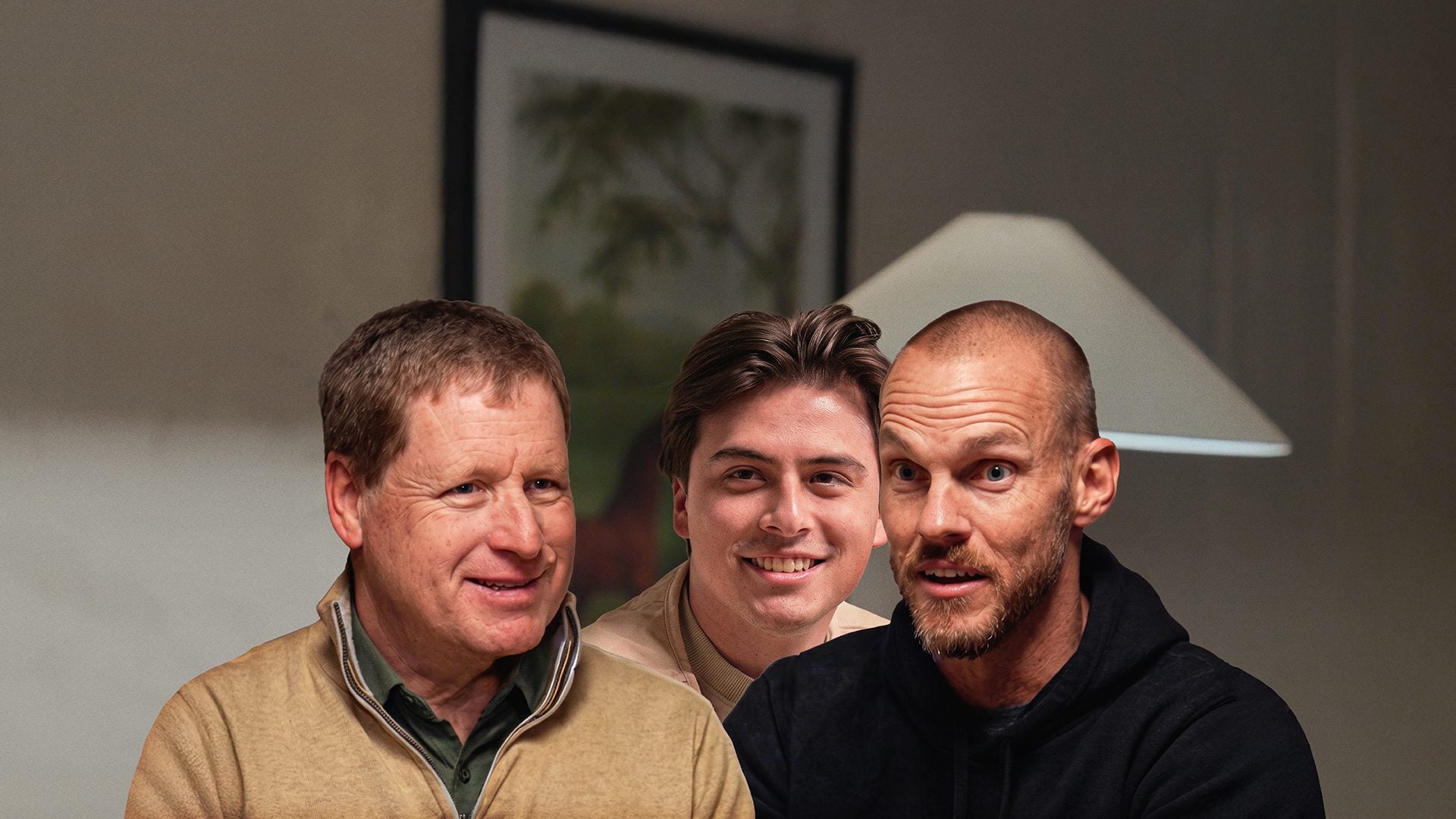

Is reading the Bible enough—or are we missing something if we don’t memorize it?
In this episode of Everyday Radical, David Platt and Austin Huang talk with Andy Davis about Scripture memorization, meditation, and what it looks like to store God’s Word in our hearts for lifelong transformation.
About This Episode
Many Christians assume Bible memorization is optional, impractical, or only for especially disciplined believers. But this conversation reframes memorization not as a niche practice, but as a deeply practical way of abiding in God’s Word, fighting forgetfulness, and growing in holiness.
Andy Davis (author of How to Memorize Scripture for Life) brings decades of pastoral experience to questions many believers feel: Why memorize Scripture when I can just read it? Where should I start? Is this legalistic? And how can memorization shape prayer, meditation, endurance, and joy in God? Davis explains how memorized Scripture helps transform the heart, align our desires with God’s will, and deepen our communion with Christ.
This episode is both inspiring and practical. It helps listeners see that the goal is not mere information, but transformation—loving what God loves, hating what God hates, and living for his glory through the power of his Word.
Key Questions Discussed
- Why memorize Scripture when I can just read it?
- Why do Christians forget God’s Word so easily?
- Is Scripture memorization legalistic—or is it part of abiding in Christ?
- How can hiding God’s Word in your heart actually change your life?
In This Episode
- Why memorization gives you greater insight into God’s Word
- How memorizing Scripture deepens intimacy with Christ through prayer and meditation
- How Andy Davis began memorizing whole books of the Bible, starting with Ephesians
- Where to start if you want to begin memorizing Scripture for life
How to Respond
- Stop assuming Scripture memorization is only for unusually disciplined Christians.
- Start small and begin storing one verse or passage in your heart.
- Use memorized Scripture in prayer, especially when your mind is distracted or your heart feels dull.
- Ask God to use his Word to shape what you love, what you hate, and how you walk with him.
Everyday Radical—honest conversations about following Jesus with courage, clarity, and compassion in everyday life. New episodes every Tuesday.
Austin Huang:
Welcome to Everyday Radical, a podcast where we help the everyday Christian follow Jesus and make him known everywhere. We pray that today’s episode encourages you to do just that. So let’s dive right in.
Andy Davis:
Paul and Apostle of Christ Jesus by the will of God to the saints in Ephesus, the faithful in Christ Jesus, grace and peace to you from God, our Father, and Lord Jesus Christ. Praise be to the God and Father of our Lord Jesus Christ was blessed us in the heavenly realms with every spiritual blessing in Christ. For he chose us in him before the creation of the world to be holy and blameless in his sight and love he predestined us to be adopted as his sons through Jesus Christ in accordance with his pleasure and will to the praise of his glorious grace, which he has freely given us in the one he loves. In him, we have redemption through his blood, the forgiveness of sins. I could keep going. I’ll stop there.
Austin Huang:
Come on.
David Platt:
I am loving this right now because you don’t know that… Yeah. So we’re talking awesome with Andy Davis. I should say that from the very beginning about scripture memorization. But brother, you don’t know that I have been like, okay, Lord, where is next in my journey memorization? And I landed this morning on Ephesians.
Austin Huang:
There you go.
Andy Davis:
Come on.
David Platt:
We just asked you-
Andy Davis:
Providential.
David Platt:
… to quote from any… I mean, brother, you know 47 books of the Bible, you could have started anywhere. Not that you can immediately, we’ll talk about that.
Andy Davis:
We’ll talk about that, I guess.
David Platt:
But the fact that you just started with Ephesians 1:1 is awesome. That was for me. And I trust this for a variety of other people too.
Andy Davis:
And actually, if people just really don’t know and they want to know where to start and they want to do a book, if they literally have never memorized, I want to start with individual verse. We’ll talk about that. But if you say, “No, I’m ready for a book,” I would go Ephesians because of the depth of doctrine, but also the practical Christian living from chapters four through six, Christian marriage, spiritual warfare, there’s so many good things.
David Platt:
Yes. So good.
Austin Huang:
And I read this last night so I knew that.
David Platt:
So how to memorize scripture for life by Andy Davis, let’s just from the very beginning say, get this book. Part of me wants to read what I wrote at the beginning because if I remember right, I do think I said-
Andy Davis:
You blurbed it. Thank you.
David Platt:
Yeah. Well, and I said I cannot recommend this book highly enough, exclamation point. I wish that every Christian would read this book and do what it says because I’m confident that doing so would transform our lives, families, churches, and the world around us for our good and God’s glory and ways far beyond what we could ask or imagine. I believe that.
Andy Davis:
Amen.
David Platt:
Completely.
Andy Davis:
It’s been true in my life for sure what you wrote. And thank you for doing that, by the way. I know it’s not a small thing.
David Platt:
Oh, it-
Andy Davis:
I’m about to ask you to do another one if you’re willing. It’s on Job and suffering. If you’re willing, look at it.
David Platt:
So I’ve known Andy for… I mean, I guess personally, I’ve known of Andy for many more years before I knew Andy who’s pastor of First Baptist Durham, and before I forget, also leads Two Journeys, which is a resource ministry, basically the way you would describe it, twojourneys.org.
Andy Davis:
Definitely.
David Platt:
But we met years ago, I think it was with the IMB. That was when we first met. And so for years, I’ve had the privilege of friendship. And I would just say sitting across the table from this brother, there have been many times in tears, mutual tears sometimes, but just the way this brother has loved, encouraged and spoken God’s word into my life. So this isn’t just the heady exercise for Andy Davis. Brother, when I think about Isaiah 66, this is the one whom i esteem. He was humble and contrite in spirit and trembles at my word.
Andy Davis:
Amen.
David Platt:
That’s your life, brother.
Andy Davis:
Yeah. We’ve just talked about it with Ezekiel 16. When I went over that, I was trembling at that. I realized I was so convicted by it and the Lord spoke to me. And you know how it’s like you accepted it not as the word of man, but as actually is the word of God. This is God talking to you. And as I do this review, it’s not mechanical for me. It’s like God is talking to my heart and telling me things I need to know.
David Platt:
That’s so good. So good.
Austin Huang:
Andy, how many verses, books of the Bible have you actually memorized?
Andy Davis:
Okay. So first of all, I have to be clear about what that means. So my pattern is to learn new verses and to recite them perfectly, get to being word perfect that day and then do it again the next day by reading 10 times, say it 10 times, next day 10 times. Then I settle into a pattern of doing the verses for 100 consecutive days and then I kiss them goodbye. I let them go and I forget them. And that’s why when I said at the conference, I don’t think anybody in this room has forgotten more scripture than me. That’s it. So I was like, “Oh, you can do 47 books.” No, I’ve never claimed that. I’m just saying there was a time in my life that I knew each one of the verses in those 47 books, but I do let them go. And to me, that’s just pro.
Of of why we need to memorize because we’re so prone to forget. But the answer is I’m in my 47th book now. Jeremiah is my 47th book. I finished chapter 19 yesterday. I’m into chapter 20 now where Pashhur puts Jeremiah in stocks for his prophetic ministry. And so, I’ve just never thought about that passage before. Now, I’ll do that for 100 days. Basically, I get three plus months of Pashhur putting Jeremiah in stocks and then when that’s done, I’ll let it go.
So just so you understand the mechanics, three new verses every day. Yesterday’s 3 verses 10 times and then they settle into 100 days. I keep records, and then when I’ve said them for 100 days, I stop reciting them. So you could picture like if you know football, the 10-yard chain, like the first down chain, that gets pulled out to taut somewhere around 300 verses, 3 verses for 100 days and then it doesn’t get any longer, and then I just drop off chapter 1, then chapter 2, then chapter 3 as I’m up in chapter 13, 14, 15, and that’s how I move through.
David Platt:
So this morning, you went through 300 verses.
Andy Davis:
I did. So that was middle of chapter 7, Jeremiah 7 up through 19. So that’s about 300, not exactly 300. And I do those for 100 days, but the real work is the 100 days. And in the 100 days, the verses are marinating in me and God is speaking to me and showing me things that become part of my theology and my preaching, teaching ministry and that’s been 47 books.
David Platt:
Which is part of… Yeah, memorization, meditation, internalization, they become a part of me. Isn’t that part of or much of the value in God’s good design for memorization?
Andy Davis:
Yeah. Do not be conform any longer to the pattern on this world, but be transformed by the renewing of your mind. So it’s a transforming process. And as we heard John Piper was talking about this at a conference that we’re both at now and he said, “The point is not knowledge or information alone. The point of it is knowledge that then transforms your heart so that you love and hate properly. You love what God loves and hate what God hates. And then you live properly for the glory of God.” That’s the point.
So it’s not just living properly, it’s feeling and loving properly and then living out of that. And I don’t want to skip the step of faith. In my conception that knowledge feeds faith and knowledge and faith together transform the heart so that we love and hate properly, and out of that then make a tree good and its fruit will be good, then we live properly.
David Platt:
So good. When you think about the difference between memorizing individual verses here and there from different places and memorizing books, there’s no cons. So I was about to say pros and cons, but there’s not cons of memorizing scripture, but yeah, some of the unique value in either or or both those different approaches.
Andy Davis:
Right. So the value of individual verses is that they are the most famous verses in the Bible for a reason. John 3:16 is famous for a reason, for God so loved the world that he gave his only begotten son that whoever believes in him should not perish but have eternal life. There’s a reason that’s probably the single most famous verse in the Bible because it’s got everything you need in the gospel right there. And there are other similar impactful single verses. So no, there is no deficit at all to memorizing individual verses. And frankly, that’s where I started.
I was converted my junior year at MIT. I was raised Roman Catholic. I was a faithful Roman Catholic Church goer. I was an altar boy. I enjoyed my Catholic faith and I learned some things about Jesus and about God and the Bible accurately, but I didn’t learn the gospel. I didn’t learn the Philippian jailer question, what must I do to be saved? I didn’t know the answer to that. And I don’t think that the Catholic Church has the right answer to that, which is tragic.
But I got then to MIT, just got into my life as a student and in my fraternity life and there was a guy there that was with Campus Crusade for Christ. He was a fraternity brother and started sharing the gospel with me. And at first, I was interested in what he had to say and then I was offended and then I couldn’t stand being around him. It wasn’t his fault. He wasn’t doing anything wrong, but I was under conviction. Took a year, gave my life to Christ. I’ll never forget it. I was working alone in a laboratory and this guy, Steve before that, earlier that day, had invited me to go on the fall retreat with Campus Crusade for Christ.
David Platt:
This is the same guy that annoyed you?
Andy Davis:
Yeah, Steve was his name. He was a year behind me in my fraternity, Sigma Chi at MIT, and he just invited me to go to weekly meetings and he didn’t even invite me every week. It’d be like once a month he would say, “Hey, we’re having that meeting if you want to come.” There was no way I was going to go. But then he up to the fall retreat. So this is three days and two nights and I had to pay 45 of my own dollars to go and I was like, “What are the odds?” I’m like, “Are you out of your mind?” But I didn’t say any of that. At the moment that Steve invited me, I felt sorry for him because of how rude I’d been to him. I had no intention of going to that fall retreat, but I lied to him and I said I’d think about it and I had no intention of thinking about it.
So I was working alone in a laboratory and I heard very powerfully and clearly a voice in my head, I guess, “You’re going to that retreat.” It was overpowering. And it was so clear that I said alone out loud, “No, I’m not.” So I argued with that voice.
David Platt:
So you were having a conversation.
Andy Davis:
I was having a conversation with some will and some force. I did not lack information. I knew the information of the gospel. I lacked the will to follow Christ and I knew to decide to go to that retreat was to decide to follow Christ. And so, I did not realize until many years later what was going on there to link it to scripture, my sheep hear my voice, I know them and they follow me and I give them eternal life and they shall never perish.
So I went to that retreat to become a Christian. It was in Grotonwood, Massachusetts, October of 1982. And it’s amazing, you think about it and I heard in a sermon recently, if you wake up a Christian, it’s because God has preserved you. And I heard another person, not that same person say, “If you can lose your salvation, you would have done so by now.”
Austin Huang:
That’s so real.
Andy Davis:
It’s not because you’ve been so awesome up to this point, but keep it going. It’s not it. So I gave my life to Christ and then I was immediately mentored by a man named Tim Schuman with Campus Crusade for Christ. And he got me into the navigator’s topical memory system and that is individual verses and they choose key verses having to do with your new life in Christ. I’ll never forget the first verse I memorize, 2 Corinthians 5:17. “If anyone is in Christ, he’s a new creation. The old is gone, new has come.” That was the first. Then they give you Galatians 2:20, which is so beautiful. I’ve been crucified with Christ and I no longer live, but Christ lives in me and the life I now live in the body, I live by faith in the son of God who loved me and gave himself from me. Not us, not there anyway, us is other places, but there it’s me. He loved me. He came for me. And by the way, I want to give you a picture of that. Can I give you a picture of that?
David Platt:
Yes.
Andy Davis:
Love me and gave himself for me?
David Platt:
Yes.
Andy Davis:
I want you to picture the journey that Jesus made across the sea of Galilee. He left behind the crowds and he went in the boat exhausted from his relentless healing ministry and teaching ministry and he goes across in that boat and he’s asleep on a cushion and then this terrible storm comes up in the sea of Galilee so bad that these professional fishermen thought they were absolutely going to drown, imminent, no doubt in their minds. So they wake Jesus up and absurdly ask him, “Lord, don’t you care that we’re perishing?” It’s like, “Don’t you care that we’re perishing.”
“Yes, I care very much that you’re perishing. That’s why I’m here on earth. I care very much that you’re perishing.” And then he stands up and says, “Peace be still,” and immediately becomes completely calm like a mill pond. And he just can see water dripping from his hair and I assume he had a beard and his clothes and they’re all soaking wet and the boat’s still half filled with water, but it’s all quiet.
And then, this terrifying thought hits them. Who is this? Even the wind and the ways obey him and they’re more afraid of him than they been of the storm, but he’s not done with his journey. They keep going and they land at the region of the Gerasenes, and as soon as Jesus steps out of the boat, this demon-possessed man sees Jesus and comes toward him, which is counterintuitive because there’s no doubt at all the demons are afraid of Jesus. But afraid of him, they run to him because they know something we don’t know. There’s nowhere to hide. There is nowhere to go. Where are you going to go?So they come and they make their plea. If you drive us out, send us into the herd of pigs and he drives them out. I believe that that demoniac was the most wretched man in the history of the world on this earth. It’s more wretched to be in hell, much more wretched.
But how can you be in a worse condition than naked cutting yourself with stones, a homicidal maniac that has broken chains, everyone’s terrified of you and you’re living like an animal with 5,000 demons inside you. I cannot imagine a worse human situation. Well, Jesus drives the demons out, the man is dressed in his right mind and becomes a genuine follower of Christ, loves him. Jesus told him, “Go tell your family how much God has done for you.” Then the people come and beg Jesus to leave because they’re more afraid of him than they’ve been of the demoniac. He gets in his boat, crosses back across the sea and lands. And then Jairus is there waiting for him.
So what was that all about? He goes from here across there through a storm, lands, does that with the demoniac, drives out the 5,000 demon, 2,000 pigs, that’s all. They beg him and he comes back. That whole thing was for one man. Galatians 2:20. Loved me and gave himself for me. And Jairus is there waiting because he’s desperate because his daughter’s dying. He must have been there all night and just the life of Jesus. But anyway, with memorization, there’s a vividness that comes on and I just love doing that. Anyway, so I started with topical memory system and then went from there.
David Platt:
Well, but that’s it. So you start memorizing individual verses, which obviously there’s value in. Galatians 2:20 being a wonderful example. And everything you just shared is the overflow of soaking in-
Andy Davis:
The whole book.
David Platt:
Yes.
Andy Davis:
Gospel of Mark.
David Platt:
Mark four and five and when this happened and what that would have been like. And it’s not just memorizing peace be still. It’s what happened before. It’s what the water dripping off his head. You’re picturing as you’re soaking that in and then you’re like, wait a minute, he did all that for this one man, this one wretched man. He does that for me. But there’s the value of, I mean, one of the values of memorizing a chapter or a book, you get into the story and narrative or just into the flow of what Paul’s saying in Ephesians and how it builds on everything. So when you get to chapter four, it’s like, “Oh, this is totally grounded in all this rich. He chose me in Ephesians chapter one.”
Andy Davis:
Amen. That’s so good. And I think there’s a lot of reasons why I do it, but there’s two, it’s alliterative. I usually… Do you alliterate in sermons?
David Platt:
Yeah, some. Yeah.
Andy Davis:
But not every time?
David Platt:
I think I used to do it more. I do it a little less, but no, if anybody… Yes, people from our church would be like, “Yes, you’re alliterate.” So I used to do it a ton more.
Andy Davis:
All right. Anyway, but these reasons, it’s not exhaustive, but these are two that are very impactful for me. They both begin with the letter I. The reason I memorize is for insight and intimacy. So insight are aha moments, things I never knew were there in the text. I just never seen it before, never. And I wrote a whole book on heaven based on meditations I did all based on sound, scriptural, theological reasoning and some very significant leaders, I won’t say their names, but people who have poured into me, but I shared what I was doing. They actually said, “I’ve never thought any of these things before.” But they’re there.
So that’s cool. When you see new things and it keeps you electric and excited about the word of God because it’s like always has more to say to show you. So there’s that and parenthetically on that topic, I remember I had to get my car repaired once and it was a transmission thing and the transmission place about a mile from our church and I decided it was a nice day. I decided I was just going to walk. I could have gotten a friend to come pick me up from the church. But as I walked along a road, I traveled on every time I drove to church. I saw things on that road I’d never seen before because I was going slowly.
David Platt:
That’s good.
Andy Davis:
And so, I got 100 days and I go over it and it’s like on day 36 something new will hit me that I… But it’s there. It’s not like I’m making it up, but it’s there. All right. And then intimacy, when I’m in the boat with Jesus for 100 days, when I’m looking at him with wonder and amazement or in Luke’s gospel, when that sinful woman comes to Simon the Pharisee’s house clearly uninvited, he doesn’t want her there. How did she get in? I don’t know.
And she is wetting Jesus’ feet with her tears and wiping them with her hair and Jesus defends her and tells that parable of the moneylender with 500 and the 50. And then he just focuses on her, defends her and then says, “Daughter, your faith has saved you, go in peace.” I feel like he’s talking to me. I got three months to hear that. I got three months of that or the one with the bleeding problem and she’s terrified to tell him what she had done, but he just stopped and said, “Who touched me?” Because he wanted that encounter with her. So I know he wants a love relationship with me and scripture mediates or delivers intimacy with Jesus.
Austin Huang:
That’s so beautiful. I mean, even just you painting that picture a few minutes ago, that even clicks for my brain of he healed that woman on the way to heal Jairus’s daughter.
Andy Davis:
That’s right.
Austin Huang:
So it’s just a continuation of that story. I’ve never thought to picture Jesus in the boat with water dripping off of him. When I think of meditating on scripture, I think of reading it, but are we missing something when we don’t memorize it?
Andy Davis:
Yeah, I have evolved at this point where I actually do. I used to say that scripture commends but doesn’t command memorization, but now I don’t think that’s true. I think it actually does command it because I don’t know how else you read James 1:22-25 without eliciting a command. Do not merely listen to the word and so deceive yourself, do what it says. The man who listens to the word and does not do what it says is like a man who looks at his face in the mirror and then goes away and immediately forgets what he looks like. But the man who looks intently into the perfect law that gives freedom and continues to do this, not forgetting what he has heard. Let me say that again. Not forgetting what he has heard, but doing it. That sounds like memorization to me.
David Platt:
Yeah. Well, yeah.
Andy Davis:
So that’s James 1:25. Let the word of Christ dwell in you richly as you teach one another with all wisdom, Colossians 3:16, I think.
David Platt:
Yeah. Well, one, this is I think maybe a place I’ve evolved too, meditation. I don’t know how to meditate without memorizing. As far as meditating, thinking on it, internalizing it, turning it over and over in your mind, even mumbling it in your mouth, that all just feels like memorization, like meditate on my word. And the other text that just came to my mind as you were sharing that is, and this so struck me when this connection, this insight, aha moment happened, but when Psalm 1:19, this amazing chapter about all the wonders and effects and fruits of God’s word and the last verse in it, I’ve gone astray like a lost sheep, seek your servant, for I do not forget your commandments.
Andy Davis:
There you go.
David Platt:
His last verse after 176 verses and the longest chapter in the Bible, all on the Bible, he’s like, “I don’t need to forget your commandments.” So I’ve got to remember them. I got to memorize them.
Andy Davis:
I have not noticed that one before. Thank you. I would also commend John 15:7 and 8. If you remain in me and my words remain in you, then ask whatever you wish and will be given to you. This is my Father’s glory. You bear my fruit and show yourselves to be in my disciples. So if you look at sometimes the word remain is abide or dwell or live. What is that translation that puts them all out there literally on the page, like rolls them all out there, all the synonyms? Is that the Living Bible or Today’s Living Version or something like that?
David Platt:
I don’t remember.
Andy Davis:
I think it’s kind of funny, but it’s like the translators didn’t want to choose, so they just roll them all up.
David Platt:
Give them all. Make your pick.
Andy Davis:
But let me do that for a moment. If you abide, dwell, live, remain in me spiritually, intimately connected with me, the vine and the branches, and my words, dwell, live, remain, abide in you. So stop right there. What does that mean? My words, plural, my nouns, verbs, adjectives, whatever. Sounds like memorization. So you didn’t forget it. So that’s a meticulous awareness of what he actually said. Then the next step is prayer. Ask whatever you wish and it will be done to you. The combination of the word and prayer is powerful.
David Platt:
Pray the word.
Austin Huang:
And I think about that too. The more his words abide in us, I think that’s the pitfall of the prosperity gospel. It’s like, well, ask whatever you wish and it’ll be done for you. But no, no, you miss the part where it says, “If my words abide in you, then ask all that you wish because then your wishes become an imprint of God’s desires and will for your life.” I just think that’s beautiful.
Andy Davis:
Can I pick up Austin on what you just said?
Austin Huang:
Yeah, absolutely.
Andy Davis:
Because I was teaching on prayer and I was trying to see times that Jesus specifically tells us things to pray and there are just not many of them. Ask the Lord of the harvest to send out labors into the harvest field to be one. There’s a few, but it’s more like a blank check. He gives you lots of blank checks, not just one verse. There’s actually four or five blank check verses. If you believe you’ll receive whatever you ask for in prayer, it’s like this whatever, whatever, whatever thing.
So if you’re mature in the faith, you know that that’s bounded by the will of God. He’s not going to give you anything that’s outside of his will. That’s just not going to happen. And there’s no way… I mean, first of all, there’s no way you’re going to put a new idea in his mind. Hey, Lord, have you looked at it this way? It’s like, you know I haven’t, but I want to tell you that is a whole fresh… It’s like that’s not going to happen. So the more you think about it, then prayer is just asking God to do what he’s already determined to do before the foundation of the world, but he just hasn’t done yet.
But the thing is, it’s like then why is this ask whatever, whatever you wish blank check language? Why is that? So I thought about it because it’s not one or two. There’s a lot of these verses. And I think it’s like he’s coming saying, “What do you want? I’m asking you, what do you want?” And I think it’s an important moment. It’s like bringing the animals to Adam to see what he would name them. It’s like, you’re involved in this thing. What do you want? Look, here’s a city. What do you want?
Austin Huang:
It’s so cool.
Andy Davis:
Here’s your family. Only one of them’s converted. Do you have any desires? Anything that’s popping in your mind? I think he wants us engaged. He wants us to dream and think and all that and then act instead of just like, tell me what to pray and I’ll pray it. To some degree, tell me what to pray and I’ll pray at is true biblically. But at the same time, the world is so complex and providence is so varied and complex. It can’t all be covered in the Bible. So it’s like you look at your specific situation, your specific city or country or where and think, look, and notice and then bring some request to me.
David Platt:
That’s so good.
Andy Davis:
I think that’s what he wants us to do.
David Platt:
What an invitation.
Andy Davis:
Amen.
David Platt:
From God.
Andy Davis:
Amen.
David Platt:
That’s amazing.
Andy Davis:
Can I tell the story of how I got into whole books?
David Platt:
Yes.
Andy Davis:
All right. So started with a topical memory system and I was converted my junior year at MIT. Senior year, I was very active in the Campus Crusade for Christ now called Crew Ministry. And there were some veteran memorizers around these were guys that were mentors. They’re students, but they were ahead of me and been Christians for a long time and they were into the TMS and they had these cards and the cards were about this big, these little navigators cards and they would punch a hole in them and then put them on these snap rings. So they had all these cards and they looked like janitors at the Pentagon or something like that with 500 keys and there were just all these cards and they’re like thumbing through them and going through them. And I thought, okay, there’s a clear bottleneck there, a limit, but I didn’t know what to do about it. I just realized there’s only so many topical verses you can learn.
I also noticed that a lot of the topical verses were taken out of context. They weren’t really specifically honoring the context. Good example of that would be Matthew 18:20, where two or three come together in my name, there, am I with them. And so, that’s like prayer. You get two or three to agree and it’s like-
Austin Huang:
There’s three of us here.
Andy Davis:
So that’s not what that’s about. That’s about church discipline and dealing with a sinning person and having witnesses along with you. I think prayer is involved, but I wouldn’t go to that for prayer, But it was an… And then the Romans road stuff, all the Romans road verses begin with connecting words, “For I am not ashamed of the gospel because it’s the power of God for the salvation.” For, I am not, for. It’s like, all right, we’re right in the middle of a thought process here. All of them, they all begin with a connecting word. So I’m like, all right. But these were all early ideas. I hadn’t really thought about what to do.
All right, couple years later, it was summer of ’86, so it’s 40 years. So it’s a 6, this is 2026. So June of 1986, 40 years ago. It’s amazing. But I was sitting on a bench in Kenya and I had asked the Kenyan man that brought me to the bus stop where the bus was coming when the bus came and he said, “In the afternoon.” So I’m like, “Okay, what does that mean?”
David Platt:
1:00, 5:00.
Andy Davis:
I’m an American. I’m like, “What do you mean afternoons?” I was there like you would have been, 11:50, all right? I’m going to not miss that bus. So it rolls in there when it wants to. So I was there with nothing to do and I had my pocket Bible and I started on Ephesians, the very verse I started with you and started with Paul and Apostle of Christ, et cetera. It was a 10-week mission trip and I stuck with it. It was middle of the trip. So for about five weeks I was learning verses. But you know what happens? You can be very busy on a mission trip, but you also have some freedoms and some time that you usually don’t have back in your American lifestyle. So the big transition was when I got back to the States to keep going.
And so, I was probably around chapter three at that point and I just kept at it and I finished it and I was really excited about that. So I decided, all right, let’s keep going. So I then did Philippians next. So Ephesians 155 verses and then Philippians is 104, that’s 259 verses. And then I was like, all right, I want to do something really big. And so, I started Gospel of Matthew. Began with the genealogy. By the way, if you want to memorize the genealogy, the best one is Matthew 1:1. A record of the genealogy of Jesus Christ, son of David, the son of Abraham. Bang, there’s your genealogy right there. That’s the quick one. But then there’s 42 names after that.
David Platt:
But you memorized them all?
Andy Davis:
I did. I did. And actually it’s amazing how that one stuck with me. The Luke one is 76 names. That was harder. But at any rate, I just started doing it six verses a day. I remember I was at Gordon-Conwell Seminary. I was single. I would go up every evening and sit at a desk and I had pennies, 10 pennies, and I would recite them and I would slide the pennies across till I got to 10. And then I would do the next verse and then slide them back when I did that 10 and then I did all 6 verses together 10 times. So I did the old 10 thing. That’s how I developed that. And I moved my way through the Gospel of Matthew, 1,068 verses.
And I just was so excited when I got to the Great Commission because I already knew it. I was like, yes, it’s a downhill journey at this point. All authority in heaven and earth has been given to me and it was already there. So that was cool. And those three books then, now it’s like, all right, it’s on. And I just wanted to keep going. And so, just seminary in Louisville when I was on the mission field in Japan, it was just been a regular part of my life. And the idea of letting it go, kissing it goodbye came later.
The 100 days came in the book of Habakkuk. I remember that I was doing a little book, three chapters, Habakkuk, and I thought, I can’t recite this book. I mean, I’m kidding myself. I don’t have this memorized. So I was learning new verses, but they were dropping out of my mind the next week or sooner. I got righteously angry at myself and I said, “All right, fine. I’m going to say it for 100 days.” I just said it out loud. And so, I’m going to do Habakkuk for 100 days. And I did and then that really stuck and I said, “All right, let me just do that.” And then, I realized I couldn’t really fight the forgetting. I knew that what was more important were the books I hadn’t done yet. And I also had a limited desktop and that can get a little bigger, but it’s not infinite. And so, I probably could keep, I don’t know, I probably could keep between 500 and 1,000 verses hot and fresh and skillful if I work at it, but that’s about it.
David Platt:
That’s the max you-
Andy Davis:
That’s probably it.
David Platt:
Because you’ve got your 300 verses that are rolling, but then you’ve got-
Andy Davis:
Romans.
David Platt:
Romans that’s there that you do once a week.
Andy Davis:
Once a week.
David Platt:
Yeah. So you’ve got others that you do-
Andy Davis:
So maybe it’s more than 1,000.
David Platt:
… with somewhat a regular, but that’s where… Yeah, I’d love to hear just your practical encouragement to the person who’s not memorized anything or maybe just memorized verses.’.
Andy Davis:
Sure.
David Platt:
I mean, these are muscles to be developed.
Andy Davis:
They are.
David Platt:
But there’s an intentional plan obviously that you started with. Just encouragement for the person who’s like, “Whoa, I’ve never thought about memorizing a book. I’ve never thought of memorizing a chapter.” I’ve memorized a few verses, but yeah, just encouraging.
Andy Davis:
Yeah, I want to do that. And so, I would say first of all, it starts with realizing, and I think we’ve done it at this table, this conversation, the incredible worth and value of the word of God. That has to be where you start because it’s hard work. And I’m not joking, it’s hard work. I spend about 50 minutes a day doing Jeremiah right now. It’s a big chunk of… But there’s no wondering about it. I’m not like, “Well, should I do it or should I not?” And it’s not an OCD thing for me or whatever. And people ask me about that, about legalism and I got asked at the breakout session the question, “Well, how do you keep it from being legalistic?” I said, “Well, you got to make a distinction between legalism and discipline.” Athletes, they’re not legalistic. They just know they need to work on their free throws and they need to do the wind sprints and all that if they’re going to function on the court. It’s not legalism, it’s just that’s discipline.
So I think we have to look at that and say, look, I’m not worried about legalism. I’m more worried about just the incredible laziness I see in my life. I’m like more tending toward that end of the equation, not toward legalism. But I would say to that person, start with individual verses. You can Google online topical memory system and they’ll tell you what verses they want you to memorize. I mean, it’s no big secret and they can’t do a trademark on what verses they are. They’re in the Bible so they’re free for everybody. So you just do those verses or whatever you want, verses that are meaningful to you, things that if you’re struggling with lust or you’re struggling with anxiety or procrastination, get into it period, just individual verses.
But what I do want is I want to put a seed of an idea in your mind of memorizing whole books that you can do it and it’s in the end better because you get context, you get verses that are not the famous verses, and you get to immerse yourself in them and learn from them for, I would commend my approach is 100 days. And somebody pushed back recently on me on kissing it goodbye. And I’m like, “Well, you don’t do it because you want to let go of the verses. It’s because you’re in a mode of acquiring new verses all the time and you’re going to reach a limit.” And so, the only way you can get the new stuff is to let the old stuff go. And so, I’m okay to let the old stuff go. I would say the genre that I’ve struggled with the most by far is the prophetic genre, Ezekiel, Jeremiah, those things really hard to memorize.
David Platt:
You know what’s interesting though, I’m just speaking out of overflow of my friendship with you, when Austin, when I’ve been sitting at the table with Andy and shared things that are heavy on my heart, I’m thinking about the conversation we were having right before we even got on the podcast, your 100 days are right now in Jeremiah. You were actually sharing with me out of the overflow of Ezekiel. You shared with me out of the overflow of Luke 15. You shared me with the overflow. I mean, I remember when you spoke Mark 9 over my life in a way I really needed to hear that has stuck with me big time to this day. You weren’t even memorized. So you had kissed them goodbye in a sense, but it’s not like they were totally gone.
Obviously, Mark 4 and 5 is not too far from your mind. I mean, that’s part of the beauty and I would add so they’re really not that far gone and it’s just another part of the value. You look at the world through the lens of God’s word. You listen to your friend unburdening his heart through the lens of God’s word. You’re weeping with me and you’re speaking God’s word over me, that value and the ability to do that in your own life, in your own heart when the adversary is coming at you with lies and deception, which he constantly is, it’s who he is, the deceiver of the whole world. So to fight that with truth, it’s got to be in there. You’re defenseless if you don’t have this sort of the spirit and this shield of faith that’s all girded with the word of God.
Andy Davis:
Amen. Thank you. And that’s so encouraging. You know what’s really super cool about all this though, 1 Corinthians 13 where Paul says, “When I was a child, I thought like a child, talk like a child, reason like a child. When I became a man, I put childish ways behind me. Now we see, but a poor reflection as in a mirror, then we shall se face to face. Now I know in part, then I shall know fully, even as I’ve been fully known.” He’s talking about now and then. Now is this present earthly age and then is heaven. So what that means is everything in that book and everything we’ve ever studied is like baby talk. When we get to heaven, we’re going to kick it into a quantum new level of learning God. That’s what my heaven book is about. I want to put in a plug for it because it’s not been marketed well. It’s called The Glory Now Revealed and Baker published it and it’s basically what we’re going to be spending eternity doing in heaven is learning the glory of God.
David Platt:
Come on. I love it. I would commend it to you, to all of you listening because… And it is really an example, again, just the fruit of God’s grace and word in your life because yes, I count me among those who would be… I’ve not thought about that. I’ve not thought about that. But it’s again, and there’s part of it that’s imagination flying on truth, but there’s also part of it that’s just like, think about this. God said this. Surely it’s going to be… Yeah, there’s just… Oh man, it’s so good. So I would definitely commend.
Andy Davis:
Amen. And I think it’s just the work of logic and theology. Theology is putting if A is true and B is true, then A plus B is true. We’ll call it C. C is not in the Bible, but it’s true. So that’s like Trinity. You’re not going to find Trinity, but it’s true. Incarnation, you’re not going to find that. You’ll find the word became flesh. Theologians are putting together ideas going beyond the immediate text. That’s what good theology is, but you just got to test the workmanship and make sure that that really is a true way of looking at those verses. I just did it with the doctrine of heaven. The problem is in our reformed world that is Calvinistic or believing in the sovereignty of God, predestination, that world is very strong on soteriology, the doctrine of salvation, very weak on eschatology, very weak. So Louis Berkhof, for example, has something like, I don’t know, 35 pages in a systematic theology on justification, has two pages on heaven. Really?
David Platt:
And we’re supposed to think about heaven.
Andy Davis:
We are.
David Platt:
Rejoice.
Andy Davis:
Colossians three. We’re supposed to set our minds on things above and things to come. So the basic concept with heaven was a dynamic heaven in which we are changing and that the insight, the key Narnia wardrobe threw it into Narnia idea was we’ll never be omniscient. It’s like, all right, so that means we’ll be able to learn things in heaven. What’s the topic? How about God? And how about his glory?
David Platt:
Oh, men. It’s in there. Come on.
Andy Davis:
And it’s like, then me with my PhD in church history, I’m like, do you think part of it will be learning the past? It’s like, yes, it will. God will teach us the past. And my feeling is, here is a simple question. Let’s talk about immediate past, yesterday. All right. What did God do on planet earth yesterday? Well, how long do you have? With the Lord, a day is like 1,000 years. Well, how many of those days have there been? 6,000 years of recorded history. Each one of those days, God did unbelievable things you know nothing about. And then, it just started to expand after that.
I’m like, all right, governments, massive rise and fall of empires down to tiny details. This man meets this woman and they get together and get married and all this stuff going on, sparrows fall into the ground, lots being cast into the lap, all this stuff was going on and God cooked all of this five star cuisine and most of it got raked into the dumpster and never got eaten in your own life. You walked by and never even noticed. And God’s like, “All right, I’m going to turn you back. I want to show you that day. I want to show you what I did that day. And I’d like to show you what the demons were trying to do and what the angels did to serve you.” How would you like to go back to the diet of arms when Luther’s there and he’s asked to defend his justification by faith alone doctrine and he quails and he asks for time and they’re like, “You basically should have come prepared,” which you should have, but he wasn’t quite ready.
So he spends a night in prayer. The next day he gives his famous courageous, “Unless I’m convinced by scripture and sound reason, I can do no other. My soul is captive to the Word of God. Here I stand.” All right, he’s got unquenchable courage and all that. What happened that night? Well, he said, I would go to Worms, though the number of demons, devils, you call them, are as many as tiles on the roofs. Well, I bet they were. What do you think that prayer life was like, that prayer night was like? How much do you think Satan was assaulting him? Would you not like to watch a movie of that night from the spiritual realms and watch how God protected him? That’s just one night.
David Platt:
So good.
Andy Davis:
How cool is that?
Austin Huang:
I’m looking forward to that.
David Platt:
That’s so awesome. Yeah. And that’s just the fast of one person.
Austin Huang:
One person.
Andy Davis:
One person, whatever.
David Platt:
One moment.
Andy Davis:
How many new friends… I quoted this when I was a trustee. How many times do we do Revelation 7:9? Pretty much daily, all right? Every tribe language, people and nation. All right. But what’s cool is, and that’s great and the other verse is not more important. It is important. They’re wearing white robes and standing around the throne and saying, salvation belongs to our God who sits and thrown to the lamb. But a couple of verses later, one of the elders asked him, these and the white robes, “Who are they and where do they come from?” All right, stop. How long is that story going to take to tell? That’s every redeemed person from every era of church history. And I’m going to just ask two simple questions when I meet them in heaven, all of them, all of my new friends who I’ve never met.
I’m going to ask them two questions. How did God save you and how did God use you? And then they’ll be able to tell with no pride and I’ll be interested because I’ll be done with my pride. I’ll be expanded to take their stories into myself and I will delight in the glory of God. God’s not going to waste that. He wants us to know what he did. How cool is that?
David Platt:
Man, that whole heaven book is just like filled with, that was like crumbs.
Andy Davis:
Yes.
Austin Huang:
Well, and that’s just like even beyond like yes using the word of God, but also just our stories with God. That encourages me as someone who is like… I grew up in the church, but I didn’t really care about my faith until I got to college. I remember just feeling this moment of just like, okay, I’m a Christian now, what else is there to do? But the fact that, and this is something I’ve learned, but the way you speak about it is just like every individual image bearer who comes to faith in Christ has this magnificent journey with the Lord. Even if they’re a janitor for the next 50 years of their life, there are stories that they get to be a part of that we don’t get to be a part of and we all get to hear about them in heaven one day. I think that’s beautiful.
Andy Davis:
I love what you just said and to me, one of the sweetest meditations, and I preached a whole sermon on this, is the perfection of the two great commandments in heaven. So the first and greatest commandment is to love the Lord our God with all of our heart, soul, mind, and strength. How delightful is it to each of you to know that in heaven you will?
You will be done sinning. You’ll be done with idolatry. You will actually love God. Well, but that’s only part of it, part two. How delightful it would be for you to actually love your neighbor with the same passion and intensity and focus with what you love yourself and that you’ll love your neighbor’s rewards as though they were your own. And you’ll like, “Tell me the story of how you got that crown or that jewel. I am all in.” And you will be done with selfishness and you’ll be like… So you ever have a situation where someone goes on a short-term mission trip and they come back and they want to show you their photos and you’re like, “Yeah, choose your five best.” What are you saying? It’s like, I’m limited in my interest. Well, in heaven you’ll be done with that. First of all, limitless time, but that’s not even the issue.
The issue is your soul will be expanded to take them into yourself and love them as you love yourself. And that language, by the way, comes from Jonathan Edwards. Heaven is a World of Love. You will be expanded to take others into yourself and there’ll be no jealousy. There’ll be no arrogance or pride. We will be celebrating each other’s white robes and crowns and honors and stories as much because it was God in them and Dennis.
David Platt:
Yes. It’s awesome. Yes. Man. So good. That’s so good. Told you, man. Man, oh, there’s so much more. I don’t know.
Austin Huang:
I think we’re running out of time.
David Platt:
Okay. Well, let me say that one thought that came to my mind earlier, super practical. I mean, you mentioned 50 minutes or so on your 100 versus I’m sure some people have thought at numerous points in this conversation, I don’t even know how to make time for just like, I mean, I would love to hear, I don’t know how to make time. I don’t know if I’m good at memorizing some of those kinds of things. I mean, my just simple expectation would be to, well, just look at the screen time on your phone and compare that we have time. But yeah, just what Sure. Pastoral, personal encouragement would you give?
Andy Davis:
Yeah, it’s a good word and I want to do that. So we want to go to the entry level of somebody who has never memorized scripture. And we said it earlier, but I’ll just give you some practical steps. First, present yourself to God as a living sacrifice. Just do that. Aside from memorization, just in general, say, “I am yours to command. I want to live my life for your glory.”
But the second part right from that same passage is to not be conformed any longer to the pattern in this world, but be transformed by the renewing of your mind. And that comes by the word of God. It’s like, I want that. And then, we’ve talked about memorization. I want to do that, Lord, but I’m intimidated. I feel busy, et cetera. I don’t know that I’m very good. Start with one verse, just do it. The mechanism is simple. We’ve said it three or four times in this video. Read it 10 times and then say it 10 times. All right. That means look away, cover it with a piece of paper. If you have to look again, et cetera, but just do that and then tomorrow recite it 10 times and then do that for a hundred days on just one verse, just one verse. Just do that.
Somewhere around day 10 or 15, you don’t need anything. You’ll be able to, “Oh yeah, I got to do John 3:16,” and you’ll recite it there. That took you 14 seconds. And you’re like, “All right, do I have some bandwidth to do another one?” You got another 86 days on John 3:16, but you pretty much got it. It’s not literally adding anything to your time at all. You decide you’ll do it when you go and shower. When you’re shampooing, I’ll do John 3:16. Or when you pull out of your driveway in your car, there that’s done. You start to realize you have more bandwidth than you think. So I’m ready to add another verse. So you do that and then after a while you start realizing, what’s the limit to my bandwidth? It’s bigger than you think. It just then comes down to how much you want it. And so, it’s just going to keep going and going. The thing that’s been most delightful about this conversation has not been the mechanics of memorization. It’s been the content of the word of God.
David Platt:
So good. Yes. For sure. Yes.
Andy Davis:
So good.
David Platt:
Which is which is what I’m so thankful for.
Austin Huang:
Amen. And friendship with you, brother.
David Platt:
Amen. And not to mention your leadership in the church and you’re equipping people. And again, how to memorize scripture for life, a little book that I, as I wrote in the front of it, I cannot command highly enough and I just wish every Christian would have this little tool. I mean, you got it. Are you ready?
Austin Huang:
I’m ready to go.
David Platt:
And you’re a hook. Well-
Andy Davis:
Someone once said people read short books. So that’s a short book.
David Platt:
That is good words.
Andy Davis:
Thank you for letting me. It’s a privilege to sit here with you and just love you brother so much, both of you.
David Platt:
Well, can you pray over every person including us who’s listening to this conversation?
Andy Davis:
Yeah, let’s do that. Father, I want to thank you for this time with David and with Austin and this time to speak on this topic. And I pray that you would take the words that we’ve said and how much of those words, how many of them are true and beneficial, let them take root in the hearts of our hearers. And I pray that it would lead to a transformed pattern of life that then we’ll see the word of God bear limitless and eternal fruit in people’s lives. We pray in Jesus’ name. Amen.
David Platt:
Amen.
Austin Huang:
Thanks so much for listening to this episode of Everyday Radical. We pray that it encouraged you in many ways. We do this every single week, so be sure to subscribe or follow to not miss the next episode. We’ll see you then.