

Stop Asking What God’s Will Is—Do This Instead


Many Christians are asking: What is God calling me to do with my life? What if I miss it?
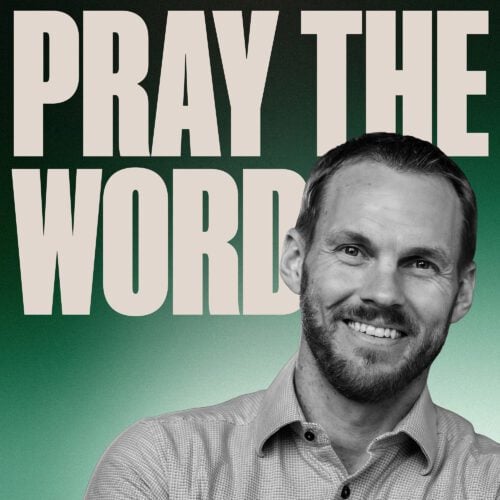
In this first episode of Everyday Radical, David Platt and Austin Huang unpack the biblical truth about calling, comparison, and how to walk confidently in God’s will, wherever you are.
From feelings of uncertainty and fear of missing out, to the comparison trap with others living “more radical” lives—this conversation brings deep encouragement, wisdom, and practical insight.
In this episode
- What the Bible really means by “calling”
- How to live a faithful life, whether you’re a missionary, student, nurse, or stay-at-home parent
- What success actually is
- Why it’s hard to miss God’s will if you’re surrendered to Him
Whether you’re preparing to go to the nations or walking faithfully in your 9–5, this episode will remind you that your life can count for eternity—right where you are.
Join us every Tuesday for Everyday Radical to have honest conversations about how to live out the gospel with courage, clarity and compassion—and how to help others do the same.
Austin Huang:
The first question, I just want to jump right in. The topic of the weight of our calling and the fear of missing it. So many people, young people in particular, leave conferences like CrossCon, that you preached at, feeling fired up about the Great Commission, but at the same time, they can probably feel a little overwhelmed. What would you say to somebody who may be thinking about their calling? Maybe they don’t even feel like they have a calling from God in terms of the Great Commission. What would you say to that person?
David Platt:
Oh man, well, I’d say a lot of things. Even just the concept of calling, I would want to step back. So biblically “calling”, the way that word is most often used in Scripture, is just a reference to calling to salvation to be a child of God. And so I would say start there. Press in and even before trying to figure out what God’s leading you to do, big picture in your life, your identity in Christ abiding in him, that’s what you’re fundamentally called to in a way that is going to be the case, no matter where you are, where he leads you anywhere in the world. So just press into Christ abiding in him, and then overflow of that, calling to make disciples of the nations. That’s not, “Okay, what do I do in the future?” That’s, “Where do I live right now?”
And wherever that is, God’s saying, “Follow Jesus and make him known right there.” You’re called to do that, so just look today at the people around you. Who can I make Jesus known to today? You live in Austin, you are today, last night, you’re on the streets making Jesus known. You’re going to be out there again tonight, making Jesus known. This is what we do wherever we are, so we don’t have to wait for some big decision. That just… And that’s so important because that’s going to be the foundation from which we discern calling when it comes to vocation or location we might live, or just what God may do. That needs to happen out of the overflow of abiding in Jesus, just walking as a child of God and being a disciple maker, making Jesus known right where we live. And then that’s the way I think about it.
Paul, in Acts 16, he starts to go in one direction. The Spirit stops him, he starts to go another direction, the Spirit stops him. It’s not like he’s sitting back, “God, what do you want me to do with my life?” He’s doing it. He’s following Jesus, making him known right where he lives, and the Spirit’s leading him. And so then, okay, we start to think through, “Okay, as I’m doing that in my life, wherever I am, if I’m in a process of discerning, what’s next? Where is God calling me to go to school? After school, to a particular job, to a particular location?” That’s where press in, and the words I always use are surrender, abide, and rest. Surrender, just Lord, I’ll go wherever. I’ll do whatever you want me to do. Abide, walk in holiness, just pray, fast. Be in his word.
Making Jesus known wherever you live, just like we just talked about, and then rest. He’s going to lead you. He’s going to guide you. You don’t ever have to worry about being in the wrong spot. He wants his will to happen in your life more than you do. He has put his very Spirit inside of you to make that happen. So just rest as you walk with him, explore all the different ways that might look in your life, and trust he’ll lead and guide and direct you. Ah, there’s so much even flowing from that, but I hope that’s foundational in a way that just infuses even meaning into today and then sets you up for whatever the Lord might lead you to do in the days to come. And in all of that, I would say, so surrender, abide, and rest, and with open hands to say, “I want to make your glory known in the world among the nations. I want to play whatever part you want me to play. So help me to do that.” That’s a prayer God promises to answer.
Austin Huang:
I think that’s inspiring to me and just helps me reflect on… Christine Caine, one time, she was speaking on this Zoom call that I was on, and she said, “It’s way harder than you actually think to step outside the will of God for your life.” And that was a few months ago at this point. But I just thought about that, and it’s just something I keep coming back to. It’s man, God can open a door like Paul in 2 Corinthians, he hears from God that there is an opportunity to preach the gospel in a certain city, but it doesn’t sit right in his spirit. So in his spirit he says, “Okay, I’m not going to go. And for me, I’m like, “Man, that means that God’s calling isn’t…” Like you’re saying, it’s not just some one assignment that you are focused on and that becomes your identity.
Because if that happens and if something goes wrong, then your identity is just out the window. And that’s happened for me, and I’ve realized that my calling from God is to be a son. And then on assignment, I am an evangelist. And on assignment, I create content that inspires people to follow Jesus and make him known. That’s what this entire episode is about right?
David Platt:
That’s good. That’s really good, bro. And to realize 95% of God’s will for our life is in the Bible. Oswald Chambers once said, “The Christian doesn’t ever need to ask what is God’s will for my life?” And the illustration he used was, if you’re in a forest walking down a path, what’s the only time you need to ask where the path is? It’s when you’re off the path. Just walk in the path, do what you know to do, and trust he’ll lead, guide, and direct you. So abide in him, be holy, humble, follow Jesus, make him known right where you live. And he will, in a Proverbs 3:5–6, “Make your path straight as you’re abiding in him.” And I would say, though, the one caveat, because we talk a lot about unreached people and people who’ve never heard the gospel in the world.
The caveat I would give or maybe emphasis I would give is to make sure that the end in mind as you think about God’s will for your life, is you’re making disciples of the nations. You want to play your part in getting the gospel to those who’ve never heard it, which may not… I’m not saying that means you’re going to move overseas. You’re sharing the gospel in Austin tonight is a part of this plan to spread the gospel in the world, but to always have in mind, “Okay, I want to play my part in the spread of the gospel among all the nations.” That I think is a missing part of the equation for most Christians. We’re just thinking, “All right, what is God’s will for my life in the terms of my own satisfaction or right where I live?” But we’re actually part of a global plan, and that’s what I think we need to remember as we’re discerning all that.
Austin Huang:
And as you say, make your life count. You use that phrase, we hear it all the time. Man, when you think of that phrase specifically, make your life count. I think maybe someone hearing this is thinking, “Okay, does that mean I have to move overseas and dedicate my life for the next 20 years to suffering on the mission for you?” What do you actually mean by that phrase, and how is it applicable to the everyday believer?
David Platt:
Man, great question because making your life count is doing what Jesus calls you to do, period. And if Jesus is not calling you to move to the other side of the world, then it’s not a wise move to go to the other side of the world. That’s the last thing you should be doing. So make your life count, I think the text that comes to my mind here, in 1 Corinthians 4:1–2, “Moreover, what is required of us as servants of Christ?” And it’s really great, the word there that Paul uses for servants, it’s not the doulos which he often uses for servant like a slave. The word is the under rower on a boat. Your whole job is, pick the lowest galley on a boat. Just when the captain says row, you row. What direction he says go, you go. And so I’m a servant of Christ. I just do whatever he tells me to do, which is key.
We have sacrificed the right to determine the direction of our lives. We don’t determine where we live, we don’t determine what we do. We have sacrificed that. He makes that call. We’re under rowers. So what’s required of us as servants of Christ and stewards of the mysteries of God, basically as a steward of the gospel. And the answer is that we be faithful. That’s 1 Corinthians 4:1–2. And so faithfulness is success. And that’s where I would encourage anybody, reorient your idea of success, not around what the world says success is, but around what God’s Word says success is. And that is faithfulness, that is success. So how do you make your life count? You are faithful to follow Jesus and make him known. I can say that with confidence based on Scripture, for every follower of Jesus, this will be success, following him, making him known right where you live and wherever he leads. If that is the guiding principle in your life, then your life will count for what matters most.
Austin Huang:
So good. For the one that is not the missionary. So we’re talking about the everyday believer, the accountant, the nine-to-five worker, the nurse, the stay-at-home mom, the college student. For these people, they may be inspired by your missional radical living, the desire to live radically on fire for Jesus, but they may compare themselves to a missionary just in the grand scheme of ministry. What would you say to them to encourage them in a way that the missionary is not living more radical than you just because you’re an accountant who gets to share the gospel to his workplace friends? How would you encourage that type of person?
David Platt:
Oh man, so many different things going on in my mind. Well, one, I think just on the issue of comparison, it’s really important. I think about Peter and John and Jesus and Peter asking, “What about him?” And Jesus is, “You focus on being faithful to me, and he’s going to focus on being faithful to me. And I’ve got different callings for both of you.” And I just think about the people you and I have been around today in all different areas, in tech and business and arts, and film. And part of me, as I’m listening to them, I’m like, “It is so cool what you do.” I guess I could be… Part of me does think, I wish I had some of these gifts and skills and was doing some of the stuff they’re doing. And they might be, “Well, I wish I were doing…” But that’s where there’s a rest in what God has called me to do. It’s different than what he’s called you to do. Now, it’s the same in the sense, we’re following Jesus, making him known.
That’s where we’re locked arms together. But the way that plays out in different people’s lives with different gifts and skills and opportunities, celebrate that. Be careful not to think, “Well, I’m not doing that, so I’m less than.” Or, “I’m doing this, so I’m more than.” None of that is from the Spirit of Jesus. The Spirit of Jesus is just saying, “Play your part.” Play your part and resist comparison. Celebrate what God’s doing in others’ lives and do all that God’s calling you to do in your life.
And then that’s where one other direction my mind goes is, yes, so the person who God calls to move… And I want to be careful to say maybe move to an unreached part of the world Middle East, maybe by leaving their job to go, but maybe also going as a teacher to the Middle East or as an accountant in the Middle East or as a college student or as a stay-at-home mom, all the things you mentioned actually could be avenues to go and make the gospel known among unreached people.
And if God calls or when God calls some people to do that, I believe many people to do that through all kinds of different avenues, there will be levels of sacrifice. I was just having a conversation with somebody today about the sacrifices it was for them, their marriage, their kids, to go to a really hard place in the world, and they were talking about how God was so faithful and just used it in so many ways beyond what they could have imagined. But all that to say, there will be sacrifices. For those God doesn’t call to make those sacrifices, I would just say we need to, and I say we because right now I live in Metro DC, in a suburb in the United States. There are comforts in my life. There are things in my life that are different than if I were living in a variety of different places in the world, like God is calling and has called many brothers and sisters to live.
So I would just say, I need to, we need to always make sure we are still called to make sacrifices for the spread of the gospel in the world. So that doesn’t mean just because we don’t move to X place that we are not… It’s not like, with the way we use our resources, with the way we spend our lives, we’re all called to live, I’m going to use the word radically. We’re all called to live radically, to go against the grain of this culture to live for that which is going to matter forever, which means spurning things in this world. So anyway, we’re all called to sacrifice, we’ll die to ourselves, to follow Jesus and make him known. And it’s going to look different in different people’s lives, and we can celebrate that and encourage one another as that plays out in different ways.
Austin Huang:
I think that’s something that my generation struggles with, is that comparison. Even myself personally, yesterday in my time with the Lord, I was reading in Galatians 1, and the verse that I’ve read a billion times is, “Am I now seeking the approval of man or of God?” And I was asking myself that question, “Am I seeking the approval of man or of God?” If I’m seeking the approval of man, then I wouldn’t be following what God is because he set me free from that. So these thoughts that I’m having of, “I’m not like this or I should be more like this.” And I think what you’re saying about that comparison piece is so just so evident in my generation. Everyone is obsessed with calling.
Those who are getting into ministry are obsessed with calling. But we just return to that first question we talked about, and we’re called to him. We’re called to abide in him; from there, from that overflow, it’s the Spirit doing the work in us. It’s Ephesians 2:10, “We are Christ’s workmanship created in him for good works that God prepared beforehand so we could walk in them.” And it brings me joy to know that man’s comparison is not from God. It’s not about measuring up to anybody. I’m not seeking the approval of man anymore, but of God.
David Platt:
And it’s interesting, we were talking about 1 Corinthians 4 earlier, be found faithful. Right after that, Paul says the exact same thing. He’s like, “You’re not my judge.” And he was, “I’m not even my judge. Jesus is my judge. I want to keep my eyes fixed on him.” And it’s so good to check our spirits in that because the adversary can… He has so many angles, and one of the angles is to make some of us feel less than because we’re not doing this or we’re not doing that, as opposed to just contentment in what God’s called us to do. And then, or in a prideful way, “Oh, look what I’m doing. I am going to do this or that.” And it’s like, “Well, wait.” Just show obedience to Jesus. Just keep your eyes fixed on him, your Savior, Lord, Judge, and to trust him, to lead you to play the part he’s going to play. I just think about what God is doing around the world to make his glory known. And each of us gets to play a part.
And one of the thoughts along those lines is not to sell God short for what he wants to do in and then through your life. I think… I talk to a lot of people who are like, “What difference can I really make?” I am a, fill in the blank, stay-at-home-mom, teacher, accountant, just a student, just… Well, that’s all of us. We’re all expendable in this picture. None of us is the hero. Jesus is the hero. And we get to play this supporting part in this supporting cast to make him known in the world. So just play our part and don’t underestimate the part you’re playing. You’ve got all the Holy Spirit inside of you to lead people from death to life right around you today. That’s a glorious part to play in this picture. So don’t sell God short in that and minimize his grace and his power at work in your life.