


What Mission Teams Miss: A Latino Pastor’s Perspective
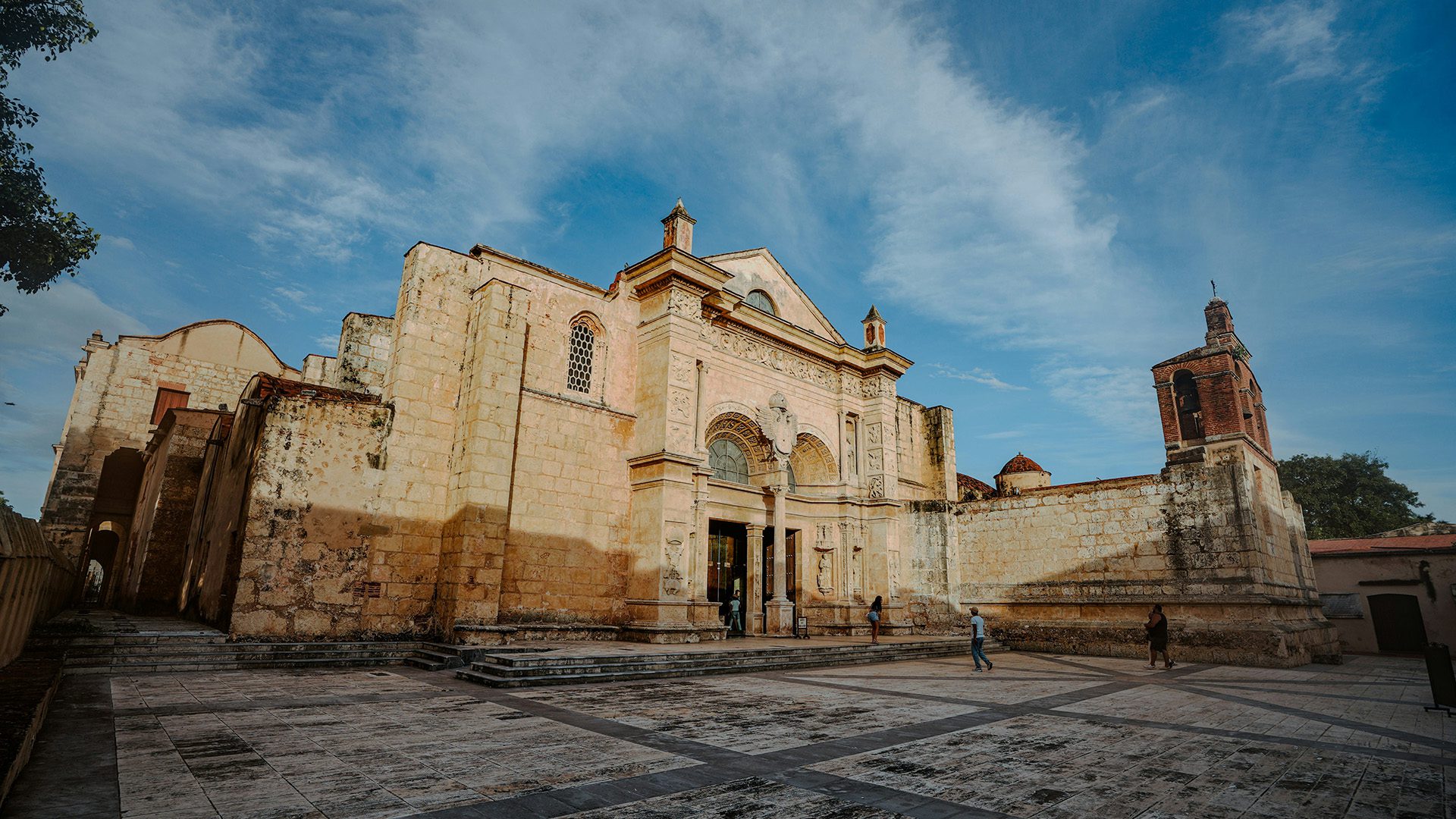
I live and minister in the oldest city in the New World. Founded in 1498, six years after Christopher Columbus first arrived, Santo Domingo is the site of the first university, hospital, and church in the Americas: The Cathedral of Santa María la Menor was completed in 1550.
Protestant history comes a little later, usually under oppression and even persecution. But to give one notable example, the oldest building in the northern peninsula of our country is called La Churcha, and it has served Saint Peter Evangelical Church for more than two centuries.
Similar stories can be found across the continent. Yet more often than not, short-term mission teams are not aware of our long, storied history with Christianity. This contributes to a sense of disorientation and frustration on both sides.
In a spirit of collaboration and a desire to continue linking arms, I would like to offer three thoughts for my brothers and sisters who are coming to Latin America on mission trips, so that “we may be mutually encouraged by each other’s faith” (Romans 1:12).
1. Catholicism holds strong.
Pew’s regional survey reports 69 percent of Latin Americans still identify as Catholic. Only one in five worship in evangelical churches. Christianity in Latin America is lived out in front of a very large Catholic backdrop, usually mixed with syncretistic elements. Catholicism also still wields enormous political power.
Christianity in Latin America is lived out in front of a very large Catholic backdrop, usually mixed with syncretistic elements.
Most U.S. evangelicals rarely navigate that tension. In many U.S. cities, Catholics are a quiet minority while evangelicals dominate civic life. Evangelicals may not realize the significant theological differences that we confront regularly in Latin America. They also may not realize we work and minister with many believers shunned by their Catholic families for being evangélicos.
I suggest we heed the Apostle Paul’s admonition: “Examine yourselves, to see whether you are in the faith. Test yourselves. Or do you not realize this about yourselves, that Jesus Christ is in you?” (2 Corinthians 13:5.) In God’s kindness, and much like in the American South, South American countries don’t usually see open opposition to the mention of Christ. Yet that doesn’t mean openness to Christ himself.
As you come alongside us in our evangelistic efforts, help us preach Christ— unadulterated, unbound, and unabashed— so that the fruit of the Spirit might bring forth the transformation that our families are longing for.
2. Committed volunteers are abundant.
The rhythm around here is relentless. Sunday service, Tuesday small group, Wednesday Prayer, Friday Youth. Yet step into a Wednesday-night prayer meeting in Santo Domingo—or Bogotá, or Tegucigalpa, or Buenos Aires—and you’ll meet believers who have finished ten-hour shifts, navigated chaotic traffic, and still arrive early to stack chairs, tune guitars, and help distribute communion. This is not marginal enthusiasm—it is covenant life.
Juggling such enthusiasm requires wisdom and balance in order to avoid burnout and legalism. But this large percentage of committed volunteers is a sign of health and contributes to the sense of vitality in the Latin-American Church. Paid staff is scarce, but it also means that most everyday Christians are doing most of the everyday work. We are all “given the manifestation of the Spirit for the common good” (1 Corinthians 12:7).
Even with good intentions, a large group from a more affluent country can end up overwhelming the volunteer pastor who was already at his limit. Hosting a large team can disrupt the carefully prepared rotation for the local army of volunteers. And in the end, instead of lightening the load, the congregation may be left picking up the tab after everyone else has gone home.
So when visiting teams grasp how much ministry a volunteer force can accomplish, they should shift the question from “How can we fill gaps?” to “How can we fuel the gifts already at work?”
3. Gaps in pastoral training are real.
In a sense, economic crises and political upheaval have been the baseline context in Latin America. Pastors not only need to deal with the glorious, heavy truths of the Word of God, but our churches also become de facto relief agencies. Yet the leaders coordinating these efforts often do so with minimal formal training.
Investing in a local leader can transform an entire congregation and help promote a network of healthy leaders, even if it’s not as exciting in the short run.
The general estimate is that 85 percent of Latin American pastors lack theological education. This stands in stark contrast with the constant calling of Scripture for pastors to be able to rightly handle the Word (2 Timothy 2:15; cp. 1 Timothy 4:13-16). It’s also a contrast to the reality in the United States, where a LifeWay survey reports 85 percent of Protestant pastors have taken seminary courses, and three-quarters say their studies prepared them well for ministry.
I pray more pastors and churches would understand that teams that come to preach for the week leave a vacuum, while teams that coach pastors in homiletics leave a legacy. I believe what’s most helpful is equipping, not replacing. Investing in a local leader can transform an entire congregation and help promote a network of healthy leaders, even if it’s not as exciting in the short run.
From a trip to a partnership
Christianity has a long, storied history here in Latin America, and we can both use and provide help. Do come and join us, as a covenant family, not as contractors. By clarifying Christ in our context, celebrating the cadence of our committed volunteers, and coaching pastors for a continual impact, we can work side by side as members of the same household of faith.