


TikTok Theology vs. Biblical Discipleship

In a digital age filled with constant noise, endless scrolling, and trending Christian soundbites, how do we build real discipleship that actually forms us into the image of Christ?
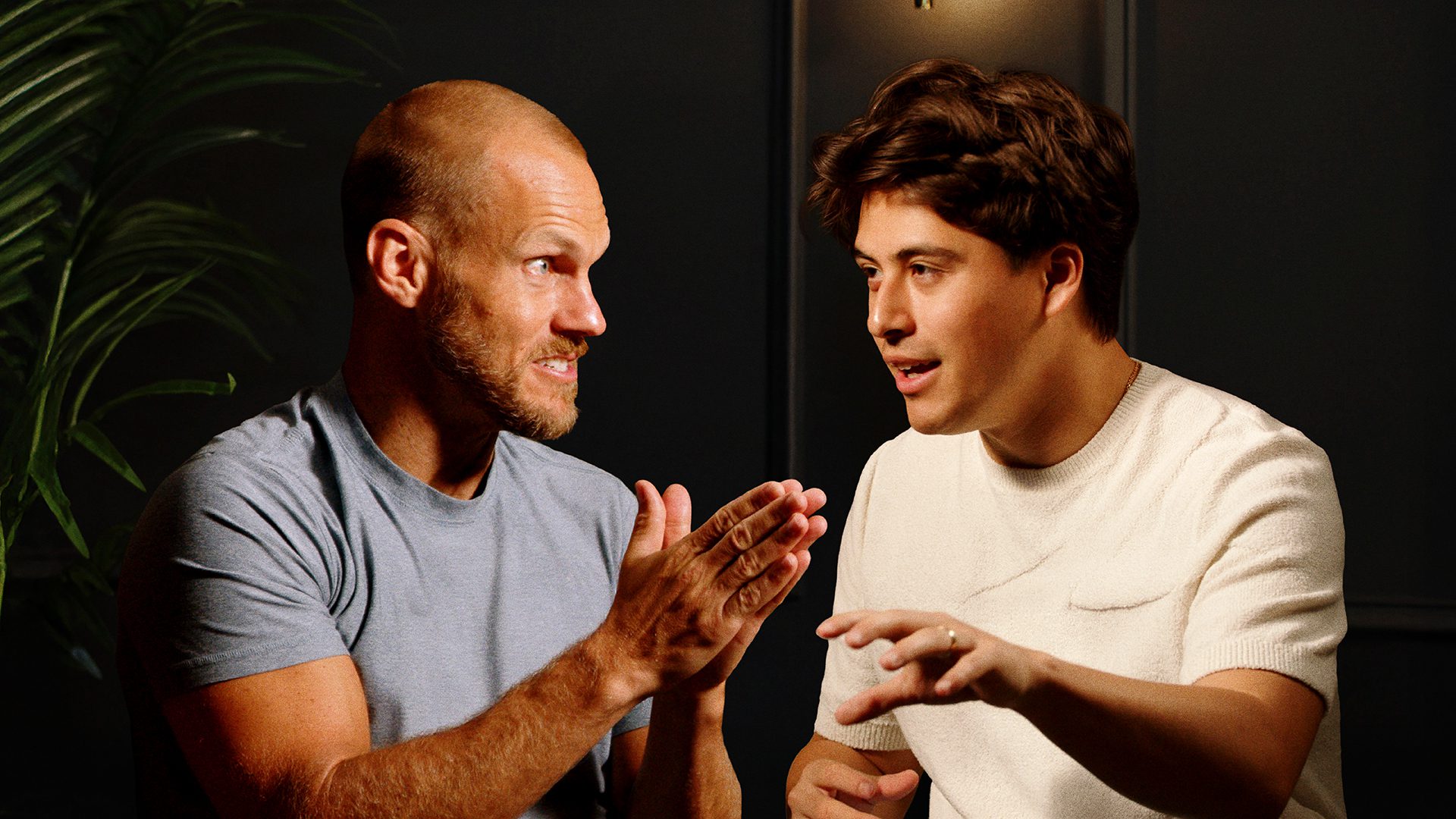
In this episode of Everyday Radical, David Platt and Austin Huang explore how we’re all being discipled—by someone or something. If we aren’t intentionally shaping our minds with God’s Word, we will inevitably be shaped by the world, our screens, and the algorithms that compete for our attention.
They discuss why social media so powerfully forms our identity, how comparison and distraction distort our view of God and ourselves, and why replacing screen time with Scripture time isn’t just wise—it’s essential.
Together, they confront the dangers of out-of-context theology, fast-food spirituality, and treating soundbites as substitutes for Scripture. And they explain why discipleship can never be fully digital—because God created us for in-person, face-to-face community in the local church.
In today’s episode:
- How social media shapes identity and discipleship
- Why Scripture—not soundbites—must form us
- How to cultivate real community and spiritual depth in a digital age
Whether you’re overwhelmed by digital noise, struggling to focus on the Bible, or shepherding others through these challenges, this conversation will equip you to pursue spiritual depth, and ground your life firmly in God’s Word.
Everyday Radical—honest conversations about living out the gospel with courage, clarity, and compassion. New episodes every Tuesday.
Austin Huang:
Is it possible that your social media feed might be forming your faith more than you realize? Hey friends, I’m Austin. This is Everyday Radical. Today, David Platt and I are digging into how social media is shaping what we believe and what it actually means to be discipled by truth instead of trends. We talk about the difference between quick inspiration and lifelong formation and how followers of Jesus can stay grounded when every opinion has a platform. Let’s get into it. David, this is a big question. Do you think that social media is discipling our generation more than the churches? Because we’re seeing a rise in Christians who are able to quote trending soundbites, but not really explain basic doctrine. I think when our religion, our theology is based on a personalized for you page, we really lose sight of who Jesus actually is. So the question that I have for you is, what does it look like to build real discipleship in a digital age?
David Platt:
Oh, man. Well, that’s a big question, Austin. Well, one, yes, social media is definitely discipling the next generation. There’s no question. I mean, the way we talk about it all the time and our church family and among our leaders is just, okay, everybody’s being discipled. The question is, who’s discipling you? The world and if we are statistically spending however many hours every day scrolling on our phones, we’re being discipled. We are getting messages all the time about who God is. And most of those messages are godless. Most of those messages are saying there is no God. It’s just what matters now in the moment. Or we’re getting messages about who we are. We’re getting… I mean, you just think about the core elements of the gospel, who God is, who we are, who Jesus is, why we need him, what it means to live by faith, what matters forever.
We’re getting messages that hit on all those levels. Who God is or is not who we are, what matters in the world. We’re filling our minds with those things. So that means if we’re not proactive in Romans chapter 12, not being conformed to the pattern of this world, but being transformed by the renewing our minds, then we’re going to be discipled by the world. We’re going to look like the world. As is 2 Corinthians 3, we become like what we behold. So what you look at, what you fill your mind with is going to shape who you are. And so if we’re not filling our minds with God’s word in the context of community and the body of Christ, then we’re not going to look like Jesus. And I should say, now social media can be, and I don’t believe it’s ultimately neutral, but it can be a vehicle through which we can receive some good stuff.
We can receive biblical truth and just plain truth through social media. So it’s not that it’s all bad by any means, obviously, but we have to be aware, all of us do, of how we’re being discipled by the world daily by the messages we’re filling our minds with.
Austin Huang:
Yeah. And I think you touched on a little bit identity. I think that’s a big thing that Gen Z struggles with. I think everybody struggles with identity. When we are being discipled by everything around us. I just remember my time in the Philippines one time. We were driving down the road. And in America, we have billboards, but not like they did. It was billboard after billboard after billboard, just like you’re just going. And it’s like both sides. And I’m just like, yes, that’s a tiny little picture of discipleship, but it’s just like, man, there’s so much vying for our attention. And when it comes to identity, it’s like, I think that’s why we lose ourselves because younger people, we are spending so much time just wasting away.
David Platt:
And not just like time waste, but it’s having an effect on us. It’s affecting the way we think about ourselves. We’re comparing ourselves to others. We’re either feeling superior to others or inferior to others. It’s shaping us. It’s not just kind of neutral time waste. It really is. We’re believing things about ourselves, thinking thing about ourselves and not just ourselves, about others in the process and in ways we don’t even realize. So again, that’s where it’s just like, okay, so how do you do discipleship in a digital age?
Well, one, these devices can be used to fill your mind with good things. I mean, I just think about something super simple that I do in order to try to avoid some of the time waste. I’ve just got an app that it’s just like a notes or kind of to-do app where I’ve just got the verses that I’m working on memorizing so that in those idle moments when I have a moment where I could just be looking at this or that on my phone, why not look at verses that I’m wanting to fill my mind with and literally meditate on God’s word throughout the day through that.
So there’s ways. There’s ways, and we can expose ourselves to some really good things online digitally that can be helpful for us. But at the same time, we all know nothing replaces face-to-face, sitting down with other people in the flesh and growing together in Christ. We’re made for face-to-face relationship with people. I was looking the other day at… It’s like this old video, but it’s this researcher just showing the effects of when a baby has a parent who doesn’t give them facial interaction-
Austin Huang:
Oh yeah. I’ve seen that.
David Platt:
-the disastrous effects that has on a child. So we’re made for face-to-face interaction. So to realize that’s the way God’s wired us. So that means at some point we’ve got to get our eyes off a screen and onto other eyes and onto other people and have real interactions with people that way.
Austin Huang:
Yeah. And on top of that, face-to-face with God.
David Platt:
Oh, man. Yes.
Austin Huang:
I will speak on the negative sides of the trends that we see on social media, but one of the great trends that I’ve ever seen on social media is replacing your screen time with Bible time. So we have six, seven hours of screen time. What if we spent our morning waking up instead of looking at your phone, the first thing you did was crack open the Bible and how much that would change our lives. And as someone who’s… I mean, you live, breathe the word of God because you’re in it all the time. Take us through your daily practice. When you wake up, what does your time with God look like?
David Platt:
Well, yeah, this morning it is just about the first thing I do. I like to brush my teeth, but then after that, it’s like get alone with the Lord. And what that time usually looks like for me, it’s maybe around an hour or so, but I do a lot of journaling. So I’ve got an on… And for me, that’s helpful in focusing my mind. So not everybody’s mind works the same way, but it’s helpful for me to not get distracted. So I just start. I’ve got today, write the date at the top. It’s just a running Word file. There’s nothing magical about it, but it’s just write the date and then I’m just like, “Lord.” And I just start writing out prayers. Usually prayers of praise, thanksgiving, start recounting the day before. And I’m not writing down everything, but I’m writing down a lot like, God, thank you for this yesterday.
Thank you for that. Thank you for… God, I pray for this person I was interacting with, whatever it might be. So just kind of… And thinking through what God taught me yesterday and then open up the word. And I’m doing most of this on computers, so on a device, but I’m open up the word. I’ve got a Bible reading plan I go through. And so I’m reading the Bible, meditating, just stop and wanting to be really intentional about not just, yeah, I’m not checking off a box. This is communion with God. Open my eyes, God, right now, that I may behold wonderful things in your law. So help me to hear from you. And bro, I mean, just this morning, I needed exactly what I was reading this morning. And so just soaking it in and I’m journaling, I’m like copy and pasting verses, writing down some reflections on verses, writing out prayers based on different verses.
And so it’s just communion with God through his word. And then I’ve got intentional things that I try to pray for like on Monday, Tuesday, Wednesday, Thursday, Friday. So I’ve got a list of things. There’s so much I want to pray for in the world. I don’t feel like I can do it all every day. So I’ve got it split up just for those five days, Saturday and Sunday, just a lot more flexibility. But it’s not like I’m tied to it, but there are intentional things I try to pray for, people I try to pray for on different days. So yeah, that’s the time of the Lord. The other thing I would add is I often do that with just… I’ve got a quiet time playlist and so I’ve got worship music going on in the background. And that’s another thing I love. There’s sometimes where I’ll think of a song and want to go to it, but I love just the sovereignty of God directing the shuffle on the playlist.
And so when I press shuffle and man, this morning I’m like, I can’t play this song right now. This is exactly what I needed. And so it’ll lead to just getting on my face in those moments and just singing in worship. I just want to experience what Matthew 6 says, like the reward that’s found alone with him. Yeah. So I don’t want to sound tried in this or just like… Yeah. Anyway, I can’t live without that time. Absolutely. I cannot live without that time with the Lord in the morning.
Austin Huang:
And I think you hit the nail on the head like you need it. You needed it for that day, for that moment, for that morning, because I think we too often go towards social media, whether we’re posting and we’re seeing who’s liking my post, who’s commenting, or we’re just going to consume. “Oh, what are they doing? Oh, I wish my life looked like them.” And we’re creating this false need within ourselves of like, “Well, I need this hit of dopamine to achieve what I’m feeling today.” But I love what you said because God wants to speak to us primarily through his word. And if we just don’t give him the time, that hole inside of us is not going to get filled up.
David Platt:
Yeah, bro. Man, yes. It’s an awesome thought. Today, before you and I got together to have this conversation, I had a meeting with God. Like God, the God who brings the rain, the God who spoke and the whole world came into being. The God who… I’ve got some things in my life right now that are just fears and concerns. And I’m reading his word this morning and he’s saying, what was it? The waters fear me. And I’m like, “Oh, yeah.” And it was like the thunder fears me. And I’m like, “Yeah, that’s right. I don’t have to be afraid of anything.” And so he’s speaking to… I heard the voice of God today and he was speaking to me and I’m pouring out my heart to him. My fears by the things that are heavy on my heart to him and he’s listening to me and I know he’s hearing me.
That was Psalm 77. He will hear me. So man, not only do I need that time, I don’t want to experience that time. And even as I say that, I should be careful because there’s… I think about one day recently where I just… I think it was a Saturday morning and I was like, “Ah, maybe I’ll just kind of take the day off from what…” I was struggling with desire to spend that time alone with God when I woke up in the morning. I did it anyway and man, hour later I’m just repenting like, “God, please forgive me. Why did I not run to this time? Please forgive me.” So I don’t want to presume that it’s just always easy or sometimes… And in fact, I would say, sorry, one more thing I would say along those lines, don’t be surprised when it’s hard.
There’s an adversary who doesn’t want us to spend time with God, who doesn’t want us to experience everything I just described. He doesn’t want me to experience it. We don’t want you, anybody listening to this, watching this. He doesn’t want us to experience intimacy with God. And so don’t be surprised when it’s hard, but I mean, we all know this, like really good things in life come through hard.
Austin Huang:
100%. 100%. Yeah. That’s so good because that’s a good reminder to us. It’s not going to come easy all the time. And I think that’s what we try to make space for because social media is easy. Just jumping on social media is so easy.
David Platt:
That’s a really good point.
Austin Huang:
It’s a quick hit, but it doesn’t build you up.
David Platt:
Man, yeah. I just think about that. I’m just picturing that adversary in a sense being like, oh, this is so easy. This is like candy. Just giving this person something-
Austin Huang:
That’s exactly what it is.
David Platt:
But then when you take the time to turn that off, get in a room alone with God, open up this word, like you’re doing spiritual battle. There’s an adversary that does not want that to happen. And he knows this is going to lead to your good. This is going to transform your thoughts about who you are, who God is, what matters in the world. He wants to keep that kind of concentrated time from happening. So that’s a spiritual battle every day.
Austin Huang:
I think that’s going to really encourage somebody to hear that it’s not supposed to be easy to crack open the Bible. There’s nothing wrong with you if you think it’s hard to open your word. There’s nothing wrong with you. That is actually the normal just because we live in a fallen world where the devil is prowling around like a roaring line looking for someone to devour.
David Platt:
Yes.
Austin Huang:
So I mean, with that, shifting gears to the negative trends that we see on TikTok, how do we distinguish between trending soundbites and these quick little hits that people take out of context from the word of God and they use it to build themselves up? How do we distinguish those little things from true biblical truth from God?
David Platt:
Oh man, that’s a really good question because there are… I think about a conversation you and I were having not long ago that was just like… There’s a moment in that conversation where there was a phrase, like a soundbite that was like, I mean, it’s going to stick with us like gazing, not glancing. That was like, oh man, at God. And so soundbites can be helpful to a certain extent. Here’s where it’s dangerous. One, when it’s totally taken out of context, that’s so common. I mean, we can take any verse in the Bible and twist it to make it say what we want it to say. And so that’s dangerous. We always need to make sure we are truly understanding what’s the context here. I could tell story after story of ways in my own life. I’ve abused scripture and taken out.
And so that’s one way soundbites can be unhelpful. Also, if we’re not careful, we can become content with a little word from God for the day, like, oh, that’s all I needed. God’s word is not intended to be treated like a fast food restaurant. This is fine dining here. This is not a McDonald’s French fry. This is a juicy steak or whatever somebody who’s vegan would like instead. I just think we don’t need to be content with a little word from God for the day. We want as much of this as possible. And we will have … The other danger is, or another danger is we will pick and choose which parts of God’s word we’re hearing from instead of all of it.
There are parts of this word that are challenging to read and understand and to grapple with. What does this mean about who God is, about who I am, about what matters in the world? And if we’re not careful, we’ll just kind of go to the verses or even phrases in the Bible that seem to fit our lifestyle and fit our culture instead of the ones that challenge our lifestyle and challenge our culture and actually lead to the cost of following Jesus and the depth of what it means to know God. So I do think we really need to be careful not to just build our faith on sound bites.
Austin Huang:
On the topic of depth that you just mentioned, and I think we can’t really assume the hearts of anybody who is doing this. I post on social media as well. And so when we see these Christian content creators, let’s call them, they’re posting all these things. And largely they have to be soundbites because that’s what works within the framework of social media. How do we encourage us as Christian content creators? How do we encourage people who are watching and consuming our content to go and get discipled elsewhere? Because we can’t disciple them. I’ve seen that time and time again where it’s like people are really honest in the comments, honestly, probably more honest than they are in person because they’re hiding behind this digital veil. But how do we encourage them to go break free from that? Like, “Hey, I hear your struggles, but I cannot walk with you in this.” What is the encouragement? How do I push them to someone like you as a pastor in a local church?
David Platt:
Well, man, I think you do exactly what you just said. One, I want to affirm anybody who’s thinking through intentionally, how do I steward content creation to get really good stuff out there, to get, even if it is short soundbites, truth. And so to make sure all the things we were just talking about, make sure what you’re saying is flowing from proper context, that it’s true, it’s not just cherry-picking, all those things. But to the extent that you’re doing that, yes. But then to your point, I do think there needs to be intentionality to say along the way, “Hey, be encouraged by this and there’s so much more to be found here and to point people to true community in a local church where there’s life on life sharing.” So it’s not that it’s bad in and of itself, it’s that it’s bad if it’s the end, if it’s like the only thing, then it’s not going to be what people ultimately need.
And so to really kind of come back to communicating, this is part of, this is good, but it’s not all that God has for you. And there’s so much more God has for you. And so just keep communicating that in relationship with other followers of Jesus, face to face and a local church that’s like the church is God’s laboratory. It’s like the greenhouse for Christians to grow in. And we will experience stunted growth. We will stay immature if we’re trying to do it apart from this greenhouse.
Austin Huang:
Man, that’s so good. I guess to land this plane in a way, how can churches and pastors like yourself step into this world that we’re living in social media and being online and preaching and teaching and doing all these things? What do you think that we’re missing because churches and pastors aren’t necessarily on these platforms? Is it you guys stepping in? Is it partnering with people? I don’t know what it could look like. Do you have any thoughts on that?
David Platt:
I think we really need to be intentional and proactive in the body of Christ, in our churches, thinking through these things together. Because the reality is, bro, you know a ton about social media and how to steward social media for good that I don’t know. Yeah, you’re just both because you’ve grown up with it in a way that I didn’t grow up with it and because you’re intentionally thinking throughout a steward that. So I think the more… We’re having conversations across generations about how we do that together and I’m helping you see blind spots or I’m helping you see dangers in that and you’re helping me see the opportunities that are there. And that’s the beauty of multiple generations working together, thinking through those things. But then I also need you to help me see blind spots, like all the different ways.
I just think of the consumeristic or just ambition that can come with influence or Christianity where we kind of view Christians as celebrities or leaders as celebrities or like trying to promote basically fame. That feels just totally contrary to the gospel. And so how do we help each other in that? Because I mean, the last thing I want to do is like build some social media platform that’s making me look good. So how do we do John 3:30 together? He must become greater. We must become less. How can we steward this medium to point people to him to decrease ourselves, to make sure it’s godly ambition, not selfish ambition in doing that, and make sure it’s holistic in the sense that we’re appointing people in really good directions, not feeding a beast that’s actually really unhealthy or unhelpful. But we got to do that together.
We got to be in conversations in community with each other, walking through those kind of conversations with each other. But that’s, again, part of the God’s design, good design for the church, that multiple generations doing this together is going to bring great glory to him.
Austin Huang:
Come on. It’s really encouraging. Thank you, Dave.
David Platt:
Yeah, man. Let’s do this together.
Austin Huang:
Thanks so much for joining us today on Everyday Radical. We pray that this conversation stirred your heart and strengthened your faith. There’s so much more ahead, so go back and catch any episodes you might have missed and subscribe so you don’t miss what’s ahead. Let’s keep making Jesus known everywhere. Until next time.