

You Can’t Follow Jesus and the American Dream
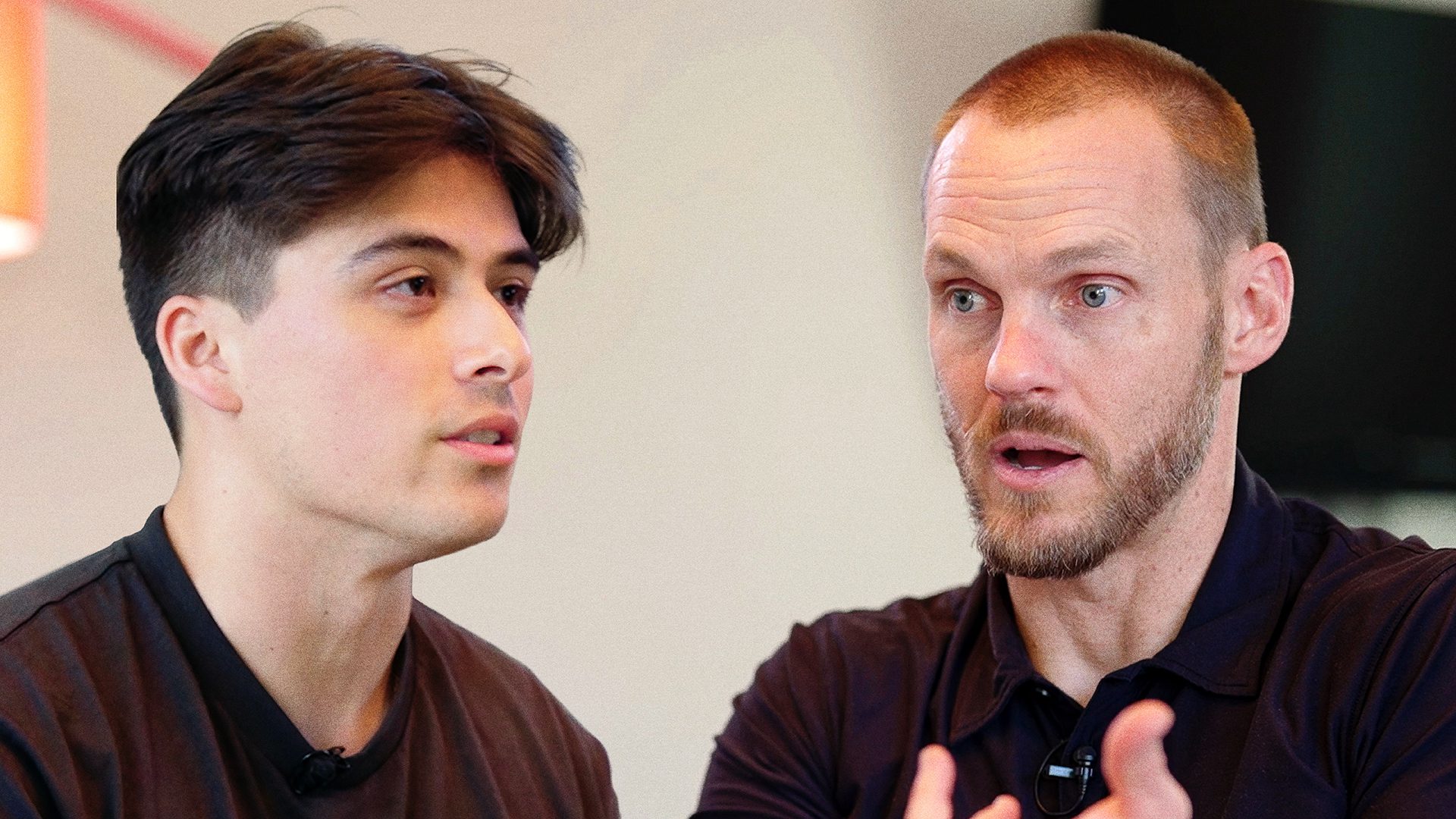

In this episode, David Platt and Austin Huang confront a difficult question: Has comfort and success in the West dulled our urgency for the gospel?
Drawing from personal encounters with the persecuted church and unreached people groups, we explore what it means to truly follow Jesus, make Him known, and live a life of eternal impact. Our prayer is that this episode stirs your heart for Christ’s mission and challenges you to live boldly for His glory.
In this episode
- How the American Dream can blind us to God’s global mission
- How persecuted believers risk everything to follow Jesus
- Why reaching the unreached starts with being faithful right where you are
- The danger of silencing your witness—and why bold obedience matters
Whether you’re a student, parent, professional, or pastor—this conversation will remind you that God has brought the nations to our doorstep, and we are called to respond with love, courage, and obedience.
Join us every Tuesday for Everyday Radical to have honest conversations about how to live out the gospel with courage, clarity and compassion—and how to help others do the same.
Austin Huang:
I think the American dream, for a lot of people, blinds them to the reality of the Great Commission. The American dream tells you, “Pursue comfort, pursue success, pursue a good life.” The Great Commission says, “Go to all nations, make disciples of every tribe, every language, every tongue.” And we see that, and I think when we look at you as a Gen Z person, I look at you and I see your passion and your zeal for the Great Commission, for meeting with these brothers and sisters in persecuted nations. What would you say to the American Church? I know this is a very lofty question and a weighty statement, but what would you say to the American Church in reference to what you experience with these brothers and sisters in persecuted places where they don’t have the luxuries, they don’t have the comforts that we have? I saw a video of you the other day, you’re meeting with a pastor who had been sent a video of people being murdered on screen. How do you take that, and then you look at the American Church, and how do you connect the two?
David Platt:
Oh, man, wow, there’s a lot there, Austin. I would say especially that conversation with that pastor, so let me come back to that. I would say big picture, and this is not just speaking to the American Church outside of me, like I’m in the American Church, I’m a pastor in the American Church. This is to us, you and me, us and myself included. Don’t miss the big picture. I think what you’re narrowing in on is American dream is a certain picture of success and prosperity. That if we’re not careful, we get caught up in this river that’s flowing in that direction. And it’s not that, take for example, money you can make in America is bad, but if the goal is success, comfort, prosperity in this world, you’ve missed the bigger picture. Like, no. I mean, just think about it. I live, you live in the United States of America, where we can actually accumulate resources that can be stewarded for the spread of the gospel among the nations. That’s all.
Even when I wrote Radical, well, one, I didn’t think that many people would read it, and two, I didn’t know this would actually make money, that by God’s grace, little type in the beginning book said, “All the royalties for that will go toward promoting the glory of Jesus in all nations.” And so, oh, what a stewardship. I was able to make money that can be used for the glory of Christ among the nations. Yeah, stewardship’s the right word, because it’s entrusted to us by God for His purposes. So to keep His big picture purposes for all of us in our lives in mind, that success, again, is following Jesus, making Him known in the world, however He calls us to do that with all these resources we’ve been given.
And then so now in the process of the big picture, yes, we have brothers and sisters, well, we have the parts of the world where the gospel’s not yet gone. So we need to have our eyes open to that, and how can we play a part in changing that? And then we have brothers and sisters all around the world who are in places oftentimes that’s where they’re persecuted, where there’s least access to the gospel, and how can we come alongside our brothers and sisters in those ways? Yeah, that picture that you’re referencing, persecution in West Africa, and I just think about Paul specifically when he is writing Romans, he has an ambition to see Christ’s preached where He has not been named, in Spain and so he’s writing to the Church at Rome to say, “Hey, we need to get the gospel to people who never heard it.” At the same time, he says, “I’m on my way to Jerusalem because they’re suffering believers there. There’s a famine in Jerusalem. So I’m taking an offering to them.”
So it’s also really important to have our eyes open as followers of Jesus, specifically in the United States, to have our eyes open to the Body of Christ around the world and how we can come alongside, giving encouragement to support. When one part of the body is hurting, then the whole body hurts. And we have brothers and sisters in parts of the world where it is costing them deeply to follow Jesus. We need to be aware of the Persecuted Church, we need to pray for the Persecuted Church, and we need to look for ways we and our churches can come alongside the Persecuted Church around the world and lock arms with the Persecuted Church around the world for the spread of the gospel in places where it hasn’t gone.
Austin Huang:
I think my exhortation, and I know you would agree with me on this, is that, and as people in America, not just us, but the ones that we’re talking to, the people that work these jobs, I’ll just give this example, people who are Uber drivers, Lyft drivers in the United States, I feel like I’ve met more people from the nations that are Lyft drivers and Uber drivers here in America than I have Americans who do that.
For reference, three weeks ago, I was flying up to Minneapolis, my Uber driver from Austin to the airport in Austin was from Nepal, an unreached nation that’s hidden in the mountains that people don’t just stumble into. But this guy had flown here 10 years ago to live in California, then moved to Austin six months ago. And I was just sitting with him, engaging in conversation, getting to talk about, “Man, do you have a faith? Do you believe in God?” Hearing his heart for spirituality and religion, and just knowing and asking him the question of, “Man, have you had a conversation, like a genuine conversation with a Christian in these past 10 years, this decade?” He said, “I don’t think so.” And I say, “Wow.” Because look at us. Look at the American Church, the ones who live here with the comfort with the luxury, and yet we aren’t even satisfied with it to the point where we won’t teach and tell and spread the gospel to the people that are around us who are taking us to the airports and go certain places. And my heart broke for him.
And I just asked him, “Man, have you ever heard the gospel?” And he goes, “No, but I’ve always wanted to. I’ve heard about it.” And I’m like, “Praise God.” So I shared the gospel with him. I think it overwhelmed him a little bit because he was starting to think of his life. His wife, he said, is super religious and Buddhist, and he was just really considering what is after this. And I got to pray for him, and I’m still believing that the Lord is doing that work in his heart.
But when we see this guy that has come to American probably in pursuit of the American dream, that if we aren’t the ones to be the Body of Christ, to be the hands and feet of Jesus to actively pursue the people around us, then we’re going to miss out on a great opportunity because that guy could maybe in a year, maybe five years, go home to Nepal. And because of this interaction by God’s grace, that this seed that is planted that God used me to do that, God brings the growth, that he could go home and start a church and just be radical where he is, because ultimately we’re not the ones who are going to change the narrative of these nations. We are the ones who’re invited into what God is doing. And if we’re just faithful and obedient to where He has placed us right now, then those are the stories that can happen.
He may never remember my name; I honestly don’t remember his name. But when we come to that, it’s like, man, that story can unfold and have ripple effects for generations to come. That Nepal may be reached by the time I’m 50 years old because of that one guy and our faithfulness. And when we talk about them: Nepal, Nigeria, Afghanistan, Pakistan, these places, and what is the encouragement that they say to you, David, as a pastor, the pastors you talk to over there? What do they say to you about us as a church, as a body of believers in America? What do they envy us? Do they say, “Well, I wish we had this,” or do they look at us and they’re like, “Man, I wish you guys were just like us.”? What’s the consensus that they have?
David Platt:
Oh, bro. Before I even answer that, I’ve got to just put an exclamation point on God has brought the nations to us. God brought Nepal to you in an Uber, and the same for me. Almost every Uber, Lyft I’m in is with somebody from usually an unreached part of the world, not just another part of the world, an unreached part of the world. The last two this week have been from Pakistan, and both have been hearing the gospel. I think to your point, for the first time, it certainly seemed like it. And not just in Uber or Lyft, look at our neighborhoods wherever we live, let’s be intentional. So this is where, yes, we can make disciples of the nations right outside of our front doors, it’s like where we live, if we’ll be intentional along those lines. And again, yeah, unique opportunities that we have to do that in ways that… I love the way you put it because that’s the way disciple-making works. It’s like you are one link in a chain.
And even not just, I love the way you put it because it wasn’t… I mean, it would’ve been great if that person had come to Christ in the car; that would’ve been awesome. But even just I planted and, Lord willing, that seed is going to be watered, it’s going to grow, it’s going to bear fruit in ways that only Heaven can measure and we’ll see and one day we’ll see, but just play our parts every day, play our parts and trust this is part of a bigger picture that does eventually lead. That’s the beauty of making disciples is that whenever we’re doing that right where we live, we’re part of a plan that eventually reaches the nations if we keep our focus there.
So then, to come back to our brothers and sisters in those parts of the world, and that’s one of the things we as Radical get to be a part of, coming alongside our brothers and sisters in really unreached areas. And one, I love the way we get to be a bridge between followers of Jesus in places where the gospel has gone or reached places and followers of Jesus in unreached places who are on the front lines doing incredible work and we get to help make those connections and come alongside and say to these brothers and sisters in really hard places, “We’re with you, we’re for you.” And not we just Radical, like the Church around the world is with you and for you, you’re not doing this alone. And that’s where I do think there is so much mutual edification that happens there. It’s like Paul in Romans 1, “For I long to see you that I may impart to you some spiritual gift to make you strong, that you and I are mutually encouraged by each other’s faith.”
So we have so much to learn from our brothers and sisters in Christ in those places about the sufficiency of Jesus, about the trustworthiness of Jesus, about all of His promises in the middle of persecution that are true. And that, I mean, talking with that pastor from a very persecuted part of the world, I was so encouraged. He looked me in the eye amidst some challenges that I was walking through, and he was like, “Don’t give up. Keep pressing on.” And I’m not experienced near the level of challenge. I mean, this brother has been in a church that’s been raided, attacked, he’s run for his life, almost got killed, and here he is looking at me like, “Don’t give up.” And I’m like, “Of course, there’s no chance. I can’t give up. I’ve not been through nearly what you’ve been through, and you’re telling me this. Yes.” But then also we have an opportunity to let them in the eye and say, “Don’t give up. Keep pressing on.”
And I’ll tell you one other thing that’s most convicting for me in conversations with our persecuted brothers and sisters around the world. They’re doing it at great cost. They’re sharing the gospel when it could cost them their lives. We, you and I, we’re talking about an Uber or whatever, there’s a risk of awkwardness maybe.
Austin Huang:
Yeah, right.
David Platt:
But beyond that, and I say I don’t want to minimize that, I think of many people in the church that pastor who may face risks like potentially losing their job if they are… Yeah, if they’re active in sharing the gospel in their workplace. There are risks, but it’s still different; it’s not like you could lose your life, you could lose your family. And well, even that, I think about some…
The point is, I’m now thinking about some brothers, sisters in Christ who are from countries that are unreached in the world that have lost their families that are in our church family. So it’s not just that it’s over there, but this is who we are as the Body of Christ. We are literally a family that surrounds each other, encourages each other, and spurs each other on toward Jesus and His mission. And when it gets hard, we help each other stay steadfast, and we need to be linked with the Body of Christ around the world in that. Because if our world just looks like followers of Jesus right around us, then we’re missing out on the big picture that God has created us to be a part of.
Austin Huang:
I mean, I just can’t help but think of Revelation 6 when the martyrs are pleading with the Lord, “When we have the final retribution of what we went through? When will we come back? When will this Kingdom be established?” And he tells them to rest until the number of the martyrs that have been killed, like them, is added to them. And so when you say that, I can’t help but think of, man, you’re so right, you’re so spot on when it comes to the American, the Western Church, who loves to gather on Sundays, but when that’s over, we don’t love to be the ones that go after the lost. There is coming a day when tribulation is going to come, and it’s going to rise, and persecution of even us will happen.
But in the meantime, when all we face is an awkward conversation, potentially, why not just handle a little bit of rejection? Why not just handle a little bit of, “Oh, no, I don’t want to be prayed for.” It’s okay. That’s what my heart burns for is that we would all step out of our comfort zones in any way, and we all have different gifts. The Spirit of God has given us each individually gifts that he wants to evoke, but He’s only going to be able to do that if we draw near. The Bible says, “Draw near to me and I will draw near to you.” It’s not that God left us; it’s not that God is away from us, but he’s standing at the door knocking on our hearts, saying, “Just let me in.” And when you do, everything’s going to change.
David Platt:
That’s good. It makes me think one of the most poignant things a brother from a persecuted part of the world said to me was, “David, the point of persecution is to silence witness.” So that’s the whole point. As long as you’re not sharing the gospel, like persecution’s not going to come in most places, it’s going to come when you are professing to be a follower of Jesus or trying to lead other people to Jesus, sharing the gospel. So the point of persecution is to silence a witness. So if we as Christians are silencing our witness, then we are actually identifying not with the Persecuted Church around the world, we’re identifying with the persecutors in that sense.
Austin Huang:
Wow.
David Platt:
Their whole purpose is to silence witness. If we’re silencing witness, like we’re identifying less with the Persecuted Church and more with those who are persecuting them in that sense, and man that stuck with me in a way that’s just like, “Oh God, how would it be faithful to Yo. And faithful to speak the gospel just because this is what You call me to do and help me to do this in a way that identifies with my persecuted brothers and sisters around the world. Don’t let me, don’t let us be guilty in the sense of yes, sinning by silencing witness.”
Austin Huang:
Wow, man, that’s deep. That’s something I’m going to take with me for the rest of my life, probably. Well, David, as we begin to wrap up our conversation, for the person listening who wants to be faithful, they want to live radically, they want to make their life count, they want to make Jesus known in the world, but they feel stuck. What’s their first step? What is the one truth that you want to leave them with?
David Platt:
All right, one truth. All right, so under this banner, follow Jesus, make Him known. This is not just the purpose of your life, but the joy of your life, like following Jesus is life, and to make Him known is life. “Follow me, I’ll make you a fisherman.” This is what it means to be a follower of Jesus. This is where joy, true life is found, and it’s not even… So the goal is not to live radically; the goal is to follow, make Him known, realizing, okay, that’s going to lead you totally against the grain of this world. So it’s going to look radical in the world. It’s normal for a follower of Jesus. It’s going to look radical in the world.
So where do you start? Oh, man. So start on your face before the Lord alone today or tomorrow, whenever you listen to this soon, immediately in His Word, just seeking Him, abiding in Him, so meditating on His Word day and night. It was just in Joshua 1, being careful to do according to all that’s written in it. This is where following Jesus, making Him known, starts. Then I would encourage you to find a church, a local church, where you can spur others on and you can be spurred on to follow Jesus and make Him known in the world. Not just to go through the motions of church. None of us notices the need to follow Jesus and make Him known alongside the brothers and sisters in Christ. We all need that. I need that. You need that. We need a Body of Christ where we’re doing this together. None of us is called to do this on our own.
And so do that and then look at the place God’s put you in right now and say, “Okay, how can I make Him known to the people around me today?” I think about one brother in a persecuted part of the world. Whenever he led somebody to Jesus, his first question he would ask that person was, “Okay, list all the people you know, everybody you know, and then who are the five people that are least likely to kill you if you share the gospel with?” That was the first question he would ask. And so they circled the five names, and he’d be like, “Okay, let’s think about how we can share the gospel with them.”
So think through, okay, how can you make Jesus known? Very practically? Who are the people you can make Jesus known to? Start praying for those people. Start praying for opportunities to share the gospel with those people. Start looking for and stepping into opportunities to share the gospel with them. You’re making Jesus known. You don’t have to wait to do this. You can do this today, tomorrow. So do this, abiding in Jesus as a part of a local church, making Him known. And then, as you do just with your life, totally open-handed surrender, say, “God, just lead me day by day to do this more and more and more. Follow You more deeply, make You known more fully, more boldly in the world.” And He will.
I just think anybody listening to this who does that. Well, and that’s what I want to do with my own life today and tomorrow. I would encourage you, like any of us, if we’re doing that, He’s going to lead us, guide us. Ephesians 3:20–21, in ways immeasurably more than all we could ask or imagine. We can trust him with our lives. And I guess maybe the last thing I would say is don’t be afraid of total surrender to Jesus. Some people are like, “I don’t know. I don’t know. What if He leads me here or there?” If you can trust Him to save you for the next 10 trillion years and beyond, you can trust Him and lead you for the next few years here. And not just to lead you, but to satisfy you every step of the way. This is life. So don’t just do this for the spread of the gospel among the nations; do it for your own joy in the process.