


Why God Calls Us to Be More Than Just Pro-Life with Roland Warren
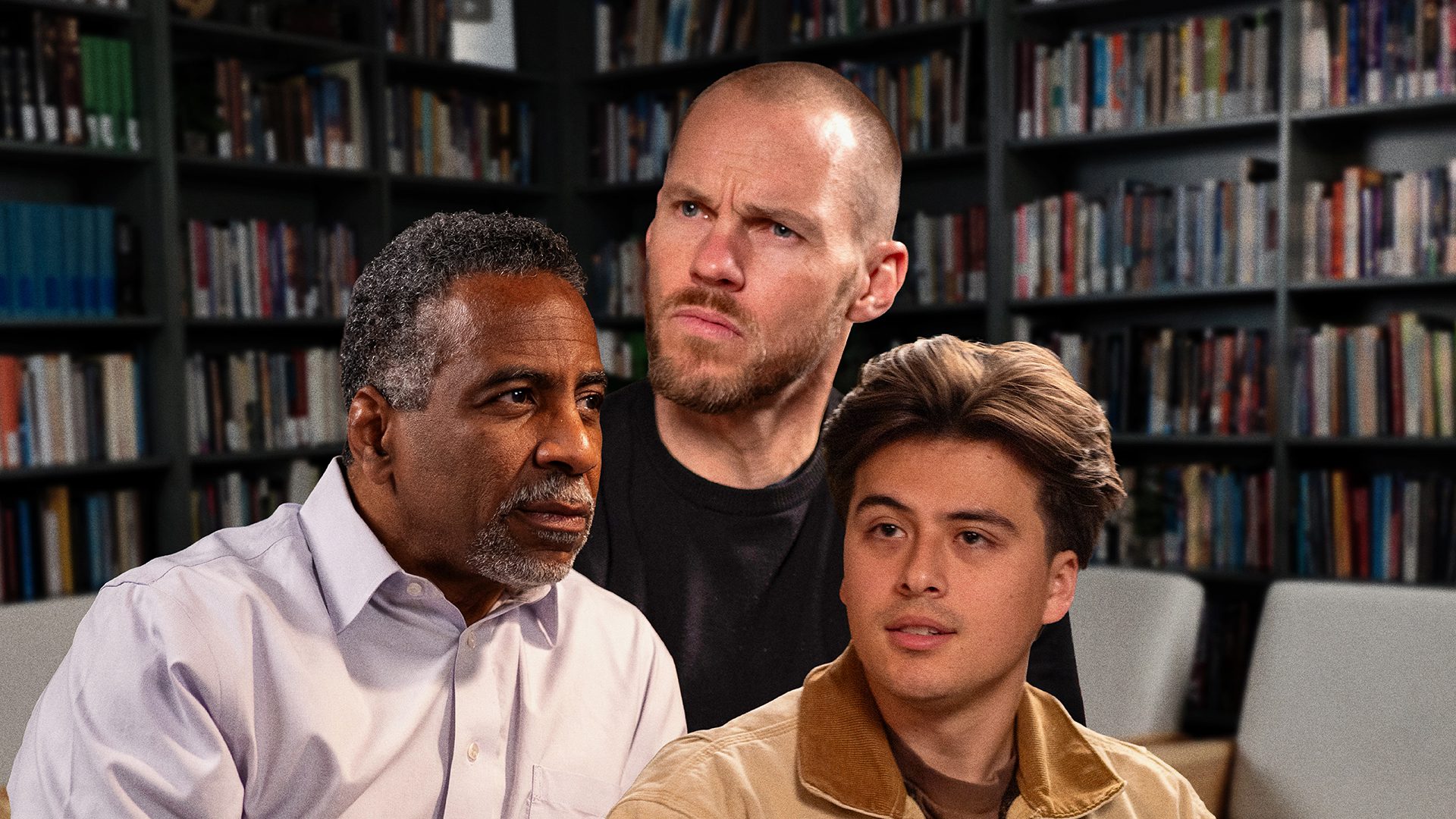

An unplanned pregnancy is often framed as a political issue. But Scripture calls the Church to something deeper: not just protecting life in principle, but surrounding mothers, fathers, and children with compassion, truth, and long-term care.
In this episode of Everyday Radical, David Platt and Austin Huang are joined by Roland Warren (CEO of Care Net) to unpack what he calls a “pro-abundant life” perspective—one that moves beyond slogans and asks a more personal question: if you could change everything about a woman’s situation except the fact that she’s pregnant, what would you want for her? From there, the conversation explores how God’s design for family and God’s call to discipleship reshape how Christians should think, speak, and act.
They also discuss why political advocacy can only go so far, why the local church is uniquely equipped to respond to complex sin and suffering, and how the gospel offers real healing for those carrying regret, grief, or shame after abortion. This is an honest conversation about mercy, truth, and what it looks like to be the Church.
In today’s episode:
- What “pro-abundant life” means, and why it’s distinctively Christian
- Why the Church must lead with both truth and tangible support
- How the gospel brings healing, hope, and a way forward
Everyday Radical—honest conversations about living out the gospel with courage, clarity, and compassion. New episodes every Tuesday.
Austin Huang:
Welcome to Everyday Radical, a podcast where we help the everyday Christian follow Jesus and make him known everywhere. We pray that today’s episode encourages you to do just that. So let’s dive right in.
Our guest on the podcast today is known for saying that Christians are called to be more than just pro-life. We’re called to be pro-abundant life. The kind of people who don’t just tell someone what not to do, but walk with them, support them, and give them real hope and real options. It’s a shift from making a point to making a difference. So what does that actually look like in practice?
David Platt:
Yeah, Austin, we’ve got Roland Warren here today, who, man, I could say so much about this brother. So I met Roland, it was, I can’t remember how many years ago.
Austin Huang:
Homebound.
David Platt:
You reached out to me-
Austin Huang:
Yep.
David Platt:
… we came, we sat down in the lobby in our church building here, and Austin, within five minutes I’m pulling out my computer and just taking notes and I’m just writing down, and I want to soak in all these things because his perspective specifically on this issue was so, well, I’m going to say different, but not new or novel in the sense that I really believe it’s biblical and totally attached to the Great Commission and making disciples of the nations. But it was very different than the way I often had thought about this issue just at a political and political advocacy sphere. Which one of the things I appreciate will get into about Roland, is that it’s not that you ignore the political dynamics of this, but it’s just so much more. And there’s a bigger picture that has the gospel in the church actually at the core.
So yeah, wrote a forward to a book that you wrote, ‘The Alternative to Abortion: Why We Must Be Pro-Abundant Life.’ And I would say that was the first of many conversations where I was taking notes, including right before we came into here.
Roland Warren:
Too kind.
David Platt:
We’re sitting around for some breakfast and I’m pulling out my computer and taking notes. So all that to say, thanks for making time for this.
Roland Warren:
Thank you guys.
David Platt:
So the challenge is going to be in this short amount of time to encapsulate so much of what just pours out of you. So all right, we’ll just start with what does that mean? Pro-abundant life?
Roland Warren:
Yeah, yeah. First of all, great to be with you and to talk about this issue. It’s near and dear to my heart.
David Platt:
And I should have mentioned, sorry, Roland, you’ve led Care Net-
Roland Warren:
Yes.
David Platt:
… which is on the front lines of this issue in every way, in all kinds of ways. Even front lines, we might talk about that, but for over a decade and have been just leading out on this issue, not just with your words, but with your life and your leadership.
Roland Warren:
Thank you very much.
David Platt:
Praise God for his grace.
Roland Warren:
Yeah, Ken, we have over 1300 affiliated pregnancy centers across the country.
David Platt:
Wow.
Roland Warren:
And we have a mobile ministry called ICU Mobile that’s a ministry of care net as well to put mobile units, basically pregnancy centers on wheels and into communities. So we’re just trying to take this life-saving work to folks who need it most. But one of the places, I always start with this, and I start with something I call the central question. And I really think this is an central question that should have been asked at the beginning of the movement, and maybe it was in some form, but I’ll just frame it.
That if a woman came to you and she was facing an unplanned pregnancy, right? Unplanned pregnancy at risk for abortion, and you could change everything except the fact that she’s pregnant, what would you want for her? And moreover, what do you think that God would want you to want for her? Say that. Okay, facing an unplanned pregnancy, that’s actually that’s the problem. And that’s the problem that we’re faced. She’s facing this an unplanned pregnancy, and then of course you can change everything, what would you want for her? And what really led me to a pro-abundant life perspective was starting to answer that question with a biblical mindset.
You say, “Okay, so all right, I want her to have the baby.” “Great, Jack, is that it? That’s it? You want her to have the baby. Single mother raising a baby.” You say it? “Well, I mean, I can change everything?” “Yeah.” “Well, what about the guy?” “He’s not a great guy, but you can change everything. I mean, everything.” “Okay, well, okay, I want the guy to what? Be a baby daddy who brings diapers? I mean, what do you want?” You start checking things. You say, “Okay, I want the guy to be involved.” “Okay, in what way?” “Well, I’d love him to be a husband to her and a father to the child growing inside of her.” “Okay, great. Anything else?” “Well, I’d like them to be a married couple.”
“Okay, yeah. Okay.” “Well, I’m a Christian, so I want them to be a Christian couple. And for that child to be raised in the fear and admonition of the Lord, to be a disciple maker and follow Jesus.” “Okay. Anything else?” “Well, I’d like them to be connected to a local church.” “Okay. Connected to a local church, to what?” “To be disciples who make disciples who live and love like Jesus.” “Okay, great. That’s the full circle of what you want.”
And when I talk to Christians and I give that fact pattern, they all just, they nod and they say, “Yep, absolutely.” And then I asked the question, “Is that what we’ve been doing for 50 years? Have we been solving for that?” See, overturning Roe doesn’t give you that. And even a narrative that says, “Well, it’s just about saving the baby,” actually doesn’t give you that. You don’t lose those things by answering the essential question, but you don’t get them just by solving those things. And so you start walking through that fact pattern, you go, oh my gosh, is that really… So this is what we say we want as Christians, but yet it’s not what we’ve been working for as Christians. Because there’s some very specific things you have to do in order to answer that central question.
And to put a fine point on it, we’re in the Christmas season, I don’t know when this is going air, but right now we’re in the Christmas season and I’ve always linked the life issue to the nativity narrative, which we can talk about a little bit. But Isaiah 7:14 says what? That a virgin would conceive and bear a child. So God locked himself in with his word, and then he comes to Mary and he can change everything except the fact that she’s pregnant. And what does he do? Give her a baby daddy and a check? No. Cause Joseph to be what? A husband to her and a father to the child growing inside of her. In other words-
Austin Huang:
Man, that’s good.
Roland Warren:
… he answered that central question exactly the way that we should answer it as Christians. No surprise there. He created a disciple making family that would live in love like the child she was carrying inside of her. That Joseph would be a disciple, that Mary would be a disciple, and you and I would be disciples of Jesus Christ. And so when you start thinking about this issue through that lens, you realize, well, that’s very different from quote, “pro-life” that’s something different. And that different is what I call pro-abundant life based on John 10:10.
David Platt:
So good. Man, there’s so much I want to dive into there and even to think about, okay, so if that’s the big picture, well really political advocacy can only get so far in getting that picture that actually the church and just followers of Jesus in day-to-day life, that’s a lot more. But before we go there, as I’m listening to you, I know some of your background. As we’re three guys sitting here talking about this issue, I think about your precious wife who I’ve met and had the opportunity to worship alongside. When you have at times been in our church family and spoken here in our church, would you mind telling a little bit of your story, background, that informs even how the personal side of why this issue is so important?
Roland Warren:
Oh yeah, yeah, absolutely. I always kind of tell the joke years ago. Austin, you’re probably too young to remember it. There used to be a commercial years ago, and it was this guy that, he was the president of this thing called the Hair Club for Men. I don’t know if you remember that or not. But he would always end the commercial with this picture of his bald head. And then yeah, of course he had lovely hair, because he was president of the Hair Club for Men. It’s kind of a requirement. And he said, I’m not just the president, I’m a client.” Right?
And I kind of feel that same way in terms of the life issue for me, because this goes all the way back to when I was a 20-year-old college student at Princeton. I was a junior and Yvette was a sophomore and we got pregnant. And when she went to student health services to get the pregnancy test, the nurse comes out and says it’s positive. And then without taking an extra air says, “Now how are you going to move forward here? Of course you’re going to have an abortion.” And Yvette says, “No, I don’t want to have an abortion. I want to have my baby.” Nurse says, “My gosh, what year are you?” And she says, “I’m a sophomore.” “Oh my gosh, how are you going to graduate from Princeton with a baby? And then what do you want to do when you graduate?” “I want to become a doctor?” Yvette said. “Well, gosh, graduate from Princeton with a baby, become a doctor with a baby. Doesn’t make a lot of sense.”
And so that was it. That was her prenatal counseling. And that moment she came back to the dorm room and by God’s grace, we said, “No, we’re going to move forward.” I said, I’m going to be a husband to you and a father to the child growing inside of you.” And that’s what we did. So we had my oldest son, and I had the pleasure of carrying him after my graduation at Princeton and she went back, finished, and we had our second son at Princeton. She actually carried her second son in her graduation at Princeton and went on to become a doctor, has been practicing medicine close to 30 years now. And so I’d lived that.
So if you think about going back to this central question, I didn’t even know that then, but really what God was calling me to do was to live out that central question in that context. I had no idea I would be here doing this at that time. God doesn’t waste anything. And so that’s why I have a passion around this because I know that this is the way that that works. There’s certain things that you do, and I tell people all the time that although we had a unplanned pregnancy, we didn’t have a crisis pregnancy because we created a family. And that’s what you see in our narrative and in the story there.
Austin Huang:
Roland, what did that feel like? I’m sure it was a chaotic time of you and your wife trying to reconcile and what do we do? So were you wrestling with God at the time of, did you have a faith at the time?
Roland Warren:
Yeah. Well, yeah, that’s what made it more complicated. That’s why I understand the issue around abortion. We were both Christians, well-known Christians on campus, and my wife was quote, “The good girl” and getting pregnant. And so we had all the reasons not to have the baby. Our parents didn’t encourage us to abort, thank God, but they also cut us off after we got pregnant and said, “Well, if you want to get married, you’re going to be adults, so you’re on your own.” So we had no visible means of support. It was a lot there that would lead to that decision. But I think in that moment we just knew that we didn’t want to complicate one bad decision, one sinful decision with a second one. And we just kind of knew in our hearts that was the case. And by God’s grace we trusted him and he provided.
I mean, as I said, she graduated from Princeton, I graduated from Princeton, and the son they wanted us to get rid of, he ended up going to Harvard.
David Platt:
Wow. Oh, my.
Roland Warren:
Which I failed.
David Platt:
As a Princeton grad.
Roland Warren:
Yeah, I always say, “I could only give you the second-best education.”
David Platt:
There you go.
Roland Warren:
I know.
David Platt:
It’s so interesting as I hear you say, “It was actually more complicated because we were both Christians.” And my mind immediately goes to a one Sunday when you were speaking here, we were addressing, just talking about pro-abundant life. You shared, and then you’re in the lobby afterwards, and I remember you came up and told me that you had just had a conversation with someone who said, “I wish I’d have heard this last Sunday.” Because I can’t remember, I think it was his girlfriend, I don’t even think it was fiance, but his girlfriend and him had just had an abortion that week.
Roland Warren:
It’s an enormous issue in the church, and frankly that’s a tragic thing. But also for me, in terms of solving the abortion issue, it’s also an encouraging thing. The data, when I first started at Care Net, I looked at the Guttmacher data, which is kind of an organization that tracks abortion, stuff like that, very aligned with Planned Parenthood. At the time, it was like 65% of the women had abortions professed to be either Catholic or Protestant, 65%. Now it’s 54%, last numbers I saw. And I don’t think it’s less Christians are having abortion necessarily, but because less people are calling themselves Christian. But still even 54% we’re half of the abortion problem at least. And I think that when you have a situation like that where when you look at how we looked at the life issue, we’ve sort of outsourced it outside of the church, if you don’t have a ministry on-ramp in your church, if you’re not just talking about the issue just in word, but also in deed, then the abortion, Planned Parenthood or abortion provider can seem like a compassionate alternative to the church.
I mean, someone has to feel. Like a woman facing a pregnancy decision, if she wakes up Sunday morning and she takes a pregnancy test and the test is positive, and for her the news is negative, you have to ask yourself a question. Well, who is she supposed to talk to in the church? I mean, who is she supposed to talk to? Because if she doesn’t have anyone to talk to, if you don’t have a ministry on-ramp in the church, then the abortion provider can look like a compassionate alternative to the church because they have a quote, “ministry” response immediate. Because otherwise the tempter would say, “Well, gosh, they’re going to treat you the way that the Pharisees wanted to treat the woman caught an adultery.”
I mean, any woman facing a pregnancy decision or a guy who’s been a part of that needs to know that our church isn’t going to treat them that way. They’re going to treat them the way that Jesus treated her. What do he say? “Neither do I condemn you, but go and sin no more.” In other words, come as you are, but don’t stay as you can be transformed by the renewing of your mind. In order for that to be credible, then you have to have word and deed. In other words, there has to be a ministry response that’s connected to that proclamation. There has to be a ministry response that’s there. And that’s really one of the big challenges. But also, frankly, that’s really one of the enormous opportunities around the life issue.
David Platt:
Man, so it’s not lost to me as we’re having this conversation that we’re not even… I don’t think it’s assumed even among everybody would be listening to this right now, what the Bible says about abortion or life, and not just abortion and life, but marriage and care in all the ways we’re talking about here. I know we’re not going to have time to dive into all of that, and even some of the nuance that’s in that. So maybe we can link to or just point to.
Roland Warren:
Absolutely.
David Platt:
Because if you go to Radical.net and you just search for messages along these lines, you’ll find Roland and I sharing on at least one, if not a couple occasions here, and then I walked through specifically when Roe verse Wade was overturned, walked through some of this just biblically. And so I’m kind of wishing we had a whole hour to dive into that, which we don’t, because I really want us to think together. So that resource is out there. So practically, what does that mean for the everyday Christian who, well, I’m on multiple levels, who may come face to face with that decision that you guys came to face to face with? Or just how can I be a part of the answer beyond? Yes, I mean, so one part is maybe going to the polls, but there’s a much bigger picture than that.
Roland Warren:
Oh, yeah. And that really is what the pro-abundant life perspective is. I mean, this is kind of framing it on the front end. I mean, one of the reasons why, frankly, I tell people that I’m pro-abundant life as opposed to quote, “pro-life” is that pro-life has basically been defined through a political narrative primarily. And what I mean by that is, look, you go to one person and say, “Okay, your pro-life. Okay, tell me why?” And they say, “Well, I believe that the circumstances of a child’s conception of birth should not determine its humanity and worth whether they’re conceived in love or lust, planned, unplanned fetal abnormality or perfectly health. It doesn’t matter. You’re creating the image of God and worthy of life and protection. Okay, how about you?” “Well, I’m for a 15-week ban pro-life too.” “Well, okay, how many abortions happen before 15 weeks?” “96%.” “Okay, what about you?” “Well, I’m for a 20-week ban, pain capable. When babies can feel pay.” “Okay. How many abortions happen before 20 weeks?” “Well, 99%.”
So wait a minute. And that’s all considered pro-life. If you look at it through the political lens, that’s all considered pro-life. Right? So the problem that we have-
David Platt:
We just pause there just to make sure that soaks in. When we hear in the political sphere, well, I’m for a 15 or 20-week ban, we’re basically saying I am for, at what percentage? 90 plus percent on the 20-week ban.
Roland Warren:
Yes.
David Platt:
I’m for that many abortions. That’s what we’re saying when someone says, I’m for a 20-week. I just want to make sure that’s clear. I don’t think that’s-
Roland Warren:
Yeah. Let me put even a finer point on that. The Dobbs decision that went all the way up to the Supreme Court, which was considered quote, “a pro-life” law, it was a 15-week ban.
David Platt:
Which only covers a very small portion.
Roland Warren:
Exactly. So it was a 15-week ban. In other words, this pro-life law allowed for abortion based on CDC data when women have abortions in 96% of the cases. And so it was for 15 weeks plus it allowed fetal abnormality and some other issues related to the woman. So when you really went down to it, it probably allowed 96, 97% of abortions. And that was considered a, quote “pro-
David Platt:
Pro-life law was actually just preventing three or 4% of abortions.
Roland Warren:
That’s right.
David Platt:
And that to your point, was classified as pro-life.
Roland Warren:
Exactly. And so my thing is, well, why don’t we ask the baby what we think pro-life is? Let’s ask the baby. And you set the baby at the table and say, “Okay, I just gave you the imago dei perspective, and then all this, they’re going to say, “Which one of these do I die in?” Oh, let’s define it from the perspective. We talk about disparate impact on all kinds of things. Why don’t we define what it means to be pro-life based on the person who’s going to be affected the most by the decision, which is the child growing in the womb. So the political narrative doesn’t do that. So a pro-abundant life perspective is actually based on a imago dei. It’s taking the issue from the podium and taking it and putting it with a pulpit, which should be preaching out, right, image dei, the creation of life based on God’s perspective.
And so it starts with that narrative, and then it starts with, okay, John 10:10 where Christ said, “I came, you might have life and then have that life abundantly.” What is he talking about in that? So if you look at the Greek there, there are two types of life that Christ is kind referring to. One is physical life. It’s the Greek word Bios, B-I-O-S, right? Physical life where we get the word biology, physical life. But then there’s also a unique type of spiritual life that only comes from a relationship with God, which is like Zoe, right? So Zoe and Bios. So it’s those things. So essentially what he’s saying is, “I came to lead your Bios to my Zoe that you might be heartbeats that are heaven bound.” Now you can be an atheist and be pro-life because you’re solving for heartbeats. Not a bad thing, but you can’t be an atheist and be pro-abundant life. That’s a distinctly Christian perspective is to be pro-life.
So that’s why I tell people, I say, “Well Jesus wasn’t pro-life.” “How do you know?” “Well, he said he wasn’t. He said he was pro-abundant. Life abundantly.” And so my view was, well, if Jesus is pro-abundant life, then I think I should be pro-abundant life too. Shouldn’t we be anchoring and linking ourselves to his perspective, and how you take that sort of heavenly perspective and bring it to earth. Imagine I was kind of building a house and I have a roof that says pro-abundant life based on John 10:10, while there’s these two pillars that hold up that roof. And the first pillar is God’s design for family. And that takes you to the nativity narrative, where Mary is facing an unplanned pregnancy from a human perspective. I referenced that already. And what happens in that moment? I mean, she doesn’t focus on the uncertainty of what she does know. She focuses on the certainty of what she does. There’s a life growing inside of her, and it’s not a life worth sacrificing, but a life worth sacrificing for.
She says, what? “Let it beyond to me,” as she have said. Now, scripture could have been written so that Jesus just came through the world with a single mother. Oh, but no, no, no, it’s God’s design for family. So what does God do? He sends an angel to Joseph to do what? To be a husband to her and a father to the child growing inside of her. And Joseph had a, if you will, sort of the same challenge as any man facing an abortion decision, because back then the way you did abortions where you put the woman and the baby away because you couldn’t put the baby away, you put them both away.
And Joseph had that perspective. Angel comes in and says, “No, no, no, I know that’s your plan, but I got a new plan.” And what he called to do? First thing the angel says, “Do not be afraid to take Mary as your wife.” Baby mama, shorty, wifey, boo. No, not even The message of hers in the Bible, is wife. Wife. So what you see in the life issue reflected in the nativity narrative is the sanctity of marriage and family and then the sanctity of life. You know, you’re a pastor, order matters in scripture. Order matters. In my humanity, I’d be like, “No, protect the Christ child.” “No, no, no. The sanctity of marriage and family, then the sanctity of life.”
Do you see? So with myself and my wife, what did God call me to do? To tap into my inner Joseph and what did he call my wife to do? To tap into her inner Mary. So when you start to think about the issue that way, you say, my gosh, this is how sanctified this issue is. So when I have questions, “Wow, you know life issue ain’t my thing.” I’m like, “What are you talking about? It’s not your thing. How can it not be your thing? You realize your entire faith is based on an unplanned pregnancy from a human perspective and God’s response. And God used the unplanned pregnancy in Mary’s life to what end, that she would become a disciple of Jesus Christ.” So when I see a woman facing an unplanned pregnancy, my first thought isn’t who do I need to vote for so she can’t have an abortion or what kind of material support she needs. Those are issues. But the first thing, my thought is, well, is she a disciple of Jesus Christ?
David Platt:
That’s good.
Roland Warren:
She needs to be a disciple of Jesus Christ. The child growing inside of her needs to be a disciple of Jesus Christ. The guy who got her pregnant needs to be a disciple of Jesus Christ. So that first pillar, which you find the answer in the first chapter, the first book of the New Testament is actually the Birth of Christ. So it’s the sanctity of marriage and family. And the second pillar is… Excuse me, sanctity of marriage and family, and it’s God’s design for family. The second pillar is God’s call to discipleship. And that’s the big problem of what we’ve lost in the Christian community around this issue. We don’t see the issue through that lens. You ask a Christian, are you pro-life? And they say yes. And you say, prove it. They tell you what they voted for.
Hey, there’s a political opponent. Or maybe they say, I do some material support. Great. But it’s not primarily any of those things. And you know this better than I do in terms of the work that you guys do at Radical, it’s all about discipleship. Jesus did good works to one end to make disciples. If you don’t do it to make disciples, then you’re doing social services, which isn’t a bad thing, but it’s not Christianity. That’s the difference between World Vision or compassion and UNICEF and care, right? Right. That’s the difference. That’s the difference linking Bios and Zoe. So what did Jesus do? He met people at their point of Bios and called them into a Zoe relationship. But you don’t get Zoe without who? The local church. Local church is the seed of discipleship. Because the issue got de-linked from the local church. So we exchanged the podium, excuse me, the pulpit and gave it to the podium that has all kinds of perspectives about life, has all kinds of perspectives about God’s design for family. They don’t even know what family is in the political narrative. Well, what’s a man? What’s a woman?
So you can’t get God’s design for family through the political narrative, that’s not a narrative that exists there. And they don’t have the call for discipleship that is distinctly something that is given to the local church and then local pastors in that context. So my view is that, look, we need to exchange the podium for the pulpit leading on this issue because when you do, guess what you get? You get the answer to the central question. If you could change everything in her life except the fact that she was pregnant, what would you want? You’d want it to be a disciple-making family, right? God’s designed for family. And you’d want it to be connected to the local church, God’s call to discipleship.
So a pro-abundant life is two pillars that hold that up right in word and then in deed. Building strong families who then become disciples who live and love like Jesus. Do you see? That’s what it means to be pro-abundant life. And I unpack that in greater detail and some other things in the book, that someone was gracious enough to the foreword in.
Austin Huang:
This is so fascinating. I feel like we just started too.
David Platt:
I told you you want to like-
Austin Huang:
I know.
David Platt:
That’s what I’m like. Okay, how do I draw pillars? Well, the pillars are drawn in the book he wrote.
Austin Huang:
Yes.
David Platt:
And beautiful.
Austin Huang:
Yeah.
David Platt:
Well, and what I appreciate, I mean he constantly is saying to me as a pastor, and not just to me as a pastor, but to the local church lead the way on this, even with 1300 pregnancy care centers, that’s a part of the picture, but it’s the goal even of those care centers is to point people to a local church community where all the abundant life you just described can happen. And then that’s the question, are our local churches and are we as everyday members of local churches, the kind of people that have that perspective on this issue?
Roland Warren:
Absolutely. And see that won’t happen in the local church unless it’s like the movie, the Matrix, unless you get unplugged from the politics.
And again, remember the movie, they got unplugged, they realized they were raggedy, they have the ray bands and the leather jackets and everything, but that was when they won, when they were unplugged. And for me, for pastors, I would say, look, I remember some years ago I was talking to some pastors, very pro-life pastors, and I said, “How many of you became pastors because you wanted to overturn Roe V. Wade?” Nobody raised their hands. Then I said, “How many became pastors because you wanted to end abortion in your lifetime?” No hands. Very committed to those things. Then I said, “Well, how many of you became pastors because you felt called to preach the gospel of Jesus Christ and to make disciples for Jesus Christ?” Every hand jumped. What does that tell you? Unless pastors see the life issue through this framework, then it’s something that they care about, like backpacks for school kids. I mean, it’s a good thing, but it’s not central to what the church, it’s not central to the mission statement of the church.
And so once you start to view it this way, you say, my gosh, it can’t be extra. This is what we’re called to do. Water for the thirsty, food for the hungry, clothes for the naked, homes for the homeless, all seen through the lens of what? Living out the great command, live that perspective. But compassion for the pregnant, because we gave the issue to the politics is outside the church. So we think about it once every four years or election time or once a year at Sanctity of Life Sunday. See if you view it the lens of discipleship, it’s Sanctity of Life every day.
And I only make one final point to kind of tie this together to the call of the church as a Christian, Jesus walked the earth basically doing two things, living out the Great Commandment to fulfill the Great Commission. That’s all he did. Lived out the Great Commandment to fulfill the Great Commission. Those two things. That’s Christianity. You’re living out the Great Commandment to fulfill the Great Commission. The life issue is connected. The abortion issue is connected to those two central pillars. Those are two bookends of the Christian faith.
The Great Commandment, particularly in Luke 10:27, talks about a lawyer perfect, comes to Jesus and says, “What must I do to inherit the kingdom of God?” And Jesus says, “What the book say?” And he says, “Well, love God, with your heart, your soul, your strength and your mind, and love your neighbors yourself.” Jesus is like thumbs up. Now, look at the Greek on that. The word for neighbor there means near one or near fellow, like near one or near fellow, right? We talk about nearness two ways, proximity, I’m next to you or relationship next of kin. The baby in the woman’s womb is her nearest near one. It’s her nearest relationship in the nearest position possible. And so too for the guy got her pregnant. So abortion is a violation of the Great Commandment. That’s why you can’t be a quote, “pro-choice” Christian. That’s why you can’t, because everything that we as Christians do, we have to reconcile with the Great Commandment.
Now, clearly the lawyer was confused on this point, right? Because after Jesus gives him that, he said, “Well, who’s my neighbor?” Well, that’s the abortion question. It’s actually who’s my neighbor question. Is where a Big Bird and Mr. Rogers meet, right? Mr. Rogers, he’d be like, “Won’t you be my neighbor?” Gave a little James Brown and you rip that cardigan open, like, “Please won’t you be my neighbor.” And Big Bird and his crew, they walk around Sesame, “Who are the people in our neighborhood? We don’t know.” The baby in the womb was like, “Won’t you be my neighbor?” And the culture is saying, “Well, who are the people in the neighborhood?” What does Jesus do? To help the lawyer get… He doesn’t answer with the question, he answers with the story. He tells the story of the Good Samaritan, right? And in that story, you have the priest and Levi, religious folks, by the way, who knew the Great Commandment, but they had defined a neighborhood that was so narrow that they could step over the most vulnerable.
David Platt:
Wow.
Roland Warren:
So if you were a pro-choice Christian, that’s what you’re doing. You defined a neighborhood, all these other injustices that you are all engaged in, but you’re stepping over the most vulnerable. Stepping over the most vulnerable.
And then he says to the lawyer, “Well, who was a neighbor to the man who fell?” And he says, “The one who showed him mercy. Mercy. Mercy.” A baby has one language. It’s a heartbeat. And the heartbeat is saying, have mercy, have mercy, have mercy, have mercy, have mercy, right? That’s what’s happening. And if you look at the Hebrew of the word mercy, it has the same root as the word for compassion and the word for womb. So the man put this other man in the womb, a womb is supposed to be a place of mercy. The only reason why any of us are here is because our mothers had mercy on us and frankly, lived out the Great Commandment, even if they’re not Christians. Why? Because the Great Commandment is loving God, loving neighbor, and loving yourself.
When you love one of God’s image bearers, right? That’s act of love for him. When you love the image bearer’s, it’s act of love or the image bearer. And then frankly, when you have an abortion, it creates antipathy between you and an almighty God, which ain’t very loving to yourself. So even if you’re not a Christian, when a woman gives birth, it’s an act of living out the Great Commandment. And so too with the Great Commission. What’s the Great Commission? To make disciples. Of who? Your neighbors. As a parent, who’s your first neighborhood, your children. Killing one of your children is not an act of discipleship.
So abortion is a violation of the Great Commandment and the Great Commission. That’s why you can’t be a pro-choice Christian. That’s why you have to do that. Now, those two things are linked to the pro-abundant life perspective because what is the role of God’s design for family? To teach children to what? Live out the Great Commandment. That’s where they’re supposed to learn it. And what is the role of the church to do what? Live out the Great Commission. So God’s designed for family. God’s called to discipleship the local family, the local church living out the Great Commandment to fulfill the Great Commission.
Austin Huang:
It’s all connected.
Roland Warren:
Do you see? So when you think about it this way, you, oh my gosh, how on earth are we letting the political class lead on this issue or advocacy lead on this issue? This is a local church issue. This is a discipleship issue. This is an issue that is firmly within the context of living out the Great Commandment to fulfill the Great Commission. And who’s the keeper of that? The local church led by the local pastor. That’s a pro-abundant life way of looking at this issue.
David Platt:
And what’s going through my mind? Well, there’s a lot of things going through my mind, but one of them when I think about that, yeah, I’m thinking about sisters and brothers in our church family who have had abortions and have a lot of heartache and pain and scar. Yeah, I don’t even know the best way to describe it in a way that does justice to all that that involves, but that’s yet one more place where politics can’t address that.
Only the gospel, only God’s grace, mercy. Even as if there’s somebody listening to this right now who this is bringing up a lot of hurt and just kind of opening a wound, but that to me just shouts yes. And only Jesus can heal that wound. Only the guy who, as you mentioned earlier, with a woman who came, everybody was condemning that woman, and Jesus did not. Only God can bring the healing that’s needed there, but that’s all the more reason why this should be at the heart of the church and what it means to be a follower of Jesus.
Roland Warren:
And that is a big part of Care Net’s ministry. We have a ministry called ARC, which is abortion, recovery and care. And we have ministries for women, for giving and set free and for men reclaiming fatherhood, and give some hope there because there’s enormous hope there. Look, Peter aborted Jesus. See, because an abortion is a rejection of vulnerable life. That’s what it actually is. He was alone, he was isolated, he was fearful, all the same things. And he said, “Jesus, I don’t know, dude.” Now, Jesus dies. He comes back and what does he do? He’s like, “Well, I guess I’m done with Peter,” because Peter gone fishing. “I’m not worthy.” I know there are men and women sitting in pews in church saying, I can’t engage on this issue. And some of them frankly become pro-choice because how could I tell someone not to do something I did?
David Platt:
Right?
Roland Warren:
And the evil one uses that in the same way that he wanted to use it with Peter, to take him off mission, out of the mission. And what does Jesus do when he comes back? He says, “Call my disciples and Peter too.” Because Peter, he’s like, “I can’t be.” And what does he do? He restores him, “Do you love me? Do you love me? Do you love me?” And then what becomes one of the most effective disciple makers ever?
David Platt:
Yeah.
Roland Warren:
He never aborts Jesus again. So if you’re sitting in a pew saying, “Well, I had an abortion.” No, God doesn’t waste any of that. He doesn’t waste any of that just like he didn’t with Peter, right? There’s room for you. And frankly, some of the most effective people I’ve seen in this work have been people that I call Peters, who made that decision were forgiven and set free, and then became effective disciple makers. So there’s two unreached people groups in the abortion issue. One is men. And we talk about that very much in terms of their role of stepping into their role to be a husband to her, a father, to the child growing inside of her, being engaged in this movement, not just framing this totally as a woman’s issue, but as a God’s desire for family issue. And the other group are those who are post-abortive, that are sitting in our pews, that either need to be forgiven and set free. And once they’re forgiven and set free, you’re called in your mission to do something.
And you string those two things together. Look, the gates of hell that abortion represents will not prevail-
David Platt:
Come on.
Roland Warren:
… but the local church is the answer, always has been. God has one plan. It’s plan A. We took this issue, and this is again, this gets me in trouble sometimes, but I just say it. When David needed to fight Goliath, he went to Saul and Saul’s like, “Dude, I got some stuff for you.” David was like, “Well, I think I’m good. Well, but I think I’m good.” And he was good. We decided, “Well, let’s get that sword. Let me get that.” When we start fighting this issue with the weapons that God has given us, which is the local church, living out the Great Commandment to fulfill the Great Commission, it changes everything.
Look, I am basically a business guy by training. So when I look at issues, I tend to look at them the way of business people do. Like when you have a problem, you have a problem. The problem I presented a woman facing an unplanned pregnancy, you change everything, right? That’s a problem. What kind of problem is that? Is that a simple problem? Is that a complicated problem or is that a complex problem? Well, simple problems. They’re known. It’s like a pegboard. Like you know what, you know, right? That’s why baby can do it, right? Simple, complicated problems are known unknowns, like a jigsaw puzzle. I got 1000 pieces, I got the box. I just don’t don’t know where the pieces go. Now, simple problems and complicated problems are not dynamic. They don’t change over time. When you put a piece in the puzzle, it doesn’t change another piece. They don’t change over time. A thousand years later solve it the same way. Then there are these problems that are complex. They’re complex.
Sin is a complex problem. That’s why one guy can look at some porn and say, “Look, I ain’t going there no more.” Another guy, next thing you know, he sold everything, left his wife, having affairs. What happened? We both looked at the same. It’s complex. Adam and Eve, when they sinned in the garden, they decided, they said, “Well, we can solve the complex problem with sin, with what?” A simple solution, a fig leaf.
And God said, “No, no, no, this is complex.” He kills a complex creature, one of his creation, and he covers their sin and says, “There’ll be another complex one will come to suffer sin.” And what does he do? He comes in relationship. Emmanuel, God with us. See, here’s the point. Sin is complex. Abortion is sin. Abortion is complex. How do you solve complex human sin problems? In relationships. Politics is not designed to solve the complex problem of abortion. There’s one entity that God created that can solve the complex problem of sin. What is it? The local church. Do you see?
Austin Huang:
Yeah. I want to press in on the father figure because we’ve alluded to it.
Roland Warren:
Yeah.
Austin Huang:
Why are there so many women who say men should not have an opinion on abortion?
Roland Warren:
Yeah. Yeah. It’s a weird framework in this context. It’s a weird framework in this context because you’re basically saying that unless someone who is affected by an issue in the most specific way, the most direct way, they should not have a say. That’s the logic behind that. But if you walk through that, you think how crazy that is. So wait a minute. Should a woman who’s a stay-at-home mom have any say in tax policy? She doesn’t make an income. Should somebody living in a community have a say in schools when they don’t have any kids? Should a congressman in Connecticut having any say about water policy in Wyoming? Should the North have had any say about slavery in the South because they didn’t have slaves? So the narrative, there is no womb, no say.
Well, the South said, “No slaves, no say? We rejected that. Why? Because we know that even though you’re not directed in the most direct way, you’re affected in some way and you should have a say. That’s what we do. Our whole government system would break down if you follow that logic in any other way. It’s a flawed way of thinking. And the reality is guys do have a role. And I think that that narrative is one that was really presented by the other side because they want guys on the sideline.
Here’s what we know. We did a national survey of women who had abortions, post-abortive women and post-abortive men. We asked the women, we gave them a long list of people and we said, “Who did you tell about your abortion decision?” Long list, number one was the father of the baby ahead of everybody, medical providers, number one. Then we said, “Who was the most influential in your decision to abort?” Guess who it was? Father of the baby. Did the same survey of men who had participated in abortion, asked them the same question. “Who’d she tell?” “Me.” And who was the most influential? “I was.”
Austin Huang:
Interesting.
Roland Warren:
When my wife got pregnant for the first five months, there was one person who knew she was pregnant other than her. Guess who it was? Me.
David Platt:
You.
Roland Warren:
You think I had an impact? Of course, I did. See, the other side, the evil one, because our battle is spiritual, he wants men to make like Adam. He wants you to be there, but be silent. Be there and be silent. And just because the first abortion happened in the garden. Because abortion, again, my body, my choice, my fruit, my choice. What did the guy do? Stood there. What’s happening with abortion? See, so the strategy for the evil one is of course for men not to have any say, because women are much more likely to have an abortion. 87% of the women that have abortions are unmarried. That’s why the sanctity of marriage and family is so connected to the life issue. And frankly, what the pro-life movement did in a lot of ways is we de-linked the sanctity of marriage and family from the sanctity of life. And as you get further and further away from a Bible-believing local church, you de-link this. You don’t even know what the sanctity of marriage and family is. But that’s actually the answer.
The reason why my wife and I had one unplanned pregnancy, if you will, that perspective, right? Why? Well, we had de-linked fatherhood, motherhood, sex and marriage and God’s design. Well, what do you think the answer was? You re-linked those things. Who has that narrative? The local church. And there’s always been a role for men. Like God went and sent an angel to Joseph, an angel. He didn’t get a smurf or a gnome or some other creature. He got an angel. He was called in his humanity to support the birth of the Christ child. What could Mary do? Only in her humanity, because she bear and conceive What could Joseph do? Be a husband to her and a father to a child growing inside of her. So the sanctity of marriage and family and the sanctity of life, there’s a role for men. And I tell you, that’s why I talked about the unreached people group. The evil one wants men to have that perspective because why? Women are more likely to have an abortion.
David Platt:
That’s right.
Roland Warren:
Yeah. Here’s the last way. I’ll just make a valid point that you see all the time. If a woman comes to a man and says, “Listen, I’m pregnant.” Why do you think she’s telling him? Not so he can say, “Well I support whatever decision you make.” She don’t need you to tell you that. She goes to her girlfriends and get some cash and have the abortion. See, I believe in the heart of a woman when that happens is she’s hoping maybe against hope that he will say to her what Joseph said to Mary. And that’s really what the local church has a tremendous opportunity to do, to build families in situations where there are unplanned pregnancies.
And again, I want to make one last point on that, because people say, well, everybody’s got to get married. I’m not saying that every woman that gets pregnant by every guy should marry that guy because it’s not possible or whatever. But here’s what I am saying is that a woman facing an unplanned pregnancy, she still needs to have God’s design for family. You need to help her relink, motherhood, fatherhood, sex and marriage and God’s design. Why? Because she’ll probably have the opportunity to have sex again. And if she does, don’t you want her to have that perspective? Don’t you want her to instill those values in her children so you don’t see her daughter in 18 years or someone her son got pregnant in 18 years? Only way to break the cycle. And the only one who has that narrative is the local church. Sorry.
David Platt:
No, I was going to say, I would say one of many examples where not only has this conversation about abortion and at least our culture in the US, which I should pause and just acknowledge, this is a global issue, which is part of why when we think about making disciples of all the nations, this is caring for children in all the nation. But we live in this context where it has been so taken out and just put it into this political sphere over here. And that’s where all the conversation is. And then what happens is it starts getting framed by politicians and by the culture. And now that’s even more disconnected from the church. Like we were talking earlier about the abortion pill today that’s very prevalent. 63% of abortions at least happen through abortion pills.
And the debate right now, correct me if I’m wrong on this, but the debate is whether the abortion pill is healthy for women or if it’s dangerous to women. And basically pro-life positions are, “This is not healthy for women.” Pro-choice positions are, “No, this is healthy for women.” But then all of a sudden you realize, well, we’ve lost the whole, it’s definitely not healthy for a baby. That’s right. But it gets not only put into a political sphere, but then it gets framed. And so to a point where, okay, men shouldn’t even be involved in the conversation, or let’s just talk about it this way. But then it’s all of a sudden this is no longer, it’s so far disconnected from how God has called us to think and how’s God designed people to live. And there’s so many examples of that. I would just say in the book that Roland wrote that I think are helpful where he addresses all these questions where I don’t think we realize as Christians how much we’ve been conformed to the pattern of this world-
Austin Huang:
That’s right.
David Platt:
… on this issue, instead of being transformed by the renewing our lives.
Roland Warren:
Yeah. And I did, at the end of the book, I put these what I call frameworks. One, why the politics won’t save us. That’s one framework I do. I talk about what to say when folks say that men shouldn’t be involved in the abortion issue. What to say when people say, well, abortion is compassionate. I have another, a little project that says, is the pro-choice position consistent with the life and teachings of Christ? I walk you through all that. These are little frameworks at the end of the book that you can use a QR code to send other people, even if they don’t have the whole book. But the rape question, I go through that in detail as well in terms of how they maybe should think about that issue as well. So I kind of touch all the third rail, the fourth rail, the fifth rail, all the rails.
Austin Huang:
All the rails.
Roland Warren:
That’s why I’m the color I am. I’ve touched so many rails.
Austin Huang:
That’s great. I’ve heard it put that abortion is the demonic parody of Jesus basically going to die for our sins. That when he goes and does that, he says, “This is my body broken for you.” And people who are pro-choice these days say, “This is my body. It’s my choice.” And that’s so heavy for me to even think about right now. And I’m sure someone who’s listening to this who is experiencing an unplanned pregnancy needs some encouragement. So what is one final statement or encouragement that you could give to a mom and a dad who are experiencing that?
Roland Warren:
Yeah, again, part of it, look, I ain’t preaching at you. I was there. I know how difficult it is in that moment. But I guess I would give you this one piece, and I wish I had the picture to show you this, but we have a son that we were supposed to abort. And during COVID, he and his wife had a baby. We weren’t able to travel to see the baby. And I have this amazing picture of my wife no longer 19, holding our granddaughter, who’s the result of that decision she made 40 years ago or whatever. I guess 40 years. Yeah, 40 plus years ago.
See, the whole premise behind abortion is that nothing good will come from this. That’s what you have to believe. And it’s not even 50/50. It’s like this baby is going to be a net negative for your life, a net negative for society. And that you know that with certainty. Think about that. You know with certain. When you abort, you say, “I know for certain what the future is.” Really? So I’ve got this picture of my wife holding our little granddaughter and the look on her face. See my wife when she was 19, and that nurse told her that, she couldn’t see that moment, but God did. And I can tell you, my wife, she went on to medical school, chief resident of her program, she was in the military, was a major in the military. I mean, she’s a very accomplished woman, amazing doctor, all of that. But I can tell you that the thing that she cherishes most is that decision that she made when she was a 19-year-old person, not knowing what the future holds.
Don’t believe the lie, don’t believe the lie that you know for certain what your future holds. Only God knows that. But we also know that life is good, abundant. And here’s another thing too. I can say this other thing too. There are truckloads of websites of women who have posted stuff that say, “I regret my abortion.” But guess what there aren’t truckloads of? Women who are posting stuff saying, “I regret my child.” Let me just think about that for a second.
David Platt:
Yeah.
Roland Warren:
In fact, it’s exactly the opposite. So again, I’ve been where you’ve been, but you haven’t been where my wife and I have been. And I would tell you that when you put it in God’s hand, he wants good for us. He will not lie about his word. Life is good. A baby is a blessing. Yes. Sex outside of marriage, that’s a sin. Got it. The baby’s not the sin. The baby’s the blessing.
Austin Huang:
So good.
Roland Warren:
Don’t abort the blessing because you’re still left with the sin and then you have another sin. So that’s what I would say.
Austin Huang:
Well, thank you so much-
Roland Warren:
You’re welcome.
Austin Huang:
… for coming on the podcast.
David Platt:
Can I pray?
Austin Huang:
Yeah.
David Platt:
I as a savagest, feel led to pray to God. Obviously only all the different people, each of the individual people who are listening to this right now and you know their stories, you know what they have walked through, what they are walking through. And I pray for anybody who’s in that situation where they’re facing an unplanned pregnancy. God, we pray for your grace and your mercy and your help over them in every way to think clearly according to your word and your good design purpose for their lives. And not just their lives, but for the life of this child that they would trust in you and your love for them and for this child. God, we pray that you would surround them with your family to walk with them through this. And God, we pray that you would help us to be the family you’ve called us to be, the church you’ve called us to be, help us to lead when it comes to caring for unborn children and their moms and their dads, and serving, loving, and helping them experience what we all need your help to experience, abundant life, that only you can give.
God, we do pray for justice in the political sphere. And at the same time, God, we pray that you would help us not to delegate this responsibility you’ve given us as the church, as your people with the Great Commandment and the Great Commission to make disciples of all the nations, to lead people and all the nations, and in every generation, including children unborn, to experience life in you. Help us to boldly, compassionately lead the way on this. As pastors, as churches, as followers of Jesus, help us to be faithful in a day where millions of children are losing their lives all around the world. Help us to do justice, love, mercy, walk humbly with you and be the people you’ve called us to be. In Jesus’ name we pray. Amen.
Roland Warren:
Amen.
Austin Huang:
Thanks so much for joining us today on Everyday Radical. If this episode stirred your heart for Christ and his mission, our hope is that you would check out some of our previous episodes as well, and do not forget to subscribe so you don’t miss out on what’s ahead. Lets keep making Jesus known everywhere together. See you next time.