

Three Questions from Luke

How can we gauge if we are living radically for Jesus? In this sermon on Luke 9:57-62 at Southeastern Baptist Theological Seminary, David Platt asks us three questions from the book of Luke that we should consider about our lives. Are we living in comfort or risking it all for the cross? Are we living passively or sacrificing our lives for the sake of the gospel? Are our lives ruled by an indecisive mind or a heart that Jesus has complete hold over? The answer to these questions reflects how we live our lives and if we are submitting to Jesus.
- Will You Choose the Cross or Comfort?
- Will You Settle for Maintenance or Sacrifice for Mission?
- Is Your Life Marked by an Indecisive Mind or an Undivided Heart?
The following is a lightly edited transcript provided by a transcription service. Please check the video before quoting.
David Platt on Luke 9
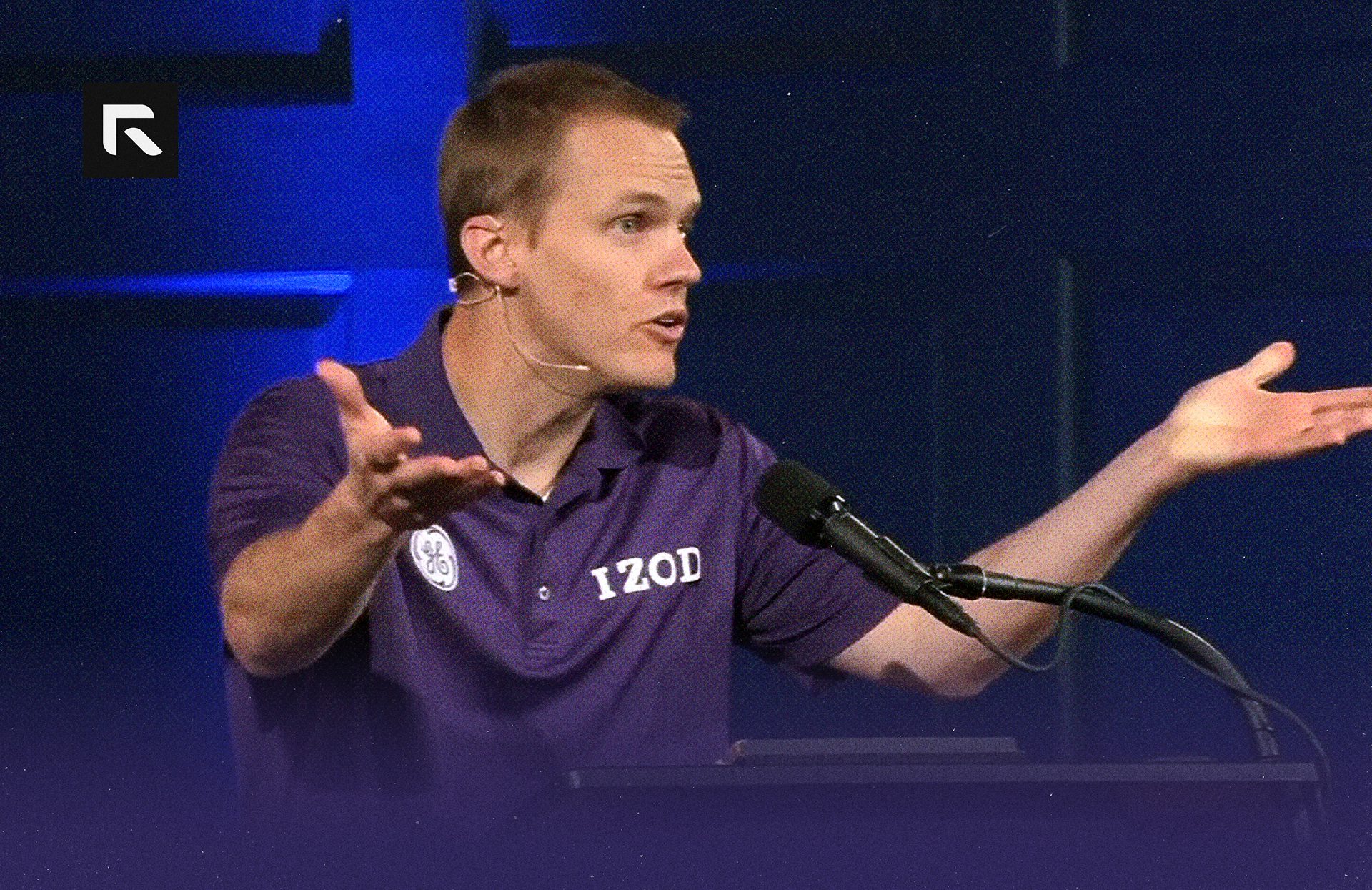
It is a frightening thing to be in a room full of Danny Aikens. What’s even more frightening is that I’m dressed like one of them. So I’ve got my cargo pants that I use overseas when I’m hiking or going into underground house churches. And then I didn’t have any, so I got the email. I don’t have a lot of wick-away golf polos in my particular wardrobe.
So it just so happens that a friend of mine who plays professional golf actually from here in North Carolina gave me this shirt a couple of weeks ago. So this sermon is brought to you by Izod General Electric and FTI consulting. But yeah, I feel like I’m going on a mission trip to the Masters lately.
This is the way you roll through on a mission wherever you go. Would it be that when it comes to a heart for the great commission, this room would be full of Danny Hains and would it be that I would be counted among them?
I know that this has been an overwhelming week for you too, but let me not be the last to thank God for his grace in you, for your love for him, for your devotion to your family, for your leadership in this seminary and for your ministry in the church, for his glory among the nations.
And in all of that, to thank God for your ministry to me, your encouragement to me, your example to me, and your friendship with me, I count it pure joy to partner together in the gospel with you. If you have a Bible, and I hope you do, lemme invite you to open me to Luke nine.
Communicating What You Have Learned
Many of you know that one of the great challenges of going overseas is coming back and trying to communicate what you’ve seen to people who haven’t seen it, what you’ve heard to people who haven’t heard it, what you’ve smelled to people who haven’t smelled it, what you’ve felt to people who haven’t felt it through no fault of their own simply by nature for the fact that they were not there.
You’re trying to communicate what God has done in your heart to people who’ve not walked in the same place at the same time, through the same journey that you have. So this is the challenge that I have faced over the last few weeks in particular, about a month ago I returned from two weeks in Nepal and I usually travel overseas anywhere between two and four times a year. So I’m used to going and coming back, but this trip was unique.
God did an unusually deep work in my mind and my heart, a work that I know has potentially huge ramifications for my life my family, and the church God has entrusted me to lead. So during those days, I was in Nepal. I was reading through the book of Luke. Our church is reading through the Bible together over the course of two years and it just so happened we were in Luke while I was in Nepal.
So what I want to do this morning is a bit unique. We’re going to start here at the end of Luke, but I want to take you on a journey with me through different parts of Luke. As I share with you some of what I saw in Nepal and in the process, I want to ask you if I could be so bold, I want to ask you, Dr. Aiken, I wanted to remember of this faculty, remember this staff, every student in this seminary, I want to ask you three questions that I believe each of us individually and all of us collectively in the church, in this culture, in our day need to ask.
And they’re based on this story. At the end of Luke nine, verse 57 tells us as they were walking along the road, someone said to Jesus, I will follow you wherever you go. And Jesus said to him, foxes have holes, and birds of the air have nests.
But the son of man has nowhere to lay his head to another. He said, follow me. But he said, Lord, first lemme go and bury my father. And Jesus said to him, leave the dead to bury their own dead. But as for you, go and proclaim the kingdom of God.
Yet another said, I’ll follow you Lord, but first let me say farewell to those at my home. Jesus said to him, no one who puts his hand to the plow and looks back is fit for the kingdom of God.
Will You Choose the Cross or Comfort?
Three questions for you, for me, and for us, are we going to choose comfort or are we going to choose the cross? Are we going to choose comfort or are we going to choose the cross? The first man in this story says to Jesus, I’ll follow you wherever you go.
He’s eager, he’s willing. Now we know from other gospel accounts this man was a teacher of the law, and that it was customary for men like him to attach themselves to another teacher in order to promote their own status.
By this time, Jesus was pretty popular with the people around him, so he seemed like a good candidate for this man’s cultural promotion. Jesus replies the son of man has no place to lay his head. In other words, if this man followed Jesus, he could expect homelessness to come.
In this way, Jesus was making clear that Christianity was not a path to more comforts, higher status, or greater ease in this world, the road that Jesus walked would not be paved with the prospect of self-advancement.
The road that Jesus walked began with the demand for self-denial. He was going, you back up to verse 51 to Jerusalem. He was going to a cross and this man’s saying, I’ll follow you wherever you go. He has no idea what he’s saying.
Jesus said to his disciples, earlier in chapter verse 23 of chapter nine, if anyone would come after me, let him deny himself, take up his cross daily, and follow me. Say the same thing over in Luke 14 when a large crowd was gathering around him and in verse 27, there he would say, whoever does not bear his own cross and come after me cannot be my disciple. Clearly choosing the cross over comfort is a requirement for following Christ.
The chapters that follow Luke nine just echo this call to leave behind comfort at every turn to leave behind. Look at chapter 10, verses three and four, when he sends out his 72, here go your way. Verse three says, behold, I’m sending you out as lambs in the midst of wolves. That’s not a call to comfort.
The Call Away from Comfort
Carry no money bag, no knapsack, no sandals and greet, no one on the road. It says, don’t take all this stuff with you. I’m calling you. You’re going to need to depend on me as a lamb walking into a pack of wolves.
That’s a call away from comfort to need. You get to the end of this chapter and you see the parable of the good Samaritan to go out of your way to love, love God loved your neighbor as yourself, your neediest neighbor, the neighbor that your flesh doesn’t want to love, the least likely person to love, sacrifice your comfort to help them in need.
Luke chapter 11, look at verse 42. Jesus is speaking to religious leaders and he says, woe to you Pharisees, for you tithe mint and rue and every herb and neglect justice and the love of God and these you ought to have done without neglecting the others.
You do your religious duties great, but you sit back and settle for injustice in the world right around you. Sure you’re in the synagogue every day giving pennies as a tithe, but you’re doing nothing to show God’s love to the oppressed and the poor you keep most for yourselves, Which leads to a stinging indictment in chapter 12.
Look at Chapter 12 verse 15, as he said to them, take care and be on your guard against all covetousness. For one’s life does not consist in the abundance of his possessions. He told him a parable saying the land of a rich man produced plentifully.
And he thought to himself, what shall I do for I have nowhere to store my crops? And he said I will do this. I will tear down my barns and build larger ones, and there I will store up all my grain and my goods and I will say to my soul, soul, you have ample goods laid up for many years. Relax, eat, drink, and be mer.
Ladies and gentlemen, this is the worldview we live in. Store all you can in barns to save it for a rainy day. Those who have got more and more and more. This is success in our culture. What does God say?
Verse 20, Fool, Fool, this night your soul is required of you and the things you have prepared, whose will they be? So is the one who lays up treasure for himself and is not rich toward God. So what does it mean to be rich toward God?
Go down to verse 32 in the same chapter where Jesus tells disciples, fear not little F. It is your father’s good pleasure to give you the kingdom and he commands them. Verse 33, sell your possessions. Give to the needy.
Provide yourselves with money bags that do not grow old with a treasure in the heavens that does not fail for where no thief parishes and no moth destroys for where your treasure is there your heart will be. Also, give your treasure to the needy.
This is what Jesus commands not to store up more comforts but to sacrifice for those in need, which then eventually leads to the profound and piercing parable at the end of Luke 16. Go to Luke 16, Luke chapter 16, Jesus speaking to religious people.
Says in verse 14, the Pharisees who were lovers of money heard all these things and they ridiculed him and he said to them, you are those who justify yourselves before men. But God knows your hearts for what is exalted among men is an abomination in the sight of God.
Do Not Love Money
They loved money and they justified it at every turn. So Jesus tells them this story. Verse 19, there was a rich man who was clothed in purple and fine linen who feasted sumptuously every day. And at his gate was laid, a poor man named Lazarus covered with sores who desired to be fed with what fell from the rich man’s table.
Moreover, even the dogs came and licked his sores. The poor man died and was carried by the angels to Abraham’s side. The rich man also died and was buried in Hades in torment, he lifted up his eyes and saw Abraham far off and Lazarus at his side.
And he called out. Father Abraham, have mercy on me and sin Lazarus to dip the end of his finger in water and cool my tongue from anguish in this flame. But Abraham said, child, remember that in your lifetime you received your good things and Lazarus and like men are bad things.
But now he has comforted you and you are in anguish. And besides all this between us and you, a great chasm has been fixed in order that those who had passed from here to you may not be able and none may cross from there to us.
Get the context. Jesus talked to religious people who loved money and justified their indulgence in it and their view of the culture around them. Jesus tells them a story about a rich man who ignored the poor man next to him, brothers and sisters, we need to hear this story, we need to hear it and we need to be careful not to justify ourselves as we hear it, as we sit in one of the wealthiest places as some of the wealthiest people in the history of the world.
Americans Are Privileged
Not long ago I wrote a forward to a revised edition of When Helping, her great book on helping the poor without hurting the poor and yourself in the process. In that book, the authors Steve Corbett, and Brian Fid, economics professors at Covenant College, point out that the average American lives on more than $90 a day, while nearly half of the world’s population lives on less than $2 a day.
And they write at no time in history has there ever been greater economic disparity in the world than at present. And then speaking specifically about Americans, they say by any measure, we are the richest people ever to walk on planet Earth. So you and I may not always feel rich, but we are rich, we are encompassed by the comforts of this world and meanwhile the poor are outside our gates. So
And five of our pastors went to Nepal landed in Kathmandu and then by helicopter into the heights of the Himalayas. We were about 12,000 feet from where we landed. It was about as high as you can be and still maintain life on a consistent basis right at the border between Nepal and Tibet.
And we landed in the middle of these mountains and then over the course of the next six days we hiked about 90 miles out of them. And it just so happened that on the first day of our trip, we were in Luke four in our reading, you don’t have to turn there, but you remember where Jesus says the spirit of the Lord is on me because he has anointed me to proclaim good news to the poor.
He has sent me to become liberty to the captives, recovery of sight to the blind, to set at liberty those who are oppressed, to proclaim the year of the Lord’s favor. And those verses set the stage for two weeks of walking among the poor and the oppressed.
The Outside World
We were totally disconnected from the outside world, with no email, no phone, texting, unable to talk at home, just not doing anything but dwelling in the middle of the poor and the oppressed. So in the villages we were in a study was done a few years ago and they found that half of the children living in these villages die before their eighth birthday.
So Half of their kids don’t make it to eight. One mom, 14 kids, two made it to adulthood and they’re dying of things like diarrhea. Simple thing, you take a pill for it, and drink some clean water. You don’t have either cholera outbreak in one village, this infection of this small intestine that causes diarrhea.
This outbreak comes about and within a matter of a couple of weeks, 60 people die going from village to village. And I think this was, people have asked me, why was this different? I mean you’ve seen poverty in the world.
Seeing the Depths of Poverty
I think part of it was just not being able to escape, not being able to withdraw and call home and be reminded, but just to walk through village after village after village and see this poverty. And remember we were walking through one village and we had packs. Of course, we didn’t have much in our packs at all and a long way to hike.
And so just a couple of little snacks to carry through. The six days were there and the partners that we work with were clear from the beginning to say, now when you go into these villages, they’re going to come up and you’ll have kids coming up and running just to get anything they can from your pack.
And once you start to give out the one little thing you have, you’ll have 10 others there. They’re not going to have anything. So we’ve got long-term plans or processes in place to address poverty in these areas, but it doesn’t need to be you just giving out little things you had to the first people that come up to you.
So they were clear about that and we got into this one village and these girls, these little girls, little boys running up and this one little girl reaching up and trying to grab my pack. And so I’m just kind of smiling and I reach down my hand to her and she grabs onto my hand. And so we walk just holding her hand.
She’s looking up at me and she realizes I’m not going to give her anything. And we’re about to the end of her village and she tightens the grip of my hand and she starts reaching up from my pack and I dunno what to do and we’re about through a village. So I start to pull my hand away and she tightens that grip even more.
And finally, I jerked it away and I said, jerk my hand away from her. I look back at this little girl’s face and she looks up at me in the eye with this desperate angry look on her face and she tries to spit on me. She wouldn’t be able to do that. Just ends up spitting on herself village after village like that. And then to see the most.
Sex Traffickers Prey on Poverty
The heinous way that sex traffickers are preying on poverty in these villages, these traffickers will come through and they’ll say to these families, we can’t take care of their kids. We’ll say to them, we have a way to provide for your daughter and your family and we’ll take her down, we’ll help her get a good job in the city. She’ll make money, she’ll be able to send that money back up here. Periodically we’ll bring her back up here where she can visit.
And if a family’s not convinced by that, then the traffic will pull out. All it takes is about a hundred dollars and say, this would be a pledge of my promise to provide for your family through your daughter.
And so these families will give their daughters 15, 10 under 10 years old to these traffickers who will take them down to Cat Mendo, put them in a brothel where they will break them, drug them, rape them repeatedly, and then require them to do whatever men who come into these brothels want them to do.
Some of these girls will have 15 to 20 customers a day and this is their life. Ashamed, used, abused, and they can’t get out. Police are corrupt because they are paid off by the traffickers. Traffickers threaten that if the girls lead, the traffickers will go back and kill their families. Some of these girls they kept in Kathmandu, and others are taken to India or the Middle East down in North Africa.
We’re talking about thousands and thousands of girls taken from impoverished villages just like the ones I’m in. So I’m reading, so I’m reading Luke 10 and I’m seeing that the greatest commandment is to love God and to love your neighbor as yourself. And I’m thinking as myself, as myself, I’m thinking that this was happening to my daughter, to my little girl, I’d do something.
What if this were our girls? What if this were our kids dying? It would change the way we live. Wouldn’t it change the way we live, and do church if we loved our neighbors in the world as we do ourselves, what are we doing?
Let’s stop justifying ourselves. Be honest with each other. We are throwing scraps to the poor in our lives and our churches and something drastic needs to change. We live in relative affluence that cares little for the poor.
We give little thought to children like our own being sold in trafficked for sex and we can live our entire Christian lives in the confines of churches in our culture while turning a blind eye to starving brothers and sisters around the world. This must not be. Look at our lives, look at our churches, our churches, really what it looks like to gather a group of people who are sacrificing their lives for the spread of the gospel.
In a world of urgent need we know, we know there’s a difference between peace, time, and war. Time, peace, time. We ask how can I be more comfortable. How can I be entertained? How can I use my resources to indulge myself in pleasure? Wartime we ask questions like what can I do to help the cause?
Where can I sacrifice to ensure victory? We’re on the alert. We want to use our resources for the accomplishment of the mission. Brothers and sisters, we are at war. We’re at war. But if you look at our lives and our families, and if you look at our churches, including the church that I lead doesn’t look like at war,
People Wage Battles Every Day
But there’s a battle that’s being waged for the lives of men and women outside our gates. And I’m wondering what would happen if our lives and our families and our churches were organized not for peacetime but for wartime. What if we were looking right in the face of urgent need in the face of over 20,000 kids who die today every single day of starvation or preventable diseases or thousands of girls are being trapped around the world and we decide we’re going to engage in this war. And I know there’s not an easy answer. I know many people say, you don’t realize that all these problems are complex. They are complex. These are extremely complex issues, but the idea that says, I can’t do everything so I won’t do anything, it’s straight from the pit of hell. So I ask you, are you going to choose comfort or are you going to choose the cross? Are you going to spend your life and your ministry coasting through the corridors of casual comfortable Christianity in this culture? Or are you going to take up the cross crucifying your flesh, sacrificing your life to lead the church for the spread of the gospel? In a world of urgent need, are we going to choose the comforts of this world or are we going to choose the cross of Christ?
Will You Settle for Maintenance or Sacrifice for the Mission?
That’s the first question. Now I want to be careful when talking about material needs. I don’t want to lose sight of people’s far greater spiritual needs. Please write to the next question, question number two are we going to settle for maintenance or are we going to sacrifice for a mission?
Are we going to settle for maintenance or are we going to sacrifice for a mission? Back in Luke nine, Jesus initiates the conversation with the second guy, follow me. He said, Lord, first let me go and bury my father. Scholars debate whether or not his father’s dad had actually died yet or not.
Some believe his dad was about to die. So if he wanted to go back, spend those last couple of days with his father, and then give him a proper burial, which is something he would obviously want to do also something he would need to do to not bury his father would be to shame his father. Others believe his dad had just died, so his dad just died and just wants to go back and be a part of the funeral.
I’ll never forget the moment when I got home from preaching at a conference and got a call from my brother crying on the other line saying, David, you need to pray for dad, pray for dad, my dad, best friend in the world. He said, I don’t know what’s wrong, just pray.
And so he hangs up the phone. I just started praying and for the next hour, I prayed until I got a call from my other brother telling me that my dad had just suddenly unexpectedly passed away from a heart attack.
And I just remember the raw emotions in a moment like that, and I know many of you’re familiar with different ways and maybe people in your life that you’ve lost. Can you imagine that moment?
I can’t imagine hearing Jesus say leave the dead to bury their own dead. Doesn’t that seem a bit brash, a bit bold? What does this mean? He says, as for you, go and proclaim the kingdom of God. Clearly, when you follow Christ, there is an urgency here.
That accompanies kingdom proclamation, an urgency, something you would most want and need to do in life. Something even more important than that, go and proclaim the kingdom of God. The urgency to proclaim the kingdom of God that was there in the first century I would submit is even greater in the 21st century.
This region we were in is home to 24 Tibetan Buddhist people. Groups that are totally unreached with the gospel haven’t been reached for centuries. These mountains are the birthplace of Hinduism and Buddhism.
Both Satan has held there for centuries, for generations. And as we walked to these villages for days, there were four or five days before we ever met somebody who heard about Jesus before we got there. Never heard.
They haven’t ever heard centuries they haven’t heard. And what was so remarkable about it was just imagining you’re walking in the Himalayas. I mean it’s just glory and grandeur all around you. Just the majesty of God on display in those mountains, snow caps, snow caps, just beautiful.
Do you know what all of that revelation has brought about in those villages? Condemnation. They have a glimpse of the glory of God and the only thing it’s brought about in their lives for generations has been condemnation and damnation.
The Knowledge of God is Powerful
They have knowledge of God, just like Romans one says, they knew God. They did not glorify him as God. No, they’ve not glorified him. They worship all kinds of other Gods and spirits, and Buddhist monasteries all across these mountains.
So they have knowledge of God to the point where they’ve rejected him and they’re standing guilty before God and nobody’s ever told him the good news of what Christ has done to make a way for them to be reconciled to the creator of all this.
I’m sitting there thinking about all of this majesty and creation around them, but none of it is as great as what you and I have right now in our hearts. The gospel, it’s greater. It’s better than the majesty of the Himalayas, the gospel you and I have got it. We have it. They haven’t heard it.
One day we’re at this Hindu Holy river and their custom at this river is to bring family members who die within 24 hours, they bring their loved ones to the river, place the body on a funeral pyre over the river, and burn the body over the river that will be helpful in the cycle of reincarnation according to their beliefs.
And so I’m standing there, we turn a corner and we see this river and you just imagine a river with funeral pyres and just burning bodies up and down the river. And I’m sitting there looking at these burning physical bodies and I’m realizing that this is just a picture of a far worse eternal reality at this moment for these people and most of them, if not all of their bodies, most if not all of them, never even heard the gospel before they died. Brothers and sisters, what is it going to take for the entire concept of unreached people to be totally intolerable to us?
This is not right. I said, I’m reading, the harvest is plentiful, but the workers are few. How can there be few workers when there’s that pickle of harvest? What are we missing here>
And reading Luke 15 I’m seeing the father running after the son, the prodigal son.
I know, I know that God worships me in this room, and desires every single one of those people. Group salvation, desires, people salvation. He desires the salvation of law. Second Peter three, nine. We know that he loves them. So wouldn’t it make sense then?
Wouldn’t it make sense if God desires the salvation of all peoples Revelation five, Jesus purchased people from every single people group. If that’s the sense that he’s pursuing them and we’re his children, we have this gospel.
Wouldn’t it make sense with 6,000 plus people groups that the majority of us would be going there, not just a select few, a couple? Well, maybe one person out of this room might go too, well, why is the line not really long for Afghanistan really long and those who don’t go to Afghanistan are redirected somewhere else? Are we going to settle for maintenance?
Are we going to settle into a life business as usual, all the while never really realizing the reality of the world, the unreached world around us? Or are we going to sacrifice the Permiss mission and it will be sacrificed? I mean, brother in Afghanistan, we’ve heard news over the last couple of weeks about increased security risks in Afghanistan,
Is Your Life Marked by an Indecisive Mind or an Undivided Heart?
Not just in embassy areas, but in residential areas and the effects of that. This is not trying to call it anything less than sacrifice, even in these villages to people upon hearing the gospel over and over and over again, trusted in Christ and when that became known in this Buddhist village, within two weeks they had been stoned. So we’ve got to decide, is this mission worth our lives?
All of that leads to the last question, will our lives then, will our lives be marked by indecisive minds or undivided hearts? Will our lives be marked by indecisive minds or undivided arms?
This last guy says, I just want to go back and say goodbye to my parents, and she just says, no one who puts his hand to the plow and looks back as fit for the kingdom of God. It’s interesting. Each of these guys was putting in a sense whether it’s spoken or implied in conditions and stipulations upon following Christ, and
Jesus Has the Biggest Heart
This story is a clear reminder that we do not have the option of following Jesus on our own terms when we follow him. He has our heart more than anyone, anything else in this world, twice says later in Luke 14, if you’re going to follow after me, you must hate your father, mother, brothers, sister, wife, and children to love Christ in a way that makes our closest relationships in this world look like hate. In comparison, it’s an undivided heart.
Luke 12, you don’t have to turn there just for the sake of time. I’ve always wanted to preach this on Christmas. Do you think that I’ve come to bring peace on earth? Jesus said, no, no. I tell you, division, from now on in one house there will be five divided, three against two. Two against three. They’ll be divided.
Father against son, son against father, mother against daughter, daughter against mother, and mother-in-law against her daughter-in-law against her. This is the issue, isn’t it? When it comes down to it, this is the issue. Does Jesus have all of our hearts? And here’s why I contrast that with indecisive minds, because I know myself
And this is my wrestling. Even over the last month, I get so conflicted. I become so hesitant. Okay, what do I do when I start to make a move in one direction? I’ll think, wait, am I sure that’s a good direction to go in and I need to wait for some strong confirmation?
Like if I’m supposed to go here or do this or make that decision, and before long my indecision and delay turn into inaction and disobedience, all while I’m waiting for full confirmation and it doesn’t make sense. If I walk by a lake and I see a child drowning in the middle of it, I don’t think I wonder what I should do.
Or wait for. Is there anybody I can bounce this off of what I should do here? Do it. You go, you jump in, you help the child so you do something. Here’s the deal. We know the will of God. He’s the defender of the weak.
God Brings Salvation
He’s the father of the fatherless. He’s the rescuer of the oppressed, and he is the healer of the nations. He desires the salvation of the nations. We don’t have to wonder what his will is. We don’t have to ask what it is.
You get to the end of Luke, Luke 24 47, just as sure as Christ would die and on the third day rise from the dead, so shall repentance and forgiveness of sins be proclaimed in his name to all nations. This is short. It’s the will of God that these Afghan peoples come to know Christ and 6,000 other people, groups like them.
So are our lives going to be marked by indecisive minds or undivided hearts? The last thing I want to do and even bring in some of this picture of Nepal into this room, is to provoke some low-grade sense of guilt for all that we have that says, oh, I guess I should do something about it.
My prayer is just as this seminary at this moment is marked as a great commissioned seminary, and I praise God for his grace in it. I pray that in the days to come on this campus and in the hearts represented in this room, not for some low-grade sense of growth, but for a high-grade sense of gospel to compel you as those who have been rescued and delivered and provided for and saved to embrace the cross of Christ, to refuse to settle for maintenance in the church, to sacrifice for mission with an undivided heart.
As we look forward to the day when this road will ultimately lead to seeing his face and giving him glory with every people group on the planet, it’s worth giving our lives for that Father, we pray to be so. God, I pray to be so in my life. God, I pray for grace even in my own life.
I answer these questions in my own life, my own family, and my own church. I lead and I pray for this across this room in lives and families and churches and in this seminary, God uses us. We pray to follow Christ for who he is and in the process to glorify Christ for all he deserves. In Jesus’ name, we pray. Amen.

David Platt serves as a Lead Pastor for McLean Bible Church. He is also the Founder of Radical, an organization that makes Jesus known among the nations.
David received his B.A. from the University of Georgia and M.Div., Th.M., and Ph.D. from New Orleans Baptist Theological Seminary. Some of his published works include Radical, Radical Together, Follow Me, Counter Culture, Something Needs to Change, Don’t Hold Back, and How to Read the Bible.
He lives in the Washington, D.C. metro area with his wife and children.