

The Characteristics of God
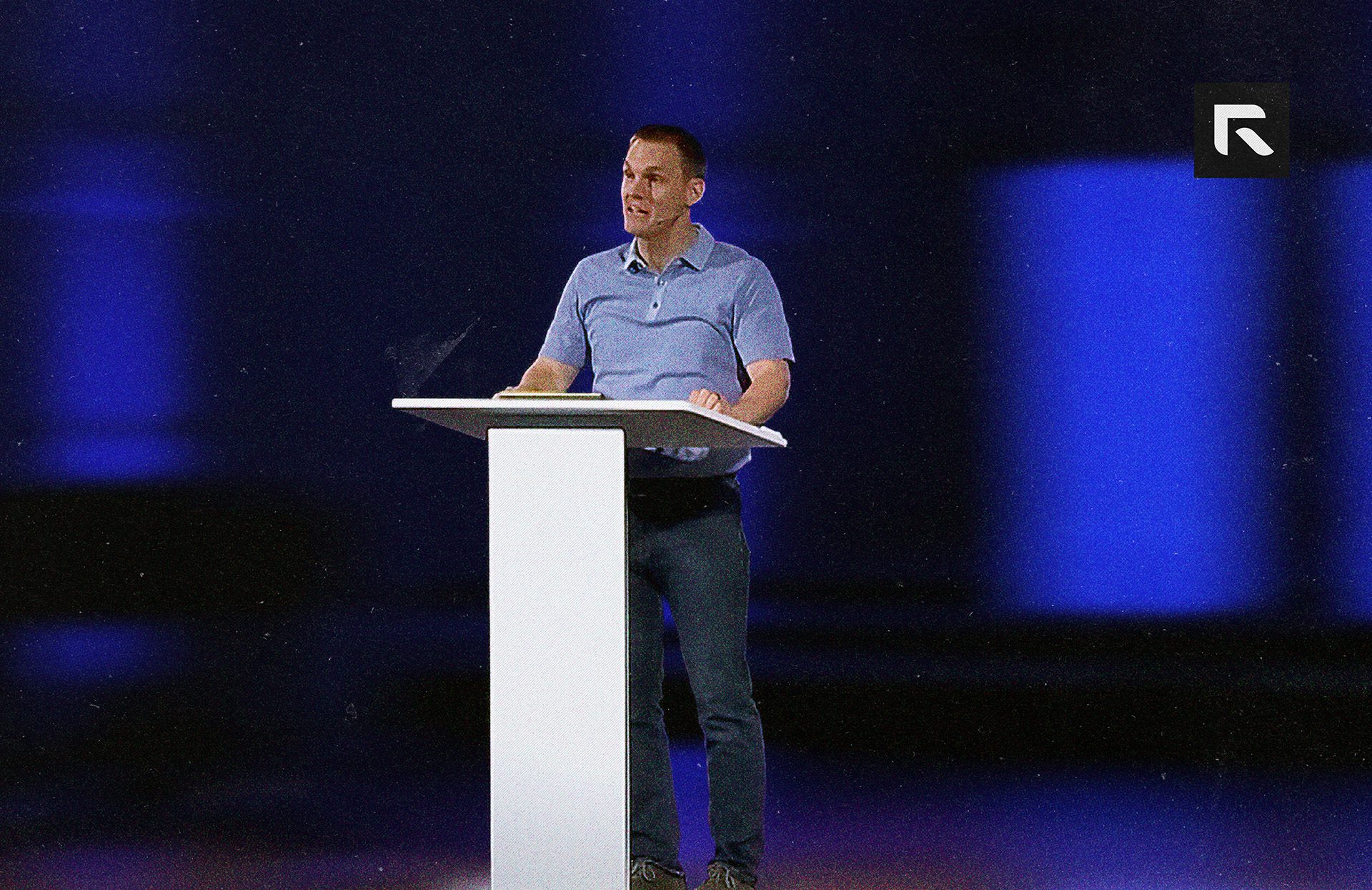

Who is God? Why should we go to Him in prayer? In this sermon on Luke 11 at the Southeastern Baptist Theological Seminary Chapel, David Platt reminds us of the characteristics of God. Our God is worthy of our worship and the only reward we should seek when we pray. He is coming back and we long to see him. God is the giver of all good gifts and he forgives our sins. He has authority over everything and he is approachable. When we realize these things about our Father in heaven, we have no choice but to earnestly pray to him in all we do.
- God is Worthy of Worship
- God is the King who is Coming
- God is a Giver of Good Gifts
- God Forgives Sins
- God Has All Authority
- God is Approachable
The following is a lightly edited transcript provided by a transcription service. Please check the video before quoting.
The Characteristics of God
If you have a Bible and I hope you or somebody around you does, you can look on with, let me invite you to open with me to Luke chapter 11, Luke chapter 11. And while you’re turning there, lemme just say what I think I say every time I’m here.
I just praise God for what he is doing on this campus. I praise God for your president, his personal friendship with me, encouragement to me, an example to me, and I’m sitting there thinking, what other seminary can you go listen to the President talk about sex on the weekend and then take him down on the basketball court on Monday night? This is going to be like, what a great couple of days at Southeastern Ahead.
I love his passion, and this faculty’s passion to infuse every facet of this seminary with the great commission. I praise God for the faculty here who have had a huge impact on my life. Many of their friendships with me, for example, to me I trust, you know, are very blessed to be on this campus and God’s given much grace to this place and to whom much is given, much is required.
So may His grace in this place resound to his glory far from this place, particularly among people who as we were talking about listening to about in Madagascar who’ve never heard his name. Just as a reminder about 2.8 billion, such people have never heard the wonderful name of Jesus over 6,000 people groups.
So I pray regardless of whether you pastor here or go as a missionary there or anything else in between, whether you’re a student, staff, or faculty member, I pray that God will use your life and your leadership to decrease the number of people who have never heard that name. But it isn’t those people I want to talk about specifically this morning.
It’s this people, so it’s not their hearts I want to speak about. It’s our hearts. I want to ask you just a simple question. How is your heart for the Lord right now? How is your heart before the Lord?
So I’m not asking what your title is, not asking what ministry opportunities you have had or might have, not asking you what you have accomplished or might accomplish. I’m asking how is your heart before the Lord.
Do you love him? Is your time long with him? Are you seeking him every day? Like you can’t live without him? Even as I ask those questions, they seem so basic, so simple. But here’s the deal. I can just be totally honest with you.
I think back to one particular time I’d called a season, but it was longer than a season, and my life in ministry at the church at Brook Hills. So a lot was going on, church was growing, rowing, getting a lot of attention in our community and beyond.
Had written a book that a lot of people were reading was getting invited to preach in different places, invited to come to places like this, to preach all kinds of different places like this, and traveling and seeing all kinds of great things happening.
My time with the Lord was inconsistent at best. Non-existent most days, and don’t get me wrong, it’s not that I was lazy, I was working hard, I was staying up all night on the bed late, getting up early, doing all kinds of things again, seeing all kinds of great things happening around me. But it’s frightening to me to look back at that time and see how successful, so to speak, I could be in ministry and be so far from Christ and I praise God for his mercy in guarding and protecting me during those days.
I think of all the directions that could have gone that by God’s grace did not go. So here’s the deal. I may be alone in having that struggle at a point in my life, but I’ve just got a feeling that in a room with this many people in it, there may be some, maybe many who are there, their time with the Lord is inconsistent or non-existent.
Your communion with him is hurried and the moments when your mind and heart are most still, your thoughts are quick to go to so many other things but he, your affections, your desires are drawn to so many other things than him and maybe you can get even energized in music like we just heard, but it takes outside things to evoke that kind of affection in you. The word alone, quietness alone before the Lord doesn’t evoke that kind of affection.
And even if you’re not there right now, even if your heart is healthy toward the Lord right now, I certainly want to encourage you to be on guard, to guard yourself against the temptation to manufacture a heart for ministry and miss a heart for Christ. I lead the International Mission Board.
One of my greatest concerns, if not my greatest concern is the subtly dangerous attempt. We have to manufacture a heart for missions while missing a heart for Christ, this attempt to manufacture love for the lost while missing love for the Lord.
When brothers and sisters, he is the one who matters, and period, it is him for whom our hearts were created. It’s him for whom our hearts long. The words of Augustine, indeed our hearts are restless until they find their rest in him. So that’s why I have you in Luke chapter 11.
Because I love how these themes of a heart for the Lord and a heart for mission and ministry are intertwined in this part of Luke. At the beginning of Luke 10, right before this, Jesus sends out the 72 on a mission. So send them out.
Yet right after that, we hear Jesus saying the greatest commandment, the greatest commandment is to do what? Love God with all your heart and soul and mind and strength. Then we have this call to ministry.
Love your neighbor as yourself leading the parable of the good Samaritan, this incredible radical counter-cultural call to serve in ministry to others. Yet right after that, we’re reminded in Mary’s example of the beauty that’s found in simply being with Jesus, not serving but sitting at his feet, which then leaves in chapter 11, the disciples to come to Jesus and say, teach us to pray.
This is an interesting request, right? I mean after all these disciples were Jewish men. They knew about prayer that had grown up with prayers offered throughout the day before meals at the beginning of the Sabbath when they went to the synagogue, but there was something different they saw in Jesus.
They watched Jesus pray and it looked like prayer actually mattered to him. He looked forward to prayer, he longed for it. Somehow Jesus, for Jesus’ prayer was feeding his soul like food fed their stomachs and they wanted to know God like that.
So they said, teach us to pray and listen to what he said. And Jesus was praying in a certain place When he finished, one of his disciples said to him, Lord, teach us to pray. As John taught his disciples.
And he said to them, when you pray, say, Father, hallowed be your name, your kingdom come to give us each day our daily bread and forgive us our sins for we ourselves forgive everyone who’s indebted to us and lead us not into temptation. And he said to them, which of you who has a friend will go to him at midnight and say to him, Friend, lend me three loaves.
For a friend of mine has arrived on a journey and I have nothing to set before him and he will answer from within. Do not bother me, the door is now shut. My children are with me in bed.
I cannot get up and give you anything. I tell you though, he will not get up and give him anything because he’s his friend. Yet because of his impedance, he will arise and give him whatever he needs.
And I tell you, ask and it’ll be given. You seek and you’ll find and knock and it will be open to you. For everyone who asks, receives, the one who seeks finds and the one who knocks it will be opened.
Well, father among you, if his son asks for a fish, will instead of a fish give him a serpent. Or if he asks for an egg, we’ll give him a scorpion. If you then who are evil know how to give good gifts to your children, how much more will the heavenly Father give the Holy Spirit to those who ask him, isn’t that an awesome passage of scripture?
There are so many ways we could approach this text. It’s like a diamond that just shines in so many angles. But I want to show you how Jesus took his disciple’s request to teach them how to pray and he totally revolutionized their understanding of who they’re praying to.
So I want to show this to you and in the process, here’s my prayer. So here’s what I’ve prayed for these few minutes this morning. My prayer is that you would be reminded of who God is, particularly if you’re in a drier time spiritually, you’d be reminded of who God is in the process.
You’d be reminded of the kind of communion for which you have been created. Jesus says, when you pray, say Father. Father. Now in order to feel the weight and the wonder of that, we have to put the text in its context, meaning its overall biblical context.
So across 39 books in the Old Testament, first about two-thirds of the Bible, father is used as a title for God only 15 times, 15 times in the entire Old Testament. And none of those usages are references to praying to God as Father. We don’t see that picture at all in the Old Testament.
When you turn the pages in the New Testament, you have a whole new picture. Once you open the pages into the book of Matthew you see in Matthew chapter six, Jesus teaching the Lord’s prayer there and then throughout the rest of the gospel.
So 15 times in the entire Old Testament, you turn the page into Matthew and from Matthew to John, you see God referred to his father 165 different times, just bursts this title for God bursts on the scene in a whole new way. And what’s interesting is, and all but one of those instances, Jesus uses that title for God when he’s teaching specifically with his disciples only exception.
Matthew chapter 23 verse nine, where he’s teaching his disciples and the crowds are mentioned as well all of the others in the context specifically of Jesus talking with his followers. So the picture we have in the New Testament from the very beginning is that as followers of Jesus, we have the right and the honor and the privilege and the blessing of calling God our Father.
So you think about all the pictures of God that we see in the Old Testament sovereign creator and all of his attributes, Lord Yahweh King Jesus says, you can call him Father Dad. This is massive and monumental.
That’s why had JI Packer and knowing God, his chapter, and adoption, which is so good, he said, what is a Christian? He said the richest answer I know is the Christian JI Packer.
So JI Packer, he’s got a lot to say we should listen to when you ask him what is a Christian that seems like I’d like to hear his perspective Packer says, the richest answer I know is that a Christian is one who has God as a father. If you want to know how well a person understands Christianity, packer said, find out how much he makes of the thought of being God’s child and having God as his father.
If this is not the thought that prompts and controls his worship and prayers and his whole outlook on life, it means that he does not understand Christianity very well at all. Oh, does this prompt?
You’re praying and you’re worshiping your whole outlook on life, the reality that you are a child of God, he is your father, you have access to God as your father. We can so easily miss this.
I think about Wesley John Wesley. Many of you know his story. Honor graduate at Oxford University, an ordained clergyman in the Church of England, active in practical good works regularly visiting the inmates of prisons and workhouses in London, helping distribute food, and clothing to slum children, orphans serving in all kinds of ways, studied the Bible, diligently attended numerous Sunday services as well as other services.
During the week, generously gave offerings to the church, and alms to the poor. Prayed fasted, and lived an exemplary moral life. Spent several years as a missionary to American Indians and what was then the British colony of Georgia.
Yet when he came back to England after being a missionary confessed in this journal, I who went to America to convert others was never myself converted to God. Then he said this statement, I had even the faith of a servant though not that of a son.
Oh, may you know God is Father, may you love him as Father. May you long for him as father prayer revolves around knowing, loving being with God is Father in this. Remember Matthews’s account of the teaching on the Lord’s Prayer.
Remember what Jesus said there before he got in the Lord’s prayer, when you pray must not be like the hypocrites. They love to pray. Stand in the synagogues on the street corners to be seen by men.
I tell you the truth, they received their room in full reward in full. When you pray, what do you do? Go in your room, close the door, shut the door, pray to your father in secret and your father sees what has been done in secret.
We’ll reward you. And when you pray, Jesus says to your Father in secret, do not heap up empty phrases like the Gentiles to think they’ll be heard because there are many words. Do not be like them for your father knows what you need before you ask him what a statement.
Your father knows what you need before you ask him. So apparently in prayer, God is not up in heaven with a steno pad like writing down our request saying, ah, and thought about that. Thank you for mentioning this.
Oh, that’s a good one. Yes, of course. No, he already knows what you need, which causes some people to think, well then what’s the point?
As soon as we ask that question, we’re on the verge of an incredible breakthrough in prayer because we’re starting to realize that the primary purpose of prayer is not to get something but to be with someone who changes everything. Go in your room, close the door, and pray to your father in secret your fathers sees it secret, and he will reward you just go in the room, there’s a reward waiting for you every single day.
There’s a reward, just waiting, a treasure waiting for you every single morning with the Father and it makes sense in light of what Jesus is teaching here. So we obviously don’t have time to exhaust this text, but just and I write ’em down just 10 characteristics of God, our father here and we’re going to go, don’t worry you get lunch in class and everything, but so we’re going to go kind of quickly through here.
God is Worthy of Worship
Not that you’re that concerned about class, but others are. So just see him, see the reward in him. So one, he’s worthy of all worship, Father. So yes we do ask for things. I mean how Jesus teaches us to praise, to ask for things.
But look at what he starts to ask for hallowed be your name, which is not an inscription of praise to God. It’s obviously right in prayer to ascribe praise to God. But this is a request for God to be praised.
Hallowed be your name. Cause your name to remain known as holy because you are worthy of where you’re the father, you’re the creator, God, you’re worthy of all worship. So we see from the very beginning, right?
Hallowed be your name and all the earth like yes, it’s a heart for God that drives heart for mission. And why do you want to go to Madagascar to spend a week there, two weeks there, your life there because God’s worthy of worship in Madagascar because you want his name to be hallowed?
There he is great and they don’t know how great he is. Why don’t we want his name to be made known among the nations? Because there are 6,000 people, groups that don’t know how great his name is, how beautiful his name is.
God is the King who is Coming
We want them to know how beautiful his name is. Our God is worthy of all worship. This is what drives us. So that’s number one. Number two, he’s the king. Our father is the king who is coming.
He’s coming and we long to see him. We long to see him. And that is why this is a whole nother sermon. We won’t go there but may that be why in Matthew nine, Jesus ties fasting and prayer and fasting to the second coming.
He says when he’s asked, why are your disciples not fast? He says, because the bridegroom’s with them. When the bridegroom’s gone, then they’ll fast. So when I’m gone, they’ll long for me. It’ll drive them to fasting.
That’s convicting. Like if we’re not fasting and praying, then we’re showing that we’re content with him not coming. I know part of the purpose of prayer. I want my faith to be sighted.
I want to see you. I want to see your face. Revelation 21, this is drives me. I want to see your kingdom come, your justice reign, your mercy reign, your kingdom consummated on the earth.
God is a Giver of Good Gifts
He’s the father who’s worthy of all worship. He’s the king who’s coming. Third, he’s the giver of all good gifts. He’s the giver of all good gifts. Give us each day our daily bread.
We know the whole picture going back to Exodus 16, when God provided manna to his people in the wilderness and in the desert and on a daily basis provided the food they needed, which is interesting, right? Give us each day our daily bread.
We don’t pray like that. And let’s be honest, how many of us got up this morning and said, give me my daily bread. I need bread today. We live in a culture of praying like that.
It makes no sense. We know we’ve got bread today obviously we have brothers, and sisters around the world who were definitely praying that first thing that got up today.
So should we pray like that? I think we should pray as Jesus taught us to pray. Give us each day our daily bread. Prayer is a God-given guard in our lives to keep us from thinking that we can have what we need on our own.
Prayer is intended to be a daily reminder that the only way we have bread is if God gives us bread. We need that reminder in a self-sufficient culture as we live in. We need to be reminded daily that we’re a God-dependent people, that we don’t have a breath the next moment.
If he doesn’t give it, we don’t have lunch today. If he doesn’t provide it, he’s the one who gives all good gifts. I wonder if that’s one of the reasons we are oftentimes so prayerless in our day.
God Forgives Sins
Maybe we’ve just convinced ourselves that we can sustain ourselves. Prayer is a guard against pride like that. He’s the giver of all good gifts. He forgives our sins. Number four, our Father forgives our sins.
Forgive us our sins. Four simple words that just open the door to the storehouse of God’s mercy poured out to us. Isn’t it true that the more we grow in prayer, the more we grow in intimacy with God, and the more constant that prayer is on our lips?
The more we see the sinfulness of our own hearts and the pride that’s so pervasive, the more sensitive we become, the lack of holiness and dis in that area of our lives. The good thing is we have a God who says, my mercy is new for you every morning and just pours it out on you.
Forgive me of God and pour out mercy, mercy. This is a reward. He forgives our sins. He leads our lives. Lead us not into temptation, obviously not a picture that God would lead us into temptation, but lead us with the strength that you provide in the middle of temptation to resist that temptation.
Lead, guide, direct my life, God I need you to lead my life. I’m prone to wander. I’m prone to do things my own way with my own plans. I want to walk in your plan. I want to walk in your will.
God Has All Authority
Leave me today, forgives our sins, he leads our lives. Then I’ll put these next two together and I want us to think about ’em. So he has all the authority. Our father has all the authority.
God is Approachable
I think that’s number six. And he is approachable. Our father is approachable. So he is all authority and he’s approachable. So this is what I love about this parable that Jesus tells. So get the picture you got the friend.
Okay, well background first-century Palestine food was not quite as readily available as it is today. So no late-night Taco bells, there’s a battle for bread every day. You bake enough bread to meet that day’s needs, then you start again tomorrow.
So a guy shows up at his buddy’s house at midnight and he’s hungry. Now in first-century Palestine, hospitality was huge. So the buddy has a dilemma. One option, he can be a poor host and not get the guy any food.
His second option is to go find some bread from somebody else at midnight. So it’s either be a poor host or a poor neighbor and he decides to take what’s behind door number two.
So his neighbor was already fast asleep, enjoying his dreams. Not only is he asleep, but everybody in his house is asleep. Houses in that day were one-room affairs, which meant that everybody in the family slept in.
You got it? One room. So family in the, so you got family, same bed or same mat, you get kid one, kid two, kid three down for bed. Then you and your wife bolt the door closed, and lay down next to each other.
Ain’t nobody getting up to go to the bathroom in the middle night without causing a commotion? So everything is quiet while this guy is nice and asleep on his mat with his wife and kids.
All of a sudden a knock comes at the door and the guy on the outside says, friend. This is a good way to start when you’re waking up somebody at midnight for a piece of bread because friendships now walk in a tight line at this point because when the dad wakes up, you can picture it.
Any dad in this room or I’m in this room for that matter. You start looking around and you see little eyes on the mat popping open. It’s one thing to wake up Dad.
It’s a whole nother thing. Another ball game. Wake up the 2-year-old that you spent an hour trying to get down. So this whole friend thing is now in question on a whole nother level.
So the guy inside not happy right now says in the most polite way possible, don’t bother me, I’m not getting up and giving you a thing. Then Jesus says, even though the guy won’t get up because he’s his friend that’s in question, he will get up because the guy is impudent, which means, so the word there means bold, literally shameless.
So the guy’s so bold and shameless, he just keeps knocking until the guy gets up and gives them some bread. So here’s the interesting thing about parables. We hear them and we think, okay, so somebody in the parable is me and somebody in the parable is God.
Instead, Simon was thinking, okay, I think we’re the guy on the outside knocking on the door. So who’s God like the grumpy old guy on the inside yelling, don’t bother me. It’s weird.
What is Luke 11 teaching about prayer? Well, if you want something from God, you just keep banging on the door. Eventually, he’ll get up and do something for you, not because he loves you but because you’ve bothered him to death. So let’s pray.
Is that the point of the story? No, no, no. So the point of the story all comes back to this impedance, this boldness shamelessness. So some translations talking about it’s like annoyingly relentless and we’ll only understand the parable rightly if we look at it through the lens of the sky on the outside who’s in need.
Jesus tells the whole story from that guy’s perspective. So keep his perspective throughout the whole thing. Resist the temptation to compare God and the friend inside. Just put yourself in the guy’s outside shoes.
Jesus phrases the whole thing as a question. He says, imagine if you are bold enough, shameless enough to go to your friend at midnight just to ask him for a piece of bread.
In other words, imagine somebody with enough nerve to knock on his friend’s door at midnight just for a piece of bread. I think the picture Jesus is painting is of a guy who’s just in a sense rude like one of those guys who doesn’t know which social lines to cross and which ones not to cross.
And that kind of person are you that kind of person? Probably don’t realize it. If you are so the guy doesn’t seem to get the hint IE you don’t wake up your buddy at midnight and his entire family unless you have a really good reason.
This guy doesn’t know that he’s shameless. He’s so socially out of it. He actually thinks it’s no big deal to wake his friend up in the middle of the night. He won’t mind. He’s got some bread.
I know he’s got some, he won’t mind giving me some in the middle of the night. I know he’ll get up and get some for me no problem. And that just saying is how we should approach God.
So think about it. He has God our father who has all authority. We know he has everything we need. He has everything we need. He is sovereign, he has power over things, all things, and sovereignty over all things to do with his power, whatever he pleases.
So he has all the authority. He has what we need. And so the beauty of this parable, the one who has all authority is approachable. So this guy knew his friend was able to meet his needs and was shameless enough to think that his friend wouldn’t mind coming to him at such an inopportune time.
And it’s this picture of the shameless guy that helps us realize that the God of the universe who has all sovereignty, and all authority over everything has actually invited you and me to come to him any day, anytime for anything. This story is a perfect illustration in that sense.
It’s a perfect illustration of us going to God. When you think about the shamelessness of talk about boldness, like I know you’re running a universe right now and you got a lot of things you’re looking at,
But I have some things going on in my life right now that I just need you to give your attention to I need to share with you some things that are heavy on my heart that seem pretty bold, doesn’t it? Kind of over the top, but that’s just it isn’t.
The picture here is of a shameless nerve of boldness. It almost seems ludicrous right to go into the presence of the God of the universe. But Jesus is saying to be as invasive as you want.
Be shameless. I think Jesus is saying here is God. Our father delights in revealing himself to those who are bold enough to bother him. I hesitate to use the word bother, but it’s the point we usually think of as bother in a negative connotation.
I mean nobody wants to be a bother. But think about this with me. Say, I’m traveling and I call home to my wife Heather and I say, Hey, how are things going babe? And she says, well, it’s been a really hard day.
I have some things that are really heavy on my heart, but I don’t want to bother you with that right now. Lemme tell you what I’m not going to say in response. Well good, because that’s the last thing I need right now are you bothering me with things that are going on in your life?
So anything else before we go? There are so many reasons I’m not going to say that. The main reason is because I delight in being the one. She bothers with the things that are heavy on her heart.
I go, I’m glad she is coming to me. It would be a sign of unhealth if she was going to somebody else with those things that are most heavy on her heart.
And so with the God of the universe, we as his children heed the lights and are the ones who we come to with the things that are heavy on our hearts. Just let this soak in. Brothers and sisters, the God of the universe is approachable to you.
He has invited you to unburden your heart shamelessly before him and don’t miss it. Just as in saying, don’t bother the Father with the trifling things in your life. He’s saying the exact opposite. Sometimes we wonder, well, it’s what I’m praying about really that significant.
But look at this story. I mean this is not an emergency. This is not a guy on the out outside saying, my wife’s having a baby. She’s dying. My kid broke his leg. We got to go to the hospital, we got to rob her in the house.
It’s the middle of the night. He says I want some biscuits. I mean, talk about presumptuous when the guy dies, if he didn’t just go to sleep and wait until breakfast in the morning, like tell him to go to sleep. He’ll forget He’s hungry.
That’s what we tell our kids when they say they’re hungry at night. But the beauty is there’s nothing too small. That’s what I love about it. Remember Nehemiah chapter six verse nine, when Nehemiah’s working on the walls and he says, now Lord strengthen my hands.
And he just looks up to heaven. He says, my hands hurt. Isn’t this great? There’s nothing too small, nothing too big. We can pray about cancers and we can pray about colds, right?
Pictures of mustard seeds and mountains. Nothing too small, nothing too great. Our God has said, ask, seek, find in everything. Now I’m running out of time.
The picture here can be confusing. Jesus says, well ask and it’ll be given. You seek and you’ll find knock and it’ll be open to you. For everyone who asks for receives, the one who seeks finds, the one who knocks will be open, which causes, I mean, let’s be honest, many of us have prayed for things sometimes and God has not given what we prayed for.
So is that true? This is what I love about where he goes next in this contrast between earthly fathers and our heavenly Father and see these last three characteristics. We’ll hit him quickly.
God is all good. So the argument here is obviously from the lesser to the greater. What Father, if his son asks for a fish, we’ll give him a serpent, ask for an egg. We’ll give him a scorpion if you then, so you’re evil. You know how to give good gifts to your children.
The picture, he’s all good. I want to be a good father to my four kids. I try to lead them well, but I know that I’m not perfect in that I don’t always do what is best for them. And Jesus is saying, that even a good parent, which I hope to be is imperfect in this way, is not always good.
Jesus is saying Your Father in heaven, he’s always good. He’s always good when you ask for fish. He doesn’t give snakes when you ask for eggs. He doesn’t give scorpion. He’s all good. He’s all wise.
He’s all wise. He always knows what is best as our father. I give counsel to my kids. I try to give that as best as I can. But I don’t know everything about how this is going to play out in this life or in that way, in this situation.
God knows all these things. He’s all wise, all good, all wise, and last. He’s all loving. He’s all loving so much. So this is what I love if you compare Luke 11:13 with Matthew chapter six, and Jesus is teaching there.
So in Matthew chapter six, Jesus teaches few then though your evil know how to give good gifts to your children. And how much more of your father in heaven give good gifts to those who ask him, well here it does not give good gifts in Luke’s count.
And he starts talking about Jesus saying, give the Holy Spirit to those who ask him, which causes me to think I kind of like the good gifts version better. What if I didn’t ask for the Holy Spirit?
Like I was asking for this over here, but here’s the beauty of what Jesus said. Don’t miss it. You think about it, you’re asking for wisdom and situation and what do I do? Give me wisdom in the situation.
He doesn’t just give wisdom, he gives the spirit of wisdom to you. I need counsel on this. He doesn’t just give counsel, he gives the counselor God loves us so much that he’s given himself to us, his Holy Spirit to us.
And you think about this, tie it with all we’re talking about in prayer and intimacy with God. I mean what Old Testament saints only get along for, remember Exodus chapter 33, like Moses going out to the tent to meet with God.
The whole crowd of people stands up watching Moses walk out to the tent, he goes to the tent, this cloud rests over the tent and all the people have thousands just standing in silence. All because there’s a man over here who’s meeting with God.
It’s an awesome picture. Inus 33. But then you’re taking it to the New Testament. You realize, oh, this is so good. We don’t have to gather together this morning and watch Dr. Akin like walk in front of us into the tent over here and cloud come down like, wow, we don’t have to walk.
We get to meet with every single one of us gets to meet with God and we don’t have to go anywhere. We don’t have to go to a tent. We are the tent, we’re the like.
His spirit dwells. He’s given the Holy Spirit. He loves us so much. He loves you so much. And so I just want to encourage you today, I want to encourage you today with a picture of who he is and his love for you.
I just want to encourage you, to go in your room, close the door, pray to your father’s unseen and you will experience reward. May your heart be hot for God. May your time belong with him.
May your intimacy be sweet with him. And I am confident that when that is a reality, then ministry and mission will flow to the ends of the earth for the hollowing of his name and the coming of his kingdom. But if we bypass this, we miss the whole point.
Let’s pray. So God, our Father, we pray, help us not to miss the point. Thank you Jesus for making the way for us to have unended access to the throne of God.
Thank you for this privilege, this joy. Help us to live in it. We pray for us to live and to pray for the brothers and sisters around me right now in my own heart.
Lord, please draw our hearts closer to you and in the process cause your name to be hallowed through our lives and ministries. In Jesus’ name, we pray. Amen.

David Platt serves as a Lead Pastor for McLean Bible Church. He is also the Founder of Radical, an organization that makes Jesus known among the nations.
David received his B.A. from the University of Georgia and M.Div., Th.M., and Ph.D. from New Orleans Baptist Theological Seminary. Some of his published works include Radical, Radical Together, Follow Me, Counter Culture, Something Needs to Change, Don’t Hold Back, and How to Read the Bible.
He lives in the Washington, D.C. metro area with his wife and children.