

Let Justice Roll Down Like Waters: Racism and Our Need for Repentance
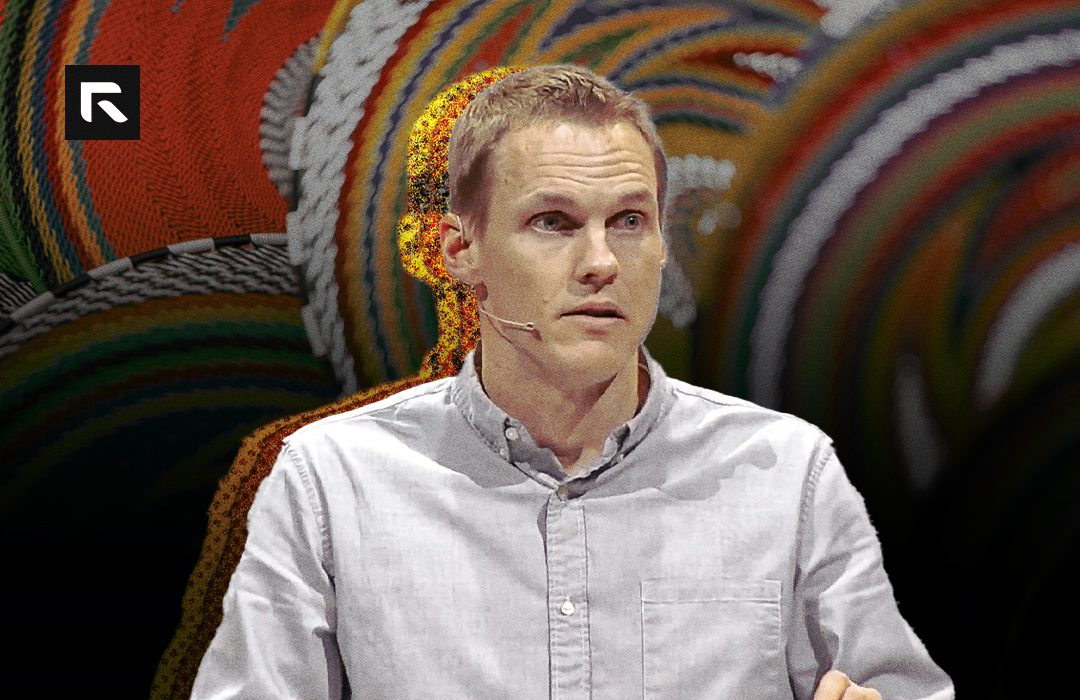

How can we recognize racism and repent in the church? In this sermon on Amos 5:18-27 at Together for the Gospel Conference 2018, David Platt offers six exhortations that we must hear and heed to work towards racial justice. It is important to recognize the reality of racism in our country today. As Christians, we are called to unity and we should live in true multi-ethnic communities. We should listen and learn from our brothers and sisters in Christ who are different from us. We are called to love others and lay aside our preferences. We should leverage our influence, our lives, and our leadership for justice in today’s society. Finally, we should long for a day when justice will be perfect and our savior will return.
- Look at the Reality of Racism
- Live in a True Multi-Ethnic Community
- Listen and Learn From Each Other
- Love and Lay Aside Preferences
- Leverage Our Influence for Justice
- Long for a Day Where Justice is Perfect
The following is a lightly edited transcript provided by a transcription service. Please check the video before quoting.
Let Justice Roll Down Like Waters: Racism and Our Need for Repentance
If you have a Bible, and I hope you do, let me invite you to open with me to Amos, the book of Amos chapter five. And while you’re turning there, I just need to say that I don’t deserve to be standing before you on so many different levels.
As a pastor, there are so many pastors I respect who are much better than I am men who have shaped my life, heroes of mine, who are serving in small churches that you would not recognize and likely never will recognize, but God knows them and God knows how indebted I am to them. I am just overwhelmed and don’t deserve to be standing here among this group of pastors and I particularly don’t deserve to be standing here on this topic.
So I have titled this session, let Justice Roll Down Like Waters Racism and Our Need for Repentance. I need to say from the start that I have failed to act as I ought on the issue of racism and God has opened my eyes to blind spots in my life and in my leadership or lack thereof in the church on this issue.
God has revealed sinfulness to me that I had not seen in me. He has shown me things that I’ll say tonight that I might have been offended by before that. Now I’m wondering why in the world I haven’t seen and said these things.
So all of this to say I’m preaching tonight out of the overflow of my weakness in so many ways and as a result, I would just like to ask for an extra measure of grace from you. I know that amidst over 12,000 people, many of whom are pastors with over 12,000 opinions, any word I say tonight can go in over 12,000 different directions and that doesn’t even include people listening online on this particular topic.
I feel like there are landmines everywhere, which is why I’ll try to make a variety of caveats along the way, but even still, I know there’s an opportunity to offend white people, black people, and people of a variety of ethnicities. Some people are already offended that I’m even differentiating between different colors of people.
As I prepared for this both tonight and when I preached a similar message in the church, I pastor in Washington DC I sent a draft to different pastors and church members both inside and outside the church to get counsel and I received much helpful feedback. The only problem is that their feedback was contradictory.
Some were like, leave this, take that out. Others saying, leave that. Take this out. So I’m just asking for grace because I know that it’s really easy for my words to be taken out of context and a talk like this.
I know it’s possible for you to tune out at one point and back in a few minutes later, but if you miss what’s in the middle, you might misunderstand the whole point and two, just because I have a lot to learn, I do not presume to come to this topic with everything figured out.
So I’m just asking for extra grace from God and from you. In fact, I’d like to pray toward that end for me and for us. So will you pray with me? Oh God, we need you.
So we just sing, we need to hear from you. We as your people in a sinful world have blind spots that we cannot see on our own and I fear that we often don’t really want to see them. So, God, we need your word and your spirit to help us see.
Think about my Bible reading recently in Matthew 13, as you described, a people whose hearts were hard and they couldn’t see God. I pray for soft hearts in this room. I pray for my own heart. I pray for hearts across this room to be soft.
I pray, oh God, that you would help us to hear your word and to see our world as you see it. You alone are wise on this issue. We are not for any of us who think we have this issue figured out.
We pray that you will strike down our pride tonight because we don’t have it figured out. None of us does, but you do. So we want to hear from you and we want to act according to your word.
I pray, oh God, that you would use us and our churches to show your justice in the world around us. In Jesus’ name, we pray, amen. So Amos chapter five, verse 18. This is the word of God.
Woe to you who desire the day of the Lord. Why would you have the day of the Lord? It is darkness and not light as if a man fled from a lion and a bear met him or went into the house and leaned his hand against the wall and a serpent bit him.
It’s not the day of the Lord darkness and not light and gloom with no brightness in it. I hate I despise your feasts and I take no delight in your solemn assemblies. Even though you offer me your burnt offerings and grain offerings, I will not accept them, and the peace offerings of your fattened animals, I will not look upon them.
Take away from me the noise of your songs to the melody of your harps. I will not listen, but let justice roll down like waters and righteousness like an ever-flowing stream. Did you bring to me sacrifices and offerings during the 40 years in the wilderness O House of Israel?
You shall take up Seth, your king, and coun your star God, the images that you made for yourselves I will send you into exile beyond Damascus says the Lord whose name is the God of hosts. Many of you may know that verse 24 was quoted repeatedly by Martin Luther King in the civil rights movement.
But let’s start with where we should be looking at the meaning of this text. So this section of Amos is divided grammatically into three parts, each of which gives us a glimpse into the state of God’s people during the reign of Gerbo ii, about 50 years before the northern kingdom of Israel would be taken into exile and God uses this shepherd from Dakota to indict his people on three primary offenses.
One, they were eagerly anticipating future salvation while they were conveniently denying present sin, they were eagerly anticipating future salvation while they were conveniently denying present sin. Woe to you who desire the day of the Lord. Do you desire it?
Why in the world? Amos asked, would you desire it this day when God’s people believed that he would come to judge all those who have turned from him to save all those who trust in him, which was right, that was and is the day of the Lord, the day that ushers in the defeat of God’s enemies and the deliverance of God’s friends.
But the mistake of God’s people was thinking that they were God’s friends. In this text, Amos says, not in good standing with God. You think you will be safe on that day, but you will not.
You’re like a man fleeing from a lion and you think you’re okay, but you’re about to meet a bear. You’re like someone running from danger into their home, shutting the door behind you, leaning up against the wall with a sigh of relief as a snake slithers out of the wall and strikes you dead. You’re not safe.
Amos says when you’re denying sin and denying is exactly what they were doing, you look in the next section, you see the burnt offering, the grain offering, and the peace offering. You see no mention of the sin offering.
They were willfully denying their sin while anticipating their salvation. This is a frightening passage that shows how possible it is to anticipate salvation for your life tomorrow while turning a blind eye to sin in your life today.
Mark it down. The devil is a deceiver and he delights in blinding our eyes our minds and our hearts to sin in us and sin around us. Amos says, your sight is so off, you think light is coming but darkness lies ahead.
Stop eagerly anticipating future salvation while conveniently denying present sin at which point God then speaks in the first person. Notice how the pronouns shift in verse 21. We don’t even have the customary prelude thus says the Lord.
Instead, God’s address is immediate, almost asks if he’s interrupting his people while they’re worshiping him and he says, I hate I despise your feasts. Listen to the language. They’re yours. They’re for you. They’re not for me.
You’re worshiping yourselves with your songs. I take no delight in your solemn assemblies As for your offerings, I will not accept or look upon them. These offerings you’ll remember from Leviticus were intended to be a pleasing aroma to the Lord in the original language.
Here God is literally saying, I cannot stomach their stent. Take the noise of your songs away from me. I will not listen to your instruments. Why not? Verse 24 gives us the answer.
Second indictment, they were indulging in worship while they were ignoring injustice. God’s people were indulging in worship while they were ignoring injustice. God’s people were quick to gather together to give offerings, sing songs, and worship God above them, but they were content to ignore injustice around them and God said, I hate it.
I don’t even want to hear it. The point of these verses is clear, people who truly worship God above them will sacrificially work for justice around them. One commentator said justice here would mean fairness for the less fortunate and dignity and compassion for the needy righteousness would include attitudes of mercy and generosity and honest dealings that reflect the character of God.
Israel was not reflecting God’s character and as a result, God was rejecting their worship, which leads to the last indictment in verses 25 through 27 verses around which there’s a good bit of confusion among commentators regarding the details, but the overall point is unquestioned. The third indictment of God’s people at the end of Aus five, they were carrying on their religion while they were refusing to repent.
They were carrying on their religion while they were refusing to repent, refusing to change. In these verses that Stephen later quotes from and Acts chapter seven, the Lord, the God of hosts says You are a religious people carrying all kinds of religious activities on, but you are refusing to repent of your sin.
So I will send you into exile. Don’t miss it. Why were they sent into exile? Why would they miss the goodness God desired for them? Because they refuse to repent because they denied their sin, they ignored injustice and they refused to repent and mark it down.
God is not honored. Our God is not honored by mouths that are quick to sing and hands that are quick to rise in worship when those same mouths are slow to speak and those same hands are slow to work against injustice.
Our God hates worship like that and in this way, Amos 5:18 to 27 beckons us to ask the question as pastors of churches, of worshiping communities, as pastors of people who gather every single week to sing our songs and give our offerings to God above us. Have we been or are we now slow to speak and work against racial injustice around us?
Now as I ask that question, I need to make a couple of caveats. One and speaking specifically about racial injustice, I’m by no means saying that’s the only injustice in the world, but it is the injustice.
I’m applying this text to tonight. Second, more specifically, I’m applying this text to the historic and current injustice associated with the white-black divide in the United States, which is not the only kind of racial injustice.
The church I have the honor of serving has over 106 different nations represented in it, 106 different ethnicities who face hundreds of unique challenges, and pastorally, we can’t ignore those challenges yet tonight I’m considering particular injustice among white black relationships in our culture. So with those caveats, I’ll ask the question again.
As pastors of churches, of worshiping communities who gather together with our congregations every week to sing our songs and give our offerings to God above us, have we been or are we now slow to speak and work against racial injustice around us? And I am convinced the answer to that question is a resounding yes.
In fact, I’m about to make a broad statement which I know is dangerous because 12,000 of you have lived 12,000 different lives with 12,000 different experiences, but on a whole, pastors in America and the churches we lead instead of bridging the racial divide in our country have historically widened and are currently widening the racial divide in our country. Pastors in America and the churches we lead instead of bridging the racial divide in our country have historically widened and are currently widening the racial divide in our country.
Now I know that’s a bold statement, but I want to show you in the next few minutes that this is not my opinion. This is a fact, but at the same time, I want to show you that this fact does not have to continue.
I want to show you in the next few minutes that this can change, that our churches can be a powerful, I would unequivocally say the most powerful impetus for justice in our culture on the issue of race if we will humble ourselves before God and one another and repent and pray and work together for justice in a way that brings great glory to our God. This is the heart of Amos 5:24.
This text is different from even other prophetic passages like it. Think Isaiah five, seven where God’s people have virtually no hint of hope. Here there is hope change is possible, but let justice roll down like waters and righteousness like an ever-flowing stream.
If we want God to be pleased with our worship, with our songs, with our instruments in our churches, then in what ways might we need to repent and work for racial justice as his people? And when I repent, I mean all that repentance involves a change of mind, a change of heart, a change of will and purpose in a London confession kind of way.
I mean we must be made to see and feel by the Holy Spirit, the manifold evils of sin in ways that humble us with godly sorrow and through faith in Christ and his shed blood to pray for pardon and strength of grace to live and lead differently than we have done in the supplies of God’s spirit and in so doing to show ourselves truly distinct from the world in ways that we currently are not so with a view toward repentance. I offer six exhortations to us that I believe we need to hear and heed if we are going to work for racial justice and the time and place in which God has put us based on Amos five and other parts of God’s word.
Look at the Reality of Racism
Number one, I want to exhort us to look at the reality of racism. Look at opening our eyes to the reality of racism. Now, I am tempted, was tempted in preparing this. I’m tempted even now not to use the word racism because I know what comes into most people’s minds, particularly white people’s minds.
When we hear the word racism, we immediately think of the extreme. We hear the word racist and we immediately think of a white supremacist marching in Charlottesville or a clan member marching on the streets of Alabama in 1960 and we think I’m not a white supremacist so I’m not racist. In fact, many white people think very few people are racist.
We can even start to believe that racism is not really a problem today. It’s just the extremes. Individually, we don’t think we have any prejudice against someone because of their ethnicity.
We think even say that we’re colorblind, that it doesn’t matter to us if someone is black or white when the reality is it does matter in our culture today, whether someone is black or white, it does matter and we need to realize it matters. Let me offer another important caveat here that pertains to the terms race and ethnicity.
I would prefer to talk in terms of ethnicity, not race based on the Bible. I assume we all would because when we look at the Bible from the beginning, we only have one race of people. Ask the question, what race were Adam and Eve and what’s the answer going to be the human race?
Now some might wonder what color was their skin as if that mattered at all. Doesn’t matter which is why they don’t tell us what color their skin is. Now, in most picture Bibles in the West, we painted a portrait of a white Adam and Eve, but we have no basis for that assumption.
For all we know they could have been any color or different colors. If anything, genetics points are the greater probability that they had darker skin, which is the dominant gene in skin color.
The point is God’s word never equates membership in the human race with skin tone. Whatever color Adam and Eve were and their children were, they contained in them. A DNA designed by God that would eventually develop into a multicolored family across a multicultural world.
And in this way, God’s word teaches that regardless of the color of our skin, we all have the same roots. We’re all part of the same race, which is why the term race is unhelpful because it actually undercuts this created unity before God and it’s why any sense of racial hierarchy or inequality including that which has marked our country’s history based on skin color, any concept of racism goes directly against the design of God.
It is sinful to the core and regardless of what has been said or not said in political statements over the last year, we know that the Bible beckons every pastor in this room and every Christian in our churches to speak with crystal clear clarity on the equality and dignity of all people, of all colors from all countries, which is why it would be preferable to use the term ethnicity because the Bible uses that term in good ways. But in this sinful world, we differentiate according to supposed race.
And for this reason, we must look at the reality of racism. And when I use that term, I’m not just referring to the extremes that we often think of extremes that help us, particularly those of us who are white distance ourselves from racism.
When I’m using that term I’m referring to, so here’s the definition I’m using. A system could be individual, institutional, society, or societal, a system in which race, and specifically as we’re talking tonight, black or white skin color profoundly affects people’s economic, political, and social experiences.
A system in which race is significant enough to be regularly acknowledged and mentioned a system of thought practice that is ever subtly present among us in me, just think on the most, not extremely, just on the most simple practical level, why is it that I would say that Arthur Price is an African-American pastor in Birmingham Instead of just saying that he is a pastor in Birmingham, I have never introduced John MacArthur as a Caucasian American pastor. He’s just a pastor.
So we’re not talking here about blunt or individual animosity alone and we’re not just talking about the past either. We’re looking at the reality of racism. Now today, this is so important because when we look back on American history and some maybe many people,
Especially white people, wonder aren’t we past this? Yes, slavery was wrong, but slavery is gone and has been for decades, but the reality is we could have said that in 1955, but we all know that racism was alive and well, right?
So likewise we could say today, okay, but everybody uses the same water fountains now and we can all sit on the bus wherever we want, which is true and we need to pause and praise God that those things have changed. I praise God for pastors in this room and people in our churches, white, black, and otherwise who have worked in different ways to change these realities in our country over the last 50 years.
Praise God. These are not realities anymore. But just because these realities are no longer true does not mean racism is gone. Let me paint a picture of our country with an admittedly broad stroke.
I’m not talking about any specific city or community here, but the reality is, the facts are some of these facts come from a helpful book called Divided by Faith, which is in the bookstore, but the facts are black Americans are much more likely to be unemployed than white Americans. The current ratio of two unemployed black people for every one unemployed white person has held pretty constant since 1950.
Income inequality between white and black people is close to 50% worse, wider today than it was 40 years ago. African-American babies die at a rate over twice the frequency of white babies.
African-American mothers are four times more likely to die in childbirth than white-American mothers. Young African-American males are six times more likely to be murdered than young white-American males.
We’ve all heard the black-white disparities in the criminal justice system that have been highlighted over recent years. You put it all together, you look at every study there is and you will see that white Americans are far more likely than black Americans to get a quality education, to have a high-paying job, and to live in a more affluent neighborhood with less crime.
Now I obviously need to stop here and make a couple of caveats. One I mentioned this is a broad stroke. The last thing I’m trying to do is equate black with poor and uneducated. I trust we all know that is not the case.
One of my concerns with even talking about this disparity is to create is it might create some artificial sense of pity for African Americans that actually contributes more to racism. My point in mentioning this is just to make clear that race specifically white or black skin color affects one’s life in our country.
And the other caveat is I’m not even saying why this disparity exists. We have all kinds of ideas and debates about why it exists. We’ll get to that in a minute. For now, I’m just pointing out that a disparity exists.
We can’t deny this. These are not opinions, they’re facts. This is not fake news. This is real news. It matters in our country whether or not one is white or black. Now we don’t want it to matter, I don’t think just why we try to convince ourselves it doesn’t matter.
We think to ourselves, I don’t hold prejudice toward black or white people. I’m not racist, so racism is not my problem, but this is where we need to see that racism is our problem. It’s all of our problem.
We are immersed in it. I was thinking about this recently, I hadn’t thought about this in decades, but I remember around the time I was in middle school when one of our neighbors put up their house for sale and a black family bought it and the word got around that housing value was going to plummet as a result and people started moving.
It mattered when a family with black skin moved into my neighborhood and we might like to think we’re past that today, but residential segregation studies continually show Now, again, this is on a national scale. This may not be true for your community, but residential segregation studies continually show that the degree of residential segregation between black people and non-black people is far greater now than between any other two racial groups in the United States.
And it’s not just in the South. In fact, the farther you get outside the South, the greater percentage you have of African-Americans in an area, and the greater the level of segregation which all leads to the primary picture of racism.
We need to see before we move on, and this is massive, I believe we in the church want nothing to do with racism. We want this to change in our hearts as followers of Christ. We want to see an end to racial disparity and division,
But despite the best intentions of our hearts, the church today is one of the most segregated institutions in our country. Over 95% of white Americans attend predominantly white churches.
Over 90% of African Americans attend predominantly black churches. And I trust we know this didn’t happen accidentally or overnight. This has been the case ever since slavery and the subsequent discrimination that churches showed toward black Christians after the Civil War and ever since then, so get ever since slavery, we as the church in our culture have not only not bridged the racial divide in our country, but we are right now every single week deepening that divide.
Could it be that as much as we like to think that the church is a force for countering racism right now, the church is actually a force for continuing it in this way I just wonder if instead of looking out there for all the reasons behind racism, we actually need to start by looking in here? In here, brothers and sisters.
We need to look at the reality of racism, not just in what we consider to be the isolated extremes around us, but in the overwhelming facts among us. Maybe you debate this story or that statistic, but in the end, we cannot be comfortable as the people of God with a clear white-black divide in our country and we can’t be content with deepening that divide in the church.
Live in True Multi-Ethnic Community
It is not just and it is not right and we will not be found to be worshiping God if we ignore injustice or far worse increase it. So what do we do? Second exhortation. I want to be clear, I don’t presume there are easy answers here.
This is a battle that has been fought and will be fought for many years, but God is calling us to fight it and to be at the forefront of it, which leads to a second expectation, a starting point if you will let us look at the reality of racism and live in true multi-ethnic community. Let us live in a true multiethnic community biblically.
Think Ephesians two. We know first century there was a massive cultural divide between Jews and Gentiles. You didn’t eat with each other, or associate with each other. You called each other dogs.
You had different traditions, different customs, different lifestyles. But what happened, Jews started following Jesus and so did Gentiles, which was a problem for many Jews. We know in the book of Acts that it was a controversy when Gentiles wanted to be baptized and Gentiles wanted to be a part of the church.
It was scandalous when they started eating at the same tables and worshiping in the same rooms. And Paul writes Ephesians in part to say, this is right. You’re one now you’re no longer divided.
Ephesians two 14 For Jesus himself is our peace who has made us both one and has broken down in his flesh the dividing wall of hostility by abolishing the law of commandments expressed in ordinances that he might create in himself one new man in place of the two. So making peace might reconcile us both to God and one body through the cross, thereby killing the hostility.
He says the same thing in Galatians 3:28. There’s neither Jew nor Greek, neither slave nor free. There’s no male and female for you are all one in Christ Jesus. We know this verse does not deny ethnic or gender distinctions.
It’s saying that over and above these real differences together we’re one in Christ. The gospel has a unique transcendent power to bring different people together and it makes sense, doesn’t it?
Ultimately division among people over race or anything else goes all the way back to Genesis three when man and woman sinned against God separating themselves not only from God but from one another. And ever since that day, it is sin that has stood at the root of all racial pride and prejudice.
But Jesus went to the cross, he conquered sin, he made the way for people to be free from it restored to God, and in the process reconciled to one another. That’s why followers of Christ, regardless of skin color, have one father as one family and one household with no dividing wall of hostility based upon ethnic diversity.
I think about one good Friday in Birmingham, Alabama where I had the privilege of preaching at 16th Street Baptist Church for 50 years before I stood in that church it had been bombed by white people killing four young black girls, outside that church. On a good Friday, Martin Luther King participated in a peaceful march and he was arrested and put in jail where he faced harsh conditions in solitary confinement.
So there I stood 50 years later invited by the pastor of that church to preach in front of a room full of black and white Christians and I was keenly reminded on that Good Friday that the cross is what made that good scene possible. The cross makes a truly multi-ethnic community possible and I want to exhort us to pursue that kind of community just like Jews and Gentiles in the first century could have chosen to stay separate from one another to live and eat and worship separate from one another.
We could do that, but I want to exhort us not to do that but instead to pursue a truly multi-ethnic community. I mentioned earlier I’ve been convicted in my own life on this issue. I look at my life in ministry and in so many ways my world has been so white, but I look around in my country, it’s not so white.
So why is my world so white? Why have the churches I’ve been a part of and led in been so white? Why is the mission organization I lead so predominantly white? How can I with supposed zeal for the nations be so blind to such injustice among peoples in my own nation?
These are questions that I have had for far too long and I don’t think they’re just for me to ask why are so many of our churches so white. Why are so many of our institutions, seminaries, and mission organizations so white?
If I can be so bold and I say this respectfully because I love this conference and have been so impacted by it over the last 10 years that I’m so honored to be a part of it, but don’t we need to at least stop and ask the question, why is this conference so white? Look around this arena.
Don’t we at least need to ask the question and address it together? Like we all hate slavery, we all hate Jim Crow laws. Certainly, we cannot be content then with churches, seminaries, mission organizations, and conferences that look like time capsules preserving the divisive effects of the past.
This is not the kind of distinction from the world. God is calling us to show the world what a true multi-ethnic community can be and by the power of the gospel, we can do this so much better than the world could ever do this.
So let’s do this. Let’s pursue a true multi-ethnic community in our lives and in our families. It’s been said that the most segregated place in America is not actually the church but the dinner table. May that not be so among us.
Let’s pursue a true multiethnic community in our lives, our families, and our churches. And then so as a part of that, here’s what’s critical. I can’t stress how critical this is because many Christian solutions, or at least many white Christian solutions to racism stop here basically with the ex to get to know somebody of another race or ethnicity as if that alone will address this issue.
Listen and Learn From Eachother
But we have to realize that the problem of racism is far deeper than individual relationships. So this is where I would offer a third exhortation in the context of a truly multi-ethnic community than third. Let’s listen to and learn from one another.
Let’s listen to and learn from one another specifically from others who don’t look like you, who may not think like you. Think James one right before James addresses prejudice favoritism and partiality in the church.
He writes, let every person be quick to hear, slow to speak, and slow to anger. James 1:19, God is a good word for all of us when it comes to racism because I trust we all realize this issue is emotionally charged and we are so prone to think differently about it, which is why we really need to listen to and learn from one another.
So as I was preparing for tonight, I came across research on people’s opinions of why there is such inequality when it comes to race in our country. I want to show you this on the screen.
So basically researchers gave people different options as contributing factors to racism. They pointed out the disparities between white and black people when it comes to jobs, income, and housing.
Then they asked why these disparities exist. Respondents could answer along this spectrum. One on the left side here could say that these disparities were due primarily to a lack of individual responsibility.
Basically a lack of personal motivation among individual people to work hard and climb out of poverty. Two, they could say disparities are due primarily to unequal education, and lack of access to quality education, or three on the right side here they could say that racialization was due primarily to unjust systems and discrimination in society.
So the researchers questioned white and black people and then asked if they were professing Christians. And here’s what they found. They found that white non-Christians explained racism.
These racial disparities are more according to the left side of this spectrum. So more white non-Christians were prone to answer that racial inequality is due to individual factors, some lack of education, less unjust systems, and structural discrimination.
On the other hand, more black non-Christians were prone to answer that racial disparity is due to unjust discriminating structures and systems including education. So more on the right side of the scale, but here’s what was so interesting among professing Christians. Here’s what the researchers found.
White professing Christians were even farther on the left side of the scale, even more, prone to explain racial disparity due to a lack of individual responsibility and personal motivation to work and get out of poverty. Black professing Christians were even farther on the right side of the scale, more prone to explain racial inequality due to discrimination in societal systems and structures.
Now here’s the point. I’m obviously not saying all white people believe this, all black people believe that. I’m not saying this is the perfect way to ask these questions. I didn’t come up with the research.
Here’s what I took away from it though it was so eye-opening for me when I saw this was to realize that basically the more Christian you are, so to speak, the more divided you are on the issue of racism. So the idea is that if everybody was just a Christian, we wouldn’t have racism.
The problem isn’t true. The reality is our faith, which we want to bring us together across races at this point is actually driving us further apart. Seeing this was so humbling and helpful, I started thinking about the tension that exists not just in our culture but in the church in light of stories in Ferguson, Falcon Heights, Baltimore, or Baton Rouge.
And my aim is not to oversimplify this in any way, but the reality is statistically more white people are prone to immediately think on the left side of that spectrum. More black people are prone to think on the right side of that spectrum, which affects our thoughts on so many things the way we think about politics, economics, education, and all sorts of things.
We’re oftentimes on different pages and we know this, don’t we? It was obvious in the last election. Let’s just be honest, somewhere around 81% of white professing Christians voted for Trump.
Around 88% of black professing Christians voted for Clinton. And many black Christians couldn’t fathom how so many of their white brothers and sisters in Christ would vote for Trump.
And many white Christians couldn’t fathom how so many of their black brothers and sisters in Christ would vote for Clinton. My aim is not to say who you should have voted for. My aim is just to say we oftentimes don’t understand each other, which means we really need to listen to and learn from one another.
None of us can think about this issue in isolation. We need to be in a truly multi-ethnic community where we’re sitting around the table sharing life with brothers and sisters who think differently from us. And when we’re at that table, we need to be quick to listen, slow to speak, and slow to become angry.
After all, as followers of Christ, we know the Bible speaks to both sides of that screen. Without question, the Bible speaks to individual responsibility. We were responsible to God and one another for our actions.
Romans two, six through 10 we’re responsible for working hard. Colossians 3 23. At the same time, the Bible requires us to work hard for justice Micah six eight to correct oppression Isaiah 1:17 to defend the rights of those in need.
Proverbs 31, 8, and 9 and we will miss it in the church if we’re not sitting down at the same table with people who are different from us with our Bibles open listening to and learning from one another. And there are so many other ways we can do that.
Just practically listen to podcasts from people who are of a different ethnicity than you. Why do pastors listen to podcasts hosted by African-American pastors, church leaders, and church members?
Learn, and share quotes from what you’ve learned in your public ministry. When was the last time you quoted an African-American pastor theologian or missionary in a sermon? One brother told me after a seminary class that he was given a list of missionary biographies to read and report on.
And not one African American was on the list. In missions, we talk about Aram. Judson is the first American missionary, but 30 years before Judson left for Burma, George Lyle went to Jamaica where he started planning churches amidst fierce persecution including Jamaican law that forbade preaching to slaves.
Lyle’s legacy was felt across Jamaica America and into Africa as he raised up other missionaries to go to the nations. Let’s make sure we’re not just listening to and learning from people who look like us in history or today.
As a side note, the Beat’s book in the bookstore, the Faithful Preacher is a helpful resource. Along these lines, I’ll introduce you to three pioneering African-American pastors. Regardless of the race discussion, that book will be a blessing to you pastorally and personally.
Love and Lay Aside Preferences
Let’s listen to and learn from each other and as we do so fourth exhortation, let’s love and lay aside our preferences for one another. Let’s love and lay aside our preferences for one another, love one another.
Think John 13:35. But this all people will know that you are my disciples. When you love one another, think back to that graphic on the screen, which on one hand is extremely discouraging, but I think there’s another way to look at that picture and that’s to see it as extremely encouraging and the way it’s encouraging is the opportunity it represents.
Just think about two individuals, one on each side here. So a white follower of Christ far on the left side, a black follower of Christ far on the right side. They think about racism and the reasons behind it in totally different terms.
It affects so much of how they view the world economically, socially, and politically. They’re on opposite ends of the spectrum. But now picture those two people in the same church listening to each other, learning from one another, and loving one another in the authentic Christian community that makes no sense to the world.
And that is what we want in our churches, the kind of churches that cause people to say how are those people together? And each of our churches, we want to be a group of people from different economic positions and political persuasions who if we were in some political discussions, we’d be on opposite sides of the aisle.
But when we gather together as the church and all throughout the week we’re sitting right next to each other with our Bibles open because this is what unites us. The word of God unites us.
The word made flesh. Jesus unites us. Our politics don’t, but our Savior does. But you might say, wait a minute, if that’s true, if Jesus in the Bible unites Christians, then why don’t white and black followers of Jesus and believers in the Bible come together in churches?
Doesn’t it seem like the Bible is actually dividing you into different colors, people believing in the Bible yet diverging in the church? Some might even conclude there’s a problem with the Bible.
Maybe it doesn’t have the power to bring together different races, and ethnicities. I don’t believe that’s true. There is nothing wrong with the Bible. There is nothing deficient in its power to bring God’s people together, which means we need to ask the question.
If there’s nothing wrong with the Bible, then there’s something wrong with the pastors who are preaching it. Think about this for me. We know there are historical reasons why churches split over racial and ethnic, but let’s not fool ourselves.
There are contemporary reasons too. After all, we like being around people who are like us, people who sing songs that we like and do things the way we like to do them. Hasn’t this been the name of the game and church growth for decades now?
How do you draw a crowd to the church? You appeal to the crowd’s preferences. We’ve practically created a reality TV show model of church where people walk away thinking, can I give the sermon a six today music four, or vice versa, this or that just didn’t do it for me.
Thinking like this about the church has had a significant contribution to division by race in the church to the point where so many of our churches, whether we realize it or not, have been affected by the homogeneous unit principle, which basically says that a church can grow the fastest if it only has one cultural group. The thinking is if you want to reach as many people as possible and people like being around those who are most like them, then focus on trying to reach one type of person in one church and another type of person in another church.
So the way to grow a church the fastest is to appeal to people’s preferences. We don’t have time to go into this one biblically tonight but suffice to say it’s not in the Bible. You never see Paul saying to Jewish people, you guys stick together.
We can grow our churches a lot faster if we keep the Gentiles out. You Gentiles start your own churches. That’s the best way to go. No, they’re working hard to come together. They’re sacrificing personal preferences because the church is not about their preferences, it’s about the display of Christ’s supremacy and the glory of Jesus Christ shines most clearly when different groups of people come together and he is the only explanation for why they’re together.
That’s what we want to mark our churches. But that’s not easy, I would say especially not easy for minority brothers and sisters. It’s interesting, I guess not surprising. There’s growing research that shows how most multi-ethnic churches in our country are still dominated by white cultural norms, music style, various preferences, authors, and others referenced by the pastor on and on.
So even in a multi-ethnic church, there can still be a sense of disparity, which often necessitates a lot more sacrifice on the part of non-white people. I think about African-American members in the church. I pastor Asian-American members, members of all sorts of ethnicities set aside musical preferences, and preferences in preaching style.
I think about some of the pastors in our church from different ethnicities. I think about Mike Kelsey, and Eric Saunders, African-American pastors who have honestly shared with me how they frequently wrestle with investing their leadership in our church instead of the church communities that raise them.
There are pastors and members in the church I serve who have made great sacrifices to be there because they’re committed to a multi-ethnic community, which causes me to realize that if I’m going to be faithful before God, then I need to sacrifice many of my preferences. As a white pastor, I need to grow in my love and my laying aside my preferences for the members of the church I’m a part of in many ways, including my preaching, and this is critical, I must be careful not to speak from the Bible on issues that are popular among white followers of Christ while staying silent in the Bible on issues that are important to non-white followers of Christ.
I actually read how studies have shown that white church leaders are less likely to speak and act prophetically on race issues because white church leaders have more to lose when they do it. It’s simple if you want to draw a crowd in general, you stay away from racial issues.
If you want to draw a white crowd, definitely stay away from saying white people are part of the problem on racial issues. Because the reality is people mainly want to be comforted when they come to church As people we’re drawn to the most benefit with the least cost.
So if you give people a choice between the church of Comfort and the church of Comfort, but you need to make sacrifices to change your life, people will choose the church of Comfort almost every time, which is why we’ve designed so much of church culture the way we have and it’s why we’re so prone not to talk about issues that are uncomfortable to us. And it’s one reason why white pastors, including myself, have been so prone to stay so silent on issues of racial justice.
But brothers, I say as the chief of sinners to you, we don’t have that option. The Bible doesn’t give us that option. This word has the power to bring together God’s people. And if it’s not doing that, then we need to seriously ask if we are faithfully preaching and leading according to it, all of it, the whole council of it.
Not just that which appeals to our preferences and our politics and people like us with preferences like ours that we want to be popular among. We will not be found faithful before our God if fear of man and fear of losing the crowd keep us from proclaiming the totality of God’s word.
Amos five makes clear God hates that kind of worship on Sundays. We cannot sing our songs while we stay silent on injustice and think he will be pleased. We say we believe we want to be rid of racism.
The question is whether we want it bad enough to lay aside our comforts in our churches. I know that as a white pastor, I have blind spots in so many ways, but particularly on this issue and I need friends and fellow pastors around me from different ethnicities who help me see those blind spots and I need to listen to learn and to love and to lay aside whatever contemporary church growth method says the best way to grow the church.
IE ignores the issues. I need to do the exact opposite. I need to hear and speak God’s word clearly and comprehensively no matter what it costs. Believing that I can trust Christ with the growth of his church to close expectations.
Leverage Our Influence for Justice
One, if Amos five we’re going to worship God truly, then let’s leverage our influence for justice in the present. Let’s leverage our influence for justice in the present. Verse 24, let justice roll down like waters and righteousness like an ever-flowing stream.
What a great picture. The language here is like Torrance of water gushing in ways that overflow and never run dry. That’s what pleases God. Not when justice is trickling from God’s people, but when it’s tumbling through dry valleys of injustice all around them.
Oh brothers, my encouragement is for each of us to look at our lives and our families and our churches at the opportunities we have, the positions in which God has put us, and the resources God has given to us to look at all of this and say, how can I leverage my influence for justice around me? The true test for us is how we will leverage our lives and our leadership in our churches and our institutions for justice.
Not how much we might applaud this or that because I trust we know the history, a trust we know that speaking broadly in every era of American racism, white churches, and their pastors have on a whole been found complacent. Think specifically about slavery and civil rights.
There’s no question why churches as a whole, including many of the pastors and evangelists and theologians that you and I frequently actively commended, promoted, and defended slavery. Slavery is a stain upon that era of church history. Some might say a scar that is still healing.
Then in the civil rights movement, I mentioned Martin Luther King being arrested in Birmingham on Good Friday. We know that as he sat in jail, and ate white Birmingham, pastors criticized him for his methods and called for him to be more patient in promoting civil rights, which prompted him to write that letter from Birmingham Jail.
A trust we’ve read which sat in the midst of blatant injustices inflicted upon the Negro. I have watched white churches stand on the signing line and merely mouth pious irrelevancies and sanctimonious trivialities in the midst of a mighty struggle to rid our nation of racial and economic injustice.
I have heard so many ministers say those are social issues with which the gospel has no real concern. The lack of civil rights is a stain, a horror upon that era of church history. So here we sit 50 or so years later, and I just think we need to at least ask the question, we’ll history.
See any stain in us that Letter from Birmingham jail ended with these words. There was a time when the church was very powerful. It was during that period when the early Christians rejoiced when they were deemed worthy to suffer for what they believed.
And those days the church was not merely a thermometer that recorded the ideas and principles of popular opinion. It was a thermostat that transformed the mood of society. But the judgment of God is upon the church as never before.
If the church of today does not recapture the sacrificial spirit of the early church, it will lose its authentic ring. Forfeit the loyalty of millions and be dismissed as an irrelevant social club with no meaning for the 20th century. May that not be said of us in our day.
Long for a Day Where Justice is Perfect
May we leverage our influence for justice in the present and then final exhortation. Let’s long for the day when justice will be perfect. Let’s long for the day when justice will be perfect. So Amos five, the day of the Lord, and an ultimate and final sense is still to come.
And as we think about that day, aren’t you thankful that God by his grace has made a way for us to be safe from his judgment? Despite all our injustice, despite all our unrighteousness, despite all the things we have thought, desired, said, and done, and all the things we have not thought, desired, said, or done that we should have God, that in his justice he has poured out the just wrath.
Do you and me in our sin upon his son Jesus. The Christ has lived the life we could not live. He has died the death we deserve to die. And he has conquered the enemy. We could not conquer death itself and all who come to him have their sin completely covered by his blood.
Oh, such grace compels us to repentance all the more so this side of the cross, may it be said of us that we eagerly anticipated future salvation while acknowledging present sin. May it not be said of us that we indulged in worship while ignoring injustice.
And may it not be said of us that we carried on our religion while we refused to repent. No, maybe live and lead. Maybe we pray and work for justice to roll and righteousness to reign in our lives our families and our churches specifically when it comes to race in our culture.
Confident that as we do there is coming a day when Amos 5 24 will be fully realized. Revelation 22 describes the river of the water of life as bright as crystal flowing from the throne of God and of the lamb through the middle of the street of the city on either side of the river, the tree of life with its 12 kinds of fruit yielding its fruit each month, the leaves of the tree were for the healing of the nations, the ethnic groups, all the ethnicities of the world.
No longer will there be anything cursed on the throne of God and of the lamb will be in it and his servants will worship him. They will see his face and his name will be on their foreheads and night will be no more. They will need no light of lamp or sun for the Lord God will be their light and they will rain forever with him.
Oh, Martin Luther King had a dream of states sweltering with the heat of injustice and oppression transformed into an oasis of justice and freedom. You had a dream of a day when rough places would be made plain, crooked places would be made straight.
Racism would be forever gone and freedom would forever ring. Yet I think it’s clear from all we’ve seen that that dream is not yet fully realized. There is still work to do in our country and among all the nations for that matter.
But there is coming a day when every nation, tribe, and tongue in the human race, every color of the person who is trusted in Christ will gather around his throne, forgiven of all our sins and free to worship him and a place of perfect justice and pure righteousness. Let’s live and lead for that day.
Let’s pray and work for that day when the glory of God will be fully and finally exalted in the unity of his church. So will you bow your heads with me in just a moment? We’re going to sing a song of repentance based upon the mercy of God, but before we do, I want to give us just a moment in silence to pray for you to bow before God.
And if I could use these six expectations as a guide, I would ask you to examine your heart for sin, for that which you have done or that which you have failed to do. Have you ignored or minimized the reality of racism around you or in you?
Have you intentionally pursued a multi-ethnic community? Are you meekly listening to and learning from people of different ethnicities who think differently from you? Are you actively loving and laying aside your preferences for others of different ethnicities?
Are you working to leverage your influence, your life, your family, and your leadership for racial justice? And are you doing all of this with hope in the gospel and a longing for the day when true justice will be perfect? I invite us in silence before we sing, to humble ourselves before God, to ask him to change us by his grace, and to make us a people distinct from the world.

David Platt serves as a Lead Pastor for McLean Bible Church. He is also the Founder of Radical, an organization that makes Jesus known among the nations.
David received his B.A. from the University of Georgia and M.Div., Th.M., and Ph.D. from New Orleans Baptist Theological Seminary. Some of his published works include Radical, Radical Together, Follow Me, Counter Culture, Something Needs to Change, Don’t Hold Back, and How to Read the Bible.
He lives in the Washington, D.C. metro area with his wife and children.