

Five Truths from God’s Word to Bear on the Refugee Crisis
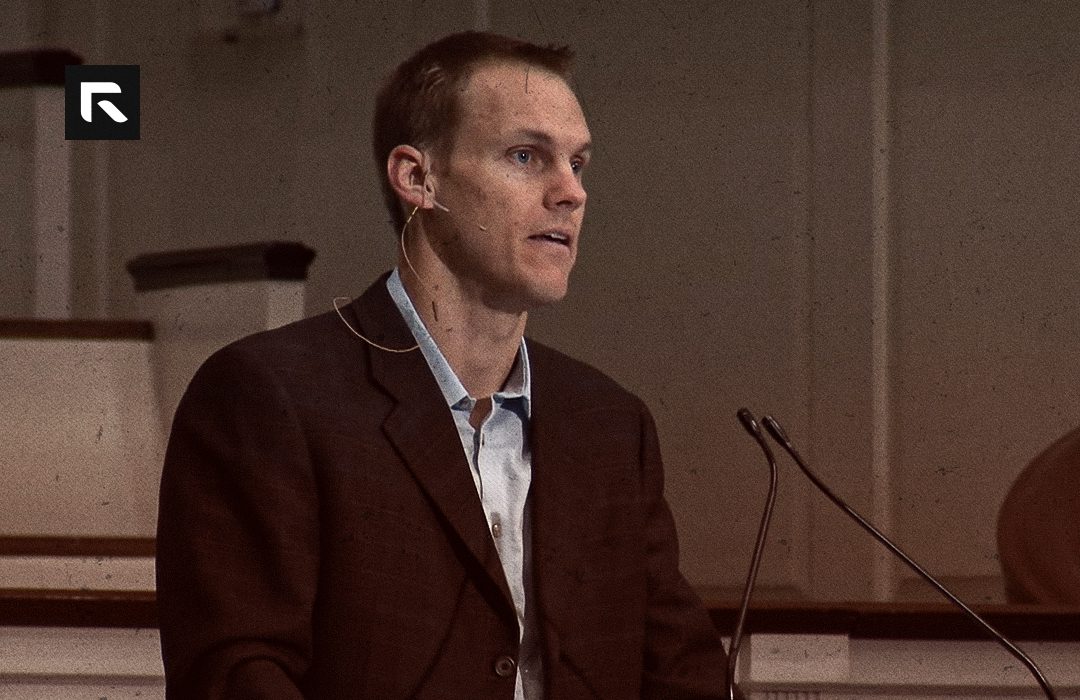

How should we respond to the global refugee crisis? In this 2016 chapel message on Acts 17:24-27 at The Southern Baptist Theological Seminary, David Platt offers five truths from God’s Word regarding the refugee crisis. We trust that God is sovereign over all and will take care of His people. We must live in light of this truth, proclaiming the gospel boldly and loving others the way He loves us. In all that we do, we must give God the glory and hope confidently for a day when there will be no more sin and suffering.
- God is Sovereign Over All Things
- God Oversees the Movement of All Peoples
- God Generally Establishes Government for the Protection of All People
- God Specifically Commands His Church to Provide for His People
- God Showers the Refugee with His Grace
The following is a lightly edited transcript provided by a transcription service. Please check the video before quoting.
Let Us Praise God
If you have a Bible, and I hope you do, let me invite you to open with me to Acts chapter 17. It is always pure joy and honor to be here at Southern. I praise God for this seminary, for Dr. Moller’s leadership, the leadership of faculty, the staff here, and the sound system that’s tweaking.
I thank God for that. His grace is evident just all over this place and I trust you. Realize how blessed you are to be a part of what God is doing here and trust you realize that to whom much is given, much is required.
I pray that God’s grace and this place will resound to God’s glory far from this place, and it’s far from this place that I want to draw our attention to this morning, specifically to the crisis of refugees that we’re currently witnessing around us in the world.
The Refugee Crisis
So I don’t think most realize the unprecedented scope of the global refugee crisis. Nearly 60 million people never before in history have so many people been displaced, put in danger, or forced from their homes In Syria alone population of about 22 million people, over half of them have either been displaced or killed.
Over 4 million have fled to neighboring countries for safety. So I share numbers like that just to show the sheer enormity of this crisis because I fear that most people in our churches and maybe even in this room
Opening Our Hearts and Minds
Are paying very little to no attention to this or if we are paying attention to it, we’re looking at it through the lens of political punditry and partisan debates regarding whether or not we should allow a relative few refugees into our land.
It is a sure sign of American self-centeredness that we would take the suffering of millions of people and turn it into an issue that is all about us. What’s so disheartening is not just the response of our culture, but the church for in much of the church here, there’s hardly any response to be seen in many of our churches. We are hardly even talking about this.
And then whatever response is seen often seems to come from a foundation of fear, not of faith flowing from a view of the world that’s far more American than it is biblical and far more concerned with the preservation of our country than it is with the accomplishment of the great commission.
So as I’ve prayed about where we might go in God’s word this morning, I want to take us into the word in view of the world and call us to open our eyes and our hearts to see what is happening in the world around us in view of the word before us.
The Refugee Camps
Surely Christ in us compels us to respond in some way. This is real. I just returned about a week and a half ago from my time in Greece where I was in those refugee camps and personally heard story after story. One Yazidi woman who saw seven of her family members beheaded by ISIS, a woman from Syria who’s the only member of her family left after her house was bombed.
Everybody I talked with so many normal people with normal lives as professors and engineers and doctors, other professionals forced to flee many them across Turkey where were exploited every step of their journey and paid lots of money to load their families on one of those rafts
Built for 20 people now loaded with 60 plus people holding their babies, crossing the A GNC, making their way to camps. This one camp was built for 2000 people now housing 15,000 people and makeshift tents one night just walking through that camp, late hearing these little babies cry and children cough, its freezing rain was falling on these tents that were drowning in the mud around them. It was like walking through a semblance of hell on earth.
How does God’s Word Compel us to Respond to this Reality in the World?
We’ve got to ask the question, how does God’s word compel us to respond to this reality in the world? We need to know and we need to help people in our churches know how a God-centered word, saturated worldview changes the way we perceive a crisis like this and compels the way we respond to a crisis like this.
So what I want to do for the next few minutes, instead of going to just one passage of scripture, which is the normal and right diet of biblical exposition, I want to just bring five truths from God’s word to bear on the refugee crisis.
I don’t presume that these truths are entirely comprehensive, but in light of what I’ve seen even just recently and reflected on God’s word in light of this reality in the world of these five truths, we are sure and from these five truths, I want to offer us five exhortations for us in our lives and our families and our churches.
God is Sovereign Over All Things
It’s truth number one. Truth number one, our God reigns sovereign over all things our God reigns sovereign over all things. This is the truth at which we must begin as we look at all that is going on in the world around us. We must remember always that God is sovereign over all of it, which is the testimony of scripture from beginning to end.
We know that our God is sovereign over all nature. The wind blows at his bidding. The light of the sun shines according to his command. The stars in the sky appear because he brings them out one by one and calls them each by name.
By his great power and mighty strength, not one of them is missing. There’s not a speck of dust on the planet that exists apart from the sovereignty of our God. He’s sovereign overall nature and he’s sovereign over all nations.
God Charts the Course
Our God charts the course of countries, he holds the rulers of the earth in the palm of his hand, which is good news that we must remember. It’s good news to know that Assad in Syria is not sovereign overall. It’s good news to know that Isis is not sovereign overall. It’s good news to know that Vladimir Putin and Russia are not sovereign.
Neither is Barack Obama in the United States. Our God is sovereign over them. It’s good news to know that no matter what happens in 2016, neither Hillary Clinton nor Donald Trump will be sovereign over all our God is He holds rulers of the earth in the palm of his sand. He’s sovereign over nature nations and so he’s sovereign over even suffering in the world. We remember the book of Job where God is called the Almighty 31 separate times and the whole story is told in such a way that it’s clear God is sovereign over everything.
Satan is Sovereign over Nothing
Satan is sovereign over nothing In Job. One whole story begins with the accuser appearing before God with limited ability. He must be allowed by God to afflict and amidst all the mystery that shrouds that scene. One conclusion is clear. The power of Satan is limited by the prerogative of God. Satan can do anything apart from divine permission job See it.
Job shows us that Satan is on a leash and God holds the reigns. God is almighty, Satan is not. God is omnipotent. Satan is not. God is omniscient. Satan is not. God is omnipresent. Satan is not. God is sovereign. Satan is not sovereign. He’s never sovereign. When Job is inflicted with sores, it’s not Satan who has ultimate power over Job’s health. God does. Ultimately God is sovereign over life and death. Satan is not sovereign over whether or not Job lives or dies. God is.
The Lord Gives
If God wills James four 15 says we live, if he doesn’t, we die. Job makes clear. God is sovereign over comfort. God is sovereign over calamity. He says the Lord gives and the Lord takes away not the Lord gives. And Satan takes away Job and tells his wife, shall we receive good from God and shall we not receive evil?
And the Bible tells us that in all this Job did not sin with his lips. So we must be careful in our lives not to sin with our lips or even with our thoughts in view of suffering like we see around us in the world. Entire theologies have developed that claim that God is doing the best he can under the circumstances, but ultimately he doesn’t have control over evil and suffering around us. The brothers and sisters, let me remind you that amidst suffering in this world, it will not bring much comfort to think that Satan is in control.
God’s Power is Not Limited
If the power of God is limited, then how can we be sure of any promises he has made? Obviously, there’s a mystery in scripture when it comes to how God’s sovereignty intertwines with man’s responsibility, God’s goodness, and evil in the world.
But the Bible is crystal clear on this. God is in control and Satan is controlled. God is sovereign. Satan is subordinate. This is not some Star Wars dualism where good and evil are equal forces warring against one another. No brothers and sisters. This is not dualism, this is domination and it’s all over scripture. When Job is afflicted, God is in control.
When Joseph is sold into slavery, God is in control. When evil kings act in Israel’s history, God is still in control. When religious leaders and Roman officials sentence Jesus to death and crucify him on the cross, God is in control of it all.
Preaching the Gospel
When Christians are preaching the gospel to the nations and being killed in the process, God is in control. And when we get to the end of the Bible and we see the cosmic battle for the souls of men and women throughout history, praise God, he will still be in control.
God is in control, says the subordinate on every page of the Bible and on every page of human history, including even the refugee crisis that surrounds us today, and leads to truth number two, our God reigns sovereign over all things.
And second, our God oversees the movement of all peoples. This is simply the outgrowth of the first truth. Our God’s sovereign over all things and he oversees the movement of all peoples. It’s why I have you in Acts chapter 17, most clearly explained by Paul at Mars Hill starting verse 24 when he says, the God who made the world and everything in it being Lord dominion, authority over heaven and earth does not live in temples made by man, nor is he served by human hands as though he needed anything since he himself gives to all mankind life and breath and everything, statement of the sovereign rule of God.
God’s Power is Everywhere
Then he says in verse 26, And He made from one man every nation of mankind to live on all the face of the earth having determined allotted periods and the boundaries of their dwelling place that they should seek God and perhaps feel their way toward him and find him through this truth.
His obvious throughout scripture, throughout the Old Testament narrative, as God raises up people and sends them here, he disperses nations and scatters them there at his appointed time, God sent Israel to Egypt.
At his appointed time, God brought Israel from Egypt. He orchestrated the exile from Jerusalem, he orchestrated the return to Jerusalem. Then in the New Testament, we see God using the stoning of Stephen to scatter his people from Jerusalem, the church going to Judea and Samaria eventually to the ends of the earth. So when we see the migration of peoples due to a multiplicity of reasons, we must realize that it’s all occurring ultimately under the governance of our God.
Acts 17 says He’s doing it for a reason that people might seek him and perhaps feel their way toward him and find him again. Much more could be said here, but no mistake, our God aims to be sought, found, known, and enjoyed by all the peoples of the world and he oversees their travels toward that end in his goodness, our God turns even the tragedy of forced migration into the triumph of future salvation.
God Protects All People
It’s this goodness in God that leads to the third truth, that our God generally establishes government for the protection of all people. Our God generally establishes government for the protection of all people. Romans 13 makes clear there is no authority except from God. And those that exist have been instituted by God.
Therefore, whoever resists the authorities resist what God has appointed and those who resist will incur judgment for rulers are not a terror to good conduct, but to bad would you have no fear of the one who is in authority? Then do what is good and you will receive his approval. For he is God’s servant for your good, but if you do wrong, be afraid for he does not bear the sword in vain for he’s the servant of God, an avenger who carries out God’s wrath on the wrongdoer.
Romans 13
Romans 13 makes clear that the Bible, that government exists under God’s authority to promote good and to restrain evil in God’s good design. The purpose of government is the protection of people’s good.
Must mention this here in scripture when thinking about what we see in the world because we know that any serious thought about the refugee crisis that surrounds us must take into account the role of government under God. So yes, in God’s good design response to the refugee crisis inevitably leads to political discussion.
Using the Biblical Foundation
But we as followers of Christ must make sure that we are having political discussions based on a biblical foundation, particularly in a representative government like ours where we have a say and the leaders we elect and the laws they create brothers and sisters, we have a responsibility before God in our government to leverage our lives and leadership as citizens for the promotion of the good.
It’s why God instituted governments for the good protection of all people and we must not ignore our responsibility as a representative of government ordained by God for that purpose. Now with that said, we in the church, take this one step further for yes, God generally establishes government for the protection of all people, but at the same time, fourth truth, our God specifically commands his church to provide for his people.
God Provides
God specifically commands his church to provide for his people. So then Paul says in Galatians chapter six, as we have opportunity, let us do good to everyone and especially to those who are of the household of faith. Obviously, Paul’s not saying that we shouldn’t care for all people.
Let’s do good to everyone He says, but we can’t deny the priority of provision here elsewhere in scripture for those who are of the household of faith, the people of God, the men and women with whom Christ identifies himself, the church of Jesus, his body, his bride.
Not long ago I celebrated my 16th anniversary with my wife Heather and I were married fairly early, young. At the end of college, we looked young. I remember going on our honeymoon and an older couple asked us if our parents knew where we were.
There is Always More to Learn
So 16 plus years later, there’s no question I’m still young in marriage and I have a lot to learn, but this I have learned, there’s an attachment with and identification with my wife that is wonderfully unique in such a way that when she hurts, I hurt. And when she’s in pain, I’m in pain. And if someone were to hurt her, they would inevitably be hurting me.
And so we see in scripture in a far greater way, Jesus’s intimate identification with his bride. We remember Acts nine, Saul. Saul, why are you persecuting me? We remember that Saul hadn’t even met Jesus, but the implication was obvious.
When you persecute the church, you persecute Christ. And isn’t this why we have that? A well-known passage on social justice in Matthew 25 is when Jesus says, remember his words, come you who are blessed by my father inherit the kingdom prepared for you from the foundation of the world.
For I was hungry and you gave me food. I was thirsty and you gave me a drink. I was a stranger and you welcomed me. I was naked and you clothed me. I was sick and you visited me. I was in prison and you came to me. And the righteous will answer him saying, Lord, when did we see you hungry and feed you or thirsty and give you drink?
When did we see you a stranger and welcome you or naked and clothe you? And when did we see you sick or in prison and visit you? And the king will answer them Truly. I say to you as you did it to one of the least of these my brothers, you did it to me. We know this is not just a general reference to anyone who’s hungry or thirsty, a stranger or sick. This is a specific reference to these my brothers needy members of the family of Christ, of the household of faith.
We Are Brothers and Sisters in Christ
Again, not to the total exclusion of those who are apart from the church. We love all our neighbors as ourselves. Jesus makes clear that includes even our enemy, but let us do good to everyone, especially those who are of the household of faith.
Consequently, it’s altogether right for us in our churches to consider how to care specifically for our brothers and sisters in Christ who are being forced from their homes and displaced in their lives, who are experiencing persecution at the hands of warring forces.
Not only is such care for refugees who are brothers and sisters in Christ, right? It’s required. This leads to the fifth truth, our God. This is the see the character of God. Fifth truth our God seeks shelter, serves, and showers the refugee with his grace. See his character our God seeks shelter, serves, and showers the refugee with his grace.
The Book of Ruth Ek
Remember the book of Ruth Ek, the Israelite, his wife Naomi, along their two sons driven from their homeland due to famine. They migrate to Moab foreign land, the forbidden people who began when Lot had an incestuous relationship with his daughter. Generations later Moabite women seduced Israelite men into sexual immorality. 24,000 Israelites struck dead. The message was clear, don’t go near Moabite women.
They’re not allowed into the Lord’s assembly down to the 10th generation. Yet now, Alec and Naomi’s sons Melon and Killian marry Moabite women. Not long after that, in the narrative, all three men, the father and two sons die. And Naomi is left alone with two Moabite daughters-in-law, she returns to Bethlehem begs her daughters-in-law to stay in Moab one obliges the other.
Ruth says, your people will be my people and your God will be my God. So a Moabite woman soon finds herself in the middle of an Israelite town, desperate for food and family, familiar and turbo Boaz the Lord of the harvest, who sees her working in his field one day upon being told who she is, a Moabite woman.
We are Stronger Together
Instead of kicking her out of his field, he seeks her out in his field. He goes to her, he greets her, he shelters her from harm, he promises her safety. Then he does the unthinkable.
He stoops to serve her, and invites her to his table where she enjoys a nice meal of roasted grain leads to a showering of grace as Boaz gives Ruth 30 to 50 pounds of food to take home worth at least half a month’s wages, all of which sets the stage for a romance of redemption that follows in which Boaz eventually takes Ruth as his wife.
Together they have a child whose line will one day lead to the quintessential kinsman redeemer, Jesus Christ. So why do we have this Bible book named after a Moabite woman?
The Book of Ruth
At least one of the answers to that question is that we have a God who wants us to know how much he cares for the outcast and the oppressed, the stranger and the refugee. It’s one of the key phrases in the entire book. Ruth chapter two, verse 12, when Boaz pronounces a blessing on the otherwise forbidden Moabite woman and he says, the full reward be given you by the Lord, the God of Israel under whose wings you have come to take refuge.
There’s a refuge. The Book of Ruth shows us under the wings of God. Now don’t miss it. Boaz is not merely a model of goodwill in this story. He is a mirror of God. He’s the agent that God uses to show how he seeks out the oppressed, how God shelters them under the shadow of his wings, how God serves the outcast at his table, and how God showers the needy with his grace. Ultimately how God is faithful to care for even the forbidden foreigner. And so then brothers and sisters, are we not compelled to do the same to reflect our redeemer?
Leading in the Light of God
So what shall we do then? How shall we live? How shall we lead the church in light of a God who reigns sovereign over all things and orchestrates the movement of all peoples, the God whose establishment established government for the general means of protection of all peoples called his church to specifically care for his people.
The God who seeks shelter serves and showers, the needy with his grace. Five expectations. One, let us speak the gospel clearly. Let’s speak the gospel clearly. First and foremost, brothers and sisters. So what do we do? How do we respond? Let’s point people to the glory, goodness, greatness, and grace of our God in the gospel.
Let’s go to refugees here. The Lord has brought refugees to Louisville. Let’s go to them here. Let’s go to them there as we have the opportunity for short-term trips. Let’s go to them here. And they’re with the good news that God loves them so much that he has come to them.
God Identifies with the Refugee
See the beauty of the gospel, the good news of a God who actually identifies with the refugee, the God who came as a baby boy. The first story we have about him following his birth is his exodus to Egypt, driven to a foreign country by a forbidden, murderous king.
This God is not distant from us. He’s not detached from the people we are and the pain we experience. No, this God is present with us. He’s no stranger to suffering. He’s familiar with our pain. He has not. Our God has not left the outcast and the oppressed alone. In a world of sin and suffering, he’s come to us and he’s conquered for us.
Jesus Christ, the son of God, has severed the root of suffering sin itself. He died an unjust death, falsely accused as a crucified criminal. But then he rose from the dead.
Now exalted as a conquering king and for all who turn from their zen and, put their trust in him, he will save and satisfy them forever. Brothers and sisters, this is the greatest news in all the world and refugees need to hear it. Amen.
We cannot, we must not shrink back from proclaiming this gospel clearly in our day. We must never forget that as vitally as important as food and water, clothing and shelter are, the gospel will always be people’s greatest need. And they won’t hear it unless we go and breach it.
Aiding those in the Middle Eastern & European Nations
We realize the unprecedented opportunities available to us today for Syrians to hear the gospel. Doors are open right now that have never been opened, at least in recent history. So we dare not sit back and spend all of our time debating whether or not a few of them can come to us.
Church of Jesus Christ. It’s time for us to go to them to go to Middle Eastern European nations to refugees where they are, to hear their stories, to meet their needs, and to share the greatest news in all the world with them. Now, are there risks in going and proclaiming the gospel to refugees? Well, sure there are. But where in the world did we get the idea that Christianity is devoid of risk? It’s only an Americanized Christianity that prioritizes security in this world over the proclamation of God’s word that shrinks back from such risk.
Proclaim the Kingdom of God
If anyone would come after me, let him deny himself, take up his cross, and follow me. Let the dead bury their own dead. You go and proclaim the kingdom of God, brothers, and sisters as followers of Christ who is no longer our God. Therefore, safety is no longer our concern. We go and we preach the gospel knowing that others’ lives depended on it and gladly giving our lives toward that hen to go there.
And here, many refugees resettled right here in Louisville. Could it be that God is orchestrating their movement so that you, your family, your church, here might be the means by which some of them hear the gospel for the first time?
We Must Proclaim the Gospel
Let’s proclaim the gospel clearly. Second expectation. Let’s pray to God earnestly. Let’s pray to God. Earnestly our God, the God who reigned, sovereign over all things, orchestrates the movement of all peoples. He has ordained prayer to be a powerful means by which we participate with him in the accomplishment of his purposes in the world.
Remember Moses in Exodus 32, when the people of God were in dire need, Moses didn’t sit idly by thinking God is sovereign. He’ll do whatever he pleases. No Moses acted. Moses’ faith in God’s sovereignty drove him to his knees where he begged for God’s mercy upon the people.
God’s Provisions
And Moses’ pleas for mercy, became the means of God’s provision for the needy. So with us, see it, our prayers matter. Prayer to our God matters. When we pray for the refugee, we participate in God’s provision for the refugee. So let’s be actively praying to God earnestly, continually for his mercy to be made known to them.
Whether they’re riding and wrapped right now in the middle of the A GC, they’re huddled in that tent on the border of Macedonia, sleeping on a street outside Hungary’s border. Let’s plead for God’s provision, believing that the God who hears our cries will answer according to his compassion. Let’s proclaim the gospel clearly. Let’s pray to God earnestly.
Third, let’s act justly. What does the Lord require of us? Micah asks that, not that we talk justice, but that we do justice, that we love mercy and walk humbly, oh, that contrite lives before God in this room would produce courageous leadership in the church beyond this room on this issue. Let’s not forget how Jesus rebuked the scribes and Pharisees in Matthew 23 for your tithe Mint and Dylan cumin. And yet you’ve neglected the weightier matters of the law, justice mercy, and faithfulness. These you ought to have done without neglecting the others.
Love & Sacrifice for God
You blind God straining out a gnat and swallowing a camel. Let us be warned, brothers and sisters, particularly in a seminary setting like this, not to get so consumed with biblical minutia that we forsake practical ministry.
It’s so easy to get so focused on small things that are important. Mind you. So I don’t want to say biblical minutiae and sound like there’s anything unimportant in the Bible. It’s all important. Just saying tithing this way is not important. You just don’t lose sight of the weight of your things.
Justice, mercy, faithfulness, and tithing according to the law are important. Jesus says, but so is generous, sacrificial care for people in crisis. So help us not to lose focus on our requirement to act justly. The fourth exhortation, let us love sacrificially. Let’s love sacrificial. We all know the story of the good Samaritan. All that he did for that man in need took him, cared for him, provided for him, paid for him, and sacrificed for everything he needed, without question, without hesitation.
Helping Those in Need
So think about it. Have you ever done that for somebody in need? Have you ever seen somebody in need and cared for them like that? I just sacrificed for everything they needed without question or hesitation. I’m guessing you have. I’m guessing almost everybody in this room has done that for somebody and that’s somebody is you.
When you’ve not been well, you’ve done whatever it takes, gone over the top to make sure you’re cared for or provided for. And Jesus is saying love strangers like that, love even enemies like that, like yourself.
Lay down your life for them beyond just the picture here, the short-term refugee crisis. I challenge every single person in this room, wherever, whatever track you’re on, whatever you’re looking to in the future, whatever you’re doing now to continually put before our God a blank check with your life, with no strings attached that said to God, he says, I’ll do whatever you want me to do.
I’ll go wherever you want me to go. I’ll spend my life doing whatever you want me to do now and in the days ahead, I will do whatever. So I’m pastoral right now, but Lord, if you want to redirect me and take me to the heart of the Middle East and I want to do that, I’ll do whatever. I’ll do whatever.
God is Everywhere
Knowing that whatever could mean to the northern part of Iraq or Syria in the middle of ISIS, or mean Somali in the middle of Al-Shabaab, or could mean West Africa in the middle of Boko Haram. You say I don’t know if I can say that to God. I’ll go to those places.
Well, if there’s any hesitancy or fear in you with putting a blank check on the table, just remind you who you’re giving the blank check to. He’s the God who loves you so much and who knows so much better than you. What is best for your life so you can trust him?
Love sacrifice. Let’s love sacrifice. Let’s lay down our lives. And God, my life is yours to spend in a world of massive need for the spread of your great glory. All that leads to the last exhortation. Let’s proclaim the gospel clearly.
Pray to God
Pray to God earnestly, act justly, love sacrificially, and ultimately let us hope confidently. Let’s hope. Confidence. So, brothers and sisters, there’s coming a day when sin and suffering will be no more. There’s coming a day when wars and crises will no longer exist.
And on that day we place confident hope. We know that in reality at this moment, every father of Christ finds him or herself in a foreign land. In the words of one Peter Hebrews, we’re sojourners and exiles who long for a better country, we’re seeking a homeland, a city that’s to come.
We’re migrants here, a multicultural citizenry of an otherworldly kingdom. So we wait and we work, work hard in our day, in anticipation of that day when we will gather together with a great multitude that no one can number from every nation, all tribes, peoples, and languages, and together not as sojourners and exiles anymore. But as sons and daughters, we will give our God the glory He is to do. Let’s pray.
So God, in light of your word and in view of the world and the specific day and time that you have put us in, we pray, help us not just to hear your word. Help us to do it. Help us to obey for the sake of your name among all the peoples of the world. Amen.

David Platt serves as a Lead Pastor for McLean Bible Church. He is also the Founder of Radical, an organization that makes Jesus known among the nations.
David received his B.A. from the University of Georgia and M.Div., Th.M., and Ph.D. from New Orleans Baptist Theological Seminary. Some of his published works include Radical, Radical Together, Follow Me, Counter Culture, Something Needs to Change, Don’t Hold Back, and How to Read the Bible.
He lives in the Washington, D.C. metro area with his wife and children.