

Every Disciple Making Disciples, Every Church Multiplying Churches
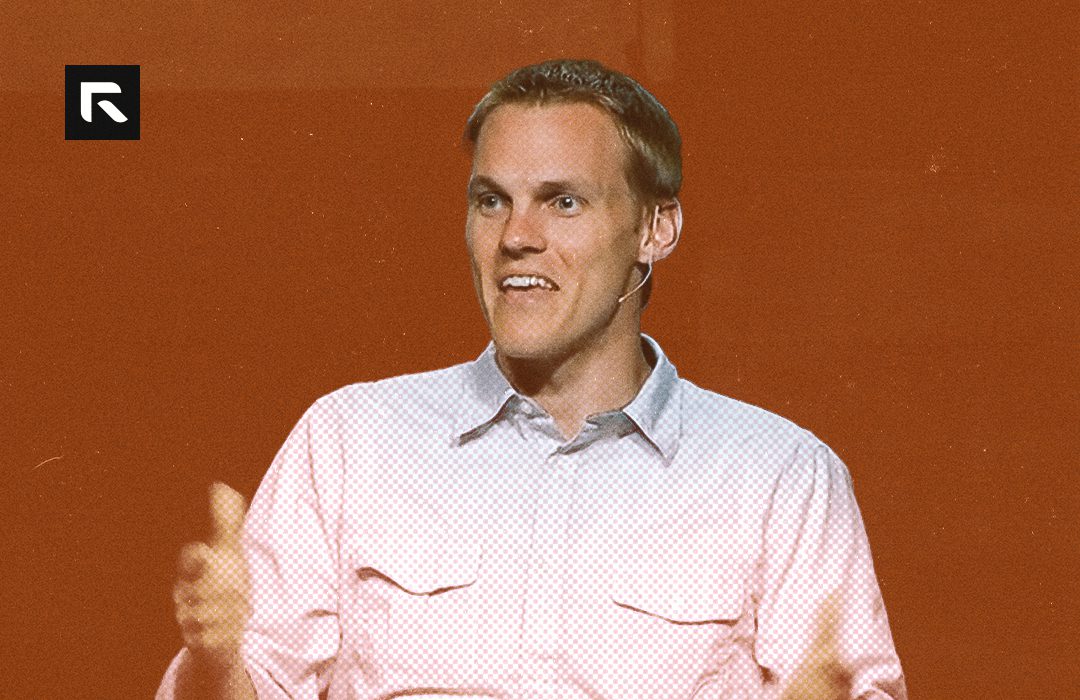

What does it mean to be a disciple of Jesus? How can we multiply churches in a healthy way? In this sermon on Luke 5 at The Gospel Coalition National Conference 2013, David Platt encourages us to disciple others and multiply churches. As followers of Jesus, we are called to disciple others and then send them out into the world. We must sacrificially obey God, loving him more than our own lives, and living in desperate dependence on the Holy Spirit. When we make disciples, churches will naturally multiply and more people will be reached with the gospel.
- Total Abandonment for the Glory of Christ
- Humble Dependence on the Grace of Christ
- Urgent Obedience to the Mission of Christ
- Confident Trust in the Authority of Christ
- Send out Ordinary Disciples to Do Extraordinary Things
- Embrace Suffering
- Penetrate Lostness
- Go Aggressively
- Love the Glory of God More than We Love Our Own Lives
- Live in Desperate Dependence Upon the Holy Spirit
- Intentionally Making Disciples Inevitably Leads to Multiplying Churches
- Leave a Legacy of Disciples Made and Churches Multiplied
The following is a lightly edited transcript provided by a transcription service. Please check the video before quoting.
Multiplying Churches
Oh, good afternoon. If you have a Bible, and I hope you do, lemme invite you to open with me to Luke chapter five. I am honored, and and humbled, just to be around this conference to be around other brothers, brothers, and sisters who are attending this conference.
I want to share this afternoon from God’s word based on the overflow of some things that the Lord has been teaching me, showing me over the past few months personally and pastorally. For those of you who were here in the Pre-conference on missions, I’m going to ask you to bear with me for just a couple of times during the next hour where I’m going to recap a couple of things.
I think it’s two things that I shared on Saturday night during my sermon from two Corinthians chapter four. So there are just a couple of brief things that I’m going to hit on today that overlap with where I was in Two Corinthians four on Saturday night which has really caused a lot of processing and evaluating in my own heart.
So bear with me if you were here then as well. So with that, let me open us by asking the Lord to speak to us. Father, we glorify your name today. We thank you for your mercy toward us. God, we know that if it weren’t for your mercy, none of us would be sitting where we find ourselves right now.
The place and position where we are in life. Even when we think about a couple of billion people in the world who have never even heard the gospel, all these unreached people groups, Lord, we praise you for making us among the reached, we know that we had nothing to do with where we were born.
And in part from your mercy toward us, we shudder to think where we would be. So thank you for your mercy and we pray that your mercy would compel us in our mission and that even now in the next few moments, by the power of your spirit amidst all of the saturation in your word and this conference, that over the next few moments, you would give us fresh eyes and ears to see your word, to hear from you by your spirit, and that you would conform us more into the image of Christ and cause us by your grace, your word, your power to be more effective in leading your church, to accomplish your commission.
Luke Chapter 5
In Jesus’ name, we pray these things. Amen. Luke chapter five, we’ll get to in just a minute if you are coming in late, Luke chapter five. So for those of you who were not here on Saturday night, I want to start with this story that I shared there and then take it a little bit further than I did Saturday night. Bihar is a state in India that’s about the size of Tennessee.
The only difference between Bihar and Tennessee is Bihar has, or Tennessee has 6 million people. Bihar has 100 million people. So you’ve got a hundred million people in Tennessee spread across 45,000 different villages.
And this state is one of the most spiritually and physically impoverished places on the planet. Physically poor, millions upon millions of people living in desperate poverty, struggling for food and water. So physical poverty is on top of spiritual poverty. The church partners we work with in Behar estimate that about 0.1% of Behar is evangelical Christian gospel-believing Christians.
So 0.1%, the area we were in, Behar, that the death region in this area was about 5,000 people per day. And so you put that together with the number of Christians. You realize that in this region where we’re in every day approximately 4,995 people are plunging into an eternal hell. And most of them have never heard the gospel.
And so we were working with these churches and you would expect in that kind of setting to just be discouraged by all of the spiritual and physical oppression around you. But on the contrary, we were very encouraged. S
o lemme tell you one story of two brothers, Neil and Hari. Neil is a school superintendent. Hari is a chicken farmer, and both of these brothers are active in church wanting to lead people to Christ. For years have been doing that and for years have been seeing no fruit from that just wall after wall after wall among predominantly Hindu, Bihar, India.
Disciple-Making Churches
And so they went to some training that we’ve worked with some churches in providing on disciple-making and multiplying churches. And at this training, they were encouraged to find a totally unreached village.
So a village where there’s no Christian, no churches go into the village first, people that come up to you and talk to you, just say to them, Hey, we’re here in the name of Jesus and we would like to pray for your village.
And Neil and Hari looked at each other and said, this will never work. But then they looked at each other and said, well, nothing we’ve done over years has worked so we might as well try it. And so they go into this village, they’re almost through the village without anybody even talking to them until they get near the end of the village. And this man comes up to them and starts a conversation with them and he says, what are you doing here?
And so they look back at this man and they say, well, we’re here in Jesus and before they get the rest of their prescription line out, this man stops them and says, Jesus, I’ve heard a little bit about him.
Can you tell me more? And so Neal and Hari look at each other and say, yes, we can tell you more. And so the man says, well, I don’t want you just to tell me. I want you to tell my friends and family if that would be okay.
And Neal and Hari said that would be okay. And so Neal and Hari follow this man to this man’s home. This man goes and gets about 15 or 20 members of his family and their friends and brings them into this home. They cram in and they say, well, now will you tell us about this?
Jesus and Neha share the gospel with them. And long story short in the next two or three weeks, about 20 people in that village repent and believe in Christ. So after generations of not hearing the gospel at that moment, that week two, when the gospel is shared for the first time they respond, the whole picture of the harvest is plentiful, but the workers are few and ask the Lord of the harvest to send out workers, they’re ready to hear the gospel.
And so they share the gospel. And then once these people come to Christ, they say, now we want to teach you, equip you to go into other villages and do the same thing that we’ve done and your village. And so that’s what they did and they started sending them out.
This was three years ago, three years later, three years later, between Aneal and Hari, their work starting in that one village, approximately 350 different churches and 350 different villages have begun.
And I sat there, yeah, glory. And I get a little cynical when I hear numbers like that in India or even in other places and there’s a variety of reasons I get cynical about that. But we worshiped with these churches, not all of ’em, but they’ve got a grid through which they’re measuring the health of these churches. We’re not talking wherever two or three are gathered, there’s church, there’s not a church, it’s not biblically church.
So they’ve got a biblical grid to which they’re looking at church health of the church, measuring the health of the church, helping these churches grow, and three 50 different churches. And so we were sitting there one day and my mentor in ministry was with me and he said, David, this is the closest thing I’ve ever seen to what we read about in the book of Acts. Just the gospel is multiplying. And so we’re sitting there with Neil and Hari and we say, what happened?
Only God Can Get the Glory
I mean you guys have been doing ministry for years and up until three years ago nothing was happening. Three years later you start sharing in these ways and all of a sudden these people are coming to Christ. You’ve seen all this.
What’s the difference? And both these guys just throw their hands up in the air and they say, we don’t know, only God could have done this. As soon as they said that, my heart left inside and I thought, I be a part of disciples being made and churches being multiplied all over the place in a way for which only God can get the glory in a way for which a particular pastor, a particular method, whatever, cannot get the glory in a way for which only God can get the glory. And it’s not just parts of India, it’s parts of Cuba.
Last time I was in Cuba, you looked that outside of Cuba, you hardly see the church at all. You don’t see the church in Cuba until you get on the inside and you get to know the people and the people.
In Cuba, we were with one particular church this church had, and basically the way the pastor described it to me, he said with communism, he said, our goal and everything is just to keep your head below the ceiling, lift your head up by the ceiling and get cut off. I don’t know if he did that figuratively or literally or what, but that was his philosophy. And so he said, that’s what we do as a church.
We just stay low. So you don’t see all buildings or programs or stuff like that. We just stay low. And so this one church that this guy pastored, had planted 60 different churches and then we went to one of these other churches that had been planted by this one and this church had planted 25 other churches, so they’re multiplying churches.
And I pulled this pastor aside and I said, what are you guys doing? How are you guys multiplying? Churches like this? He looked back at me and he said, we’re making disciples. I said, lemme write that down. That’s good, we should do that.
This guy, he’s a fireball, he is an older brother. I mean he was brought before the communist council in his community brought before this communist council. And he brings with him in this older brother, he brings with him before him, before this communist council, a rock.
And he places it on the table in front of him and the communist council is like, why’d you bring the rock in? And he said, I just want you all to know that if you try to stop me from proclaiming the gospel, the rocks will cry out about the glory of Christ. Instead, they thought the guy was nuts and they let ’em go.
This is the kind of boldness there is. And alright, we’re going to make disciples, we’re going to multiply churches. So I hear stories about this and I see around brothers and sisters in India or Cuba or China, we’re seeing this or that. And I want to paint a glamorous picture. It’s not, it’s that way everywhere else in the world, but this is happening differently. Don’t we want to be a part of that here?
And isn’t this God’s design for our lives, for the life of every disciple of Jesus? Hasn’t he created us, saved us, commissioned us, commanded us to make disciples of Jesus? And isn’t it God’s design for his church to be spreading, to be multiplying?
And so why would we be content with anything less than praying and working and in longing to see every disciple making disciples and every church multiplying churches and not to think, well we can’t do that because of this or that. If our brothers and sisters are doing it in these ways around the world with no resources, no technology, and just the word of God, the spirit of God, and the people of God, that’s apparently enough to spread the gospel of God.
And we’ve got these things, words, spirit, people put ’em together. There’s power for multiplication. And so what I want to do this afternoon is I want to take us on a journey.
Disciples Making Disciples
I’ve got a lot of things I want to cover and a little bit of time. So we’re going to be all over the place and Luke and Ax. So I want to start with a key passage and Luke about what it means to be a disciple. And I want to show the tie between being a disciple of Jesus and making disciples of Jesus.
So every disciple makes disciples. And then I want to jump to the Book of Acts. So part two of Luke’s narrative is here. And I want to show how making disciples inevitably leads to multiplying churches.
And I want to encourage us to be about these two things, making disciples and multiplying churches. Specifically, I want to offer 12 exhortations to us during this hour when it comes to leading disciples to make disciples and leading churches, to multiply churches where we live and around the world.
12 exhortations. So let’s start here in Luke chapter five, read with me starting in verse one. Luke tells us, that on one occasion while the crowd was pressing in on him to hear the word of God, he being Jesus was standing by the lake of cancer and he saw two boats by the lake, but the fishermen had gone out of them and were washing their nets, getting into one of the boats, which was Simon’s.
He asked them to put out a little from the land and he sat down and taught the people from the boat. And when he had finished speaking, he said to Simon, put out into the deep and let down your nets for a catch.
And Simon answered master, we toiled all night and took nothing but your word. I will let down the nets. And when they had done this, they enclosed a large number of fish and their nets were breaking.
Total Abandonment for the Glory of Christ
They signaled to their partners in the other boat to come and help them, and they came and filled both the boats so they began to sink. But when Peter saw it, he fell down at Jesus’ knees saying, depart for me, for I am a sinful man, oh Lord, for he and all who were with him were astonished to catch a fish they had taken.
And so also were James and John sons of Zebedee who were partners with Simon. And Jesus said to Simon, do not be afraid. From now on you will be catching men. And when they had brought their boats to land, they left everything and followed him.
Abandonment
Oh, what a picture of discipleship in the book of Luke, this is where it all begins. So first exhortation for us today, brothers and sisters, let’s call people. Let’s call people to total abandonment for the glory of Christ.
Let’s call people ex number one. Let’s call people to total abandonment for the glory of Christ. These men left everything and followed Jesus. What a statement. We cannot minimize the magnitude of it.
Think about what these men were leaving behind. Put yourself in their shoes. What’s involved in this? Everything they were leaving behind was their comfort. These guys were leaving behind everything that was familiar to them, all that was natural for them. Leaving comfort for uncertainty.
Notice that Jesus did not tell them where they would be going. All they knew was who they would be with. That’s a huge side point here. Followers of Jesus don’t always know where they’re going, but they always know who they’re with.
That’s the whole sermon that’ll preach. We don’t have time, don’t always know where we’re going, know who we’re with. They’re leaving behind comfort. They were leaving behind their careers.
This is an abandonment of profession for these guys at least temporarily. Now we’re going to come back to how all of this applies to us but just feel. See how it applied to them leaving behind their comfort and careers.
They left behind their possessions, they dropped their nets left behind their boats. Now these guys were obviously not the most economically elite in their society, but the fact that they had a boat, and successful trade as fishermen shows these men had much to lose in following Christ.
We find out later that they still had private property and various possessions, but the reality is at this moment, they followed Jesus with nothing in their hands. Possessions, they were leaving behind their families. Were told in Matthew chapter four that James and John left behind their father. They would not be the only ones called by Jesus to do this.
Remember in Luke chapter nine, end of the text we were looking at last night with Dr. Carson. Jesus tells other potential disciples, don’t even go tell the potential disciple, don’t even go back and say goodbye to your family.
We were leaving behind their families. We were leaving behind their friends’ safety following a rabbi teacher who would say to these men, one day I’m going to send you out like sheep among wolves. All men will hate you because of me. You will be persecuted.
They were abandoning their safety. They were abandoned, of course, leaving behind their sin. This is the essence of what it means to follow Jesus, to leave behind sin, whether manifested in self-righteousness or self-indulgence.
And ultimately this was a call for these men to leave behind themselves echoed most clearly in that passage from Luke chapter nine. If anyone would come after me, he must deny himself. He must abandon himself in a world where everything revolves around self, protect yourself, promote yourself, entertain yourself, comfort yourself. Take care of yourself. Preserve yourself. Jesus said, slay yourself.
Just a few chapters after that. In Luke, chapter 14, verse 25, remember when large crowds were following Jesus? He turned around to them and said, if anyone would come after me, he must hate his father and mother, his wife and sister, his brother and sisters, mother and father, brother and sisters. Just imagine following an obscure religious teacher in the first century, him turning around to you and saying, if you’re going to come after me, you hate your mom and dad, your wife and your kids.
He just lost most of us at hello. As if that’s not enough. The next phrase is, if you’re going to come after me, you must deny yourself. Take up your cross and follow me. And we for good reason, have respect, reverence for the cross today. But we put ourselves in the shoes of those first century years and we here pick up your cross.
Pick up an instrument of torture, reserved for the est of criminals. You’re going to come after me, 21st-century Christian, pick up your electric chair, and follow me. That’s just weird, creepy. Even if that’s not enough, you get to the end of Luke 14 and he says, if anyone will come after me, he must come after me.
He must renounce everything he has, renounce it all, abandon it all. So you put that together. Hate your mom and dad, wife and kids. Pick up an instrument of torture, and renounce everything you have. That’s a lot different than admitting, believing, confessing, and praying the prayer.
Clearly following this Christ involves far more than an invitation to pray a prayer. This is a summons to lose our lives. So don’t buy it and don’t sell it. So many supposed Christians have bought it and so many church leaders have sold it.
The idea is that all you need to do is make a decision, sign a card, pray a prayer, become a Christian, whatever it is, and keep your life as you know it. It’s not true. You become a follower of Jesus and you lose your life as you know it.
Now I want to be really careful here. I’m not saying nor could I say what I say based on the whole of the New Testament that every follower of Jesus must lose their career, sell, give away all their possessions, and leave their family behind to die for the gospel. The New Testament is clear on this for all who follow Jesus, comfort and certainty in this world are no longer our concerns.
Our career revolves around what he wants us to do, what he calls us to do for the advancement of his kingdom. Whatever that looks like, our possessions are not our own. We no longer live for material pleasure in this world.
We forsake material pleasure in this world because we are living for eternal treasure in the world. To come position is no longer our priority when it comes to family, absolutely based on the whole of the New Testament, we’re commanded to honor our parents to love our spouse, and to provide for our children.
So you can’t use passages like Luke 14 to justify being a lousy son or daughter, spouse or parent, or whatever. But our love for Christ, according to Luke 14, Matthew chapter 10, should make our love for the closest people in our lives on this earth look like in comparison. And we go wherever he says to go. Knowing that because self is no longer our God, safety is no longer our priority.
As followers of Jesus, we die to self, we die to sin. We lay our lives down, leaving everything behind him. This is what it means to follow him. So let’s call people to leave behind everything, comforts careers, possessions, positions of safety and clinging tightly to the person of Christ.
Humble Dependence on the Grace of Christ
Let’s not minimize the claims of the gospel in order to try to draw more and more people in. Let’s tell people that following Christ costs you everything you’ve got. And then in the next breath, let’s tell them that Christ is worth it, that he is worth it.
Now, some people say, aren’t you saying that Christianity then is all about what we can do for God and abandon for Christ and radical whatever? Where’s the grace in all of that? Where’s the gospel? I’m glad you asked. The second exhortation from Luke five, let’s call people to total abandonment for the glory of Christ and let’s call people to humble dependence on the grace of Christ.
Let’s call people to humble dependence on the grace of Christ. Notice how Peter’s surrender of self is a reaction to Christ’s majestic mercy. Peter encounters the majesty of Jesus. He realizes this is no ordinary man standing in front of me.
This is the Lord who controls the wind and the waves and who is sovereign over the fish of the sea. And Peter immediately realizes his own unworthiness. Much like Isaiah, he beholds the glory of the one in front of him. Isaiah cries down, woe is me. Peter cries out, departing from me.
It’s not Peter saying, look at what I can do for you, Lord. It’s Lord I can do nothing apart from you. I don’t even belong in your presence. And yet, just like we see in Isaiah chapter six, where the Lord mercifully comforts Isaiah in his confession of sinfulness. So here Jesus says to Peter, do not be afraid.
And Jesus invites Peter to follow him. Do you see it? Abandonment for Christ is the overflow of affection from Christ. Do we want people to lay down their lives, and leave behind everything for the glory of Christ? How do we lead them to do that?
We lead them to do that by saturating them with the majesty and the mercy of Christ. Overwhelm them with mercy in the gospel of God so that they will live in mission for the glory of God. Help them to see his majesty cry out for his mercy.
Urgent Obedience to the Mission of Christ
And once this happens, missions just make sense and help him to make that connection, which leads to the third exhortation. Let’s call people to urgent obedience to the mission of Christ.
Let’s call people to urgent obedience to the mission of Christ. Sub seed. In the text here in verse 10, Jesus said to Simon, do not be afraid. Mercy. So there’s mercy from Christ. Do not be afraid. From now on you’ll be catching men. Mission, mission for Christ.
They go together In Luke chapter five, mercy from Christ leads to a mission for Christ. Now here from the very beginning, Jesus makes clear when you follow me, you’re going to fish for men. He uses this imagery that’s familiar to these fishermen and says, okay, instead of searching for fish all over the sea, you’re going to spread the gospel all over the world. That was his introduction here, don’t be afraid.
You’re following me and I’m going to show you how to catch men from now on. And that carries through all the way to the end of the book of Luke when he tells the same disciples upon his resurrection before his ascension.
Now repentance and forgiveness of sins must be preached through all nations. There are bookends in the book of Luke, you’re going to catch men. Now go catch men. Same thing in the book of Matthew, right? Matthew 4, 18th to 22, follow me and I’ll make you fishers of men. That was his introduction to those disciples.
And then you get to the very end, Matthew chapter 28. Now go and make disciples of all nations. So see the bookends in Matthew. See the bookends in Luke and realize that from the beginning of Christianity, being a disciple has been linked to making disciples, and following Christ has been linked with fishing for men.
The Link Between Disciples
Inextricable link between the two disciples making disciples, followers of Christ, fishing for men. But somewhere along the way we have taken this picture of followers of Christ, this costly command of Christ to go and make disciples of all nations.
And we’ve turned it into, morphed it into a comfortable call for Christians to come be baptized and sit in one location and a rampant spectator mentality pervades our churches as a result evident in our lives and our churches.
So many come to worship services, participate in church, maybe even serve in different ways than the church, give to the church, and do things in the church but not make disciples.
The church is filled with people who’ve been Christians for 5, 10, 15, 20, 30, 40, 50 years who’ve never led someone outside of their family to faith in Christ in a way that that person is now leading others to faith in Christ.
We participate in all kinds of good religious activity, void of gospel, kingdom productivity. We are tempted at every turn to do everything except for what Jesus told these disciples to do from beginning to end. We have been commanded, called commissioned to make disciples who make disciples to fish for men, who will fish for men, who will fish for men.
And so could I even just pause at this moment and ask the question of you this afternoon, how are you doing when it comes to personal evangelism? Can I just ask you that question and encourage you not to think, well, I’m doing other things in discipleship here and there. And I’m not saying other things aren’t important beyond personal evangelism.
Obviously, they are. But clearly, when Jesus was telling these guys on a mountain in Matthew 28 and Luke 24 commissioning them out when he said, go and make disciples, he wasn’t telling them to get in huddles and discipline each other. He’s telling ’em that go and lead people to Jesus. So who are you sharing the gospel with and who are you leading to Christ?
When was the last time that you personally led someone to Christ? And I don’t ask these questions to leap a load of heap, a load of guilt onto you if it’s been a long time or for that matter to heap a load of pride on you if you led somebody to Christ this morning.
But brothers and sisters as leaders in the church, if we are not fishing for men and if we’re not living with personal urgent obedience to this mission, how will we ever lead others to live with personal urgent obedience to this mission?
Let’s be brothers and sisters with urgent obedience to the mission of Christ and let’s call people to urgent obedience to the mission of Christ. Let’s call every member of the church to make disciples.
This is why at the beginning of the year in the church that I pastor, we walk through a personal disciple-making plan. We do this with all of our new members when they come in. But then we go through this process, did it in January with our new members, with all of our members, and say, okay, how are you going to be intentional about making disciples? We say, alright, let’s make a list of the people.
Make a list of the people in your life, in your sphere of influence who don’t know Christ that you’re going to be praying for working to lead to Christ. So write ’em down and they say, we do this in our worship gathering.
Followers of Christ
Say, I know some of you aren’t here and you’re not followers of Christ, you’re not Christians, and you’re getting a little weirded out now because you’re going to be on somebody’s target list. But here’s the deal, I just say if this gospel is true, if Jesus died on the cross for your sins and rose from the grave and your eternity is dependent on whether or not you believe this, don’t you want somebody being intentional about making this known to you? Certainly, you do.
So I was sharing that and a guy came up to me afterward, he said, I’m one of those guys. It was weirded out. And he said, but I get it if it’s true, but that’s a big question mark if it’s true. I got a lot of questions and a lot of proof that says it’s not true. He said, okay, well you want to get together.
And so we did. We got together before we got together. He sent me a lawyer, an incredibly intelligent guy, and he sent me six pages of questions, like six pages. And he’s questions. He has spent hours and hours reading new atheists and this or that, listening to debates about this or that. And I’m just looking through the questions.
I don’t know half of these. I don’t even know what some of these words mean. And so we sit down for breakfast, he brings a bible with him. I’ve never seen this many sticky notes in a bible. He has read it and he’s got questions about it and he’s ready to go through every single one of ’em.
And so we start walking through some of his questions, but not even just his questions, just get to know his life and his family and begin to learn about him and some of the things that are going on in his life behind the questions.
And long story short, over the next few weeks, we’re meeting every week, every week, every week. And then we’re set to meet next week. And I can tell he’s getting closer and closer and closer and just praying for him and longing to see this guy trusting Christ. And he sent me an email one day, well, I sent him an email about, Hey, we’ll get together next week this time.
He said, that’s great, I’m really looking forward to getting together. And then at the end of the email it said, I have good news, pun intended, isn’t that I wish every email in my inbox was that good. It’s just not. But he said I have good news, pun intended. And so we get together next week and he just with tears in his eyes says, I believe, I believe I see this, I see this. He starts preaching the gospel.
I see why. Because God is holy. He’s just, he hates sin and therefore I am a recipient of that. I deserve his judgment forever and hell makes sense. But Jesus is perfect. He’s like the perfect sacrifice because of his life and his death. It’s resurrection. He’s sharing the gospel with me. He said I realized Kevin talked about it this morning.
He’s like, he’s been searching after me and he’s been patient with me. And he said I’ve trusted him to save me from my sins. So this is what we live for, right? This is what we live for. This is what we preach in pastors and shepherds for and not just those who are leaders in the church. This is what every member of the church has created for. It’s why we’re here on the earth. So let’s live with urgent obedience to the mission of Christ.
Confident Trust in the Authority of Christ
And at the same time, this leads right into the next one, the fourth exhortation. Let’s call people to have confidence in the authority of Christ. Let’s call people to have confidence in the authority of Christ. So tie this fishing for men, imagery with what just happened in this narrative.
These fishermen have been toiling all night, working hard to bring in fish. Nothing had happened. Jesus says, put down your nuts over there and fish start swimming into the nets and they’re astonished. Now, I want to be careful.
I don’t want to read too much here, but I think we’re on safe ground when it comes to reality. The same Christ who has authority over the fish of the sea is the same Christ who has authority over the souls of men and women. And he knows not only knows he ordains, that when the gospel is preached when disciples of Jesus are fishing for men and women, but he’s also going to bring men and women into the nets.
It’s going to happen. People are going to come to Christ. He’s going to draw people sovereignly to himself. So as we call people to urge and obedience to the mission of Christ, call ’em at the same time, to confident trust in the authority of Christ.
Tell ’em if they’re sharing, the gospel is dependent on their intellect and their ingenuity and their creativity. They’re sunk from the start. But tell ’em this gospel’s good and it will save. And the hardest of hearts it will save, whether it’s in BR India or a lawyer in Birmingham, Alabama. This gospel cuts to the core.
God draws people to himself as this gospel is proclaimed. Do we believe that? Then let’s speak it, saying it’s nothing. If we believe that we stay silent with us. It Makes no sense. So speak it. If we believe that here and around the world, that’s where we go, oh, there’s so much here.
We can go into the darkest, most difficult places on the planet, right? We have all these unreached people groups, 6,000 plus unreached people, groups that have little to no exposure to the gospel.
Revelations seven, nine, and 10 promise us that one day, every nation, tribe, and language people, it’s going to be separated, represented around the throne, singing praises to God for his salvation.
What that means is we can go to the most difficult, dangerous, darkest people, and groups on the planet, preach the gospel and we know somebody’s coming out, somebody’s coming into the nets because somebody’s going to be there in Revelation chapter seven.
That’s the confidence that we can give people as they go out. So let’s call people to have confidence in the authority of Christ. Alright, so now we have to move on. Oh, we got to get to Acts. Okay, go to Acts, go to Acts, go into Acts chapter eight.
Peter and Luke
So we’re going to fly over seven very important chapters. Think about Peter here. Okay, Peter and Luke chapter five. And you know the pictures, you don’t have to turn. There are Acts one and two. So total abandonment for the glory of Christ, right? These guys have staked everything on a crucified Messiah.
It rises from the grave, total abandonment. They’ve left everything they’re sitting in this upper room. Total humble dependence on the grace of Christ, as God as Christ from heaven sends his spirit down on them, his very presence to live in them, urgent obedience to the mission of Christ. So Peter, what does he do?
As soon as the spirit comes down, he preaches the gospel. He’s fishing for men. He’s doing what he’s created to do and confident in the authority of Christ. Here is the disciple with the foot-shaped mouth proclaiming the gospel and 3000 people are saved just like that.
So this is the picture here in Peter’s life, but you might say, well, not everybody is Peter or James or John, which you’re right, which is why I want you to look in Acts chapter eight because this is where it gets really good.
I want to show you how disciple-making was playing out in the New Testament church. How did the gospel spread to the ends of the earth throughout the Roman world? Was it just because of these few gifted apostles, disciples, Peter, James, and John? Was this just extraordinary people or was there something else going on here? No. Look with me at Acts chapter eight verse one.
There arose on that day after Stephen’s stoning at the end of Acts chapter seven, a great persecution against the church in Jerusalem. And they were all scattered throughout the regions of Judea and Samaria. Underline these three words, accept the apostles. The apostles are still in Jerusalem.
All these other believers are scattered throughout Judea and Samaria. Devout men buried Stephen and made great lamentation over him. But Saul was ravaging the church and entering house after house, he dragged off men and women and committed them to prison.
Now, those who were scattered went about preaching the word. And verse five begins to tell us about Philip doing that. And the story continues. Now flip over. Go ahead and flip over to Acts chapter 11 because we pick up from verse four in Acts 11 verse 19.
So the church scatters except for the apostles throughout Judea and Samaria preaching the word. Listen to what Acts chapter 11 verse 19 says. Now those who were scattered because of the persecution that rose over Stephen traveled as far as Fania Cyprus and Antioch speaking the word preaching the word.
That’s what Acts eight, four told us to know. One except Jews, but there were some of them. Men of Cyprus and Cyrene who won’t come into Antioch spoke to Hellen. This also preached the Lord Jesus and the hand of the Lord was with them and a great number who believed turned to the Lord.
The reported this came to the ears of the church of Jerusalem and they sent Barnabas to Antioch. When he came and saw the grace of God, he was glad and he exhorted them all to remain faithful to the Lord with steadfast purpose, for he was a good man full of the Holy Spirit and of faith, and a great many people were added to the Lord.
So Barnabas went to Tarsus to look for Saul, and when he found him, he brought him to Antioch for a whole year. They met with the church and taught a great many people. And in Antioch, the disciples were first called Christians. So do you see this?
Acts chapter eight tells us that the church, not apostles beyond the apostles, scattered preaching wherever they went. That ends up leading to the founding of the church at Antioch, which becomes the base for missions throughout the Roman world. In the rest of the book of Acts, who started the church at Antioch, unnamed ordinary disciples, the text says some of them,
Send out Ordinary Disciples to Do Extraordinary Things
Some guys started the greatest mission-sending church in the history of Christianity, just some of God’s fifth exhortation. So now making the connection for what we’ve seen in Luke. Now to ask the fifth exhortation, let’s send out ordinary disciples in the church to do extraordinary things in the kingdom.
So based on that, there are four foundational and being a disciple, making disciples. In Luke five, now seated in Acts, let’s send out ordinary disciples in the church to do extraordinary things in the kingdom.
Ordinary unnamed men and women, unnamed Jews, no official direction, no seminary training, no church planning experience, nondenominational convention or mission organization behind them, no conferences, just some guys who start one of the greatest churches in the history of Christianity, ordinary disciples making disciples of Jesus. And we are totally tempted to miss this today.
If you want to grow a church today or plant a church, get a gifted communicator, gifted musicians, and a good place to gather programs for all ages and stages represented there and you are set.
Yet none of those things are mentioned here at the start of the church at Antioch instead, professionals, places, and programs. All you have is people who are sharing the gospel. And this is how God intends the gospel to spread not through primarily constructing big buildings, creating cool programs, and putting on sharp presentations, but through equipping ordinary people.
Ail a school superintendent or a chicken farmer. Every one of those pastors in Behar, India is working ordinary jobs. And these churches in India view every disciple of Jesus as a laborer in the harvest field. So are we viewing every member of the church as a labor in the harvest field? Are we pouring our energies instead of exalting the gifts of the extraordinary, fueling the gifts of the ordinary right where they live?
Remember a couple of small groups that live about, they meet in their homes about 20 minutes away from where we gather, and they came to me one day and said, pastor, we think we can more effectively make disciples if we could gather together in our community instead of just always driving down to where our campus is. And so they said, do you think we could do that? I said, absolutely. I want you guys to o leave, please.
I want you to live out where you’re at. And so we sent ’em out to plant church there. This is the whole picture, right? If we are all, making disciples that will inevitably lead to multiplying churches. It just makes sense, right? You do the math, however many people are in your church, if every one of them makes a disciple of Jesus over the next year or two, we’ll give ’em three years to do what the Spior or it has equipped them to do to lead one other person to Jesus.
That happens in 1, 2, 3 years. Church doubles every 1, 2, 3 years. And before law, you got problems with space and you can’t contain that kind of growth. And isn’t that what we want to be a part of?
Embrace Suffering
Ordinary people in the church are now involved, not just in making disciples, but in multiplying the church and doing extraordinary things in the kingdom. Let’s raise ordinary people in the church doing extraordinary things in the kingdom six exhortations.
Let’s embrace, and this is going to overlap a little bit from where I was Saturday night, but it’s unavoidable here. Let’s embrace suffering. Let’s embrace suffering as a God. Ordained means for the accomplishment of the great commission.
Let’s embrace suffering as a God. Ordained means for the accomplishment of the great commission. You tie Acts 8 with Acts 11. You see that the church at Antioch was started because of persecution, right?
If Stephen hadn’t been stoned and killed, the gospel would’ve been stuck in Jerusalem still at that point. So martyrdom in the church led to the multiplication of the church. And the frightening thing for us to realize is that this was God’s design.
God doesn’t just allow suffering among his people. He ordains suffering among his people for his purpose. The gospel does not spread in the world in spite of suffering. The gospel spreads in the world because of suffering and it makes sense, right?
How are we saved from our sins? We’re saved from our sins by a suffering savior. Jesus died. He was crucified. We’re saved from our sins by a suffering savior. So how will this gospel of a suffering savior spread?
And the answer to the New Testament gives us through suffering. Servants Colossians one, we fill up what’s lacking in Christ’s afflictions. Philippians three, we share in his sufferings. Now it’s different.
Jesus suffered to accomplish salvation. We suffered to spread salvation. His cross was for propitiation. Our cross is for the propagation of the gospel and everybody who wants to live a godly life in Christ just will be persecuted. He sends us out like sheep among wolves.
So we must come face to face with the reality that the more active we are in making disciples and multiplying churches here and around the world, the harder it will get, not the easier it will get for us. And we must remember.
And I am confident that in a room this size, some of you’re there, some of you’re in the middle of a major valley on the front lines in mission and ministry and you’re in the valley. And so let this be a reminder that the sovereign God of the universe doesn’t just allow the valley.
He ordains the valley ultimately for our good, for the spread of the gospel for the glory of his name, and for our enjoyment of that glory in eternity. Two Corinthians four, which is where we were last night. And see the picture, you can only imagine the panic in Acts chapter eight, eight when this happened.
God Over Satan
This is horrible. What’s going on? Little did they know what was coming in Acts chapter 11, this is what I love about the sovereignty of God over Satan. Satan’s strategy to stop the church. In Acts chapter seven, the stoning of Stephen only served to advance the church.
In Acts chapter eight, Satan strikes down God’s choice of servant. He thinks, yes, I’m winning now. Next verse. Everybody’s scattering and preaching the gospel wherever they go. Take that and even better, Luke tells us that Saul are approving of the execution.
So Saul leads to the persecution of Stephen, which leads to the scattering of believers, which leads to the founding of the church in Antioch, which becomes the church that sends out Saul Paul on a global mission. You cannot write a script any better than that. Saul inadvertently starts the church that one day sends him out and marks it down.
Satan’s strategies to stop the church will ultimately serve to spread the church. Let’s embrace the suffering as a God. Ordained means for the accomplishment of the great commission. Seventh expectation. Man, we got to go quick. Right, seventh ex-expectation.
Penetrate Lostness
Let’s penetrate. It’s a long sentence, but every word here is important. Let’s penetrate lostness. Let’s penetrate lostness through externally focused intentionally faithful proclamations of the gospel. Let’s penetrate lostness through externally focused intentionally faithful proclamations of the gospel.
So let’s take that step by step. If you missed it, we’ll pick it up. First, let’s penetrate lostness. So chapter 11, verse 20 tells us there were some of them men of disciple Cyan who on coming to Antioch spoke to Hellenism also preaching the Lord Jesus. So these unnamed believers were specifically targeting going to Greeks and Hellenism.
They set their face on the lost to penetrate lostness with the gospel to preach the gospel to them. That seems basic, but I think it’s in danger of being forgotten Today.
Even in the way we’re planting churches in cities and across our country, we need to realize we need to open our eyes to the numbers, the reality, the amount of church growth today that is indeed simply the transfer of Christians from one church to another.
Even among church plants. Many are focused, even designed around what appeals most to church people. The overwhelming majority of people coming into churches, even church plants today. The numbers there are coming from other churches.
And the humming reality we need to come face to face with is the fact that we are pastoring and planting churches. But in all that we’re doing as a whole, we are not penetrating lostness. We’re not pushing back the darkness. So let’s penetrate lostness through external focus.
So external focus, believers going to hell in this where they were people that were not being engaged with the gospel. So we need to be careful. So much in our evangelism today is even built around creating safe environments for people to come to in order to hear the gospel.
Evangelism in Acts 11 was totally different. Instead of building safe environments for people to come to, they were going into dangerous environments that nobody else would go to.
So let’s go as the church into tough places too dangerous places to the people in the city and our communities, to countries that are least engaged with the gospel, penetrate losses through the externally focused intentionally faithful proclamation of the gospel, intentionally faithful.
They’re preaching the Lord Jesus, the hand of the Lord is with the,m and a great number who believe turn to the Lord. This is what we’re called. This is what we’re commanded to do. Do you realize, just a reminder, that we’re never commanded to plant churches in the New Testament?
Instead, we are called to preach the gospel, and the church is birthed as the gospel is preached. So let’s be faithful to preach, proclaim the gospel externally focused intentionally, faithful proclamation. This is how God will build his church. This is how the church multiplies. All of that leads in Acts chapter 11, verse 27 to Luke telling us that in these days prophets came down from Jerusalem to Antioch, one of them named Agabus, stood up and foretold by the spirit.
Go Aggressively
There would be a great famine all over the world. This took place in the days of Claudius. So the disciples determined everyone according to his ability to send relief to the brothers living in Judea and they did. So sending it to the elders by the hand of Barnabas and Saul ex number eight, let’s go aggressively.
Let’s go aggressively after spiritual needs in the world. Let’s go aggressively after spiritual needs in the world while we give sacrificially to physical needs in the world. Let’s go aggressively after spiritual needs in the world while we give sacrificially to spiritual need to physical needs in the world. Notice this highly evangelistic church was also a highly effective church when it came to helping brothers and sisters around the world.
They hear about famine, they send relief to the brothers living in Judea. We find out later in the New Testament, that many of these churches though extremely poor, not wealthy, were giving to these Christians who were in famine according to their ability. So yes, we need to ask the question in the churches that we lead, are we verbally proclaiming the gospel among the spiritually needy?
Are we making disciples to proclaim in the gospel? This is central. At the same time, we do need to ask if we’re going to make disciples of all nations in a world where a billion people are living in desperate poverty, we’re going to come alongside physical need along the way.
And we have brothers and sisters, our brothers and sisters around the world who at this moment are starving and we can’t live and do church like they don’t exist. So let’s go aggressively after spiritual needs in the world while we give sacrificially to physical needs in the world. All that leads to Acts chapter 13, verses one through three.
And I’m going to read this passage and then just hit these last ones because we are running low on time. Acts 13, they were in the church at Antioch Prophets and teachers. This is picking up the narrative of Antioch Barnabas Simeon, who is called Nira, Lucius of Cyrene man, a lifelong friend of hair, the Tetra and Saul, while they were worshiping the Lord in fasting, the Holy Spirit said, set apart from him, Barnabas and Saul for the work to which I have called them. Then after fasting and praying, they laid their hands on them and sent them off ninth exhortation.
Love the Glory of God More than We Love Our Own Lives
And this really should be number one, but it just comes here, this point in the text. Let’s love the glory of God. Let’s love the glory of God more than we love our own lives. Notice that missionary journeys, Paul Barnabas Paul, three missionary journeys, it all began here in Acts chapter 13 with worship. People who love the glory of God will lay down their lives to spread the gospel of God, no matter what it costs. And so we start with a high view of God. Let’s love the glory of God more than we love our own lives.
Live in Desperate Dependence Upon the Holy Spirit
Let’s show the people that we shepherd that money and possessions and sex and sports and success are not worthy of their worship. God is worthy of their worship. And let’s lead them to be so enthralled with him that they lay down these things to run after their neighbors and the nations with the gospel. 10th exhortation, let’s fast and pray and desperate dependence upon the Holy Spirit.
Let’s fast and pray and desperate dependence on the Holy Spirit. So they’re worshiping and they’re fasting, fasting, and praying. They lay their hands on them and sent them off and they were sent out by the Holy Spirit with the power of the Holy Spirit. Who do we think we are? Who do you think you are? You and I in this room had the creativity, ingenuity, technology, and gifts to see disciples made in churches multiplied in all nations.
Do we realize how ludicrous our message is? Go into the inner cities amidst the liberal cultural elite of this country, then to unreached peoples around the world and tell people that they’re wicked at the core of who they are, condemned in their sin before Go,d and destined to spend eternity in hell.
Then if they’re still listening, tell them that 2000 years ago the son of a Jewish carpenter claimed to be the son of God, was nailed naked to a wooden cross and their future is entirely dependent on denying themselves and declaring him God’s savior and king. That’s a tough sell and you and I with all of our fears and all of our quirks and all of our struggles are going to be able to call them to surrender their lives and their money and their gods and their plans and their possessions and their future, their lives and all they have and all they are to Christ.
Intentionally Making Disciples Inevitably Leads to Multiplying Churches
Not a chance, brothers and sisters. As leaders in the church, we are desperately dependent on the spirit of God to do that which we could never do on our own. So let us never fool ourselves into thinking that if we come up with a good enough strategy and cool enough plans, we can penetrate our neighborhoods in the nations with the gospel. Let’s not fool ourselves, let’s deny ourselves. Let’s fall on our knees in prayer.
Let’s forsake food and fasting. Why? Because we need spiritual power more than we need physical provision more than our stomachs long for food. Our souls long for God to show his glory in our day more than we want hunger payings to cease. We want God’s kingdom to come. So are we praying?
Are we fasting or have we created a whole host of means and methods for doing church that require little, if any help at all from the Holy Spirit of God? Are we crying out for him? And remind us of the words of Samuel Chadwick the devil fears nothing from prayerless work, prayerless studies, and prayerless religion. He laughs at our wisdom. He mocks at our toil, but he trembles when we pray.
Ex number 11, let’s trust. Let’s trust that intentionally making disciples inevitably leads to multiplying churches. I hit on this a bit earlier. This is what happens as Paul and Barnabas are sent out and the rest of the pages of the book of Acts intentionally make disciples, inevitably leading to multiplying churches.
Leave a Legacy of Disciples Made and Churches Multiplied
They sent it out. Antioch was sending out their best, weren’t they? If Paul and Barnabas are on staff in the church, I pastor, I’m wanting to keep them there for a while, but they weren’t afraid to send their best out.
There’s a culture of sending that says, our goal is not to sit back comfortably in church and coast out our Christian lives. Our goal is to keep this thing moving all the time. All the time, making disciples, multiplying churches leading to exhortation. Number 12, let’s brothers and sisters, let’s leave a legacy of disciples made and churches multiplied.
Let’s leave a legacy of disciples made and churches multiplied around the world for the fame of God’s name. As a result of God’s grace in the church in Antioch, disciples were made, churches were multiplied from Antioch to Cyprus, to Ephesus, to Corinth, to Thesal, and a colossal to Rome in such a way that Paul would say in his letter to the Romans from Corinth, there’s no more work for me to do in this region.
Brothers and sisters, there are 6,000 plus people groups in the world who have little to no knowledge of the gospel. Unreached means they don’t have access to the gospel. It doesn’t just mean lost. It means if you’re born into an unreached people, that means the likelihood is you’ll be born to live and die without ever even hearing the gospel.
So in view of a savior who is worthy of the worship of every single one of those people groups and a savior who’s worthy of the worship of every single person in the cities that we live in, let’s give our lives personally pastorally. Let’s give our leadership to see disciples made and churches multiplied.
May this be the legacy of the church that you are a part of and the church that I’m a part of, in a way that only God can get the glory for Father, we pray that this would be a reality. I pray, I pray God, for the church is represented in this room and church leaders are represented in this room by the power of your spirit.
There we might see even as the next breakout comes into this room about revival. Your glory is being made known. God, we pray for that where we live. We pray for your glory to spread across the earth like the waters. Cover the sea as we look forward to the day when we will gather around your throne and with all peoples and nations and tribes give you the praise that you alone are doing. In Jesus’ name, we pray. Amen.

David Platt serves as a Lead Pastor for McLean Bible Church. He is also the Founder of Radical, an organization that makes Jesus known among the nations.
David received his B.A. from the University of Georgia and M.Div., Th.M., and Ph.D. from New Orleans Baptist Theological Seminary. Some of his published works include Radical, Radical Together, Follow Me, Counter Culture, Something Needs to Change, Don’t Hold Back, and How to Read the Bible.
He lives in the Washington, D.C. metro area with his wife and children.