
Trip Lee on How Faith Shapes His Music

What does it look like to use creativity for the glory of God?
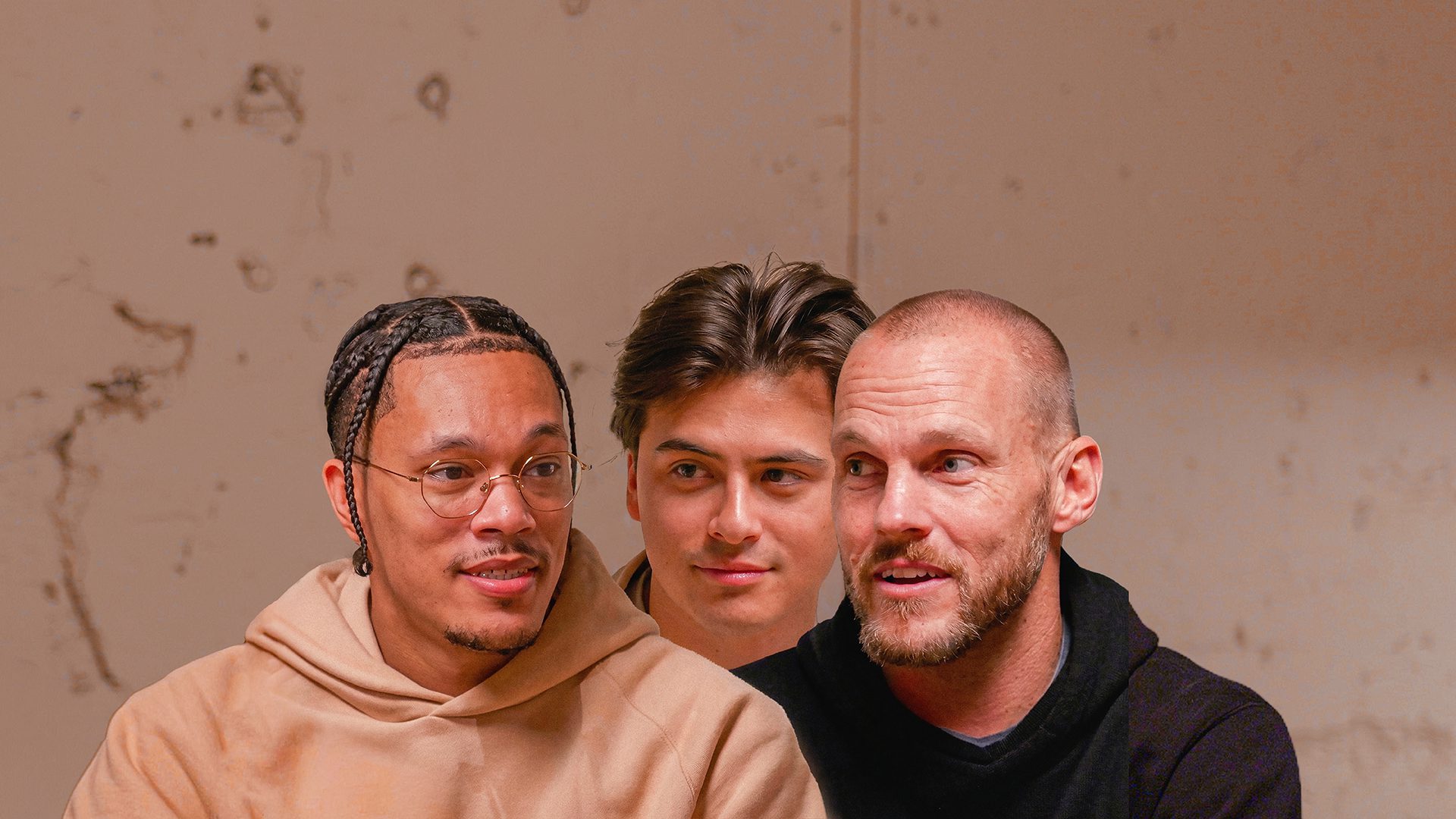
In this episode of Everyday Radical, David Platt and Austin Huang sit down with Trip Lee to talk about music, cultural expression, faithfulness, and the call to create in a way that reflects the beauty of God. From his early love for hip-hop to his desire to write songs for the church, Trip shares how meeting Jesus reshaped his ambition, his art, and his understanding of success.
They discuss why Christian creativity should reflect the diversity of the global church, how worship music disciples God’s people, and why churches should think carefully about unity without demanding uniformity. They also reflect on calling, seasons of life, generosity, and the dangers of fame in a culture built on self-promotion.
At the center of the conversation is a simple but searching question: what does faithfulness look like right now? Not what looks impressive. Not what gains the most attention. But what most honors Jesus in this season.
In this episode:
- How Trip Lee’s faith reshaped his music and creativity
- Why worship should reflect the beauty and diversity of the church
- What it means to pursue faithfulness over fame or success
Everyday Radical—honest conversations about living out the gospel with courage, clarity, and compassion. New episodes every Tuesday.
Austin Huang:
Well, I just want to even start by saying, I told a lot of my friends that we’re going to have Trip Lee on the podcast and they’re like, “Oh, my gosh, that’s insane.”
And so for someone who might not know you though, I told you before we started rolling that I listened to you on Lecrae’s podcast and I learned that you started your music career when you were like really young.
Trip Lee:
Yeah.
Austin Huang:
Could you take us back to that time?
Trip Lee:
Sure. When I was about 14, that’s when I met Jesus. Before then I’m not hostile to the gospel at all, assumed I was a Christian. And when I was 14, that’s when I started going to youth group for social reasons. There’s this Baptist church that my family would go to. I had heard the gospel a lot growing up.
Start going for social reasons, have a great youth pastor who preaches the gospel. And the stuff that I had assumed about the gospel, the stuff that I hadn’t understood when I repeated a prayer after children’s past when I was a little kid, about how good and holy God was, about the ways I’d sinned against him, about what it meant to repent and believe. That stuff started to click.
I realized I was a bad lord of my life and it turned my life upside down. I had already been rapping at that time. It wasn’t good in case you wondered.
David Platt:
You’d already been rapping at 14, how long you’d been rapping?
Trip Lee:
So I was rapping the way that I watched Michael Jordan, it was like, “I want to do that.” I was playing basketball. I was writing raps all the time. Now I had already understood that I was taking it more seriously than my friends. So we were always rapping in school, rapping at the lunch table, passing little rhyme books around.
And I think there was a time already where I was like, “I think I’m better. Better than all of you guys.” But also, I was telling somebody earlier, I was also obsessed with it in a way that I don’t think my friends were. I think there’s something about creativity, having an idea in my mind, and then I can work towards it existing and then I can hear it is something that’s always just been incredible to me.
And I was printing out lyrics of my favorite rappers and trying to understand metaphor. And the stuff that we knew and it was getting in trouble because I was up rapping all night.
So I loved, loved, loved hip hop. And when I’m passionate about something, I really do kind of hyper-focus on it. And so I was already really obsessed with hip hop and loved it. And then when I meet Jesus, and I’m already rapping, I’m starting, as I’m like rethinking every area of my life, I’m interacting with my friends, how I’m interacting with opposite sex, how I’m thinking about school.
My music too, I’m like, as I’m reading a Bible, it seems obvious that I’m not the center of the universe. I rap though as if I’m the center of the universe. I’m starting to see how the Bible talks about how I should interact with women. I’m talking about girls not in the same way the Scriptures teach. Maybe I should rearrange how I’m thinking about things.
So I was rapping in my church a little bit in the youth group. Again, I’m glad there was no cell phone footage of this because it was awful. I was on a youth praise team. I would lip sync and then there’d be a little breakdown and I would rap.
David Platt:
What do you mean? You would lip sync on the youth praise?
Trip Lee:
I was on youth praise, we’d be singing a song. We’d probably singing He’s Able by Kirk Franklin. I’d just be up there.
David Platt:
Who’s actually singing? Kurt?
Trip Lee:
No, there are… It’s like a praise group with like four people.
David Platt:
Oh, okay. All right.
Trip Lee:
Usually it’s four people who could sing. But I was just lip-syncing. And then there’d be some breakdown and then I would step out and I would rap. Something horrible but it came from a good place.
David Platt:
So good, man.
Trip Lee:
And then I was… Long story short, I made this little mixtape in my room and was selling it at school. And my youth pastor let me do a little mixtape release party, which again, this goes to show how supportive and loving some of the people God was put in my life were.
I had seen Lecrae and Tedashii and Sho Baraka open up for Cross Movement, who’s my favorite Christian rap group at the time. And then I found some way to get Lecrae’s number. Nobody knew who any of us were. And I was like, “Hey, can you come to this thing I’m doing?” And him and Tedashii, I’m 15 and they’re like, “Oh yeah, we’ll come.” So they just came and-
Austin Huang:
How old were they?
Trip Lee:
They were about 10 years older than me. They were in college. They’re like 18 years older than me, so they’re early 20s.
Austin Huang:
Okay.
Trip Lee:
And they come and they open up for me at this little thing. And then after that, they’re like, “Hey, is anybody discipling you?” And I was like, “I don’t know what that is.” And we built this relationship. And then I signed that record deal with Reach Records. This was just starting when I was senior in high school.
David Platt:
Wow, man.
Austin Huang:
Insane.
Trip Lee:
So it was pretty crazy.
David Platt:
So that was how many years ago?
Trip Lee:
2006 was when that album came out. It was like right as I graduated high school. So that’s almost 20 years.
David Platt:
20 years ago. Wow.
Trip Lee:
This year it is. It’s crazy. Yeah.
David Platt:
Man, so part of me wants to just ask, I mean, there’s a lot that’s happened in that 20 years. What are some pivotal moments in that 20 years, shaping moments? And could be professional kind of moments or spiritual moments or trajectory shifting moments. Yeah.
Trip Lee:
One of the things that’s interesting about starting so early is I’m a teen and my brain is still forming. There’s sometimes people are like, “Oh, did you think it was going to be this?” And I’m like, “I honestly don’t know what I thought this was going to be. It definitely wasn’t this.”
But at the time, the only thing I cared about to my detriment was Jesus and hip hop. I was still figuring out how to be disciplined in school. There was a lot of stuff where I was like, “I love Jesus. I love rap.” But I was just like, if I get to rap, these are the two things I care about most and I get to be really passionate about both of them at the same time.
Austin Huang:
Yeah, that’s good.
Trip Lee:
The music I was hearing from Cross Movement, which was deep, theological, and it was good, I was like, the impact that had on me, I would love to have that impact on other people.
David Platt:
Yeah.
Trip Lee:
So some pivotal moments, one would be when I did that little album release party and Lecrae and Tedashii came, Lecrae asking me after, “Hey, is anybody discipling you?” That’s a life changing question for me.
Now my youth pastor, he had been discipling me in some ways, but this was new terminology. And so now I have another mature Christian who is walking with me, teaching me Bible study methods, giving me good books. And at that point even like, “Hey, we want to do music stuff, but the music isn’t really the main thing. So we would love to focus on your growth in Jesus.” And I’m like, “That’s the very thing I would love to focus on.”
David Platt:
That’s awesome.
Trip Lee:
So God was very gracious too. So that would be a really key moment. By the time I go to college, my first album has already come out and I’m part of a church planted in Philly and there’s a lot of Christian hip hop stuff going on there. But during that season, I don’t know, I didn’t think I was going to pastor.
Even as I went to Bible college, I just thought, oh, I just want to teach the word, help people to grow. I think my understanding of the local church was a little, it was still growing. I had understood discipling one another, really important. I hadn’t really understood as much the local church being the main place where that happens in the life of a Christian.
So even as I’m growing as an artist, now I’m doing it in a community, both in school and with other people. I think that’s part of what changed how I approached music, where I was never a regular artist who was on the road 200 days a year. I was in college. So I already had limitations. And so I had to say no to so much stuff right away.
So it shaped a lot of ways how I approached my career. Where, I don’t know, some of the decisions I made later about how often I was going to be gone on Sunday mornings, what kind of opportunities I’d be willing to say no to. I think in some ways was shaped by, I’m still a teenager in college being developed and this can’t, I can’t turn this into what my entire life is about. And I think allowed me to in some ways approach things in healthy ways.
Austin Huang:
Praise God for that. Praise God that his grace allowed you to not, because I’m sure it was a temptation to just jump right into it, right?
Trip Lee:
Yeah.
David Platt:
You didn’t have to go to college. You didn’t have to go to Bible college.
Trip Lee:
Yeah. Well, I did because I don’t think I, at least right away, I wasn’t like, “Oh, I’m just going to be able to provide for myself and my family for 20 years.” That part felt like a bonus and surprise.
David Platt:
Oh, okay.
Trip Lee:
There wasn’t a lot of examples of very successful Christian rappers providing for their families, rapping about Jesus around the world.
David Platt:
Yeah.
Trip Lee:
And in some ways, I think God used that to help us to pursue it without fame and acclaim being our… Because not only was it not our main motive, we didn’t think it was an option.
David Platt:
Yeah, not even possible.
Trip Lee:
No. And there’s a line on my first album where I say, “I don’t care if I don’t ever get a Billboard hit.” And I said that thinking there will never be a day when the name Trip Lee is on any Billboard chart or list anywhere. And I’m fine with that because that’s not why I’m doing this. So it was not a possibility and that to me feels like a gift.
David Platt:
Yes.
Trip Lee:
Because then when some of that stuff happens, then I’m responding to a surprise thing that the Lord has done. And so sometimes people be like, “Oh, well, how do I?” I’m like, “That’s not even how we thought about it.” And so I don’t even know how to give you a blueprint in that direction. We were trying to be faithful with the opportunities put in front of us.
David Platt:
Which, man, that’s a good takeaway.
Trip Lee:
Yeah.
David Platt:
Faithful with where the next step the Lord has for you in whatever facet of life. You don’t have to figure out the 20-year plan at this point.
Trip Lee:
Absolutely.
David Platt:
Yeah. Keep faithfully following what seems like faithful responsibility right now.
Trip Lee:
Amen.
David Platt:
And not being consumed by ambition in the process is a huge temptation.
Trip Lee:
Yeah.
Austin Huang:
I kind of want to dive into your idea of brag worship.
Trip Lee:
Yeah.
Austin Huang:
Did you come up with that? What does that mean? Could you kind of explain that?
Trip Lee:
Yeah. So as a rapper, I have put out eight solo albums. I’m really grateful for that. And I also wanted to write some different kinds of songs, and this is like a desire I’ve had for a long time. I will say in my music that I’ve put out, bragging on God has been a theme that you’ll hear a lot.
You’ll hear, I don’t know, like one of my songs, 1:16. I say, “All I need is 1:16 to brag on my king, Romans 1:16.” Hip hop is a very boastful art form. If there was an Olympics for bragging, rappers would be the gold medalists. They are shameless and very good at it.
And so in an art form like hip hop where everything is kind of bold and in your face, to me, I’m like, “I want to make boasting on God a recurring theme in my music.” And so even when I would be blogging, it was like brag was the name of my sight and it was like a little bit of a… Yeah.
So people who’ve been following me know about that. And then as I thought about this kind of corporate worship music I wanted to write, it felt like it was a good way to describe what it was that I’m doing, trying to make much of God.
When I was at Epiphany Fellowship, which is a church I was at when I was in Philly, when that church planted, there were lots of really good musicians. And so they were taking songs from like CCM songs and traditional gospel songs and made them feel like us. They made it feel like our church felt. It wasn’t a lot of songs that felt like that. And I was like, “Man, I wish there were more songs that we didn’t have to make feel even more like us, but were still songs that God’s people gather together to sing.”
Austin Huang:
So good.
Trip Lee:
And had that thought time and time again in different places, even helping to plant a church in Atlanta. Yeah. And so I’m like, “If worship music, if the songs that Christians sing together is such an important part of God’s people gathering together, then it shouldn’t be limited to a few different expressions.”
There should be as many expressions as there are different cultures and peoples. And I’m like, “I just want there to be more different kinds of stuff.” And there’s so much worship music that has really impacted me, that has really blessed the Church. And I’m like, “If I can, in the same way that I heard Christian hip hop that impacted me and I want to impact people with that.”
These great hymn writers and worship songwriters, they’ve impacted me deeply and I’m like, “I want there to be more of that good stuff.” And so yeah, this has been an idea I’ve had for a really long time. For this project I’m working on, I am writing and producing these songs, mostly having other people sing them. I don’t want people’s imagination to be limited by my limited vocal ability.
I am on some of them, but for the most part, writing and producing them and working with artists who I think, who are some of my favorite artists. And yeah, so I’m excited for people to hear it. I don’t know how people are going to respond to it. It’s very different. It’s a very different project for me.
I think all the time that I was thinking about it, and some of the songs I wrote a long time ago, a lot of them I wrote more recently. But all the time people would be like, “No, tell me, what are you doing again?” It’s just hard for people to just like, “Wait, so wait, but what do you mean by that? You’re going to rap and it’ll be like a worshipy hook.” I’m like, “No, no, no. These are just songs for Christians to sing to you. I want churches to sing these. I want small groups to sing these.”
What I see in the New Testament is not… There’s some stuff that God wants us to do. And I think we think of songs sometimes as something that we made up at some point. People like, “Oh, the Western Church, they have their fog and their lights and all the little stuff we added.” And I’m like, “Yeah, music is not one of those things.”
This is something that God commanded us to do to sing songs. In the Epistles when Paul was talking about letting the word of Christ dwell in us richly, he’s talking about teaching and admonishing one another. And singing songs and hymns and spiritual songs is just one of the ways that we let the Word of Christ dwell in us richly.
I want pastors to think of it more as a tool for discipling the congregations, not as the opener for their sermon. And if it’s that important, then I’m just like, “Here’s my contribution for us to do some of it.” So we’ll see if it’s good.
David Platt:
So when does it come out?
Trip Lee:
We haven’t said the exact day.
David Platt:
All right.
Trip Lee:
But it’s soon. In the first quarter of this year, the music is done.
David Platt:
Okay. All right.
Austin Huang:
Sweet.
Trip Lee:
Yeah.
David Platt:
But yes, this is like for congregational singing.
Trip Lee:
Yes. Now, I’m going to say this though. The one thing that I want people to, that I’m trying to push on a little bit is what we think of as worship music, what we think it has to sound like.
David Platt:
Okay. Yeah.
Trip Lee:
I think it needs to be filled with the Word of God. I think the gospel needs to be clear. I think it needs to be singable. I was trying to write them in a way where, here’s what the production sounds like on my songs, but the structure of these songs, the melodies, the words, the chord progressions can live in different spaces. But I do think it is going to challenge some of what people think worship music sounds like.
David Platt:
Because of the style or?
Trip Lee:
Because of the style.
David Platt:
Yeah.
Trip Lee:
Yeah. And I think some of the things that we do stylistically are for good reasons, but I think there’s more ways to hear those principles. So if they need to be singable, I think there’s more than one way to make sure things are singable. And easy for people to connect with right away, I think there’s more than one way to do that. I think other music tries to do that as well. Pop music tries to do that.
David Platt:
Sure.
Trip Lee:
And so I think there’s some space for things to sound differently. We’ll see what people think.
David Platt:
Well, I mean, it’s certainly true with the Global Church all around the world. I go to any number of different countries.
Trip Lee:
Yeah.
David Platt:
Yeah, it sounds very different. It’s true.
Trip Lee:
Yeah.
David Platt:
Yeah. And so whether it’s an underground house church in Asia or a church in Sub-Saharan Africa or a church in Brazil or whatever church here in the US, which is not all monolithic either, but that’s going to sound very different.
When you’re stepping into that context, it’s going to feel different, and maybe even be challenging in some ways. But I love the picture of, yeah, we are a diverse body.
Trip Lee:
Absolutely.
David Platt:
And that should be evident in our singing, right?
Trip Lee:
Absolutely. And even if you just look through church history, even if you think about the Psalms, right? The meter of the Psalms isn’t even every… They don’t work like our songs work where every single line has the same number of syllables. And to us, it’d be like, “Oh, that’s not very singable.” But this is what their music felt like.
Some of that was probably more chanty. I mean, if you look at what music look like in different places throughout the history of the Church, I think it helps us to see we don’t have to have such narrow definitions. But we do need to know what it is we’re trying to do when we sing together and then saying, “Hey, do these songs help us to do that?”
Austin Huang:
That’s interesting.
David Platt:
So good, man. I’m looking forward to it.
Austin Huang:
Me too.
David Platt:
I just think about, even just our church family, that’s one of the things we often wrestle with, with people from 100 different countries and backgrounds. I mean, we’ve got… Yeah, I mean, when even just in our, one of our gatherings each week is translated into Mandarin and Spanish and Korean.
And so just those three backgrounds, we’ve got the church in South Korea, the church, the Mandarin-speaking church, and then Latin American churches of all kinds. And then that didn’t even accounted for people who’ve come from predominantly African American churches. People who’ve come from liturgical, like high church, Anglican, whatever.
And we’re all together and we’re trying to figure out how to sing together and it doesn’t feel like it’s an expression of the body of Christ for us to say to most everybody there, “You need to learn to sing like these people over here.”
Trip Lee:
Yeah. And it is, I think it’s hard to know where those lines are when we’re leading particular congregations. But I do think even what’s happening culturally as a whole, I do think everyone’s so connected that I think we’re kind of squeezing out a lot of cultural differences and we’re all…
There are some ways where there are more niches, but there are other ways where every… There’s some like, for instance, a small dumb example, like cultural slang, like they used to just be like, “Oh, that’s just Atlanta slang or that’s just LA slang.” Because of TikTok and stuff, everybody picks it up immediately.
There’s some ways where there are a lot of traditional Black churches where a lot of the songs that they sing sound more like traditional CCN music than it ever has to you. And I’m not saying it’s a good or a bad thing, that’s just a thing. But I think that it is good for us to hold onto some cultural differences in different cultural places.
I was with the Gettys, Keith and Kris and Getty. Keith has always bring me to do something. I’m like, “Keith, what we do is so different.”
David Platt:
Which I thought-
Austin Huang:
That’s right.
David Platt:
… I think about things like Christmas concerts you’ve done where it’s like one pretty consistent stream through the night of Irish Christmas. And then Trip Lee on the stage and just looking at people around the room.
Trip Lee:
And incredible hymns that they’re writing and they do sound very Irish. What I would not want them to do is like, “Oh, no, no, let me just-”
David Platt:
Take the Irish out.
Trip Lee:
“… take the little Irish.” It’s like, “Well, no, no, this is a beautiful expression of the image of God in different places and different cultures.” And I think some of those cultural things are what make things beautiful.
Now there could be times where in particular congregations, we have to figure out how to make things work for everybody. I’m sure that stuff y’all have talked about and thought about a lot, but I think there’s a lot of value in different expressions.
Austin Huang:
Yes, that’s so good.
David Platt:
As opposed to trying to mute all that, how can we… I mean, I was going to ask that. We’ve not talked about this personally, but yeah, in our church family, just keep using that example. Yeah, what would be your encouragement?
Because I am thinking we obviously divide for sure into churches based on language for the most part. I mean, you’re going to primarily be involved in a church that at least in many cases, ideally is your heart language, but at least a language you can understand. It’s going to be hard to worship if it’s unintelligible to you.
Trip Lee:
Yeah.
David Platt:
But then outside of that, obviously, yeah, we live, at least in the United States, we divide a lot into different churches based on ethnicity, based on political leanings. And I think music’s part of it, right?
Trip Lee:
Yeah, for sure.
David Platt:
Because there’s oftentimes certain styles that go with ethnicity, for example.
Trip Lee:
Sure, yeah.
David Platt:
That we’re like, “I don’t want to go there because it doesn’t. I like the music better over here.” What do you think about that? And what would you say to… I mean, I hear you saying, “No, we need to make sure not to mute that.” So is it possible to be in a church where that you’re experiencing authentic expressions of different, not just ethnicity, but just different Christians?
Trip Lee:
I don’t want to say that everyone… I think particular communities in particular situations have to think about how are we all worshiping together. So I don’t want to say anything blanketed for people who have people from all different places. I don’t want to say, because then there are very difficult things where people will choose, let’s do one song from each culture every week and that feels untenable.
It’s just that there are things that are difficult about it. I think there are principles we’re trying to pay attention to, people we want to feel loved and welcomed and trying to worship from sincere places, in terms of the person looking for a church and thinking where they can worship.
I want people to be very open to worshiping Jesus with cultural expressions that are not always their own. Because I think if we are completely unwilling to do that, then we are going to just remain very segregated. And surely what we’re gathering around is not our particular cultural taste. What we’re gathering around is a Savior who when lifted up, draws all men to himself.
And I think you are looking for a church that preaches the gospel of Jesus. Where you can gather around the gospel of Jesus with others, disciple others, help others disciple you, link arms to take the gospel to the nations. That’s what we’re looking for in a church.
And there are some preferences within that. There are some things that are easier or harder within that. There are things that you’re going to have to think through like, “Hey, this is not my natural, this is not like me naturally music wise. Can I still worship Jesus sincerely? And is the other stuff I’m here for worth me making that sacrifice?”
When I was in DC at Capitol Hill Baptist Church, I had just come from an urban church plant. Now I’m there and there’s not a drum in sight. And there are obvious cultural… Where Mark is also like, “Well, no one likes this music, so it’s not just you.”
But what I had to think through was, okay, how am I worshiping God honestly with the stuff that we have? And there’s stuff that I really learned to really appreciate about these hymns that I think has impacted how I think about music in the church. But it wasn’t like I turned my brain off on a musical zone. I was like, “All right, I’m just here for the preachers. I’m going to sit through this.”
It was like, “No, I’m gathering with my family and Jesus. Let’s go before the throne and worship Jesus together. Let’s sing this truth to one another and let’s be willing to make sacrifices where we can.” So I don’t want us to think of the churches we’re joining as… I don’t want us to put a list of our preferences and just figure out how many of them they check off.
I want us to think, what’s the main thing that we’re doing here? And then where there’s some things that would be a little easier or that would fit a little better, how do we factor that into what God is calling us to do?
David Platt:
So good. I would even say there probably should be somewhere on, if you were to make a list of preferences where you’re yielding-
Trip Lee:
Absolutely.
David Platt:
… where you’re intentionally, this is part of what it means to be a part of the body of Christ. If it’s like, “I’m just checking off my preferences, then I’m missing something.”
I mean, that’s what I think about Romans 15, just welcome one another and yield to each other and experience this depth of unity that’s there that’s actually not a unity around preferences. It is now even more authentically, I think, a unity around Jesus. Because we’ve made clear, it’s not because I prefer all the things here.
And the other thing I would add is I do think we have to be careful, particularly leaders in churches, but on members in churches, to make sure that we are not checking off our preferences and then asking everybody else to yield to our preferences, to where particular groups always have to do the yielding.
Trip Lee:
Amen. Amen. I think that can be one of the difficult things about multi-ethnic churches, is so often it’ll be primarily white leadership with other cultures submitting to their cultural references. So I think what’s really important about what you said is this is all of us yielding to one another and figuring out how to worship Jesus all together.
Austin Huang:
That’s good.
David Platt:
Yeah. Our other lead pastor, Mike Kelsey, the way he put it at one point was he just said, it’s just so helpful for me to hear him say this, he’s like, “Sometimes I feel like this is a bed and breakfast. I’m welcome here, get to eat the food, sleep here, but it’s not my pictures on the walls. The meal, I’m not speaking into what’s being served.”
And so there’s a lot of yielding, it’s less home. And so how can, to the extent of which it’s possible, to make sure this is home for every brother and sister in Christ?
Trip Lee:
That’s so good. And I think when everyone is yielding, even some of the stuff that you’re sacrificing, it doesn’t feel like, “They’re just asking me to just swallow this.” It’s like all of us are yielding in different places so that we can worship Jesus.
David Platt:
And we’re growing in that. I mean, I love you talking about CHBC. Yes, I mean, the way you’re healing in that sense, but it led to a richness of, okay, I can appreciate these hymns in a particular way.
Trip Lee:
Absolutely. I do think when we think about our church experience that way too, even stuff beyond what’s happening on Sunday morning, putting ourselves in situations where everything’s not our exact preference also helps us to be following Jesus alongside people who don’t agree with us in other areas.
So I think even some of the political disagreement around Christians, I think sometimes it’s… I’ve talked to brothers and sisters who I’m like, “You have no imagination for anybody ever coming to a different decision than you have with sincere motives.” And I think it’s because you’ve never done life with anybody who has any different cultural preferences than you or who would potentially come to a different decision.
You can have disagreements and still be like, “Oh, but I see how you got there. And let’s talk through that.” But I think when every area of our life is like all of my cultural preferences are right in the same lined up. And I think we miss out on opportunities to learn from other people and learn where we’re wrong.
David Platt:
Yes.
Trip Lee:
The question isn’t are you wrong about anything? It’s like, “Do you know where you’re wrong? Is there anybody who could ever show you that?” If I’m like, “The only time I ever see anybody who disagrees with me is when we’re having an argument.” Well, I think that’s probably not going to grow.
David Platt:
That’s so good. I think about, because Mike, when he said that about bread and breakfast, he said, “I feel that most when issues of justice are at the fore.” Because it’s like, “Okay, this is a menu that talks about particular issues, avoids other issues.”
But then I think about, I’ve got in my picture, in my mind right now, a picture of sitting around the table not long ago with some different leaders in our church talking about immigration, total hot button issue. And there’s immigrants that are on the table, there’s people from a variety of different perspectives around the table.
And we all got our Bibles open and we’re talking about it, but we are not agreeing. There’s passionate disagreement happening at the table with tears at points and very deeply personal. And at the same time, we are legit brothers and sisters in Christ and joyfully walking away from that table with our arms around each other, just like this is, we got worshiping Jesus together.
Trip Lee:
And if God’s people can’t model that then I don’t know. If we’re as unwilling to have hard conversations, yeah. I would love God’s people to be a place where that is to be modeled.
David Platt:
It’s good.
Trip Lee:
Yeah.
Austin Huang:
I want to jump off of what you kind of said. It’s not, am I wrong, but where am I wrong? Where can I look more like Jesus? And it sounds a lot like discipleship. And I want to kind of get your thoughts on using music as an avenue to disciple other people.
I just think back to when I was in high school, I played basketball all growing up and rap was like a big thing. No one questioned it. We just listened to it. It was like Uzi, all this stuff going in my mind and that was discipling me in a way to think about what are my desires?
Like you said earlier, this is boastful music. And it’s just like hearing that I think was shaping me in ways that I didn’t understand. I mean, I was in high school. When you started your rap career, that’s like the time in which I was listening to rap.
What are ways that Christians can use music to disciple others? And also on top of that, how have you seen rap, Christian rap or also worldly rap shape the minds and hearts of Christians and believers. Who they might be saying like, “I want to listen to things that honor God,” but they also are still attached to things that are speaking and boasting about things that totally dishonor the Lord.
Trip Lee:
Yeah. One thing I would say is music is really powerful. And I think there’s a reason why God is telling us to sing. In some prior cultures, I think sometimes we think something with song like that, that means there’s a little less gravity to it. Prior cultures, before written cultures, they would sometimes put their most important things in song form because it would be more memorable. This is so important that we need to remember it.
Music has access to our soul, our entire person in ways that sometimes just spoken word doesn’t. There’s a reason on the other side of the Red Sea, they sing a song. God has just done this incredible, miraculous miracle and just saying like, “Wasn’t that crazy?” It wasn’t enough. They sing songs together. It is special.
We have a whole songbook in our Bible. Obviously music is important and I think that we should be aware of that power as believers. I can think of so many people who have said to me over and over again. Now that it’s my first album came out in 2006, people are like, “Oh, I grew up listening even.” I’m like-
David Platt:
Yeah, bro.
Trip Lee:
“… don’t that to me.”
David Platt:
Yeah, you’re old, man.
Trip Lee:
Now, but people who said the way that I was introduced to any of these theological categories was through y’all’s music. People saying, “Oh, man, your song, Good Thing about you and your wife, we played that at my wedding.” “Oh, your song Sweet Victory. I was going through this health challenge. It gave me a hope in the midst of difficulty.” Or, “I was going to take my life. I listened to this song about the goodness of Jesus that made me not do that.” Music is really, really powerful.
David Platt:
That’s powerful.
Trip Lee:
Storytelling is powerful. Even more so a music form. I mean, you think about the number of times someone asks Jesus a regular question and he’s like, “There was once a man.” You know what I mean? There’s something about storytelling and things being artful that just has a deep impact on our souls. And I would encourage us to be very aware of that.
I’ll encourage parents to be aware of that as is and their kids and that. But I would encourage us to as well. It does shape our worldviews. Even my dad used to try to get me to not to listen to certain kind of stuff when I was growing up. And I was like, “Dad, I’m not going to shoot anybody.”
But what I didn’t realize is how much, like you’re saying, my worldviews were being shaped by the people I admired most. And to this day, when I think about what I personally listen to, one of the things it starts with is understanding myself and what kinds of things are going to impact me in good or bad ways.
There’s this TV show that I’ll leave nameless that so many people have watched. And I feel like I’m the only person in the entire world. My goal is not to tell you you’ve made horrible decisions, but I can’t see me watching that and it not having a bad effect though. And someone who loves art, that stings a little bit. I’m like, “I want to experience this, it’s one of the greatest TV shows.” But I’m like, “I would rather miss out on this show than it do any damage to my soul.”
And I think sometimes we want to draw really hard lines with that with art. Sometimes I’m beyond certain things that are obviously beyond the pale. There’s some things where I’m like, “You have to know yourself well and you have to have people around you that know you well and you have to be willing to let go of stuff that’s actually not good for your soul.”
It was a season for me where I listened to no, no mainstream hip hop when I was a teenager. And though I’m not telling people that’s exactly what they have to do, it was very good for me in that season. Especially in a season where there was a little battle going on in my soul with what my values were. It was very helpful for all of the music that I was listening to, to be pouring fuel on the values that Jesus was calling me to take on.
So I think we have to know ourselves and think carefully about that. It’s okay to miss out on some good art if it’s for the sake of your soul.
David Platt:
Bro, that is gold. That is so helpful. Not like, “Yeah, here’s a line drawn that Scripture doesn’t directly draw.” But I mean, I’m hearing you say there’s wisdom here, application of God’s Word. But I heard you saying for you to really know yourself, to really intentionally think through how this is influencing you, I just think don’t be conformed to the power of this world, be transformative with renewing your mind. It’s so easily to be conformed.
Trip Lee:
Yes.
David Platt:
And we’re going to be discipled. We’re either going to be discipled by the world or by the Word, one of the two, but we’re going to be discipled. So to be intentional in that. And I heard you saying, involve others in that, help others. We don’t know ourselves well.
Trip Lee:
Yeah, that’s right.
David Platt:
We need other people who know us also to speak into our lives and help us see, “Hey, do you see these things I’m listening to? Do you see them leading me toward Jesus or away from Jesus?”
Trip Lee:
That’s when I was being like, “Hey, I think this is fine, but what do you think?” That’s a good place to be like, “Hey, I think this is fine, but am I tripping? Do you think this is?”
The number of times where I have redirected something I was doing because I was like, “Hey, I think this is fine, but let me know what you think.” People are like, “Well, actually I think… ” Yeah, I think it’s a good posture to have.
David Platt:
So good.
Trip Lee:
Yeah.
Austin Huang:
I want to ask a question about, you spent some time as a pastor.
Trip Lee:
Yeah.
Austin Huang:
How long were you a pastor? A few years?
Trip Lee:
I was pastoring for 10 years.
Austin Huang:
10 years.
Trip Lee:
Yeah.
Austin Huang:
What was it like in that time? Were you still passionate about music? Were you still making music at that time? And also, how did that season, that 10 years of being a pastor, how has that shaped your music now?
Trip Lee:
Oh, my goodness.
Austin Huang:
Sorry for all the questions.
Trip Lee:
No, no, no, no. That’s good. What was the first question? Oh, no, no. Yes. I was still passionate about music. Yes. And I was still making music for most of that time. There were seasons where I took off from music. People always called me crazy for doing that.
David Platt:
For pastoring?
Trip Lee:
Yeah. To take time off music for that. The time when your career is doing this, it’s not a good time to… But, man, it felt very clear to me that faithfulness for me in that season looked like shepherding God’s people.
But yeah, I mean, I remain passionate about it all the way through. I think pastoring did impact me as an artist too. I feel like when you pastor, I think one of the things people, I think people think of pastoral responsibilities and tasks. They don’t think about the number of conversations you have with people. They don’t think about the bearing of other people’s burdens. They don’t think about what it means to be right in the middle of a very messy community and to know all the stuff that’s going on. One of the things that it did for me is it made me a more compassionate person.
David Platt:
That’s good.
Trip Lee:
It made me more urgent about what we were up against, and that impacted the way that I wrote songs. I think being a songwriter helped me to be a better preacher, for sure. I think I spent my entire life trying to say big things in easy ways. I think that helped me as a preacher.
Yeah. And so my time pastoring, that only stopped because of my health, really. I have an illness that I’ve had for a long time that just makes the energy demands of pastoring hard on me. And so in this season of my life, I’m not pastoring. It’s not to say I never will again, but I don’t think it’s most faithful me to do now.
But it has shaped me in ways that are almost impossible to describe. But I think I understand people better. I think I love people more. And it just makes me think carefully about what people need and how I can use my art to help point people to it.
David Platt:
So good.
Trip Lee:
Yeah.
David Platt:
I think there’s something there too that’s just applicable across so many. God’s call on your life, that sometimes it’s fluid. And stewardship of God’s grace in this moment looks different than stewardship of God’s grace at that moment.
Trip Lee:
Absolutely.
David Platt:
And it’s wise to walk through this life with brothers and sisters in Christ alongside you, helping you discern in this season of my life, what does faithfulness look like?
Trip Lee:
Yeah.
David Platt:
And I love that. Even people saying, “You shouldn’t be doing this because it’s going to hurt the rise of… ” But I mean, I just think 1 Corinthians 4:1–2, what’s required of us as servants of Christ and stewards of the mysteries of God that we’d be found faithful. So faithfulness may not look like what the world says is success.
Trip Lee:
That’s right. And then even sometimes with pastoring, one of the things that was hard about saying, “I think I’m not going to pastor right now,” is most people who think about themselves pastoring, they’re like, “Oh, here’s the start of this thing that I’m going to just keep doing forever and ever.”
And it can feel like failure to be like, “Well, I don’t think I’m going to continue to do that.” But we have to be open-handed enough to say, “God, how can I be most faithful to you in this season?”
David Platt:
Yes.
Trip Lee:
Which can be a hard thing to do. And maybe a way that we need to sometimes correct a little bit the way that we think about calling.
Austin Huang:
Yeah, it’s good.
David Platt:
Along, I mean, you mentioned just physical health and well, one, I’m just thankful. I think about whenever I think about Sweet Victory or a number of things you’ve written and the way you’ve preached, I just think 2 Corinthians 1, just God’s comfort in your life overflowing and comfort for a lot of other people.
So thank you, brother, for the way you’ve helped a lot of people walk through, out of the overflow, walk through pain, challenge, hardship, out of the overflow of God’s grace in your life.
Trip Lee:
I appreciate that.
David Platt:
Yeah.
Trip Lee:
I appreciate that.
David Platt:
Anything along those lines, just as God… Yeah, you’re still on this journey, still walking through the struggle that the Lord is doing in your own heart, in the Second Corinthians one way that you’d pass on to us? Or just?
Trip Lee:
I think for somebody like me who is ambitious and always has vision for lots of stuff, what can be hard is not being able to say, “Okay, so I’m going to do this, which will lead to this and this, this and this.” It’s very humbling to not be able to say, “Oh, here’s my vision. And with the strength I have, I’m going to ABC.”
God has… I think we have kind of this illusion that, yeah, we’re not in control of everything, but we can really plan out our life. And if we do the stuff we’re supposed to do, then it’s going to go from this to this to this.
And what God has done with my illness is he’s kind of taken that delusion away from me. I can be faithful to God in particular moments. And I can pray for where I would like things to go and I can be faithful with each step after step after step, but I do not know the future. I mean, you think of James 4 where it’s like, “Man says, I’m going to go, I’m going to do this business in this day and this way and I’m going to make this much.” And he’s like, “You fool.”
Your life was a vapor, it could be demanded of you in the next minute. He’s not saying don’t plan, but he’s saying don’t act as if the entire world is in your hands. Make your plans with an open hand looking to be faithful to God and saying, “If the Lord wills, this or that will happen.”
I think one of the things that’s happened with my health is it has forced me to live with that phrase on my lips, Lord willing. It’s in God’s hands. And here’s how I’m going to try to be faithful and I’m going to trust God, whatever that is. And I would encourage us to, whether our weakness is really clear to us in the season or not, to fight to have that Lord willing perspective on everything that we’re doing.
Because sometimes when we’re more anxious or worried about a thing, because we think it is the key to things going well for us because we’ve mapped out this plan. We’re like, “No, no, but if this doesn’t happen, then how am I going to get to this?” When God is saying, “That was you, you came up with this thing.” Think about what does faithfulness look like in this particular season. Plan, but plan with an open hand and with the Lord’s will.
David Platt:
With, and yeah, obviously implied in that, but just to make really explicit, the Lord’s will. I mean, this is a God who is sovereign over every detail and who is infinitely trustworthy.
Trip Lee:
Amen.
David Platt:
And infinitely good and infinitely wise and always, always working for the good of his people. And so that doesn’t have to be a reluctant, “Okay, if the Lord wills about this, I glad if the Lord wills.” Even in the hard, right? But I trust you that you’re working this together for good that I, far beyond what I can see even.
Trip Lee:
Yeah. I think sometimes we think we have to wrestle good things out of God’s hands and it’s like, “Well, no, no, no, no. He’s really excited to do good things for his people.”
David Platt:
Yes.
Trip Lee:
Even the text that I’m-
David Platt:
I was about to say, man, give us a little. I know you’re about to preach soon on the extravagant generosity of God. So give us a taste.
Trip Lee:
Well, part of it is the part where he says, “Which one of you, if your son asks you for some bread is going to give him a stone? Or which one of you, if your son asks for a fish, is going to give him a snake.” He’s like, “If even you who are evil know how to give good gifts to your son, how much more your Father in heaven would give good gifts to his children.”
To me, I think even sometimes when I think about my own prayer life and how often I go to God with things, I think it is shaped in part by how generous I see God as. If you invite somebody over and they say no and you ask him again and they say no, it’s like, “I’m not even inviting you anymore because you don’t seem like this is something you’re into.”
And I think when we don’t get the answers we want to, sometimes we forget how generous God is. But that Jesus is not saying, “God would give you everything you ask for.” He’s saying, “God delights to give good things to his children.” And just because we point at a stone and call it bread doesn’t mean that God’s going to give it to us so that we bite it and chew it and harm ourselves. So that even some of the things that God withholds from us is an expression of his generosity.
There are times when if he gave us what we asked for, that would be harm, but instead he gives us something much better. And so we have to trust God’s character. So even with some of the Lord willing stuff, it’s like, “Oh, this is what I want because it seems clearest and best to me.”
And God is saying, “Trust me, I know much more than you do. You think that’s what’s best for you. You don’t see this, you don’t see this, you don’t see this.” And Tim Keller said, I’m not going to say it perfectly, but he said, “When we pray, God answers the prayer we would have prayed. He gives us what we would have asked for if we knew everything that he knew.”
David Platt:
So good.
Trip Lee:
And I’m like, “Yes.” I have to keep God’s knowledge in view.
David Platt:
Yes.
Trip Lee:
And it’s not like, “God, just please let me wrestle the good things out of your hand.”
David Platt:
Yes.
Trip Lee:
“No, no, that’s what I’m excited to give you. So come ask me. I have it. It’s ready for you.”
David Platt:
The Psalms talks about he’s eager to show mercy to us. Yes, he’s not reluctant. Yeah, extravagantly.
Trip Lee:
Yeah.
Austin Huang:
So encouraged by your humility. Seriously, just hearing your life story and just how even when the fame and the popularity starts picking up, you take a step back because you’re feeling called to what the Lord has for you. Even just the fact that you said people were questioning, “Well, why are you pastoring?” It’s like you were never in it for the fame, the money, or whatever. You’re in it to follow Jesus. And so I’m just thankful for your obedience in that.
David Platt:
Is that a battle for you?
Trip Lee:
Yeah.
David Platt:
Humility?
Trip Lee:
Sure, sure. Yeah. I think the interesting thing about doing what I’ve been doing for so long is there’ll be some ways where I’m like, “Oh, I never… This was never what I was doing this for.” But there are ways that you get accustomed to how people treat you when they see you as special. And there will be times when it’s like, “Oh, I didn’t get the same special treatment.” And it’s like, “Wait, wait, wait, that’s not what we were doing.”
And another way to guard my heart, I’ve told myself for a very long time, people still care about what I’m doing and they have for a long time. One day, nobody will care about what I’m doing. And if I haven’t prepared my heart for that, if I’m not guarding my heart against… Even if that’s not something that you sought out. And this can happen in anything, a pastoral ministry, it can happen with leadership, and it can happen with being the president of student council, anything.
Then once you’re accustomed to certain kinds of things, your heart can attach yourself to it and begin to think of that as part of the thing that leads to your joy and leads to your peace and that you must have. And so one of the fights for me is being liked by people as a public figure is not key to my peace or my joy. That’s not the reason that I have peace and joy. That’s not the reason that God has blessed me. It’s the way that God has used for things for me to be used by God in the world.
But in the same way that God used a random teenager from Dallas to do incredible thing, which just doesn’t seem like how you’d use it. God can do his work however he decides. He can do it with me on stages or me in obscurity, but he wants glory for his name. I trust him with how he’s going to do it.
David Platt:
So good.
Trip Lee:
Yeah.
David Platt:
So good, bro.
Austin Huang:
We could just sit here forever. I have one kind of final question if that’s all right?
David Platt:
That’s great. Just go for it.
Austin Huang:
For the young creative, young artist, rapper, painter, whatever the art form is, who might be kind of hearing everything that you’re saying, but still feeling this pride bubbling up. Feeling like they want to create for the praise of man, could you give them an exhortation, encouragement to remind them that the true satisfaction is found in Christ and doing this for him?
Trip Lee:
Yeah. I would say it’s harder than ever. It’s harder than ever to fight the desire for fame. I mean, we have built our culture in a way where everybody is their own PR agency. Where it feels almost strange to people if you don’t spend much of your day presenting a version of yourself for the world for a literal instant, we like you or not.
Austin Huang:
That’s crazy.
Trip Lee:
And so then when that begins, when you’re doing art and part of your job would be for people to pay attention. I think that’s one of the strangest things about being a Christian public figure is, part of my job is to make sure people are paying attention to me, which is just strange.
I don’t think fame is wrong. I think about 1 Corinthians where Paul is like, “Oh, and we’re bringing the brother who’s famous for his preaching.” People being well known for me and good at things, nothing wrong with that. But it’s very difficult to not turn that into the thing, especially if you begin to think, “No, how I know I’m being faithful is more eyes on me.” That is false. Do not believe the lie that whatever gets more eyes on you is the thing that is faithful, that is not true.
There are some ways to get eyes on you that are unfaithful and it will steer you further away from what Jesus has called you to. So I would encourage us not to believe that lie.
And then I would encourage us to… I even think about this with my kids because being famous is more of like a thing kids aspire to than ever. I think because more than ever, sometimes people are famous just because they’re good at being famous.
But fame, a lot of people knowing you as a byproduct of something you do well, that’s not a goal to seek. So everybody knows LeBron James because he’s really good at basketball. It’s not because he was trying to be famous. He was trying to get good at basketball. And so if you’re making art, I want to encourage you to try to be great at art and see if the fame comes as a byproduct, not as something to desire and seek.
So figure out, okay, why do I want to do this creative thing? How does it fit into what God has called me to do in the world? And let me try to excel at that. For people doing music, one of the things that was helpful for me was if I just wanted to say good things about Jesus, I could just talk. But if I’m making songs, then I want to make great songs. So it’s not enough for me to make mediocre music that says good things about Jesus. Then I’ll just talk to people.
If I want to make art and I’m created by the most amazing Creator of all time, if every creator who’s ever come up with anything is really the biggest influence is God himself. If you are a painter that likes to paint sunsets, my Lord made that. If you’re a songwriter who likes to write about romantic love, my Lord came up with that.
If that’s the case, and I’m a son of that God, then I’m like, “I actually want to create excellent things.” I want to point to how incredible of a creator he is. God seems to value beauty. It seems like not only a good message, but also beauty itself.
Zebras didn’t have to look all beautiful and black and white striped. God did that. Food didn’t have to taste delicious. It could just fuel us. God did that. There’s value there. And so I would encourage artists to value the beauty and think about how making beautiful things enriches people’s lives, points to the glory of God, and then to really drill in down on that.
Try to have others around you that not only help you to be faithful to Jesus, but help you to get great at the art that you want to do. And then trust God with the rest. Because the fame, this is the last thing I’ll say, the fame stuff is so fickle, man.
David Platt:
Yeah.
Trip Lee:
It’s so fickle. And people spend their lives chasing it and then they get it and then it’s gone. I mean, we all have seen people get famous overnight and then some random thing, people turn on them and everyone hates you. And it’s like, “Yeah, it’s just not a good thing to build your life on.”
Even some of these content creatives who are like, “Yeah, it was fun until if I didn’t post a viral video every week, it seemed like my entire life worth and value is based on that.” That’s just not a good thing to build your life on. It won’t last.
Will Smith, most famous person in the world, it’s not automatic blockbusters anymore, but that’s fine. That’s not who he is as a person, that’s something that he was able to do. And so I think we just want to have those lines drawn clearly.
Fame is not strong enough to build your life on. It will crumble. Most of us won’t even achieve it, but even those who do, it’s just a matter of time until it’s gone.
David Platt:
Bro, in just a second, I want to ask you to pray over just every person who’s listening to this. But before that, I just want to praise God for his grace in you, honor God’s grace in you. As you’re talking, what’s come to my mind is the two great commandments. They’re like the guard against all this.
But I see them evident in your life. Loving God with all your heart, soul, mind, and strength. I’d see, yes. Lord, I want to be faithful to you, if that’s pastoring, if that’s creating a hip hop album. If that’s creating a worship album that I don’t know what people are going to think about. I want to be faithful to you. Yeah. I want to honor, glorify you.
And love your neighbor as yourself. As I’m listening to you talk, I think, yeah, you want to create great music that’s going to edify people, that’s going to help point people to Jesus. Yeah, you want to create great worship music that’s going to help congregations glorify Jesus.
That’s where creating art, there’s a way to do it selflessly and there’s a way to do it selfishly for my own fame. Or no, for the edification of a lot of people. And that’s actually a good ambition to want to be faithful to God first and foremost and loving toward others by creating beautiful things.
Trip Lee:
Amen. Yeah.
David Platt:
Bro, thank you for beautiful things you’ve created that edify many. Have edified me, Austin.
Trip Lee:
Yes.
David Platt:
Yeah, so many. And yeah, so, man, I just pray that those two great commandments would continue to mark your life.
Trip Lee:
I appreciate that.
David Platt:
In ever-increasing ways.
Trip Lee:
Thank you so much.
David Platt:
So would you pray over? One of the things we love about podcasts is just different people that listen to this at different stages in their life. This might be a simple encouragement or it might be a life altering, I had not thought about that and this shapes things. So would you just pray over the people who are listening to this?
Trip Lee:
Father, we come before you in Jesus’s name. Father, we come before you in Jesus’s name because he’s how we have access to you. Father, we know that there’s no amount of fame, there’s no amount of universal acceptance that is more precious than being accepted in the presence of you. Father, we thank you that we can come before you and we know you hear us.
Austin Huang:
Thank you, God.
Trip Lee:
And we thank you for the ways that you’ve promised to respond with love and grace and good gifts. God, we pray for everybody who’s listening. God, we don’t know exactly where everybody is, but you do.
Father, we know that there are some people who have had particular questions or doubts or distractions that you in your grace drove them to listen to this episode at this time. And, Father, we thank you for being such a meticulous, particular, sovereign, gracious, thoughtful, intentional God.
God, we pray that things that people heard that were challenging or that were encouraging, Father, we pray that you would help them to find ways not to have that challenge or encouragement drift off as soon as they are done listening to this podcast, but you would press it in on their hearts. Father, that your Holy Spirit would bring it to remembrance.
God, that you would bring them the passages that remind them that you would have them have conversations that remind them, God, and they’d be able to be faithful to you in the world. Father, I pray for that person listening who is feeling insecure and shameful and like they’re not good enough disciples. Father, we pray that you would remind them that the same thing that got them into the family, that same cross is the same one we turn to day after day after day.
And then when we come to you, we don’t see a father with his arms folded, but a Father with his arms open wide. Father, we pray that’s the picture you would give them and that they would fall at your feet day after day after day. We thank you for the cross. We thank you for the resurrection and we thank you for the opportunity to live in light of it. We as in Jesus’ name. Amen.
David Platt:
Amen.
Austin Huang:
Thanks so much for listening to this episode of Everyday Radical. We pray that it encouraged you in many ways. We do this every single week, so be sure to subscribe or follow to not miss the next episode. We’ll see you then.