


The #1 Mistake People Make When Reading the Bible
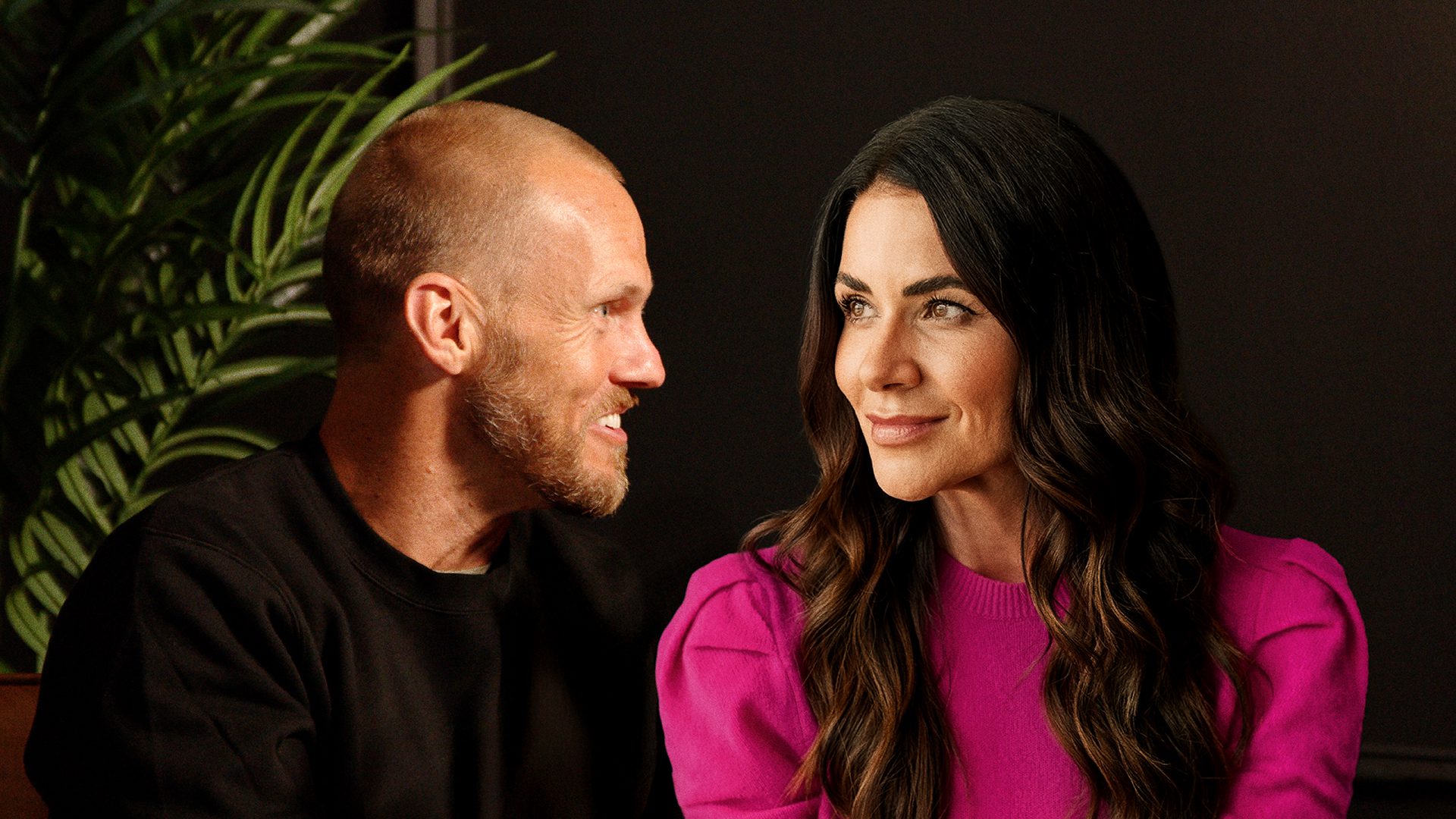

How do we move from checking boxes to truly meeting God in his Word?
In this episode of Everyday Radical, David Platt and Tara-Leigh Cobble (creator of The Bible Recap) talk about what it means to read Scripture with fresh eyes—seeing God for who He is instead of simply looking for what it says about us.
From struggling through dry seasons to rediscovering joy in God’s character, this conversation points us back to the heart of Bible reading: delighting in Him.
In this episode:
- The danger of twisting Scripture around ourselves instead of seeking God
- How daily reading builds a “reservoir” of truth for trials
- The role of community in helping us persevere in God’s Word
- Why we all need the gospel—every single day
Whether you’re discouraged in your Bible reading, stuck in routine, or longing for deeper joy, this episode will encourage you to approach God’s Word with awe, humility, and dependence on Jesus.
Join us every Tuesday for Everyday Radical—honest conversations about how to live out the gospel with courage, conviction and compassion—and how to help others do the same.
David Platt: Tara-Leigh, thank you for being a part of this conversation, and just, thank you. I praise God for His grace in your life. We were praying right before we started this, and as I’m praying, near my age, just immediately came in my mind, just the picture of God’s people with His Word, like delighting in His Word, and people helping them understand it in a way that led to confession and weeping in a way that led to joy, rejoicing. So, I praise God for how God is using you, The Bible Recap, to create understanding around His Word, love for His Word in the hearts of multitudes of people, so.
Tara-Leigh Cobble: It’s my favorite thing in the world. Doesn’t it just bring you so much joy to help other people fall in love with God’s Word? When you say something or teach something, and somebody’s like, “What? I never knew that. I never understood that. I understand God in a new way.” It’s just that’s my favorite thing.
David: Yes, well, and the beauty. We were just talking about how, so our life first, John 3:30, your life first, my life, that was since I was a teenager. What about you?
Tara-Leigh: I think probably around the time I was a teenager as well.
David: Okay.
Tara-Leigh: Yeah.
David: But that’s part of what the Word does, right? Because you can’t take credit for anything. All this thing that is just… this person’s joy, what they’re experiencing through the Word. It’s like, oh, I didn’t create it, I just helped you see what was there.
Tara-Leigh: There’s a poet. I don’t recommend his poetry, but I love this line from his poetry. Khahlil Gibran said, “I am a hole in the flute that Christ’s breath moves through.” Right? Just so good.
David: Hole in the flute, whoa. Okay, yeah. Love that.
Tara-Leigh: Right? I’m just a hole in the flute that the Christ’s breath moves through.
David: Wow, I’ve got chills.
Tara-Leigh: Yeah.
David: Yes. He must become greater, we must become less. The Word does that. Okay, so, a lot of people know some of your story, but when would you say you first fell in love with the Author of the Bible?
Tara-Leigh: That would be, I remember it, it wasn’t that long ago. I’ve known the Lord; I have no memories of my life that Jesus is not a part of.
David: How you grew up in the church, yes.
Tara-Leigh: Right, yeah. Earliest memory is saying John 3:16 with my mom. But it wasn’t until my second time reading through the Bible that I fell in love with God.
David: Reading through the whole Bible. You’d read through the whole Bible one time, very intentionally.
Tara-Leigh: Didn’t like Him, didn’t like Him. And there’s a pastor named Lee McDerment in South Carolina who had walked through that journey with me, and he’d answer my questions along the way. So the first time through, I’m reading it, and I had always tried and given up several times to read the Bible, like most Christians. And he said, “You need to read it all. You can read it in 12 minutes a day, and I’ll answer your questions along the way.” So, that kept me going.
So into the first trip through, I go back to Lee and I’m like, “I don’t know what to do because I know this is true. I believe all this is true, and I don’t like Him.” And Lee said, “Okay, well, I’ve walked through Scripture with you for a year. I know the lens that you’re reading Scripture through. I know the kinds of questions you’ve asked, so I know what you’re looking for. So, I have a new challenge for you. I want you to read it again and stop looking for yourself. Start looking for God. What does He love? What does He hate? What motivates Him to do what He does? Because this book isn’t about you. It’s for you, but it’s not about you.”
And so, he gave me some questions to ask myself as I’m reading. What does God say or do in this passage? Again, what does God love or hate in this passage? What does it reveal about His character? What attributes of God are named here? And I was about halfway through the Old Testament in the prophets, which is not where you expect to fall in love with God.
David: And were you reading just straight through?
Tara-Leigh: Chronologically.
David: Okay, you’re reading chronologically through, obviously. Yeah.
Tara-Leigh: So I was reading chronologically, it’s the plan we do with The Bible Recap now. And it was built out by Blue Letter Bible originally, and so I was doing that plan for my second time through, and I had been reading the same book for about a year and a half, but with this new lens, it changed everything. The lens through which I read scripture with the lens to look for God. So, that’s something that it doesn’t come naturally to us, that whole, He must increase, I must decrease. I had always come to Scripture and had mostly heard Scripture taught to me as, what are the application points? How do I go and be a good, moral Christian? How do I please God with my life? And if I’m honest, the reason I wanted to do that was because I wanted Him to give me what I wanted. So it was very much still about me. So that, He must increase, I must decrease, that is a regular rhythm that I get to practice when I look for God in Scripture and not myself.
David: Do you remember where you were in the prophets?
Tara-Leigh: I think I was in Isaiah.
David: Okay, all right. Just seeing this grand picture of God and His holiness. But yeah, even… Wow, because there are, yeah, some challenging things about God’s character, at least challenging to us in a lot of those prophets as well.
Tara-Leigh: For me, one of the things that was most shocking as I was reading commentaries and things about the character of God was, I always thought that things like God’s wrath were just things we tolerated because He had so many other good perks, like we can put up with His wrath because He’s really loving. And to discover that even God’s wrath is a praiseworthy element that it should induce awe and delight in us is, I mean, that blew my hair back. I was just like, what, what?
David: Yes. When I was thinking about, I was actually having a conversation earlier today with somebody just talking about in Heaven, we’re not going to be questioning God’s justice. We’re going to be praising God for His justice and all the ways that’s playing out in the whole narrative of Heaven.
All right. So, you fell in love with the Author of the Bible. So, does that mean that reading the Bible from that point on was just easy and without challenge or cost or anything in your life?
Tara-Leigh: Absolutely, yep.
David: It’s that easy from that point on, and so every Christian should expect it, should be the same.
Tara-Leigh: Yeah, and I fully understand it now. Yeah, yep.
David: Yes, just like that. Amazing.
Tara-Leigh: And remember it all.
David: No, okay. So when you think about, yeah, what are challenges or costs that you’ve experienced when it comes to reading the Bible?
Tara-Leigh: I think, I mean, there have been multiple. Sometimes it’s a discipline, right? I’ve made it pretty much a habit. So that often when you start out with something new and you’re introducing it into your life, it’s a discipline. And until that discipline becomes a habit, that can still be a struggle. And so there’d be days when I would wake up and I’d be like, I don’t want to read the Bible today, or the passage I read yesterday was really dry. I think that’s what I meant. Again, I think I’m still in genealogies again today. So, you just have to get over that, and you get into the habit of it. Sometimes it’s been a misunderstanding. I think for me, I have found a lot of places in Scripture where I’ve had the same bible since my first trip through the Bible, and I’ve read a couple of times a year.
David: Today, you’re using the same one?
Tara-Leigh: Same one. And so throughout my journeys through, my first trip through, I would make some notes in the margin. I like to make a note in the margin when I feel like I’ve learned something new or uncovered something that’s exciting for me. And there are numerous places, if I had it right now, we could easily flip to find a place where I’ve marked through a note that I had previously taken.
David: Really? Yes.
Tara-Leigh: I’m like, oh, no, that’s not all right.
David: Never mind.
Tara-Leigh: And God’s patience with me-
David: Yes, so good.
Tara-Leigh: … to continue teaching me about himself. And so, I’m still on a journey learning; it still can be a challenge sometimes. I used to not like Isaiah, and then I really didn’t like Isaiah my first time through. The second time through is where that changed. Currently, don’t love Ezekiel. I trust that someday there’s going to be a day when I read the Bible and I’m like, man, Ezekiel really hit this year, this is good stuff.
David: Well, there are parts like the beginning. Well, just, there’s a lot we could talk about there. I do think about though, as you were talking, I think about Genesis 3, I think about the first temptation attack of the adversary in the world. It really was on the relationship between God and His people and His Word. Did God really say? We shouldn’t be surprised that there is an adversary who doesn’t want us to experience intimacy with God around His Word, trusting His Word, believing His Word. I really, would you agree with this, that there’s never going to be a point where Bible reading, meditation, obeying, memorizing is going to be without struggle, at least in this world, in this fallen world?
Tara-Leigh: Yeah. I don’t think so. As long as we’re in these fleshly bodies and we have an enemy of our souls, who, he’s super predictable, Satan. He has that one thing over and over, it’s like God can’t be trusted, God can’t be trusted, God can’t be trusted. And so, to make us want to doubt what God says from the beginning, even when he is warring with Jesus in the wilderness. We always talk about Jesus fighting back with Scripture, but Satan’s tool with Scripture too, just twisted Scripture.
David: That’s good.
Tara-Leigh: You know?
David: I mean, not good, but yes. Yes, yes, yeah, that’s true.
Tara-Leigh: And he’s a one-hit wonder.
David: Yes, yeah. What are some misunderstandings that you think people have when it comes to just reading the Bible, understanding the Bible, and how to approach the Bible? I mean, you talked about the man-centered, our self-centered lens.
Tara-Leigh: Yeah, the lens.
David: Yeah. What are some other things that come to your mind?
Tara-Leigh: I think for me, one of the things that I have tried to do really, it’s really been important to me as we built The Bible Recap is, I don’t want to scream where Scripture whispers, and I don’t want to whisper where Scripture screams. And so, there are places in Scripture where it’s okay if I don’t have a fully formed theology around these secondary and tertiary ideas. And so I think for some people, they feel like when they read the Bible the whole time, they should understand it all, and they should have a position on everything, and there are very few hills that I will die on.
And so I just was having a conversation a couple of days ago with my team about our perspectives on Revelation and the different views on the Book of Revelation, different views on our different eschatological positions. And I was like, I don’t think it’s wrong to have an opinion, and I don’t think it’s wrong to not have an opinion. I personally hold it all with an open hand. I don’t feel like even as a person whose job is to study the Word and talk about it, I think it’s okay to not put my foot down on some of those secondary and tertiary issues, and-
David: As you were talking about that, I’m thinking about Tom Schreiner, New Testament theologian, who has written, yeah, multiple commentary books. But he was preaching through Revelation. I’m not going to get this exactly right, so I’m not representing Tom Schreiner’s position, but he was preaching through Revelation. He had one viewpoint at the beginning, and then he got to Revelation 20, and he switched. He was like, “You know what? Studying this text, I’m…”
Tara-Leigh: I’ve changed my mind.
David: Yeah, I don’t think that was… and so, but then I listened to him explain that, and he was like, it’s not like you’re going to have a lot of confidence in me right now, but this is where we need to see, yes, there are-
Tara-Leigh: I love that humility.
David: … things that are clear and direct in scripture that are, yes, yeah, non-negotiable, we stake our lives on. But there are other things where it’s okay to hold it with an open hand, but that doesn’t mean we don’t even… That’s part of what I love about Romans 14, when Paul’s like, “Be firm and have a conviction about whether or not to eat this meat or celebrate this holiday, so, and operate out of the overflow of that.” But don’t promote disunity in the church over that where it’s… Yeah, anyway, there’s a skill there to be learned.
Tara-Leigh: Yes. I think threading the needle on that is so important because it’s not like, who knows? It doesn’t really matter. Why do we even need to study these things? That’s not my perspective on it. I think it’s important to study these things, but there are things God hasn’t revealed, and there are things that can be complicated and complex to unwind. And I love the humility that he presented in that. And I heard John Piper preach a sermon where he rebuked a former sermon he had preached. He was like, “Here’s what I’ve learned in the past 20 years.” And I was like that’s, I love that.
David: Yeah, wow, yeah. That’s good.
Tara-Leigh: I love that.
David: Yeah, or even I love when you talk about these notes you’ve got in your Bible. Okay, never mind. But the beauty is, that’s us, we’re wrestling through this with our finite minds, and here we have this Word that is true, that is timeless. But it’s, yeah, and we need to approach it humbly.
Tara-Leigh: Yeah. It never lets us feel like we’ve arrived, which I think is great.
David: No, yeah. That’s good.
Tara-Leigh: One of the things I love about Scripture being living and active is that there is always something new for me to discover in it. And I’m a different person when I come back to that passage six months later or a year later, and so there’s something new in me that it can connect to that the Holy Spirit can engage and ignite in me.
David: Well, and not even just, well, I need to learn new things, for sure. But I just think about my time in Psalm 77 this morning, there are just some things that are really heavy on my heart. And the first verse, “I cry aloud to God, I cry aloud to God.” It says it twice, and then it says, “And He will hear me.” And sorry, that’s not new. I cry aloud to God all the time, and I know he hears me, but I needed that verse to open up the very beginning of my time with the Lord this morning. So, that’s the beauty of communion with God. To hear him speak that word to me in that moment was something I really needed. So anyway, praise God for the privilege of hearing His voice like that.
Tara-Leigh: Yeah, absolutely.
David: Yeah, sorry. Okay, this is not about me and what I’m walking through right now. But even, I’m going to stay there for just a second, actually.
Tara-Leigh: Yeah, because it is actually. It is about you and what you’re walking through right now.
David: Yes, yeah.
Tara-Leigh: He’s in all those spaces.
David: Yes, for sure. And what was so good, as I get further down in Psalm 77, and the psalmist there is just really struggling like, God, where are You? What’s going on? Why is this happening? But then he says, “That this I will call to remind, I’ll remember the years of the Lord most high.” And he just starts to talk about He’s the God who does wonders, and he starts recounting the wonders He’s done. And it was so good because that’s where, isn’t this why daily Bible reading is so necessary? So that when we get to that moment where our faith is attacked or just we’re walking through the trial, we need a reservoir to be able to stop. I’m recalling the years of the Lord and His faithfulness and all He’s done certainly in my life, but all these things that I’ve seen Him do in His Word, He will be faithful to me today.
Yeah, I mean, you spend your life helping people read the Bible every day. Why is it so important for people to read the Bible every day?
Tara-Leigh: I’m not married, but I hear that it’s pretty important to have regular communication with your spouse.
David: Yes.
Tara-Leigh: And that’s how intimacy happens. That not every conversation is a deep, rich quality conversation, you come away with this complete new depth of intimacy, but you don’t get those moments unless you have regularity.
And it’s called daily bread, right? Daily bread. And so that is something that I have found that is true in my life, because you just used a phrase, something about when our faith is attacked, and I just had the thought in my head, nobody attacks my faith more than I do. Nobody attacks my faith more than I do. No worldly circumstance, no lie of the enemy. I lie to myself more than anybody lies to me. You know? And so I just was like, oh, I’m the chief attacker of my own faith, and so I need a voice that can speak at a higher volume with a bolder density in a bigger font than my own lies. And so I’ve got to store up, I’ve got to in that reservoir, just pack it with the truth of God because I know the world’s about to lie to me, the enemy’s about to lie to me, my flesh is about to lie to me, and I need a louder voice in there.
David: Yes, yes. I cannot live without that time with the Lord in His Word in the morning. I mean it, because of that, because if I don’t have that time, I am just susceptible to all those lies, yeah, all day long. I will be conformed to the pattern of this world if I’m not transformed intentionally by the renewing of my mind.
Why do you think that’s important to do in community? So, not just in our own time alone with the Lord, but to walk through the Bible together?
Tara-Leigh: Yeah. I love that so much.
David: You’ve cultivated by God’s grace’s, this community of people are reading through the Bible together.
Tara-Leigh: It blows my mind. We have entire churches doing The Bible Recap together.
David: I love it.
Tara-Leigh: We have a whole kids division now, like The Bible Recap for kids.
David: Oh, that’s so good.
Tara-Leigh: I love it so much.
David: Yes.
Tara-Leigh: These kids are going to have read by the time they’re 18, some of them will have read the Bible 10, 15 times. Can you imagine?
David: How great is that? Yes, yes.
Tara-Leigh: So, anyway, doing it with the family, doing it with the church, doing it in community, first of all, you’re more likely to stick to it like any habit, especially when it’s hard for you in the beginning. But then also, just to have a space where you can confess those lies you tell yourself, confess the things you’re struggling with to other people. James 5:16 says, “Confess your sins to one another and pray for one another, that you might be healed.” That those things we struggle with might be unlocked by the power of the church coming together.
And so we talked before we started here today, you’re going through some stuff, I’m going through some stuff. And my assistant and I were just in the bathroom touching the hair and the makeup up before we came on camera and she was like, “I’m just going to pray.” And it was exactly what needed to happen. In the midst of the chaos, to just center on the God of the universe who works all things together for the good of those who love Him, for those who are called according to His purpose, and that sets my heart at ease. When you’re waiting to find out what’s going to happen, when you’re waiting on the call from the doctor, when you’re waiting on the resolution of a disagreement, when all of those things are at play, and it’s just like the faithfulness of God, the faithfulness of God. I will cry to the Lord and He will hear me.
David: Yes, yes. He will hear me. And to have people in your life who are speaking that into you. And I always think about in Deuteronomy, this whole picture of when you talk, when you walk along the road, when you sit down, when you lie down, when you rise, for the Word to just saturate your conversations. And I’ve found when Heather and I, and then our kids, join in as they have gotten older, we have been using the same Bible reading plan. We’ve not used the exact same plan, but reading the same portions of the Bible every day together it transformed our relationship. It transformed our family worship time around the house. It transformed just the on-the-go conversations as we and our church family do the same thing. All those churches, all those kids there. And even the other day, Heather sometimes jokes, she’s like, that I’ll come with something that I’ve seen and she’s like, “Well, I totally missed that.” But that, the other day-
Tara-Leigh: I love that.
David: She was like, “Didn’t you love the Word this morning?” And I was like, “Yeah. What did you love about it?” Because I wanted… but she had seen something that was super encouraging that I had totally, not kind of, I totally missed. We need that in each other, and for that to be the foundation of our relationship, and say relationship not just with and family, but in the body of Christ. It’s so-
Tara-Leigh: It’s so good. It has so many more benefits than we can even conceive. Kind of like what you just talked about with Heather and how we each see and learn different things in Scripture. But I know there’s the first church that I know of that ever did the Bible recap as a whole church. It’s a multi-site, like 16, 17 campuses. And they’d never done anything like this before. And they were most excited about how it would bless their congregation because it was a lot of new believers in their congregation. And one of the pastors said to me after their first year of doing it, he said, “We’re going to do it again.” And he said, “I was most excited for how it would bless our people. What I didn’t expect was to walk into the office and the fact that we’re all reading the same thing every day. I never walk into the office that I don’t hear staff members encouraging each other with what they’ve read in the Word that day.”
David: Yes, yes, yes.
Tara-Leigh: And just that community aspect, wherever it happens in a home, in a church, in a small group, at a job site, with your pickleball team, you know?
David: Yes.
Tara-Leigh: Your pickleball team, whatever, your pickleball crew. However it happens, being in the Word with people changes things, and that’s how Scripture was originally received for the most part. You know?
David: Yes, yes, yes. It’s read in this hearing of this congregation, this letter to this church is they had to be… That’s so good. They had to be like, that had to be the topic of conversation in Thessalonica for a while, like, what, this? Did you hear what he said? He said this. Yeah, that’s so good for that to be the center of our… And talk to me about the importance that you see of that across generations. You mentioned the kids, but for generations to do that together, I mean, you see that plan out through The Bible Recap. What encourages you when you see that?
Tara-Leigh: One of the cool things that happens when families read together, the kids doing the kids’ version, often the family will play the audio Bible reading, and then the kid will do The Bible Recap for Kids, and the adults will do The Bible Recap regular version. And the parents will often say that things happened to them like what happened with you and Heather, where they will have totally missed something and their kid will point out.
David: Check it out. Oh, that’s so good.
Tara-Leigh: Right?
David: Yeah, I love that.
Tara-Leigh: How encouraging do you think that is for the parent? To be like, look what my kid just discovered in Scripture. He’s six.
David: Yes, yes.
Tara-Leigh: I’m like, I cannot wait to see that I’m so excited for future generations because something is happening in the Church right now with Gen Z is starting to really come back to church, more men than women. What’s happening? I don’t know, but I’m so excited. I have so much hope for the Church.
David: That’s good. I was talking actually earlier today about a was it 18 to 20 year olds group that I was speaking to? And they were not like arms crossed sitting back like, what do you got for me? It was like edge of their seat. At one point, some of them were standing on their seat saying, “Amen.” It was like near my… and it was so good, but yeah, there was a real hunger. And that’s where one other thing I think about as I’m listening to you say that about the six-year-old, we really do need each other across generations. Yes, younger generation needs spiritual mothers and spiritual fathers pouring into them, but we need the next generation. We need to see Scriptures through the eyes of a six-year-old as well and to learn from what God is doing in teenagers as they’re walking through the Word together. Yeah.
Tara-Leigh: There’s a wisdom of the aged, and there’s this zeal that the young people often have, and I think the Church needs both of those. And the way Gen Z is, some of my friends are Gen Z, and they are the most evangelical people. They just are evangelizing everywhere we go, and I’m like, this is so inspiring and convicting.
David: Yeah, and like, okay, wait a minute, I need to get on, I need to join with you guys here. Yes.
Tara-Leigh: Right?
David: You’re showing me.
Tara-Leigh: It’s the best. It makes me so happy.
David: 1 Timothy 4, you’re setting an example for me.
Tara-Leigh: Yeah, absolutely.
David: Yeah, that’s good. Okay, I was about to say for anybody listening to this, I know there are many people listening to this, watching this, who, I mean, we could talk for hours just about the joy of being in the Word, who just don’t feel that joy when they think about the Bible. Feel intimidated, feel even discouraged, they don’t have more desire. So, what do you say to that person who’s struggling to get into the Word, struggling with motivation to get into God’s Word, and their experience of God’s Word is just not what we’ve been talking about?
Tara-Leigh: Well, I would say I find that wildly relatable because that’s how I felt for a year and a half of every day picking up my Bible and going, either I don’t want to be here in this or I’m here and I don’t like Him. And so, I get it, I get it. I have no condemnation for that person. What I have for that person is an invitation. And it is exactly why I built The Bible Recap, was to help people read Scripture with a new lens to understand it. I don’t just want to help people read it, I want to help them understand it, and I want to help them love it. That’s what we say. We want to help people read, understand, and love the Bible and the God who wrote it.
David: I love it.
Tara-Leigh: And so everything is geared toward that. And every day we end with something we call the God Shot, which is the snapshot of God and His character from that day. It’s not an application point. If you come to Scripture with, what am I supposed to do? And you read it and you’re like, okay, I need to be nicer to Heather this week, I need to be nicer to Heather, that’s what I’m taking away. Well, that’s not a God Shot, that’s a me shot, right? What a God Shot would be is that God is kind to those who are rebellious. God is patient with those who fail to see His character.
And so, the difference would be if you read that I’m supposed to be nicer to Heather, and you go away and you are short with Heather, then you feel like a failure, and you don’t want to come back and read Scripture the next day. It’s this burden of… If you read it with a lens to look for God and you go and you’re unkind to Heather, and then you’re like, okay, God is patient, God is kind to me, then that kindness begins to show up in your character because you become what you behold. The Holy Spirit, who has imparted that wisdom of God to you, lives it out through you in your subsequent responses. And so then you start to have a bit of a lift, a bit of a, oh, repentance brings this delight and joy.
I just had to, I called and apologized to my physician’s assistant that I was short with on the phone yesterday. I had to call her, I was like, “Hey, we’re on the same team here. I don’t like how I talked to you. I’m a believer. I follow Jesus and He just really convicted me last night about the shortness in my tone,” and it was a lift to my day. And so if a person is coming to Scripture and they have that weight and they don’t have that joy, I would say there’s probably a good chance they’re reading it with the lens that I always read it with.
So, I have a new lens that I would love to invite you to join me with The Bible Recap. If it’s not for you, that’s fine. You might learn a few tools that are helpful for you. But I think another thing that’s important to remember is that no matter what reading plan you use, you’re probably going to do it imperfectly. And if you have set a standard of perfection for yourself, you’re going to be really disappointed because you can’t live up to that. And so, I would just encourage that person to remember that every day that they’re in God’s Word, they’re right on time. There’s no such thing as being behind when you’re reading Scripture.
David: That’s good, that’s a great word. Now, a lot of this has implied, I don’t want to miss anybody who doesn’t know all about The Bible Recap. Tell just where they can find The Bible Recap, what The Bible Recap is. So yeah, why, what it’s made for. Yeah, go for it.
Tara-Leigh: Oh, yeah. Thebiblerecap.com and it’s a guide to help people read, understand, and love God’s Word. Basically, we have a New Testament reading plan that’s about three months. We have a whole Bible reading plan that’s a year, but it might take you two years, three years, however long it takes is how long it takes. And basically, you go and read Scripture, and that day’s part of the chronological reading plan, about three-ish chapters, 12-ish minutes of reading. And then you come to The Bible Recap, either in book form or we have a podcast and a YouTube, and the podcasts and the YouTube are free. And I explain what you just read in about eight minutes, and I point to the character of God and the joy of the Lord.
Every day we end with saying, “He’s where the joy is,” and that’s to me, one of the things I really want to teach people about Scripture, is the fear of the Lord consists primarily of delight and awe, like delight and awe, the way people feel about the Grand Canyon. You know? Just its beauty and delight. And so, I feel like because my pastor walked me through Scripture two years in a row and trained me how to read it, he imparted to me a gift that I now want to impart to anyone who struggles to read Scripture, understand it, love it, like I have. I want to impart that gift to everybody, and we found that it’s just contagious. So many people want to then have their husband do it, have their kids do it, have their church do it, have their… And we just launched The Bible Recap Bible.
David: Yeah, I was going to ask you about that. Yes. So, tell me about that.
Tara-Leigh: Yeah, yeah, it’s a two-in-one book. It’s got the daily chronological reading, followed by the recap. The next day is chronological reading, followed by the recap.
David: It’s all there.
Tara-Leigh: You have four versions of that.
David: That’s so great.
Tara-Leigh: Yeah. So, super pumped.
David: So basically, the Bible with alongside it, this guide to understanding it as you read through it chronologically.
Tara-Leigh: Right, yeah.
David: Yeah. That’s what I meant. So I’m just going to, in just a second, I’m going to ask you just one other thing you would share. So, and I know that’s not fair, but just one other thing. But that’s what I meant when I was talking about Nehemiah 8, for yeah, go read Nehemiah 8 as we’re talking about this. But this picture of God’s Word, everybody’s in awe, they’re lifting their hands, they’re bowing down with their faces to the ground. Just when the Bible’s opened up, right? All they did was open the book, and everybody went nuts. But then, as it was being read for hours, there were leaders who were there to help people understand the Word, and it led to fear and joy. It led to fear and joy, and so I’m just so thankful for that, that’s happening just daily, and that’s possible for us. I just think of all the different ways I pray God uses the conversation we’ve just had.
I pray for pastors to have confidence walking through the Word like Tim McDerment.
Tara-Leigh: Lee McDerment.
David: Lee McDerment, sorry, did with you. Yeah, just don’t underestimate as a pastor what walking through God’s Word with people will do in their hearts.
Tara-Leigh: Right.
David: For those who feel discouraged when it comes to Bible reading, I’m talking to Tara-Leigh Cobble, who does The Bible Recap, and she’s like, “Yep, I was there.” So just there’s, don’t be discouraged in that. There’s a whole journey and then everywhere in between. All right. So, one parting thought you would give at the end of this whole conversation.
Tara-Leigh: One parting thought.
David: To people, yeah, just anything. I don’t want even, whatever the Spirit leads you to encourage us with.
Tara-Leigh: Okay. Can I tell you what’s been on my heart lately with this?
David: Yes.
Tara-Leigh: I need the gospel. I need the gospel, and here’s what I mean. And we all need the gospel every day, and I think often, the messages that I hear from pulpits do a great work of telling me how to live a good, godly life, and I need that. We need that, we need the law, but I don’t want to forget that the law is not the gospel. That the gospel of Jesus Christ is that none of us can earn or maintain our own salvation through our works. That we are saved by works, but they’re Christ finished works, not our own. That we are saved by believing in Him and His finished work. And I think I see a commingling of that in the Church that scares me.
I sat in a church a year ago where the pastor said, “The gospel is that you should die to self and serve others.” And I was like, that’s not the gospel. That’s a response to the gospel, that’s not the gospel. The gospel is, it is finished. And if I don’t remember that it is finished, my flesh every day is going to tell me to go finish it. Every day, my flesh wants to tell me that I need to add something to my salvation. And Paul in Galatians, when the Galatians were wrestling with like, is this required for people to be true believers? And Paul said, “You are severed from Christ, you who would be justified by works.” Severed, not adjacent to Christ, severed from Christ. And so, any gospel that tells you you have to do something to earn or maintain your salvation, apart from belief in Jesus, is a false gospel. And I need the gospel.
David: Yes, and we, yeah, all need the gospel.
Tara-Leigh: Yeah.
David: This is, yes, by grace through faith in Jesus alone.
Tara-Leigh: Now and forever.
David: In sufficient, yes, for all of eternity. And really, to see that on all the pages of Scripture, to see it all pointing us to the gospel and God’s sufficiency for our salvation, God’s love for us, not based on our performance for Him, but based on Jesus’ performance for us. Yeah.
Tara-Leigh: Yeah, and I bet there’s somebody out there listening or watching right now who fears that they have fallen from grace in a way that is irreparable. But when Paul used that term, “Fall from grace, you have fallen from grace,” it’s an accusation against those who are trying to obtain their own righteousness. It’s not a reference to those who’ve fallen into sin. It’s a reference to those who’ve fallen into self-righteousness.
David: Oh, wow. That’s really strong.
Tara-Leigh: So, if there’s somebody out there listening who feels that they are beyond God’s grasp, I assure you that is what the blood of Jesus is for. It reaches far enough for you.
David: Yes, yes. Receive that. That’s so good.