

David Mathis on Exercising for the Glory of God

Is exercise just self-improvement—or can it be part of Christian faithfulness?
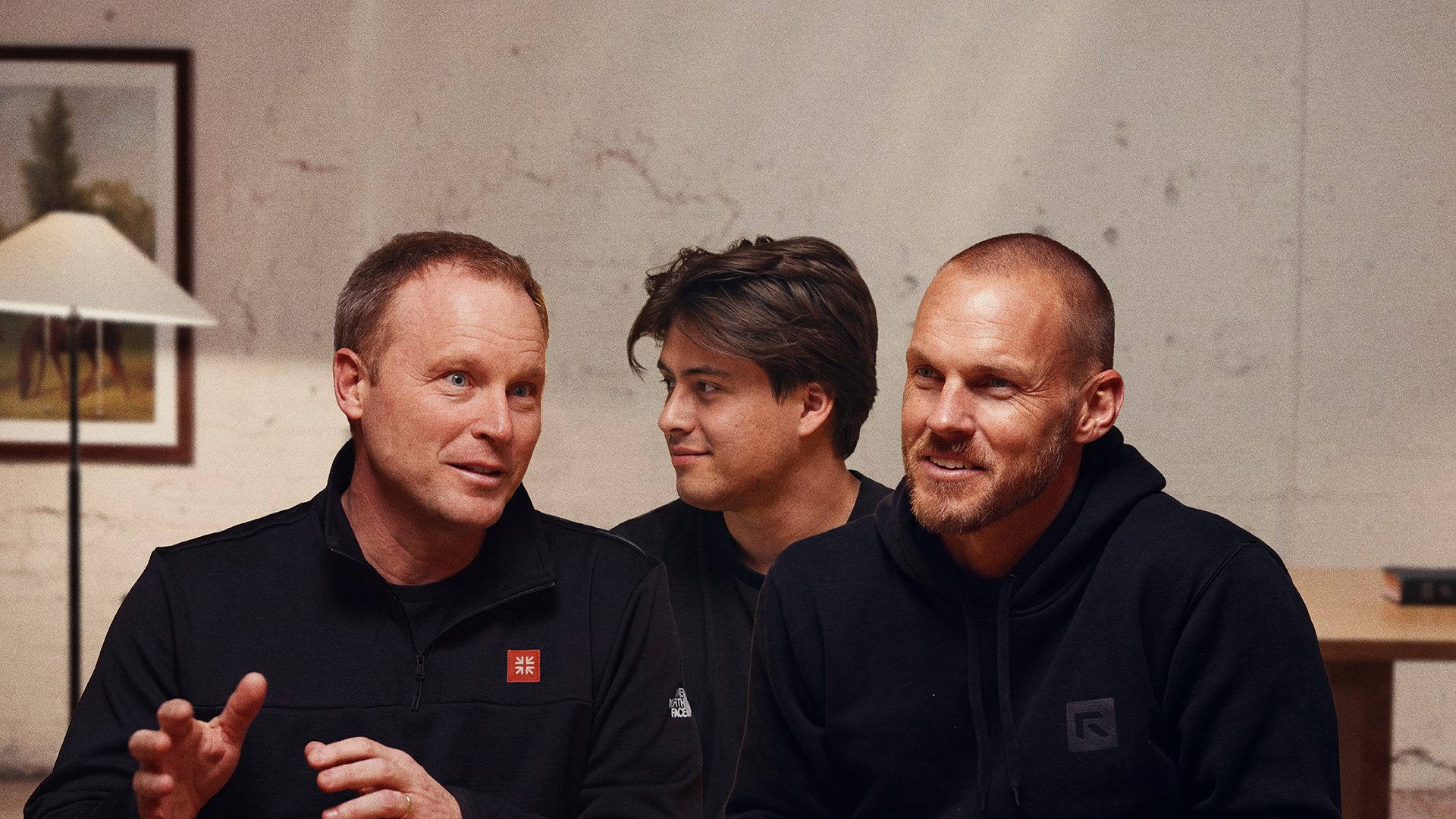
In this episode of Everyday Radical, David Platt and Austin Huang talk with David Mathis about exercise, fitness, competition, and what it looks like to honor God with our bodies.
About This Episode
Many Christians are unsure how to think about exercise. On one side is neglect of the body. On the other is obsession with fitness, appearance, and performance. This episode helps believers think biblically about physical discipline without slipping into vanity, guilt, or self-focus.
David Mathis (author of A Little Theology of Exercise) brings a pastoral and practical perspective to questions many Christians already struggle with: Does exercise really matter? Can competition be God-honoring? Is it sinful to ignore our health? And how should believers think about food, sleep, motivation, aging, and disability?
This conversation shows that our bodies are not everything—but they do matter. Exercise, rest, and discipline can all become meaningful acts of stewardship when they are received as gifts from God and offered back to him in faith.
Key Questions Discussed
- Should Christians care about exercise?
- How do physical health and spiritual health relate to each other?
- Is there a distinctly Christian way to think about exercise?
- Can competition be pursued for the glory of God?
- How should Christians think about food, sleep, and bodily stewardship?
- What does it look like to honor God with your body without idolizing it?
In This Episode
- Why David Mathis wrote a book on exercise
- Why it can be difficult to connect physical and spiritual health
- How 1 Timothy 4 helps frame exercise as something received with thanksgiving
- What it looks like to pray over and through your routines
- How movement, community, and evangelism can overlap
- Whether competition can reveal the heart and still be approached in faith
- How Christians can think about food, sleep, disability, and motivation through a biblical lens
How to Respond
- Ask whether you have been neglecting your body or making too much of it.
- Consider how ordinary physical habits might become opportunities for gratitude, discipline, and worship.
- Bring your routines before God in prayer, asking Him to help you steward your body with wisdom and humility.
Everyday Radical—honest conversations about following Jesus with courage, clarity, and compassion in everyday life. New episodes every Tuesday.
David Platt:
David, we met… I think the first time we met was years ago. I mean, it would’ve been at a Desiring God conference, I think. I don’t know. It was many, many years ago.
David Mathis:
I’m wondering if in 2006 at the first Together for the Gospel, because of our friend Rob Wilton, Rob might introduced me to you years ago. That’s almost 20 years ago. It was crazy.
David Platt:
Yeah, it’s pretty nuts. Yeah. So man, you have… Well, by God’s grace. So I just think about that. Yeah, it’s good to be at the table with you 20 years later. I saw some people just the other night who I was in seminary with 20-plus years ago, so graduate school, and I didn’t even know this person that well, but when I saw him and they’re still going at it, serving in the church, I just gave them a big hug. It’s good to still be doing it. So anyway, I know you were like five years old when… So I’m not trying to be like the old guys, but I just… Man, I say that because I’m thankful for your faithful leadership in the church and serving the church, pastoring, and serving the broader church through Desiring God. So grateful for you, brother.
David Mathis:
Thanks, man. Me too. But it is one of the grace of getting older. So I’m in my mid 40s and in your mid 40s, you can have friendships that are 20, 25 years. That’s one thing you don’t get. With the energy of youth, you don’t get that kind of longstanding relationships, that appreciation for God’s grace over the years.
David Platt:
Yes.
David Mathis:
I think that’s something I look forward to as we get older.
David Platt:
Yes, that’s a good word. Amidst the challenges that come with getting older and making sure we’re healthy in whatever stage we’re in, which obviously you’ve… Yeah. Tell us, for somebody listening, the most recent book you wrote on exercise, why you wrote that and why that’s important, and even a theology behind it, why that is so important.
David Mathis:
Oh, man. It is not something I dreamed about writing years ago or set out to write necessarily. I felt like kind of the need found me and I was willing just a little step at a time to kind of chase after it. Eventually it came to this small book. It’s a small book, just about a hundred pages. I don’t have a lot to say about exercise and it may not be good for me as a pastor to say a lot about exercise, but just a little. A little theology of exercise. I was active growing up, played baseball like you, David.
David Platt:
And you were good, good enough to have potential in college to play.
David Mathis:
Some college interest and went to college thinking I would play. I was a catcher.
David Platt:
Okay. All right.
David Mathis:
I found that, that was my place of… I was at a big high school in South Carolina and that was my place of involvement. My identity was there in my baseball. That got me to Furman University. At Furman University, God met me in a way like never before. I think I was born again at Furman University and had an active life there and in college ministry with campus outreach. I got married in ’07. I started working for John Piper as his executive assistant and my life became very sedentary for almost 10 years. So first day on the job with Piper, they gave me a laptop and they gave me a Blackberry phone. This is before the iPhone, 2006, and I thought, “Oh, this is so cool to get this nice electronic equipment.” I didn’t know those were symbols of my new sedentary life. And if I wasn’t getting some physical activity outside of my job, I was not going to get normal healthy levels of physical activity. And it took me eight to 10 years to realize that.
David Platt:
Wow.
David Mathis:
So flash forward 2015, I’m carrying probably about 40 pounds more than I needed to be carrying back in 2015, and I’m griping one day to my wife. We’re walking around in Minnesota Lake and she calls me on it. I said, “I just don’t have enough energy to exercise when I get home after work. There’s not time in my life for it.” She goes, “You have time for all the non-negotiables, all the spiritual non-negotiables, all the human non-negotiables. You can make time for those things. You cut out other things after that.” And her comment was, “You seem to have plenty time in the morning for your nice leisurely devotions. What if you took some of that time and did a little bit of exercise?” And so I took her up on it. This was the summer of 2015 and what changed it for me was trying to get some exercise in first thing in the morning. I would do it every other day, a day to work, a day to rest and that changed it for me in particular.
But at that point it wasn’t necessarily Christian yet. I was thinking about my future cholesterol numbers, I’m thinking about the number on the scale. I’m sure I’m thinking, “Oh, I’d rather look better in the mirror than worse in the mirror.” So it wasn’t Christian, it was just human. And so along the way, I started thinking, “I’m a pastor. I’m a theologian. I need to apply my theology to this. What’s my theology, my practical theology of this exercise?” So the first time I wrote on it was in 2017, I thought it was just one article. I had a buddy at Desiring God asked me to do a second and then Justin Taylor at Crossway Books emailed me and said, “Hey, do you think it should be a short book?” And this was March 1st, 2019. And my first thought was maybe someday, not yet. I need to live in this longer.
I was probably in it at that point about two years. I got to live this longer than before putting the paper on it. And in the course of those years, some different invitations came. There was a conference in Des Moines, a Christian exercise conference and they wanted a pastor to come talk about theology in a Christian exercise conference. There was some chapel messages, some other things along the way and eventually I think God kind of breadcrumbed it there. I emailed Justin back eventually and said, “Let’s do it and let’s make it little.” So that’s the journey. I would not have planned that early on. I don’t know that I’m… I’m nowhere near world-class athlete or impressive. In fact, I got a guy at DG, a good friend of mine who’s far more in shape than I am, and he said, “Mathis, you’re a good person for this because…” Essentially saying, “You’re not that impressive.”
David Platt:
He’s like, “Nobody’s looking at you like, ‘Whoa, that guy’s out of reach for me.'” Are you complimenting me? Are you encouraging me right now?
David Mathis:
I do hope that the theology would speak to world-class athletes, but in particular as a pastor, I’m coming to try to help the masses, folks who find themselves in an inactive, sedentary life, who want to move forward, move the needle just a little bit.
David Platt:
Yes.
Austin Huang:
Well, I’ve read the first chapter already and I loved it. I think that that is such a unique voice because it’s either… We were talking about this earlier, in the world of fitness, it’s either you swing all the way over here and you’re idolizing the body, you’re idolizing working out, or you swing this way and it’s like you’re saying it’s a sedentary life where you’re not doing anything about it. Why do you think it’s so hard for Christians to attach our physical health with our spiritual health?
David Mathis:
Good question. I mean, in some sense, it’s a human struggle. I mean, we have had… You go back in history, Christians, historians love to talk about Gnosticism. Those who talked about the body as not really mattering, it’s the ethereal that matters. It’s the Platonic ideals that matter, but I think that’s an expression of a pagan, sinful influence in all humans. So I think when that happens in the church, I don’t think it’s distinct to Christianity. I don’t think Christianity’s producing that. I think it’s a human struggle. And throughout time… C.S. Lewis talked about man having three views of the body. He talked about the pagans who discarded the body, the neopagans who made too much of it and made it an idol, and then he talked about St. Francis. St. Francis called the body Brother Ass. Brother Donkey. I don’t want to get the explicit filter going here on your podcast. Brother Donkey and he talks about the body being wonderful, beautiful, loveable, stubborn, infuriating beast, which that keeps well with Christian theology, because there are layers to the story of the human body for Christians.
We have the layer of creation, layer of the fall, layer of God himself taking the human body, the ultimate dignifying of the human body in Jesus Christ to come accomplish our redemption in our own flesh. Then amazing, just as amazing, the Holy Spirit indwells these human bodies. Amazing for Christians. 1 Corinthians 6:19–20. And then the Christian lives we live, we live in these bodies and God promises we got this spectacular bodily upgrade coming. So because of the layers, because the human body isn’t storied, it’s complicated. We are prone to get it wrong in many directions. In one sense, I understand why there has been a proclivity among Christians to get it wrong in the gnostic direction because we as Christians do make much of the soul.
We make much of heaven and hell and eternity, and so I understand why Christians would have errors in that direction, why their thinking would be immature in that direction. I don’t want to bless that. I want to say that’s still an error and I want to bring a more mature thinking, but it’s understandable why it would tend in that direction. And then the world around us, we live in a society polarized about the body.
So we have all these labor-saving devices. We have the richest food, I’m sure, in the history of the world. I mean, you get food pushed towards you and a habit of meals even when you’re not hungry in our world. So if you’re just drifting with our society, then you’re going to find yourself overeating and underactive in our sedentary labor. Or there is the fitness culture, there’s a reaction, the counterculture, and it’s all about me, my PR, my visage in the mirror, my image. So we live in those polar society. We’re being pulled at the same time by both directions. I mean, here we are on our device in the sedentary setting looking at these meticulously sculpted bodies that are projecting themselves at it.
David Platt:
We’re living in the tension, yes.
David Mathis:
We are. That’s right.
David Platt:
We can sit around for hours looking at other people talking about working out.
David Mathis:
That’s right. So we as Christians need some intentional thought and help in this so that we can say with the Apostle Paul, Philippians 1, “I want Christ to be magnified in my body.”
David Platt:
All right, how do you do it, man? How do you glorify God with your body? Eating, exercise. Yeah, what are the practical handles you’re like, “Okay, this is what this looks like in practice.”?
David Mathis:
So try to do a little bit of theological triage or sorting. A danger would be for the Christian, just as we’ve said, to just think the body doesn’t matter would be a danger. Another would be to think that exercise in and of itself is a kind of spiritual discipline. I mean, it’s not in and of itself. I mean, non-believers can experience the joys of exercise. The joys of exercise are acquired pleasures. Good exercise involves discomfort, and so as you experience that connected to the reward on the other side, it becomes enmeshed with the pleasure. So exercise can become pleasurable, but just because you enjoy it doesn’t make it Christian. So we need to know as Christians, how do we make that Christian? And where was I going to go?
David Platt:
That’s so significant. I just want to let that soak in for a minute. As I’m processing that, I’m like… I’m just thinking about in our CrossFit gym, obviously not everybody’s a follower of Jesus in there, and so we can be doing the same exercises, the same workouts, but actually there’s a variety of differences here with how I’m processing this, what my motivation is in this, not only the reasons why I’m doing this, but also how I’m doing this is going to be… There’s a distinctly Christian way to work out that’s different. That’s really helpful.
David Mathis:
If at any given moment you just take a snapshot of that gym, you may not be able to tell. I mean, you may say, “Well, that person’s dressed in such a way that didn’t seem very Christian or whatever.” But just in that snapshot, you may not know, but what goes into it? So in terms of the preparation, I don’t think that theology is insignificant. I mean, however maturely or immaturely somebody’s thinking about the nature of their body… So a very practical text, I go to this again and again with exercise with sleep, with any bodily activity, 1 Timothy 4, verses four and five. So the famous exercise verse is 1 Timothy 4:8. Maybe we can go there in a minute.
The first, go to verses four and five, where Paul talks about everything that God created is good and is not to be rejected if it is received with thanksgiving for it is made holy by the word of God in prayer. So I think this is really significant for us as Christians because that’s what we’re talking about here is how do I make exercise holy? How do I sanctify it? How do I make it Christian? And Paul’s way of talking there about food and the marriage bed, which are bodily activities, I think this applies to sleep and to exercise. I’m going to apply 1 Timothy 4:4-5 to sleep, exercise the marriage bed and the dinner table, and-
David Platt:
All these good gifts that are created by God.
David Mathis:
Good gifts in the body, he says that’s made holy by the word of God in prayer. So what does that mean? Word of God means… What does God say about it? And you can take it in the conceptual way of what does God have to say? And our answer for that is, I mean, He says in this book. So to be the kind of man or woman who is in the word, who’s in scripture, who’s saying, “I want to think about my body the way God does. I want to see it as His gift. I want to know that it’s marred threatened by sin, that God himself took a body in Jesus, that He indwells His body by His spirit, that I obey in this body by His spirit and that this bodily upgrade is coming someday for me.” So if I live in light of what God says about my body and activity and then do that, he says by the word of God in prayer. So it may seem like a small thing.
I think prayer is a real linchpin for people in making exercise Christian. In a couple different senses, one of them is to pray ahead, to pray about your exercise. I think so many of us just think we see a number on a scale, we hear a report from a doctor about cholesterol, we look in the mirror and we just react and say, “I want to exercise. I’m going to do this. I’m a Christian. I think through other areas of my life, Christianly, but this area of my life, I just do.” But we don’t want Christians to be animals in their exercise. We want to be Christians. So to pray about our exercise, to genuinely seek God’s face and say, “God, what would you have for me? How can I steward this body? Do I know people in my life who could provide counsel for me? Who can I go alongside with? What kinds of exercise would glorify You?”
Sometimes we ask these questions about what exercises are Christian or not or what’s going too far, but to approach it from the very beginning of how might You direct me, Holy Spirit, God in heaven in exercise. And then in the actual moment of the exercise, sanctify it by prayer. I wish I would have done this as a college student doing college ministry in 2015 when I started exercising again, it took me years to learn this, but in the same way that I pray over meals, which I’m going to connect back to 1 Timothy 4, I want to pray over my exercise. So part of my pre-jog routine is not just stretching, but it’s praying. Part of that prayer is a prayer of gratitude. Father, thank you-
David Platt:
That you can do this.
David Mathis:
Yes, yes. Thank you. I’m on my two feet. It’s chance to rehearse the curse and the fall. I have dearly loved friends who are disabled, who can’t do this. I’ve had my own sprained ankles. I’ve got my own tennis elbow right now. I know. It’s an amazing thing to be able to do. Thank God for that. And then to ask for that consecration. Father, these weights, this jog, this basketball with buddies, whatever the activity is, would this be to Your good purposes in my life? Would You… And we can talk more about this. Would You clarify my thinking? Would it have its good effects in my brain? Would You make me the kind of person who can feel the right things about Jesus and about His word? I want to be emotionally alive and exercise, it helps me be emotionally alive. And so I ask for God’s good purposes and then I go. Some people ask me like, “Do you pray the whole time?” No.
David Platt:
I don’t pray the whole time. I’ve tried at different points, but when you’re in an intense moment, yeah, sometimes it works, sometimes it does. But man, I just love all this because you mentioned emotionally thriving, spiritually. So obviously it’s physical exercise. I think about the mental thriving, just the… Heather and I, so we usually do, that’s our morning routine, get up, spend time with the Lord on… When I’m not traveling or something else. Spend time with the Lord on our own and then we get in the car and we go do CrossFit together and we talk all the time about the mental toughness that… I should make sure to make clear, this is not me being like the CrossFit evangelist, but it is exercise. Mental toughness that comes with pressing through and working hard at this and your body saying no and you just kind of keeping going in healthy ways, obviously.
Yeah, but all that to say, there’s just so many practical benefits, but I’m going to go ahead and just confess when I’m stretching, I’ve not been praying. That is so good. That’s a clear takeaway for me right now just to make sure to soak that time when I’m able to mentally in prayer. That’s really good word.
David Mathis:
One other habit then. So at the outset of prayer, sometimes I’ve got to stretch probably about 300 yards uphill in the last mile coming back to my house, and over the years, as I’ve gotten older, God helped me get up the hill. Help me. When I get to the part of my exercise where I need to endure, I need to have a little bit of resilience, some grit, I’ll pray for help. I’ve got the Holy Spirit. We have the Holy Spirit.
David Platt:
Why would we not?
David Mathis:
The Holy Spirit wants us to use these bodies to the Father’s glory. He’s ready to help in that moment. And then the last one is in stepping to the finish, enjoying the sometimes, not always, sometimes the euphoria of being done, whether that’s endocannabinoids, dopamine, if there’s endorphins involved, whatever’s involved. I’m finished. I want to go to prayer in that moment. Lord, thank You. Thank You for that. Use this now.
David Platt:
That’s the other thing I need to do. When I’m like, “Yes,” on my back, exhausted, legs threatening to explode, whatever, to just in that moment, all the things. Thank You, God, that I was able to do that. Thank you for getting me through it. You obviously did. And yeah, use this for my good. And yeah, that’s so good.
David Mathis:
David, you and I as pastors doing in so much of our work being mental work, mind work, sermon and preparation, meetings with people that the mind benefits, you mentioned there just a minute ago, I think are very significant. I did not appreciate that when I just started back into exercising in 2015. I started to realize that I think when I switched from trying to do late day workouts to early morning workouts, I would just feel various kind of mental help. So the resilience part is one. I mean, just the fact that I had encountered something of difficulty and I didn’t fold. I mean, so much of modern life conditions us to fold at resistance and exercise is a great way to get off your screen, get into the real world, encounter some obstacle, persevere in it and train your soul, teach yourself like, “Soul, you can endure more than you think you can.” With God’s help, but not in a way that would rule out the Holy Spirit or divine help, but you can bear up under more than you probably think in your 20th century Western conditioning.
The other aspects are I just think clearly or at least I think I think clearly and I’m not against having that effect. With it is a kind of mental energy and a clarity of thought and ability to focus and not be distracted. So in our world of distraction, if I can have any help that I can get on focus and on tension, I’m taking it. And so on the mental aspects alone of exercise, I’m going to do that as a pastor. I think it’s worth consideration for Christians just because Christians are people where the mind matters. We don’t check out on the mind. We are our best when our minds are our best, and so exercise can help with that.
Austin Huang:
David, I’m curious if in your book you touched on communal aspects of exercise like community-based… Working out, I think for me, my wife and I started a Christian run club in Austin, Texas, and I’ve just found that Austin, it’s a hub for run clubs, but there’s something different about ours and I don’t think it’s the preparation that we do, I don’t think it’s all the fancy gadgets that we bring, but it’s truly the prayers that we pray, the fellowship of the saints at a run club of anything. Is there anything special about community gatherings when it comes to working out, Christians coming together? Is there something special about that?
David Mathis:
I think there’s added benefit. So I don’t talk much or maybe any about that in the book and it’s a great idea. You’re saying it right now and it totally resonates. I mean, my journey over the last 10 years has corresponded with having children in diapers. So the few moments I’ve had early in the morning before the kids get up, I’m just jetting, I’m getting out and getting back. But now I’m in a season of life now and my youngest is eight and so there’s a little more elbow room. There’s more flex.
And when I can run with a brother, the run feels like it takes a third of the time. We get going in conversation. I don’t care if we’re going a nine-minute pace. Just to have a Christian brother, we’re multiplying the good effects. So I’m working the body, I’m getting those good effects for clarity of thought, work on the heart, so many other aspects, and then with that brother to share Christian fellowship. So if you can multiply that with a running team, a Christian running club, I love it. God hasn’t yet provided that in my life, but hearing you talk about it makes me want to seek it.
David Platt:
Well, that’s good. I think about guys like who they’ve got a garage that they work out in together and it’s like discipleship. And it is. It’s all these benefits applied to, “Hey, we kind of do this together. We press through the hard together.” And the more you bond like that, that’s… So that can have really positive benefits. And so to put a plug in for the other side of things, because it really does. So it’s not going to be the same going to, say for example, a CrossFit gym where you’ve got all kinds of people and you got sometimes music that’s blaring that’s not awesome and not spiritually-edifying or things being said that are not always edifying. But okay, this is part of what it means to be in the world in I think healthy ways to be hope, salt and light.
I mean, some of our… When I think relationships with people who may not be followers of Jesus, and again, this goes back to partly having a job where I’m around followers of Jesus a lot, like this is… Sports in general, whether coaching kids in sports leagues, which I’ve just done ever since my kids have been young, to exercising these ways, it allows you to really develop really good relationships with people who may not be followers of Jesus and in the process hopefully show some of the distinct things that we’ve been talking about. So it’s kind of win-win in my mind. I think yeah, that can be super valuable either way. Does that make sense?
David Mathis:
Yeah.
David Platt:
But we do have to also, yeah as with anything in the world, be careful not to… Yeah, I think not just music or whatever, but I think about if you’re not careful, the motivations of the people around you become your motivation. So to really be more vigilant, just like we always have to be in every facet of our lives in this world not to be conformed to the pattern of this world. So if everything is around you is look better for yourself or yeah, do this or that, compete so that you can win. I mean, I’m pretty competitive. I’m guessing you’re pretty competitive, David.
David Mathis:
I came up on StrengthsFinder.
David Platt:
Let’s just kind of dive into that. Can we dive into that for a second? How do you compete for the glory of God? How do you try to defeat someone for the glory of God?
David Mathis:
Yeah, that’s right. Well, there’s several different layers. I’ve been working on this. This is probably the question I’m getting most frequently with a thoughtful audience when I’m talking about the Christian exercise. Well, what about competition? So I’m working on this. I’ll give you several fresh thoughts. On the one hand, the backdrop is we serve a God, we worship a God who wins in the end and He is defeating Satan and in choosing to run out redemptive history like He does in the kind of patience He exercises in the world, there’s some enjoyment in that defeat. There’s glory for Him in the way that he is defeating Satan so with His patience. So there’s a background, we have a God who you may say in certain terms is competitive. There’s no chance of Him losing, but He’s going to win.
David Platt:
And we’re on his team with God, yes.
David Mathis:
That’s right. There’s some background for competitiveness. Now, I think it’s helpful for Christians to understand the different spheres in which they are and in which they’re living out the commands of Christ. So on the street corner, showing compassion to someone is a different context than being in a game. If you show Christian compassion in the game such that you let a guy have a free basket, you’re letting down your team, you’re letting down your opponent because the terms of the game… As a Christian… I really think part of being a godly player, being a Christian player of the game is you honor the terms of the game, and if the terms of the game are the team with the most points wins, then you want to give that some genuine effort with your team.
Now we all know you can go overboard, and an amazing thing about sports, which is a reason why I’ve been willing to invest so much time in coaching my kids, probably the same for you, David, is it becomes a microcosm of life. Within the bounds of the field and the time on the clock or the innings, our hearts are pressed and things come out that wouldn’t come out, but it’s in there. So it’s not that the competition caused the sin. The competition was a lens that revealed the sin that was there. So the game gives you an opportunity as a friend, as evaluating yourself, as a dad to say, “Hey buddy, when you yelled like that, when you threw the bat…” Just making these up. These are not-
David Platt:
Yes, of course. Of course. You had a friend whose kids did this. Oh, you had a friend who was coaching and said something. Yes, of course.
David Mathis:
What was going on in your heart? So it’s been golden for me as a dad. I guess not right now, but there was a time I was doing an interview a few weeks ago, I came to tears just thinking about how God had used sports in my fatherhood, in the opportunity to connect with my sons and then to be a Christian father, to talk about conduct, talk about the Christian life, talk about character through the avenue of sports. So I think that’s important for us Christians. Honor the terms of the game and see how the game can be a sanctifier. When you’re fully engaged, not sinfully engaged either in not caring, the apathy, there can be a sinful apathy as well as losing sight of what really matters, caring too much, losing yourself in it.
David Platt:
That’s so good. Another layer I would maybe add on to it too that I’ve thought about is… Yeah, 1 Corinthians 4 is definitely is not talking about athletic competition, but this picture of Jesus is my judge and I am a steward of His grace, ultimately the gospel. I’m a servant of Christ, steward of the mysteries of God is what Paul says in the beginning of 1 Corinthians 4. But then he talks about basically, I’m accountable before the Lord for what I do with what He’s entrusted to me. And so when I think about… And as I’ve spent time with athletes and some different professional athletes in some different contexts, I’ve encouraged you’ve been entrusted with a unique elite gift, so steward that, and yet I think Christianly there is a way to steward that to the full and if someone else is better, then to actually rejoice in God’s grace in this person over here, which feels very counter-cultural.
And I realize, I mean, I’ve played enough… I remember we had talked through this with some professional baseball players and one of them texted me the next morning and was like, “Okay, so just making sure I get this right. So I’m pitching in a really important game, I throw the ball, I make the pitch and dude hits a grand slam. I’m supposed to rejoice as he’s running behind me because I did my best and he did his best and it’s a grand slam, that’s the result?”
And I’m like, “In a sense, yes. And I totally get it, just like with anything that you’re bummed, you’re down about this, but to compete in a way you know you were faithful with what was entrusted to you and God gave more grace and His sovereignty to another person at that time, I do think there’s some rest that can be found in that. And that doesn’t…” But I said to her, “I really don’t think that minimizes the desire to win and strike that guy out because you gave your all.” And that’s what every player wants to do, right? we want to walk off the field like, “I gave him my all. I did all that I could.”
David Mathis:
I do think that’s it, that you give your all through the play, through the pitch and then there’s a kind of composure that both honors the opponent and your own team. I mean, if you run over a little too zealously to the guy who hit the winning home run and give him high-fives, I don’t think your team’s going to be or your fans’ going to be happy with that. I think there’s a way to live that out.
It’s a complicated moment, which is amazing then opportunity for sanctification. None of us gets it right every time. Many of us get it wrong often. And if you get it wrong in a big moment, that’s not the end of your story too, that’s a chance to trust the Holy Spirit for grace to grow and improve. I do think there can be a composure there that honors that moment and maybe there’s a later time there’s a text to him, “Hey, that was great.” I think you’re right. There’s a kind of maturity in saying, “I played my best, he played his best. Yeah, I wanted to win and because I’ve got something more in my life than this game-”
David Platt:
Yes, that’s right. That’s right. This was not ultimately-
David Mathis:
… I can look at that performance and go, “Touche.”
David Platt:
Yep, yeah, because my contentment is not ultimately found in how that game ended. My contentment is so much deeper. Again, this is a Christian way to approach competition. This is why the theology matters, because man, that affects your heart. I mean, that’s where… Yes, sports, working out, whatever, can be an idol for sure where you’re looking to this thing for your joy, where you’re looking to this thing for your peace. Yes, not just to enjoy the good thing, but to realize, okay, you’re the giver of all good gifts. My contentment, my joy, my peace is in you and I want to be faithful and work hard with all you’ve given to me and I can trust you with how it plays out.
David Mathis:
Maybe a quick word, if we have some athletes listening. There can be pressure in that moment to put on a kind of show as a Christian. I got to be a certain thing as a Christian for my teammates. I got to carry myself in a certain way, and I would say that is a great opportunity, it’s something to think about, but first and foremost is where your heart is and know that any given moment is not the only moment of your life. You mess up a moment, you mess up a moment. Jesus came and died on the cross for sins. Christians can handle a bad moment.
So I would say first and foremost, in those hard moments that are created by sport, where is your heart at? And as you train your heart to have a Christian composure in those moments, I think you really serve your teammates, because a lot of them are going to be emotionally out of whack. They’re not going to know how to handle a defeat at the end of the fourth quarter or in the bottom of the ninth inning. And so for you to kind of handle yourself in a way that says this game was important and they’re like-
David Platt:
“I’m really upset.”
David Mathis:
That’s more important.
David Platt:
Yeah, it’s good.
Austin Huang:
That’s so encouraging. That’s encouraging. I mean, I just think back as you’re speaking about that to my days in middle school and high school, I played basketball and I loved it, but it was always this thing if I was doing bad or for my team wasn’t winning, it was this heart-wrenching feeling within me that I just felt like… I mean, my whole identity is wrapped in this, so if that’s not going well, then my life is not going well. And so I trust that that would be an encouraging word for a lot of even young athletes and professional athletes alike.
David Platt:
So this is total left turn, but I want to come back to something you mentioned earlier. Is that all right?
David Mathis:
Yeah, let’s do it.
David Platt:
You mentioned this applies to the table too, food, how to eat healthfully, because we’ve been talking a lot about exercise. Yeah, just practical encouragement. It’s so interesting. I had one of my kids recently who is been very disciplined when it comes to physical exercise and if I could just thank God for His grace in him, even the way he is going to the gym and sharing the gospel with other guys who’s close to him. It’s great. But he was asking me the other day, he said, “Dad, is it a sin to eat unhealthily?” And so yeah, how do we think through eating on this level?
David Mathis:
So I have done more thought in the area of exercise, a little bit on eating. So I’ll say a few things. I’ll try to stay in my pastor lane and not get into the lane of nutritionist rather, but I take some cues from the way Jesus handles food that I find helpful. It’s simple, but it’s helpful. So on the one hand, we find Jesus fasting. We all know about Jesus’ fasting 40 days in the wilderness. He stays up all night. I’m sure He’s fasting before He picks His disciples. He’s part of the life of Israel. It has fast. So we know that. He says, “When you fast, my disciples will fast.” Also though, this is the surprising part, Jesus does say, “When you feast, invite the lame, the blind, the cripple who can’t pay you back.” So He also assumes His disciples will feast and Jesus was part of the life of the first century Jews. They had their big three annual feasts. So there is this, something that’s different in modern life and first century is the fast and the feasts had a balancing effect in everyday life. We just feast.
Now, I know there are some who are doing the fast mainly for health reasons, but we’re not in a day where I hear too much about Christian fasting for a spiritual purpose. We’re in a day of a lot of feasting. So back to Jesus’ life. There’s fast, there’s feast, and then He tells us in the Lord’s prayer to pray for daily bread. So those categories of fasting, feasting and then the main thing, the main prayer is daily bread. Now I know that’s not a specific category. That’s not going to tell you whether it’s okay to have a second or have a third slider or you stop at two sliders or you have one drink or two drinks. That’s not going to do that. Daily bread just provides a category of there’s a normal human fair and there are times to fast for spiritual purposes and God does mean… He gave us the capacity, He means for us to enjoy feasts, holidays, times together with friends.
I have found in my own life it’s helpful to have those categories that I not let feasting become daily, that I seek to have a daily bread pattern and that I’m able to enjoy some feast and know that feasts aren’t meant to be balanced by fast as the spiritual purposes.
David Platt:
So good. And man, if I would just double-click on a couple of things there. One, I think the discipline of fasting is so helpful in this to guard us from the idolatry of food, from the idolatry of feasting, to have… Yeah. I mean, we encourage the brothers, sisters in our church family regularly, like have some regular pattern of fasting in your life and then periodic fast to the extent which you’re physically able to make sure you’re guarding against just… I mean, there’s so much good in fasting that God has designed for us, Christian fasting, in addition to just the physical benefits, but to just wean us off of addiction to feasting.
And then the other thing I would double-click on there is just like the relationship between these two, even exercising and eating can… I mean, I know for me, once I got serious about exercising, I realized, “Whoa, I need to get serious about what I’m eating because how I eat the night before I’m working out has a… You don’t feast every night and then go for a run every morning and it feels awesome.” It’s just like, whoa, these actually go together. What I realized in my own life when I had kind of a turning point moment on all this, I just had a lack of… I mean, you mentioned in your life, you had spiritual disciplines in the morning and your wife was like, “Well, you could add some other disciplines to this.” I had no discipline. I didn’t have spiritual discipline. This was as a pastor years ago, I’ve shared this in different settings, but I just had a lack of discipline, self-control spiritually, physically, no exercise, no healthy eating, no sleeping patterns, all that together. It was just a lack of self-control in all my life.
So I guess the double-click there, so this is the third thing, but is whatever we’re eating, however we’re exercising, that there is the fruit of the spirit of self-control in us and that’s good. It’s not food controlling us, but it’s us controlling what we eat by the power of the Holy Spirit, like supernatural, this is Christian self-control that we are wisely eating and we’re intentional about our eating, not just continually without self-control feeding our bodies. And then that certainly leads to not… I mean, these are all a lot of wisdom issues. We don’t have here in the Bible eat pizza or don’t eat pizza. For the record, I love pizza. So these are wisdom issues, but to be intentional about what am I putting into this temple of the Holy Spirit is it’s a wise thing to be asking and to be self-controlled and disciplined in what we’re doing.
David Mathis:
One little interesting flashpoint biblically is in the Bible there’s honey, and you can trace out what the Bible has to say about honey and there are some good lessons to be learned in honey. God didn’t make honey by accident. He meant for us to taste that sweetness, “Oh, that is sweet. That is good.” And God’s sweeter than honey. There’s something for the soul in the tasting of honey and it is not good that you have much honey Proverbs say. So it’s very easy to overdo the good thing and sugar is a huge part of the American diet these days and I’m sure that’s the case across the world. And so to have those little theological helps… Sometimes it’s not giving us the answer. These are wisdom issues, but we’re given by the life of Jesus, by the Bible theology, some help here.
So to say that you should always avoid sugar and never have it, like that’s not coming from the Bible. The Bible’s got a category for honey and at the same time that you can overdo it is manifestly clear and that’s something we should especially monitor in our life. I think the only thing I say about diet and food in the book is just a general warning not to drink sugar.
David Platt:
Well, there’s something… It’s funny, as you say that, I think the other day I pulled over… I was traveling, I pulled over to a gas station, I get something to drink and I got one of these… I thought it was a healthy drink. I’m not going to mention what it was. I don’t want to get us in trouble on this podcast, but I go up, I’m checking out this woman behind the checkout counter at the gas station, she said… She turns it around, she looks at the ingredients and she starts reading a couple things and she was like, “Do you know what that is?” And I was like, “No.” And she was like, “And you’re going to put it in your body?” And I was like-
David Mathis:
Gas station shouldn’t… What state were you in? You weren’t in Minnesota.
David Platt:
I don’t know where. I can’t even remember. But I was like, “Well, I guess,” and she was like, “Okay.” And she-
David Mathis:
Wow.
David Platt:
But it really made me think, okay, I need to be intentional about at least knowing what I’m putting in my body. That feels like a wise way to steward God’s gift.
David Mathis:
I’m going to borrow that move in disciple making like, “You know what this is?”
David Platt:
Okay. I’m just curious. I mean, it was like It’s convenient. I can’t even remember if I drank it when I walked away because I-
Austin Huang:
Just throw it away.
David Platt:
Yes. Yeah. But that’s what I love about is… One of the things, many things I love about this whole conversation is just a we need to think Christianly about exercise, about eating, about sleep. Anything about sleep that would be helpful to talk about just kind of real quickly too?
David Mathis:
Yes. A quick caveat here is this has been a journey for me. It sounds like it’s been a journey for you. I think for so many of us in the 21st century, it’s been a kind of journey of discovery, like what’s in our food and how sedentary has my life become and how did they used to live just 150 years ago? Some of these things, these lights come one at a time slowly and sometimes one light coming on eventually leads to a next light coming on. A danger is that once a few lights have come on for us, we just assume that they should be on for everybody else and we not give them space. So in disciple making, if I can have a question where I can in a moment bring something up and ask a question as opposed to laying down the law for somebody… And then how we handle this as pastors is tricky. I’m walking that very slowly. I don’t know all the answers. I haven’t done all that.
I mean, writing a book on it is one way that I’ve sought to do this in my own church because getting up and preaching in the face is different than it’s in this book and if you’d like to avail yourself of this information and thought, you can do so. And so a book is a less direct approach than me in your face behind a pulpit. And so I’m learning how to walk this in the local church and some of my conversations with pastors have been, “How do we do this well? How do we help people make some of these realizations from a Christian standpoint without playing nutritionist? We got to stay in our lane pastorally.”
David Platt:
That’s good.
David Mathis:
On sleep-
David Platt:
Hey, before you start talking about sleep, because there are just a couple things there that I think are worth just kind of letting soak in. One, that’s such a good principle just in disciple making and helping others grow in Christ, just as the Lord is patient with us, to be patient with others to us and to walk the journey together. And yeah, just because in so many different… Not just this area, so many different areas, once you are growing in your faith to realize others are growing their faith too and praise God, He’s been patient with you, so be patient and walk the journey with them. That is just so applicable in so many different ways that I think is just a helpful nugget that applies to so much. Oh, there was something else, but now I’m forgetting it because I’m thinking about sleep. So maybe it’ll come back-
David Mathis:
To do sleep?
David Platt:
Yeah, talk about sleep for a minute.
David Mathis:
I’m working on sleep. I got my whoop here.
David Platt:
There you go.
David Mathis:
This is year number two on the WHOOP for me. My wife got me a WHOOP a year ago and for a while on a Fitbit, I was looking at some really rudimentary stuff and beginning to learn. So as I got into my 40s, I began to learn some of how, or at least feel the effects of a decent night’s sleep versus burning the candle at both ends, especially when I go back to back nights. Here’s a more general principle. Modern life tells us that we’re a little more hardwired than I think we typically are. God has made the human body pretty amazingly flexible and plastic. There’s a kind of metabolic plasticity and flexibility. God made us for fasting and for feasting. There’s some plasticity there that I think or flexibility at least that we often don’t tend to think about. Same with sleep. I do think He has given us the ability to miss sleep when love calls. So Jesus stayed up all night to pray when He was going to pick His disciples. And the night before He died, we don’t hear anything about Jesus sleeping.
I do think there is a time. Sleep should not be God. Sleep is a gift from Him. And if you’re a young dad and mom with little kids in the house, if there’s a need to be met, God can fill in whatever gap is in that sleep. Now if I start going because of my own failures and planning, I’m going multiple nights in a row with little sleep, then I’m reaping what I’m sowing there. And as I got older, I started to feel the effects of that. And I’d hear more, learn more, start realizing I need to make sure that I’m exercising Christian faith in getting to end of the day and saying, “I don’t rule the world. God rules the world. I need to lie down and sleep.” I read in Psalm 4 this morning, lie down and sleep. Are you on these Navigators Reading Plan?
David Platt:
I’m on a different reading plan, but I mean, it’s Psalm 4. Yeah, it’s so good.
David Mathis:
So Psalm 3 and 4 about lying down and sleeping. And there are times where you lie down and you don’t sleep. Sometimes you lie down and you sleep in peace trusting that you’ll dwell in safety because God rules the world. You don’t. And a real practical thing from the people I talk to is having the discipline to stop the digital device, like stop the Netflix, stop the ESPN, stop the news, whatever it is that you’re helping to kind of slow down in the evening to hit that stop, to look ahead to the morning. I’m a Christian hedonist. I believe God is most glorified in us and we are most satisfied in Him. I am pursuing joy in Jesus. And so one way I get myself to sleep, I get the light off, I get the screen off is I want to enjoy Jesus tomorrow morning. If I get a better night’s sleep tonight, I want to be awake in the morning for the Word.
So my commitment to have God’s voice be the first voice I hear in the morning with the Bible open over time as that becomes a greater joy, if I’ll leverage it, that can help me try to do better by sleep in the evening. There’s young man’s life, there’s a middle-aged man’s life that I’m living right now and I just know that I need to be more disciplined about that. But I do want to say when love calls, when that need comes, the Holy Spirit can make up for that. Don’t be ruled by your need for whatever amount of hours.
David Platt:
That’s really good, and how much… Yeah, just demands discernment in a good way to make sure it’s love that’s calling, make sure it’s God that’s calling, it’s not your just insatiable desire for work or you’re overworking or your any number of other things. That’s so good. As you were talking, it made me think of actually multiple things you said. I made me think of the second thing that I had forgotten earlier, and that’s praise God for His common grace in medicine and nutritionist. I love how you’ve said multiple times. I want to stay in my lane, I’m not an exercise therapist, I’m not a nutritionist, but praise God that He’s given common grace gifts to a variety of people to help us understand these things and even just the common grace benefits God’s given to all of our bodies, whether it’s in fasting or exercise or eating healthily or sleeping.
And again, it’s what I think is one of the biggest takeaways from this conversation is to make sure that all of that, even our processing what’s out there in common grace, we’re doing so through a Christian lens, through a biblical lens, through just a Christ-centered perspective that doesn’t… Because there’s a lot of good exercise stuff, fasting stuff that is totally godless, that is totally even anti-God, that is atheistic at its core or is promoting some other kind of new age spirituality. I mean, there’s so many different examples. And so to take some of that good and make sure that we’re not just, okay, scrolling through the latest new thing that this new nutritionist or new exercise person is saying instead of processing through, okay, Lord, help me to… Yeah, that’s first time before is, again, so helpful. Just the picture of sanctified, these things being made holy by the word of God in prayer. Yeah.
David Mathis:
Yes.
Austin Huang:
So good. I feel like we could just keep going. This is a fascinating conversation, but kind of to land the plane, I would love, David, if you could just share for the listener who feels discouraged, maybe they feel stuck in their unhealthy habits, maybe they have injuries or chronic illness or just not really motivated at all to go and exercise, eat well, get good sleep, what encouragement would you give them to see exercise as a way to enjoy Christ in body and soul? Yeah.
David Platt:
Can I just elaborate on that question and maybe two different people. One, the person who is struggling with motivation but can exercise, and then the other, the person who may have physical limitations to keep them from doing a lot of the things that we’ve just talked about that have… Yeah, anyway.
David Mathis:
Yeah. So let me do that first one first, disability. And I think when we talk about the body, its ability and then how the body can be leveraged, how physical exercise can be leveraged for spiritual good, we really need to dignify disability. I mean, disability is dignified not by ignoring it or pretending that it isn’t difficult, it’s painful. I mean, it can be devastating for people. And I have dear friends that I continue to think about as I work on this book, as I talk about exercise. I do think I would be happy to say that the help that exercise brings for the Christian is a kind of boost. A mind that works more clearly, a heart that’s more ready, but it’s a kind of boost. It’s not a means of grace in of itself. It is useful, it’s helpful.
If you can pursue it, I would encourage and counsel people to, but I think for those who cannot, God has a thousand ways to make up for that. It is not essential. It’s not even essential in humanity, much more not essential in Christianity. So you may be missing a kind of boost or help that you would avail yourself of if you weren’t disabled and that’s part of the pain and then dignity of disability, but God’s not holding out on you. In fact, some of the greatest saints, I mean, I dare to say like perhaps the greatest saint alive, Joni Eareckson Tada, quadriplegic in her wheelchair, amazing joy in Jesus. And apparently that inability to go for a jog has not held her back from manifesting some of the most beautiful joy I’ve seen in my life.
David Platt:
Yes, for sure.
David Mathis:
So be encouraged in your disability. The Holy Spirit just makes up for something like that. No problem. Just washes over it. For those who can’t-
David Platt:
Real quick before I forget, I’m trying to remember the name of it, but if you just search Joni Eareckson Tada, she has… I did an endorsement for this book that came out not long ago, but it’s like songs she sings in the night when her body is just so in pain and she can’t even sleep, much less exercise, she can’t even sleep. And it’s just songs. It’s like devotions that go with it. So I would just encourage devouring anything from that sister in Christ. She’s amazing.
David Mathis:
Her recent book, Practicing the Presence of Jesus, Piper taught a class on 2 Corinthians for our seminary students at Bethlehem and he assigned them the Greek text of 2 Corinthians and Joni’s book called Practicing the Presence.
David Platt:
So good. Man.
David Mathis:
Yeah. Avail yourself on that sister’s ministry. For those who could exercise, for those who have the ability and don’t, and maybe you find yourself… Probably the hardest position you’d find yourself in is you’re carrying a bunch of extra weight and you’re thinking, “I wish that was gone tomorrow.” I know what that feels like at least a little bit, and what I would say on this side of it is we tend to overestimate what we can do in the short run and we underestimate what can be done in the long run. So I would encourage somebody, think in terms of months and years, not days and weeks. So it’s not about in that first workout shedding pounds, even in that first week. Think what God would be calling to you to for spiritual purposes five years from now, 10 years from now.
Set a doable, enjoyable trajectory for years ahead and trust the Lord along this process. So many, they get hyped up in a moment, they overdo it, they’re trying to shed that weight immediately. It’s not good for the body and the soul’s not going to be able to hold that. The will will not be able to hold that. You need to have your inner person, your mind and heart reconditioned. And that’s the more fundamental thing is the reconditioning of the soul. So work that over time. Exercise is a chance to keep working on that, have a long trajectory on it.
David Platt:
Yes. That’s gold. There’s so much gold here. Brother, thank you for stepping in to this. Well, one, just in your own life out of personal conviction, the prompting of the Holy Spirit in your life, but then for serving us, the broader church in an accessible way. So I just, yes, would just commend David Mathis’ book on this and for all of us to continue growing in this, to how to glorify God with our bodies. So yeah, can you pray over every single person who’s listening to this with all the different circumstances that obviously only the Lord knows, but yeah, just however the Holy Spirit leads you based on the conversation.
David Mathis:
And do you not know that your body is a temple of the Holy Spirit who you have within you from God? You are not your own for you are bought with a price. So glorify God in your body. So Father in heaven, that’s an amazing calling to glorify You in these bodies, that we don’t have to escape them or ignore them and we definitely don’t make them God and put them in Your place. You mean to be glorified in these bodies and remarkably You’ve not only sent Your son in these human bodies, but for those who are in Christ, You dwell in us amazingly. Well, how amazing to have the Holy Spirit in us indwelling our bodies. So that means we’re not on our own wherever we are in this journey, whatever your calling is, to from the most sedentary to the most sinfully active and the ones who overdo exercise as an idol, Father, we’re not our own if we’re in Jesus and we have the Holy Spirit.
I pray for His help. For those who’ve listened here, who felt any measure of conviction of inspiration, I pray now that the Holy Spirit would go to work and helping them working on the mind, working on the will, giving them the taste of spiritual joys. I pray that Christians would be motivated to exercise not by normal joy, not just by the physical. The physical would bolster and help. They’d supplement, but I pray that a spiritual joy, a tasting of the goodness of Christ and of the powers of the kingdom and the age to come and of You, Father, in your grace and sovereignty and the nearness of the Holy Spirit and the goodness of the fellowship of the church, I pray that spiritual joys would pull us on, strange as it is, would pull us into the proper human exertion of our bodies that would serve Your great purposes in our life. We ask this in Jesus’ name. Amen.
David Platt:
Amen. And man, as you were praying, one thing that came to my mind that I just want to mention, because we’ve kind of assumed that most people who are listening to this are followers of Jesus. We’ve talked about how to think Christianly. Somebody may have passed this on to you or you maybe saw what Christians talking about exercise, a Christian way to exercise. I just want to encourage you. I hope that you’ve heard in this conversation maybe a new dimension of the depth of God’s love for you and God’s good design for your life, your body in this world, and I just want to encourage you to seek out Christians who believe the gospel, which is the good news, that though we are separated from the God who made us by our sin against God, God has made a way for us to be reconciled to relationship with Him through the life and death and resurrection of Jesus. And there’s a hope and a joy and a peace and a totally transforming power for every facet of your life, not just in this world, but in the next that is found in Jesus.
So I hope that maybe this will be kind of a catapult for you in your own spiritual journey to think through, okay, what I’m passionate about with physical exercise, how can actually lead me to a relationship with God who cares about my physical exercise? So follow up, look at more resources on Radical. We would love to help point you to Jesus and His good design for your life and all of its totality.
Austin Huang:
Thanks so much for listening to this episode of Everyday Radical. We pray that it encouraged you in many ways. We do this every single week, so be sure to subscribe or follow to not miss the next episode. We’ll see you then.