

Proclaim the Gospel Among the Nations
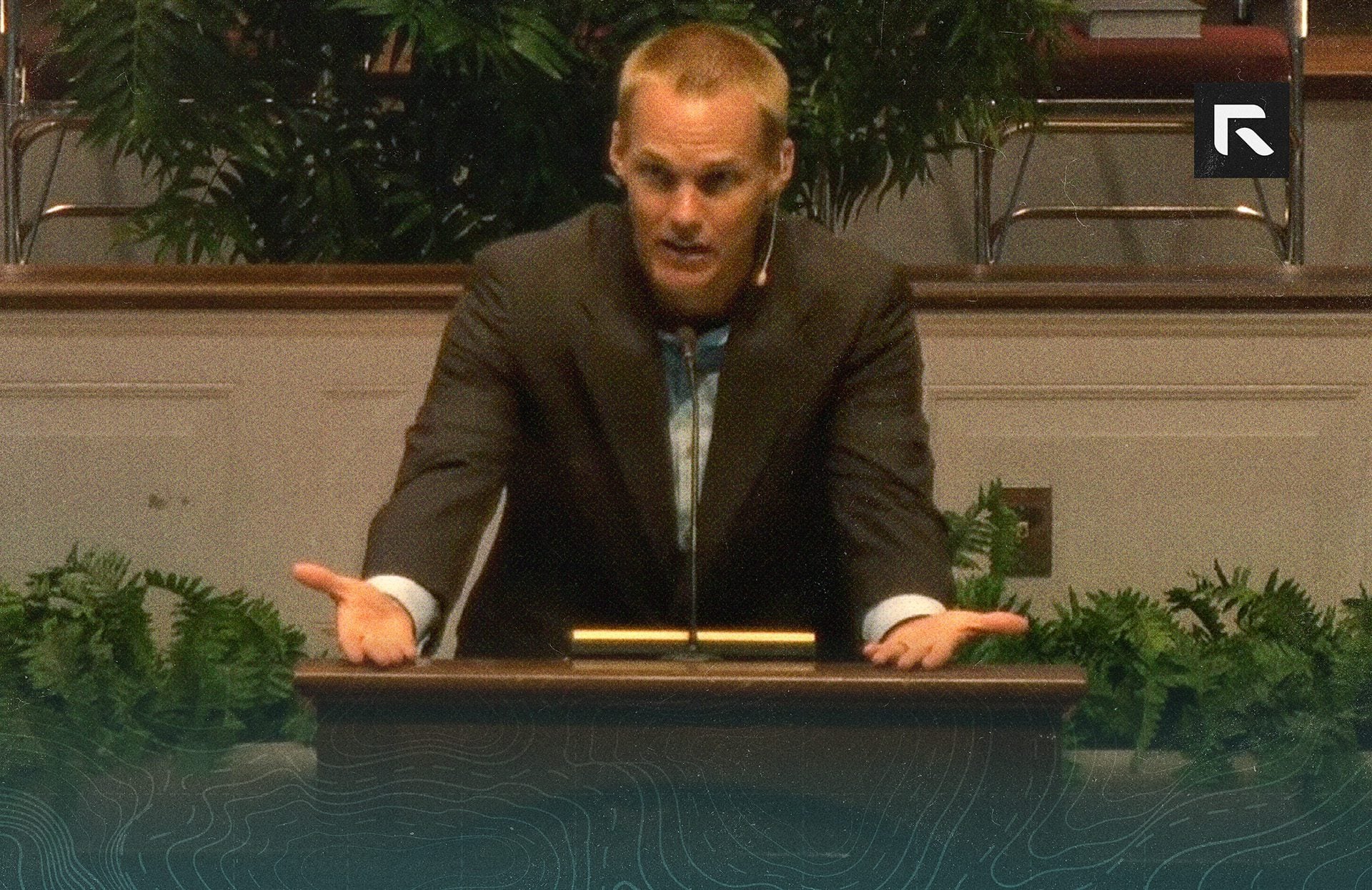

What does it mean to proclaim the gospel among all nations? How can we share the Good News to the ends of the earth? In this sermon at New Orleans Baptist Theological Seminary chapel on Acts 1:8, David Platt urges us to proclaim the gospel among all nations. Evangelism is the proclamation of the gospel and the power of the Holy Spirit with the aim of persuading people to repent and believe in Christ. As Christians, we all need to be passionate about the spread of God’s glory among the nations, whether we are vocational missionaries or not. Platt encourages us to make evangelism primary in our lives and ministry.
- What is Evangelism?
- What is the Good News?
- Power from the Holy Spirit
- Persuading with the Gospel
- What Does it Mean to Be a Christian?
The following is a lightly edited transcript provided by a transcription service. Please check the video before quoting.
Proclaim the Gospel Among the Nations
Good morning. Good morning. If you have a Bible, and I hope you do, lemme invite you to open with me to Acts chapter one. As you’re turning there. Just got to say how grateful I am to God for his grace.
Just every time I come back to New Orleans just floods over me in a fresh way. His grace is expressed to me in this place, in this city, and on this campus, through faces that I see around this room, many of them are sitting in the same spots.
They sat in the chapel when I was here and it’s still just weird being the chapel speaker. I would host chapel speakers, I’d run ’em around or go pick ’em up. I remember and I saw Dr. Stu. So every time I come on campus, just kind of fresh memories kind of flood over me.
Well, this is the memory that flooded over me as I’m pulling in today, Dr. Stewart, I see Dr. Stewart back there. He had asked me, it was during Greer her, so this group of scholarly apologists was coming into town and he asked me to go pick up one of them.
I’ll leave this person nameless but just think brilliant apologist. Like I’m scared about a conversation with this brother because I don’t know if I’m going to be able to have a conversation with him that I would understand.
I was supposed to pick him up, take him to a meal, and then bring him back to campus. And so Dr. Stewart spelled out, here’s what you need to do. And I mean, if I told you his name, you’d be like, oh yeah, I can see why you were totally intimidated by this guy.
So I go and pick him up and am extremely kind. He was, yeah, I’ll just put extremely kind. And so I took him now, I had gone in my car, which I don’t always keep totally clean. And so when I was going to pick him up, I was like, oh, I probably should have cleaned this up.
So I just took all this stuff in there and just crammed it into the trunk and I’m crammed it in there, close it. So the inside looks fine now. Well, we get there, I get to the airport and he’s got a bag with him and I said, we’ll just put that in the backseat.
He said, no, I’d really rather put it in the trunk. I was like, okay, we can just put it in the backseat, but okay if you were going to put it in the trunk, just kind of quirky. And so I said, I’ll take the bag and you go ahead and sit up there.
So I opened up the trunk and I crammed it in there, moving all this trash out of the way and putting this bag in the middle of it. So anyway, close the trunk, and go take him to eat. It was so kind, just really great conversation.
And then we get here, we pull into the parking lot back here, and now I know he’s going to go back toward his back, but I’m going to beat him there and I’m going to get that trunk open, get the bag out before he changed everything back there and close it. When we get there, I turn off the car, I immediately get out of the car quickly to get out of there, open up the trunk, pull out and I’m slamming the trunk door closed.
Little do I know that he’s pretty swift himself. And so he’s gotten out and he’s come around and he’s actually, I didn’t see him. He’s actually reaching inside the trunk for the back. Oh yeah, I slammed the trunk door on the back of his head and just slammed it.
So I was trying to go fast. So I slammed it right on the back of his head and this brilliant apologist I’ll never forget. I mean I can hear your gesture just right by there. He’s like, oh, I’m like, doctor, I’m so sorry.
Are you okay? And he is rubbing his head and he’s not talking. And I’m like, sir, are you okay? And he said, I think I need to lay down. So I walk him in, he comes into this room, lays down on a pew, and I go back in there and I get on the phone, Dr. Stewart, I’m so sorry, but Dr. So-and-So he’s hurt.
How’s he hurt? Why? I kind of slammed the trunk on his head. So anyway, that was the fresh memory that just flooded over me as I came in here. I’m not used to it, I’m still used to it with the chapel speakers.
I slammed trunks on the chapel, speaker’s heads. So anyway, just all that to say come back to just being grateful to God for his grace to me in this place. And that brother still preached that night. He did a great job.
I think he did better. I think it kind of jarred some things. Anyway, alright. Didn’t have time to tell that whole story. I got a lot to cover. So I want to dive in. So from my seat where I sit now as president of the IMB, I see much in the broader missions world that is gospel-less or at best gospel light.
So I see debates among supposedly evangelical missions agencies concerning whether or not to refer to Jesus as the Son of God when interacting with Muslims and whether or not to even use that title for Jesus. In translations of the Bible, I see practices among these same mission agencies that minimize the call to Christ in the gospel assuring people you can be both Muslim and Christian at the same time.
I see continual trends that make social justice either equal to or more important than evangelism and gospel proclamation. Such a way that just last month I was preaching at a missions conference and was criticized for arguing the primacy of evangelism and missions.
So as I’ve stepped into my role in the IMB, my top priority over and above everything else that you may know we’ve been walking through, my top priority has been making sure that across our thousands of faithful missionaries, we have a biblical clarity and precision and consistency when it comes to our understanding of the gospel and evangelism and conversion and the church and so on. Now, you may be wondering why I’m sharing that with you as a seminary family, you might think, well that’s helpful to know about the IMB, but what does that have to do with us?
Gospel-less and Gospel-light
I believe this has everything to do with this seminary family as professors, staff, students, pastors, and church leaders, whether you’re leading a church in some way right now or preparing to do so in the future because missionaries are reflections of the churches and seminaries who train and send them out. The reason there are mission agencies and missionaries around the world who are gospel-less and gospel-light and who are minimizing evangelism is that there are churches and seminaries around this country who are gospel-less and gospel-light and are minimizing evangelism in the mission of the church.
And I would say this morning, that the last thing the nations need is the exportation of nominal Christianity from North America. The last thing the nations need is men, and women doing supposed missions while they stay silent with the greatest news in all the world, the nations need the gospel and men and women who are committed to proclaiming it with contrite courage and brokenhearted boldness wherever God leads them.
So what we’ve been doing IMB is we’ve taken 10 key terms, so gospel, evangelism, conversion, church, and so on. We’ve communicated this together in written form and preaching and teaching clear definitions, and some necessary clarifications for each of them among our IMB families.
So I want to do something today a little bit different than the steady needed normal diet of expedition from one text of scripture. I want to share with you all our simple, but I’m convinced significant definition of evangelism in hopes that you might be encouraged in a fresh way today to make evangelism primary in your life and ministry.
In the end, I want to close with another conversation I had with the chapel speaker and plead for you to consider giving your life and ministry to the proclamation of this gospel far from here. So lemme start with what I hope I trust is a biblical definition of evangelism. Then I want to explore how it’s grounded in various scriptures.
So here it is if you’re taking notes and we’ll just unpack this phrase by phase over the next few minutes. So if you don’t get it all the first time, we’ll come back to it on multiple occasions and there’s nothing new here. I pray that this will be a fresh encouragement to your heart.
Evangelism is the proclamation of the gospel and the power of the Holy Spirit with the aim of persuading people to repent and believe in Christ. Evangelism is the proclamation of the gospel in the power of the Holy Spirit with the aim of persuading people to repent and believe in Christ so simply.
Proclamation Evangelism
Yet I’m convinced every part of this is significant and I hope granted in scripture. So Acts chapter one, verse eight, I have you in Acts chapter one, many of you know this text by heart. Jesus says to his disciples, but you’ll receive power when the Holy Spirit has come upon you and you will be my witnesses in Jerusalem and in all Judea and Samaria and to the end of the earth. So let’s unpack. So the first keyword in this definition of evangelism, proclamation evangelism is the proclamation of the gospel.
That word is based on the word witnesses that we see at the center of Acts. Chapter one, verse eight. Jesus was telling his disciples they were going to be his witnesses, which necessarily involves communication proclamation.
So in the IME, we spell out that specifically and some clarifications go along with these definitions. Evangelism always means proclamation, it always involves communicating the message of the gospel using language the lost can understand.
And we know this is one of those areas in the church, particularly in our culture where we have totally misconstrued evangelism and people say, well, I witnessed with my life, I witnessed by being a good person, I witnessed by putting a smile on my face every day. Can we just assume that’s a given?
You’re supposed to live a life worthy of the gospel and you’re supposed to be kind to people and smile, but Jesus wasn’t saying you’re going to have the power of the Holy Spirit so you can smile. You’re going to have the power of the Holy Spirit so you can speak.
That’s what a witness does. When you have a witness on a stand, they speak, they testify, they communicate about something. We know the word for witnesses here is marreo from which we get the word martyr.
And you think about the guys who Jesus is speaking to here, who lost their lives in the days that would come and it wasn’t because they were nice, it’s because they spoke. Today our brothers and sisters and places around the world are losing their lives and it’s not because they’re smiling and doing good deeds, it’s because they’re proclaiming the gospel.
You stay silent with the gospel in North Korea, you’re okay. You speak the gospel in North Korea, your life is over and it’s that to which Jesus is calling his disciples. Here. Evangelism necessarily involves always means proclamation using language the loss can understand, which is particularly huge in missions.
When Dr. Kelly was talking about having those professors for different languages, this is why we and the IMB family as we send out brothers and sisters around the world, many of them spend much time going deep in learning language and culture. And the reason is not just so they can get around town and buy food for the families, although that’s helpful.
The reason they learn different languages and dive into culture is so they can proclaim the good news of Jesus Christ in those languages and in that culture. And in order to do that, you have to know that language.
It’s worth the time spent on it. So the point is we want to evangelize. That means we want to proclaim the gospel, which leads then to the next component of this definition, the content we proclaim. Evangelism is the proclamation of the gospel. So the content of what we proclaim matters.
So evangelism is the proclamation of the gospel, not just generic talk about God or Jesus. People think, well, I had a conversation about God with someone today, so that was evangelism but never mentioned Jesus, the need to repent, and believe in him. That’s not evangelism or even just because you’ve mentioned Jesus and so did the Mormon, but they’re not evangelizing, they’re not telling good news, they’re telling bad news about how to earn the favor of God and it dams. Evangelism requires the good news.
And what’s the good news? The good news is that the holy, just gracious creator of the universe looks upon hopelessly, sinful men and women and has sent his son God in the flesh to bear his wrath against sin through his substitutionary death on the cross to show his power over sin and his resurrection from the dead so that everyone, anyone who turns from their sin, repents and trust in him believes will have eternal life forever.
That’s good news. The fact that you and I have sinned just doesn’t ever get old. You and I have sinned against all the God and we deserve eternal wrath before him, never-ending wrath. But this God has not left us alone.
He has come to us in the person of Jesus and his identity is very important as the son of God, fully human, fully divine, only in that way uniquely able to pay the price for our sin to live the life we could not live a life of perfect obedience to God the Father. And then though we had no sin for which to pay to die, the death we deserve to die, to stand in our place on a cross to pay the price for our sin.
And then if that wasn’t good enough, good news keeps getting better. Three days later, he rose from the dead. We’re not talking about resuscitation or reincarnation, we’re not talking. Kind of passed out, went to heaven, came back, and wrote a bestselling book about it.
We’re talking dead for three days than walking around alive. We’re talking, you go to a funeral tomorrow, you see a man’s body put in a coffin, that coffin put in the grave, dirt poured over it, and then next weekend that guy comes up to you on the street and says hello. It’s unusual. It’s the greatest news in all the world.
Death has been defeated and eternal life is available to anyone who will turn and trust in him. This is the gospel. It’s the greatest news of all. So in order to be biblical evangelism, the full message of the holiness and love of God, the sinfulness of every human being, the atoning sacrifice and victorious resurrection of Jesus for our sins, the necessity of repentance of faith must be presented.
Now this seems so basic, but I emphasize this because we’re living in a day in the church and in missions where the doctrines of the gospel are so subtly and easily minimized in order to manipulate decisions, and manufacture reports. So I receive some missions where I receive a flyer one day in the mail from a missions organization that many of you would recognize and the flyer says for $20 a month you can plant a church a month in said country and want to talk about the low cost of pastors, the return rates in their reports.
Thousands and thousands of conversions recorded churches planted across the said country, and I didn’t know whether to weep in sadness or whale in anger in a different similar way. Oh, I see mission organizations, and insider movements, diluting Jesus’s identity as the son of God. In order to supposedly reach more Muslims, supposedly multiply more churches in the Muslim world.
It’s like we’ve forgotten the doctrine matters. You know that next year commemorates the 500 year anniversary of the Reformation, or at least Martin Luther’s nail, 95 theses in the church store at Denberg. I’ve been reading about various reformers, particularly those I didn’t know about, particularly in England.
So 1555 the church in England was under fire literally from a royal foe named Queen Mary. Over the next four years, 288 people will be burned at the stake for their Protestant faith. Men, women, church leaders, common laborers, children.
JC Ryle wrote the first to break the ice and cross the river as a martyr. In Mary’s reign was John Rogers. I don’t know if you know much about John Rogers. He received his education at Cambridge, became a Catholic priest, quickly became disillusioned though with the teachings of the Catholic church, and in God’s providence found himself in Holland where he met a man by the name of William Tindale.
Tindale taught Rogers the Bible and the gospel and Rogers would never be the same, and Tindale was arrested. Months after they met, he left his Old Testament manuscripts with Rogers who in the days to come would compile them into a complete English Bible under the code name Thomas Matthew, the Matthews Bible would become the first officially authorized version of the Bible in the English language is the Lord using this man to open eyes and minds to the gospel in the scriptures, Rogers went on to pastor in Germany, but his heart was for the people of England.
So he came back to London in 1548 with his wife, Ariana, and their eight children at the time there he preached, and pastored safely under the reign of Edward the Sixth until the day when Edward died, and soon thereafter, his half-sister Mary proclaimed herself. Queen Rogers knew where Mary stood on religion steadfast for the church of Rome against all Protestant teachings. She arrived in London on Thursday, August 3rd, 1553, and Rogers was appointed to preach the following Sunday.
So this was his moment and he boldly proclaimed the gospel of salvation by grace alone through faith alone in Christ alone. And he warned the church against pestilent, popery, and all idolatry. One biographer commented on Rogers’s sermon that day, and said there was never any position in the whole history of the Reformation.
All things considered, the responsibilities thrown upon a single man were greater and the results more important. The same historian went on to save Rogers. His conduct that day was more than noble, it was magnificent.
But Rogers’s sermon that day would be his last. A week later he was placed under house arrest with his wife and now 10 children with another on the way. Six months later he was put in prison or he’d live in cruel conditions for the next year.
That led to January 1555 when he was examined on three occasions and condemned for two offenses. One standing against the church at Rome and two saying at the sacrament of the altar there is not substantially nor really the natural body and blood of Christ, Rogers hadn’t been able to communicate with his wife the entire time he’d been in prison.
He’d never even met his youngest child. So he pleaded for an opportunity to see them at least speak to her before he died. That request was refused. The next morning he was roused from his cell, let outside to the streets of the parish.
He once pastored. He walked in the shadow of the church building where he had preached to thousands of spectators lying the way. And in that sea of faces, he saw his family, his wife holding a baby. It was the first time he’d ever laid eyes on his youngest child with 10 of his other children standing beside looking at their dad.
One writer said their anxious faces were all fixed on him and the voices of pain reached his ears. Another remark, it’s difficult even to imagine anything more tender and affecting in this parting scene. This last ado to a beloved wife and so numerous offspring, all in tears.
He stood the shock with the feelings of a father and husband but with the unshaken confidence of a Christian marching to his death. John Fox, in his book of Martyrs, tells us that Rogers walked calmly to the stake when he arrived.
The sheriff gave him one last opportunity to recant and revoke his confession of faith to which he responded, that which I have preached I will seal with my blood. Within moments, the fire at Roger’s feet was set ablaze and his body slowly began to burn as he lifted his arms high in the air, RI said the enthusiasm of the crowds knew no bounds.
They rent the air with thunders of applause for up to that day he wrote, men could not tell how English reformers would behave in the face of death, and they could hardly believe that some would actually give their bodies to be burned for their religion and some it would be within days, others would face the same fate. Nicholas Ridley was a fellow prisoner with Rogers.
He wrote to other pastors who’ve been in prison and said, I thank our Lord God and heavenly Father by Christ that since I heard of our dear brother Rogers departing and stout confession of Christ and his truth even to the death. Since that time I say I have no longer felt any lump heaviness in my own heart.
John Leaf, a 19-year-old apprentice of John Rogers was arrested, and asked if he believed what Rogers taught. Leaf said not only did he believe every doctrine Rogers had taught him from God’s word, but he was ready to meet the same death that Rogers had faced.
So he did history says burned alive. This 19-year-old with a cheerfulness and an unshaken resolution that were remarkable for one so young, they would’ve pleased his teacher in the faith. John Rogers, Nicholas Ridley, John Leaf.
I could read 285 other names who would follow in the fire of their footsteps across England under the reign of Queen Mary. So here’s the question, why did they die? The answer to that question totally surprised me.
JC RA wrote a paper entitled The Burning of Our English Reformers and the Reason Why They Were Burned. His paper struck me because in it he wrote So listen to this great indeed would be our mistake if we suppose that these martyrs suffered for the vague charge of refusing submission of the Pope or desiring to maintain the independence of the church in England. Nothing of the kind.
The principal reason why they were burned was because they refused one of the peculiar doctrines of the Romas church that doctrine in almost every case hinged their life or death. If they admitted it, they might live. If they refused it, they must die.
So he continued the doctrine in question was the real presence of the body and blood of Christ and the consecrated elements of bread and wine in the Lord’s Supper, did they or did not believe that the body and blood of Christ were really? That is all, literally locally and materially present under the forms of bread and wine After the words of consecration were pronounced.
Did they or did they not? That was the simple question. If they did not believe and admit it, they were burned. It’s true. John Rogers recounted his interrogation by the church saying, I was asked whether I believed in the sacrament to be the very body and blood of our savior Christ and that was born to the Virgin Mary and hang on the cross really and substantially I answered.
I think it to be false. I cannot understand really and substantially to signify otherwise than corporately, but corporately Christ is only in heaven and so Christ cannot be corporately in your sacrament.
The same statement was made by subsequent men and women, church leaders, and common laborers. Rollins White was a fisherman who couldn’t read, but he had his son taught to read so that every night his family would gather around the table after dinner and the boy would read from the new English Bible to his family and the course of doing so, Rollins White came to believe in salvation through faith in God’s mercy.
When that belief became public, he was condemned to die. History tells us he came to the place where his poor wife and children stood weeping. The sight of them so pierced his heart that tears trickled down his face when everything was ready, they set white on the stake, then erected a stand upon which a priest stepped up and began speaking about the Catholic doctrine of the sacraments.
White cried out, ah, you wicked hypocrite. Do you presume to prove your false doctrine by scripture? Look in the text, the fishermen’s expositor. Look in the text tonight. Christ said, do this in remembrance of me, and immediately they lit the fire.
Fox says his legs were so quickly consumed by the flames that his body briskly fell over and burned. John Holier was taken to the stake bound with a chain placed in a pitch barrel. Fire applied to the reeds and wood as he began to burn, and people started throwing books into the fire to be burned with him.
One of the books was on the communion service, a book that countered Catholic teaching on the Lord’s Supper and taught salvation through faith alone. So Holier caught this book, held it high above the flames, opened it, and read it joyfully until the fire and smoke deprived him of sight.
Then he pressed the book to his heart, thanking God for giving him this precious gift in his last moments. And it wasn’t just men, Agnes Snuff and Wright Joan Soul, Joan Ka four women alongside one man, John Lomas questioned concerning transubstantiation and sentenced to burn together on two stakes in one fire where Fox says they sang hos is until the breath of life was extinct. Are you hearing this? Why did these reformers die?
They gave their lives for the Lord’s supper. They died because they knew that Rome’s doctrine of real presence undercut gospel grace. Because if receiving communion involves receiving Christ, if eating the communion feast is necessary to experience Christ’s forgiveness, then man’s merit becomes a means for obtaining Christ’s mercy.
And the reformers would’ve nothing to do with it. No doctrine like this was decisive for them. Truth like this was not trivial for them. So pastor looks into the eyes of his wife and 11 children, one of whom he’s never even held.
A fisherman looks into the eyes of his wife and children, including his little boy who first learned to read the gospel to him. And together they say salvation by God’s mercy separate from all your merit is worth your life. It’s all of mercy kids, it’s all of mercy. My bride, if we lose this, we lose everything.
We have hope not in our merit, but only in his mercy, not our merit. His merit and doctrine like this matters, theology like this matters. So God help us 500 years later to be men and women pastors and church leaders and missionaries who believe the doctrine matters, who do not hold loosely to the gospel, but who cling to the core of it with our entire lives.
Like it matters like it’s worth giving our lives. For evangelism’s proclamation of the gospel. I’ve got to move faster in the power of the Holy Spirit. Again, this is pure Acts chapter one, verse eight.
The Holy Spirit Was Given to us to Proclaim the Gospel
You’ll receive power from the Holy Spirit and the direct result is you will be a witness, you will proclaim the gospel according to Jesus. In Acts chapter one, verse eight, the power of the Holy Spirit is given to us primarily for the purpose of proclaiming the gospel.
You say, well, I thought we have the Holy Spirit for all sorts of reasons to convict us, to comfort us, to encourage us, to guide us, to lead us, to teach us, to fill us. And yes, the Holy Spirit does all those things. You know what’s interesting?
You look and if we had time we go through, I’ll list them out for you, but eight different times in the New Testament, we see the phrase fill with the Holy Spirit. Luke is the one who uses it every time. Luke and Acts eight different times.
We see the phrase filled with the Holy Spirit all eight times lead directly to verbal proclamation speaking. Luke chapter one, verses 13 through 15, John the Baptist, the prophet who would proclaim the coming of Christ. Luke chapter one, verses 39 through 42, Elizabeth was filled with the Holy Spirit and she immediately exclaimed with a loud cry.
Blessed are you among women speaking to Mary blesses the fruit of your womb. Luke chapter one, verses 67 through 69, Zechariah is filled with the Holy Spirit, and as soon as it says that he prophesied, saying speaks prophecy. Those are the three in Luke. Then you get to acts very next chapter.
Acts chapter two, verses two through four. Suddenly there came from heaven, it sounded like a mighty rush. One filled the entire house where they were sitting divided tongues as the fire appeared to them, rested on each one of them.
They were all filled with the Holy Spirit and one did they do, they began to speak in other tongues as the Spirit gave them utterance filled with the Holy Spirit. They speak. Acts chapter four, verse eight.
Peter filled with the Holy Spirit said to them, he started preaching Acts chapter four, verse 31. When they prayed at the place where their meeting was shaken, they were all filled with the Holy Spirit and they continued to speak the word of God with great boldness. Acts chapter nine, verses 17 through 20 talks about Paul.
Immediately after he was filled with the Holy Spirit at the end of verse 17, he rose and was baptized, taking food strengthened for some days with the disciple of Damascus, and immediately he began proclaiming Jesus in the synagogues.
Acts chapter nine verse 20. In Acts chapter 13, verses eight through 11, when El the magician is following Saul, Paul turns around Saul, who is also called Paul, filled with the Holy Spirit, looks intently at him and says, you son of the devil, you enemy of all righteousness.
He starts speaking eight different times. We see this phrase filled with the Holy Spirit and every time it’s accompanied by this verbal proclamation of truth from God. Do you see this When you are preparing to proclaim the gospel to someone else, when you are speaking with someone and you’re about to dive into the truth of who God is and who we are who Christ is and what he has done, and what we must do in response to that, you’re about to share the gospel?
Do you realize there’s a filling of the Holy Spirit that accompanies the proclamation of the gospel that leads to the proclamation of the gospel, This makes total sense, doesn’t it? Doesn’t it?
Are you going to lead people in New Orleans to go from death to life in your own power? It’s the whole story about one preaching professor who first day of class took his students to a cemetery, had him stand in front, and said, I want each of you to step up here and call these people in their graves to come to life.
And one by one, they would all step up and say something and nothing would happen. And he reminded them, don’t forget Ephesians two, you’re speaking to people who are dead in their sin and God has ordained your proclamation of the gospel to bring them to life. But that can only happen in the power of his spirit.
Only in the only the spirit can bring from death to life. So that’s one of the things we clarify. We present the gospel message, but only the Holy Spirit can turn a person’s heart and mind toward Christ.
The Holy Spirit Persuades People to Repentance
So evangelism, the proclamation of the gospel, it’s totally dependent on the Holy Spirit to do what? So this keeps going in the definition, evangelism, proclamation of the gospel, and the power of the Holy Spirit where the aim of persuading people to repent and believe in Christ.
This is why Peter preaches the gospel in Acts chapter two, why Philip goes to an Ethiopian eunuch in Acts chapter eight, and why Paul talks with a Philippian jailer in Acts chapter 16. In every case, whether it’s Peter, Philip, or Paul, they’re not just informing people about the gospel, they’re persuading people with the gospel.
And that’s a significant difference. Evangelism has the aim of persuading people to repent and believe in Christ. Evangelism is more than mere presentation of the gospel. It is persuasion with the gospel.
Evangelism necessarily includes a call for the heart to repent of sin and believe in Christ. And we know the reason it’s so important is because we so often leave it out. We are let’s beyond. We’re content to have a conversation about who Jesus is, and what he’s done, but we fail to connect the dots with what this person who’s listening to us must do.
So not Peter. Acts chapter two, verse 37. When they heard this, they were cut to the heart, and said to Peter, the rest of the apostles Brothers, what shall we do? And Peter said to them, repent and be baptized in the name of Jesus Christ for the forgiveness of your sins and you’ll receive the gift of the Holy Spirit with many other words.
Verse 40 says, he said, save yourselves from this crooked generation. He’s pleading with them. And verse 41 tells us the result, those who received his word were baptized and they were added that day about 3000 souls.
So we don’t just present the gospel, we persuade with the gospel, which some might shy away from persuasion language because they think it sounds manipulative, but it’s not manipulative. I’ve given you at least two rock-solid reasons why it’s not.
Number one, we know it’s not manipulative because it’s the Holy Spirit who does this work. So we’re not talking about us manipulating some kind of means to generate some kind of response.
We’ve renounced all man-centered means like that. But we urge people to repent and believe, trusting the Holy Spirit is going to do this work and bring the dead to life as we’re speaking the gospel.
And then second plead urge persuade the absolutely the right words that we should have in our mind based upon our message with urgency, we persuade people, right? Because an eternal urgency marks our message.
I remember the way on this campus, Jim Shaddock, explained this to me. He said, he said, David living over here, he said, if I walk into my son’s room and I see him with a gun pointed at his head about to take his life, he said, I don’t stand there and say, well, it’s your choice.
He said, I got down on my knees and I started pleading with my son. Don’t do this. Don’t do this. Plead with them. So how much more so when eternity is at stake, how much more is there pleading, longing for people to trust that us to say repent, believe savior self evangelism, proclaim the gospel and the power of the holy, build the aim, persuading people to repent and believe in Christ.
So I want to encourage you in a fresh way today to do this work of evangelism right where you live. Dr. Kelly mentioned it to not be content, to stay within the confines of this campus. My first semester supervised ministry, you get mad up with the church and go share the gospel. And the last church that was left was CRA right in the middle of the fringe quarter.
So a couple of guys signed up with CRA, and we went down and met with the pastor. He says, if you guys can learn to share the gospel here, you can learn to share it anywhere in the world. Thanks.
And he said so, and he really didn’t give us a lot of guidance. He said, just kind of go out there and see how it goes. And so that’s what led to us. I told this story before just setting up a table in the French Quarter next to right in Jackson Square, next to the other fortune fellers and palm readers saying, we’ll tell your future for free.
And having people come down, we didn’t ask ’em to put out their palm taking a little too far, ask ’em a couple of questions, establish the fact they have sin in their lives and say, well, your future doesn’t look very good, but here’s how it can change. Share the gospel and then drove by on the way in here, Edgewater Baptist Church, what that local church taught me to do, evangelism in that community right around there, right where you live, speak this gospel in the power of the Holy Spirit with the aim of persuading people to repin and believe in Christ right where you live.
And then do this work of evangelism wherever God leads you. So knowing that there are about 2.8 billion people in the world right now who are classified as unreached by this gospel. Now we know unreached doesn’t just mean lost, right?
There’s a difference. I mean, people are just as lost in New Orleans as they are in North Korea to be lost apart from God in Christ. The same in New Orleans. The difference between New Orleans and North Korea is when we’re talking about unreached, we’re talking about access to the gospel.
So there are churches and gospel preaching churches in New Orleans. There are not a lot of gospel-preaching churches in North Korea. And so most people in North Korea don’t have access to it, they’ve never met a Christian who has this gospel.
They can’t go to a church where they can hear this gospel proclaim. That’s why we don’t say, I don’t know why we talk about unreached people around the world. I mean, there are unreached people in my office. There are unreached people in my neighborhood.
Well, those people aren’t in, they’re not unreached and say, well, how do you know? Because they’re in your office or your neighborhood. They’ve got access to the gospel. How do you know you’re it?
We’re talking about people who are born and live and die without ever having anybody tell them this gospel. And so I challenge you to at least open your life up. It’s the possibility that he may lead you to do this work of evangelism among people who don’t have access to this gospel.
So that’s the other conversation that I was reminded of when I came on this campus. The president of the IMB at that time, Jerry Rankin was preaching in chapel. I’ve been asked to take him to breakfast.
And so Heather and I, my wife, and I had been praying about what God was leading us to do and we’re seeing God’s passion for his glory among all nations. In the word, we’re seeing the number of unreached people in the world.
It seemed like a no-brainer to us like we needed to go. So I was taking Dr. Rankin to breakfast and I told my wife the night before, I said, I’m going with Dr. Rankin at breakfast morning. I think I’m going to tell him we’re ready to go overseas with the IMB. Is that okay?
And she said, let’s do it. So I sat down with him at breakfast in that dining hall over there before he even sat down. I’m just throwing up my heart on him which is better than me slamming a car trunk on him.
But I just shared with him, all right, I see this in the word. I see this in the world. I think we’re ready to go. Well, Dr. Rankin looked at me for about 30 seconds and encouraged me in what I just said, but then he spent the rest of breakfast talking to me about the need for pastors to shepherd churches here for the spread of the gospel of the unreached.
And I was so confused. I remember walking back, Heather says that night, she says, how’d it go? I said I think the president of the IB just talked to me out of going overseas. And she was like, does he not want you?
I was like, I don’t know. I don’t know what I said. And I’m so thankful for that conversation with Dr. Rankin in that cafeteria because it did something for me. It created a category that wasn’t in my mind.
I don’t know why it wasn’t in my mind, but it wasn’t in my mind up until that point, this category of a Christian who’s passionate about the spread of the gospel of the nations, but who doesn’t become a missionary. And then I thought about it.
Well, of course, that category exists. That’s what it means to be a Christian, to be passionate about the spread of God’s glory among the nations, right? I mean, in Acts Chapter One, verse eight, the Spirit of God wants the world for God’s glory.
Do you have the spirit of Christ? Well then do you want the world for God’s glory? So now I’m president of the IB, and people will come up to me and they’ll say, Hey, I’m passionate about the nations and I think God’s calling me to be a missionary.
And I’ll say to them, well, what you’ve shared with me, I’m very encouraged by. But actually you’re passionate for the nation only makes you a Christian. So whether or not you’re supposed to be a missionary, we can talk about that.
But the passion for the nations, for the spread of the gospel to the ends of the earth is not for a select few. It is for every single follower of Christ. And so I challenged you today to look at a world with 2.8 billion people who’ve never even heard the gospel and make it your ambition to see this gospel proclaimed among them, wherever God may lead you, whether that’s here in New Orleans for the rest of your life or this or that place in North America, or this or that place in the nations, may you be driven with zeal and Acts 2024 kind of way. I consider my life worth nothing to me.
If only I could finish this race and complete this task. The Lord Jesus has given me the task of testifying to the gospel of God’s grace. So do the task here in this city, wherever you’re living and serving right now, and do this task wherever God may lead you.
May God use our proclamation of the gospel and the power of the Holy Spirit with the aim of persuading people to repent and believe in Christ, to usher in that day when every nation, tribe, tongue, and language will gather around his throne and give him the praise that he is due.

David Platt serves as a Lead Pastor for McLean Bible Church. He is also the Founder of Radical, an organization that makes Jesus known among the nations.
David received his B.A. from the University of Georgia and M.Div., Th.M., and Ph.D. from New Orleans Baptist Theological Seminary. Some of his published works include Radical, Radical Together, Follow Me, Counter Culture, Something Needs to Change, Don’t Hold Back, and How to Read the Bible.
He lives in the Washington, D.C. metro area with his wife and children.