

Drawing Nearer to God Through Journaling


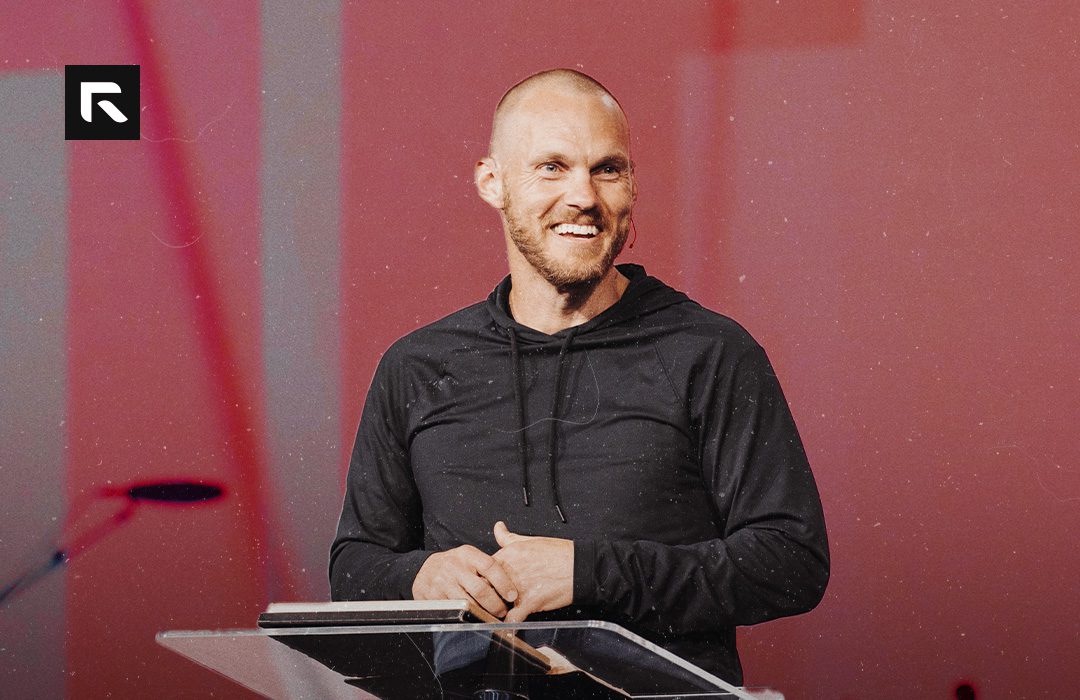
How can we draw near to God through journaling? In this message at CROSS CON24, David Platt discusses how to start journaling as a Christian and how it will help you draw near to God. Using the acronym MAPS, we can deepen our relationship with God in our journaling. First, we must memorize and meditate on the Word of God and apply what we are learning to our lives. We should biblically pray; praising, repenting, asking, and yielding to God. Lastly, we should intentionally think about how we can share what we have learned with others.
- Meditate and Memorize
- Apply to Your Life
- Pray over the Word
- Share with Others
The following is a lightly edited transcript provided by a transcription service. Please check the video before quoting.
Drawing Nearer to God Through Journaling
David Platt:
Let’s dive right into drawing near to God through journaling. So much of this is just going to be out of the overflow of my personal life in the sense that I can’t point you to a verse in scripture that says you should journal.
At the same time, I know in my own personal life I can map the times in my life when I’ve experienced the deepest intimacy with God, with the times in my life when I have consistently journaled and I can look back to going all the way back to middle school and high school journals that I have, and I say that I don’t have journals from every part of my life. There have been seasons in my life when I have been more distant from God.
I would confess every season in my life as a pastor when I’ve not been walking in intimacy with God. There was a time many years back when, yeah, the church I pastored was growing.
I had written a book that a lot of people were reading. I was getting invited to preach in a lot of different places. I was busy doing all kinds of really, I think good things, but for a long period of time there I hardly ever God alone just to be with God.
I would study the Bible to preach a sermon, but I wouldn’t study the Bible just to know God. And I could turn on a public prayer like that, but I wouldn’t get alone just to be with God. And that’s frightening to me how successful in a sense, at least in the eyes of the world, that I could be in ministry and I could do it totally apart from intimacy with Jesus.
And I’m so thankful for God’s grace in my life protecting me. There are so many different directions those days could have gone that God did not let them go. And I’m so thankful for my wife and how the Lord used her.
One day was just, I tried to ask her, how can I love you better? And periodically, and she’ll usually look back at me and say, oh, you’re doing fine. Maybe you can work on this, but you’re doing great this day.
There was no, you’re doing fine or you’re doing great. She just looked at me. She said you’re working all the time. You’re traveling, you’re doing this or that in the church, all these different things.
She said, you don’t sleep, you don’t eat healthy, you don’t exercise. And she said, don’t know when you have a quiet time. She said, if you don’t make some major changes really fast, you’re not going to be around to love me very long.
It was a major wake-up call in my life just to a lack of discipline in many areas of my life, physically and spiritually. And so that weekend I made some changes and one of the changes I made was getting back to journaling.
And by God’s grace, I can point you to journals ever since that weekend in my life practically. Here’s how this plays out and I’ll give you an acrostic that I use for my time in the word that will help you see what happens when I journal.
So when I wake up, spend my time with the Lord in the morning, and open his word, which has an intentional Bible reading plan I used, I was sharing last night in a q and a, use a Bible reading plan put together by a guy named Robert Murray McShane. I would highly recommend it.
You can do two or four chapters a day, usually Old Testament and New Testament readings. It’s super valuable. Carson has a devotional, it goes with it called For the Love of God.
I would highly recommend it to you. So I use that. So that’s every morning. So I’m opening the word, here’s the acrostic I would give you, and then I’ll come back to how this plays out in journaling. So the acrostic is mapped, MAPS.
Meditate and Memorize
And so this is how we talk about diving into the word, experiencing God in his word in our church where I pastor up in metro DC. But the M stands for meditate and memorize, meditate and memorize. So to open God’s word for time with him and to start with meditating on scripture, just reading it slowly, not trying to check off boxes but reading it slowly and observing what’s happening in it.
I shared it at this Q and A last night. The short of it is that my wife, when we were dating would send me a letter and I’d never dated a girl before. It was the first time I ever got a letter from a girl. And so I would devour every word like, dear David, dear, what a sweet opening.
She thinks I’m dear. Or she’d write this sentence, what does she mean by that? She’d put a smiley face here and be like, why is there a smiley face there at that point where she’d be like, I’m praying for you. And I’d be like, I wonder what she means.
I’m praying for you just like I pray for anybody or I’m praying for you like I am praying for my future husband. And you come to mind. Is that what she means? So I’m just devouring every word.
And you might be like, you’re obsessed. And yes, I was. I was obsessed. I was in love. But that’s kind of the point. When you love somebody, you love their words, you’re soaking in.
So do that with God’s word. Meditate, and ask questions like, why is this there? What’s happening here? Who’s writing this? What does this mean to dive in? And then to spend time memorizing?
I don’t know of any better way to meditate on God’s word, and let it soak in than to memorize it, to commit it, to say it to yourself over and over again until it becomes a part of you to do that with verses or passages or even chapters of the Bible. And some of you might think, well, I don’t know how to, if I can memorize scripture very well, and I just want to encourage you with rare exceptions in this room, you can memorize scripture and I’ll prove it to you.
What if I told you I would give you a thousand dollars for every verse you can memorize between now and this time tomorrow? I think you’d learn like Jesus swept John 11:35.
Boom, a thousand dollars. So you’d figure it out. The question is, what’s more important to you? Money or knowledge of God? So meditate and memorize.
Apply to Your Life
Then A, apply as you meditate and see what this passage means apply. So how does this word change the way I think my head, the way I feel, my heart, and the way I act, my hands, head, heart, hands?
Pray over the Word
How does this word that I’ve just read change the way I think feel and the way I live, the way I act? So meditate and memorize. Apply, then pray. So this actually leads to another acrostic, PRAY. So P for pray.
How does what I just read in God’s word lead me to praise God? R, how does what I just read in God’s word lead me to repent before God? What sin do I need to confess? In what ways do I need to turn from myself and my sin to trust in him and follow him in response to what I’m reading?
That’s the word convicts. I want to spend time and repentance, praise, repent, a ask. So when I read through this passage, what does it lead me to ask God for in my life? What does it lead me to ask God for in others’ lives?
So ask, and then why yield? How does this passage lead me to say, God, help me to follow you? I yield to your leadership in my life. So to spend time based on what I’ve just read in God’s word, praising, repenting, asking, and yielding.
Share with Others
Meditate and memorize, apply, and pray. And then S is share. So what I’ve just received from God’s word is not intended to stop with me. It’s actually intended to spread through me.
God’s word is not just for me, it’s for others. And so to intentionally think through who can I share, encourage with this word that I’ve just heard from with others today to think through my day, different people I’ll be interacting with, how can I encourage others from this?
So now to come back to journaling and just on a super practical level, this is the way it works for me. I’m sure there are many other ways this could work for you, but when I got up to spend my time with the Lord this morning, I didn’t have a fancy way to journal.
All I have is a word document for every year. So I started a new document a few days ago, a 2024 journal, and I woke up this morning and wrote January 5th, 2024. And what I usually do is start by just writing out, and this is so helpful for me, I’m guessing I’m not alone in this.
I can get so easily distracted when I’m praying. My mind can go in so many different directions and sometimes the Lord is taking it in different directions. So to follow that in prayer, but journaling and just writing down, I’m usually doing this on my computer or iPad.
Obviously you can write on paper, but I like being able to look back just at any time that journals from the past. And so I’m just reflecting on yesterday what God taught me, what God did, challenges great things that happen.
So I’m just, God, I’m seeking you today. I want to know you more. I praise you, God, for yesterday, just writing out just different things from being here yesterday, interactions with different people.
God, I praise you for this. God, I pray for that person that I was spending that time with. And so I’m just writing that out. I’m just writing out just my dialogue with God and I’m not writing out everything I’m praying, but a lot of things I am.
And I think it’s a helpful thing to take inventory on a daily basis. What is God doing in my life? How is he teaching? How is he leading? What is God doing in others’ lives that I can be praying for as I interact with him?
I like to pause and take that time and then start thinking through today, oh God, I pray for this or that. That’s coming today. And then to go into the word. Okay, now you’ve got maps.
I’ve got my text this morning. I was reading in Ezra five and Acts five, and as I was walking through Ezra five I was reading about them rebuilding the temple, I got to verse five which talks about how they were facing opposition and the eye of God was on them in the middle of the opposition they were facing.
And so I take that verse, verse five, I copy and paste it into my journal and I just write out a prayer like, God, I praise you that your eye is on me at all times that you see me, you see what’s going on and my life and my family right now, you see what’s going on and not just you see it, but you’re sovereign over it. Much like Pastor John was talking about last night, you’re in control of it all.
You are faithful to help me through whatever is going on. I’m walking through. And so just to write out that prayer and not just for my own life as I think about this person or that person in my life who’s walking through some challenges, God, I pray that they would know your eye is on them.
They would sense your eye upon them. And so just to write that out based on Ezra five, five to keep reading, doing the same with other verses that go through. Similarly through Acts five, writing out observations that I see in God’s word and praying according to it and writing all of that down and in the process that starts to happen applying.
God, help me to all day long today know your eye is upon me to live in the knowledge today of your eye upon me at every moment. And then to think through, okay, how can I, well, I’ll get to how can I encourage others with that?
But so that applies happening and I’m writing out an application just as you go through. And it’s not like mechanical like, okay, let me go to a now it’s just happening as I’m journaling and then to pray.
So I’m praising God that his eyes upon me, I’m confessing. Well, I was confessing some sin from that God exposed my heart last night that was just so clearly exposed in the preaching of God’s word last night that I needed to spend time confessing.
So I’m writing that out and I’m spending time asking God as I was just mentioning these different things and saying, God, help me to live yield according to this. And then I start praying through specifically, how can I encourage others with this word today?
Now obviously it’s not every day I have on my schedule to talk to thousands of students about drawing near to God through journaling, but it worked out pretty well to then pray. God help me to encourage others.
I pray that the people I get to speak to today that I’ll have an opportunity to encourage them and that they will be built up. Knowing your eye is on them, that God’s eye is on you. He sees you.
You’re not alone am. It’s whatever you’re walking through in your life right now. He loves you. He’s sovereign over everything you’re walking through. So I just spend time praying for you.
Obviously there’s things that’ll happen in my day or your day that you don’t know are coming, but it’s good to just pray. God, help me to stay and step with your spirit. This is usually how my journal concludes with some kind of version of this.
Help me to stay and step with your spirit all day today to walk and step with your spirit. And I pray that you lead me, guide me, direct me. And so that was my journal from today.
And Lord willing, if he gives me breath, I’ll wake up and do the same thing tomorrow and the next day and the next day. And I hope that just this little window into journaling in my own life gives one picture.
I’m not saying that needs to be the practice exactly of every single person’s life in this room, but a picture of when I drew near to God. I want that to be the story of my life today. I want to be nearer to him at the end of today than last night when I went to bed.
And I want to be nearer to him the next day and nearer to him the next day. And I just want to encourage you, I can encourage you with anything, and this is as much on the practical level as what this looks like, but just generally and big picture, may that be your goal today to draw near to God than you were yesterday.
May it be your goal tomorrow to draw nearer to God than you are today, and just think of what we’re talking about. We’re talking about drawing near to God. God, this morning I was meeting with God and was pouring out my heart to him and he was listening to me thinking the sovereign ruler over the universe was listening to me and not just listening to me.
He was speaking to me through Ezra five and Acts 5 through his spirit. I was having communion with God. And it’s not just me. Every single one of us has this privilege. So let’s steward it to the full.
Yes, may the goal of your life be to draw near to God today more so than yesterday. Just think about the fruit of that drawing near day after day, week after week, month after month, year after year, may you experience deeper intimacy with God and the next year than you’ve ever experienced before. And may it be the overflow of your daily pursuit of him.
And may journaling be a helpful tool for you in that pursuit. So I want to pray that specifically over you right now, and then I think Ben will come back out and facilitate some Q and A. But you bow your heads with me.
God, I pray over every single person within the sound of my voice, even right now, even in the room full of so many people. I pray that right now they would know. Each of them would know you see them and not just you see them but you love them, that your eye of love and care and compassion is on them.
And God, I pray that you would draw them into deeper intimacy with you today and tomorrow the next day more than last week, last month, last year. God, I pray that over this coming year, they will experience deeper intimacy with you than they have ever experienced before. And I pray this because I know you desire that.
I pray that it would be a reality for them, and I pray that meditation application, praying through, sharing your word, praising, repenting, asking and yielding, and potentially journaling as part of that would lead toward that end toward more intimacy with you. In Jesus’ name, I pray, amen. May it be so.
Ben Lacey:
Amen. Thank you, David. Love your heart. Passion for the Lord encouraging us. You can see the mic stands right here. Do you have a question for David? Make sure you say your name, and where you’re from, and briefly state your brief question right here.
Mariah:
Hello, my name’s Mariah. I’m from Alabama and I’m starting a discipleship group in a couple of weeks. I don’t have a specific date yet. What is the most important thing to pass on to the people that you’re discipling in your experience?
David Platt:
Oh, that’s a great question, Mariah. I would say in a sense what I just ran through. If the people I’m walking through, I want to be an instrument in their lives, well, I just know if they’re walking with God in prayer and meditation on his word and reflecting daily before God on what he’s saying to them and how he’s transforming them, if that’s happening in their lives, then it changes the whole tenor of a discipleship group of a relationship.
I would even encourage on a practical level, like my wife and I, my kids and I, many people in our church, we all use the same Bible reading plan. You have to, but I love walking through the words.
So my wife was in Ezra five and Acts five this morning. So when I talked to her later today, it just always comes up. I mean, wasn’t that a great word? His eye is on us, babe, let’s live in it.
So not that you’re telling everybody in your discipleship group, babe, but to encourage each other as you’re sharing life together. But just to the extent of which we’re nurturing that kind of personal intimacy in others’ lives, then we’re going to be growing as disciples making disciples together. So I hope that’s helpful.
Ben Lacey:
They are bathed in Christ. Amen. Okay, over here.
Annie:
Hi, I’m Annie. I’m from Atlanta. I’m just curious, is there a piece of, well-meaning advice or theology you’ve received at some point in your life that you accepted at first that you’ve come to recognize as requiring a really focused effort to Correct?
Ben Lacey:
Let me make sure I understand this. Yeah. Something you believed at first you realized was wrong and now you’re saying I’m repenting of that thought and changing my belief.
David Platt:
I’m trying to right now think of all the bad things people have told me that were well-meaning, That’s my fault there, David. So there was this time when I was on the stage with a guy named Ben and he just like, no. Okay, man. Well-meaning advice.
I mean one thing that’s come to my mind right now, but it’s more ministry-related, I guess I’ll share it. What’s coming to my mind and I just had somebody tell me one time, even as a pastor, like, hey, the people you work with your boss, and they’re like employees, so make sure to maintain that kind of relationship. Actually I didn’t think that was good advice when I got it.
So I didn’t really receive it and apply it. So that doesn’t answer your question. I might need to keep thinking about this. That’s a really good question. I do think maybe I’ll just go in this direction.
It is wise when we receive counsel to always filter that through word and spirit and other counselors. I found myself numerous times and my Bible reading was just in some of the kings and Chronicles and some of these kings who had surrounded themselves with really unwise counselors and it totally wrecked them.
And I was constantly praying, God, I pray for wise counsel in my life and I pray that you help me to be a wise counsel in others’ lives. So always filter counsel that you receive through certainly word and the leadership of the spirit and always be, especially when you start to make some decisions based on counsel, maybe not to bake that just on the council for one person. I hope that’s helpful. Great question.
Chris:
Hey, my name’s Chris. I’m a student pastor out in the Memphis area. I often use a bunch of different acrostics or methods, but it seems like they don’t stick often because of the environment where they try to journal or they try to get along with God and pray like the actual physical time and space. So what would you recommend as far as when you journal, where you journal what you use to journal, and things like that?
David Platt:
Yeah, I would recommend it, well Matthew 6 is where my mind goes. Go in your room, close the door, and pray to your father’s unseen. Your father sees what has been done in secret or rewards you like. So just find a place alone with God to the extent possible.
I know it’s a challenge when you’ve got roommates, you got this or that as best as possible alone with God where you feel freedom. I think that’s so important to be able to fall on your face, to get on your knees, to shout, to sing, to be silent, and not be distracted.
That’s why you go in your room, close the door, and just you, there’s something that happens when nobody else sees, nobody else can see. It’s just you and there’s a reward waiting for you in that.
So to prioritize a physical place where you’re alone with God with the word, again, I mentioned I practically just use my computer or iPad just because I like to have something that I can look back on at any moment.
I can look back, just last week I was looking back at journal entries from a cross-conference like six years ago, and some things the Lord was doing in my heart then that I was just encouraged by. So to be able to do that I think is helpful.
I would also say that in the mornings I would prioritize, well, I would meditate day and night. So I looked to try to cultivate rhythms where there’s meditation and prayer happening in your life in some way day and night. But I think the most concentrated time in the morning is most helpful in setting the stage for the day on a practical level.
Hannah:
Hi, my name’s Hannah. I feel like I struggle heavily with doubting. I feel like I struggle to understand whether I’m hearing God’s voice or it’s my own thoughts. So what advice do you have on discernment and learning to distinguish God’s voice from your own intuition, I guess?
David Platt:
Yeah, that’s good. I would encourage on even a doubting level pressing to God with those doubts. I think doubt is actually a part of growth in faith. We want to be certain in what we believe that’s a good thing. It’s actually when we’re not asking the questions, we’ve kind of just turned away that that’s more unhealthy.
So to press in with those and then specifically with, okay, God, I just picture God our father and I think about things I journal or as I’m praying, God, I’m wrestling with this. I don’t know what to do. Am I thinking about this right?
I think the Lord is glorified with me coming before him and asking them that and he wants to lead me in that. So then to objectively check whatever I’m thinking, certainly according to God’s word, if it’s not aligned with God’s word, I know it’s my thoughts, not his thoughts, and I know his thoughts are what’s here in the word when it comes to things that are not spelled out clearly, directly, explicitly in his word.
David Platt:
Then, God, I’m seeking you. I want to know you. Is this, my thought is this from you? Then to go to, as we were talking about counsel from other brothers and sisters in Christ, but depress in, if we still need more clarity, like spend time fasting, that’s a whole nother discipline we’re not talking about right now, but that would be a regular discipline in our lives.
But I would just encourage when those cloudy times when we’re making a decision, we’re not sure what to do here or there, and Lord direct me, what are you leading me to do? Remember that the goal is not just getting an answer.
The goal is God. I love in that sense, decision-making times were for months. I’m like fasting and praying, God, what do you want me to do? What do you want me to do?
And then I get to clarity. He provides it eventually and through counselors, through his word, his spirit, get to that point. But then, man, I’ve just spent months praying and fasting and seeking God. I know God.
I’m in deeper intimacy with God at the end of that journey than I was at the beginning. He’s the goal, not the answer ultimately. So keep pressing in with those things.
Ben Lacey:
Last question for David.
Hayden:
Hello, my name is Hayden. I’m from Tennessee. How important is it to go back and look at what you’ve written down in past journal entries and how should you do that effectively?
David Platt:
I actually think it’s really important on this biblical principle all throughout scripture, the call to command, to remember God’s constantly telling his people, obviously to remember what he has done in their midst and looking back at God’s faithfulness in the past is so helpful, needed for trust in God’s faithfulness in the present and for the future. And so to be able to look back is really, it’s necessary.
I mean, that’s part of what Bible reading is. We’re a part of the history of the people of God. We’re constantly looking back to what he’s done in the past, but even in our own lives, to be able to do that, to see those markers and to remember God was doing this, God was doing this, God, that’s where I’m here.
God’s going to do this. God’s going to do this. I’m confident in him. So I would encourage regularly remembering in that way.
Ben Lacey:
Great. David, thank you so much. All helpful things. Give it up for David. Thank you, brother. Appreciate your wisdom and counsel.

David Platt serves as a Lead Pastor for McLean Bible Church. He is also the Founder of Radical, an organization that makes Jesus known among the nations.
David received his B.A. from the University of Georgia and M.Div., Th.M., and Ph.D. from New Orleans Baptist Theological Seminary. Some of his published works include Radical, Radical Together, Follow Me, Counter Culture, Something Needs to Change, Don’t Hold Back, and How to Read the Bible.
He lives in the Washington, D.C. metro area with his wife and children.

Ben Lacey is the lead pastor of Trinity River Baptist Church in Fort Worth, TX. Ben is a graduate of both Liberty University and Southwestern Baptist Theological Seminary. He has been married to Meagan since June 2013. They have five children, Norah, Eva, Lydia, Moriah, & Elijah.