
How Worshipping with Your Family Breaks Chains with Shai Linne

What would change if worship in the home became normal?
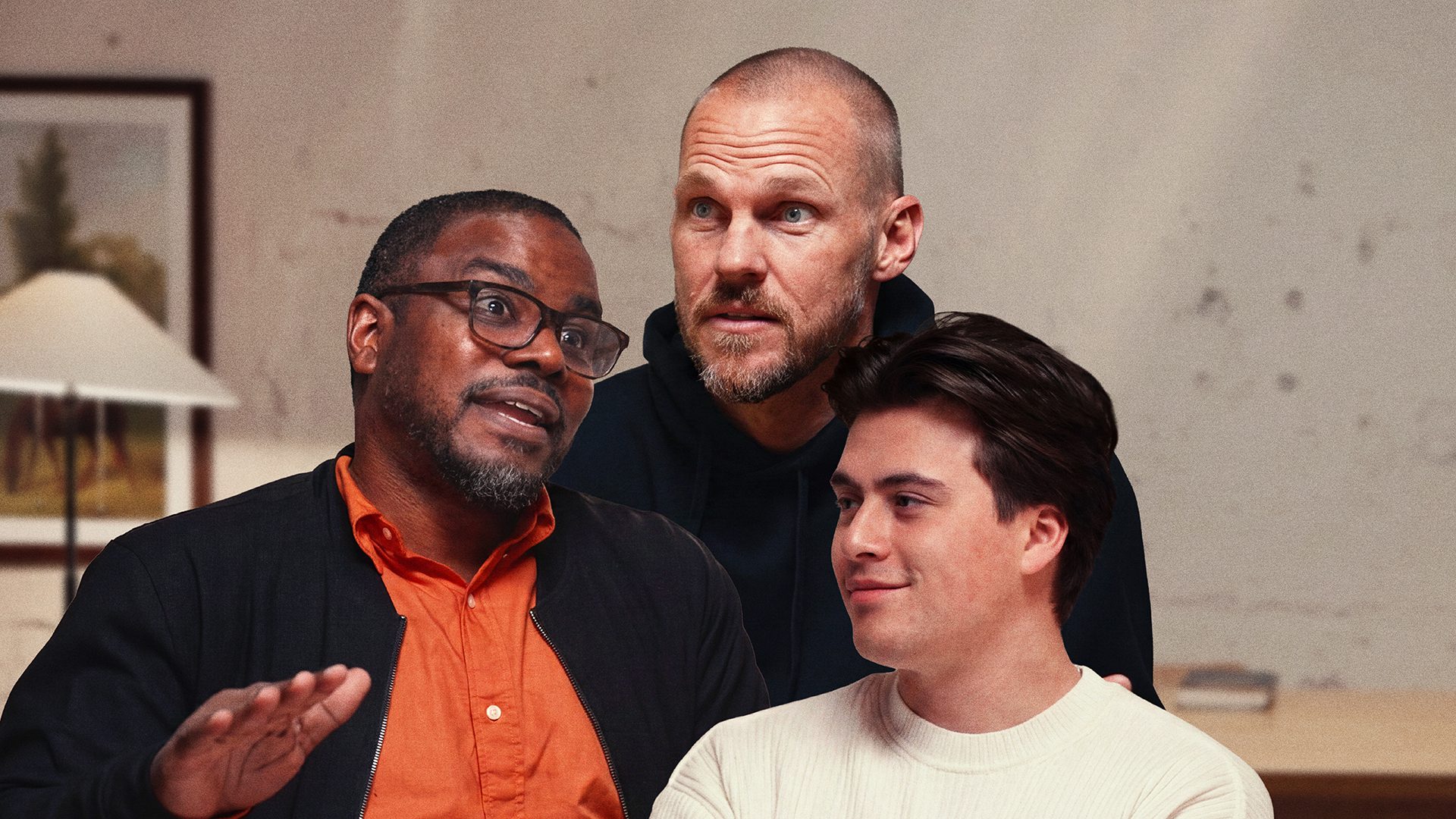
In this episode of Everyday Radical, David Platt and Austin Huang sit down with Shai Linne to talk about family worship, generational faithfulness, and the quiet power of ordinary obedience in the home. Shai shares how he and his wife Blair, both coming from broken backgrounds, began building simple rhythms of singing, praying, and reading Scripture together long before they had children—and how those habits became part of the spiritual inheritance they are now passing on.
They also talk about why so few families practice worship outside of Sunday gatherings, the barriers that keep many from starting, and why the goal is not perfection or performance. It is simply to make space, however imperfectly, for God’s Word, prayer, and praise to shape life in the home. The conversation is both convicting and freeing: you do not need to be a pastor or theologian to begin, and even ten faithful minutes in God’s Word can bear eternal fruit.
At the heart of this episode is a bigger vision of legacy. Family worship is not just about one moment at the dinner table. It is about forming households where the glorious deeds of God are proclaimed to the next generation until Jesus comes.
In this episode:
- Why family worship is a powerful way to pass down the faith
- What keeps many families from starting—and how to begin simply
- How everyday worship in the home can shape generations to come
Everyday Radical—honest conversations about living out the gospel with courage, clarity, and compassion. New episodes every Tuesday.
Related Resources:
David Platt:
Shai Linne
Shai Linne:
Hey, what’s up?
David Platt:
Bro, it is so good. I’m so glad to be sitting at the table with you for numerous reasons right now.
Shai Linne:
Yeah.
David Platt:
And especially when we think about family worship. But before we dive in, even just that topic makes me go all the way back to… When was the first kids stuff you started writing? Because all right, Shai, you’ve done so much. You’ve done hip hop, you’ve pastored, you’ve done all kinds of things, but we’re talking about… Yeah. When were the first kids songs you wrote?
Shai Linne:
The first kid song I did was Penelope Judd, which was 2008.
David Platt:
2008?
Shai Linne:
2008.
David Platt:
Yes. Because our youngest was… Or our oldest now was two years old at that point.
Shai Linne:
Yeah.
David Platt:
And I remember listening to it with my kids and they loved it. So man, that’s awesome. Praise God for the fruit of his grace in your life.
Shai Linne:
And I was single at the time when I did that song. And the response to it, it ended up being one of my most popular songs.
David Platt:
Interesting.
Shai Linne:
It’s funny because I would have these dudes, these big husky dudes coming up like, “Yo man. Yo. Yo that Penelope Judd, dog. That had me in tears, dog.”
David Platt:
That’s so great. Because up until that point, you’ve been doing hip hop for how long?
Shai Linne:
At that point, I mean, my first album came out in ’05.
David Platt:
Okay.
Shai Linne:
But I’d been doing Christian hip hop since ’01.
David Platt:
Yeah. And your quick background, you came to Christ when?
Shai Linne:
As an adult. I’m born and raised in Philly, a product of hip hop culture. I went to college, the University of the Arts to study theater. And third year of college, basically I partied my way out of school. So in a big party crowd, very hostile to the gospel, wanted nothing to do with the Lord Jesus. I would be at parties and I would look for Christians to get into arguments with…
David Platt:
Oh man.
Shai Linne:
And I saw-
David Platt:
Intellectually, just like I want to attack Christianity.
Shai Linne:
Yeah, 100%. Based on the kind of hip hop that I grew up listening to was very anti-authoritarian and anti-Christian. And so I remember one guy that I listened to, he said, “If your slave master wasn’t a Christian, you wouldn’t be a Christian.” And that just, I was absolutely not wanting nothing to do with it.
David Platt:
Wow.
Shai Linne:
And so I partied my way out of school, ended up in this party crowd. I went to South Carolina actually to basically prepare to move to Spain. So I was saving up money to move to Spain to pursue acting and Spanish women, not necessarily in that order.
David Platt:
Okay. Wow.
Shai Linne:
And that was my desire. And while I was down there, there was a young lady who was in our circle of friends who was a believer. And it was the first time that there was a peer who was actually a Christian. She would come around us. She would be at our parties, but she wouldn’t participate in our sin. She would just have her glass of water and be just as joyful. And we didn’t treat her well. We would make fun of her behind her back and to her face and she just returned it with nothing but kindness. And that just really hit me.
And so long story short, while I was down there, I was at a party, completely intoxicated. And I remember looking around the room and before that night, if you would have asked me if I believed in good and evil, my worldview that was heavily influenced by New Age and Eastern philosophy, I would have said, “I don’t think there’s a such thing as objective evil, like evil for its own sake, but just different levels of good.” But as I looked around that room, I got the keen sense that I was in the presence of the demonic in a way that just terrified me.
I went out on the balcony to try to clear my mind. And as I was out there, I started to think about some things that my mom had told me years before. My mom, believer, loves the Lord, and she would always just share with me, ask me to come to church. And as I was out there, I realized two things. One was that trying to run my own life just wasn’t working. And then two was that I had rejected the Bible, but I never actually read it for myself. I had all these arguments against Christianity, but it was things that were spoonfed to me that I had never actually investigated myself. Exactly. Not long after that night, went to a bookstore, grabbed the Bible for the first time. And the first thing I remember reading is Psalm 25:7 where David says, “Remember not the rebellious ways of my youth.”
David Platt:
Wow.
Shai Linne:
That cut me to the heart.
David Platt:
Oh, that’s where it started.
Shai Linne:
Yeah, that’s where it started. I called my mom, let her know what was going on. She sent me a care package and she told me to read the Gospel of John. So there’d be parties going on in the living room and I’m in the bedroom just reading through John and that’s where I met the Savior through the Gospel of John.
David Platt:
Praise God. So you were how old at that point? Right.
Shai Linne:
At that point, I was adult, full adult, 24. 24 years old.
David Platt:
Okay. And so all right then. There’s a ton in the story.
Shai Linne:
Yeah.
David Platt:
So fast forward. When did you meet Blair?
Shai Linne:
So met Blair in 2008.
David Platt:
Okay.
Shai Linne:
So Blair, she does spoken word poetry. We were invited to same event, me to do music, her to do spoken word. We met in Long Beach. And it was just in passing. I saw her. At that point, I was so focused. I’m like, I don’t want any distractions, you know what I’m saying? It’s me and you, Jesus.
David Platt:
It was you, because you’re doing Christian hip hop at that point.
Shai Linne:
That’s right.
David Platt:
And you’re just like, yeah, you’re passionate about Jesus.
Shai Linne:
Yeah. And so we kept getting invited to the same events around the country. So we just kept running to each other on panels and stuff like that. And so we eventually struck up a friendship and then the Lord brought us… We got married in 2010, so it’s been 15 years.
David Platt:
Yeah. All right. All right. Praise God. And then your family has grown in that time.
Shai Linne:
Yeah. This leads into the family worship thing, when I proposed to Blair, I proposed at the Lincoln Memorial. So a few feet away from where Martin Luther King gave us, “I have a dream” speech. And when I proposed, we talked about legacy, the idea of the impact that just one godly couple can have on generations to come. You know what I’m saying? And we’re both coming from single parent homes, very few Christians in our family. When I was growing up, I didn’t know married people, let alone Christian married people. So just good old secular marriage. I didn’t have any categories for that. And so the idea that, man, God has brought us together from very similar broken backgrounds that he might create a new picture for generations to come.
Austin Huang:
That really touches me in a new way. I just got married about a year and a half ago.
Shai Linne:
Oh. Congrats, bro.
Austin Huang:
Thank you. And you say that, both my wife and I had come from divorced parents. And so neither one of us had a really good model of what a healthy marriage, Christian marriage should look like. So just the fact that you and your wife made that decision and the fact that that decision has led to so much faithfulness, which has led to so much fruit is such a blessing. Praise God. That’s awesome.
Shai Linne:
Yeah. Yeah. And so we were, at that point, we’re engaged, we’re about to get married, and that’s when the panic set in for me because it’s like, okay, I don’t know what I’m doing. I’m about to be a husband. But thankfully we were at a church that had a lot of godly couples. And so we basically, we went up to people, I remember, and just said, “You know what? Can we come over? We’ll bring the food. You don’t have to worry about that. We just want to come over and just sit with y’all and just learn.” And so many couples, they were so gracious to allow us to do that.
And so that’s where we first started to get a model of… Oh, okay. A husband leading his family in family worship. And so having that model, then we began to incorporate it when it was just Blair and I, after dinner, getting the Word, sing and pray. And then as each child came, the Lord blessed us with three kids. As each child came, they came into an environment where that was what we did. And that’s all they know.
David Platt:
That’s so good, bro. So man, there’s again, so many different ways we could go. Yeah, because you guys are leading workshops on family worship. You are trying to help equip the Church followers of Jesus to do this well.
Shai Linne:
That’s right. That’s right.
David Platt:
So man, yeah. Yeah. I wish we could do the workshop right now, but-
Shai Linne:
Let’s do it.
David Platt:
… people need to go to the workshop, but what are some of the big things you’re wanting to communicate?
Shai Linne:
So the reason why we’re doing the workshops is because in researching it, what we learned was that there are a number of Barnipoles out there, one of which says that out of all church-going families, less than 5% do any kind of worship activity outside of Sundays.
David Platt:
Less than 5%.
Shai Linne:
Less than 5%. And that’s church-going families. Less than 5%, right? But then on the flip side, of the students that maintain a vibrant faith after college, over half would point back to some kind of worship activity in the home outside of church. So very few are doing it, but of the ones who are doing it, it’s very fruitful and lasting in the lives of the kids.
David Platt:
Yes. Yes.
Shai Linne:
And so we just had to say, “Okay, most Christians, when they hear family worship, family devotions, they’re like, ‘That’s a good idea.’ So then the question, well, why is it less than 5%?” And so just beginning to identify some of the hindrances. So one being just a lack of teaching on it. They’re believers who would do it, but just have not been taught. Don Whitney of Southern Seminary who’s done some good teaching on this, he tells a story of being in a class full of seminarians, future pastors, and asking the question, “How many of you had family worship growing up?” And saying that less than 10% raised their hands.
These are future pastors who haven’t had it modeled for them. You know what I mean? And so if it’s not model for them, they’re not going to pass it on to the congregation. So a lack of teaching is one. Busyness is another, right? So especially as the kids get older, you got all these activities, church activities, work activities, sports, all those kinds of things. It’s like just adding another thing to the mix is a thing.
But then I think a key one is the paralysis of guilt. So the idea that, man, I know I should be doing this. I know I should be leading my family in this way, but I haven’t been doing it and now my kids are older and so I’m just too weighed down by the guilt and all, so I’m just not… Just forget about it. You know what I mean?
David Platt:
Yeah.
Shai Linne:
And then finally, I would say just the idea, people don’t know where to start, right? So it can seem daunting. It’s like, do I have to be a pastor to do this? Do I have to be a theologian? You know what I mean? And so what we’re trying to do in the conferences or micro conferences, as we call them, is just try to reduce those barriers, break those down and say, “No, this is something that you can do.” And just try to go through that.
David Platt:
All right. Again, I don’t want to get you to do the whole conference here.
Shai Linne:
Yeah, no that’s-
David Platt:
Obviously it’s possible, but where do you start? What are some of the things… Well, I’m just assuming 95 plus percent of people would have no idea where to start because they’re not doing it or they’re not seen it.
Shai Linne:
That’s right. Yeah. There’s five sessions, two Friday night, three on Saturday. It’s over at noon on Saturday. And session one, Blair and I just share our story. So a lot of what I just shared with y’all, it’s us sharing it, but we’re doing it in a way that we’re incorporating our gifts, music, spoken word, congregational singing, all those kinds of things.
David Platt:
So good.
Shai Linne:
Yeah. So it’s not just a series of dry lectures. It’s very engaging. And also-
David Platt:
Not that… I mean, I’ve heard you preach. I can’t picture you doing dry lecture.
Shai Linne:
Right. Preaching.
David Platt:
But even still, yeah, you and Blair together with unique gifts and grace, I love that.
Shai Linne:
Yeah. So we share our story. And then the other thing is that kids are invited. So it’s the entire family who’s there.
David Platt:
That makes sense.
Shai Linne:
So we’re engaging the kids as we’re doing it. And then session two, I share the biblical basis. So where can we go to in the Scriptures where this principle is clearly expounded? And one of the verses that we look at is Psalm 78.
David Platt:
So good.
Shai Linne:
Yeah. Psalm 78:4, and this is speaking about the teaching of the Lord. In verse four, it says, “We will not hide them from their children, but tell to the coming generation the glorious deeds of the Lord and his might and the wonders that he has done. He established a testimony in Jacob and appointed a law in Israel, which he commanded our fathers to teach to their children that the next generation might know them, the children yet unborn, and arise and tell them to their children so that they should set their hope in God and not forget the works of God, but keep his commandments.”
And so the principle is the faith passed down to the next generation. That’s a scriptural principle. Parents are to impart the faith into their children, right? But then the next question becomes, and Deuteronomy 6 is another passage, but the next question becomes, okay, when do we do that? How do we do that? And we believe that family worship, regular times of family worship are a great way to apply that principle.
David Platt:
Yes.
Shai Linne:
See what I’m saying?
David Platt:
Mm-hmm.
Shai Linne:
And I’m careful in the language there, because what I’m not saying is that this particular practice in this way is prescribed.
Austin Huang:
Commanded.
Shai Linne:
Right.
David Platt:
To not do it is to sin if you’re not doing it in this way.
Shai Linne:
Exactly. Exactly. But rather, what’s the principle? It’s passing down the faith. Okay. What’s a great way to do it through regular times of family worship? And so that’s the second session, just teaching on that. And then Saturday, it’s the breakout sessions. I teach the men, Blair teaches the women, and I just drill in on men leading our families, the importance of men singing, and the importance of our families hearing dads sing, those kinds of things. And then session four is very practical. So the setup, if a church has us out, we have them build a set where it’s a living room, there’s a couch, and then there’s a dining room table. So it’s a literal table, and we’re sitting at the table, and then we invite people to come up, and we have three different sessions of family worship.
David Platt:
Wow. So good.
Shai Linne:
So one adult, one teenager, one child would come up, and then we just do it in three different ways.
David Platt:
So you show how, when you say three different ways, it’s like, with more of an attention to this child, with more of an attention to this teenager, with more of the attention to this adult or just how to hit, or how to basically do family worship that includes all of them?
Shai Linne:
The different ways are what we’re doing.
David Platt:
I see. Okay.
Shai Linne:
So it’s all surrounding the Word, but in one instance, we use a family worship Bible guide by Joel Beeke. So Joel Beeke has this Family Worship Bible Guide where each chapter of the Bible, there’s a short synopsis that points to Christ in the gospel. And so one way to do it is, because this is eliminating the, I don’t have the gift of teaching piece, right?
David Platt:
Yeah, yeah.
Shai Linne:
So a chapter in the Bible, read it, read Joel Beeke’s comments, pray and sing.
David Platt:
Yeah.
Shai Linne:
That’s one way to do it.
David Platt:
That’s it. It was like just reading.
Shai Linne:
Just reading. Right.
David Platt:
Yeah, yeah.
Shai Linne:
Another way is, and what we’ve done as a family, particularly in the last few years, is we’ve tied wherever we’re at in the Bible to what’s happening in the preaching at our church on Sunday. So our family worship text is the text that’s going to be preached the upcoming Sunday.
David Platt:
Okay.
Shai Linne:
So that, and that’s borne so much fruit in our family’s life just the conversations that we’re able to have, because we’ve steeped in the passage that week.
David Platt:
That’s good, man.
Shai Linne:
So as the pastor’s preaching the text, I’m looking at my kids. We’re like, remember that? You know what I mean? Making those connections. And so that’s another way to do it.
David Platt:
That’s good.
Shai Linne:
And then the third way is we just do one verse.
David Platt:
Okay.
Shai Linne:
We look at one verse and we discuss it and we pray and we sing. The goal is always to get back to Christ and the gospel no matter where we are in the Bible and yeah.
David Platt:
And singing, what does singing look like to somebody who’s like, “Oh, that makes me nervous. I don’t want to be singing.”
Shai Linne:
Yeah. Yeah, so for us, we naturally love to sing as a family. So one of the things I’ve heard is like, “Well, we’re not Shai and Blair Linne.”
David Platt:
Of course. Yeah.
Shai Linne:
Of course, y’all are singing.
David Platt:
I’m sure you do-
Shai Linne:
You got hip hop parties in here.
David Platt:
… hip hop and spoken word and it’s amazing and sorry, I just can’t do that.
Shai Linne:
Yeah. But for us, it’s very simple. So it’s acapella. In recent years, we’ve used the hymnal and our kids really love the hymnal. And I’m leading and again, we’re connecting it to the local church. So it’s the songs that we’re singing in our church are songs that we’re doing in family worship. And yeah, so for those who would say, “Well, I’m not a singer. I don’t have a good voice,” or those kinds of things, there’s a great quote from John Newton who in his letters, one of his letters is on family worship and he says, in terms of what we should do, the circumstances of every family is different. So you have to determine in terms of like when you do it and in what setting, but in terms of what you do, generally speaking, it’s going to be, you’re going to read the Bible, so there’ll be Scripture, there’s going to be prayer. And then he says, “And there should be singing if it can be conducted in a tolerable manner.” This is what he says.
David Platt:
That’s funny. What does he mean by that?
Shai Linne:
Yeah, in a tolerable manner.
David Platt:
Tolerable.
Shai Linne:
Yeah. And in other words, if it’s so distracting and so pitched, tone deaf, he said it might be better left omitted.
David Platt:
But this is where I think, man, praise God, we’ve got… I can just put on some music on the soundbar and we’re like-
Shai Linne:
Let’s go. Let’s go.
David Platt:
I don’t want to drown it out too much that we’re missing the beauty of our voices together, but at the same time, I got help.
Shai Linne:
That’s right.
David Platt:
I can actually bring Shai Linne into the room.
Shai Linne:
That’s right. So when Newton was writing, they didn’t have Spotify, they didn’t have great music.
David Platt:
I can bring in all these resources.
Shai Linne:
YouTube.
David Platt:
Yes, totally. With lyrics.
Shai Linne:
That’s right. And I was talking to a dear friend of mine who came up to me and said that after I taught on this at his church, he said, “I can’t sing. And it’s not only that I can’t sing, it’s actually offensive to my family when I try.”
David Platt:
Intolerable.
Shai Linne:
It’s intolerable. Right. And so what I asked him, I said, “Well, is there anybody in your family who’s musical?” He said, “Well yeah, my 14-year-old son, he sings, he plays the guitar.” I said, “You can ask him.”
David Platt:
That’s beautiful. And huge for him.
Shai Linne:
Exactly. And so a few weeks later, I get a text, video of them doing family worship with the son, the 14-year-old lead them like, “Come on, Let’s go.”
David Platt:
I love that. I love that.
Shai Linne:
Yeah.
David Platt:
Man, there’s so many things that are going through my mind that are… I mean, well, our family… Man, I have so many thoughts. Well, one, yeah, our family, we need to do more hymns. We’ve had a steady stream of little kids where we’ve done a lot of motion songs, and we still do those for the younger kids. The older kids join in, but it’s still… So anyway, we need to do more. So that’s one takeaway for me. But yeah, and one of the things we do that Heather and I have done for years, and then our kids are now involved in it, we use the same Bible reading plan, and so that forms a basis for our family worship times. What did you… Because we just invite the kids to do the same thing. So it’s like, “What did you see today in Matthew 3? And let’s reflect on that.” So we do that together.
Those prayer times, they vary them some. Sometimes it’s just like, “Let’s pray one sentence prayers like this.” And then resources, Bible Project, watching some videos like that or prayer cast videos, praying for the nations together. There’s just so many resources that are out there available.
Shai Linne:
Absolutely.
David Platt:
Are there other resources you’d point to? You mentioned Joel Beeke’s book. I think Donald Whitney has a… At least he did have a book, I remember on family worship.
Shai Linne:
He has a great book on family worship and it’s small and good. We love the Jesus Storybook Bible. So particularly when our kids were younger, that was something that we used. And yeah, those are some of the main things.
David Platt:
That’s good.
Austin Huang:
I have a question. How did you guys prepare? Before you had kids, was this on your heart and what did you do practically for someone like me who, Lord willing, like God will bless us with kids one day, but how do we prepare because we’re coming from that background of not being raised in that, not having any context for that. So what can me and my wife do now to prepare for the day that God might bless us with kids?
Shai Linne:
Yeah. So one thing that you can do is not do what I did, which was, I began after we got married, first time at the dinner table, afterwards, I started with the Book of Revelation and I said, “Let’s talk eschatology.”
David Platt:
That’s where it was going to start for you.
Shai Linne:
That’s where we going to start. We going to dive in. I’m going to exegete this and it’s going to be, you know what I’m saying? We going to get into the millennium. And I knew something was wrong when I saw my wife nodding off in the midst of it. So the point is, you don’t have to be the greatest theologian in the world to do this. You don’t have to be a seminary professor or have a PhD.
David Platt:
So good.
Shai Linne:
It’s just simply opening the Bible, beginning by reading a passage, discussing the passage, praying, and singing, or any combination of those things. Don’t lay so much-
Austin Huang:
All this pressure.
Shai Linne:
Yeah. All this pressure on yourself. Can you read and can you pray? You know what I mean?
David Platt:
Yeah. I love that.
Shai Linne:
Yeah. And then the other thing is that don’t feel like it has to go for an hour and a half or two hours every time. It could be as short as 10 minutes and the Lord will bless 10 minutes in his Word. 10 faithful minutes a day in his Word.
David Platt:
Yeah. Yeah.
Shai Linne:
God’s going to bless that. You know what I’m saying?
David Platt:
That’s good. I love, because Heather and I didn’t do family worship until we had kids in ways that I love what you’re saying because to build that rhythm and from the beginning of marriage, and I would even say to the extent in which it’s possible to back it up with the people you live with in your home.
Shai Linne:
Households.
David Platt:
So if you’re in an apartment or a dorm or whatever, for that just to become a rhythm in your life that the people you’re sharing life with most closely, obviously if they’re believers, that you would build in some rhythm.
Shai Linne:
That’s a good way to start.
David Platt:
Yeah. So that that rhythm, then that just makes sense to do in marriage and it makes sense to do with kids.
Shai Linne:
That’s right.
David Platt:
I love that your kids just, they who are born into a family-
Shai Linne:
That’s all they know.
David Platt:
… this is what we do at night.
Shai Linne:
Yeah. And we define family worship as a time set aside, apart from the Sunday gathering for households to worship God.
David Platt:
That’s good.
Shai Linne:
Those households can look different.
David Platt:
Yes, totally.
Shai Linne:
Roommates, grandparents. We can still look different ways.
David Platt:
Yeah, yeah. And then when people are in your household for dinner or an evening, to invite them into that. I’m guessing that they do that. And it’s just a wonderful opportunity to invite others into that time. We’ve had sweet times with brothers and sisters in Christ who’ve been visiting us from out of town or just friends who are over at that particular time and where we just get to do this together.
Shai Linne:
Yes. Yes. Yeah. In terms of hospitality and bringing people in, we have the privilege of doing for others what people did for us way back when.
David Platt:
Yes. Yes.
Shai Linne:
You know what I mean? And then even unbelievers. We have unbelievers over and we say, “This is what we do after dinner.”
Austin Huang:
Come on.
Shai Linne:
And we do it.
David Platt:
That’s good. That’s good.
Shai Linne:
And so even evangelistically, because there’s so many people who’ve never seen a family like me, never seen a family together, mom, dad and kids at the table-
David Platt:
Period.
Shai Linne:
… period, let alone family worship, let alone the father leading, like all those kinds of things. And so it’s like-
Austin Huang:
Mind-blowing.
Shai Linne:
… it’s mind-blowing.
David Platt:
Bro, there’s obviously a lot of things, what you have done with your life that you can do with your life, with the unique grace that God’s given you. I’m just super thankful for how you are, you and Blair together are leaning into this because I just think as we’re talking about this, I just think of the generational impact this can have. I mean, the data shows it, the likelihood of someone following Jesus after college and then having that model for them in a way that it’s not just them. It’s their future spouse. It’s their future children that the next generation might know God. Like it is Psalm 78. And so man, just thank you for… Yeah, there’s a lot of different things who you could be doing that. And I know it’s not the only thing you’re doing, but thank you for following the Lord’s leadership to pour into families, the households in this way. It’s so powerful.
Austin Huang:
What a legacy. Back to that decision that you made with your wife.
David Platt:
Man, so good. In a way that transcends just you and Blair, obviously-
Austin Huang:
100%.
David Platt:
… that so many others. Yeah.
Austin Huang:
Because it is revolutionary. I’m just like, I think the fear that I’ve always had in my mind, I’m like, I just don’t want to end up like my parents. And like I love them, but I just don’t want to end up with this divorce. It’s so destructive, not only to them, but to me and to generations to come. If I keep that pattern going. And this is just a practical way to put a blockade right there and say, “No, I’m going to stand with the everlasting rock. I’m going to keep my mind on him daily.” And you said, even 10 minutes doing this worship, I just think back to, we talked about this earlier, better is one day in the courts of the Lord than a thousand elsewhere.
Shai Linne:
Amen. Amen.
Austin Huang:
And so I’m excited to start doing that with my wife.
David Platt:
And bro, I’m just thinking about Psalm 78. And then I want to ask you, Shai, to just pray over everyone who’s listening to this and all the different households they represent. But I just think as you’re talking, Austin, I’m thinking about Psalm 78, you read it, when you get to verse 6 and it says, “That the next generation might know them, the children yet unborn.” So just, man, there’s kids, if the Lord entrusts children to you and all kinds of children yet unborn who might know the wonders of God in a wonderful way because some, not just parents who are listening to this right now decide to do this, but some teenagers who are listening, college students who are listening right now decide to do this. And children that’ll be born 10 years from now are experiencing the fruit of that.
Shai Linne:
Amen. May it be so.
David Platt:
Can you pray for that end?
Shai Linne:
Yeah, let’s go. Let’s go. Heavenly Father, we praise you for your glorious deeds, your wondrous works. We praise you for your glorious deeds in creation, your wondrous works in salvation, and we praise you that you are a God not only of individuals, but of families, and we thank you for your wisdom in ordaining that the faith would be passed down generationally. And so Lord, we pray for those who are listening, we pray for children who are yet unborn.
David Platt:
Yes, God.
Shai Linne:
Lord, would you in your grace and in your power raise up a generation who practice family worship. So what would our churches be like if they were filled with people who are in the homes regularly practicing family worship? What would this world look like? If there were churches filled with people who regularly practice family worship? Lord, would you do that? Nothing is too hard for you.
And for those who are wondering how it could possibly be done, Lord, would you guide them? Would you lead people to resources? Would you produce the conviction that God deserves to be worshiped, not only on Sundays, but throughout the week? Would you develop the conviction that what happens on Sundays should be an overflow of what’s happening in the home throughout the week? And we ask all of these things to the glory of your Name and your wondrous deeds, your glorious works might be proclaimed to the next generation until Jesus comes. Do this for the glory of your Name we ask in Jesus’ name. Amen.
David Platt:
Amen. Amen.
Austin Huang:
Thanks so much for listening to this episode of Everyday Radical. We pray that it encouraged you in many ways. We do this every single week, so be sure to subscribe or follow to not miss the next episode. We’ll see you then.