
How A Computer Store in Milan Became An Outpost for the Gospel
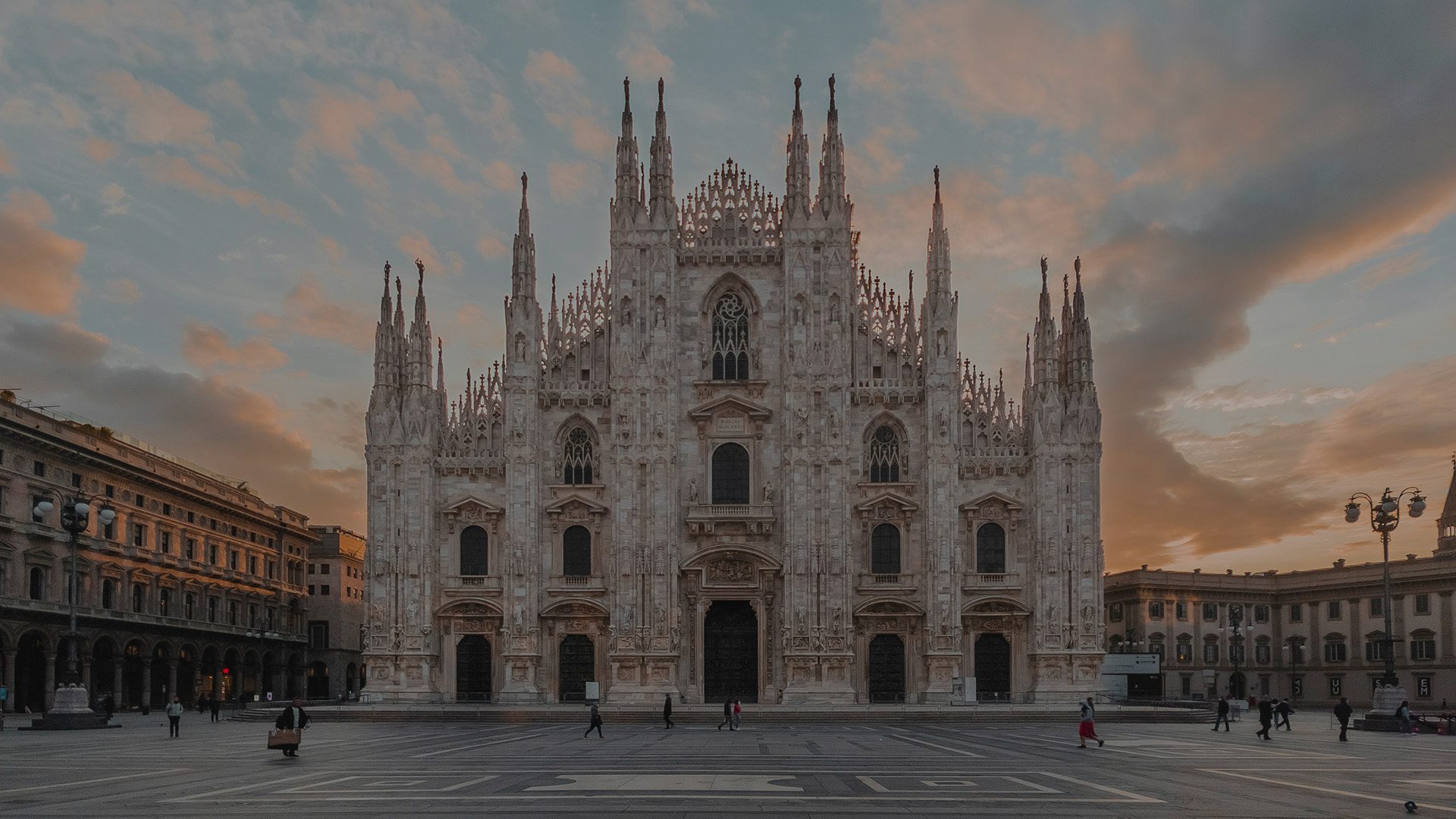
One of the scenic backdrops of the Winter Olympics in Milan has been the city’s famous Duomo: a massive cathedral that took six centuries to build and has capacity for holding 40,000 people.
On the northwest side of Milan, a much smaller number gathers in a former computer store on Sunday mornings for a simple worship service. But the implications are huge: they hear the gospel preached with clarity, often for the first time in their lives.
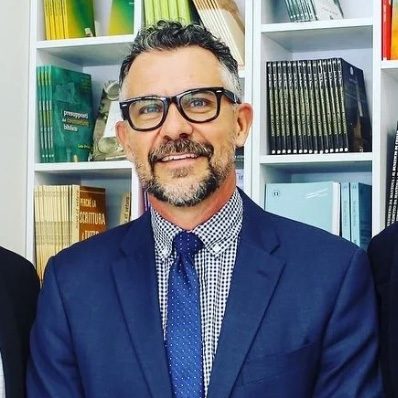
Michael Brown is a missionary and pastor of Chiesa Riformada Filadelfia, and leads Mission to Milan. He moved to Milan with his family in 2018, after a series of short-term mission trips sparked a desire to serve Italians long-term.
He says Milan, a famous city full of historic churches, deeply needs to hear the gospel of Jesus Christ. And some Italians are listening.
It sounds like you had an interesting path to the mission field in Milan. You were pastoring a congregation in California and started making short-term trips to Italy through a connection in the local church?
Yeah, so what happened was, over the course of the years, I ended up going over to Italy every year. It started out as one week, and then the next year it became two weeks, and then every year it was getting longer. I really just fell in love with the country, my wife as well— just the people. And we did that for about nine years.
I would go every year. I ended up learning the language, mainly because it just frustrated me so much to preach through an interpreter.
And little by little I just said, well, I just got to do this. I think the big thing for us was just that every time we would go home back to California, we realize there’s need everywhere. We need to plant churches everywhere, but it just stood out to us how great the need is here in Italy.
In terms of numbers, about how many Protestants in Italy?
Less than 1 percent of the population identifies as Protestant.
Most people have heard a lot about the religious history of Rome. But Milan has a pretty rich Christian history too, right?
Yeah, Milan is the home of Ambrose. Ambrose was the archbishop here in the fourth century. He planted five churches. He’s still the patron saint of Milan, but huge, immensely important in terms of church history, and especially combating the Arians and standing up for the Lord’s Supper, and that you need to be under the spiritual discipline of the local church. He even said the emperor was not allowed to take the Lord’s Supper if he was not repentant. And so he was very influential.
And then of course, he discipled Augustine and then baptized Augustine. So, Augustine was converted in Milan. And you can still see where he baptized Augustine. It’s underneath the Duomo.
And there’s the Edict of Milan—in 314 A.D., when Christianity becomes tolerable or tolerated by the Roman Empire during Constantine. So yeah, there is definitely a rich history in the ancient church.
It’s really the development of the medieval church where things really go awry, and the gospel just gets completely obscured.
So, what’s the spiritual landscape of Milan like today for the average person?
Your average Italian is Catholic, a baptized Catholic, but does not go to Mass.
I would say, upper middle age to old age would attend Mass, but not a lot of young people. I mean, you can find them, but not that many. It’s more tied to Italian culture. Catholicism, Christianity, just generally speaking, is seen more as a dying cultural tradition.
But they’re still very proud of their cathedrals. Like the Duomo, for example, is the second biggest cathedral in Italy after the Vatican. It’s enormous. It’s incredible to see just from an architectural perspective, but it’s seen more as a symbol of the city than the church. If you ask, how many people actually go there for mass? I think you’d see more pilgrims from outside of the country attending.
How do Italians in Milan receive Protestants?
Generally speaking, I would say that most Italians are very respectful and curious…but not to the point where they’re going to come to church. That’s really hard to get them to come to church.
So, we’ve evangelized neighbors and developed really great relationships with them. We’ll have dinner at their house, and they at ours, and just become good friends. And yet they’re still really nervous about going into a Protestant church. I think generally they think we’re something of a cult….like maybe we’re the same things as Jehovah’s Witnesses. There are a lot of Jehovah’s Witnesses here.
Have Jehovah’s Witnesses made a lot of inroads in Italy?
Well, we see them all the time—every local neighborhood has what we would call like a farmer’s market. It’s once a week, and you always see them out there. You see them at the transit station, you’ll see them all over the place. And I think what they’re doing is they’re kind of filling a void for Catholics who don’t know the Bible; grew up with a little bit of Catholic catechesis in grade school. Maybe they went to church a little bit when they were young.
And so, they have some vague belief sort of mixed with superstition and tied to their identity. A little bit of belief, at least in God, and probably believe in the Trinity maybe, but they don’t know the Bible. And so they’re filled with questions. The Jehovah’s Witnesses come along and they say, well, we’ll teach you the Bible. And that’s their “in,” right? They say, we’re going to teach you what the Scriptures are saying. Of course, it’s all error. But I think in that way, they’ve found a way in.
And so, yeah, that’s a concern for us…we want to make it clear that we’re not a cult.
What would be the baseline understanding of the gospel for the average person in Milan?
Well, St. Francis of Assisi said that the gospel is love the Lord your God with all your heart, soul, strength and mind, and love your neighbor as yourself. Which is actually the law, right?
But that’s what they tend to think. They tend to think the gospel is love your neighbor, be like Jesus. Well, that’s good, but that’s not the good news. Yes, we need to love God. We need to love our neighbor. We need to be good, but that’s the law.
And so the idea that Jesus lived the perfect life for you, died on the cross for your sins, rose again from the dead, and that’s the gospel—what saves you is through faith in him. That’s totally foreign, totally off the radar.
What are some other challenges for Protestant churches?
We are not viewed as a church in the same way as the Roman Catholic Church is. There’s no 501c3, for example, for us. In the States, churches get a tax break, and there’s protection that you have here. We do not have that.
We’re actually registered as a humanitarian organization, and we did some work with the local Red Cross for quite a while to be able to get that status, but we have to pay taxes like a store on our building.
And then you can’t even get a loan for a building. The way we got our building was, it was a computer store and four families took out second [mortgages] on their homes, and then everybody pitched in, and we just paid it down as fast as possible, so we actually paid it off.
Even with all the challenges, are you seeing people coming into the church? What draws them in?
Yeah, our church has grown quite a bit in the last seven years, and we have a number of Roman Catholic converts. And I think the thing that really attracts them initially is the love that they see in the church. Because one of the things we’ve noticed about the Roman Catholic Church here is that typically a priest doesn’t know his flock….Again, most of them are very nominal and don’t go very often.
When they come to a church like ours and they see, wow, the pastor knows everybody and everybody knows him, and the people are smiling, they want to stay. They’re not out the door right away. Italians love to talk, especially if there’s food. We spend a good hour every Sunday after church just talking and having coffee or a little something to eat. And then if we have lunch, which we only do four times a year, that goes for four hours.
So the people, when they see that, that always makes an impression. And then I think that opens the door to, okay, what is it exactly that you believe? And so I think that softens the heart for hearing the gospel.
What do you see as some of the opportunities for the gospel in Milan?
Well, you have a lot of the similar things here that you would see in America: Western civilization kind of falling part a little bit. And there’s that openness and void. The challenge, of course, is that you’ve got this old rooted cultural Catholicism along with sort of this European post modernity secularism, kind of skeptical.
But I mean, in all of that, you still have people with questions and people who think, well, what does it all mean at the end of the day? So yeah, I think there’s a lot of opportunity. I think there’s a lot of loneliness that people experience, even though Italians are known for their family ties…
So we celebrate the Lord’s Supper every week. I think when people see that communal thing that you can’t do over the internet, and then they see us spending time afterward talking and just fellowshipping and enjoying each other’s company and participating in that life together. Also, our midweek Bible study, same thing. I think that that is a draw to a lot of Italians, is this is something that I’m not seeing anywhere else in the world today.
And we just pray that, as any church prays, we will just be a good testimony to the world. That Christ will really shine despite our weakness and our failures, and then the gospel message will be received.
I think the truth and love are so important in missions. I mean, the truth without love is just cold and hard, and then the love without truth is just mush. It doesn’t really amount to anything. And so we’ve got to have those two in tandem together. And so just getting back again to the words of Jesus and the words of the apostles, I think is still very appealing today to Italians.
So I’m always hopeful. I’m not pessimistic. I think that there’s a great work to be done that will be done. I’m really confident that God will continue to do this work. And our goal is to leave something for the next generation.