What If the Unreached Don’t Want to Be Reached?


Pray for God's Word to be known in Indonesia
Pray for Indonesia
Invest in Indonesia
Invest in IndonesiaIn 2018, a young American missionary named John Chau paddled toward North Sentinel Island, home to one of the most isolated tribes on earth. Almost nothing is known about the Sentinelese, except one thing: they fiercely reject all outside contact. John hoped to live among them, learn their language, and share the gospel. Instead, he was killed shortly after arriving. His body was never recovered.
He seemed sincere in his goals, though some questioned his strategy. But in the secular media, a bigger controversy erupted over these questions: Why do Christians think they have the right to reach the unreached? Shouldn’t isolated peoples be left alone? And that raised a question believers have to grapple with too: What if the unreached don’t want to be reached? Should we go anyway?
It’s a question that’s been asked many times before, including in Indonesia.
MARTYRS IN THE MOUNTAINS
In 1962, missionary Don Richardson entered a remote Indonesian tribe known for headhunting and cannibalism. Many eventually embraced Christ, and Richardson wrote a best selling book about the transformation called Peace Child.
But reaching the unreached in these regions didn’t come without cost. In 1968, Yali tribesmen ambushed two missionaries, Stan Dale and Phil Masters. They killed them with bows and arrows, and the missionaries’ bodies were never recovered. But the work continued. Phil’s widow stayed to serve another tribe, and decades later, the Yali celebrated the dedication of the first full Bible translated into their language.
Some missionaries see rapid results, many wait years with little visible progress, and some lose their lives. But there’s another important question: How do Indonesian believers themselves think about reaching the unreached in their own land?
AT THE CROSSROADS OF JAVA
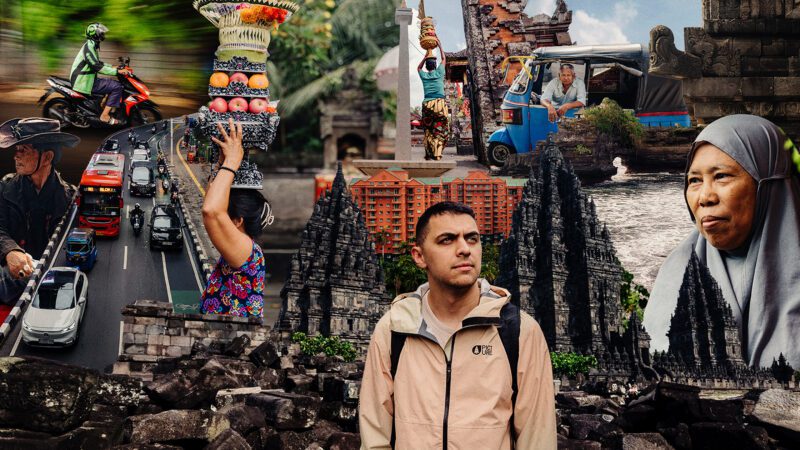
Yogyakarta is one of Indonesia’s most culturally and spiritually significant cities. Hindu and Buddhist influence is everywhere—ancient temples, carved deities, and rituals that go back more than a millennium. You can see spiritualism everywhere you look.
In a nearby area, Indonesian believers are working to bring gospel clarity, not only for neighbors steeped in old traditions but for people groups across Indonesia who have no access to the gospel at all.
A missionary named David has spent decades partnering with Indonesian churches to train and send gospel workers. He knows the context well.
“Indonesia has more than 700 ethnic groups,” he says. “Around 175 are unreached. About 45 to 50 are unengaged and unreached—no Scriptures, no church, no believers. Millions have never heard the gospel.”
That’s a massive amount of remaining work, but foreign missionaries aren’t the only ones doing it. In many cases, Indonesian believers are taking the lead.
“BEING BORN CHRISTIAN DIDN’T MEAN I KNEW CHRIST.”
One of those believers is Orsi. He grew up on a remote island where everyone called themselves Christian because of the influence of Dutch missionaries generations ago.
“We thought being born into a Christian tribe made us Christian,” he says. “But no one really knew the gospel.”
When he moved to Jakarta, Orsi encountered a church that taught the Scriptures more deeply. His life changed, so did his perspective on what he should do. He had never really thought about sharing the gospel with others, but he realized that’s what Christians are called to do: “When God allows us to see someone come to faith, that really brings us joy.”
TRAINING FOR A DIFFERENT KIND OF CONVERSATION
But how do Indonesian believers share their faith with unbelievers steeped in animism and other ancient traditions? Even Indonesians who identify with religions like Islam and Christianity often still operate from an animistic view where spirits, harmony, blessing, and curses explain life.
David says that’s where evangelism has to start: “You can’t begin with sin. Concepts of good and evil aren’t central. People long for wholeness, balance, harmony. We show them how those longings can only be fulfilled in Christ.” Once the conversation shifts to their deepest spiritual questions, Scripture speaks with clarity.
ARE WE SURE WE SHOULD REACH THEM?
After John Chau’s death, critics argued that isolated peoples should be left alone. But for Christians, the answer begins and ends with Jesus’ commands. “We don’t get to say no to the Great Commission,” David says. “People die every day without hearing the name of Jesus. That should move us.”
And we should do it now, he says: “Delayed obedience is disobedience. Jesus said go to the ends of the earth, and not to stop until it’s done.”
Mission isn’t about checking a box. It’s about making disciples, planting churches, and introducing people to the only Savior who can reconcile them to God.
“HE IS SEEKING THEM BEFORE WE DO.”
Indonesia does seem enchanted, with lush jungles, ancient temples, and beautiful islands stretching to the horizon. But beyond the beauty, millions of Indonesians sense a spiritual reality they cannot name.
Believers across the country want to show them the truth of the one God who can actually save. The God who came down in Christ, the God who offers grace rather than rituals, forgiveness rather than fear, and eternal life rather than endless striving.
That message is needed in Jakarta’s crowded streets, in the jungles’ remote corners, and in the farthest islands of Indonesia. Because that is exactly who Jesus is seeking, even before they seek him.
Transcript
John Chau: I plan on arriving on the shores of an island in which an unknown number of people live who have unknown religious beliefs and speak an unknown tongue. Soli Deo Gloria, John Chau.
In 2018, John Chau attempted to bring the gospel to a people group unreached by the outside world. The isolated tribe lives on North Sentinel Island, a small island north of Indonesia. Very little is known about its inhabitants. John had hoped to live long-term among the Sentinelese, giving his life to share the gospel and make disciples. Instead, he ended up getting his life on his first visit.
John’s body was never recovered, and while no one questioned his zeal, he seemed to have a real burden for the unreached. Some did wonder if he had gone about it the best way, but John’s death sparked a different question that made a lot more noise: why do Christians think they have the right to reach the unreached in the first place?
There was a lot of criticism. People called John a kind of Christian supremacist, trying to impose his beliefs on a tribe that should have been left alone. His story does make me wonder, though, what if the unreached don’t want to be reached, and are we sure that we should try?
Let’s look at another story of frontier gospel work. In 1962, a Canadian missionary named Don Richardson reached out to an Indonesian tribe known for headhunting and cannibalism. Many in that tribe came to Christ, and Richardson later wrote about it in a best-selling book called Peace Child.
In 1968, another pair of missionaries set out to reach members of another animistic tribe, but they didn’t live to tell about it. As Stan Dale and Phil Masters were hiking through the Indonesian jungle, they were suddenly ambushed by a group of Yali tribesmen and attacked with bows and arrows. Now, their bodies were never recovered, and each man left behind a family.
Martyrdom wasn’t the end for those two missionaries. After Phil Masters was killed, his wife stayed in Indonesia, serving another tribe that embraced Christ and later sent out missionaries of their own. Others kept reaching to the Yali, undeterred by the violence. And in 2000, nearly 40 years after the murders, the Yali dedicated the first full Bible in their language.
For decades, Indonesian believers and missionaries worked not just in cities but deep in remote regions, making contact, building trust, learning languages, and slowly introducing Bible stories to people with no framework for Christianity, all while praying God would open hearts.
It’s stunning to see once unreached tribes rejoicing as they hold a Bible in their own language for the first time, but it doesn’t always end like that. Some never see fruit in their lifetime. Some tribes just don’t open the door. Just look at John Chau and the Sentinelese, which raises a deeper question. How do Indonesian believers think about reaching their own unreached, and what does it actually look like on the ground?
So we’re not in one of the most remote parts of Indonesia, but we’re still in an important part. We’re in Central Java in one of the most historically significant cities of all Indonesia, this is Yogyakarta. Yogyakarta is known as the cradle of civilization in Indonesia. And when you look around, you get a feel and sense for the cultures and religions that have existed here for thousands of years.
We got here just in time for rainy season, and hey, we may not be in the most remote part of Indonesia, but we’re still in an important part.
Everywhere you go here, you can just see the sway that Hinduism and Buddhism once had, and not far from here, you’ll find some of the largest Buddhist and Hindu temples in the world. These are the kind of places where people ask questions about what the spiritual realm is trying to tell them. And these temples are beautiful, but they don’t provide answers to those life questions. But there’s a town close by where believers are working to bring gospel answers, not just for people here near them, but for Indonesians a lot further away.
So I wanted to talk to someone who knows what gospel outreach looks like in Indonesia. This is David. He’s been working with Indonesian believers for decades, equipping them to reach the unreached in their own nation.
David: We have about 700-plus ethnic groups here. We would count about 175 or so as still being unreached. And then of those, we would count probably another 45 to 50 as being unengaged and unreached. So not only do we have a minimal population among them that would embrace faith in Christ, there are some people groups that have no witness, no access to the gospel, no translation of the Scriptures in their language, and no gospel presence among them. There are just vast pockets of lostness, and when I say “Vast,” I mean millions of people who have no access to the gospel, never heard it before, and think of Christianity maybe as just a foreigner’s religion, if they’ve heard of it at all.
So to that end, not only do we look to put boots on the ground working through a lot of Indonesian national partners, is what we call them, brothers and sisters in Christ who also have a heart to see their own country reached and to get the gospel to those remote locations and to have a viable gospel witness a presence among them.
Orsi: So I was born and raised in a very remote island in North Indonesia, North Sulawesi. My story is the first time I come to Jakarta at the end of 2018. My friend asked me to visit someone house, and then while they’re doing fellowship there, I just learned that this community is different. They really talk about the gospel very deeply, being a disciple. And then I can tell that my faith grows very well day by day, my awareness about how great the gospel is. There’s so much need of the gospel. We don’t know how to do that.
David: Being a disciple, it’s not just about information transfer, it’s about life transformation as we’re all being transformed into the image of Christ, transformed into His likeness, that He might become the firstborn among many brothers.
Orsi: For my example, I was born and raised in a small island that all the people who lived there consider themselves Christian because back then, the Dutch visit that place and then spread the gospel, but I don’t think the tribe that you were born into makes you Christian. There are no other non-Christians living there, so you just don’t know how to share your faith with the non-Christian.
When God allows us to see someone come to faith, that really brings you joy. I’m a Christian. This is what should a Christian do. We want to keep doing that, yeah.
David: So as we’re coming alongside these churches, we’re looking to identify who in their ranks, national partners, right? The Lord is calling and setting apart, and sending out by His Spirit through the local church. I think that’s how, that’s the model, that’s the pattern that we see there in Acts 13. The local church is the sending agency.
Sending involves training, and that’s a subject that comes up a lot, too. How do we train gospel workers to communicate the gospel in settings where there’s very little context for it?
David: When we share the gospel with these people, they’re looking for balance. They’re looking for wholeness, they’re looking for completeness. They’re looking to commune with the divine. So it’s hard to just sort of start with sin and what separates us from God, because in the worldview of a mystic, right and wrong, good and evil, those things are all relative. So we have to kind of step back a little bit, move the conversation toward what causes disintegration in the first place. What is it that separates us from the transcendent or God?
And then once we get the conversation to a place where we’re actually talking in concrete terms, we would ask them what are the things that they’re doing to nurture integration, to restore wholeness, and to seek harmony? And at the end of that conversation, it becomes very clear that despite all of their diligence and their efforts, that they still feel very distant and far from the divine. So then we’ve come back to them with Scripture, and in Christ they see the wholeness, the completeness, the restoration of all things that they seek, and that it can only be found in Christ alone.
In Christ alone. That brings us back to that central question. If Indonesians have their own beliefs, why should Christians try to reach them?
David: As followers of Jesus, I don’t know that we have the option of saying no to the Lord’s command to take the gospel to the nations. Jesus gave us this command 2,000 years ago, but there are still people and places who’ve never heard the name of Jesus Christ, who have no understanding of what the gospel is, no translation of the Scriptures, and there ought to be something that moves us to say that, “This is just not acceptable.”
Delayed obedience is a form of disobedience. This is urgent because Jesus said, “Go.” In Acts 1:8 when Jesus, we hear that iteration of theGreat Commission that Jesus gave his disciples, they heard Jesus say, “Start here and move out and don’t finish until it’s done.”
This morning a man died on a beach, a remote island in Indonesia never having heard the gospel of Jesus Christ and has entered into a Christless eternity because of our negligence. Ask yourself, what resource is the Lord asking you to leverage to get the gospel to that man’s wife who survived him, to his children, to his village, to his community, to his people, that the name of Jesus might be made famous among them?
There’s something one missionary said that really stuck with me, “The goal isn’t just to reach the unreached in Indonesia. It’s to make disciples. It’s to plant churches among the unreached. It isn’t just to check an unreached box the way Indonesians check a box for their religion. It’s to reach their hearts with the good news of the gospel of Christ and pray that God transforms them.” The missionary put it this way, he said, “Every unreached, unengaged people group from the center of civilization to the edges of creation, that’s where we want to plant a church.”
After spending some time in Indonesia, I kind of understand why people use the word enchanted to describe it, not just because of its beauty and its people, but because there does seem to be a sense that there’s something beyond us, that behind all of this, there is a true God.
And what Indonesian believers and gospel workers want to show people across these thousands of islands is the one true God, the one God who can only be known through Jesus Christ, and they want to show them why that’s Good News, because not only can God be known, but they can be known by Him. They can be loved by Him and saved from their sins, and made new creations in Christ. They don’t have to find a religion to work their way to God. He came down to them to save them by His grace.
That’s a message that’s needed in the crowded streets of Jakarta and the remote jungles of Sumatra and the farthest islands of Indonesia, in every tribe, in every tongue, because that’s who Jesus told us to go. That’s who Jesus told us to seek. That is who He is seeking, even before they seek Him.