The Mission Field Is Outgrowing Us

When you read Jesus’ command to go and make disciples of all nations, do you ever wonder: Where do we start? Where do I start?
Of course, we start where we are.
We share the gospel and make disciples among the people all around us. But Jesus also clearly commands us to make him known among all nations. The two aren’t mutually exclusive.
But in a world of more than 8 billion people, it’s a big job. It’s actually even bigger than we realize.
Right now, the U.S. sends out more missionaries than any other country in the world—about 135,000 on the field. But that’s a tiny number compared to the overall need. The reality is churches in North America send less than 0.1 % of their own to the mission field.
And the mission field keeps getting bigger than the places from where traditional missionaries are being sent.
For example, consider Pakistan: It has a population of about 255 million people—nearly 88 million less than the U.S. But in 2025, Pakistan welcomed 6.9 million new babies.
The U.S. had about half as many births.
Next door, India has a population of 1.4 billion people and roughly six times as many births as the U.S. each year.
That’s a lot of people, but to get the true scale, you have to widen the lens.
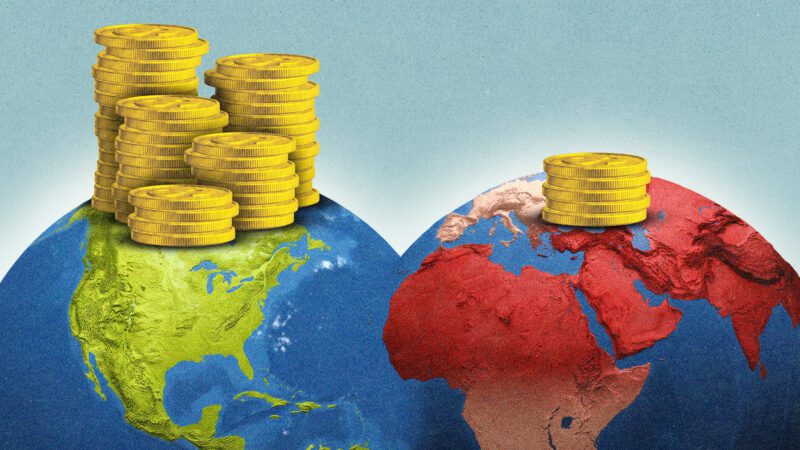
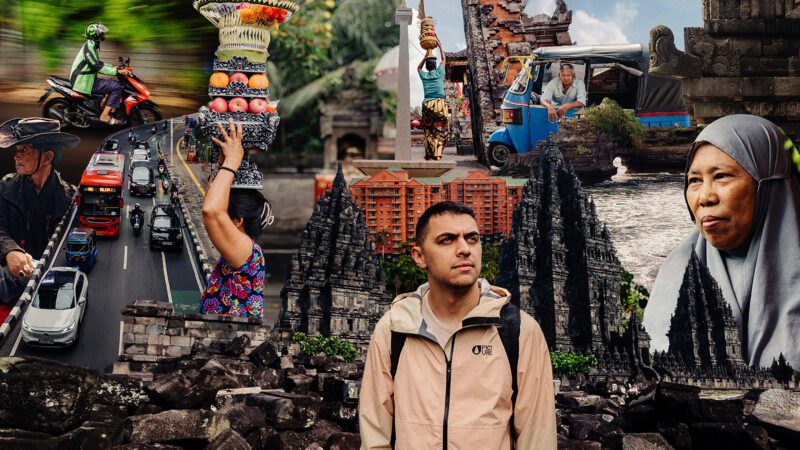
The U.S. and Europe, from where most missionaries have been sent over the last century have a little over a billion people combined. The areas of the world still hardest to reach with the gospel stretch through the Middle East, North Africa, and Asia.
The total population of those regions is about 5 billion people.
So, the entire population of the U.S. is roughly one-fifth of the population of the regions that need the gospel most. And that’s before we’ve considered how many of those Westerners are Christians, and how many of those Christians might actually go be missionaries in a foreign country.
Even if we could double the actual number of missionaries going out, the need among the nations would vastly outnumber the pool of available workers.
But there’s still another problem: A lot of the places that need the gospel most are places we can’t go.
GETTING SHUT OUT
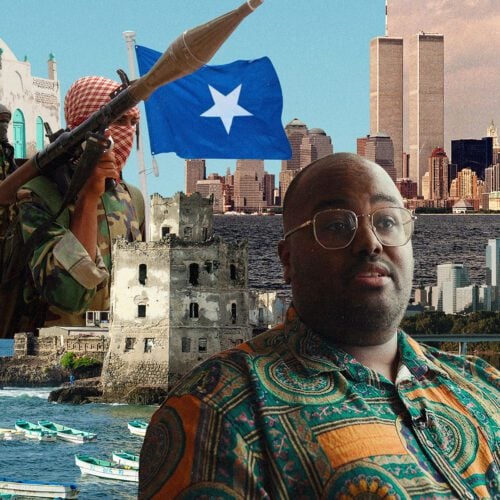
Governments have continued to clamp down on Christianity in many nations across the Middle East and Asia, and many missionaries have been forced out. (Consider India, Pakistan, China, Russia, Turkey, and Kazakhstan as just a few examples.)
And, of course, there are places where most foreign missionaries have been banned for decades. Think North Korea, Iran, Afghanistan, Saudi Arabia, Yemen.
Even if you were willing to leave for the mission field tonight, if you’re a Westerner, you’d be unlikely to get into many of these countries. And if you did, you probably couldn’t stay very long.
So, what do we do? Give up? Stay home?
THINKING BIGGER
We certainly don’t give up. Jesus’s command still stands, despite the difficulties. And we don’t all stay home. God is still calling some Christians to go.
But what if instead of only thinking about the places where most missionaries have come from in the past, we look at the bigger map? Because that map has already changed, whether we realize it or not.
A century ago, more than 80% of the world’s Christians lived in Europe or North America. Today, it’s only about 25%. Christianity’s center of gravity has shifted south and east toward Africa, Latin America, and Asia.
That means there are more than a billion Christians much closer to the places that are hardest to reach. And some of those Christians can be sent to reach others. Many of them are already doing it.
You see, sending isn’t one straight line from the West to the rest of the world.
It’s more like a global relay—churches strengthening other churches, believers crossing nearby borders, and each part of the body together carrying the gospel farther than any one of us could take it alone.
The Great Commission was never given to one country or region, or just to missionaries. It was given to the whole church in the whole world.
Some of us will still go to other countries to share the gospel. For others of us, making Jesus known may look less like crossing an ocean, and more like putting our prayers, money, and skills behind someone who can go farther than we can.
So the question is: What am I doing to make Jesus known where he’s not known? How can I use my own life—my church, job, knowledge, finances, family, friendships, to reach those who haven’t heard.
How can I do my part to make Jesus known everywhere?