
Is China Rewriting the Bible?
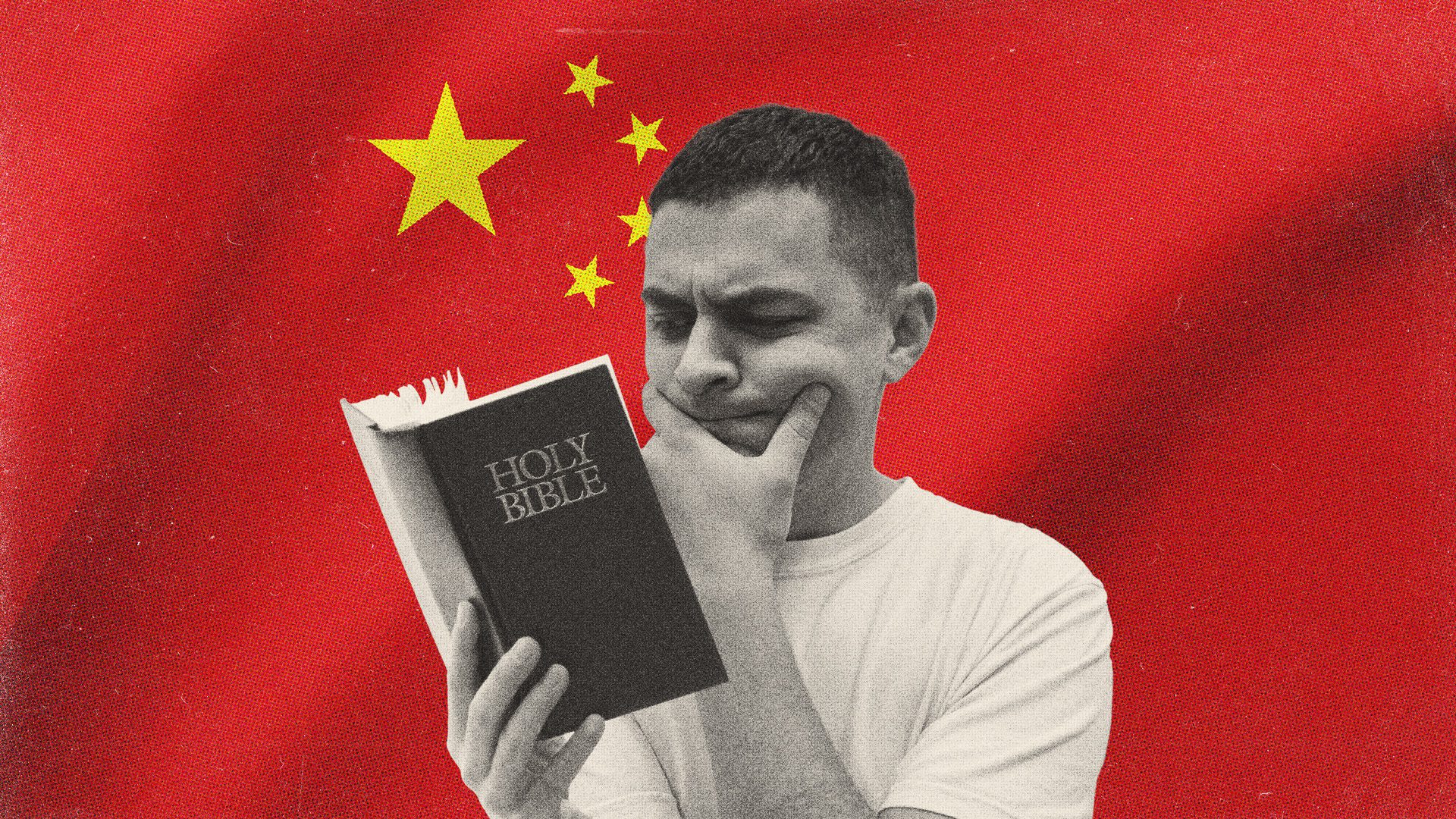

If you have been a Christian for any length of time, you probably have a go-to Bible. Not just a favorite physical copy—perhaps goatskin, heavily underlined, filled with notes—but a preferred translation. Add study Bibles, reference Bibles, Spanish Bibles, children’s Bibles, and, most days, a Bible app on your phone.
The point is simple: many Christians today have access to a lot of Bibles.
That was not always the case. Just a generation ago, the King James Version largely dominated the English-speaking world. And when it was first published, it was not archaic at all—it was written in the language of ordinary people.
But this is not primarily a story about Bible translations.
It is a story about where those Bibles are printed.
Open the front cover of your Bible, and there is a strong chance you will find that it was printed halfway around the world—in China. That detail matters, because the same government that prints Bibles for the global church actively restricts access to Scripture for its own citizens.
That tension raises a troubling question:
What does it mean when the world’s largest Bible printer does not want its people reading the Bible?
Printing in China
China accounts for roughly fifteen percent of global economic activity, much of it driven by manufacturing. Printing—books, clothing, packaging, signage, and yes, Bibles—is a major part of that ecosystem.
At the center of global Bible production is the Amity Printing Company, the largest Bible-printing facility in the world. The company produces an average of seventy Bibles per minute and has printed more than 250 million copies to date. Bible publishing is complex and highly specialized, and many international publishers rely on China’s scale, speed, and technical expertise.
So why would a government known for restricting Christianity allow mass production of Scripture?
Money is part of the answer. Roughly three out of every four Bibles printed in China are produced for export. But economics alone do not explain the full picture. The deeper issue is control.
Christianity in China
Protestant Christianity in China is growing. By some estimates, there are now more Protestants in China than in countries like Germany or France.
Broadly speaking, Christianity in China exists in two parallel forms. There are underground or house churches—networks of believers who meet quietly, move locations frequently, and live under constant surveillance. And there is the state-sanctioned church, overseen by government bodies such as the China Christian Council and the Three-Self Patriotic Movement.
The distinction is clear: Christianity is permitted, as long as it operates on the government’s terms.
That control extends to the Bible itself.
Rewriting Scripture
In 2019, the Chinese Communist Party announced plans to produce a revised version of the Bible—one edited to align with socialist values. Official statements made clear that the goal was not simply to restrict religion, but to reshape it: to create a distinctly Chinese version of Christianity, compatible with state ideology.
What does that look like in practice?
In 2020, Chinese Catholics encountered a government-published ethics textbook that quoted Gospel of John 8:3–11, the story of Jesus and the woman caught in adultery. The passage begins familiarly, with Jesus telling the crowd, “Let the one who has never sinned throw the first stone,” and the accusers walking away.
Then the story takes a shocking turn.
In this version, Jesus proceeds to stone the woman to death, explaining that if the law could only be enforced by sinless people, it would collapse.
This is not a translation error. It is a deliberate rewrite. And it fundamentally alters the identity of Jesus—from a merciful Savior to an enforcer of state authority.
If that is the only Scripture available, the result is not Christianity. It is something else entirely.
A Bible That Is No Bible
The Chinese government understands the power of sacred texts. A church shaped by Scripture cannot easily be controlled. So the strategy is not only to limit access to the Bible, but to redefine it.
A church without the true Word of God loses the gospel. And a church without the gospel loses its power to endure, multiply, and bear faithful witness.
For many Christians around the world, access to Scripture feels secure. We debate translations, bindings, and features—not availability. That freedom is a gift, but it is also a responsibility.
Because the Bible is not merely a book we prefer. It is the words of eternal life. And it is worth protecting, preserving, and making accessible—especially for believers who risk receiving a Bible that is no Bible at all.
That includes our brothers and sisters in China.
If you’ve been a Christian for a minute, you probably have a go-to Bible. Not just like your favorite physical one—although there’s a bunch: goatskin, multiple bookmarks, sheesh.
We also have Study Bibles. Reference Bibles. Spanish Bibles. Children’s Bibles. And even so, at the end of the day I usually just end up using our phones.
The point is: we have a lot of Bibles—and not just with different types of covers or for different audiences—we have a lot of translations of the Bible.
Just a generation ago, this wasn’t really a thing— King James ruled the day.
Yes, the Bible that sounds Shakespearean to us today, but was written in the language of the people at that time.
But this story is not about all the translations of the Bible. It’s about where all these Bibles are printed.
If you look inside the cover of your Bible, you will most likely find that it was printed halfway around the world, in China.
And that’s significant because the Chinese Communist Party is known for persecuting Christians—the same country that prints the Bible for the entire world doesn’t want it to reach the hands of its own people.
Can you even imagine what it would be like to be a Christian without a Bible?
But even then, that’s not necessarily what’s happening in China today.
This story is about how persecution in China is heading in a new direction. They’re not trying to destroy Christianity—they’re trying to rewrite it.
Printing in China
Today, China accounts for about 15% of all economic activity in the world, most of which is manufacturing, which explains why a lot of my toys growing up have this little sticker somewhere that said: “Made in China”.
But a big part of manufacturing is printing. Of all kinds, books, apparel, signage, and yes, Bibles.
A lot of Bibles are printed in China. Amity Printing Company, the largest Bible production base in the world, produces an average of 70 Bibles per minute. To date, they have printed more than 250 million Bibles.
Printing a Bible isn’t easy. And Bible publishers rely heavily on China’s expertise.
But the question remains: why would a country so set against Christianity be willing to print the very book they don’t want their citizens reading?
We could say that it’s a matter of trade. Dollars. The bottom line. After all, 3 out of 4 Bibles printed in China are produced for export. If you’re the manufacturing powerhouse of the world, why not make a buck?
But the answer is not that simple. The biggest thing the Chinese Communist Party is after is not just money, but control.
Christianity in China
Protestant Christianity in China is on the rise. It’s estimated that there are more Protestants today in China than in Germany or France.
Generally speaking, there are two very distinct churches in China.
There’s the grassroots movement of churches, usually called underground or house churches. Christians who attend these churches do so in secrecy, even changing locations and being very careful about who they meet with.
But there is also the State Sanctioned Church, mostly represented through the China Christian Council and the Three-Self Patriotic Movement. You can guess which one the Chinese government is cool with you being a part of. China is okay with you being a Christian… as long as it’s on their terms.
They don’t mind if you have a Bible, as long as it’s their Bible.
In 2019, the CCP announced that they’d be publishing a new translation of the Bible, adapting it to be more in line with their beliefs and systems. They “no longer want simply to repress religion but… transform it” into “a new version of Christianity.”
China’s take on Jesus and the Adulterous Woman
Let me give you an example of what I mean. In 2020, Chinese Catholics found a government-published textbook on professional ethics and law quoting a known passage, John 8:3–11. You’ve heard this story before when Jesus stops the crowd from stoning the adulterous woman. Let’s read their translation:
“The crowd wanted to stone the woman to death as per their law. But Jesus said, ‘Let the one who has never sinned throw the first stone.’ Hearing this, they slipped away one by one.”
Okay, so far not so bad.
“When the crowd disappeared, Jesus stoned the sinner to death saying, ‘I too am a sinner. But if the law could only be executed by men without blemish, the law would be dead.’”
I don’t have enough time to get into this passage and explain why this it’s obviously insane, but what’s important for you to know is that this is not a bad translation. This is a rewrite. This new ending changes the whole story. So much so that the Jesus we know is no longer recognizable.
So the point is: ask yourself, what would the church look like if the only Bible they had was one where Jesus stoned the adulterous woman, instead of forgiving her?
This is the danger facing the Chinese Church. If they get the wrong Bible, then they get the wrong gospel, and they get the wrong Jesus.
Can You Trust Your Bible?
The Chinese Communist Party knows what they’re doing. They know the power that religious texts have power over the people, the Bible most of all.
They know that a Church without the Bible is no Church at all. And if you take away the Church, you take away the strength of the Christians, which then hinders the ability of Christians to multiply.
If you go after the Bible, you go after the lifeblood of Christianity.
We can give thanks for the freedom that many of us enjoy in our countries. With all the things we can say, most of us are not worried about losing access to our copies of the Scriptures.
And so we can be thankful that we have all of these Bibles. Not only because we got them in all the colors we like and the translation we prefer… but because in them we got the very words of eternal life.
And the Bible is so precious, that it’s worth doing everything we can to ensure it’s accessible to everyone.
And that includes our brothers and sisters in China who are in danger of receiving a Bible that is no Bible at all.