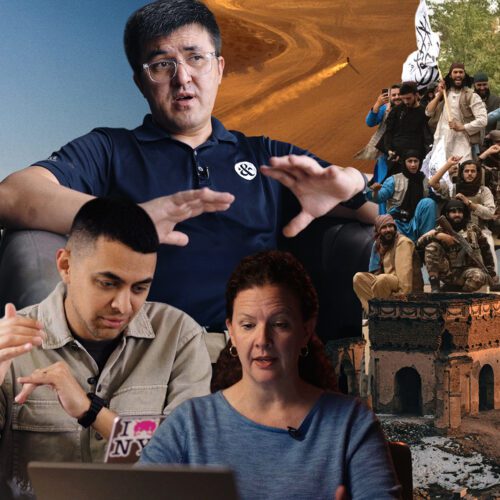
Hard to Reach: Iran – Full Documentary

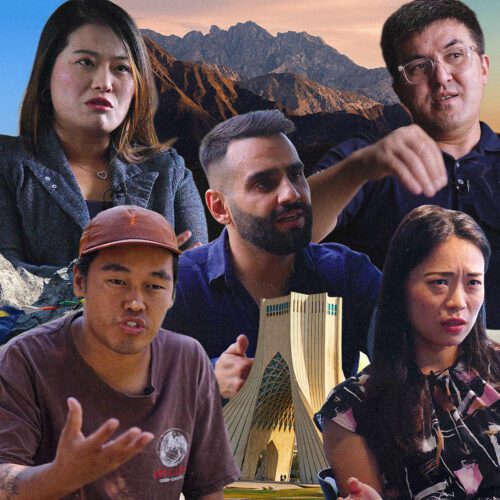
Last year, our team spent months researching and producing Hard to Reach: Iran, traveling into the heart of the Islamic Republic to uncover why this ancient land remains one of the hardest places for the gospel to take root.
In this one-hour Director’s Cut, Steven Morales journeys through the bustling streets of Tehran and the ruins of Persia’s past, exploring how history, politics, and persecution have shaped the lives of Iranian Christians today.
You’ll meet believers who risk everything to follow Christ—discover the hidden church that thrives in secret—and hear how, despite censorship and exile, the gospel is multiplying through courageous men and women who long for revival in cities like Tehran, Isfahan, and Mashhad.
But, this story is not just about Iran. It’s about us—about how God is weaving the faith of Iranian Christians into the global church’s story in ways more profound than we realize.
Watch Hard to Reach: Iran and see how light shines in the hardest places.
Transcript
Steven Morales:
It’s April 1951. The world wrestling championships are being held in Helsinki, Finland, and this is a year that one of the greatest Persian athletes won Iran’s first international medal, the silver in wrestling. His name was Gholamreza Takhti, and he was just getting started. One year later, he went to the Summer Olympics in Melbourne where he finally brought home the gold. Takhti’s career in wrestling took him all over the world winning medal after medal. This guy was a national icon, one of the most beloved figures in Iran’s history. I mean, they made a movie about him. But he was loved not just because of his athletic feats, but also because of the kind of guy he was. He was honorable and fair in his wrestling matches. He once found out an opponent was injured in one leg, so he intentionally avoided it and only attacked the other.
When he beat the reigning champ of the world in Moscow, he noticed his opponent’s mother was crying, so he pulled her aside and comforted her. And when an earthquake devastated Buin Zahra in 1961, Takhti walked the streets calling on everyone, especially other prominent Iranians, to provide help and relief. He was in many ways a man of the people. But why does all of this matter? A few months ago, I was in Tehran, the capital city of Iran, and I first learned about Takhti when I visited his grave with a local guy. His unexpected and controversial death caused a stir in the nation, and thousands showed up to his funeral. It was clear that the man buried in this tomb was different from the others. It looked like a tomb for a king or a shah as they’re known in Persia. And back in the ’60s, Iran was ruled by the Shah, but unlike Takhti, the Shah and his regime was not as beloved or praised by the public.
Across a backdrop of political corruption, economic strife, and natural disasters, people had very little faith in their leadership. They lived in fear and distress, but they couldn’t complain out of fear of being harassed, arrested, or even killed by the Shah’s secret police. The contrast between a leader like Takhti and the Shah couldn’t be clearer. While we were at Takhti’s grave, my guide, a devout Muslim, told me story after story of the hardships and discontentment of living under the Shah. But it’s what he said at the end of his stories that stood out to me the most. Living under the Shah was terrible, but life today under the Islamic regime is a hundred times worse. My name is Steven Morales. I’m part of the team here at Radical. I want to take you on a journey through the history of one of the oldest civilizations on the planet, tracing back thousands of years to understand the complexities and ruptures and fractures of a nation.
And how that has led cultural and religious challenges that make Iran such a hard to reach place that is bursting with the opportunity for gospel growth today. The truth is, if you’re a part of Western Christianity and watching this, you’ve probably only seen Iran through the limited lens of news headlines or Hollywood movies. It’s possible that like me, you’ve never actually considered going or sending or supporting indigenous churches in a place that just seems like another Nineveh. But if God’s heart is to reach all nations, and we have to ask ourselves, how did some of these nations, nations like Iran, become so hard to reach? And is it possible that God could bring a revival to cities in Iran like Tehran, Isfahan, and Shiraz, just like he did to Nineveh? This is Hard to Reach, Iran.
So let’s go back to the 1960s. Iran is being ruled by Shah Mohammad Reza Pahlavi. Since the time of the Medes, yeah, like the ones you read about in Daniel and Isaiah, Iran has been ruled by Shah’s. And Pahlavi was the last of the Shah’s and he was allegedly trying to make Iran a secular country. He came to power after World War II with promises of freedom and growth and modernity for Iran like never before. And while things seemed to be going in that direction, Pahlavi was not the ruler the people of Iran hoped for. His life was marked by excess, throwing lavish parties and living a life of luxury while his people starved and struggled through a national economic crisis.
This was nothing new for the Pahlavi dynasty or even for the dynasties that ruled before, like the Qajar dynasty, which started all the way back in 1789. Iran has had a long history of unjust rulers, revolutions, and changing of powers. In order to understand why this is relevant for us today, we need to look back even further. Back to before Iran was even called Iran. That’s right, Persia. It’s not every day you can trace the history of a country back to the Bible, but flip open the Old Testament and you’ll find a lot about the Persian Empire. We hear about Persian rulers in places like Second Chronicles, Ezra and Ezekiel, but you probably know it best from this story.
Veggie Tales on Video:
Oh no, what we going to do?
The king likes Daniel more than me.
Surely, Yorkan is above all men.
Now I understand.
For even at the bottom of the lion’s den.
You are in his hand.
Steven Morales:
Daniel and the lions den, Darius the Mede. All of this is happening during what is called the Achaemenid Dynasty, one of the greatest empires the world has ever seen. And it all happened right here in Iran. The story literally ends saying, “So this Daniel prospered in the reign of Darius and the reign of Cyrus, the Persian,” who’s also known as Cyrus the Great. Cyrus was the leader that Isaiah prophesied about in Isaiah 45 saying he would bring Israel back from exile. Cyrus was the founder of the first great Persian empire that extended over the southeast of Europe and Egypt and into parts of India. His grandson, Xerxes, was also an important Bible figure. You might remember him with another name. Now in the days of Ahasuerus, the Ahasuerus who reigned from India to Ethiopia, he gave a feast for all his officials and servants. The army of Persia and Media and the nobles and governors of the provinces were before him. This is the beginning of the book of Esther, and it’s also happening in present day Iran.
So 2,500 years ago, Persia was a powerful empire that ruled over, man, almost half the population on earth. And it seemed like for a moment there, Persia was poised to rule the world. And then history took a turn that no man could have foreseen. A group of tribes that had historically been dispersed and at odds with each other united under one man and one creed and began expanding into Iran. Arab forces made their first incursion onto Iranian soil right after the death of Muhammad, in 633 AD. At this point, the Persian empire had worn itself out from internal civil war while defending its grounds from the Romans and now found itself fighting off a Muslim army. They pressed on and continued to fight for almost two decades, but this new Islamic threat would ultimately prove the demise of the Neo-Persian empire. And so Islam entered Iran. Now we can’t cover a whole religion in one video, but for the sake of this story, there’s some things you should know. Islam is an Arabic word that literally means submitting. Muslim means one who submits to God.
You may have heard the Islamic creed, there is no God but God and Muhammad is his prophet. Their holy book is called the Quran, which should only be read and studied in Arabic. There are two major denominations in Islam, Sunni and Shia. Across the world, Sunnis make up the majority, but the most well-known exception is in Iran. The split between these two denominations happened in the first generation of Islam in the seventh century. And the breaking point was about who should be Muhammad’s successor. Today, there are a number of theological and practical differences between the two, but they do share some common beliefs. Islam has a high regard for Jesus, considering him a prophet and a sinless man. However, it denies him his rightful place as a Son of God and payment for our sin. Muslims may be devout and earnest in their beliefs, but just like everyone else, they’re in desperate need of salvation. Talk a little bit more about this later. So back to the story. The Muslim conquest of 651 AD changed the game in Iran, transforming its political and religious landscape, but many Iranians today are still resisting Muslim influence.
Nima Alizadeh:
Yeah, so I mean, Persian culture goes back a lot. I mean, we see it in the Bible too. When Islam actually came to Iran and Islamic way impacted Iran, slowly and slowly, we adapt the culture. But when you go back to the root, we are Persians. That’s how Iranian would look at it. We said, “We are Persians. We are not Arabs.” It’s not that being Arab is bad, no, but we have our own identity. So Islam was not part of our culture. We had our own culture. Now, Iranians actually wanted to regain that culture again, so they’re opposing to Islamic way and thinking because we think, “Okay, this is for another world.”
Steven Morales:
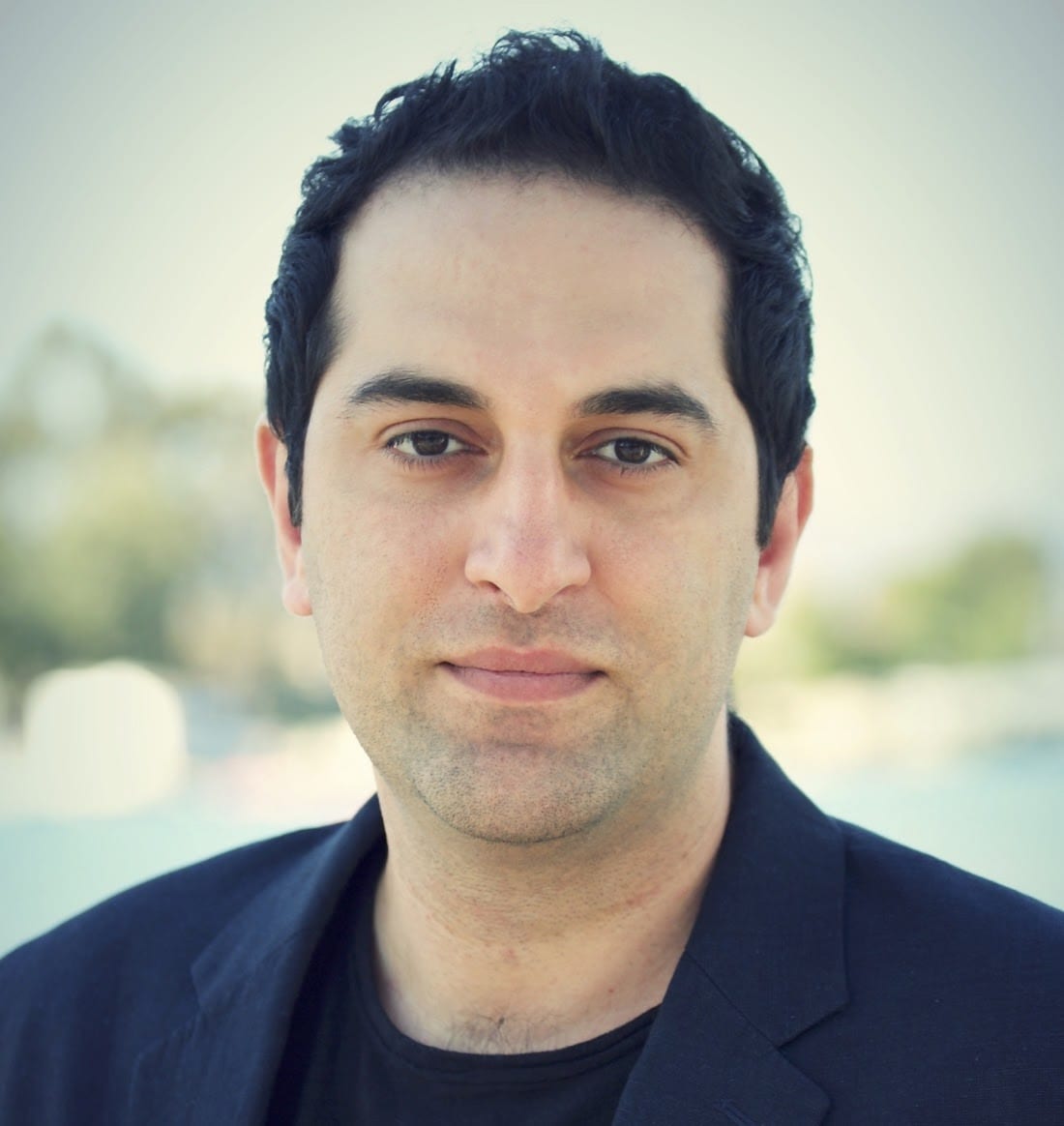
This is my friend, Nima Alizadeh. Before he became a believer, he was also a star athlete in Iran, not in wrestling, but playing for the national basketball team. When he converted to Christianity, he was forced to leave his home and dreams of playing professional basketball. But the Lord took him on a different path, training Iranian church leaders for gospel ministry and translating a whole bunch of resources into Farsi. He knows firsthand what it’s like to grow up under the heavy weight of Islam in Iran.
Nima Alizadeh:
When you go to school, for example, you have to learn Arabic to be able to read the Quran and then pray five times in Arabic. So still, you have no idea what you’re talking about, but you’re just rehearsing something every day, you have no idea what you’re talking about. And then we say, “Okay, like 2,000 years ago we had this in Farsi. Why can’t we just keep that culture? Why can’t we just be Persians and have the freedom of having our own God and worshiping God in the way that we want to worship our God?”
Steven Morales:
When your country is so culturally rich and historically influential, for outsiders to only see you as Muslim, it’s a bit insulting. While there are many people groups within Iran, Persians in particular have existed for thousands of years before anybody who spoke Arabic ever entered their land. All of this is crucial to understanding Iran’s history and even to understand what’s happening with Christians today. Islam may be Iran’s national religion, but it wasn’t always that way. It’s not even what most Iranians want today. Quick break from the rest of the video. We’re currently in Tehran in Shahr Park, really close to the Grand Palace. It’s a grand bizarre and it’s incredible, the hospitality, the kindness we have faced in this country. A lot of people look at Iran and maybe don’t have the best impression, but really when you get here, you realize how much the media probably doesn’t tell you the full story.
So I’m guessing the majority of people watching this haven’t been to and aren’t planning on going to Iran anytime soon. And if that’s the case, I just want to let you in on a little something. There’s something just lovely and unique about the people of Iran. They’re truth seekers. They’re really not afraid to ask you questions, even hard questions, but at the same time, they’re very warm and inviting. Culturally, you just don’t know hospitality until you’ve experienced Persian hospitality. I mean, I was walking through a park here in Tehran when a woman approached me and for no other reason than seeing that I was from out of town, invited me to sit with her family, drink tea, and eat sweets. I mean, I think every Christian can learn something about hospitality from our Iranian brothers and sisters. It doesn’t matter how far or different a place may seem to us, the image of God is everywhere and it’s beautiful to see. And it’s why this story matters so much.
All right, back to the story. It’s December 1979, and after years of political instability and public demonstrations, Shah Mohammad Reza Pahlavi was overthrown and forced to leave the country. You see, Pahlavi was no stranger to Western influence. He was after all a huge proponent of secularization. And if you watch historical footage of Iran in the ’60s and ’70s, you’ll notice it doesn’t look all that different than some places in Europe and even the US. And while initially many supported Pahlavi, the satisfaction grew, particularly among Muslims who felt that that Western influence had gotten too strong. Not to mention that the Shah’s opulent lifestyle left many wondering how he could throw such lavish parties while the people were going hungry. All of this led to the point of no return. The Shah was deposed and in came the Islamic Republic’s new supreme leader, Ayatollah Ruhollah Khomeini.
Things were about to drastically change for the people of Iran. Beginning with a new leader, a new Islamic constitution that would shape the life of every citizen moving forward, meaning no more religious freedom. Islam is the rule of law, and most of all, a new name, the Islamic Republic of Iran. Now, I want to talk about what this actually means for believers in Iran. And I know that talking about government structures may not be the most exciting thing, but it is really relevant for our story here. And so let me take one minute to break down what it means to live under an Islamic Republic. As a Republic and as part of the UN, Iran technically has a separation of powers. There’s an elected president, a constitution, a parliament of 290 elected officials. These officials represent all the people groups of Iran, and there are even three seats preserved for leaders of traditionally Christian backgrounds.
There’s a chief justice, police, and armed forces, everything a typical government needs to function. But let’s go back to that word Islamic. Being an Islamic republic means that the latter is subject to the former. Yes, Iran has the president, but above the president, there is a supreme leader known as the Ayatollah, which means a sign from God. And the Ayatollah can approve or remove any president at any time. He sits at the top of the Guardian Council, which approves or removes every member of parliament. He supervises the special clerical court that handles religious and clerical matters. He appoints the chief justice, and you guessed it, the police and armed forces answer to him as well. Iran is one of only three Islamic republics in the world. And when you get down to it, you can see how it doesn’t actually function like a republic at all, but here’s why this matters. For the last 40 years, politics and religion in Iran have been one and the same.
Nima Alizadeh:
It’s the Islamic Republic of Iran, so the main religion is Islam, so you cannot have any other religion rather than Islam. So when you are born in Iran, you are told you are a Muslim, you have to practice Islam, so then that’s your religion by birth.
Steven Morales:
Islam is not a choice. It’s what you’re forcibly born into. And in people’s minds, the rule of the government and the rule of Islam are the same thing. There is no separation between the church and state. And while that has elevated the level of persecution against Christians and other religious groups, it’s also had one huge unexpected consequence. And I’ll say it like this. The Islamic regime came to power at a time when people were looking for hope for the future. And they came on a wave of promises that things would change for the better, but that didn’t happen.
Ramdin Sudman:
For example, the promise of the religious leader in Iranian never take place in Iran, and it causes that people search about their, for example, truths in the other way. Because before that, Iranian was so strong in Islam, but after Islamic revolution, they found out there is nothing in Islam.
Steven Morales:
They were disappointed by it.
Ramdin Sudman:
Yes.
Steven Morales:
This is Ramdin Sudman. Ramdin is an Iranian pastor who recently had to flee his home because of persecution. He’s also the son of the first Christian martyr who was officially killed by the Iranian government after the Islamic revolution took place. So what happened after the Iranian revolution?
Ramdin Sudman:
The excitement caused by establishment of the first republic regime based on the law of Islamic Sharia and the hope of creating a utopia so quickly faded in the eyes of many Iranian. Because not only all social problems, despite the initial promise of the religious leaders of the Iranian revolution, such as the poverty, discrimination, corruption never disappear, but also all problem were clearly visible in Iran society more than before. And this caused answered question among Iranian.
Steven Morales:
The Islamic regime was not able to deliver on its promises to build a better country, and the disillusionment and disappointment people felt after wasn’t only with their government, but with Islam itself. And for people whose culture values to search for truth, this led many on a search for truth elsewhere, particularly in Christianity. It was in many ways the first step towards revival.
Ramdin Sudman:
Perhaps the corrupt fruit of Iran’s government had a bitter taste of people, but it never tired them of searching for the truth. The positive evidence and good testimony of the life of the Armenian and Christian community in Iran during the years draw a lot of attention to Christianity amongst Iranians.
Steven Morales:
There’s this quote by CS Lewis in his book, Miracles. He says, “Every good chess player takes what is precisely the strong point in his opponent’s plan and makes it the pivot of his own plan.” He takes his opponent’s best move and makes it work in his own favor. He makes unpredictable moves. This is the pattern of persecution that we see across the world and in places like Iran. God’s enemies will do everything in their power to crush the gospel, but somehow God turns it around and makes it work in his own favor to advance the gospel. Life for Christians in Iran is not easy, and that’s a huge understatement, but we also need to acknowledge that life is not easy for Iranians in general living under the Islamic regime. There is a long list of urgent physical and spiritual needs, and yet God is doing something incredible and unpredictable here in Iran.
Are you sure you want to go to Iran? I got this question a lot in the weeks leading up to our trip. Like anyone who has traveled to places known for Christian persecution, I got some looks when I told others where I was going. But that’s not really surprising. What was surprising though were the first words I heard when I arrived in Iran from the customs officer. He asked almost in disbelief, “Why are you here?” If you’re a Christian, the answer to that question will shape your life. It might change the way you look at money, the things you spend time and energy on. It might change the way you look at the person you could potentially marry. It might take you to a place you never imagined you’d go to. It might even take you to a mosque. Not all mosques are the same, but they’re all fascinating architectural wonders, and they’re the center of religious life for Muslims.
For devout Muslims, daily life revolves around prayer. They pray five times a day, and mosques are built as centers of worship and prayer. Before they pray, they perform a ritual cleansing at a fountain in the courtyard. And men and women separate its two different rooms and pray in rows behind the Imam, or the leader of the congregational prayers who stands on the minbar, which is like a pulpit. This all involves standing, bowing, and sitting on prayer mats, all an act of submission to Allah. So when Muslims pray, they’re supposed to be pointing towards Mecca, the city where it believes Muhammad received visions from Allah. And we see this in the architecture of mosques because they have a mihrab or a niche in the wall that indicates the direction of Mecca. There’s even a tower called a minaret where the call to prayer is announced.
Plus, you’ve probably also noticed most mosques have a dome, and that’s because it represents the vault of heaven. So much of the physical building has representative elements of their faith, so you won’t see the same type of iconography or art that you’d see in a Catholic Church or a gothic cathedral. I’ve been to a lot of mosques outside of Iran. Many of them are huge, beautiful buildings that attract thousands of visitors. As soon as I got to Iran, I visited mosque after mosque of different shapes and sizes. There were no tourists here. No one taking selfies, just hundreds and even thousands of Muslims praying to Allah. There are places on this earth where the atmosphere of spiritual warfare is palpable. You can feel the enemy, and we realize the danger of visiting this place. Just getting these shots required us to use small hidden cameras, and yet this is just a small taste of what Christians in Iran face every day.
There are no church buildings. There’s no freedom to worship Jesus openly, to follow Jesus means to live in enemy territory. So if you asked me why I went to Iran, I went to understand the struggles of my brothers and sisters and what life under persecution looks and feels like. Ultimately, I came to find the answer to the question, what does the church look like in a nation of mosques? In spite of travel advisories, tourism in Iran is a growing economy, and has consistently gone up over the years. In 2019, right before the pandemic, Iran was visited by 9.1 million tourists, about two million more than the year before. That makes Iran the fourth most visited nation in the Middle East. Only behind Saudi Arabia, United Arab Emirates, and Egypt. And there’s a lot to see. For any Bible nerds out there, you can visit Esther and Mordekhai’s tombs. Or you can go to the Golestan Palace or Persepolis and see traces of ancient history, stories of leaders and empires from thousands of years ago.
Or you could visit Iran’s Grand Bazaar, a marketplace filled with everything that’s been there for hundreds of years. Or you could race down a roller coaster on Mount Toha. There is so much to see in Iran, but no matter where you go, one thing you can’t escape is that it’s the Islamic Republic of Iran. Islam is everywhere. There are pictures of the Ayatollah everywhere. Our hotel didn’t have Gideon Bibles in the drawers. They had Qurans and prayer mats and an arrow on the ceiling pointing you to Mecca. As we were exploring Tehran, our guide would stop several times throughout the day at different mosques to do his prayers. And it all got me wondering, in a country that is so dominated by Islam. How would anyone even hear about Jesus? Tell me a little bit about your story. How did you come to know Jesus and just what was that journey like?
Iman:
I was born in a Muslim Shia family.
Steven Morales:
This is Iman. He spent almost a decade as a refugee in Turkey after needing to flee Iran because of his faith.
Iman:
Unfortunately, Muslims, they believe that Jew and Christian, they are not clean and they call them najis. It means that you cannot touch them because if you touch these people, you will be unclean. But my father, the way they teaching us, they said, “No, you shouldn’t think in that way.” I remember it was Yom Kippur. Yom Kippur is the fasting, all the Jew fasting from one day, 24 hours on. That night, I remember my very good friend, he told me, “Iman, if we are believed to everything, we doing all of the single law in Sharia, in the 10 commandment, but we are not believed to the Mosiha or the Messiah to come. We are not even Jew.” And then it was in my mind, it’s about one year after there was a church and they was talking about Jesus and they said, “Jesus is the Christ and he’s a Messiah.” When I heard that, all of my attentions came and I listening to them and they had the one number. They said, “If you want New Testament, send us an email.” And then I sent an email to them, “Can I have a New Testament?”
Steven Morales:
Iman received a copy of the New Testament and he couldn’t put it down because of both his Muslim background and his Jewish friends, he was already a little familiar with Old Testament stories, but this New Testament gave him the true interpretation of who Christ was.
Iman:
And after that, I went to my friend and he’s a Jewish and I said, “I heard that Jesus is the Son of the God and he is a Messiah, you looking for it.” And my friend said, “No, Jesus was a liar,” and he said many, many bad things about Jesus. I was shocked because I really trusted him.
Steven Morales:
Your Jewish friend?
Iman:
The Jewish friend, yes. One night I was feeling so, so bad. And I keep reading my New Testament. I know I was sinner. I know I have no way to be getting salvation. I know that, but when I’m reading the New Testament, my heart is going to be full of the joy of the God. It’s the first time I pray that, “God, if you are really, you are the Son of the God, please save me, please help me.” The minute I pray that I finish, I feel like everything atmosphere for my room is changed. And I feel like the presence of the God, I heard the voice that said, “Iman, follow me. I want to change your life.” And I was just looking back at my back. I see the light and I see the Jesus and he show his hand to me, said, “Iman, I die for you. Follow me. I want to change your life.” Then I was start to cry.
Steven Morales:
Government numbers will identify 99% of the population as Muslim, not really surprising when everyone is automatically assigned Islam as a religion at birth. But the reality is that that number is much lower. Some reports even have it under 50%. But an Islamic government that imposes Islam on its people does not equal a truly Islamic people. And when that government continues to let down and even oppress its own people, you can understand how many Iranians would be dissatisfied and disillusioned with Islam as a whole. But what’s most encouraging is not necessarily Islams decline, but rather how much Christianity has grown. Because even though many Iranians were let down by Islam, it didn’t mean they stopped looking for an answer.
Milad:
In my country, Iran, when I grew up, all the things you can do or used to belong to the mosque. So if you want to play ping-pong or football. I mean soccer, football.
Steven Morales:
Yeah, we know the real football, yes.
Milad:
The real football. Exactly. So you should go to mosque. So I was in the mosque almost every day and people were praying, doing the Islamic namaz and everything and the mullah were there. So I always had questions.
Steven Morales:
This is Milad. He left Iran years ago after facing relentless persecution. He told me about how he would often go to the mullah or religious leader of his community to try to understand the Quran.
Milad:
I always had questions. So once I asked one of them, “What does this words means in Quran?” And that man told me, “We don’t know.” And I was like, “What do you mean?” He said, “This is a secret between the prophet and God.” So I was like, “I’m hearing you telling all these people that this book is given to guide us, so why do we need to have some secrets between the prophet and God in the book, which it’s role is to guide us in life and we don’t know the meanings.”
Steven Morales:
Imagine seeking the truth only to be told God was keeping secrets. What a disappointment. But in God’s good grace, there is something in Persian culture that just drives them to keep pressing on looking for answers. And in that search, many are finding Jesus.
Iranian Christian Woman:
When I read the Quran in Farsi, a series of questions came to me that I had never encountered before, because we always read the Quran in Arabic, and I saw that it was written in the Quran that the only one who had the Holy Spirit was Jesus Christ.
The only person who is going to judge the world was Jesus Christ, and as I was reading, questions came to me for which there was no answer, and when I asked my father, he said that we don’t know these questions, only scholars do, and I was so scared because I knew if I continued to read the Quran like that, I would lose my Muslim identity, so I stopped reading the Quran.
Steven Morales:
For security reasons, I can’t say much about her, but her story is one of many of Persians searching for answers.
Iranian Christian Woman:
One day I came to this conclusion, little by little God showed me that Islam is a lie. Something happened to me, I realized that Muhammad is a prophet who came and died, but Islam says that Jesus is alive, and it will come again. Then the question for me was, if Jesus is alive and he is going to judge the world, then why does God send a prophet who dies and cannot do anything for people?
When I opened the Bible to read it at once I realized the true meaning of Jesus’ name, which means Savior, and it was there that I gave my heart to Jesus Christ. and I said, “Jesus, I put my hands in your hands.”
Steven Morales:
Remember Nima? He came out in the first episode of the series. He knows a thing or two about reaching Iran.
Nima Alizadeh:
In the West, you can just get on a radio or TV or just do public ministry. In Iran, it’s different. You have to work out with strategies, like we’re going for shopping. Again, we don’t need to shop, but we’re going pretending to be shoppers and talking to the salespersons. Because again, those are the ones who are actually meeting so many peoples on a daily basis. But again, there are lots of challenges.
Iman:
The one year I God connect me with some of the other people, four or five people, they came to faith and we had just one New Testament.
Steven Morales:
The one you got, you would share with your other five friends.
Iman:
Yes. Sometimes we doing the printing them and they’re giving to them to read it. And we going somewhere like a mountain and we start to pray for that city. And then we walk into a street and we are just praying for that city. And if we had some opportunity to share the gospel to them.
Nima Alizadeh:
At one instance, I remember we were talking to the guy and then he said, “Okay, let me call my friend to come and hear.” We realized he’s actually calling the police. So it still is dangerous. I hear some people are doing bus evangelism. It’s a bit risky, but when they’re getting off, they just get up and say, “Jesus is the savior and then leave some Bibles and just take off.”
Iman:
And God, after three years, one time we came together, we just thinking, we were just working, working, and then we just recognized that you are almost 300 people.
Steven Morales:
Wow.
Iman:
Yes.
Steven Morales:
Just from one-on-one sharing the gospel through conversation. I was walking through the courtyard of the Ebn-e Babviyeh cemetery, the same one where Takhti is buried. And I came across a funeral service taking place. This is a historic site where technically you’re not allowed to bury people anymore, but many still do. Funerals can mark some of the most somber and dark moments of our lives. And as most Christians have experienced, it’s one of those occasions where we’re especially thankful to have a church family. We’re supposed to come alongside those experiencing loss. Weep with those who weep. And it’s a time when your pastor or other members of your church join you to pray or share words from scripture, counsel family members. But all of it got me thinking. What happens when a Christian in Iran dies? Or if someone in your house church passes away, or what about other significant moments in the lives of Christians? The baptisms, weddings, maybe just regular church? Where do you go?
Nima Alizadeh:
About 25 years ago, we had buildings, but I think about five, six years ago, they shot down all the churches. So we had house group churches, everything is on the ground. Everything is house churches now. So Iranian churches now in Iran, they all house cells like China. So they meet in groups, the houses, they move around meetings. They have to be really careful. Even though over the phone, they cannot be direct. They cannot call each other brothers and sisters. They have to be really, really careful. In terms of gatherings, evangelism, singing songs, preaching, everywhere in the society they go, they have to be mindful. Especially when they are in close gatherings like family gatherings or any parties they go, they have to be careful when they talk about their personal beliefs because you never know. Maybe your brother, your parents, your family members will turn you in.
Iranian Christian Woman:
Well, I went to both a church building as well as a house church. It was very good to have close fellowship in the house church. But, well, we could never worship loudly. And if I were to say a little bit about the positive points, the fellowship we had together, and the fact that the house church was focused on teaching and spiritual nourishment, which was very useful for us.
We got more spiritual nourishment. We were able to serve more, I mean, the service opportunities I had in the house church, I never experienced in the church building.
Milad:
What makes me sad nowadays is when people talk about church, they make it so complicated and professional sound. But where I grew up, it was a bunch of us, mostly young people who became Christian and the family denied them or they don’t want to be around them. They come and join us. We were like a family. We had food, we talk, we sing. I play the little guitar and we sing worship song, we eat food, we read the Bible and we try to understand. We ask the churches in Tehran and the more mature Christian brothers we know to help us to understand the scripture and we grew up. So it was very raw and it was very close relationship based kind of gathering. Although we did not have many things, we did not have so many people or big buildings, but what is the purpose of being in church? Growing and help other people to know Christ and I think we succeed in that.
Steven Morales:
Yeah. So was that something where you guys were meeting in secret?
Milad:
Yes.
Steven Morales:
Was it difficult to communicate with other Christians? I mean, what did it look like? How do you share the gospel? How do you do that when it’s all secretive?
Milad:
Well, secret, yes. All in secret. We were all 007 agents. We know how took off the SIM cards from the phone, put it into the… Some are safe and always someone by the window is checking the outside, not singing with a loud voice, everything. But we know we are risking our life, but it was like that’s the life that God is giving us and it’s worth to risk it to reach others.
Steven Morales:
That’s the point.
Milad:
Yeah, that’s the point.
Iman:
One time when I was sharing the gospel, the government arrest me. I’ve been one night that they beat me and one night I’ve been in the jail and then bring me out. It’s the first time they arrest me and they-
Steven Morales:
Because you were evangelizing?
Iman:
Evangelist. And it was Christmas. We make a small bag with, it’s a small book name, it’s Trust the Way of the Salvation. We printed it with some chocolate, they put it in the bag and we passed it out to people and say Merry Christmas. And I arrived home at 3:00 AM and I see that someone knocked the door and it was two big guy came and opened the door. And one of them had a camera and other one came and they put us and my family to sit in the chair. And then they came and they took everything, like in my books and computer, everything, and they brought me to the jail. I’ve been 29 days in one room. I didn’t know it’s a morning and a night or what is that?
Steven Morales:
They put you in a room where you didn’t know what time it was.
Iman:
No. They bring me to the court and they said, “You are blamed as a spy for the Israel.”
Steven Morales:
A spy for Israel.
Iman:
Israel. And then making some groups, I guess the government. And because in Iran, we don’t have the Christian punishment. They put you in the category of political motion.
Steven Morales:
The realities of modern society and belonging to organizations like the UN should technically move Iran to treat its citizens with a certain level of dignity and care that they’re currently violating, particularly to minorities like Christians.
Milad:
I was studying software engineering in university, and I was on my last semester when they arrest my father and everyone else. And then the school authority called me in the office and said, “This is your last semester. Finish it or not, we’re not going to give you a certificate.” And I think that’s one of the many few things that the Islamic regime said, and they actually did what they said. They did not give me my certificate. So challenges from everywhere. My wife and I were running a computer shop. They come and close and shut it down. Every single morning we would go to our office and it was shut down. It was an official paper on the door that you cannot open it. “Come and pay a visit to this office and that office,” and we went and spent the whole day. And by the end of the day, they were saying, “Oh, we’re sorry that was a mistake. It was not you. It was just something else. Oh, sorry.” And then tomorrow it was another department come and shut it down.
Steven Morales:
Seems like the government doesn’t necessarily always want to put you in jail, but they want to make life impossible for you. So the story that I’m hearing over and over again from just different people I’ve had the opportunity to talk to is, you lose your education, your access to education, you lose your access to your job, business, and you lose access to people around you, even just because of that fear, because you don’t want to put them in danger. Or maybe people don’t even want to relate to you anymore because they’re afraid that they’ll also be persecuted in a similar way.
Milad:
They were monitoring us wherever we go. I went and pay a visit to my uncle’s house one day, which he was not, and he still isn’t a Christian believer. After about an hour after we left, he called me and said, “I do really love you, but stop coming to my house. Immediately after you left, people called and asked me question, ‘What was he doing there? Was he talking about Christ? Was he trying to make a Christian?'” And he was like, “He’s just my brother’s son and he’s just here, but I don’t want this.” “I don’t want them to call me.”
Steven Morales:
There’s a lot to wrap your mind around here. I can’t help but try to put myself in the shoes of Iranian believer. Imagine this for your own life. You’re born into a culture that values asking questions and searching for truth, but at the same time into a religion that you are forced to practice and to reject it can mean losing your job, your family, your home, even your life. Following Jesus comes at a tremendous cost. There’s no cultural or social advantage. It doesn’t make life easier. Following Jesus does make life with all of its pains and sorrows worth it. There’s something we need to talk about. When it comes to the unreached or hard to reach or any place where gospel access is limited, we need to recognize these places and the people who live there are not all the same. While they all may face hardship and persecution in some form, there are a multitude of factors that play into how hard a place is to reach.
Take North Korea, for instance, it constantly ranks as the country most hostile to Christianity in the world. If you’re identified as a Christian, you might be executed on the spot. Just having a Bible or just even expressing curiosity about Jesus could send you and your family to prison to be interrogated and tortured, but that’s not the only way persecution takes place. A little closer to many of us, there’s the island of Cuba. For generations, Cuba’s communist regime has considered Christianity intolerable, viewing it as a dissenting voice. The government has banned all churches from owning property or meeting in the open. They don’t allow people to bring in Christian literature and doing any sort of religious work is pretty complex, forcing believers to form a network of house churches and even set up their own printing facilities on the island.
You’ll find both of these countries as well as Iran on most persecution watch lists. Becoming a Christian in these places means your life will be harder. But here’s the thing, and I know this might be obvious, but hear me out. In order to better understand what the Lord is doing all over the world, we need to be a little more nuanced and willing to explore these complexities. Living in a place that’s hard to reach means much more than just having no access to the gospel. As we’ve explored in Iran, we’ve already seen that there are profound historical, political, religious, and cultural challenges that directly or indirectly effect advance of the gospel in this region. And sometimes you don’t have to go that far back in history to see how these challenges play out in the lives of people today.
Video:
Mahsa Amini.
Mahsa Amini.
Mahsa Amini.
Six months since the death of 22-year-old Iranian woman, Mahsa Amini, who died while in custody.
Arrested after being accused of wearing her hijab improperly.
Unprecedented wave of protests.
Crowds of young men and even school children have taken part. An unprecedented display of unity.
Steven Morales:
The Iranian government’s morality police killed Mahsa Amini. This sparked an outrage in the entire country. People took to the streets and to social media to call out the Islamic regimes injustices. So how do you think they responded?
Video:
At least 522 people have been killed, including 70 minors. More than 20,000 arrests have been made. A hundred of those on charges that can lead to a death sentence. At least four have been executed so far.
Steven Morales:
The Islamic regime does not tolerate anyone getting out of line, and they’ll do everything in their power to maintain control. They hold their people in a choke hold, and they don’t hesitate to squeeze whenever they feel threatened, not even against their own Muslim citizens. I was in Tehran shortly after Mahsa Amini was killed. And tensions were high. Many streets were closed down. Police and armed forces were posted throughout the city, and the government shut down the internet in the entire country. For my entire time in Iran, I was disconnected from the rest of the world. It’s a surreal feeling, and you can’t help but wonder if this is how believers in hard to reach places feel all the time. Like, “Does anybody on the outside know what we’re going through? Does anyone care?”
So when almost 90 million people live under this sort of choke hold, what hope can there be for a future of gospel growth? So you would think that when the government shuts down the internet, it means that no one can get online. Well, not quite. So I’m walking outside Tehran’s bazaar, and I’m mostly into the shop because they got football jerseys. And I’m talking to the guy in the shop. I mean, he doesn’t speak English, I don’t speak Farsi, but we’re figuring it out. And I see him pull out his phone and open up Instagram. And immediately I’m like, “Wait, what?” I’m not addicted to Instagram, but my phone doesn’t work. And everywhere I ask, people say there’s no internet. So I asked the guy and he explains to me that government surveillance in Iran is a very real thing. Another guy in the shop even said Iran was turning into the next North Korea, which is how bad things were getting.
But many people have found ways around this using pirated SIM cards, VPN connections, and satellite phones. And all of this made me realize that even when the internet is shut off, Iranians today are actually more connected than ever before. Iran was the second country in the Middle East to access the internet. And in spite of government firewalls and shutdowns, it’s reported that 90% of internet traffic is routed to hosts outside the country. So what I’m saying is if you live in Iran, you can find a way to access what you want. And talking with Iranian believers, it became clear that the challenge for getting the gospel in Iran is not so much about accessing the gospel, but about what gospel they have access to.
Iman:
Biggest need for Iran is teaching. God doing a lot for that people come into faith, but the theology and the people come and wrong teaching is a lot. It’s a lot in Iran.
Steven Morales:
I mean, it’s like what you described earlier, that a lot of people become Christians, but there’s not much leadership, there’s not much training and so people make mistakes.
Iman:
Exactly.
Steven Morales:
Many Iranians have become disillusioned with Islam over the years. They are now taking to the internet, TV, and radio to find hope. And incredibly, this has led to thousands, if not millions of Iranians coming to faith. But like in so many other places, Iran not only has access now to the gospel, but also unfortunately to a steady stream of false teaching being pumped in from other countries, and it makes things messy and confusing. It’s like what Jesus taught in the Parable of the Weeds. He tells us that whenever God plants seeds that will spring into an abundant harvest, the devil will send a wave of confusion and distraction in the form of weeds to interrupt Christ’s work.
Milad:
The number one challenge, which I myself are trying to talk about it is prosperity gospel. Can you imagine you are teaching or talking to a group of people that they are in massive need and you tell them, “Come to Christ and you will get everything.” So who said no to that gospel? If people don’t have money, if people are sick or if people are tired, then you promise them come to Christ. And as the sons of daughter of the king, you’ll not get sick anymore or you’ll not be in financial needs anymore.
Steven Morales:
Horrible.
Milad:
Or tell people, “When you pray, don’t tell God if you need a car. Tell God what color you want.” So it’s more like they turn God to sounds like a genie, a lie thing, so just tell them what you need.
Steven Morales:
Yeah.
Milad:
That’s not the God that Bible teach.
Steven Morales:
I heard several stories from Iranian believers of turning on a TV and just happening to come across Christian programming. For many, it was a turning point. And I didn’t know that many of the most popular megachurch pastors we see in the US are actually being translated and broadcast all over Iranian satellite TV. But that’s not all. I was also surprised to find a lot of Christian imagery in museums and other historic sites around the city. Don’t get me wrong. I’m not saying that seeing a picture of Jesus will make someone a Christian, but I am saying that for Iranians, the name and the idea of Jesus is not this inaccessible, nebulous concept. So problem solve, right? Iran has been reached. They got Jesus on TV. What else do they need? Well, let’s not be too hasty. From what we can gather, there are two big issues at play that need to happen for a healthier future of the Iranian church. First, there’s a matter of contextualization. They need more resources, sure, but the right ones.
Nima Alizadeh:
We have the satellite. We can actually air everything in Iran. So we should be actually careful of what we are giving them. Actually, they are seekers. They are serious seekers. We have to listen to them because they have specific needs and challenges. We should actually, okay, we said, “These are the needs and challenges. We shape our ministry around that, instead of vice versa.” We do things. We say, “Okay, this is the Western culture. We want to feed you with the Western culture.” That wouldn’t help. You know what I mean?
Steven Morales:
Yeah.
Nima Alizadeh:
You want to contextualize something so you cannot really impose or you can reinforce another culture through Christianity to this culture. Christianity is very young in Iran. So we are learning as we go, but some people we see that they just copying Western Christianity to Iranian Christianity. When we see that happen, Iranians inside Iran, they cannot really take that into heart. There’s so many good things we can learn from the Western culture, Western Christianity, Western churches, but we have to be really mindful of not having the hundred percent of the, for example, American church to Iranian church. That doesn’t work.
Steven Morales:
Nima had to leave Iran because of persecution, but he’s been working tirelessly on providing content for the Farsi speaking church. I mean, I don’t know anybody who works harder than this guy. And a lot of what he does is translate and adapt some of the best Christian content that’s produced in our churches so that it can work for the Farsi speaking world.
Milad:
We need resources. We need opportunities for those who like to do job like this, to connect them with good theologians in great churches in the West, to learn from them, to talk to them, to sit with them and see, “Okay, how we can change that softball illustration to something that makes sense in the East and still have the point.”
Steven Morales:
So the Iranian church needs more resources that are not only biblical and gospel centered, but that feel Iranian, even if they’re just translations. And advances in technology have resulted in hundreds of articles, videos, books, podcasts that are all about the gospel, helping Iranians learn about the fundamental basics of the Christian faith. But what about the most important Christian resource of all? What about the Bible?
Milad:
Having Bibles to give people was a really big challenge. That’s why right now, my number one pray for Iran is having Bible. And thank God I know many, many ways that Bibles are going to Iran. And they’re online, so it’s everywhere.
Steven Morales:
Owning or distributing a Bible to Muslim citizens is still illegal in Iran, but online access and the pure boldness of the church has made it even more available than ever before. The Bible has been translated into Farsi and yet every Christian would agree that while having a Bible is huge and of the utmost importance, it’s also vital to have other believers, other disciple makers, pastors, teachers, Christians who can gather together to worship God and deepen in their relationship through him through the reading, studying and application of His word. And this brings us to another really urgent need for the future of the church in Iran. In other words, Iran doesn’t just need gospel access. It needs more gospel presence.
Our Iranian brothers and sisters need not just access to the gospel, but a faithful gospel presence in their lives. They need churches and perhaps we need to consider if we lack a gospel presence as well. Maybe not physically, but are places like Iran present on our minds and hearts? Or do we just consider them lost causes? Talked to another Iranian pastor who said after the Iranian revolution in ’79, many ministries pulled out and said, “Yeah, it’s impossible to do anything here.” And some people look at that work in some of these difficult regions and say, “Pretty much we should invest elsewhere.” How do you respond to that?
Nima Alizadeh:
When we look at the Bible, we can ask, I mean, the Roman Empire and then we get to Nero and the persecution is huge, it’s massive, but we see godly people standing for God, for the kingdom, and we see the same thing in Iran. So we should actually, in places like Iran, we should invest more because the hunger is there. Iranians are coming out of Islam now because they know Islam is not the answer. Because now they know that all the promises that Islam have given them, it’s all false. So they’re coming out of Islam. It’s a great opportunity actually for Christians to give them the alternatives saying, “Okay, this is not a religion. This is the way of life. This is the way that you can actually be saved.”
And then there’s a thirst for that in Iran because Iranians have the fear of God, but they are misled. So I think it looks impossible, but underneath there’s a great opportunity. And we have lots of, lots of godly people, godly saints in Iran. They are willing to sacrifice so many things of just getting the word out and preaching the gospel. And we should actually help them to do the work because some people, they can’t do it anymore. I cannot go back anymore. So what I can do, I can support them. I can encourage them.
Steven Morales:
In the great commission, Jesus commanded us to go to all nations and teach them to observe all that I have commanded you. And what we’re finding in Iran right now is a group of hungry young believers turning from Islam and running from an oppressive regime who are now in desperate need of healthy leadership to see the gospel applied to all areas of life right where they are.
Milad:
So how we equip and empower the church inside the country for them to first realize if something is not biblical. Second, to learn more how they can disciple people, not just convert them. I don’t think God is looking for converted people. God is seeking and looking for disciples.
Steven Morales:
Milad here is asking the right question. How will Iranian disciples be made? And then how will they go and make disciples? How can Iran go from a place that persecutes Christians to one that sends Christians to other nations? As with most things worth doing, there’s no easy answers and there’s no microwave discipleship method, but there are ways we can be present with them in this endeavor. The primary way is through our prayer. Iran is already experiencing a type of revival, one brought on in part because of the severity of their persecution under an Islamic regime. We can ask God to turn the tables in Iran.
We can also be present with them through the opportunities that immigration provides. This varies on where you live, but there very well may be Iranian immigrants in your city. I mean, California has the largest population of Iranians outside Iran, and many Iranian pastors are trained in nearby countries as well. Whatever it is we do, we can find hope in knowing that God’s already at work. The gospel is moving forward. And yeah, there are challenges and obstacles at every step, but what God is doing in Iran and the potential that has to reach other nations, it’s nothing short of a miracle.
Ramdin Sudman:
When my father death 32 years ago, the number of Iranian evangelists among Farsi speakers were less than 20 or 25. But nowadays, we have thousand of thousand evangelist pastors, teachers, theologian. 30 years ago, all of this fruit were not predictable.
Milad:
Our pastor those days was pastoring like many house churches in the same city, but none of us were aware of those house churches.
Ramdin Sudman:
Okay. For the safety?
Milad:
For the safety. Yes. So it was really hard to know there are other believers in the town. But after we left Iran and after everyone were arrested those days, we found that there were 500 house churches in that very religious city.
Iman:
I believe that Iran is a country you can send a missionary out to whole Middle East because to reach another nation is not the American to come to the Middle East. It’s a good, but we are near to the Afghan people. We are more near to Arab people, and this is our job to go to the different nation.
Steven Morales:
There’s a part of me that didn’t really know what to expect coming to Iran. I mean, I still don’t really understand the exchange rate between dollars and rials, and I don’t really speak the language all that well. I know maybe two words. But more than that, would I have any kinship with the people here? Would we have anything in common? But I didn’t really have to worry about that. Yeah, I’m entering territory hostile to Christians and disconnected from the world for a few days, but the experience here and the stories I’ve heard, it’s not that different than the ordinary life of Christians everywhere. I’m just more aware of it, more aware of the spiritual warfare that’s taking place around me. But it doesn’t just take place here. It takes place everywhere, even in our own neighborhoods.
And sitting down with my new friends like Nima, and Iman and Milad, made me realize how much we actually have in common. Just being with them for a few days has made me wonder if I’m missing out any opportunities to be for them every day. If we pray more, read more, consider more, send more. Even now as we see Iran in the news, wonder what the future holds for the Islamic Republic of Iran. But one thing I don’t have to wonder about is what will happen to the Iranian church. Because I’m no prophet, but I’ve read the book and I know that in those last days as we are worshiping the Lamb of God on the throne, there will be a multitude of Iranians too large for me to count. Until then, all we can do is press on.
Nima Alizadeh:
For my brothers and sisters in Iran, I really pray that they go strong, they keep their hope and they know that God is with them. Jesus is close to his church. Jesus is building his church. Even though right now, they feel the persecution. But when we read a Revelation, we see that God is pushing us to be faithful. Pushing us, okay, this is the persecution, but be faithful because the future of victory is ours. We know that Jesus is King. We know that the kingdom is coming. This is not the kingdom. Jesus is not going to build his kingdom on earth. So the kingdom is coming and we are going to be faithful to him. We’re going to keep preaching the gospel and that’s my hope, that every single Iranians in Iran on that side hear the gospel and put his or her faith in Jesus to be saved.
Steven Morales:
Amen.
Nima Alizadeh:
Amen.