Hard to Reach: Indonesia — Extended Version
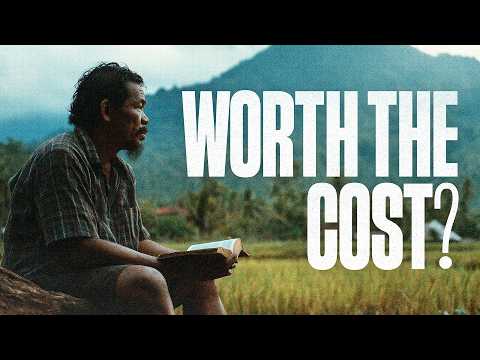

Pray for God's Word to be known in Indonesia
Pray for Indonesia
Invest in Indonesia
Invest in IndonesiaOne of the most unexpected sites you’ll find in one of the most Muslim nations on earth is a Protestant megachurch with the Five Solas of the Reformation wrapped around the outside of the huge structure.
About 10 minutes away, you’ll find one of the largest mosques on earth, connected by a long tunnel to a Catholic cathedral across the street.
And pulsing through this nation’s thousands of islands, you’ll find supernaturalism fused into the worldviews of self-identified Muslims, Christians, Hindus, Buddhists, and animists.
It’s why some people called Indonesia “enchanted.” It’s why others call it hard to reach with the gospel. But hard to reach doesn’t mean unreachable.
WHEN PROFESSING CHRISTIANS HEAR THE GOSPEL FOR THE FIRST TIME
Some missionaries and other believers in Indonesia still climb into long canoes and wind their way up dark rivers to bring the gospel to people who have never heard the name of Jesus.
But others live quiet lives in big cities, where they reach out to neighbors who have heard the name of Jesus, but haven’t heard how he transforms the hearts and lives of those who know him.
The huge variety of different people, places, and experiences is a huge part of the story of Indonesia.
The Southeast Asian nation is a vast archipelago of 17,000 islands. Nearly 280 million people inhabit about 6,000 of them. About half of the population lives on the island of Java, also home to the capital city of Jakarta.
When Indonesia gained independence from Dutch rule in 1945, its leaders searched for a governing principle aimed at bringing unity to such vast numbers of different people scattered across its vast number of islands.
They declared a national motto: “Unity in Diversity.” And they came up with a governing set of ideas called Pancasila—the five principles that lay the foundation for life in Indonesia. And the first principle they set is particularly interesting: Indonesia would be a sovereign state based on belief in “the one and only God.”
That may sound a lot like monotheism. But the idea is more like a form of pluralism that says there’s one divine being, with many ways to get to him. It’s why the government in the majority-Muslim nation officially allows other religions, like Christianity, Hinduism, and Buddhism.
Not only do they allow a handful of religions, but they also require Indonesians to choose a religion on their official identity cards. Most choose the religion of their parents, and most parents expect their children to remain in that religion.
But many Indonesians have no idea what those religions actually teach or any real connection to them beyond tradition and culture.
That’s as true for many self-identified Christians as it is for many Muslims. Gospel-centered pastors find themselves having to start at the very beginning with people who have formally claimed Christianity for years.
“They’ve sort of heard the gospel spoken, and it’s kind of in the periphery of their minds growing up, but never really clicked, although they did grow up in a churchy environment,” an Indonesian pastor named Tezar told us.
“They haven’t really encountered a saving relationship with Christ.”
But if reaching out to Christians with the gospel is difficult, it’s even harder to reach out to Muslims.
THE GOSPEL FOR THOSE WHO COULD LOSE EVERYTHING
It’s not illegal to change religions in Indonesia, but the cost can still be high: pressure and rejection from family and friends can be intense in a culture where religious identity is tied to personal and even national identity.
“They may be out there, but I haven’t met a Muslim who is a Muslim because of the joy that Islam brings to their life,” a believer named Henry told us. “Every Muslim I’ve met is a Muslim because they’re afraid of what will happen if they leave it.”
How do believers in Indonesia hold out the gospel to people under that kind of pressure?
“The only thing that’s going to compel them to leave it is having something better that’s worth it,” says Henry. “Something that is more beautiful, more compelling, more powerful.”
That’s exactly what happened to Anisa.
THE GOSPEL IN THE LIFE OF A FORMER MUSLIM
An Indonesian who grew up as a devout Muslim, Anisa told us about coming to faith in Jesus in a culture where Islam is dominant.
“My family told me to show respect to Christians, but not to get too close,” she says. “I was happy with my life until I started having difficulties. I wondered, “God, what are you doing?”
What God was doing was amazing. Through the kindness of Christians that she encountered, God was leading Anisa to Christ. As she embraced Jesus in saving faith, the change in Anisa’s life was profound.
So was the cost.
“God changed my life, but it wasn’t easy,” she says. “One of my family members died.
The rest of my family rejected me because of my faith in Christ, and I lost them, too.”
“It’s true that I left everything for Jesus. I lost everything, but I don’t regret it because he’s for all eternity. I finally have a relationship with God. That’s what I was missing all these years before. I’m going to walk with him until I die. And then, I’m going to meet him face to face.”
THE GOSPEL FOR THOSE WHO MAY NOT WANT TO HEAR IT
Many more in Indonesia are still missing the good news of the gospel, including in places where there are still no Christians at all.
Gospel workers tell us the best people to reach those truly unreached areas in Indonesia are usually Indonesian believers, with more access to remote areas, and more effectiveness in engaging with others from their own land.
Sometimes the efforts raise a question: What if the unreached don’t want to be reached? It’s a hard question with a straightforward answer, according to a gospel worker named David.
“As followers of Jesus, I don’t know that we have the option of saying ‘no’ to the Lord’s command to take the gospel to the nations,” David told us. “This is urgent because Jesus said, ‘Go.’
“In Acts 1:8, we hear the iteration of the Great Commission that Jesus gave his disciples. They heard Jesus say, “Start here, and move out, and don’t finish until it’s done.”
Even when it’s hard. Even when it’s dangerous. It’s worth it in every nation on earth, including Indonesia, and all the way to the ends of the earth.
Transcript
Steven Morales:
There are some countries where a lot of people identify as Christian, and there are some where the majority are Muslim. Some where Islam is more cultural than devout. And others where people live under Sharia law. There are some countries where people’s lives are deeply rooted in animism and mysticism, and others where some people are so remote that they are still completely unreached by the gospel.
But there’s one certain country where all of these are true. You might be wondering, how is that even possible? How can one country be a land of mosques and churches, of Imams and missionaries, of devotion and nominalism, of materialism and mysticism? It’s a country that’s relatively reached and incredibly hard to reach at the same time. My name is Steven Morales, and I want to know how the most populous country in Southeast Asia, one that was originally mostly Hindu, came to have the most Muslims of any nation on Earth. How does that even happen? While also being home to millions of Christians and people from other religions. How did Indonesia become one of the most religiously diverse places in the world, and yet still today have millions of people unreached by the gospel?
I’m in Jakarta with a metro area home to 30 million people. It’s a massive city in a massive country. And I didn’t realize this before I got here, but Indonesia is the fourth most populous country in the world, right after India, China, and the U.S. And if you want to get an idea of how big this city is, you just have to take a look at this mosque. This is Istiqlal, the independence mosque. It’s one of the largest mosques in the world. It’s five levels high with a complex that can hold at least 120,000 people. It was finished in 1978 during a time when the number of Indonesians identifying as Muslims was rising. And just in the last century the number of Muslims in Indonesia has doubled.
Earlier this year one study reported that Pakistan has now surpassed Indonesia as a nation with the highest number of Muslims. But for years Indonesia held the title as the most Muslim nation on Earth.
So, when you step out of a massive mosque like this, you wouldn’t imagine that literally across the street you would find a Catholic Church and just 10 minutes away this. The Messiah Cathedral. It’s home to a Protestant mega church called the Reformed Evangelical Church of Jakarta. It’s got the five Solas of the reformation spelled out all the way around the building. And this is where we begin to see the strange dichotomy. While Indonesia has a huge number of Muslims, it also has the second-largest number of Christians in Southeast Asia. That’s nearly 30 million people. To put that into perspective, there are more self-identified Christians in Indonesia than there are people in the whole country of Australia. But how does this all work? I mean, you don’t see Protestant mega churches in Iran or Afghanistan, but that’s kind of the point. Indonesia isn’t like a lot of other predominantly Muslim countries. It’s kind of its own world.
But in order to understand the religious landscape of Indonesia, we have to start with the country’s physical landscape. Indonesia is a massive archipelago. The nation of Indonesia is actually a vast chain of 17,000 islands, with nearly 280 million people inhabiting an estimated 6,000 of them. The islands straddle the equator, putting Indonesia in both the northern and southern hemispheres. About half the population lives on the island of Java. It’s not the biggest island in the country, but it’s definitely the most populated. It averages 2,600 people per square mile, making it one of the most densely populated places in the world. Meanwhile, Indonesia also has islands with no people or very few, and some of those populations remain really remote. There are cultures within cultures here, making it one of the most diverse countries in the world.
So, what does this mean for Indonesia’s religious landscape? Well, let’s hop on over to a little island you’ve probably heard of before. Bali has become one of the top tourist destinations in the world. And this is what you’ll see on Instagram, white sand beaches, turquoise water, the wildlife. But Bali is also an extremely religious place, just not Muslim or Christian. This is the Ulun Danu Beratan Temple. It’s one of over 20,000 Hindu temples in Bali alone. In first centuries Bali has been known as the island of the gods.
But wait, I thought we were talking about Islam and Christianity. Well, we were, but this is Indonesia, so there’s more to the story. And Bali takes us back even further into Indonesia’s religious past. Before Islam or Christianity arrived, Indonesia was a Hindu kingdom. But even before that Indonesians practiced forms of animism and indigenous religions. Those practices remained woven into the religious fabric of the country as Hindu and also Buddhist influence spread. By the 14th century a new religion was on the horizon. Muslim traitors arrived on the shores of Indonesia from other parts of Asia, and the long march of Islam began across the coastlands. When Muslim rulers began seeking control of some regions by force, some Hindus fled to the island of Bali as a safe haven. And today, despite the widespread growth of Islam in the entire country, the island of Bali remains 87% Hindu.
So, Hinduism has been here from the beginning. Islam came in with force. We’re starting to see now how this place is becoming a melting pot for religions, but when did Christianity arrive? In the 1500s Catholic missionaries arrived as Portugal colonized Indonesia. Then in 1605 the Netherlands defeated Portugal and expelled Catholic missionaries from Indonesia. This began a long period of Dutch colonization and a deep influence from the Dutch Reformed Church. German Lutherans arrived in the 1800s, but the biggest period of Christian growth came the 20th century as many Protestant missionaries arrived. Significant numbers of people at a handful of regions embraced Christianity, including many people from Chinese backgrounds, and Chinese Christians remain a major segment of believers in Indonesia today. Still, the influence of Islam grew far larger than Christianity and became the dominant religion claimed by Indonesians by the end of the 20th century. Today, about 242 million Indonesians identify as Muslim in the fourth-largest nation on Earth.
So, you have Hindus in Bali, Islam is now heavily present in Indonesia. You have notable pockets of Christianity, and you have smaller numbers of people who practice Buddhism or Confucianism. But here’s the thing. It’s one thing to check any of these major religions on your ID card, but peel back a layer, and you’ll find that most people actually hold a second more hidden belief system, one that touches every part of life, supernaturalism, or similarly, animism.
Henry:
When I talk to my neighbors, they’re worried about in the spirit God cursed my wife and now she can’t get pregnant. Or I can’t cross this bridge because someone died there and their spirit is there and they’re going to curse me. Or I got to go get this special ring that has a rock that’s going to bring success to my family. And so, it’s very much on that level.
Steven Morales:
This is Henry. He’s lived in Indonesia for years and has experienced firsthand the effect supernaturalism and animism has had in his neighborhood and among his friends.
Henry:
I would say the default worldview of most Indonesians is going to be animism. And then you put your formal religion on top of that as like a grid. I would say that’s just as much true for Christians here.
Steven Morales:
Indonesians see life infused with spiritual forces, and spirituality often sounds harmless, even comforting. In Indonesia they describe the sense that the world is full of meaning and mystery as enchanted, but this belief cuts both ways. If spirits are behind the blessings in your life, they’re also behind your suffering. Every sickness, every calamity, every unexplained loss might be a sign that something or someone has turned against you. And this means that for centuries Indonesians have lived not just in wonder, but in fear.
Old Film Footage:
And the little boy asked, “Are you ready? Shall I wait for the spirit of the mountain?” And the wind blew, and the sea rose. And the spirit appeared. “Many lifetimes I have slumbered under the mountain. Now I wake. They must learn what it is to earn the wrath of the spirit of the mountain.”
Steven Morales:
This historical drama gives you a picture of what people felt when tragedy struck. On August 26th, 1883, Krakatoa erupted with unimaginable force, wiping out entire towns and killing over 36,000 people in less than two days.
Old Film Footage:
Many stories about the mountain, but the spirit of the mountain broke the land into pieces. It sunk into the sea, and it was reborn out of the sea and some people say it will come again to destroy.
Steven Morales:
It was one of the deadliest natural disasters in human history, but this isn’t just a story from the past. Indonesia still suffers disaster after disaster. And in every generation the same haunting questions rise. “What have we done to deserve this? Why are the spirits angry with us, and will they do it again?”
News Anchor 1:
A powerful earthquake struck off Indonesia’s Western coast in 2004, sending ocean waters surging toward more than a dozen countries since a massive tsunami swept ashore, killing more than 220,000 people.
Steven Morales:
Indonesia may feel enchanted, but it’s also spiritually complex. Alongside deep religious tradition there’s fear, fear of spirits and unseen powers. Many claim a religion, but it’s hard to know how many truly follow. So, what happens when someone in a place like this does follow Jesus with their whole life? To understand we’ll need to go straight to the source and talk to some Indonesian believers themselves.
If Jakarta is a city of about 30 million people, it also feels like a city of about 30 million choices. So many things to see and do and eat, is this crazy mix of cultures and peoples and backgrounds. There’s a lot of wealth, but there’s also a lot of poverty. And one of the reasons for why Jakarta is this melting pot is because for most people in Indonesia this is the place to live. And while unity is a big part of Indonesia’s identity, religion is where the differences can’t be ignored. In a country where faith shapes culture, law, and daily life, what you believe isn’t just personal, it can define everything. For Christians this creates a tension that’s hard to navigate. Standing out can be dangerous, but blending in can mean losing the very thing that makes Christianity true. So the question is, in a place where unity is everything, what happens when your faith sets you apart?
To understand Indonesia’s concept of unity and how it relates to religion, we have to go back to Indonesia’s independence. This is Merdeka Square, the perfect place to look at that, and particularly the national monument.
It looks like I’m sweating a lot. It’s because I’m sweating a lot. It’s really hot. The national monument at Merdeka Square commemorates Indonesia’s long struggle for freedom. In 1945 Indonesia declared its independence after nearly 350 years of Dutch rule. It also declared its national motto, Unity in Diversity. And you could see why that would be important in a country with thousands of islands and hundreds of people groups with distinct cultures and languages pursuing unity would be key to thriving as an independent nation. They even wrote it into the Constitution. Unity is one of five principles in the country’s governing philosophy known as Pancasila. And Pancasila is still a big deal. There’s a national holiday to celebrate it. The five principles of Pancasila include civilized humanity, national unity, democracy, and social justice. But the very first principle is what catches my attention the most, that Indonesia would be built into a sovereign state based on a belief in the one and only God.
Now, belief in the one and only God, where have I heard that before? Oh yeah, that sounds a lot like monotheism, which is interesting in a country that officially recognizes six religions, Islam, Catholicism, Protestantism, Buddhism, Hinduism, and Confucianism. It’s why there can be a Protestant megachurch in the same city as a huge mosque, because even though the majority of Indonesians identify as Muslim and Islam has a major influence, Indonesia is not an Islamic state. It’s definitely a big country with a lot of Muslims, but the point here is that Indonesia recognizes the importance of religion in general more than the importance of just one religion. And this first principle isn’t so much saying that there’s only one true religion. The idea is more like there’s one God with different ways to reach him, and you could see how that could start to get problematic, depending on what your own religion teaches.
So, how does this all work out in reality? Well, it depends on where you live in Indonesia, but it’s not something Indonesians can ignore, because there’s something else really important that you need to know about religions here. And it’s that you have to pick one. Indonesians must declare one of the officially recognized religions on their national ID card. Just leaving it blank can make it difficult to access government and financial services. That means that while there are certainly devout Muslims and Protestants and Catholics and Hindus, there’s also plenty of nominalism. People just checking the box of the religion of their family or region, whether they truly follow it or not. For churches, that means outreach often looks like reaching out to people who identify as Christians, but have never actually heard the gospel. Discipleship here looks like starting from ground zero. And perhaps there’s no better person to ask about how that plays out on a local level than Indonesian believers themselves and those working among them.
Tazer:
Hey, we have a name for it. It’s called Christian Catepe, which means it says Christian in your Catepe card in your ID card, but they haven’t really encountered a saving relationship with Christ. They’ve sort of heard the gospel spoken and it’s kind of in the periphery of their minds growing up, but never really clicked, although they did grow up in a churchy environment.
Hector:
I was born from this, I can say like Christian tribes, so I was thinking that I’m a Christian until I moved to Jakarta, I was thinking that before, okay, I was born from Christian family and I was thinking that I’m Christian and then start to study the Bible more seriously and all about the gospels, how the gospel can influence our hearts and our perspective. And start from there, I start seeing not too many Christians realize that their main purpose of becoming Christians.
Steven Morales:
So, if reaching out to Christians is a challenge, what about reaching out to Muslims, the group that makes up more than 80% of the population, and how do they respond?
Tazer:
People get upset, not necessarily because you’re imposing your worldview on them, which that could be part of their anger, but a lot of it is also you’re betraying this thing Bhinneka Tunggal Ika, which means different, but one, diverse, but united. Everyone’s trying to honor that. So, when you try and impose your worldview on someone else, it feels like you’re betraying this thing, this glue that’s kept us all together. So, we have to do sensitively. We have to offer the gospel as a beautiful thing that hopefully people would want to know more about, and then we’re more in the responsive end with kind of responding to people’s questions.
Hector:
Here in Indonesia, we have our government demands each of religions to live in the harmony, and that means being tolerance. For me personally, it kills the great commissions. Because we should share the gospel to the people, and then the government’s like, “No, you have to be tolerance.” Yeah, as a Christian, we have to express our faith to the others, and then some non-believers will start that to argue something like, and then the conversation normally will end up with, “Oh, you’re not being tolerant.”
Steven Morales:
Well, it’s not illegal to change religions, but leaving Islam to follow Christ can be really difficult. Social and family pressures can be hard to endure in a culture where family identity is really important. It’s not so common for a Muslim to just walk into a church, so maybe the church has to go to them.
Henry:
They may be out there, but I haven’t met a Muslim who is a Muslim because of the joy that Islam brings to their life. Every Muslim I’ve met is a Muslim because they’re afraid of what will happen if they leave it. The only thing that’s going to compel them to leave it is having something better that’s worth it. Something that is more beautiful, more compelling, more powerful.
Steven Morales:
In 2020 the Indonesian government built a 28-meter tunnel in Central Jakarta, connecting the massive Istiqlal mosque with the city’s most famous Catholic cathedral. They call it the tunnel of friendship, and it’s intended to be a symbol of religious harmony, but things aren’t always so harmonious. Churches face government restrictions, especially when it comes to building. And though much of Indonesia is definitely known for more moderate forms of Islam, the northern province of Aceh on the island of Sumatra enforces Sharia law, making Islamic code part of civil and criminal law. And other parts of the country forms an extreme Islam breakthrough. In 2002, a series of attacks by an Islamist terror group in Bali killed 202 people. Other attacks followed, including the 2018 bombing of three churches in Surabaya.
The simultaneous blast killed 13 people on a Sunday morning before worship. It’s a reminder that dangers do exist and that opposition can take lots of different forms. And it’s a reality that can make it hard to reach some populations in Indonesia, but the reality of the gospel means it’s not impossible. We see this in the story of Anisa. For security reasons we can’t show you her face, but her story tells the truth of how the gospel can change a life.
Anisa:
I was born into a very traditional Muslim family. Some of my relatives were leaders in the mosque. When I was a teenager, I decided for myself to wear the hijab. As I grew up, I sometimes encountered Christians, but I was taught their doctrine didn’t make sense.
Henry:
And a lot of Christian Indonesians, let’s face it, Christian anybody don’t have that compelling of a vision of Christ and the gospel as well, and so they’re not willing to risk, and they’re afraid.
Anisa:
My family told me to show respect to Christians, but not to get too close. I was happy with my life until I started having difficulties. I wondered, “God, what are you doing?”
Henry:
Because there’s the Christian space, there’s the Muslim space, and it’s very hard for a Christian to go to the Muslim space and try to have a witness there.
Anisa:
One of the Christians I knew tried to help me, and he kept being my friend, even when I treated him harshly. I realized I was seeing Jesus in him, and suddenly I was thirsty for the truth. I can’t explain it, but my heart started seeking. Who is this Jesus? What is this gospel?
Henry:
We were called to reach them. So, number one, it’s not up to you. We command to make disciples of all nations and we now know which ones still need to be reached, so there’s not an excuse.
Anisa:
I reached out to one of the other Christians I knew. I asked her, “Would you want to do a Bible study with me?” She had tears in her eyes. “Of course,” she said. I also started reading on my own. One night I read the entire books of Matthew and Mark because I was just thirsty for God and God’s Word. I realized, there was so much grace here. Finally, one night I was in my little apartment, and I said, “God, I need you. Jesus, I need you.” And then I just poured my heart out. I told God, “I can’t live my life without a savior. My good credits cannot save me from hell. You’re the final savior, and I confess it with my heart and with my mouth.”
Henry:
By in large, persecution’s going to happen. It’s mainly from the local community, and that starts with the family, right? So, if the family has a problem, there’s going to be immediate persecution against an individual who decides to believe something different.
Anisa:
God changed my life, but it wasn’t easy. One of my family members died. The rest of my family rejected me because of my faith in Christ, and I lost them too. It’s true that I left everything for Jesus. I lost everything, but I don’t regret it, because he is for all eternity. I finally have a relationship with God. That’s what I was missing all these years before. I’m going to walk with him until I die. And then I’m going to meet him face to face.
Steven Morales:
Anisa’s story is a living example of how the spirit is at work in places we don’t expect. And how Jesus is able to save anyone, no matter how hard it seems to us. And it’s also a reminder that Indonesia needs believers to keep reaching out, even if it means going to remote ends, and even if it means answering this question. What if the unreached don’t want to be reached at all?
John Chau on Documentary Footage:
I plan on arriving on the shores of an island in which an unknown number of people live, who have unknown religious beliefs and speak an unknown tongue. Soli Deo Gloria, John Chau.
Steven Morales:
In 2018, John Chau attempted to bring the gospel to a people group unreached by the outside world. The isolated tribe lives on North Sentinel Island, a small island north of Indonesia. Very little is known about its inhabitants. John had hoped to live long-term among the Sentinelese, giving his life to share the gospel and make disciples. Instead, he ended up giving his life on his first visit. John’s body was never recovered, and while no one questioned his zeal, he seemed to have a real burden for the unreached. Some did wonder if he had gone about it the best way, but John’s death sparked a different question that made a lot more noise. Why do Christians think they have the right to reach the unreached in the first place? There was a lot of criticism. People called John a kind of Christian supremacist trying to impose his beliefs on a tribe that should have been left alone.
His story does make me wonder though, what if the unreached don’t want to be reached? And are we sure that we should try? Let’s look at another story of Frontier Gospel work. In 1962, a Canadian missionary named Don Richardson reached out to an Indonesian tribe known for headhunting and cannibalism. Many in that tribe came to Christ and Richardson later wrote about it in a bestselling book called Peace Child. In 1968, another pair of missionaries set out to reach members of another animistic tribe, but they didn’t live to tell about it. As Stan Dale and Phil Masters were hiking through the Indonesian jungle, they were suddenly ambushed by a group of Yali tribesmen and attacked with bows and arrows. Now, their bodies were never recovered, and each man left behind a family. Martyrdom wasn’t the end for those two missionaries. After Phil Masters was killed, his wife stayed in Indonesia, serving another tribe that embraced Christ and later sent out missionaries of their own.
Others kept reaching to the Yali, undeterred by the violence. And in 2000, nearly 40 years after the murders, the Yali dedicated the first full Bible in their language. For decades Indonesian believers and missionaries worked not just in cities, but deep in remote regions, making contact, building trust, learning languages, and slowly introducing Bible stories to people with no framework for Christianity. All while praying God would open hearts. It’s stunning to see one’s unreached tribes rejoicing as they hold a Bible in their own language for the first time, but it doesn’t always end like that. Some never see fruit in their lifetime. Some tribes just don’t open the door. Just look at John Chau and the Sentinelese. which raises a deeper question. How do Indonesian believers think about reaching their own unreached, and what does it actually look like on the ground?
So, we’re not in one of the most remote parts of Indonesia, but we’re still in an important part. We’re in Central Java, and one of the most historically significant cities of all Indonesia. This is Yogyakarta. Yogyakarta is known as a cradle of civilization in Indonesia. And when you look around, you get a feel and sense for the cultures and religions that have existed here for thousands of years. We got here just in time for rainy season, and hey, we may not be in the most remote part of Indonesia, but we’re still in an important part.
Everywhere you go here you can just see the sway that Hinduism and Buddhism once had. And not far from here you’ll find some of the largest Buddhist and Hindu temples in the world. These are the kind of places where people ask questions about what the spiritual realm is trying to tell them. And these temples are beautiful, that they don’t provide answers to those life questions, but there’s a town close by where believers are working to bring gospel answers, not just for people here near them, but for Indonesians a lot further away. So, I wanted to talk to someone who knows what gospel outreach looks like in Indonesia. This is David. He’s been working with Indonesian believers for decades, equipping them to reach the unreached in their own nation.
David:
We have about 700 plus ethnic groups here. We would count about 175 or so was still being unreached. And then of those we would count probably another 45 to 50 as being unengaged and unreached. So, not only do we have a minimal population among them that would embrace faith in Christ, there are some people groups that have no witness, at all no access to the gospel, no translation of the scriptures in their language and no gospel presence among them. They’re just vast pockets of lostness. And when I say vast, I mean millions of people who have no access to the gospel, never heard it before, and think of Christianity maybe as just a foreigner’s religion, if they’ve heard of it at all. So, to that end, not only do we look to put boots on the ground working through a lot of Indonesian national partners, it’s what we call them, brothers and sisters in Christ, to also have a heart to see their own country. We reached them to get the gospel to those remote locations and to have a viable gospel witness of presence among them.
Orsi:
So, I was born and raised in a very remote island in North Indonesia, North Sulawesi. My story is the first time I come to Jakarta at the end of 2018. So, my friend asked me to visit someone house and then all they’re doing fellowship there. I just learned that this community is different. They really talk about the gospel very deeply, being disciple. And then I can tell that my faith grows very well day by day. My awareness about how great the gospel is. There’s so much need of the gospel. We don’t know how to do that.
David:
Being discipled is not just about information transfer. It’s about life transformation as we’re all being transformed into the image of Christ, transformed into his likeness that he might become their firstborn among many brothers.
Orsi:
For my example, I was born and raised in a small island that all the people who live there consider themselves Christian, because back then the Dutch visit that place and then spread the gospel, but I don’t think the tribe that you was born make you Christian. So, there’s no others, non-Christian living there. So, we just don’t know how to share your faith with the non-Christian. When God allow us to see someone come to faith that really bring you joy, I’m a Christian, this is what should a Christian do. We want to keep doing that. Yeah.
David:
So as we’re coming alongside these churches, we’re looking to identify who in their ranks, national partners, right? The Lord is calling and setting apart and sending out by his spirit through the local church. I think that’s how that’s the model, that’s the pattern that we see there in Acts 13. The local church is the sending agents.
Steven Morales:
Sending involves training, and that’s a subject that comes up a lot too. How do we train gospel workers to communicate the gospel in settings where there’s very little context for it?
David:
When we share the gospel with these people, they’re looking for balance. They’re looking for wholeness. They’re looking for completeness. They’re looking to commune with the divine. So it’s hard to just sort of start with sin and what separates us from God because in the worldview of a mystic, right and wrong, good and evil, those things are all relative. So we have to kind of step back a little bit, move the conversation toward what causes disintegration in the first place. What is it that separates us from the transcendent or God? And then once we get the conversation to a place where we’re actually talking in concrete terms, we would ask them what are the things that they’re doing to nurture integration, to restore wholeness and to seek harmony? And at the end of that conversation, it becomes very clear that despite all of their diligence and their efforts, that they still feel very distant and far from the divine.
So, then we’ve come back to them with scripture, and in Christ they see the wholeness, the completeness, the restoration of all things that they seek, and that it can only be found in Christ alone.
Steven Morales:
In Christ alone, that brings us back to that central question. If Indonesians have their own beliefs, why should Christians try to reach them?
David:
As followers of Jesus, I don’t know that we have the option of saying no to the Lord’s command to take the gospel to the nations. Jesus gave us this command 2,000 years ago, but there are still peoples and places who’ve never heard the name of Jesus Christ, who have no understanding of what the gospel is, no translation of the scriptures. And there ought to be something that moves us to say that, “This is just not acceptable.” Delayed obedience is a form of disobedience. This is urgent, because Jesus said, “Go.” In Acts chapter one, versa, when Jesus, we hear that iteration of the Great Commission that Jesus gave his disciples, they heard Jesus say, “Start here and move out and don’t finish until it’s done.” This morning a man died on a beach, a remote island in Indonesia, never having heard the gospel of Jesus Christ and has entered into a Christless eternity because of our negligence.
Ask yourself, “What resource is the Lord asking you to leverage to get the gospel to that man’s wife who survived him, to his children, to his village, to his community, to his people that the name of Jesus might be made famous among them?”
Steven Morales:
There’s something one missionary said that really stuck with me. “The goal isn’t just to reach the unreached in Indonesia, it’s to make disciples. It’s to plant churches among the unreached. It isn’t just to check an unreached box the way Indonesians check a box for their religion. It’s to reach their hearts with the good news of the gospel of Christ and pray that God transforms them.” The missionary put it this way. He said, “Every unreached unengaged people group, from the center of civilization to the edges of creation, that’s where we want to plant church.”
After spending some time in Indonesia, I kind of understand why people use the word enchanted to describe it, not just because of its beauty and its people, but because there does seem to be a sense that there’s something beyond us, that behind all of this there is a true God. And when Indonesian believers and gospel workers want to show people across these thousands of islands is the one true God, the one God who can only be known through Jesus Christ.
And they want to show them why that’s good news because not only can God be known, but they can be known by him. They can be loved by him and saved from their sins and made new creations in Christ. They don’t have to find a religion to work their way to God. He came down to them to save them by his grace. That’s a message that’s needed in the crowded streets of Jakarta and the remote jungles of Sumatra and the farthest islands of Indonesia in every tribe and every tongue, because that’s where Jesus told us to go. That’s who Jesus told us to seek. That is who he is seeking, even before they seek him.