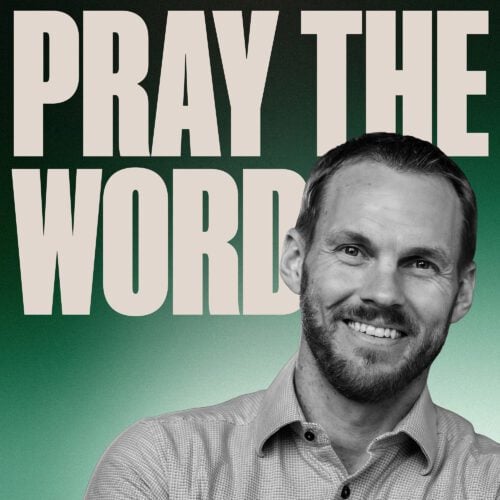
David Platt Honors His Mentor

What is biblical preaching, and why does it matter so deeply for the life of the church? Scripture doesn’t leave that question unanswered.
In this message, David Platt reflects on the Emmaus Road encounter to show how God uses the opening of Scripture to ignite burning hearts. Honoring Jim Shaddix and the establishment of a chair of expository preaching in his name, David traces how Jesus himself models preaching—walking with ordinary people, opening the Scriptures, and revealing how all of God’s Word points to Christ.
The message weaves together testimony, theology, and biblical exposition to show that true preaching is not sharing opinions or techniques, but laying open the text so that the Holy Spirit’s intended meaning and power are brought to bear on listeners’ lives. From Moses and the Prophets to the early church in Acts, we see how God advances the gospel through faithful exposition empowered by the Spirit.
It also highlights why preaching is inseparable from humility, prayer, and dependence on God—and why opening the Scriptures, whether in pulpits or personal conversations, is how God opens eyes and sends his people into the world.
In this episode:
- What Luke 24 teaches about the nature of preaching
- Why Scripture points relentlessly to Christ
- How God opens eyes as his Word is opened
- Why preaching depends on the Spirit, not human ability
- How faithful exposition fuels gospel mission across generations
This message calls preachers, teachers, and everyday believers alike to recommit their lives to opening the Scriptures with confidence in God’s power—trusting that the risen Christ still sets hearts on fire through his Word.
Transcript
Well, if you have a Bible, and I hope you or somebody around you does that you can look on with, let me invite you to open with me to Luke 24.
Almost 25 years ago, I stepped into my first preaching class with Jim Shaddix. An older brother in ministry had told me when I was looking where to go to seminary, “Find somebody to study under, and go learn all you can from that person.” I knew I wanted to study preaching, and I’d heard about Dr. Shaddix. So Heather and I, newly married, traveled to campus to meet him.
I remember the moment when Dr. Shaddix asked me if I would be willing to work for him, and Heather said she could see drool coming out of my mouth. Tried to play it cool. I’ll pray about it. I prayed about it about as long as you did. As you mentioned earlier, this is exactly what I wanted to do … by God’s grace, he gave me the opportunity to do … and a door was open to twenty-five years of not just mentorship, but friendship and family with this brother. And “family” is the right word.
So the Shaddix family well remembers when soon after Heather and I came to campus, the Shaddixes invited us over for dinner one week night. We’re eating, and I’m just as nervous as I could be, just getting to know Dr. Shaddix and his family. At one point, we’re talking about how I was going to be traveling and preaching that weekend out of town. They were sharing about how they were going to be doing one of their family’s favorite things—Friday night movie night. And that’s when my wife, Heather, who’s over here, was not traveling with me that weekend. As soon as she heard about family movie night, she said, “I love family movie night. Can I come?” I was horrified. You don’t invite yourself over to the professor’s house for family night. The Shaddixes looked at my wife’s eager face and realized they would crush her heart if they said no. So they invited her to come.
And that Friday night, she came over and did what she does at every movie night. She fell asleep on their couch. And the Shaddix family found themselves looking at each other like, “Who’s the random seminary girl sleeping in our living room?” I joke, but I do want to say that while this Chair of Expository Preaching today is obviously about honoring Jim, it is a testimony to you, Deborah, and to you, Clint and Shane and Dallas—to who you are as a family to so many, including Heather and me.
So twenty-five years later, I’m standing here in a seminary chapel with the indescribable honor and privilege and joy to be a part of this establishment of this Chair of
Expository Preaching in your name. Which, brother, I know this is somewhat uncomfortable for you, but just so you know, it feels extremely appropriate for us. I feel like I’m standing here on behalf of two groups of people. One, all the men and women who have learned to preach and teach the Bible through your life and leadership. By God’s grace, God’s Word is being proclaimed to God’s glory in places literally around the world because people learned to proclaim it through you. That’s amazing. That’s
breathtaking to think about. And then I’m standing here on behalf of all the men and women who, if the Lord tarries, will learn to preach from professors who serve in this position who will train countless others to proclaim God’s Word in places around the world. That’s amazing and breathtaking to think about. This is what you have given so much of your life to. And I hope and pray you receive all of this today as the fruit of God’s grace flowing in and through your life.
So here’s what I want to do. I cannot in good conscience not do some level of exposition of a text today. That would feel totally dishonoring to you; for you to sit there and think that after all those years, you didn’t even preach a text. So, I can’t not preach. At the same time, the text in Romans 12:10 tells me to “outdo one another in showing honor.” And this is a chance for me to do that on behalf of a lot of people. So, if you all will just permit me a little bit of liberty, not with exposition, but with illustrations and application, I want to try to faithfully preach God’s Word and personally honor God’s grace in Jim Shaddix at the same time. And I think I have a way to do this.
So, first, when it comes to the text: of all the texts I could have chosen, as I prayed about it, one clearly rose to the top. When I first met Dr. Shaddix he had founded not long before Burning Heart Ministries for the purpose of mentoring and training preachers. And the name of that ministry came from Luke 24. It’s the text more than any other, in my estimation, that marks your preaching ministry. So what I want to do is take us to Luke 24. We’re going to read the story. And here’s what I’m thinking. So, I’ve had numerous papers graded by Dr. Shaddix. I’ve had numerous sermons critiqued by Dr. Shaddix. I remember one day he took me up into the preaching lab, put one of the sermons up on the big screen, walked me through things to keep, things to throw away. There are not many things more humbling than watching one of your sermons on a big screen with your preaching professor and hero making notes.
So, here’s Dr. Shaddix’s definition of preaching … back up on the screen … I’m thinking if there’s going to be a Chair of Expository Preaching named after someone, we should at least examine his definition of preaching. So I want to do that in light of this text, Luke 24. So, here’s the definition again: “The process of laying open a text in such a way that the Holy Spirit’s intended meaning and accompanying power are brought to bear in the lives of contemporary listeners.” So, let’s hold on to that definition, and then let’s read the text. Luke 24, starting in verse 13. I’ll have it on the screen if that’s helpful.
“That very day two of them were going to a village named Emmaus, about seven miles from Jerusalem, and they were talking with each other about all these things that had happened. While they were talking and discussing together, Jesus himself drew near and went with them. But their eyes were kept from recognizing him. And he said to them, “What is this conversation that you are holding with each other as you walk?” And they stood still, looking sad. Then one of them, named Cleopas, answered him, “Are you the only visitor to Jerusalem who does not know the things that have happened there in these days?” And he said to them, “What things?” And they said to him, “Concerning Jesus of Nazareth, a man who was a prophet mighty in deed and word before God and all the people, and how our chief priests and rulers delivered him up to be condemned to death, and crucified him. But we had hoped that he was the one to redeem Israel. Yes, and besides all this, it is now the third day since these things happened. Moreover, some women of our company amazed us. They were at the tomb early in the morning, and when they did not find his body, they came back saying that they had even seen a vision of angels, who said that he was alive. Some of those who were with us went to the tomb and found it just as the women had said, but him they did not see.” And he said to them, “O foolish ones, and slow of heart to believe all that the prophets have spoken! Was it not necessary that the Christ should suffer these things and enter into his glory?” And beginning with Moses and all the Prophets, he interpreted to them in all the Scriptures the things concerning himself.
So they drew near to the village to which they were going. He acted as if he were going farther, but they urged him strongly, saying, “Stay with us, for it is toward evening and the day is now far spent.” So he went in to stay with them. When he was at table with them, he took the bread and blessed and broke it and gave it to them. And their eyes were opened, and they recognized him. And he vanished from their sight. They said to each other, “Did not our hearts burn within us while he talked to us on the road, while he opened to us the Scriptures?” And they rose that same hour and returned to Jerusalem. And they found the eleven and those who were with them gathered together, saying, “The Lord has risen indeed, and has appeared to Simon!” Then they told what had happened on the road, and how he was known to them in the breaking of the bread.” (Luke 24:13–35 ESV)
What a story. Two dejected, depressed, disillusioned, confused followers of Jesus walking along a road outside of Jerusalem saying, “We thought he was the one to redeem us. Some are saying he’s alive. Nobody’s actually seen him.” And the stage is set for the first people in the book of Luke to encounter the resurrected Christ. And I can’t help but to think of all the ways Jesus could have revealed himself in much grander fashion to much greater effect. Think about it. Why did he not just show up at the temple in front of the masses as a massive sign to say, “I told you … I am back!”
How beautiful is this? Jesus had just conquered death—what no one in history has ever done or could ever do on their own. And Jesus finds two plain, humble, ordinary, obscure people on a dusty road and starts a conversation with them. Jesus is showing us from the start of his resurrected life how this good news will spread through the simple power of a spoken word. Which leads to another beautiful thing about the story. Verse 16: God kept their eyes from recognizing him. Why is that? Why not just come up and say, “Guys, cheer up. I’m here! It’s true. I’m alive!” At least one of the reasons sure seems to be that God wants us to realize that people don’t have to see the resurrected
Christ in order for their hearts to be transformed. Instead, what they need is someone who will be willing to open the Scriptures with them and then hearts will be transformed. That’s the phrase Luke uses when these two followers recollect what had just happened. Verse 32: They said to each other, “Did not our hearts burn within us while he talked to us on the road while he opened to us the Scriptures?”
Well, that’s interesting, because that sounds a lot like Shaddix’s definition of preaching. Preaching is “the process of laying open a text to expose the voice of God in the Scriptures.” Expository preaching. That’s a term I had never heard before I came to seminary. It’s a term that many people haven’t heard. As a result of Dr. Shaddix’s investment in my life, I became an Assistant Professor of Expository Preaching. I remember preaching at a college conference not long thereafter, and a sweet college girl introduced me as David Platt, an Assistant Professor of Suppository Preaching. I’m on the front row like exposit, not supposite. That’s a such a drastic difference on so many levels!
Expose, lay open a text. That’s the job of a preacher or a teacher. Not to communicate your thoughts, your ideas, your opinions, or even your personal convictions, but to communicate God’s truth. Period. First day in preaching class, I remember Dr. Shaddix saying if you’re going to say, “Thus saith the Lord,” you better know what the Lord saith. You have one job: lay open a text in such a way that the Holy Spirit’s intended meaning.
So look at verse 27 with me. Luke says, “Beginning with Moses and all the prophets, he interpreted to them.” See my circle … just made a note … that word is diermanuo, from which we get hermeneutics. It means to explain what is there; in a Nehemiah 8:8 kind of way, to read from the book the law of God clearly and to give the sense so that the people understand the reading. And can you just imagine what this conversation was like as Jesus, beginning with Moses and all the prophets, interprets to them—does some hermeneutics—with all the Scriptures the things concerning himself. One writer said this was exegetical heaven.
Just imagine Jesus looking at these guys as he talks to them about himself in the third person. Like, guys, do you remember Genesis 3? As soon as sin entered the world, God said a seed would come from the woman. He told the serpent, “You’re going to bruise his heel, but he will crush your head.” He looks at them, he’s like, “Guys, that’s what happened.” He says, “Remember Exodus 12—Passover lamb? Now it’s Jesus’s blood that covers sinful hearts and keeps God’s people from judgment they deserve.” Remember Exodus 16, manna from heaven. It’s what he told us. He’s the bread of life. No one who comes to him will ever be hungry again. Remember the high priest in Leviticus? Sinner that he was—we do not need him anymore. The sinless Savior has died once and for all on behalf of all who trust in him.
Remember Numbers 21? Look at the serpent on the pole and live, just like Jesus said in John 3. Now we look at the Savior on the cross and we live. Remember the greater prophet Moses promised in Deuteronomy? It’s him. Remember Joshua, the conqueror of armies who led God’s people into the promised land? He was just pointing to his namesake—Jesus, the defeater of death, who leads God’s people into eternal life. Jesus is the rescuer from Judges, the redeemer from Ruth, the Shepherd King and righteous ruler and true temple of 1 and 2 Samuel and Kings and Chronicles.
Remember, guys, the prophets? Isaiah told us he would be a Suffering Servant who would be “pierced for our transgressions” and “crushed for our iniquities.” And though we would not be attracted to him, he would cause many to be “accounted righteous.” Micah told us exactly where he’d be born. You remember that? How about Zechariah? He told us exactly how he’d come to Jerusalem riding on a donkey. He told us we would look on him whom they have pierced and that a fountain would flow from his side to cleanse us from all our sins. Jesus is just rattling off century after century of history that all pointed to himself in the third person.
So don’t miss the point. It’s at least twofold here. One, this is the Holy Spirit’s intended meaning in the text. The Holy Spirit of God means to point us to the Holy Son of God in the text. Peter put it this way in his first letter: “Concerning this salvation, the prophets who prophesied about the grace that was to be yours searched and inquired carefully, inquiring what person or time the Spirit of Christ in them was indicating when he predicted the sufferings of Christ and the subsequent glories” (1 Peter 1:10–11). Is this not awesome? The Spirit of Christ pointing these prophets to the sufferings and glories of Jesus centuries before he came.
Second Peter 1:21: “For no prophecy was ever produced by the will of men man, but men spoke from God as they were carried along by the Holy Spirit.” Now, here’s where it gets even more awesome.
And here’s the other point you’ve got to see here. So, back to Luke. Luke later tells us in this passage … when Jesus is with all the disciples in verse 44, Jesus said to them, “These are my words that I spoke to you while I was still with you that everything written about me in … [notice this language] … the law of Moses and the prophets and the psalms must be fulfilled.” Then he … [watch this] … opened their minds to understand the scriptures.” That’s the same language we read earlier. So it’s the same thing
Jesus did on the Emmas road. Now he’s doing it with his disciples here.
So then, fast forward to Luke’s second volume, the book of Acts, and check this out. Philip is literally, physically carried along by the Holy Spirit to the side of an Ethiopian eunuch. Read Acts 8:35: “Philip opened his mouth and beginning with this scripture, he told him the good news about Jesus.” Same language. He’s opening his mouth and beginning with scripture, pointing him to Jesus. Then two chapters later, Peter speaking to the household of Cornelius … Acts 10:43 … says to him, “All the prophets bear witness that everyone who believes in him receives forgiveness of sins through his name.” And while Peter was saying these things, the Holy Spirit fell on all who heard the word. Peter, from the prophets, points them to the name of Jesus.
Then Paul, before King Agria, same language. Acts 26: To this day, he says, “I have had the help that comes from God. I stand here testifying both to the small and great, saying nothing but what the prophets and Moses said would come to pass, that the Christ must suffer. And by being the first to rise from the dead, he would proclaim light both to our people and to the Gentiles.”
So, are you seeing this? How does the good news of Jesus spread in the world? Through a line of people starting in Luke 24, opening the scriptures and pointing others to the suffering and the resurrection of Jesus for the salvation of sinners among all the nations. So to every teacher and preacher of God’s Word in this room, realize this is
the line you are in. Talk about significance and meaning in ministry! You and I are in a line of literally thousands of years of men and women who have had the sober responsibility, the pure privilege, the high honor, and the inexpressable joy of opening up the Scriptures and saying, “I want to show you Jesus.” That’s preaching.
And Jim Shaddix, we join together today to praise God for how you have faithfully taken your place in that line. In churches, you have shepherded, in interim pastors, you have served. From conferences to classrooms, you have faithfully, week after week, year after year, taken your place in this line. And not just your place: you have enlisted, encouraged, emboldened, and equipped countless others in this line. And yes, all of that alliteration was for you. In all seriousness, one of the greatest compliments I could possibly give to you is that after learning preaching from you and listening to you preach over the course of decades, and I know that I’m not alone in what I’m about to say, I
know of no other person on the planet who more faithfully steps behind a pulpit or podium with the Word of God to expose the meaning of the Spirit of God in such a way that you exalt the beauty majesty and glory of the Son of God. And you do so not in your own power, but in the power of God, which just so happens to be the next part of your preaching definition.
Preaching is the process of laying open the text in such a way the Holy Spirit’s intended meaning and accompanying power. So back on the road to Emmas in Luke 24. Did you notice Luke’s masterful play on words? Remember verse 16? “Their eyes were kept from recognizing him”. It’s what some biblical scholars call the divine passive. Their eyes were “kept”—passive voice. Their eyes were kept by God from recognizing Jesus. But then you get down to verse 30 where we read, “While he was at the table with them, he took the bread and blessed and broke it and gave it to them, and their eyes were opened and they recognized him, and he vanished from their sight. And they said to each other, ‘Did not our hearts burn within us while we talked on the road, while he opened to us the Scriptures?’”
You see the reversal? Verse 16, eyes were kept from recognizing Jesus. And verse 31, their eyes were opened. Which begs the question: Who opened them? God did. God opened their eyes. And how did he do it? Luke tells us, he uses the exact same word, when he says through his opening of the Scriptures and then breaking this bread. Don’t miss this. As we open Scriptures, God opens eyes. How do you get to burning hearts? You open the Scriptures and you trust God to open the eyes. Mark it down, and do not forget it. The proclamation of the Word of God is completely dependent on the power of God. You can preach the text, but only the Spirit of God can open the eye and change the heart. Which means the preacher must preach in the power of the Spirit, not in the flesh. Which is only possible when the preacher lives in the power of the Spirit and not in the flesh. And this, Jim Shaddix, I believe, is the key to your preaching. You preach the Word of God out of the overflow of intimacy with the Spirit of God.
I remember preaching a sermon with him together one time. We were co-preaching, which meant co-preparing that sermon. I remember how we started. He said, “David, let’s get on our knees.” And we knelt, and we read through the text and began to pray just the text. By the time we were finished, Jim was next to me on his knees just weeping over the text. I remember one day coming unexpectedly upon him in his private office, and I found him on his face before God again weeping. Brother, you preach with authority because you live with humility. You preach the Word of God because you love the God of the Word. I remember running laps around campus with this brother. I was not a runner, but if Dr. Shaddix invited me to run, I was up for a marathon. And I would be totally out of breath as he was running and literally quoting books of the Bible to me. Then, last January, when Jim had his initial surgeries, I flew down for the day just to spend some time with him and their family. And I had a few minutes where it was just the two of us in his hospital room. And during that time, he started praying for me. And as he prayed, he started mentioning things that I’d not even shared with him that my family and I specifically needed prayer for … in ways that only the Spirit of Jesus in him could know. And I walked away from that hospital room that day worshiping from being with a brother whose brain was extremely weak, but in whom the mind of God’s Spirit was stronger than ever.
Preaching is the process of laying open a text in such a way the Holy Spirit’s intended meaning and accompanying power are brought to bear on the lives of contemporary listeners. So what was the effect of Jesus opening the Scriptures? God opening their eyes … burning hearts. What a phrase. What a phrase. Burning hearts. He lit us up.
It’s what the word means—to light on fire. God is telling us that as we open the Scriptures, he opens the eyes. A supernatural, otherwise unexplainable phenomenon happens in the human heart. And I think it’s worth noting that this story didn’t actually happen with a pulpit or a podium on a stage or in a crowd. It happened in a conversation with two people; the kind of conversation that every Spirit-filled brother or sister can and is called by God to have—from the neighborhoods where we live to the nations of the earth. This is how the glory of God spreads through ordinary followers of Jesus filled with the extraordinary power of Jesus sharing the good news about Jesus.
As many times as I’ve heard Jim preach, I’ve also heard him share the gospel with individual people on the streets, in taxis, in casual conversations. We will not be faithful if our only proclamation of the gospel is when the most people are watching us. No crowd is too small. No conversation is too insignificant to bring the gospel to bear on the lives of contemporary listeners with confidence in the power of that gospel to save and the power of God’s Spirit to send.
Did you notice what these two did just as soon as Jesus vanished? They rose that same hour and returned to Jerusalem. They found the eleven and those who were with them gathered together, saying “The Lord has risen indeed.” Don’t you love this? Death could not stop this Messiah. And mark it down: Death cannot stop his messengers.
So I want to put all this together. Dr. Shaddix, Good news: I think it is clear to all of us that your definition of preaching is biblical. Preaching is the process of laying open a text in such a way that the Holy Spirit’s intended meaning and accompanying power are brought to bear in the lives of contemporary listeners. And even better news, brother, especially for us, we honor you today because by God’s grace, you have faithfully demonstrated this definition of preaching in your life. And here’s the best news, and I trust you know this, but I simply want to remind you of it today: Because of your faithfulness, to not only preach like this, but to pour out your life, training men and women like me and many others to preach this Word, your fruitfulness will not stop with your time in this world.
I hope, I pray with many others that you have many, many, many more days in this world. At the same time, there is coming a day when you and, well, all of us are one day going to leave this world—could be today for any one of us. But know this, brother: Whenever that day comes in the sovereign providence of God, the risen Lord himself is going to welcome you into glory as his good and faithful servant; as a good and faithful husband; as a good and faithful dad; as a good and faithful papa; and as a good and faithful steward of this Word. And that won’t be the end of the story, because you know what else the risen Lord is going to do? He’s going to continue the work you have given your life to in your life and in your children and your grandchildren and your sons and daughters in ministry. That’s what today is about. It’s about a commitment from a seminary to keep raising up faithful preachers and teachers of God’s Word who will carry on this work far beyond you, as Dr. Akin said, until Jesus comes again. And it’s just one picture of how the fruit of your faithfulness with God’s Word is going to far outlast you in this world.
I think about the night when I got a call from my brother that my dad had
passed away unexpectedly from a heart attack. And the first person that Heather called, and the first person to walk through the doors of my house that night, was Jim Shaddix. And he came over to me and he held me and he hugged me and he cried with me. And then he got into a car, and he drove Heather and me through the night from New Orleans to Atlanta so we could sleep along the way. Jim, I honor you today as a spiritual father to me, and I join with many others who will be grateful in eternity to have been one of your many children in ministry.
And I say to every brother or sister in Christ within the sound of my voice, and particularly to preachers and teachers of God’s Word, based on the authority of the Scriptures in Luke 24, let’s give our lives in individual conversations and in churches around the world to laying open the text in such a way that the Holy Spirit’s intended meaning and accompanying power are brought to bear on the lives of contemporary listeners—until Jesus brings us all home.
Discussion Questions
Observation (What does the passage say?)
- What type of writing is this text?
(Law? Poetry or Wisdom? History? A letter? Narrative? Gospels? Apocalyptic?) - Are there any clues about the circumstances under which this text was originally written?
- Are there any major sub-sections or breaks in the text that might help the reader understand the focus of the passage?
- Who is involved in the passage and what do you notice about the specific participants?
- What actions and events are taking place? What words or themes stand out to you and why?
- Was there anything about the passage/message that didn’t make sense to you?
Interpretation (What does the passage mean?)
- How does this text relate to other parts of the Scriptures
(e.g., the surrounding chapters, book, Testament, or Bible)? - What does this passage teach us about God? About Jesus?
- How does this passage relate to the gospel?
- How can we sum up the main truth of this passage in our own words?
- How did this truth impact the hearers in their day?
Application (How can I apply this to passage to my life?)
- What challenged you the most from this week’s passage? What encouraged you the most?
- Head: How does this passage change my understanding of the Lord? (How does this impact what I think?)
- Heart: How does this passage correct my understanding of who I am to the Lord? (How should this impact my affections and what I feel?)
- Hands: How should this change the way I view and relate to others and the world? (How does this impact what I should do?)
- What is one action I can take this week to respond in surrender and obedience to the Lord?
[Note: some questions have been adapted from One to One Bible Reading by David Helm]