What Happens to Those Who Never Hear the Gospel?

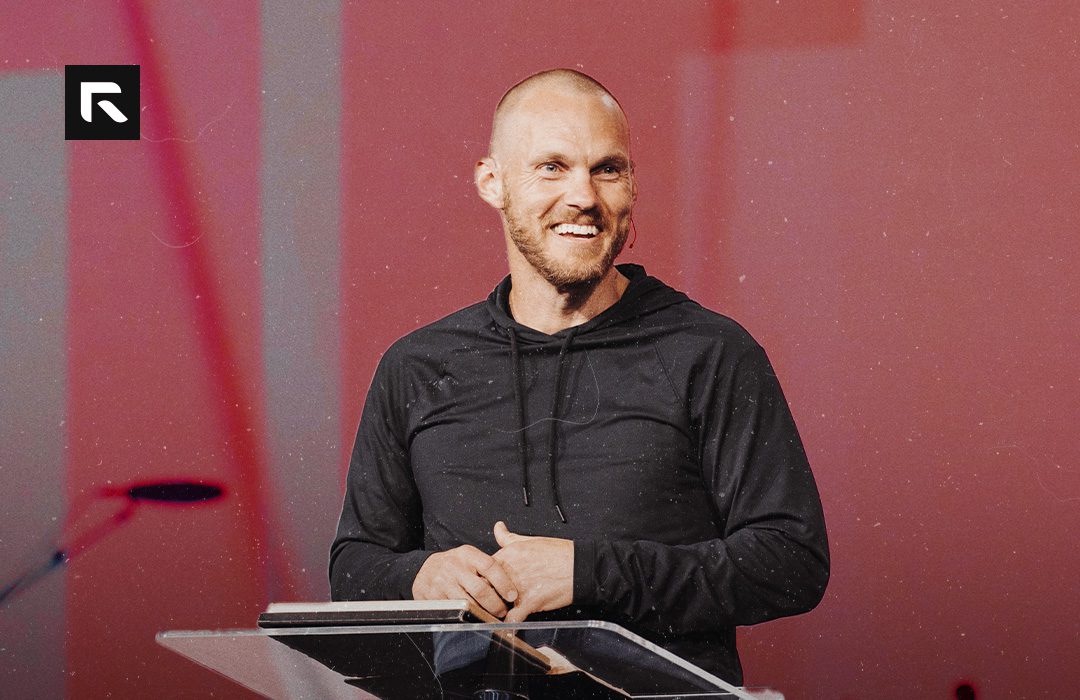
What happens to people who never hear about Jesus? In this sermon on Romans 15:20-24 at Southeastern Baptist Theological Seminary, David Platt biblically explains what happens to the people who never hear the gospel. We have all sinned and this sin has separated us from God. Graciously, God has made a way for us to be saved. The only way to come to God is through faith in Jesus Christ. As Christians, we must preach the gospel to all nations because, without the Good News, man is sentenced to an eternity separated from God.
- We All Know God the Father
- We Have All Rejected God
- None of Us are Innocent
- We Are All Condemned
- God Made a Way of Salvation
- We Cannot Come to God Except Through Faith in Jesus
- Christ Commands Us to Preach the Gospel
Transcript
The following is a lightly edited transcript provided by a transcription service. Please check the video before quoting.
What Happens to Those Who Never Hear the Gospel?
The story I’m about to share with you, you’re going to think is an exaggeration. And I know preachers have a tendency to exaggerate, but I promise you this story happened exactly like I’m about to tell it.
I had been invited to preach at a particular church on a Sunday morning and my wife and I drove up there Saturday afternoon and were there Saturday evening. I was going to preach the next morning on declaring the glory of God to the ends of the earth and giving our lives to make the gospel known in all nations.
The night before on Saturday night, my wife Heather and I were sitting in one of the deacons’ homes. There were two deacons and their wives and the pastor and his wife. We were sitting around talking and they were asking, this is a church that had been incredibly supportive of me, had even had a group that prayed together and would just periodically send us a check when we were in seminary and we’d never ask for anything like that.
Just very, very kind. And so they were asking us about how things were going in life and ministry. And so we shared with them about opportunities God was opening up in the inner city where we were doing ministry and then, particularly in tough places in the world where it is not easy to go and proclaim the gospel and where people are oftentimes against you being there sharing the gospel.
And it was at this point that one of the deacons sat up in his chair and said, David, I think it’s great that you’re going and doing all of those different things. He said in places like that though in the world, I just assume God annihilated all those people and sent them to Hell’s exactly what he said, you asked me what I said in response.
I didn’t say anything. I didn’t know what to say. Stunned in silence the conversation went on like nothing had just happened. And I thought, okay, I’m going to talk tomorrow about declaring the glory of Christ, of the ends of the earth.
This is going to be interesting. And so I got there the next morning and the pastor got up before I preached and he was welcoming folks and then I’m not sure what inspired this, but he went into a tangent about how thankful he was to live in the United States of America and how there was no chance he would ever live anywhere outside of the United States of America, all of the freedoms that we have and this or that.
Preaching Outside the US
I thought there were men firing left and right. I thought Lee Greenwood was about to pipe in the background, going to stand and cross our hearts. And so I’m about to preach and go outside of the United States of America.
And so I preached, I hope with grace that morning, not a lot of response at the end. And I walked down to the front and before the service was closed out, the pastor got up and said, David, we just want you to know how excited we are about what God’s doing around the world and your involvement in that.
And he said, we want to commit today to, and these are his exact words. He said we want to commit today to continue to send you money so that we don’t have to go and do that ourselves.
At this point, my wife who’s standing behind me puts her hand on my shoulder like she thinks I’m about to take this guy down. And he continued on. He said, the last church I pastored, and these were his words, we had a missionary from Japan who came and spoke and he said, I told my congregation that if they did not give to this missionary I was going to pray that God would send their kids to go serve with them like it was a threat.
And he said that the congregation gave it work. So I get in the car that afternoon with Heather and we drive away and I’m processing what has just happened and what I’ve heard over the last 24 hours. And there’s a range of emotions, just sadness, anger.
It was one of those times where God kind of turned the tables a bit and began to think maybe that deacon and that pastor said what most Christians in our context believe but are just not bold enough to say, and I don’t want to be too brash, but are we not avoiding the tough inner cities? And we would not say just assume God annihilates people in other countries and sends them to hell, but if 1.6 billion of them have never heard the gospel,
Bring the Gospel to the Toughest Nations
Then is that not where they will go? Have we not created an entire system that is built on sending a check so that we don’t have to go ourselves? And are we really praying that God would raise us and our children up to go to the toughest places in the nations to take the gospel? And so I guess it comes back to what do we really believe about people who’ve never heard the gospel?
Because if they will go to heaven, then it would make sense for us to spend all of our millions and our resources and our time on ourselves here. But if they’re perishing and we’ll go to an eternal hell not having ever heard this gospel, then we must abandon all of our lives and our resources in the church to get the gospel to them.
It was set off by Spurgeon when he was asked, will the heathen who have never heard be saved Spurgeon responds? The real question is whether or not those who have received the gospel and are not taking it to those heathens really can be saved at all. So what happens to people who never hear about Jesus? I’m convinced this is one of the most important questions facing us in the church.
Unfortunately, as you know, there’s not a place we can go to in scripture where Jesus says, some of you might wonder what happens to people who never hear about me. And so I want to clear that up for you, but I don’t believe the Bible is silent on this issue.
And so I want to bring us to Romans chapter 15 and here’s why I want to bring us to Romans chapter 15. Look with me at verse 20 where Paul is giving us a glimpse into his life and ministry and even deeper than that, the purpose for which he has written the book of Romans.
Start in the middle there in verse 20 in the middle of this argument, but I want you to see what’s going on. He says, thus I make it my ambition to preach the gospel not where Christ has already been named lest I build on someone else’s foundation.
But as it is written, those who have never been told of him will see and those who have never heard will understand. This is the reason why I have so often been hindered from coming to you.
But now since I no longer have any room for work in these regions and since I have longed for many years to come to you, listen to verse 24, I hope to see you in passing as I go to Spain and to be helped on my journey there by you once.
I’ve enjoyed your company for a while. A little historical background here to what Paul is talking about. I want you to look at a couple of maps up here on the screen with me and I want you to see, you won’t be able to see the minute details in this map, but I hope you’ll be able to see the overall picture. We’ll show one map up here.
God By His Spirit Raises Up
On the far eastern part of this map. You see red and blue arrows coming together. That is Antioch. Acts chapter 13 is when God by His Spirit raises up Paul and Barnabas to leave Antioch and go on their first missionary journey on this map. The blue arrows coming out from the far right over there or they’re leaving out.
You see they went down to the islands of Cypress and they went up to Pisidian, Antioch, other places and they’re preaching the gospel, they’re being persecuted, they’re planting churches and then they come back, the red show them coming back and they came back to where Antioch, it was their home base, home base of Christian mission.
They come back and they encourage the believers there. That sets the stage for missionary journey number two. Look at this next map with me. It’s a little larger because the scope of where Paul traveled is bigger again on the far right part of this map midway up, that’s Antioch and you’ll see he leaves and he goes to the places that he’s already been before and that’s when God gives him that Macedonian call and says, come over here to help us.
And so he goes farther north and he goes to places like Thessalonica and Corinth. He comes back down close to the middle of this map to Ephesus and then in the bottom right corner of this map to Jerusalem and then he heads back to Antioch’s home base and he camps out there again encouraging the brothers and sisters.
That sets the stage for missionary journey number three. Next map he leaves, he goes, he’s retracing his steps and when he gets to Corinth, which is in the top left quadrant of this map when he gets to Corinth, he’s headed down to Jerusalem to take an offering there and there in Corinth. He writes the book of Romans.
Now, why does he write this book at this time? Lemme show you one additional map that I think helps us understand it. You look at this map on the far right again, the eastern portion of the map.
You’ve got Antioch and Jerusalem and in the very middle of this map you have Rome and in between them is Corinth. And then on the far western part of this map, the left part of this map, you see Spain, Paul writes this book from Corinth saying, I want to get the gospel to places that I have never heard.
Now if he wants to go specifically to Spain where they have not heard the gospel, then it would not make much sense for Antioch on the far eastern part of this map to be the home base for getting him there. He wants to get the gospel to Spain.
So the church in Rome is the most logical place to help him get to Spain. And so he writes the book of Romans yes to give us a masterful treatise, maybe the most masterful treatise on the gospel in Romans one through eight.
Affirmations and Truths Help Us
But it’s deeper than just that He is writing this to the church to show them why we must get this gospel to people who’ve never heard it before and why they need to help him get there as a result, I think the book of Romans is the perfect place to go to consider why we would need to take the gospel to the ends of the earth, particularly those who have never heard.
And so I want you to turn back with me to Romans one and very briefly and we’re going to run through these. I want to show you seven truths in the book of Romans, seven affirmations, truths that help us understand what happens to people who never hear about Jesus.
We’re going to camp out on a couple, we’ll fly through some of the others. I want you to, if you could just pay attention real close because there’s a point or two where if you tune out at one point and then tune back in 60 seconds later, you might think I’m a heretic and I don’t want to be labeled a heretic in Southeastern’s chapel.
We All Know God the Father
So yes, so hang with me. Alright. Truth number one, all people know God the Father. All people know God the Father. All people have knowledge of God.
The Father, Paul, gives introductory comments, setting the stage in the first 17 verses, and then in verse 18, he starts talking about the wrath of God that is being revealed from heaven against the godlessness and wickedness of men who suppress the truth of God by their wickedness since what may be known about God.
And listen to what it says is plain to them because God has made it plain to them since the creation of the world. God’s invisible qualities eternal power and divine nature have been clearly seen being understood from what has been made so that men are without excuse.
Then he says in verse 21, therefore, although they knew God, fundamental assumption, God has revealed himself to all men, everyone on the planet, whether it is the man in the African jungle, Asian village, Eskimo, or the forgotten tundra.
We Have All Rejected God
Wherever all people have knowledge of God the Father, it is clear, sufficient, plain so that men are without excuse. Fundamental truth number one. Truth number two, all people reject true knowledge of God for although they knew God.
Verse 21 says, they neither glorified him as God nor gave thanks to him, but their thinking became futile and their foolish hearts were darkened, although they claimed to be wise, they became fools and exchanged the glory of the immortal God for images made to look like mortal man and birds and animals and reptiles.
So God gave them over in the sinful desires of their hearts to sexual impurity for the degrading of their bodies with one another. They exchanged the truth of God for a lie. And this is us worshiped and created worship, created things rather than the creator who is forever praised. Amen.
They rejected God the Father, and this is the human condition for all of us, us in this room, people in Africa and in Asia and the Middle East and Australia.
We have all rejected God the Father. I remember talking about this question with a group of college students at one point and one girl asked me, she said, well, what about, her example, the Aztec Indians, she said, Aztec Indians who did not have the Bible but they did the best they could with what they had.
Maybe they worshiped the Son and they called it the Son God, but that was the best they could do with what they had. Isn’t that good enough? And I think it’s a good question, but the reality is Paul says very clearly in Romans, absolutely that is not good enough.
That is the core of what we have all done. We have taken, created things, and worshiped them instead of the creator. Idolatry is not good enough before the God of the universe.
None of Us are Innocent
All people reject true knowledge of God leading to truth number three, there are no innocent people in the world. You read through Romans 18 through two 16 and you see an indictment of the Gentiles, the heathen who do not have the law, and you can almost hear the Jewish Christians meaning at every line until he gets to verse chapter two, verse 17.
He says, now if you call yourself a Jew if you rely on the law and brag about your relationship to God, and he goes off on them, and then in chapter three verse nine all the way through verse 20, he gives this stinging indictment where he pulls text after text after text from the Old Testament and says, there is no one righteous, not even one, no one who understands, no one who seeks God all have turned away.
They have together become worthless. There is no one who does good, not even one. So here’s the deal. If you were to ask me, David, what happens to the innocent guy in Africa who has never heard the gospel, is never heard the gospel and my answer to you based on what I believe the word of God teaches very clearly, my answer would be that that man undoubtedly goes to heaven.
We Are All Condemned
Without question. He’ll spend eternity in heaven even though he has never heard the gospel. The only problem is that the guy does not exist. What happens to the innocent guy in Africa? See how this question is most often phrased? The reality is there is not one innocent person in Africa if they were innocent, they would have no need to hear the gospel.
The reason they need to hear the gospel is because at this moment they stand guilty before a holy God. That’s why we take the gospel to them. Do you follow me there? I saw you looking at each other like this guy’s going to get stoned in the chapel.
We bias this question toward ourselves and away from the holiness of God at every turn and we look for opportunities to point to the injustice of God. The reality is every single one of us in this room is guilty before a holy God infinitely guilty before a holy God. No innocent people in the world leading to truth number four, all people then all people are condemned for rejecting God. Romans One 18 through three 20 has to be one of the most depressing parts of the entire body.
Depravity in every phrase, and Paul sums it up in chapter three, verse 19, we know that whatever the law says to those who are under the law every mouth is silenced and the whole world is held accountable to God.
No one Paul says, no one will be declared righteous in God’s sight. By observing the law through the law we become conscious of sin. In other words, we all stand condemned and our efforts, every good effort we have to overcome our condemnation sinks us into greater condemnation. Our best effort even condemns us more.
Now it’s at this point that we think about a common idea not just in our culture, I would say in our churches there’s this idea that if people have never heard the gospel, that certainly God would not allow them or in a more active way send them to hell they never heard.
So certainly by nature of the fact that they’ve not heard, they will not be held accountable and therefore they’ll go to heaven. It’s an idea that at the core begins to think that because they’ve never heard there’s a pass of sorts into heaven. But think about that.
If that were true, first of all, it would certainly not, there’s no evidence of this in scripture, but even on a practical level, if they were guaranteed to go to heaven simply by nature of the fact that they have never heard the gospel, then what is the worst thing you and I could do for their eternal state? Take ’em to the gospel. Thanks for having missions week.
Stop Commissioning
We were doing fine, headed to eternity in heaven with God. You and your IMB got here and messed it all up. Stop commissioning. Obviously, that undercuts the entire evangelistic enterprise of the church even here in our country.
You go to a college campus here and inevitably you will meet international students who have little, maybe no knowledge of the gospel. Imagine going up to one of them and saying, have you heard of the gospel? Have you heard of Christ? And they look back at you and say, no.
Now if you believe that person is going to heaven precisely because they have never heard, then what would you say to them? Well, if somebody tries to tell you, put your fingers in your ears and start yelling really loudly and run away. This misses the whole point.
The reality is regardless. Paul acknowledges that there is a different level of knowledge between Gentiles and Jews, but regardless, Gentiles and Jews are all condemned before God for rejecting him. They’re not condemned for rejecting the gospel and they’ve never heard the gospel. They’re condemned fundamentally for rejecting God.
And so we find ourselves depressed after verse 20 in Romans chapter three, and it is one of the most beautiful transitions in all of scripture when Paul says in verse 21, but now that’s good,
God Made a Way of Salvation
But now a righteousness from God apart from the law has been made known. And this righteousness from God comes through faith in Jesus Christ to all who believe there is no difference for all have sinned and fall short of the glory of God.
And verse 23, bad news like memorize the good news, two are justified freely by his grace of the redemption that came by Christ Jesus. God presented him as a sacrifice of atonement through faith in his blood truth number five, God has made a way of salvation for the lost. What beautiful words, a sacrifice of atonement.
He has put him forward as a propitiation by his blood. Feel the weight, the wonder of those words. One of the most incredible phrases in all of holy scripture. We are not saved from our sins because ultimately what a bunch of Roman soldiers decided they were going to do to Jesus we’re not saved because this falsely tried and beaten all the gruesome things that we almost glamorize sometimes in the picture of the cross.
We see Jesus in the garden cowering. He’s sweating blood. Is it because he’s afraid of what some Roman soldiers are about to do to him? Think about it. There have been scores of people since that day who have followed Christ and faced martyr death and they have done it singing crucified, upside down, tortured, beaten, and done it seeing did they have more courage than Christ himself.
One Indian man being skinned alive, looks at his tormentor and says, take off my outer garment today. I put on a new garment of righteousness. Christopher Love is about to head to the gallows and he writes a note to his wife and he says, today they will sever me from my physical head, but they cannot sever me from my spiritual head, Christ.
And he goes to the gallows scene with his wife applauding. Did they have more courage than Christ himself? Absolutely not. Listen to his words in the garden. Father, if it is possible, let this cup pass from me. This cup,
Wrath of God Sin
Isaiah, Jeremiah’s cup filled with the fury of the wrath of God do sin. Revelation is a cup filled with a winepress of God’s fury. Holy fury, infinitely holy fury towards sin. Jesus was not a coward about to face Roman soldiers.
He was a savior about to endure divine wrath and he went to that cross as a propitiation. He went there taking the full, infinitely holy, infinitely just wrath of God, do your sin in my sin.
He took it upon himself. Preachers say God couldn’t bear to see what those soldiers were doing to his son and so they turned away. Absolutely not. God turned away because he could not bear to see your sin and my sin on his son.
And in that moment he took that wrath. Do I sup upon himself? One preacher said, it’s like you and I were standing in front of a dam 10,000 miles high and 10,000 miles wide filled to the brim with water, and in an instant that dam was let loose and that water came like a torrent toward you and me and right before it was about to overtake us, the ground in front of us opened up and swallowed every single drop and the same in a much greater way.
Christ took the full torrent of the wrath of you and me upon himself. He drank down every single last drop, turned that cup over, and cried out. It is finished. It finished. God has made a way of salvation for the lost truth. Five brings us up.
We Cannot Come to God Except Through Faith in Jesus
Truth six takes us back to reality. Truth number six, people cannot come to God apart from faith in Christ. What does Paul do in verses 27 through 31 as he talks about where’s boasting? It excluded him from observing the law.
No, but on that of faith, a man is justified by faith apart from observing the law and that sets the stage for Romans four, Abraham justified faith. We are justified by faith. Romans 5, we’re justified by faith. That’s how we have peace with God reconciled to God by faith over and over again throughout the rest of this book comes back we are justified by faith.
So if God has made a way for salvation for the lost in Christ and people cannot come to God apart from faith in Christ, that is troubling when we consider that 1.6 plus million people have not heard of Christ, which leads us to truth number seven and truth number seven is this, Christ commands the church to take the gospel to preach the gospel to all people.
Look In Romans chapter 10 words that I think are probably familiar, two eyes, we’ll start in verse 12. Christ commands the church to priest, the gospel to all peoples. Verse 12 says, there is no distinction between Jew and Greek for the same Lord as Lord of all bestowing his riches and on all who call on him. For everyone who calls in the name of the Lord will be saved.
How then will they call on him and whom they have not believed and how are they to believe in him of whom they have never heard? And how are they to hear without someone preaching and how are they to preach unless they’re sent as it is written? How beautiful are the feet of those who preach the good news? And here’s what I want us to do.
I want us to take those verses and I want us to look at ’em kind of in reverse from verse 15 back up to verse 13. And I want you to see the progression because these verses are not just about Paul’s rhetorical skill.
These verses are about God’s redemptive plan and how this gospel will get to the ends of the earth and I want you to see it with me. How are they to preach unless they’re sent? So here’s where it starts. It starts with Christ sending his people.
Christ Commands Us to Preach the Gospel
They don’t go unless they’re sent. So Christ senses his people, and when his people are sent, what do they do? How do they preach? So as people preach, the word is to proclaim the gospel. It’s not just in a setting like this.
This is what privilege we all have as followers of Christ, we’re proclaimers of the gospel. We preach the gospel. So Christ sends his followers as followers preach. When we preach what happens? How can they hear without someone preaching?
So unless we’re preaching to a wall, people hear, Christ sends his people, they preach and people hear when they hear what happens, how are they to believe in him if they haven’t heard, when they hear they believe? Now we know obviously that not everyone who hears is going to believe. We know that in scripture. We know that in practice. But here’s really, really good news, don’t miss this.
Dr. Aiken, we were praying earlier and quoted Revelation chapter seven verses nine and 10, the reality that there is one day going to be a tribe, a people represented from every tribe, people, language, and nation in the world gathered around seeing salvation that they have been given by the lamb, which means it’s a guarantee.
Every tribe, language, people, and nation is going to be there, which means you and I can go into any unreached people group on this planet, preach the gospel and we can know somebody from that people group’s coming out, somebody’s going to be there.
That’s confidence for every single family that is leaving to go into a tough place in the next year. That’s confidence to know that God is going to draw a people for himself from all of these people groups. They, not everybody, but somebody’s going to believe when they hear, they believe, when they believe, well they do. They will call on him if they do not believe.
They believe they call and when they call they’ll be what? Saved. There’s the plan. Christens his people. They preach when they preach, people hear when they hear, they believe when they believe they call and they call. They’re saved. Now think about that plan and ask the question, where is there a potential breakdown?
Will They Be Saved?
Start at the end? Those who call, will they be saved? Yes, absolutely. Everyone who calls and names the Lord will be saved. Those who believe will they call? Yes, absolutely. Those who the spirit of God is working their hearts, no question.
Those who hear will believe, not everybody, but we just talked about some will believe when they hear when we preach, will they hear unless we’re preaching to a wall? That’s a given start at the very beginning. Is Christ still sending his servants? Is he taking a decade off? Now he’s still sending his servants.
So the only potential breakdown in this whole picture is when servants of the Lord Jesus Christ do not spend their lives preaching this gospel to all peoples and this is the humbling reality. God and his infinite wisdom and grace have made you and me plan A for getting the gospel to all peoples and there is no plan B.
We hear stories of dreams and visions and revelations around the world and have talked with brothers and sisters in those kinds of pictures. And there’s no question God is revealing himself. Some have concluded though that well, God is doing this in other ways.
The reality is if you look at the book of Acts, you won’t find one verse where the gospel is going forward apart from a human instrument. Even in points where there are visions like Cornelius, God tells his servant, Peter, to get up and go.
The reality is God has the power to put the Roman road in the sky if he wants to, but he has chosen instead to use you and me and his grace in you and me to make his glory known to the ends of the earth. This then is the challenge before us.
The challenge is not to answer the question, what happens to people who never hear about Jesus? The challenge is to alleviate the question altogether. Brothers and sisters, the challenge is not just for missionaries or for people over here or here or here who are called to this or that, but for every follower of Christ.
Lead Our Churchs
To spend our lives taking the gospel to the ends of the earth, to lead our churches, to stop spending our money on ourselves and our ends, programs that revolve around us. God forgive us. Let us lead the church to take the gospel to the ends of the earth.
The most common question in our churches is, what is God’s will for my life? People are always wondering, how do I know God’s will for my life? How can I find God’s will for my life? God’s will is not lost. 1.4 million betters in Algeria, a hundred percent Muslim, no Christian, no church, no missionary, no gospel, no Jesus, and we’re sitting over here saying, what do you want me to do? God?
God raises up people who are no longer content to wait for a tingly feeling to go down our spine, to cause us to rise up and do what we have already been commanded to do. Get the gospel to all people. Is that too idealistic? Can that really happen?
Yes. I want to bring those maps before you. Again, I want to show you the map we left off on in the middle of this map you see Rome, and you’ll notice Rome has a little bit of yellow right around it, and on the right around Jerusalem and Antioch, there’s a sorry, that’s your right. There’s a little bit of yellow around there.
That yellow represents, you can barely see it. It represents the areas that were known to contain Christians at the beginning of Paul’s ministry. So Paul went about preaching the gospel and planting churches. And in just a second I want to show you a second map that’s going to show you the regions known to contain Christians at the end of Paul’s ministry.
And I want you to see if you can tell the difference. Look at the second map with me. You see that yellow light up in the exact places where Paul was going. I’m not saying Paul was the only one preaching the gospel here, but Paul undoubtedly had a huge impact on that map. But you’ll notice as you look at this map on the far western corner, you see Spain and there was no yellow there.
Paul wanted to get to Spain and he got to Rome, but not quite the way he planned. He got there in chains and never made it to Spain. What shall we conclude then? Paul, you failed Paul, you were idealistic.
You thought you could get the gospel to people who have never heard it, but you didn’t. Before we make that conclusion, I want to show you a map that represents the number of regions that were known to contain Christians within 200 years after Paul’s death.
And I want you to see if you can tell the difference. Look at this last map with me. Again, I’m not saying that Paul was the only person influencing that man, but I’m saying this brother or sister in this room, pastor or church, the in this room or church member in this room, do not underestimate what God will do when his servants are radically abandoned to taking this gospel to the ends of the earth.
People are Lost Without Jesus
God, we pray that this will mark our lives. Our lives would count for giving the gospel to the ends of the earth for the glory of your name. In Jesus’ name, we pray, Amen. People are lost without Jesus.
Breakdown. In this whole picture is when servants of the Lord Jesus Christ do not spend their lives preaching this gospel to all peoples and this is the humbling reality. God and his infinite wisdom and grace have made you and me plan A for getting the gospel to all peoples and there is no plan. B,
We hear stories of dreams and visions and revelations around the world and we have talked with brothers and sisters in those kinds of pictures and there’s no question God is revealing himself. Some have concluded though that well, God is doing this in other ways.
The reality is if you look at the book of Acts, you won’t find one verse where the gospel is going forward apart from a human instrument. Even in points where there are visions like Cornelius, God tells his servant, Peter, to get up and go.
The reality is God has the power to put the Roman road in the sky if he wants to, but he has chosen instead to use you and me and his grace you and to make his glory known for the ends of the earth. This then is the challenge before us.
The challenge is not to answer the question, what happens to people who never hear about Jesus? The challenge is to alleviate the question altogether. Brothers and sisters, the challenge is not just for missionaries or for people over here or here or here who are called to this or that, but for every follower of Christ.
Take the Gospel to the End of Earth
To spend our lives taking the gospel to the ends of the earth, to lead our churches, to stop spending our money on ourselves and our ends, programs that revolve around us. God forgive us. Let us lead the church to take the gospel to the ends of the earth. The most common question in our churches. What is God’s will for my life?
People are always wondering, how do I know God’s will for my life? How can I find God’s will for my life? God’s will is not lost. 1.4 million Bedouins in Algeria, a hundred percent Muslim, no Christian, no church, no missionary, no gospel, no Jesus, and we’re sitting over here saying, what do you want me to do? God? God, raise up a people who are no longer content to wait for a tingly feeling to go down our spine, to rise us, cause us to rise up and do what we have already been commanded to do.
Get the gospel to all people. Is that too idealistic? Can that really happen? I want to bring those maps before you Again, I want to show you the map we left off on and in the middle of this wrap map you see Rome, and you’ll notice Rome has a little bit of yellow right around it and on the right around Jerusalem and Antioch, there’s a sorry, that’s your right.
There’s a little bit of yellow around there. That yellow represents. You can barely see it. It represents the areas that were known to contain Christians at the beginning of Paul’s ministry.
So Paul went about preaching the gospel and planting churches and in just a second I want to show you a second map that’s going to show you the regions known to contain Christians at the end of Paul’s ministry.
And I want you to see if you can tell the difference. Look at the second map with me. You see that yellow light up in the exact places where Paul was going. I’m not saying Paul was the only one preaching the gospel here, but Paul undoubtedly had a huge impact on that map. But you’ll notice as you look at this map on the far western corner, you see Spain and there was no yellow there.
Paul wanted to get to Spain and he got to Rome, but not quite the way he planned. He got there in chains. He never made it to Spain. What shall we conclude then? Paul, you failed Paul, you were idealistic.
You thought you could get the gospel to people who have never heard it, but you didn’t. Before we make that conclusion, I want to show you a map that represents the number of regions that were known to contain Christians within 200 years after Paul’s death, and I want you to see if you can tell a difference. Look at this last map with me.
Again, I’m not saying that Paul was the only person influencing that map, but I am saying this brother or sister in this room, pastor or church theater in this room, or church member in this room, do not underestimate what God will do when his servants are radically abandoned to taking this gospel to the ends of the earth. God, we pray that this will mark our lives. Our lives would count for getting the gospel to the ends of the earth for the glory of your name. In Jesus’ name, we pray,
Amen.
People are lost without Jesus. That’s why we pray and that’s why we go and today we have the wonderful honor and privilege of commissioning those whom to go to the nations. And of course, my heart is that he would call even more of you to go.
I challenge you to pray, not Lord, should I go. I challenge you to pray. Lord, why should I stay? The reason why we should go is overwhelming and compelling. I want to invite at this time those who are going to be deployed this year in our two plus two and two plus three programs if they would go with their families.
Come down here at this time and stand, so if you are a part of our deployment for this year, would you come down at this particular time? Those in our two plus two and two plus three 2010 deployment. Also, if you are.


David Platt serves as a Lead Pastor for McLean Bible Church. He is also the Founder of Radical, an organization that makes Jesus known among the nations.
David received his B.A. from the University of Georgia and M.Div., Th.M., and Ph.D. from New Orleans Baptist Theological Seminary. Some of his published works include Radical, Radical Together, Follow Me, Counter Culture, Something Needs to Change, Don’t Hold Back, and How to Read the Bible.
He lives in the Washington, D.C. metro area with his wife and children.