The Glory of God, the Lostness of Man, and the Gospel of Christ

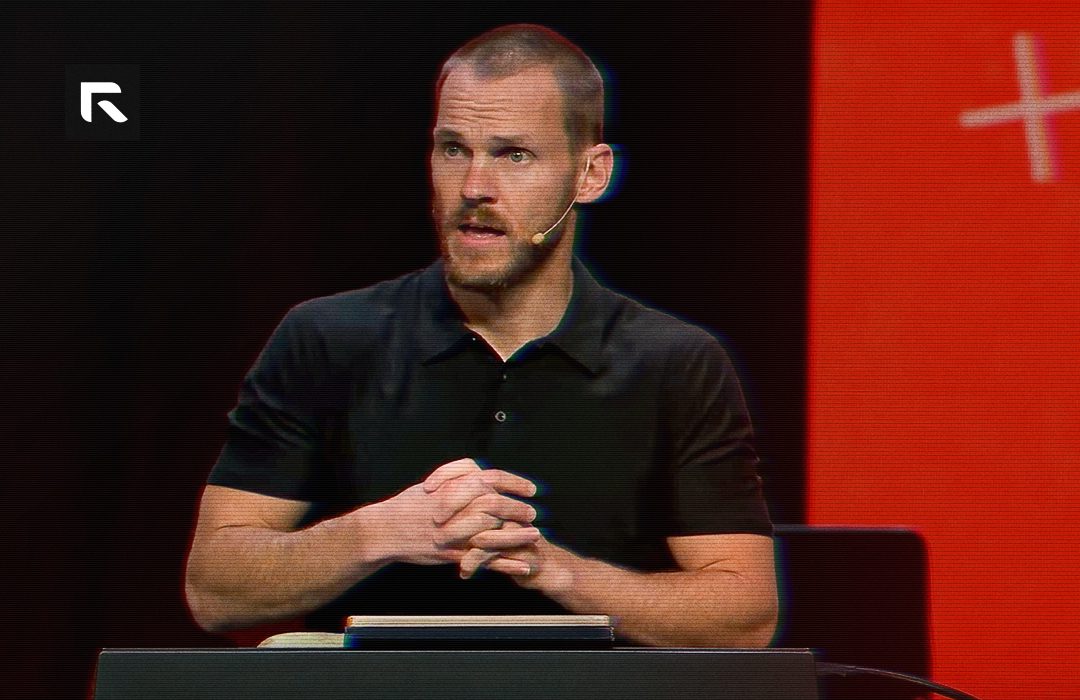
How are we reunited with God when we are evil sinners? In this sermon on Isaiah 6 at Desiring God National Conference 2011, David Platt reminds us that Jesus has paid our debts. The earth sings of God’s glory and we revere Him as holy. Humans are innately evil and our sin separates us from God. Jesus lived a perfect life and paid the penalty of death that we deserve so that we can be saved. It is our duty to share this Good News to the ends of the earth.
- God is Holy
- Man is Sinful
- Christ Endured the Penalty of Sin
- The Urgency of the Gospel
Transcript
The following is a lightly edited transcript provided by a transcription service. Please check video before quoting.
The Glory of God, the Lostness of Man, and the Gospel of Christ
I see no reason not to start off this morning where we left off last night. So Psalm 148 says, praise the Lord. Praise the Lord from the heavens. Praise him in the heights above. Praise him all his angels. Praise him, all his heavenly hosts.
Praise him, sun and moon, and all you quadrillions of shining stars. Praise him you highest heavens and your waters above the skies. Let them praise the name of the Lord. For he commanded and they were created.
He set them in place forever and ever. He gave a decree that will never pass away. So praise the Lord from the earth, you great sea creatures, whales and all ocean depths, lightning and hail, snow and clouds, stormy winds that do his bidding, your mountains in all hills, fruit, trees in all cedars, wild animals and all cattle, small creatures, and flying birds, kings of the earth in all nations, your princes and all rulers on the earth.
Young men and maidens old men and children. Let them all praise the name of the Lord for his name alone is exalted and his splendor is above the earth in the heavens and he is raised up for his people.
A horn, the praise of all his saints of Israel, the people close to his heart. Praise the Lord, praise the Lord. Sing to the Lord a new song. His praise in the assembly of the saints. Let Israel rejoice in their maker.
Let the people of Zion be glad in their king. Let them praise his name with dancing and make music to him with the tambourine and heart for listening. Let them soak in the Bible says the Lord takes delight in his people.
He crowns the humble with salvation. Let the saints rejoice in this honor and sing for joy on their beds. May the praise of God be in their mouths and a double-edged sword in their hands to inflict vengeance on the nations and punishment on the peoples to bind their kings with fetters.
Their nobles will shackles of iron to carry out the sentence written against them. This is the glory of all the saints. Praise the Lord. Praise the Lord. Praise God in his sanctuary. Praise him in his mighty heavens.
Praise him for his acts of power. Praise him for his surpassing greatness. Praise him with the sounding of the trumpet. Praise him with the heart and liar, praise him with tambourine and dancing.
Praise him with the strings and flute. Praise him with the clash of symbols. Praise him with the resounding symbols. Let everything that has breath, praise the Lord. Praise the Lord. There are over 16,000 people groups on the planet and our God deserves every single one of their praise.
The glory of God among the nations is not just the reason for which we have this conference. The glory of God among the nations is the reason for which we have breath. So I’ve got to walk you through what was happening to me last night when Louis was talking.
Okay, so I’ve been praying about what to say at this conference more than I’ve prayed about any other conference this year because of what I believe about the potential of this conference. So I’ve been praying about what the Lord would have me say at this moment.
And as I prayed, the Lord believed was putting three texts on my heart that I was supposed to dive into this morning. Those three texts are Isaiah chapter six, Psalm chapter 148 and Romans chapter one.
So I’m sitting there last night and I’ve got this word burning in my heart prepared to preach, and Louis starts talking about Isaiah six and I start thinking, oh no, I’m not sleeping tonight. I got to go to something else. But then he starts talking about pulsars and sombrero galaxies and I think, all right, I’m okay.
I wouldn’t plan on going the pulsar sombrero route and so I’m okay. And then he says, now I want you to turn with me to Psalm 148 and I’m starting to panic. I’m thinking, you’ve got to be kidding. He’s taking my whole sermon,
But then he starts playing whale music. I am thinking I don’t know any whale songs. It’s not in my repertoire, so I’m okay. And then at the end, he reads from Romans chapter one, and I just sat there and all of a sudden this panic in me just turned to peace and I realized that God, the God who is at work in pulsars and sombrero galaxies and whales in the universe is the same God who is evidently at work in this room that he would lead his heart and my heart unbeknownst to one another, to the exact same three texts.
So maybe the Lord wants us to go of me maybe deep here. And so with a sense of anticipation and trepidation, I want to invite you to turn with me to Isaiah chapter six, and I want us to plunge even deeper into this word, trusting that maybe the Lord doesn’t want us to move on just quite yet from where we were last, last night.
And while you’re turning, I do just want to say I am in over my head at this conference. I’m in over my head as a pastor on every level and then I’m in over my head at this conference.
The seeds of God’s passion for his glory among the nations were planted in my heart through John Piper and Louis Giglio at passion conferences am indebted in so many ways to these brothers and then these other brothers who you’ll hear the rest of today whose God-given brilliance and ministry just insights praise to his name. I was intimidated enough.
And then Louis goes out, pulls an iPad where he has conducted an orchestra of water mammals and oscillating supernovas and I think I don’t have anything to bring to the table here. I’m out of my league.
I’m just going to talk, just going to talk, but I got something really good to talk about. This word is good and so I’m going to stay as close as I can to it. I want to show you four simple, glorious life-altering truths in this text, and then I want to apply those truths to the way we in this room lead our churches and give our lives, lose them if necessary for the spread of the gospel among unreached peoples.
So Isaiah chapter six, verse one in the year that King Eiah died, Isaiah says, I saw the Lord sitting upon a throne high and lifted up and the train of his robe filled the temple above him stood the seraphim, each had six wings with two, he covered his face and with two he covered his feet and with two he flew and one called to another and said, holy, holy, holy is the Lord of hosts.
The whole earth is full of his glory and the foundations of the threshold shook at the voice of him who called and the house is filled with smoke. And I said, woe is me. For I am lost from a man of unclean lips and I dwell in the midst of people of unclean lips for my eyes have seen the king, the Lord of hosts.
Then one of the sheriff serafin flew to me having in his hand a burning coal that he had taken with tongs from the altar and he touched my mouth and said, behold, this has touched your lips. Your guilt is taken away and your sin atone for.
And I heard the voice of the Lord saying, whom shall I send and who will go for us? Then I said, here am I. Send me. And he said, go and say to this people, keep on hearing but do not understand.
Keep on seeing but do not perceive. Make the heart of these people dull and their eyes heavy and blind their eyes lest they see with their eyes and hear with their ears and understand with their hearts and turn and be healed.
Then I said, how long, oh Lord. And he said, until cities lie, waste without inhabitant and houses without people and the land is a desolate waste, and the Lord removes people far away and the forsaken places are many in the midst of the land and though a 10th remain in it, it will be burned again like a Rabin or an oak whose stump remains.
When it is felled, the holy seed is its stump for simple, glorious life-altering truths that will apply to our lives and churches. When it comes to the unreached number one, we have an incomprehensibly glorious God, we have an incomprehensibly, glorious God, our God reigns in the year that King Siah died king for 52 years you and I are used to a president for four, maybe eight years, 52 years.
For most of the people of God, this was the only leader they knew and for the most part of his reign he had sought God and things had gone well. All of a sudden he was gone, things were in crisis, and Isaiah looks up and he sees that though King Uz Isaiah is gone, the real king is still on the throne.
Throughout history, presidents have come and presidents have gone and will go. Leaders have come, leaders have gone and will go. Kings have come, Kings have gone and will go. One king will always remain and he’s surrounded by these angelic attendants.
These sheriffs, their name literally means burning ones. It’s a great picture. These angels that are literally ablaze with the adoration of God, they live, they burn to worship God and they surround his throne with other angels.
We know from scripture with myriads and multitudes all flaming with pure nuclear power. Praise of God to think that while you and I were sleeping, while you were snoring last night, they were singing, shouting, trumpeting the glory of God.
When you woke up the morning this morning, they were still singing. At this moment while you sit in your seat, they’re still shouting his praise and you go to bed tonight, they never stop.
God is Holy
What is their song selection? Holy, holy, holy. This holiness is terrifying. It’s like these angels are grasping at the leash of language to try to find a word to express the nature of the one who is before them and the only word comes out Holy, holy, holy, other.
What does it mean for God to be holy? He is without error. Our God is perfect. There is nothing wrong and our God, he has never had a wrong thought. He has never done a wrong deed. He has never had a wrong motive.
Everything in him is right, righteous, unadulterated, purity. But we need to be careful not just to think about purity here because the reality is there is a sense in which not exactly the same, but there is a sense in which the same thing could be said about angels surrounding his throne.
They’re not a part of fallen man, they’re not a part of fallen angels. They are also in a very real sense without sin. So we know that for God to be holy, it’s more than just him being without error.
For him to be holy means that he is without equal. Isaiah 40, to whom will you compare me says the holy one who is my equal? Isaiah 45, I am God and there is no other. There is no one like our God. It is folly to try to compare anyone or anything to our God because he is incomparable.
His holiness is terrifying and his sovereignty is total. The whole earth is full of his glory. All of the earth is a continual explosion of the glory of God. We talked about last night how he has sovereignty over all nature. You just couldn’t help to think about Isaiah 40, could you?
He brings out the story hosts one by one and calls them each by name. They’ve all got names, sovereign overall nature, and sovereign overall nation. So do something when they go to Isaiah chapter 36 for a minute.
This is part of the purpose of Isaiah, the point of Isaiah to show the supremacy and sovereignty of God over the nations. Look at Isaiah chapter 36, this historical interlude in the middle of this prophecy. You remember the background, the historical background.
The Assyrians had overtaken the northern kingdom of Israel and were on the assault when it came to the southern kingdom of Judah. They were taking city after city and they came to Jerusalem and they had surrounded Jerusalem with 185,000 troops. You remember this?
185,000 put yourself in Jerusalem for a second. You’ve heard about the dreaded Assyrians taking over and destroying city after city, after city, and now you are in Jerusalem and there’s 185,000 Assyrian troops surrounding you.
And so one of the Assyrian commanders comes out and begins to taunt the people of God. A bit of Old Testament trash-talking. Listen to what he says. Isaiah chapter 36, verse 18, Hezekiah is telling the people of God, trust God.
Trust God. Verse 18, the Syrian commander says, beware lest Hezekiah mislead you by saying the Lord will deliver us. Has any of the gods of the nations delivered his land out of the hand of the king of Assyria?
Where are the gods of Hamoth and Arpad? Where are the gods of Sepharvaim? Have they delivered Samaria out of my hand? Who among all the gods of these lands have delivered their lands out of my hand that the Lord should deliver Jerusalem out of my hand? Oh, you don’t say that to God.
You go to the next chapter, chapter 37 verse 23, and God decides to join in the trash talk and he speaks through his servant Isaiah 37, verse 23 to Assyria, whom have you mocked and reviled against whom have you raised your voice and lifted your eyes to the heights against the holy one of Israel? By your servants, you have mocked the Lord and you have said, with my many chariots, I’ve gone up the heights of the mountains to the far recesses of Lebanon to cut down its tallest cedars, its choice of cypresses to come to its remotest height, its most fruitful forest.
I dug wells and drank waters to dry up with the sole of my foot, all the streams of Egypt. God says, have you not heard that? I determined it long ago. I plan from days of old.
What now I bring to pass that you should make fortified cities crash into heaps of ruins while their inhabitants, short of strength are dismayed and confounded and have become like plants for the field and like tender grass, like grass on the housetops blighted before it has grown. I know you’re sitting down and you’re going out and coming in and you’re raging against me because you have raged against me and your complacency has come to my ears.
I will put my hook in your nose and my bit in your mouth and I will turn you back on the way by which you came and you get down to verse 33 and you see what happens. Therefore, thus says the Lord concerning the king of Assyria, he shall not come into the city or shoot an arrow there or come before it with a shield or cast up a siege mound against it by the way that he came.
By the same, he shall return and he shall not come into the city declares the Lord, for I will defend this city to save it for my own sake and for the sake of my servant. David and the angel of the Lord went out and struck down 185,000 in the camp of the Assyrians.
And when people arose early in the morning, behold these were all dead bodies. 185,000 people struck down like that. Then Sona, king of Assyria departed as well. He should have returned home and lived at Nineveh and as he was worshiping in the house of this rock, his God drama like in Ezra, his sons struck him down with the sword.
Mark this down. You don’t mess with God. God says, Assyria, you’re in my hands, Babylon in my hands, Israel, Judah in my hands. I’m sovereign over all of you. And this is good news, isn’t it?
Isn’t it good news to know that Kim Jong-il in North Korea is not sovereign overall? Neither is Akma, Deja, and Iran, neither is Benjamin Netanyahu or Hamid Karzai or Omar Gaddafi or Barack Obama.
Man is Sinful
The Lord our God is sovereign over every single one of them. He holds them in his hands, holiness, terrifying sovereignty. In total, we have an incomprehensibly glorious God. The second truth, we are a sinfully.
Lost people. We’re sinfully lost people. So what was Isaiah’s response to the glory of God? Not while his response was woe, woe is me, for I am lost. What does that mean? This is where I want us to step back a moment and to consider what all of scripture tells us about what it means to be lost.
Consider the testimony of scripture to the lostness of man, not three chapters into this book, man is sinfully lost. Man is slandering the goodness of God. Let’s eat from the tree. God doesn’t know what is best for us.
We know better than him. Slandering the goodness of God, spurning the authority of God. Even if God said don’t eat from the tree, we’re going to do it anyway. He’s not Lord over us. We can do what we want.
This is the God who beckons storm clouds and then comes the God who says to the wind and the rain, you blow there and you fall here and they do it. This is God who says to mountains, you go here, and says, you stop there.
Everything in all creation responds to the bidding of the creator. Until you get to man and you and I have the audacity to look at him in the face and say, no slandering, God’s goodness spurning God’s authority and then questioning God’s word.
Did God really say, oh, it is a dangerous, dangerous thing? Whenever we subject God’s word to man’s judgment and from this sin we see lostness all over this book, what does it mean to be lost?
To be lost is to be cut off from God, man, cast out from God’s favorable presence in Genesis chapter three to live alienated from God. Colossians 1:21 separated from Christ. Ephesians 2:12 cut off from God and condemned by God. Romans 5:12 says, from that one, sin came condemnation for all men.
Romans 5:18, 1 trespass led to condemnation. For everybody in our sinfulness, we are cut off from God, condemned by God, enemies of God. Romans 5:10, friends of the world with enmity toward God.
James chapter 4:4, in our lostness, we are slaves to sin. John 8:34, Jesus says, truly, truly I say to you, everyone who commits sin is a slave to sin. Romans 6:11 says we’re slaves to sin and impurity and lawlessness.
We are slaves to sin and dominated by Satan. 2 Timothy 2:26 says, we are caught in the snare of the evil one who has captured us to do his will. 1 John 5:19 says, we live in the world that lies in the power of the evil one.
We’re children of wrath. Ephesians 2:3, lovers of darkness, we hate the light. John 3:20, Ephesians 4:18 says, we are darkened in our understanding and it affects all of us, every facet of our being permeated with lostness, our minds are blinded.
Romans 1:21 says we claim to be wise, but we are fools exchanging the glory of the immortal God for images made to look like mortal man and birds and animals and reptiles. Verse 28 says God has given sinful man over to a depraved mind.
2 Corinthians 4:4 says the God of this world, little g God of this world has blinded the minds of unbelievers. So in our lostness, we can’t see, our minds are blinded, our emotions are disordered. Romans 1:26 says God has given us over to our sinful hearts.
1 Peter 2:11 says, the sinful passions of our flesh war against our souls, our minds blinded our emotions disordered our bodies defiled. Romans 1:24 says God has given us over to sexual impurity for the degrading of our bodies of one another. Romans three.
There is no one righteous, not even one. No one who understands, no one who seeks God all have turned away. They have together become worthless. There is no one who does good, not even one.
Our throats are open graves. Our tongues practice deceit. The poison of vipers is on our lips. Our mouths are full of cursing and bitterness, ruin and misery. Mark our ways in the way of peace. We do not know there is no fear of God before our eyes.
We are morally evil. Genesis 8:21 says every inclination of man’s heart is evil from childhood, spiritually sick. Jesus says in Matthew chapter 19, verse 12, we are continually perishing. 2 Thessalonians 2:9, 1 Corinthians 1:18, 2 Corinthians 4:3.
Do we see this? Our problem is not just that we’ve made some bad decisions. Our problem is not just that we’ve messed up. Our problem is that we are at the core sinfully lost cut off from God, condemned by God and consequently destined for hell our sin before an infinitely holy God warrants infinitely horrifying judgment.
This is the truth of all scriptures. God is Professor James Denny said Amongst all of scripture, we see this one truth, that those who refuse to submit to the gospel and love and obey Jesus Christ will incur at the last advent and infinite and irreparable loss they will pass into a night on which no morning will ever dawn.
We had a hell of a time we played a hell of a game that was a hell of a song. The way we talk about hell shows that we have no idea what we are talking about. Hell, a place of fiery agony.
Mark 9:43, your hand causes you to sin, cut it off. It’s better for you to enter the kingdom with one hand than with two hands to go into hell into the unquenchable fire. If your eye causes you to sin, gouge it out.
It’s better for you to enter the kingdom of God with one eye than with two eyes to go into hell where the worm never dies and the fire is never quenched. Revelation 20:15, if anyone’s name was not found written in the Book of Life, he was thrown into the lake of fire.
Revelation 21:8. As for the cowardly and the faithless, the detestable as for murderers, the sexually immoral and sorcerers and idolaters and all liars, their lot will be in the lake that burns with fire and sulfur.
You say, well, aren’t those just images in the Bible? Are those just symbols? Okay, maybe. But if they’re symbols, then what are they symbols for? A wintry retreat, a summer vacation? No, these are symbols that stand for something much worse.
Surely burning fire and smoking sulfur are not symbols for a nice place to be. They’re symbols for a terrifying place to be. A place of fiery agony, a place of conscience torment. Luke 16:22, A place of outer darkness.
Matthew 22, verse 13, A place of divine destruction, 2 Thessalonians 1:9, separated from the presence of the Lord and the power of his might and maybe most horrifying of all, a place of eternal duration.
Revelation 14, verse 11 says, the smoke of sinners torment rises up forever and ever and ever. Thomas Watson said, the wicked in hell shall be always dying but never dead, smoke of the furnace as sins forever and ever.
He said, oh, who can endure thus to be ever upon the rack? The word ever he said breaks the heart and it does. Who in this room can even begin to grasp the everlasting horror of hell?
Brothers and sisters, we are not just playing games here. There is real everlasting wrath awaiting sinners before a holy God. Be not ignorant of this and be not indifferent to this. Refuse to be numbed by the temporary stuff of this world that keeps you from seeing and feeling the eternal weight of heaven and hell.
And this is why Isaiah said, woe is me. I am lost. Now we see he is lost and it’s not just him or not just them, those unreached people. This is us. It’s what we are in our sinfulness, sinfully lost.
We are in our sinfulness, cut off from God, condemned by God, enemies of God, slaves to sin dominated by Satan, children of wrath, lovers of darkness, minds blinded emotions, disordered bodies defiled morally evil, spiritually sick, continually perishing and destined for hell.
Christ Endured the Penalty of Sin
This is us, which leads us to the third truth. We are sinfully lost people. And third, we have a scandalously merciful savior. So Isaiah cries out in depravity and the Lord responds in mercy. He commands the seraphim to take a live coal from the altar and touches Isaiah’s lips and says these words, see, your guilt is taken away and your sin gone for now, I want you to think about this.
This is Isaiah. He is guilty. He’s a guilty sinner in the presence of a holy God. And God in Isaiah six looks at this guilty sinner and says, you are innocent. How is that possible? How can a holy God, everything he does is right and true and perfect, how can he look at a guilty sinner and say innocent?
That’s a scandal No matter how you look at it, whether you’re conservative or progressive or liberal, whatever, you have a sense of right and wrong. You expect right to be praised and wrong, to be condemned, and you expect God to do the same. So how can God in perfection look at that which is totally rebellious and say you are perfectly righteous?
And this is where Isaiah 6 doesn’t give us the whole story. So turn me over to Isaiah chapter 53, and I want you to see the continuation of this picture of a God who takes the altar of sacrifice and turns it into a place where man’s sinfulness and guilt are removed.
It’s the picture that God had set up all among his people for generations. You know the feast and celebrations and the special days, whether it’s the Passover, you take a lamb into your home, you get to love it, let your kids love it, then you slaughter it, you take its blood and you put it over your doorpost to show that the price for sin death has been paid.
And you fast forward to the day of atonement and you see these two offerings brought in, one sacrificed its blood taken, sprinkled over the atonement cover to show that the penalty of sin, death has been paid. And then you take the other sacrifice, you place your hands, priest places his hands on the scapegoat, confesses the sins of the people, symbolically passing of the sins onto the goat, and then the offering taken out into the wilderness outside the camp never to return again as a picture of God removing sins, taking sins away.
It’s the same word that’s used there in Leviticus chapter seeing that Isaiah brings in in chapter 53 verse four, to talk about what Christ will do for us Christ the servant. Surely verse four, chapter 53, he has born our griefs and carried our sorrows, yet we esteemed him, stricken, smitten by God and afflicted, but he was wounded for our transgressions.
He was crushed for our iniquities. Upon him was the chastisement that brought us peace. And with his stripes, we are healed. All we like sheep have gone astray. We have turned every one to his own way and the Lord has laid on him the iniquity of us all.
So what does this mean? Two things. One, Christ will endure. The servant will endure the penalty of sin. In all of these pictures we see grief, sorrow, do sin that he’s carrying is the payment for sin.
All the physical suffering we see on the cross, a visible demonstration of the penalty, do sin but don’t miss it. That’s not all. The servant will not just endure the penalty of sin. The servant Isaiah says will stand in the place of sinners.
Isaiah brings us into this passage. You look at verses four, five, and six and you see how he brings the first person plural in surely he is born. You might circle it, our griefs and carried our sorrows. We esteemed him stricken.
He was wounded for our transgressions, crushed for our iniquities upon him and the chastises of the brought us peace. And with his stripes, we are healed. All we like sheep have gone astray. We’ve turned every one to his own way.
The Lord has laid on him the iniquity of us all, no less than 10 times. In three verses we see that the servant will do this in our place, in our stead. Now this is key. So wrote this little orange book that got some publicity in a few different places.
One local place where it got publicity was in the Birmingham News where I pastor and the Newspaper writer took a quote from the book. This is what the article said. He said, while it’s a common pulpit truism that God hates sin but loves the sinner.
Plat argues that God hates sinners. And it’s a quote taken from the book, but the article just moves on at that point. So people start emailing me, church members, pastor, you believe God hates sinners, people in the city emailing me, not so kindly. You preaching hatred there.
And this is one of those places where I like many of you can find yourself in a bit of trouble for quoting the Bible, does God hate sinners? Listen to Psalm chapter five, verses five and six. The boastful shall not stand before your eyes.
You God, you hate all evildoers. You destroy those who speak lies. The Lord abhors the bloodthirsty and deceitful, man, maybe I should have said up whore, maybe that’s a better word. No, no, no, no. You misread. God doesn’t hate sinners. He abhors them and destroys them.
Could you quote me on that, please? But it’s not isolated in scripture. 14 times in the first 50 Psalms alone, we see God’s hatred toward the sinner, his wrath toward the liar, and so on. And it’s not just Old Testament, it’s New Testament.
In John chapter three, that chapter where we have one of the most famous verses about God’s love, we also have one of the most neglected verses about God’s wrath. And so begs the question, does God, is it true that God hates the sin but loves the sinner?
Yes, of course in one sense, but not completely. Think about it with me. Does God hate the sinner? And this right here is so key to understanding the cross because when we see God’s holy hatred of sin, God’s holy wrath of sin.
It’s not like sin is something outside of us. We have this tendency to think when Jesus went to the cross, he died for my lusting and my lying and my cheating or my doing this or that as if sin is outside of us.
The reality is sin is at the core of who we are. We are sinful to the core. So when Jesus went to the cross, he wasn’t just enduring the penalty of sin as if it was something outside of us. He was taking the place of sinners when he was crushed and bruised and literally pulverized.
Isaiah 53 says He was doing this in our place. He was taking the full wrath of God, do you and do me as sinners. So let us be comfortable not to lean on comfortable cliches that rob the cross of its meaning.
Here’s the deal. We are sinners. We are all like sheep of John astray. I obviously, there are many preachers today who would try to advocate that, no, you are good, you’re fine. Believe in yourself, trust in yourself. Don’t believe them. You are a dumb sheep.
Even the smartest, most intellectual one in this room is a dumb sheep going your own way. So we are sinners. God is holy possessing, holy hatred towards sin and sinners, and possessing holy love toward sinners.
So then how can God show both holy hatred and holy love towards sinners? That’s the question of the Bible and the answer is the cross because, at the cross, God shows the full expression of his wrath. You see the verbs?
He was wounded, he was crushed, chastised stripes. The Lord has laid on him the iniquity of us all. He was crushed for sin and sinners and at the same time, he did this for sinners. So does God hate sinners?
Yes. Look at the cross. Does God love sinners? Absolutely. Look at the cross because there he takes our sin away. They’re gone. Isaiah 43, verse 25 says He remembers them no more. He doesn’t even remember them.
It’s not that he has amnesia. Our God knows everything. The beauty of the gospel is that God knows every single sinful thing you or I have ever done. Every single sinful thought, every single sinful inclination, and by the grace of Christ the servant, he does not count any of those things against odds.
I heard a story about Royals Royce in England. Englishman who bought this Rolls Royce advertised as the car that would never, ever, ever, ever break down. And so he bought it at a hefty price.
He’s driving it around one day and it breaks down. He was pretty far away and so he called and said, Hey, you know the car that will never break down? Well, I’m broken down. He said we’ll get somebody to you Immediately.
They fly someone a mechanic on a helicopter to him and landed there. They fix his car. Not often that a mechanic does that. He begins driving, goes off on his way after it’s fixed, he expects to get a bill from Rolls Royce.
Obviously, that was expensive for them to do and he wanted to get this whole thing behind him and so he hadn’t gotten a bill for weeks. And so he called Roys Royce and he said, I’d like to go ahead and pay my bill that way. It’s all taken care of.
And the Rolls Royce people responded and said, sir, we are sorry, but we have absolutely no record of anything ever having gone wrong with your car. Think of it that the God of the universe would look at your life and my life and say I have absolutely no record of anything ever having gone wrong and back to the exact opposite because we’re clothed in Christ.
He says, I have record of everything having gone right in your life. That is a scandal. We have a scandalously merciful savior. Moving to truth number four. This is true. We have an incomprehensibly glorious God.
The Urgency of the Gospel
We are sinfully lost people with a scandalously, merciful savior than we have an indescribably urgent mission. Surely this God warrants more than raising a hand and praying a prayer. Surely this God warrants more than nominal adherence and casual acceptance.
This God warrants total abandonment of our lives, our dreams and our plans and our hopes and our possessions, and our stuff, all of it on the table. How do you want to use my life and my family and this church for the spread of your glory and this gospel to the ends of the earth?
The only possible response, and this is where, okay, running out of time here, but take these truths now let’s apply them to the unreached. Okay? This is where I’m going to go to Romans 1 in my mind. We don’t have time to turn there but think about these truths.
Apply 6,000 plus people groups who have little to no access to the gospel over two and a half billion people. Why must we, all of us in this room, lead our churches and give our lives and lose them if necessary, spreading this gospel somehow in the ways that God and his creativity ordains, but we abandon to him?
How can you most effectively make this gospel known to unreached peoples? Why must we go to them with urgency? Three reasons. Number one, because, so here, the application here, because when it comes to the unreached, their knowledge of God is only enough to damn them to hell,
Right? Romans 1 the wrath of God being revealed from heaven against all the godlessness and wickedness of men who suppressed the truth of God by their wickedness. Since what we’ve known about God is plain to them because God has made it plain to them for since the creation of the world, God’s invisible qualities, eternal power, and divine nature have been clearly seen.
Being understood has been made so that men are without excuse all of them. Every man in the African jungle or Amazon rainforest woman in the Asian village, Eskimo, and the forgotten Tundra, all of them have knowledge of God. We talked about that last night.
Then they see the glory of God, which exposes the lostness of their hearts. It’s clear in Romans chapter one, the knowledge they have shows them that God is glorious and they are guilty and that’s all they’ve got. You say, well, what happens to the innocent guy in Africa who never hears the gospel?
Well, my answer to that is easy based on the authority of God’s word. The innocent guy in Africa who’s never heard the gospel will absolutely go to heaven even though he’s never heard the gospel, he will go to heaven.
The only problem is the innocent guy in Africa does not exist. Okay, you follow with me here so that I’m not about to be thrown out as a heretic. You. If he were innocent, which is the way the question is normally asked, if he were innocent, why would he need the gospel?
He has no sin. Of course, they’ll go to heaven. The problem is there are no innocent people in Africa waiting to hear the gospel. They’re guilty people all over the nations ready to hear the gospel.
That’s why we must go to them because they’re guilty. You see how we default the question toward us, vice toward us, and away from the glory and the holiness of God as if we’re innocent people out there? No, none of us are.
Feel the weight of our lostness and feel the weight of that for people who have enough knowledge of God to show them they’re lost and nothing more than their knowledge of God. There are two and a half plus billion people in the world who have enough knowledge of God to damn them to help.
That’s all they have. Reason number two, why we must go to them is because the gospel of God is powerful enough to save them for heaven. Because this gospel of a scandalously, merciful savior is really good news for every people group on the planet.
This is great news and it works. It works. I was in India a couple months ago in East India and we were in a very impoverished area here. Rajesh story, Rajesh, a pastor at the end of his road lives in one of the most spiritually, physically desolate places in India, home to the poorest of the poor and 0.01% Evangelical.
The death rate in his area is about 5,000 people per day, which means every day, every day, 4,950 people in his area are plunged into hell for generations. Spiritual ground has been hard and physical poverty has been harrowing.
And his church planting, he was just at the end of his rope, but he went to a conference where he was encouraged, just renewed, refreshed, make disciples, multiply churches, and partnership with some of the things we’re doing there. And so JE says, all right, what he was encouraged to do at this training, he was encouraged to go into a totally unreached village.
Walk in the first person you meet, look at them, and say, I’m here in the name of Jesus and I would like to pray for you and your village. JE kind of rolled his eyes. This will never work. At the end of his rope though, he says, I’ll try it.
So he goes into the village, a totally unreached village. He walks in. First man he sees, he goes up to him. He says, I’m here in the name of Jesus and I would like to pray for you and your village.
This man replies I’ve never heard about Jesus. Can you tell me more about him? Or just said, sure. And the man said, well wait because I want to have my friends here too. And so Rajesh follows this guy to his home where all of a sudden he’s surrounded by friends and family in a home telling people about Jesus.
Within two weeks, 25 people had trusted in faith in Christ. And then so he gets better after that. So then they decide, well, why don’t we start doing the same thing? Churches have been planted in 115 different villages in that area.
As a result, this gospel is good. It works. This is why this is, you can go to the hardest, most difficult place to reach the most difficult, most hardened people group, and you can have confidence.
When we send out from Brook Hills people to some of the hardest, most difficult people groups on the planet, we’re sending them out with confidence because we know this gospel has power to save.
When we adopt a people group, we know, we know that that people group’s going to be represented around the throne in Revelation chapter seven. So no matter how hard it seems, how difficult it seems, we preach the gospel.
We know somebody’s coming out because this gospel is powerful enough to save. There is not a people group on the planet that is beyond the power of God to save. And a people who believe that cannot sit on this gospel, all who believe that will lead churches and give lives to make this gospel.
Now three reasons. Because their knowledge of God is only enough for them to damn tell this gospel of God is powerful enough to save them for heaven. Third reason, because the glory of God is good enough to satisfy them forever
Because the glory of God is good enough to satisfy them forever. There is coming a day when our scandalous savior and sovereign king will return and he will surround himself with a throng composed of every people, nation, tribe, and tongue.
And we will see his face. And together we will be glad in his glory. This is why we rise and we say without condition and regardless of cost, here we are. Send us. This is what we live for. This is what we die for. This is why we have breath.
Let’s pray. Oh God, we sang earlier to Christ. You are the one we are waiting for. We praise you for your incarnation and your first coming, and we long for your second coming. So give us grace across this room to see the gravity of your glory, to know it, to love it,
To feel God give us grace. Hearts are so numb. Give us grace to feel the weight of lostness in the midst of gospel revival and awakening in our day glorious truths of Romans one through eight. Give us the burden of Romans 9 and use us, we pray.
Use this conference, these brothers and sisters, us, or churches together with brothers and sisters around the world to finish this mission. Oh God, we want to be a part of finishing this mission.
Shall we surrender ourselves to your person and to your purpose? And we pray that you would use us to make the glory of God and the gospel of Christ known amidst the lostness of man. In Jesus’ name, we pray. Amen.


David Platt serves as a Lead Pastor for McLean Bible Church. He is also the Founder of Radical, an organization that makes Jesus known among the nations.
David received his B.A. from the University of Georgia and M.Div., Th.M., and Ph.D. from New Orleans Baptist Theological Seminary. Some of his published works include Radical, Radical Together, Follow Me, Counter Culture, Something Needs to Change, Don’t Hold Back, and How to Read the Bible.
He lives in the Washington, D.C. metro area with his wife and children.