Awakening to God’s Heart for the Nations

Does God have a heart for the nations? David Platt awakens us to God’s heart for the nations in this sermon on Mark 11 at Beyond These Walls Conference 2023. Platt explains that when our worship of God is missing fear, reverence, and awe of God and faithful prayer, we miss a love for the nations too. When we come to God with the correct heart posture, He breaks our hearts for what breaks His. We will be led to share the gospel with the nations and make His name known to the ends of the earth.
- Missing Fear, Awe, and Reverence of God
- Worship that Is Missing Prayer
- Missing a Love for the Nations in Worship
- Living for the Nations
Transcript
The following is a lightly edited transcript provided by a transcription service. Please check the video before quoting.
God’s Heart for the Nations
Well, if you have a Bible and I hope you or somebody around you do that you can look on with, let me invite you to open with me to Mark chapter 11. Mark chapter 11. And while you’re turning there, I just want to say how honored I am to be here on so many levels. This stream of churches has had a profound influence on my life.
When I went to college at the University of Georgia, I was involved, my wife was even more involved in the Wesley Ministry there, and it shaped both of us at a really critical time in our lives. I’m actually flying back through Atlanta, Lord willing tomorrow and we’ll stop and meet my wife there to spend a few hours with our campus minister from Wesley during our time in Georgia.
He’s one of my heroes in the faith, Tom Tanner, then I pastor in Birmingham, Alabama. And I don’t know how else to put it. I don’t mean this as any slight toward any other pastor in Birmingham, but my favorite pastor in Birmingham, Alabama by a long shot is Paul Lawler. And I don’t even know how appropriate that is to say Paul, because that’s like these other guys, not favorites. And that’s not a commentary on them. It’s a commentary on God’s grace. And this brother, I love this brother.
I know because I love Jesus more when I’m around this brother. And that is without exception every time I’m around him. So I’m so thankful for Paul. And then so just to come full circle, I am getting close to becoming a global Methodist myself as I’m kind of recounting all this. So then all the way up to the last few months, so encouraging hearing Sadie from Asbury and hearing stories of what God was doing there.
And one Sunday after all that had been happening, I just looked at our church and I said, you’ve heard stories. You’ve seen this about students seeking God and God moving and this way or that way. And I just said, I have really good news. We don’t even have to drive to Asbury. He’s here.
Do Not Minimize God’s Grace
And so I said, what happens when we just decide we’re not going to just go through the motions? Not that we should minimize ordinary means of grace that God gives in any way, but are we really here to seek God, to be honest, before God? So that Sunday, our 11 o’clock gathering, which usually ends at about 1230, went on until about four o’clock in the afternoon.
And I had never experienced that before in my life on a Sunday. And I didn’t want to stop it even at four, but it seemed like it was time. But then the next morning I got up and my time with the Lord, he just made it really clear I’m not done here and moving in that particular way. And so I called up a couple of our pastors. I said, guys, I think we need to gather again tonight and just seek the Lord together.
I don’t know who will. We’re not planning on it. So I don’t know how many people will come, but even if 20 people come, well that’ll be awesome to seek God together with 20 people. And if more than 20 people come, that’ll be awesome.
So awesome or awesome, let’s do it. And so we just sent out an email that afternoon to our church, said, Hey, we’re going to get together tonight, seven 30 if for anybody who just wants to pray. And a lot more than 20 people showed up that night.
It wasn’t planned. It was just word spirit for the next three hours, just seeking God together. And that room was still full after 10. And I realized the only way I could stop that that night was if I said we’d come back together the next night. And so I said, well, let me make sure it’s going to happen. We’ll send out an email tomorrow.
So we came back the next night, the next night, and the next night. And God is just moving people seeking him, people confessing sin. I mean you’d have a couple sitting next to each other. And this has continued not every single night, but as we’ve gathered together all night.
But couples where one couple turns to another and confesses adultery or other sorts of sexual immorality or people confessing addictions in a variety of different ways, people confessing struggles. One night one person was just sharing testimony and as part of their testimony, they were talking about how they were struggling at one point in their life with depression and suicidal thoughts.
I just stopped him. I said, Hey, can we just pause for a minute? I know this is kind of bold, but who in this room struggles with depression, and suicidal thoughts, if you’d be willing, I just want to ask you to stand and we want to gather around and pray for you.
Praying for Salvation
And people stood all across that room, just gathering around and praying for people who are, I mean, I know of specific stories of people who started coming to these prayer nights who were not planning on making it to the next day. So just interceding for each other, praying for healing over each other, praying for salvation.
There was one night we had somebody share testimony about a 90, I think it was a 92-year-old who had come to faith in Christ and been baptized. And so we just said, Hey, I’m guessing there’s some people in here. You’ve been praying for your parents or grandparents who don’t know Jesus and they’re getting older.
Let’s just pray for them. And so we just said, Hey, if you have a parent who doesn’t know Jesus, stand up. We’re going to gather around. So we prayed for people all across the room. Well, the next night this one girl had been praying for her mom.
Well, that next night she’d invited her mom to come to this prayer gathering. I didn’t know this. And so that next night somebody else was sharing a testimony. This was close to 10 o’clock. Somebody else was sharing a testimony about how they had just led somebody to Jesus in the power of God’s spirit.
And as they’re sharing, I was thinking, I think I need to give an invitation for people to come to Christ. But then I start thinking it’s close to 10 o’clock at a prayer gathering. I think most of the people here that’s probably covered.
But then in my mind, then in my mind, I was like, well, where does it say that in the Bible? And everyone who comes to prayer gatherings at 10 o’clock shall be saved. That’s not there. So I’m like, I think I need to do this. And I said I think I’m just going to ask people to come down, stand up, and come down if they want to trust in Jesus.
So this guy finished sharing. I said, I think the spirit is leading right now and this room is drawing people to Jesus. And so I said, I know this is bold, but if you’ve not put your faith in Jesus, the Savior and Lord of your life, you’re here for a prayer gathering. Maybe you’re just playing games, I don’t know, just I want to invite you to step out from where you are and come down in the front and this room full of people just come down, says, is there anybody who God’s calling in that way?
And we waited for a moment and then all of a sudden, this guy over here, a young guy in his twenties, steps out, he comes running down, I say running like you don’t picture it, like you were saying bolt like sprinting, but there’s not a walk.
He was coming down fast. And I say that because he was so eager and his grandmother on the other side of the room came walking down to meet him right there. She was praying for him. And then this person starts coming, this person, this person, people start coming down.
And little did I know it. So this girl who the night before had stood to pray for her mom, she’d invited her mom. Well, her mom had come that night, had come late, and as soon as she saw her mom come in, she’s over here in the room and she said she started praying while this other guy was sharing, she started praying that I would give an invitation at the finish of him talking and invite people to stand up and come down to the front if they wanted to trust them.
Jesus, I didn’t know that. And so one of the people who comes down that night is this girl’s mom. So I could go on with story after story. We don’t have time and we have better things to do than just stories.
See and Know God
But I want to see God and know God and experience more and more and more of the glory of God, don’t you? I don’t want to go through the motions again, not to minimize ordinary means of grace, like getting up in the morning, just being in the Word.
That’s a good motion. And coming together on Sundays, that’s a good motion and coming together in a setting like this. But I trust we realize we can go through the motions and miss the point. We can go through the motions and miss God, which is why.
So that’s why when I was praying about where to go tonight, I’d been playing in a different direction, but I think the spirit is redirected. So Mark 11 is the text that came to my mind. So I want to read it starting in verse 12 and ask God to show us Anyways we might be missing the point.
So I think we’ll have it up here on the screen. Oh, there we go. Lemme try this. Will that work? Okay. Alright. We’ll just do that right there. Okay, I’ll put it up on the screen because we’re going to be in some different places in Word 2 and we won’t have time to turn our wall, but hopefully, this will help.
But alright, mark 1112. On the following day when they came from Bethany, he being Jesus was hungry, and seeing in the distance of fig tree and leaf, Jesus went to see if he could find anything on it.
When he came to it, he found nothing but leaves for it was not the season for figs. And he said to it, may no one ever eat fruit from you again. And his disciples heard it and they came to Jerusalem and he entered the temple and began to drive out those who sold and those who bought in the temple.
And he overturned the tables of the money changers and the seats of those who sold pigeons and he would not allow anyone to carry anything through the temple. And he was teaching them and saying to them, is it not written by house shall be called a house of prayer for all the nations, but you have made it a den of robbers. And the chief priests and the scribes heard it and were seeking a way to destroy him for they feared him because all the crowd was astonished at his teaching.
And when evening came, they went out of the city. As they passed by in the morning they saw the fig tree withered away to its roots. And Peter remembered and said to him, rabbi, look, the fig tree that you cursed has withered. And Jesus answered them, have faith in God. Truly I say to you, whoever says to this mountain be taken up and thrown into the sea and does not doubt in his heart but believes that what he says will come to pass, it will be done for him.
Therefore, I tell you, whatever you ask in prayer, believe that you have received it and it will be yours. And whenever you stand praying, forgive if you have anything against anyone so that your Father also is in heaven may forgive your trespasses.
So if you’ve studied this part of Mark before, Mark tells this story differently from all the other gospel writers. So this is the week Jesus was about to die on the cross, that Palm Sunday, he entered the city of Jerusalem. It’s packed with people for the Passover feast.
He looks around and he leaves. And then so in the following day, try to make sure we’re all tracking here on the following day, so this is Monday of Holy Week, Jesus is walking back toward the city from Bethany and he speaks to this fig tree that doesn’t have any fruit and he curses it and he and his disciples go into Jerusalem, the scene where he overturns the tables in the temple and then they leave and then the next morning after they enter the temple, do all of that. The next morning they see the same fig tree withered away to its roots instead.
And Peter remarks, look, rabbi, the fig tree that you cursed has withered. So what’s happening here is Mark is intentionally sandwiching this story about the temple with this cursing of a fig tree to make a point because throughout the Old Testament, God had often compared his people Israel to a fig tree.
Places like Jeremiah eight 13, and Joel, seven, where God describes how at times Israel’s religion was dead, it was fruitless because they were being unfaithful to him. So now this picture of a fig tree with no fruit in mark is a picture of what’s happening in Jerusalem, the religion that’s being practiced there. On the outside, it looks like a thriving picture of religion.
Think about what they had. They had people, multitudes, and crowds of them coming to celebrate the Passover. They had the word of God, they had his law in addition to all kinds of other laws they worked hard to keep.
Missing Fear, Awe, and Reverence of God
They had worship in the temple with all kinds of sacrifices. They had offerings they gave and feasts they observed. They had an abundance of religious activity, but they were totally missing the point. Following this, they had all the trappings of religion, crowds of people, the word of God, the worship of God offerings, and religious activity, but they were missing God.
Is it possible to have crowds of people at a church or a conference? The word of God worships all kinds of religious activity, but miss God, let’s think specifically about what they were missing. At least four things. Think about it with me. One, they were missing fear, reverence, and awe before God.
All these people doing all this activity supposedly in the worship of God, but missing fear, reverence, and awe of the God they were supposedly worshiping. This was holy ground. They were in the temple, the place where the glory of God dwelled among his people.
Remember this scene from Second Chronicles chapter seven, when Solomon originally dedicated the temple, as soon as Solomon finished his prayer fire came down from heaven and consumed the burnt offering, and the sacrifices and the glory of the Lord filled the temple, the priest could not even enter the house of the Lord because the glory of the Lord filled the Lord’s house.
When all the people of Israel saw the fire come down the glory of the Lord on the temple, they bowed down with their faces to the ground on the pavement and worshiped and gave thanks to the Lord saying for he is good, for his steadfast love endures forever. That’s what you do in the temple. You bow down with your face to the ground on the pavement, you worship and you give thanks. This was the place where seven 50 years before Isaiah wrote, I saw the Lord sitting on a throne high and lifted up the train of his robe, filled the what?
That temple above him stood my angels each with six wings. Two, he covered his face with two, he covered his feet with two he flew and one called to another saying, holy, holy, holy is the Lord of hosts. The whole earth is full of his glory and the foundations of the threshold shook the voice of him who called and the house, the temple was filled with smoke.
This was Isaiah six. Now mark 11, there’s none of this awe. Nobody’s on their face. No one in holy fear. Did you notice verse 16, when Jesus would not allow anyone to carry anything through the temple, people were using the temple as just a pass-through? You don’t want to get from one side of the city to the other. It’s too long to walk around, just go through it. Save some time. You had all these people just casually walking through the temple with no thought of the glory of God. No awe before the majesty of God. No fear of the holiness of God.
And we know what Isaiah said after that vision in the temple in verse five, woe is me. I’m lost. I’m a man of unclean lips. I dwell in the midst of people of unclean lips and my eyes have seen the king, the Lord of hosts. Isaiah was undone because Isaiah was in the presence of a holy God and Isaiah was not holy.
Ezra did the same thing. Ezra 10 verse one, while Ezra prayed and made confession weeping and casting himself down before the house of God, a very great assembly of men, women, and children gathered to him out of Israel for the people wept bitterly. Imagine the scene at the house of God, people making confessions weeping, casting themselves down before God, and contrition over sin.
Worship Without Prayer
That’s something else that was missing. Not just fear, reverence, and awe before God, but confession and sorrow over sin instead of confession and weeping, casting down and confession over sin. And Mark 11, you have people making bank on changing money and selling offerings. Jesus says you’ve made God’s house a den of robbers. That’s a quote from Jeremiah chapter seven, verse 11. You go back, you read Jeremiah chapter seven, it’s known as the temple address. It is a stinging indictment of false worship. There, God’s people were saying, look at all we do at the temple. We love our worship.
God says, but you’re disobeying me. You’re committing all kinds of injustice. You’re pretending like you’re worshiping but you’re ignoring me. Listen to how God describes this end of robbers in Jeremiah 7:24 says, they did not obey or even inclined their ear to me, but walked in their own counsels in the stubbornness of their evil hearts and went backward and not forward. Their hearts were hard and they only hardened all the more as they presumed to worship while ignoring their sin.
It’s a dangerous thing to get comfortable with worship that ignores honesty before God and they were missing faithful and forgiving prayer. And I word this intentionally clearly. They were missing prayer. Jesus says, did God not say my house shall be called a house of prayer?
That’s a quote from Isaiah 56, which we’ll look at more specifically in a moment when we think about the nation’s part, but for now just focus on the reality, the template. This is a place of prayer, of communion with God.
They were missing communion with God and then now to make the connection with what Mark includes from Jesus right after the disciples see this fig tree withered, Jesus says to them, have faith in God. Truly I say to you, whoever says to this mountain, be taken up, thrown in the sea, doesn’t doubt in this harbor, believes that what he says will come to pass.
It’ll be done for him. Therefore, I tell you whatever you ask in prayer, believe that you’ve received it and it will be yours. Pray with faith, faithful prayer, prayer that’s full of faith in the power of God to do the impossible commune with trust in the God of the impossible. Ask for things from the God of the impossible.
Believe that he is able to do the impossible. They were missing faithful prayer and forgiving prayer. What does Jesus say next? Whenever you stand praying, forgive if you have anything against anyone who says your Father also is in heaven, may forgive your trespass. It’s really similar to what Jesus taught in the Lord’s prayer.
Forgive our sins as we forgive those who sin against us. But it is interesting that Mark, under the inspiration of the Holy Spirit, as he writes this story, includes this here as a picture of true religion and it makes sense, doesn’t it? You put it together. When you are broken and weeping over your sin and you realize that God and his holiness forgive you, you don’t walk away with a heart of unforgiveness toward others. You walk away willing to forgive others. There is no room for bitterness or unforgiveness toward others in true religion.
Missing a Love for the Nations in Worship
And then the last thing I’ll point out that they were missing in Mark 11 was love for all nations’ pictures. Jesus turns over these tables. What a scene. Everybody’s waiting to hear what he says and he looks at them and he says, is it not written?
My house shall be called a house of prayer for all the nations. So the quote there is from Isaiah chapter 56 verse seven, and I want to read the whole verse in Isaiah 56 verse seven there as well as the verse right before it, the context in Isaiah 56, God is telling his people how much he loves not just them, the people of Israel, but he loves all the peoples of the world, all the nations and God specifically invites people outside Israel to come to his house, to his temple, to behold and see and savor and enjoy the glory of God there.
So listen to the language, Isaiah 56, verse six, the foreigners, people outside the people of Israel who join themselves to the Lord, to minister to him, to love the name of the Lord, to be his servants. Everyone who keeps the Sabbath and does not profane it and holds fast to my covenant. So verse seven says, I will bring to my holy mountain, I will make them joyful in my house of prayer.
Their burn offerings and their sacrifices will be accepted on my altar for my house shall be called a house of prayer. There it is for all peoples, and this was God’s intent from the very beginning of the temple way back in One Kings chapter eight, verse 41, Solomon prays likewise when a foreigner who is not of your people, Israel comes from a far country for your name’s sake, they shall hear of your great name, your mighty hand, your outstretched arm when he comes and praise toward this house here in heaven, your dwelling place and do according to all for which the foreigner calls to you in order that all the peoples of the earth may know your name and fear you as do your people Israel, that they may know that this house that I have built is called by your name.
The temple was a place where all the nations could come and behold and fear the glory of God. So the question is, I think this part of the picture here in Mark chapter 11 that most people don’t get in this passage. Why after Jesus turned over tables, he could have quoted many places in the Old Testament that talk about the temple being a house of prayer. Why did he pick Isaiah 56?
Well, I’m glad you asked. Here’s why. The temple was a massive structure in the middle of the city of Jerusalem, this majestic place where God’s presence dwelled in glory, and in the innermost part of that temple you have to almost picture it like right here where I’m standing like the holy of holies.
This is a place hardly anybody went into, only the high priest and only at certain times and when he went in and this was going into the holy place, he would wear bells around him so the people outside could hear him moving around.
He would have a rope tied around his ankle so that if they heard the bell stop, they would realize, okay, he stopped. He’s been struck down and we got a rope because I’m not going in after him. We’re going to pull him out. Like what a sink.
Can you imagine just sitting outside that room, just listening as there’s a man encountering God in his holiness? That’s the holy holies. Then outside of that, you had the court of priests where the priests would prepare offerings and sacrifices and do their work. You had the court of Jewish men where the Jewish men could come and pray, behold the glory of God, and worship outside of that.
You had the court of Jewish women or Jewish women could do that. Obviously, as you progress further out, more and more people can be in a particular place all the way out to the outer court, which was the court of the Gentiles, and this is the place that God designated for the nations, anyone from anywhere to be able to come and behold his glory.
So with that picture of the temple, ask the question, where do you think these people set up their tables to make bank and sell offerings? Did they do that in the Holy of Holies? No chance of the court of priests, no court of Jewish men, the court of Jewish women, no. They set up in the court of the Gentiles, the place that God had designated for the nations, the peoples of the world to behold his glory don’t miss it.
A System of Worship
They had set up a whole system of worship that totally disregarded the nations. They were essentially saying, and this is no exaggeration, we are going to worship in ways that are comfortable for us and we are going to let the nations go to hell. They were missing love for all the nations in their worship.
So let’s bring this text into this place, this gathering right now, and I want to be careful because we know there are differences between that day and today and I’ll point out those differences, but could we pause and consider the similarities they had with people, the word worship and religious activity. We have all of that today. Crowds of people, word worship, religious activity.
So is it possible for us to have all of these things and miss the point, is it possible for us like them to have these things and miss God? Absolutely it is. Think about what they were missing, fear, reverence, and awe before God.
Is it possible for us to come into a gathering on a Sunday in our churches or a gathering like this even tonight, this is where I do want to put down a significant inference. We don’t go from a temple to a physical building that houses the glory of God. No, we are the temple. The Bible teaches followers of Jesus.
We are the temple of the Holy Spirit. God’s holy Spirit is dwelling in us right now and the Bible calls the church. First Corinthians chapter three, the church assembled together is the place where the glory of God dwells the temple. So is it possible for us to come into worship gatherings as the temple, the dwelling place of the glory of God, even write now and sing songs and pray prayers and open the Bible without fear and reverence and awe before God?
If we realize we’re gathering in the presence of the God who is holy, holy, holy, before whom even angels cover their faces and people fall on their faces, wouldn’t it make sense that at some point we’d be on our faces?
Sorrow Over Sin
Is this posture not more common among us? Why is that a rarity for people who gather every week before the holy, holy, holy God of the universe? Could it be that we’re missing fear and reverence and awe before God? What about confession and sorrow over sin? Is it possible for us to sing songs, listen to a sermon, or be religious, is it possible to come to this conference and leave holding onto the same sin we came here with?
Let’s be honest, we do this all the time. We can all come into church gatherings, myself included, and not stop and confess sin. Meanwhile, God is saying, Jeremiah 7, you’re pretending to worship me. You’re not even listening to me. When was the last time you wept over your sin? When was the last time we were together in our worship weeping over our sin? Why is weeping over sin so uncommon among us? Sorrow over sin.
This has been one of the most eye-opening realities for me over the last couple of months in our church as we’ve been praying, people confessing all kinds of sin, addiction, adultery, anger, sexual immorality, pride, lust, greed, materialism, and selfishness. All we did was create space for people to be honest before God.
We need that and I’ve been at many, many prayer gatherings over the last couple months, almost all of them in our church family and we have time and confession in all of them. There hasn’t been one time when I’ve examined my heart before God and concluded there is nothing to confess here.
We need this. God will open our eyes to see what he sees if we’re willing to stop and ask him, God will break our hearts over what breaks his. If we’re willing, God brings about sorrow and confession over sin that leads to grace and mercy in his arms. This is the gospel. This is the good news that Jesus has paid the price for our sins.
This is Mark 15, I think he got in there 37. Remember that moment Mark records when Jesus uttered a loud cry and breathed his last, he died. And what happened right after that, the curtain of what Time was torn into from top to bottom. When Jesus died on the cross, he opened the door for sinners like you and me to be welcomed into the presence of the holy, holy, holy God through confession and sorrow over sin that then leads to faithful and forgiving prayer.
The way has been opened for us to come to God, to commune with God the God of the impossible. Yet think about this. Isn’t it possible even in our gatherings to treat prayer as a mindless ritual? Everybody bows their heads and closes their eyes, somebody starts talking and many people’s minds are wandering in a million different directions.
You can almost hear heaven shouting. Do you realize who you’re talking to? I confess I can do this as a pastor, I can pray in public, and I can, as I’m saying words, be thinking about something totally different. I can actually be thinking as I’m praying about what you are thinking about me. How sick is that? How sick is that?
What does prayer look like that’s full of faith in God? This is one of the things I’ve seen in my own heart over recent months and in our church family, just faith raising people praying and trust and his power to heal, his wisdom, his love, praying for people to come to Christ.
So then seeing it happen, God gives us faith in you, the God of the impossible. He acts in response to our prayers and I’ll just go ahead and tell you I’m totally reformed in my theology, but that doesn’t mean God doesn’t act in response to our prayers. God has chosen our prayers to be the means by which he moves in power in the lives of people around us and the nations of the world. If we’ll pray and forgive, are you holding on to any unforgiveness or any bitterness in your heart?
It’s not a true religion in the name of Jesus, be free from unforgiveness and bitterness. Isn’t this the beautiful power of the gospel? Jesus not only forgives us, he frees us from unforgiveness. Praise God. And then remember the last thing they were missing.
And that’s the question, is it possible In the church today, we are missing love for all the nations. In Mark 11, they’re carrying all their religious activity and ignoring the nations most in need of the gospel. What about us? See if I have it on here. I think it’ll be a second. Sorry to get all the way back. There it is.
I trust many, not most of you are familiar with this map or a version of it. Green areas of this map represent areas that are reached by the gospel. Obviously, it doesn’t mean everybody is saved in those areas, but by God’s grace, disciples have been made and churches have been planted in the green areas on this map where we live, most of us in this room in the green yellows, areas of this map represent areas that are less reached by the gospel.
What Happens Without the Presence of the Gospel?
It’s less of a gospel presence there, but it’s still there usually in one of two directions. Either the gospel used to be stronger there, or there used to be a lot of disciples in churches, places in Europe for example. But that has waned significantly or maybe in the other direction, maybe the gospel recently came and it’s beginning to grow, but there’s still a relatively small gospel presence there.
And then you have the red places that are unreached in the world. And I trust, we all know when we use the word unreached, we’re not just talking lost. People are just as lost in Houston as they are in Somalia.
The difference is there’s by God’s grace, a lot of churches and Christians in Houston, so people have access to the gospel in Houston, Somalia, hardly any Christians, hardly any churches, people don’t have access to the gospel. That’s why we don’t say, I don’t know why we talk about unreached people around the world. I mean there are unreached people in my office or unreached people in my neighborhood.
Those people are not unreached. You say, how do you know? Because they’re in your office, they’re in your neighborhood, they have access to the gospel. You’re it? Like, do something with it like they have access. We’re talking about people and I trust, we realize there are about 3.2 billion of them who practically what it means to be unreached is they’ll be born and live and die and never even hear the gospel.
And the Bible’s really clear. If you die without faith in the only one who can save you from sin, then you go to eternal judgment. We’re talking about 3 billion people in the world who are on a road that leads to an eternal hell, an everlasting hell who have never had somebody tell them the good news of who Jesus is and how they can go to heaven.
So this reality in the world, 3 billion people, thousands of people groups with little to no access to the gospel. And what are we doing? Well, Jesus said, you’re your treasure. Your heart will be also. Let’s look at where our treasure is.
We’re some of the wealthiest people to ever walk planet Earth in the wealthiest countries ever to exist in history and followers of Jesus in this country. We spend most of our resources on ourselves. We give a small portion of our resources to churches or ministries. And the reality is we spend most of those resources on making church comfortable for us, millions upon millions on church buildings and church programs.
And then we give a very small percentage of that to what we call missions work around the world. So now we’re dealing with a really small percentage of our money. But did you know we’ve done the research even out of that money we give to missions? Did you know that approximately 99% of the money we give to missions, we actually give to green places on this map?
Latin America, Sub-Saharan Africa, parts of Europe, and some parts of Asia. And I want to be clear, I’m not saying it’s bad to come alongside our brothers and sisters in other parts of the world. Of course, we do that at the same time. Do we realize that even when we give to missions, we’re ignoring the people most in need of the gospel in the world?
And do we realize that out of all the resources God’s entrusted to us, a very tiny percentage is actually going to 3 billion people who have never heard the gospel? Could it be that we have created a whole system of religious activity, church worship that is comfortable for us and says, let the nations go to hell?
Of course, we would never say that, but it’s what we’re saying. God, open her eyes and make the connection. The call today is not to get all the nations to come to a temple. We are the temple. We have the Holy Spirit. This is when you walk through Ezekiel’s acts, we are the temple of the Holy Spirit. It’s not nations.
Come see a temple, it’s temples. Go to the nations, take the glory of God to the ends of the earth through your life. So is this what we’re living for? Is this what we’re leading our churches for love, for the nation’s worship that takes the glory and the grace of our God, holy, holy, holy to the ends of the earth?
Is this the way we pray and we gather together in our worship world, we pray not just at a missions conference like every Sunday for the spread of the gospel of the nations. We pray every once in a while for 3 billion people, but we should be talking about this all the time. 3 billion people.
We should be giving relative pennies to them. We should make all kinds of sacrifices in all kinds of ways, individually, and corporately, to get the gospel to them and praise God for all the ways he’s actually bringing the nations to us.
You know that here you live in Houston, I know that in DC and almost every community represents this room, there are nations that have been brought here. So interesting how even statistics show that evangelical Christians are some of the most resistant to people from other nations coming right next to us.
And I’m not trying to believe me, pastor in DC I’m not trying to make commentary here on immigration legislation or lack thereof. I am just saying if God brings people who are far from the gospel next door to us, we should be really excited about introducing him to the greatest news in the world.
Why are we resistant to the spread of the gospel among the nations right around us and far from us? Do we realize, do we, we have more opportunities today to spread the gospel among the red than ever before in history?
What a time to be alive like Paul, he could not have dreamed or imagined that it took him months to travel, sail from one city to the next, get on a boat, and wouldn’t always work out very well. He couldn’t have dreamed of a machine that could pick you up and take you through the air anywhere in the world in a day. It’s amazing that you and I can be a part of work in the red just like that. And technology.
How long did it take him to write a letter then get it sent over months, and get a reply over months? You and I have a device in our pockets that enables us to communicate with the world in multiple languages.
This is amazing. What a time to live in. The question is are we stewarding this? Look at the globalization of today’s marketplace. There are all kinds of opportunities for work in the red. People say those are closed countries, they are not closed countries.
They’re wide open to nurses and teachers and engineers and doctors and all kinds of different people with all kinds of different jobs. If we realize this is what we’re on the earth for, not to make our nation great, but to make Jesus’ name great among donations, that’ll change the way we live. It’ll change the way you view your career.
College students, I think about one girl, who graduates with her nursing degree, and instead of looking for a job in the green, she looks for jobs in the red and she finds a job in the heart of the Middle East. Start going over to that.
That place works. I’m trying to speak generally about getting a job in the heart of this country in the Middle East doing nursing. She’s now head of nursing in the hospital that she’s in in this very significant city. She has a Bible study in her office every week with Muslims and nobody stops her. Do you know why?
Because she’s really good at nursing. So I tell college students who are like, I’m just going to quit school and go to the nation. It’s like, no, get your world-class degree that’ll open doors to go to the nations and then put it together. This country in the Middle East is paying her to spread the gospel in the Middle East. Don’t tell them that, but that’s exactly what’s happened. What if God has designed the globalization of today’s marketplace for the spread of his glory among the nations?
He wants this. The question is, do we want to? I’ll give you one more picture. I saw a video not long ago of a 17-year-old girl, 17, 18. She’s graduating senior year and she’s Mormon and she’s got a letter from the Mormon churches that she’s reading in this video.
And it’s the letter telling her where she’s going to spend the next year of her life on a mission spreading a false gospel that condemns and she’s so excited and she gets to the sentence where it says where she’s going to go, and she reads it and she lights up like giddy.
She lights up and the camera’s just like an iPhone video. It pans out and all her family and her friends are there. They start cheering and clapping. They’re jumping up and down because she’s going to spend the next year going somewhere in the world spreading this message they have.
Living for the Nations
Why is it an expectation in a cult that we raise our kids to go after the nations and those of us who have the true gospel are raising our kids to live out an American dream? Why is this? Why is this not the expectation in every one of our homes and our family farm? We’re not raising kids like this is what you’re made for.
This is what you are made for. You’re made for the spread of the glory of God among the nations, and there are so many ways this could play out, son, or daughter, I want to encourage you to live for that and I want to show you what it looks like to live for that. What are we doing? Love for the nations.
So put all this together, church. Surely it is high time for us to step back and say, are we worshiping God with fear and reference and all? Are we spending time and confession and sorrow over sin in our worship? Are we praying with faith and are we freely forgiving? And are we living for the spread of the glory of God among all the nations? So I just want to lead us into a time of response to Mark chapter 11. And
I think there’s a variety of different directions this could go and I really want to give room for the spirit of God to lead. I guess I would just ask the next few minutes that we would be very discontent with even the thought of closing the Bible and kind of moving on to the next thing.
Then the next few minutes say, these guys come up and lead us musically that there would be freedom in this room to fall on your face before God and his holiness, or to stand and lift your hands, that there would be freedom in this room to confess sin, to come down here to the front and just kneel and spend time and examination and confession and sorrow over sin. God, help me to see what you see. Break my heart the way your heart breaks over sin and maybe not even just to him like James.
Seeking Out God
Five makes it really clear. Confess your sins to one another so that you may be healed. Is God calling you to turn to somebody else during this time to say, I need to confess something to you, confess to what I’m struggling with now? Let them pray over you. There’s healing.
God’s inviting you into that intercession God may be calling you to and certainly love for the nations. Is there repentance, or lack of love for the nations that is played out in your life and your leadership even in the church? So will you bow your heads with me? Holy Spirit, we want you to have this free reign in this place
And this time of response. I just pray for a spirit of humility for you to remove all pride. Pray for a spirit of honesty. God, we just say we don’t want to miss the point. We don’t want to miss you. We want to see you. We want to seek you and experience you in all your fullness. Maybe if we just start this way, can we just surround this room and you in whatever posture is most appropriate, maybe sitting, maybe standing, maybe kneeling maybe to the ground? Can we just call out from different places in this room?
Just one sentence, prayers of praise God, you are God, we praise you because you are exalted because you are. And just fill in the blank. Just on one side of the room, somebody shouts and then another. I say, shout just out loud where we can all together praise God and we’ll step over each other’s psalm. It’s fine, but try to do it one at a time. Just lift prayers of praise to God. Let’s do that now.
You are so good. Amen. You are So good. Holy, holy. Let’s stay here a little longer. Let’s just picture Mary at the feet of Jesus just adoring him. Jesus, you are you fill in the blank. Beautiful. Amen. Amen. You’re high God. Yes, yes, yes. You’re infinite. Yes, You are gracious. Amen. Yes, amen. You deserve you. Name Worthy is your name.
Your name means the one who will save us from our sins and you are worthy of this name. Your sister here has led us out. Can we follow her lead? In the same way, just we’ve lifted up prayers of praise. Could we lift up prayers of confession? God forgive us for God, weak confess, who would be so bold?
Just cross this room to lift up those kinds of prayers. Honestly, humbly, corporately, confessing our sin. Jesus, we praise you for John one, one, John one, nine, we praise you that when we confess our sins, you are faithful. We praise you for your faithfulness.
We praise you for your faithfulness to us and your justice and your mercy to forgive us our sins, to cleanse us from all in righteousness. God, we need your cleansing. We praise you for it. Jesus, we praise you for the cross.
We praise you for living the life we couldn’t live with no sin. We praise you that in every single moment, you resisted sin, no impure thought, desire, word deed, everything about you, it’s holy, holy, holy. We praise you for your sinless life. We want to be like you, Jesus,
And we praise you for your substitutionary death, for dying. The death we deserve to die all glory feet to your name for taking our sins upon yourself. We praise you for living the life we couldn’t live for dying. Death we deserve to die.
And for conquering the enemy we could not conquer death itself. We praise you for your resurrection from the grave, we praise you, Jesus, Victor, on high seated at the right hand of the Father, our intercessor. We praise You that when we confess to our sins, we don’t have to keep our heads low, we can lift our heads.
You’re the lifter of our heads. You take our shame and you give us honor, you take our guilt and you say forgiven. Oh, glory be to your name for remembering our sins. Oh God, no more for clothing us in the righteousness of Jesus himself. Praise you, Jesus. And so with this way opened, with this way opened the curtain of the temple, torn, we come before you. We want to pray in faith. We want to pray in faith and trust you are the God of the impossible. Could we do this?
I’m just wondering in this room, who is walking through something right now? It feels really impossible. You’re just at a low in a valley, an obstacle, and it seems, well, it seems like, well impossible. Can it ever move or you are not sure how you’re going to make it through?
I would love for us to have a moment to pray over you specifically. So in just a minute, I’m going to ask you, let’s just put it this way. If you are walking through a valley, a challenge right now where you just need extra measures of grace to get through to the other side, and that could be any number of things and don’t think, well, I don’t know if mine is as hard as theirs. It’s not about comparison.
If you’re just like, we all need grace, if you need some extra measures of grace right now because you’re facing something, then in just a second I’m going to invite you to stand where you are and then we’re going to gather around.
We’re just going to pray over you with faith. We’re just going to pray for you and you can share with those people around you what you’re going through or not. You don’t have to share anything or you can just share briefly and just we’re going to intercede for each other. So if that’s you.


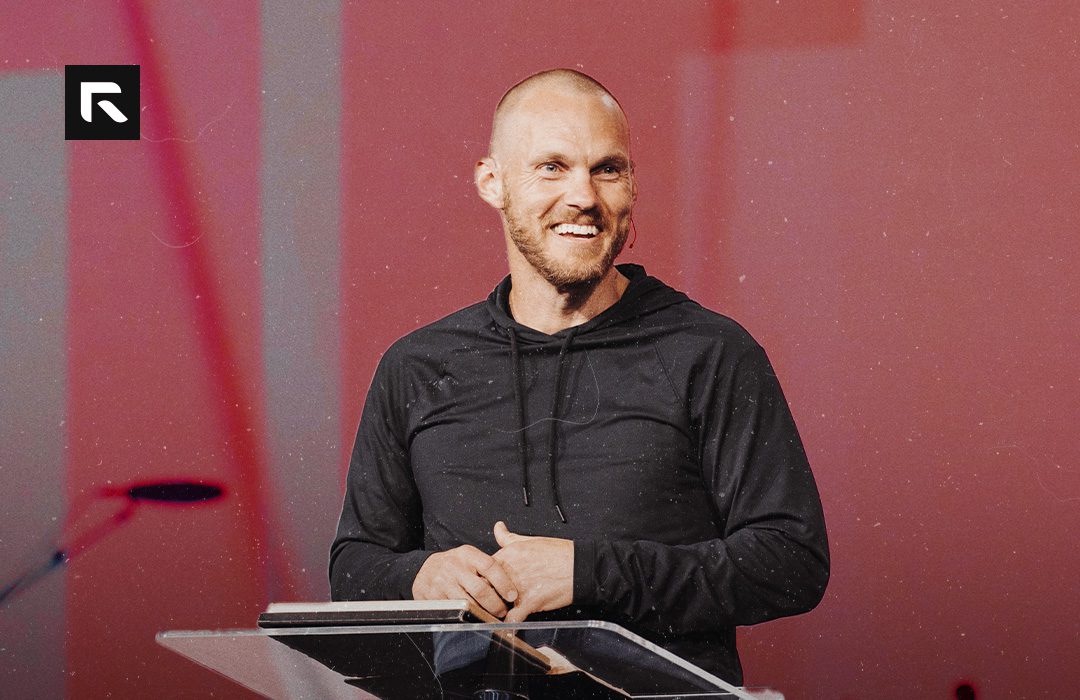
David Platt serves as a Lead Pastor for McLean Bible Church. He is also the Founder of Radical, an organization that makes Jesus known among the nations.
David received his B.A. from the University of Georgia and M.Div., Th.M., and Ph.D. from New Orleans Baptist Theological Seminary. Some of his published works include Radical, Radical Together, Follow Me, Counter Culture, Something Needs to Change, Don’t Hold Back, and How to Read the Bible.
He lives in the Washington, D.C. metro area with his wife and children.