Adoniram Judson: A Call to Go

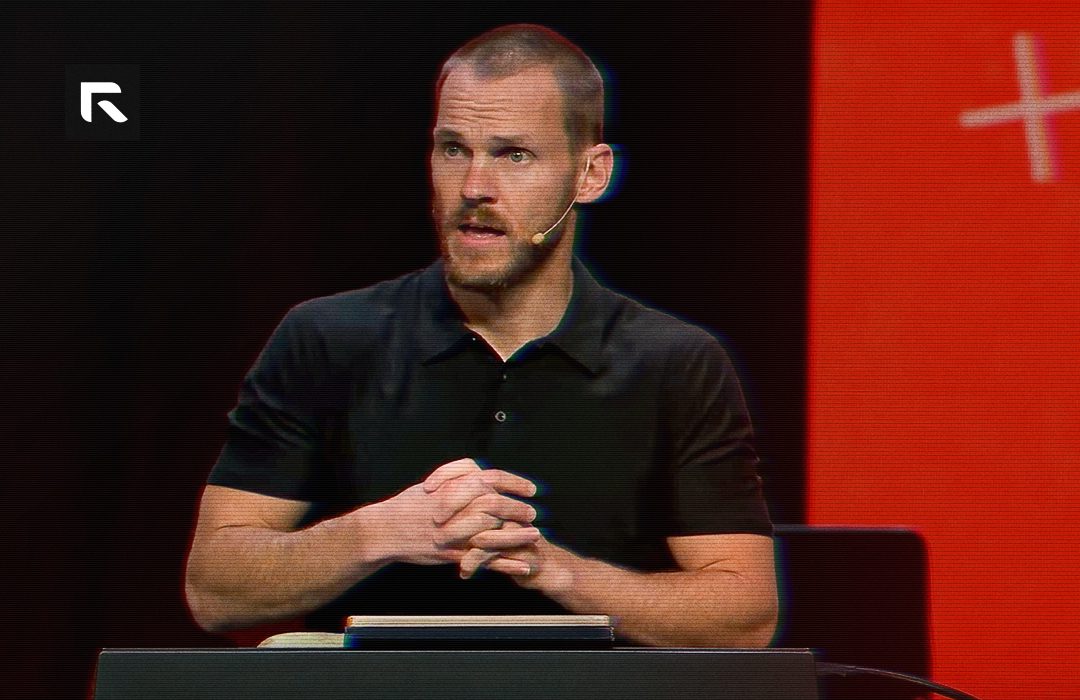
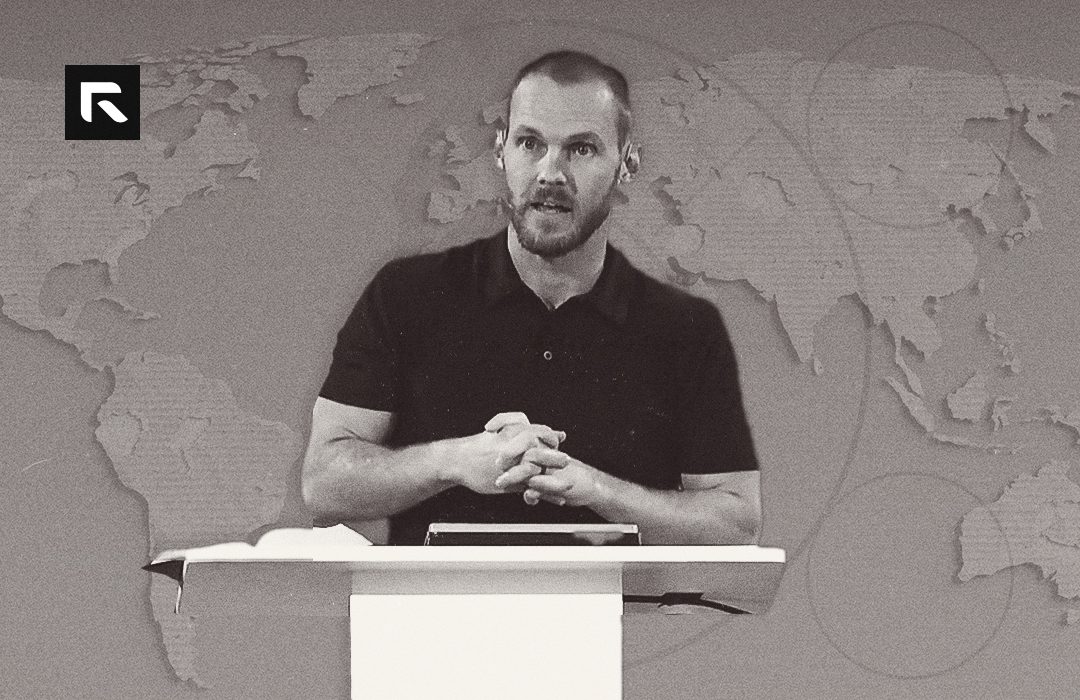
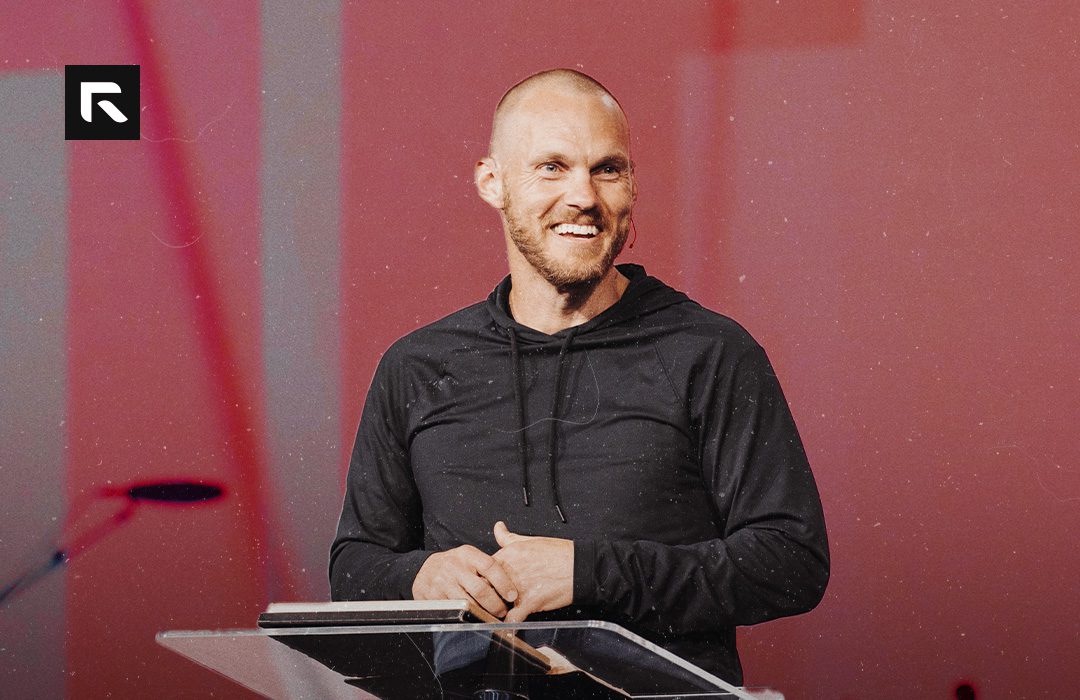
Is God calling you to go to other nations and share the Good News? In this sermon on Romans 10:13 at the Southeastern Baptist Theological Seminary Chapel, David Platt shares Adoniram Judson’s story. Judson was a missionary in Burma who worked tirelessly to make the gospel known. He faced hardship after hardship while serving as a missionary but his faith in God’s grace never waivered. We can be inspired by Judson’s story to go and make God’s name known among all nations.
- Judson Faced Hardship
- Judson Experienced God’s Grace in the Hardship
- Loving God Through it All
- Listen to God’s Call for Your Life
Transcript
The following is a lightly edited transcript provided by a transcription service. Please check the video before quoting.
Adoniram Judson: A Call to Go
If you have a Bible, and I hope you do, if somebody around you does, you can look on with it, let me invite you to open with me to Romans chapter 10. It is always an honor to be here at Southeastern, especially on this day.
I love this school. I love your president. I love the faculty, staff, and students here. I love the effect this seminary is having on the church and the effect this seminary is having on the world, particularly on this day as this seminary family commissions out brothers and sisters whose ambition in Romans 15 kind of ways to seek Christ, preach where he is not been named, and they are moving their lives to make his name known among people who have little to no knowledge of him.
But before we get to praying for them, I want to ask every person in this room, why are you not moving with them? Trustees, why are you not moving with the faculty? Why are you not moving with them?
To every student in this room? Why are you not being commissioned out with them? Romans chapter 10, verse 13 says, everyone who calls on the name of the Lord will be saved.
How then will they call on him and whom they have not believed and how are they to believe in him of whom they have never heard? And how are they to hear without someone preaching?
And how are they to preach unless they’re sent as it is written? How beautiful are the feet of those who preach the good news? There are over 2.8 billion people in the world right now who have little to no knowledge of the gospel.
There are some of them today plunging into an eternal hell and no one has even told them about how they could go to heaven. I believe that means you need a really good reason to not be moving to them and view of this world and the reality in our world right now.
The default certainly is for those with the gospel to be moving to those without access to the gospel. So I have prayed that this morning. I might encourage those who are moving and challenge those who are not to either move or to have a really good reason for staying and a radical commitment to sacrificing their life here to send more people moving there.
So I want to do something a little different. Instead of explaining this text, think it’s pretty clear. I want to illustrate it, starting with a scene similar to what’s happening in this room. It was a cold blistery day in 1812 on a crowd gathered to commission Samuel and Harriet Newell and Nym and Ann Judson as missionaries to the unreached.
So a couple of years before Samuel and Aram and a couple of other seminary students petitioned the leaders of congregational churches to send them as missionaries. After much debate, those churches agreed that same week, Aram just so happened to meet a woman named Ann, not one to waste time.
One month later he expressed a desire to marry her. Forget this, dating four months, her response was that he would have to talk with her dad. So, Aden, I wrote her dad a letter saying, deacon Haseltine, I have now to ask whether you can consent to part with your daughter early next spring to see her no more in this world.
Judson Faced Hardship
Whether you can consent to her departure and her subjection to the hardships and sufferings of missionary life, whether you can consent to her exposure to the dangers of the ocean, to the fatal influence of the southern climate of India to every kind of want and distress to degradation, insult, persecution, and perhaps a violent death. Can you consent to all of this for the sake of him who left his heavenly home and died for her and for you, for the sake of perishing, immortal souls, for the sake of Zion and the glory of God?
Can you consent to all this in the hope of soon meeting your daughter in the world of glory with the crown of righteousness, brightened with the acclamations of praise, which shall read down to her savior from heathens saved through her means from eternal woe and despair? How about that? In a letter to a future father-in-law, one of Anne’s friend’s dads said he would tie his own daughter to the bedpost rather than let her go on such a hair-brained adventure.
Ann’s dad left it up to his daughter and she said yes. Not long thereafter, they were sailing on a 114-day trip to India. Be thankful for planes. With plans to go on to Burma on the ship.
Judson had plenty of time to read and study. He was working on a translation of the Greek New Testament into English when he became especially interested in the word baptism as a congregationalist, Judson had been baptized as a baby by sprinkling.
But the more he looked at his Bible, the more he thought baptism was for believers by immersion, as he realized the ramifications of what he was studying. He looked at Anne one day with surprise and he said, I am afraid the Baptist may be in the right, but it was the congregationalist who had sent him and they had sent him to do ministry the congregationalist way, a way which he could no longer follow.
So when they arrived in India, Judson connected with a brother named William Carey and the serum Poor Baptist. And he and Anne were baptized as believers which led Judson to start writing letters one to the congregationalists back home, letting them know that their first American missionary was now a Baptist, and two, letting the Baptist back home know that surprise.
They now had missionaries who needed support before long Luther Rice had also become a Baptist and for health reasons would have to return to the States and start a concentrated effort to raise funds for Baptist missionaries. As a result, in 1814, a Baptist missionary society was established.
It was called the General Missionary Convention of the Baptist Denomination in the United States of America for Foreign Mission. So if you like acrostics, that’s not NAMB or IMB, that’s the G-M-C-B-D-U-S-A-F-M. Boom.
Meanwhile, the Judsons had another problem. As soon as they arrived in India, everybody told them, they couldn’t go to Burma ship captains, government officials, or missionaries.
Even William Carey himself said, get Burma out of your mind. The country’s ruled by a desperate, and they’re known for savage, barbaric practices. They have no religious toleration.
You just plain can’t survive. Every missionary who had gone to Burma had either died or left, but this didn’t deter the Judsons. They found a ship sailing for Rangoon, a city in Burma, and against everybody’s council, they jumped on board.
Anne wrote in her journal, that the Germans are entirely destitute of those constellations and joys, which are our happiness and why should we be unwilling to part with a few fleeting comforts for the sake of making them sharers with us in joys as durable as eternity? Indeed, the Judsons would part with comforts from their first days on the ship and were pregnant, and just a few days into the journey, she gave birth to a baby born dead.
The trip to Burma had hardly begun and they were burying their first child at sea. When they arrived at the shore, they found a land filled with swarming crowds, Buddhist temples, lepers, beggars, and children running around with no clothes while smoking cigars like they were adults.
Immediately they started learning the language. As soon as possible, they started working on translating the Bible into Burmese. They settled into life at Rangoon and less than two years later, another child was born.
Roger. Roger was the pride of his parents and as the first white baby the Burmese had ever seen, he was more than popular around town. For six months he was healthy, but then he started getting fevers at night.
It turned into loud, heavy breathing and coughing fits around two o’clock one morning Aaron was up with him trying to calm him by feeding him and baby Roger seemed to respond well.
Aram laid him down in the cradle where Roger slept with ease for half an hour and then all of a sudden stopped breathing. That same day, Aram dug a grave for his six-month-old baby boy.
Anne wrote, our hearts were bound up in this child. We felt he was our earthly, all our only source of innocent recreation. In this heathen land, Anne and her husband threw themselves into ministry, sharing the gospel, translating the scriptures, and starting a Z.
So ZTs were small shelters on the side of the road where Buddhist teachers disseminated Buddhist teachings. The Judson’s thought, why not start one? So on April 4th, 1819, the first service was held at the First Baptist ZT with about 15 adults and a bunch of naked kids smoking cigars.
Six years after landing at Rangoon, the Judsons saw the first Burmese person baptized six years later. Within the next year, they had a church of about 10 Burmese, and however was sick, and they decided she needed relief from Burma’s tropical climate. So Aden Iram sent his wife off on a ship back to America where she could recover while raising awareness of the need for more gospel work in that part of the world.
Anne would be gone from her husband for two years. By the time she returned to Burma, Aram had finished his translation of the Burmese New Testament. But trouble came soon after that.
The British invaded Burma in 1824 and suddenly every foreigner in the country was suspected of being a spy. One night, Nyman Anne was getting ready to sit down for dinner when the door busted open, and a dozen Burmese rushed in.
Where’s the teacher? They asked. Aram stepped forward and said here. Immediately he was thrown to the floor, tied up with an instrument designed for torture, and clung to him until the officers dragged him away from her.
He was taken away to the courthouse where he was consigned to Mayo otherwise known as the death prison. When he got to the prison, Judson’s ankles were fastened with three pairs of fetters.
He was thrown to the ground and dragged into a windowless room, 30 feet wide, and 40 feet long with 50 prisoners on the floor, some of whom he knew that night. The prison guards lowered a long horizontal bamboo pole down from the ceiling, fastened the prisoner’s legs around it, and then raised the pole so that only the prisoner’s shoulders and head were on the floor.
They would sleep with their feet in the air that night and every night thereafter, and immediately began working nonstop for Adnams release. When her efforts were rebuffed, she gave bribes to earn at least five minutes, five-minute visits with him.
The first time she saw him, he came crawling out of the prison, hardly recognizable to her. She would bring him tea and rice as often as she could, and before long in one of these brief visits, she broke the news to him. She was pregnant while Judson languished in prison. Day after day after day for 11 months, baby Maria was born.
The time came for the prisoners to be transferred to a more rural place, commonly known for executing prisoners. As they were led to that place, one biographer said of the men, no one who had known them when they entered could possibly have recognized them.
When they left, their hair was matted, their eyes hollow, their bodies skin covered skeletons, clothed in rags, so greasy and tattered. Their original purpose could not even be suspected. They could scarcely hobble and moved to a house closer to that prison from which she could bring food and supplies to den Iram.
Judson Experienced God’s Grace in the Hardship
But during this time, Anne became ill and in turn, so did Maria. The baby wasn’t getting the nourishment she needed, and Anne was so sick she had no milk to give. So Aden Iram received permission to go each night under guard, from house to house in the village nearby, begging Burmese mothers to nurse his daughter by God’s grace and Maria lived.
And then by God’s grace, the Burmese government decided they needed some translator for their negotiations with the British. So Aden Irem was released to help them. That eventually led to his complete freedom in a way they once thought was never possible.
This family of three had a fresh start. They moved to Amherst and settled into a new home. Iram needed to travel to the embassy. So he left and settled in Amherst and set out for a few month voyage and wrote him a letter.
Soon after he left, I finally felt myself at home. When I ask little Maria where Papa is, she always starts up and points toward the sea. Pray, take care of yourself. May God preserve and bless you and restore you in safety to your home.
This is the prayer of your affectionate Anne. But another letter from her was long and coming and Nar wondered if something was wrong. He received word that baby Maria had gotten sick and his heart sank.
One day when a man showed up with a letter sealed in black, the man said, I’m sorry to inform you of the death of your child. Nar went aside to read the letter alone. He longed to be with Anne to hold and comfort her and the loss of their third child.
He sat down, opened the letter, and began to read words that stunned him. Silent. My dear sir, the letter said to one who has suffered so much and with such exemplary fortitude there needs but little preface to tell a tale of distress.
It will be cruel indeed to torture you with doubt and suspense, to sum up the unhappy tidings. In a few words, Mrs. Judson is no more. His jaw dropped. He couldn’t move.
He read it over and over and over again, unable to believe the words before him. Then he read that it was his wife, not his baby who had experienced a violent fever. It was Anne who had never recovered.
He began to cry softly at first and then with loud uncontrollable sobbing as the reality set in his wife had been buried a month before he even knew she was dead. Judson couldn’t wait to get back home where at least his 2-year-old daughter was still alive.
Little did he know that once he got back four days later, she would join her mom in death. As Aram Judson wrote, I’m left alone in the wide world. My own dear family, I have buried one in Rangoon, two in Amherst, had now resumed his work of preaching and translating, but he couldn’t escape a growing sense of despair in his soul.
He gradually secluded himself as he sunk into depression. At one point he dug an empty grave and sat by it every day simply reflecting on the decay of the body. He was struggling with his faith at one point. Writing God to me is the great unknown.
I believe in him, but I find him not yet much like Elijah. In one Kings 19, God met Judson where he was and slowly restored his faith. That restoration was evident when the spouse of another missionary died.
Sarah Boardman, the wife, of George Boardman, saw her husband die of sickness while working in another part of Burma. Iden Iron wrote to her saying, you are now drinking the bitter cup whose drags I am somewhat acquainted with, and I venture to say that it is far bitter than you expected.
But then he went on to say, take the bitter cup with both hands and sit down until you’ve ever passed. You’ll soon learn a secret that there is sweetness at the bottom. At the end of the letter, Judson encouraged Sarah Borman to stay in Burma and continue the work.
She started with her husband, Judson likewise re-entered ministry with renewed zeal, and the Lord began to bless it had taken nine years to baptize 18 converts. But now in 1831 alone, they saw 217 people baptized.
126 more were baptized the following year. What if God’s blessing in our ministries doesn’t come until after deep suffering in our lives? Judson recommitted himself to finishing the Burmese Bible.
And finally, seven years after Anne’s death, the translation was complete. Now what he thought, he started to look around. It just so happened that a couple of weeks after finishing his translation, Judson received a letter from Sarah Boardman, George Boardman’s widow.
In her letter, Sarah congratulated Judson on finishing his translation, acknowledging how valuable this was not only for the Burmese but for her own soul. And Judson began to think, wait a minute, here’s a woman traveling through Tiger Field, Burmese jungles proclaiming the gospel.
She’s alone. I’m alone. Why don’t we do this together again, not one to waste time. Judson wrote her about a month after her letter to him. He planned a trip to see her follow this timeline.
He left on April 1st. He arrived on April 6th. On April 10th, they were married. Some single guy in this room wants to use that example. The newly married couple thrust themselves into ministry, preaching, discipling new believers, improving translations, and having babies.
Abigail Anne was born in 1835 at an iron in 1837 L Nathan in 1838 and Henry in 1839. This is one way to make disciples among the nations. But then tragedy struck. A stillborn boy named Luther was born in 1841.
Not long after that, the whole family started getting sick. Baby Henry died as a result, a year and seven months old. The rest recovered though in 1842. Sarah gave birth to a second Henry, followed by Charles in 1843 and Edward in 1844.
So all in all, Aden Aram had eight children with Sarah and six of them had lived. But Sarah’s body was weak and her only hope of recovery was a voyage back to the United States.
Aden Aram did not want to send her alone. So the couple left their three youngest children in Burma with other families while taking the three oldest children with them on the ship. At first, Sarah’s health improved, but then it worsened again and they both began to realize that Sarah might not make it to the States.
Narron spent all of his time on the ship in the cabin with her. He wrote One evening she appeared to be drawing near to the end of her pilgrimage. The children took leave of her and retired to rest. I sat alone by the side of her bed during the hours of the night endeavoring to administer relief to the distressed body and consolation to the departing soul.
Loving God Through it All
At two in the morning wishing to obtain one more token of recognition, I aroused her attention and said, do you still love the Savior? Oh yes, she replied, I ever love the Lord Jesus Christ.
I said again, do you still love me? She replied in the affirmative with a peculiar expression of her own. Then give me one more kiss. And we exchanged that token of love for the last time. Another hour passed, life continued to recede and she ceased to breathe.
For a moment, I traced her upward flight and thought of the wonders which were opening to her. I then closed her sightless eyes, dressed her for the last time in the drapery of death and being quite exhausted from many sleepless nights. I threw myself down and slept.
The next morning, Sarah was buried on the coast and Aram set sail with his three children weeping around him. The next stop would be America. It had been 33 years since he set sail with Anne and one other couple.
All of those who left with him were dead. Judson only knew the few friends and family he had corresponded with while he was gone. So he was looking forward to quietly catching up with them, but nothing about his return would be quiet.
Little did this man know that while he had been gone, thousands of sermons had been preached about him. Hundreds of thousands of prayers had been offered for him, and thousands of parents had named their children after him.
He was welcomed with wild fanfare in a way that made him very uncomfortable everywhere. People wanted him to preach and tell of his adventures, but he would often disappoint them because all he wanted to do was preach the gospel. One woman who was a family member of his remarked, that it was evident even in the most unobservant eye that most of the listeners in one particular gathering were disappointed.
After the exercises were over, several persons inquired of me, frankly, why Dr. Judson had not talked of something else, why he had not told a story. So she mentioned the subject to admire him. Why? What did they want?
He inquired. I presented the most interesting subject in the world to the best of my ability, but they wanted something different, A story. She said, well, I’m sure I gave them a story, the most thrilling one that can be conceived of. But they heard it before.
She said they wanted something new of a man who had just come from the antipodes on the other side of the world I’m glad they have it to say. Judson replied that a man coming from the anodes had nothing better to tell them than the wondrous story of Jesus’ dying love.
Judson was also discouraged by the division he found in the church. It was 1845 and slavery was beginning to divide the country, which was having an effect on missionary sending.
Baptist missionaries refused to appoint slaveholders as missionaries, which caused the southern churches to separate and start their own convention called the Southern Baptist Convention, leaving the Northern Convention struggling to support missionaries like Judson. In other words, while Judson was at sea on his way back to America, we were withdrawing our support from him because of our support for slavery.
Once in the States, Judson quickly tired of all the travel. One day he found himself on a train headed to Philadelphia for a missions convention for his relaxation. The man traveling with him gave him a book to read by a woman named Fannie Forster.
Her actual name was Emily Chubb. But apparently people didn’t read books by Emily Chubbuck the way they did by Fannie Forster. She was a popular author. Judson was taken in by her style. Her writing has great beauty and power.
She said. Is she a Christian Judson’s traveling companion? Said yes. And in fact, you can meet her tonight. She’s a guest at my house. When Judson met her, he was all the more fascinated.
He asked, you know where this is going, don’t you? We know this man. Now Judson met her and asked her if she would be willing to write Sarah’s memoirs. Emily was honored by the invitation she’d grown up with.
A Baptist had always heard about the work in Burma, so she agreed to help. In the coming weeks, they began working on the book. And somewhere along the way, Judson thought, I don’t want her simply to write Sarah’s biography. I want her to take Sarah’s place, not one to waste time.
Less than a month after meeting Emily Chubb, AKA Fannie Forrester, Aram Judson asked her to marry and returned to Burma with him. They were we June 1st, 1846, and one of Judson’s fire first describes her this way.
Emily brought a subtly compounded blend of character. She was bold, but meltable independent, yet deeply feminine, deeply responsive, and spicy. I have no idea what that means. Emily was spicy.
She was his equal with her own accomplishments, which she prized. Yet she revered him. She could throw off her adulthood in a way that encouraged him to throw off his. They would play and tease together like children.
Whatever happened, they could never be bored with each other. Together they sailed for Burma where Emily began to write not only Sarah’s memoirs but many entertaining stories, thoughtful reflections from her own journey.
Upon arrival in Burma, she gave birth to a daughter. Emily, as I admire him, worked to strengthen the church and spread the gospel. M’s. The final project was the completion of an English-to-Burmese dictionary, a 600-page accomplishment.
Soon thereafter though he became sick and they decided he needed to go on a voyage to recover. Emily was pregnant so she couldn’t go with him, and it was decided that he needed to leave as soon as possible. By the time everything was arranged, it became clear to both of them that though he needed to take this voyage, the chances of his recovery were slim.
As he lay in bed, he looked back at all he’d done and he said, I feel as if I were only just beginning to be prepared for usefulness. He wanted to continue the work for the sake of the Burmese.
But in the same breath, he would say, when Christ calls me home, I shall go. With the gladness of a boy bounding away from his school. The day finally came when Emily sent her husband off to sea with hopes of his recovery.
Within days though, he would breathe his last breath. The ship’s carpenter constructed a coffin. The sand was poured into it to make it sink. The body was placed inside the top nailed shut, and slowly it sat into the sea west of the Burmese mountains.
This was the last sight of a man who once prayed one prayer, my God, thy will be done. One only boon I crave to finish well is my work and rest within a Burma grave. How beautiful are the feet of those who bring good news?
How will they hear if we do not preach to them, if we do not move our lives to them, how will they hear? Romans 10 is not just a flash of Paul’s rhetorical skill. It is a glimpse into God’s redemptive plan to make his love known to every person and people group in the world.
You just follow the questions from 15 back up to 13 and you see the plan. Christ sends his followers, and his followers preach. People hear hearers believe. Believers call the name of the Lord and the nations are saved.
It all starts with him sending. So is God sending you to do this? I prayed that through the telling of Judson. So today the Lord might move in hearts around this room to call out more brothers and sisters from this room to follow in his footsteps.
He is still sending the opportunities, the technology, and the advancements that are far greater today than ever before in history for going. So will you, for every trustee, faculty, staff, and student in this room, at least ask the Lord in a fresh way today?
Listen to God’s Call for Your Life
If he is calling you to do this, just ask before you lay your head on your pillow tonight, will you at some point today, even if it’s by your bed tonight, kneel on your face before God if you are married to do this with your spouse and just ask the Lord, do you want us to go? Will you at least ask this today?
And will you commit to obey? However, he answers bleed with you? Just ask and obey. And if he doesn’t call you to move your life, will you believe that surely he’s calling you to lead the church, to send more men and women there?
And to support them and to serve them in any ways you possibly can to refuse to lead and pastor churches for which this is a side thing, getting the gospel to people who’ve never heard. It is not a side thing.
We are here to accomplish this thing. The great commission to see disciples made in all the nations during her time in America and exhorted pastors to feel the misery of the heathen world to try to awaken Christians around them, preach frequently on the subject of missions, and remarked it to be the case.
When a minister feels much engaged for the heathen, his people generally partake of his spirit. Did you hear that? When a minister feels engaged in talking about the heathen news, people who have not yet been reached with the gospel, when a minister feels much engaged for them, then his people will partake of that spirit.
So may that emotion, may that zeal Mark every single student, staff, faculty member, and trustee from Southeastern Seminary and say, that every Christian in the United States should feel as deeply impressed with the importance of making continual efforts for the salvation of the heathen as though their conversion depended solely on himself and said, Christian should live like people who’ve never heard the gospel like their conversion depended on us. Because in a very real sense it does.
That’s Romans 10. They will not hear. If someone does not go, they won’t hear. If we don’t go, we might feel a personal responsibility, yes, resting in divine sovereignty that he will accomplish this mission.
But let us not ignore the means through which this mission will be accomplished. You and me, our churches, our seminaries, and spirit-filled brothers and sisters going out from them.
So whether we move or we stay and if we stay, we would fight to keep our lives and our ministries undistracted by things that don’t ultimately matter, that our lives, our ministries, would be undivided in all our devotion to making the gospel and glory of our king known among people in the world who have still not heard his name.
So for brothers and sisters who are going to move your lives, be encouraged. You are giving yourselves to that which matters. It will not be easy. Judson makes that clear.
I just, along with Dr. Lawless did the funeral of two of our missionaries. It will not be easy, but it will be worth it and be challenging. Brothers and sisters, let’s either move with them or let’s do everything we can to multiply their number and undergird their work.
I leave you with the words of the late Judson, oh, that all the members of the Baptist Convention could live in Rangoon. One month will the Christian world wake up. Oh Lord, send help. Our waiting eyes are unto you.


David Platt serves as a Lead Pastor for McLean Bible Church. He is also the Founder of Radical, an organization that makes Jesus known among the nations.
David received his B.A. from the University of Georgia and M.Div., Th.M., and Ph.D. from New Orleans Baptist Theological Seminary. Some of his published works include Radical, Radical Together, Follow Me, Counter Culture, Something Needs to Change, Don’t Hold Back, and How to Read the Bible.
He lives in the Washington, D.C. metro area with his wife and children.