Caring for the Ones We Send


“Your senses are about to be assaulted.”
That’s the way a dear friend briefed me when we first arrived in Asia as young missionaries in 2014.
Her prediction turned out to be incredibly accurate. During those first few months, the new smells, wet floors, loud voices, and lack of personal space easily overwhelmed me. Everything was different, and though with time I truly came to love our city and become deeply shaped by it, there were moments and days when these individually small challenges accumulated and led to almost every ounce of me resisting this place.
These kinds of experiences are common as believers seek to cross cultural, geographical, and linguistic boundaries for the sake of the gospel. No matter how much careful preparation goes into sending, for most missionaries, some level of external and internal resistance is imminent.
Sending and supporting churches can play a vital role in sustaining missionaries over time by anticipating two obvious but foundational truths and seeking to engage well in light of them.
TRUTH #1: THE HEAT WILL BE HIGH.
The commitment to serve Christ, especially in a hard or unreached place, can feel like stepping into a proverbial oven (and depending on location, sometimes like a literal one). Scripture is clear that as we seek to live for Jesus and make his name known, we will face resistance. It is not a matter of if but how, and for each situation, the heat of resistance may look a little bit different.
The Apostle Paul wrote repeatedly about the kinds of resistance he faced as he sought to take the gospel to new locations. One example is found in 2 Corinthians 7, where Paul says, “our bodies had no rest, but we were afflicted at every turn—fighting without and fear within.”
In Paul’s statement, we see two very real, yet different forms of resistance. First, he says they faced “fighting without.” This was presumably fierce opposition to the gospel, accompanied by afflictions, hardships, calamities, beatings, imprisonments, riots, labors, sleepless nights, and hunger that he describes just a few verses earlier. This is significant external pressure.
Supporting cross-cultural workers well means seeking to understand their most significant sources of external heat. Is it language acquisition, either the difficulty of it or the perceived pressure? Is it relational tension on their team or in their new location? Is it open resistance to the gospel message or cultural challenges that make church planting feel impossible?
It could be family difficulties, schooling, or health-related problems. Or maybe it’s a myriad of little things that add up over time. Likely, the external heat is some combination of factors. But expecting that there will be resistance to gospel ministry and seeking to understand the unique forms for each person is a wonderful (and often overlooked) way to love missionaries well.
Next, Paul tells the Corinthians they battled “fear within.”
The internal battle every cross-cultural worker faces at some point is often even more challenging than the external pressures. Identifying these fears and recognizing who God is in the midst of them is the key to dismantling them of the power they possess.
Missionaries are often incredibly resilient, capable, and God-fearing people, but they are still people. They’ll benefit from friends asking them about the fears within, listening carefully, and pointing them to the God who planned the end from the beginning and who hung the stars in the sky.
As we face fears of many kinds, we can meditate on God’s grandeur. This great God plans our paths and holds our hands: “The Lord makes firm the steps of the one who delights in Him; though he may stumble, he will not fall, for the Lord upholds him with his hand” (Ps. 37:23-24).
TRUTH #2: THE HEART CAN BE HELPED.
Paul follows up his statement about external fighting and internal fear with a beautiful reflection: “But God, who comforts the downcast, comforted us by the coming of Titus, and not only by his coming but also by the comfort with which he was comforted by you, as he told us of your longing, your mourning, your zeal for me, so that I rejoiced still more” (2 Corinthians 7:6-7).
In the midst of difficult and uncertain circumstances, Paul says their hearts were helped. First by God, who comforts the downcast. What an encouragement to remember that God loves to comfort those who are his. He is near to the afflicted and beckons us to bring our fears to his throne of grace.
But encouragement also comes in the form of people. In Paul’s case, it’s a visit from a dear friend and the evidence of faithfulness from those he loves at Corinth. The encouragement of a friend is indeed refreshment for the soul, especially when the heat has been turned up in our lives.
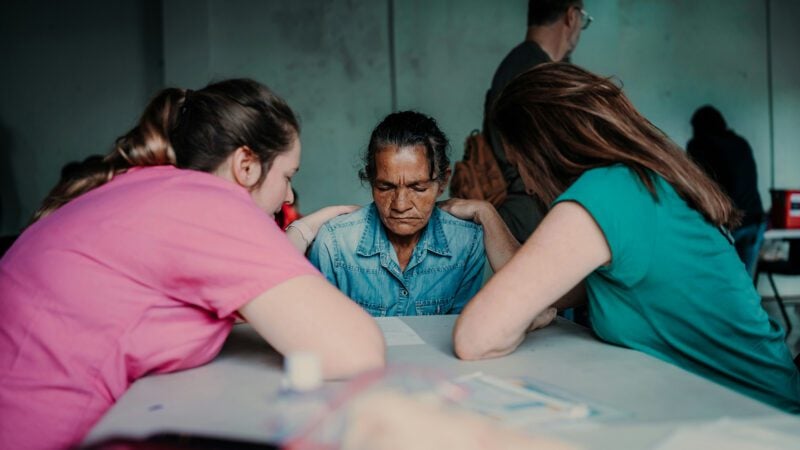
Those we send will face hardship, opposition, and fear. The heat will be high, but the heart can be helped. So, consider a visit to those you support. Spend regular and intentional time asking them about both the external and the internal pressures they may be facing.
Pray that God would be their comfort, as he was for Paul and Timothy. Seek ways to communicate the depth of your concern, not just for their ministry goals but for them. Remember their humanity and point them to Jesus.
May God empower us to care well for those we send, until the good news is proclaimed in all the world as a testimony to all nations (Matt. 24:14).