From Bombs to Bibles in Hiroshima

In August 1945, an atomic bomb detonated over the city of Hiroshima, killing tens of thousands of people on impact. Life would never be the same.
In October 2009, an American teenager walked into an evangelistic tent in the state of Georgia, leaving with the first Bible he’d ever owned. His life would never be the same.
These two events, separated by more than a half century, are linked in ways only God could orchestrate.
The teenager from Georgia was Michael Creed, a high school student who had never heard the gospel. Michael had also never met his biological father, but he knew this about him: He was originally from Hiroshima—a city where most people have never heard the gospel either.
But now, that’s changing.
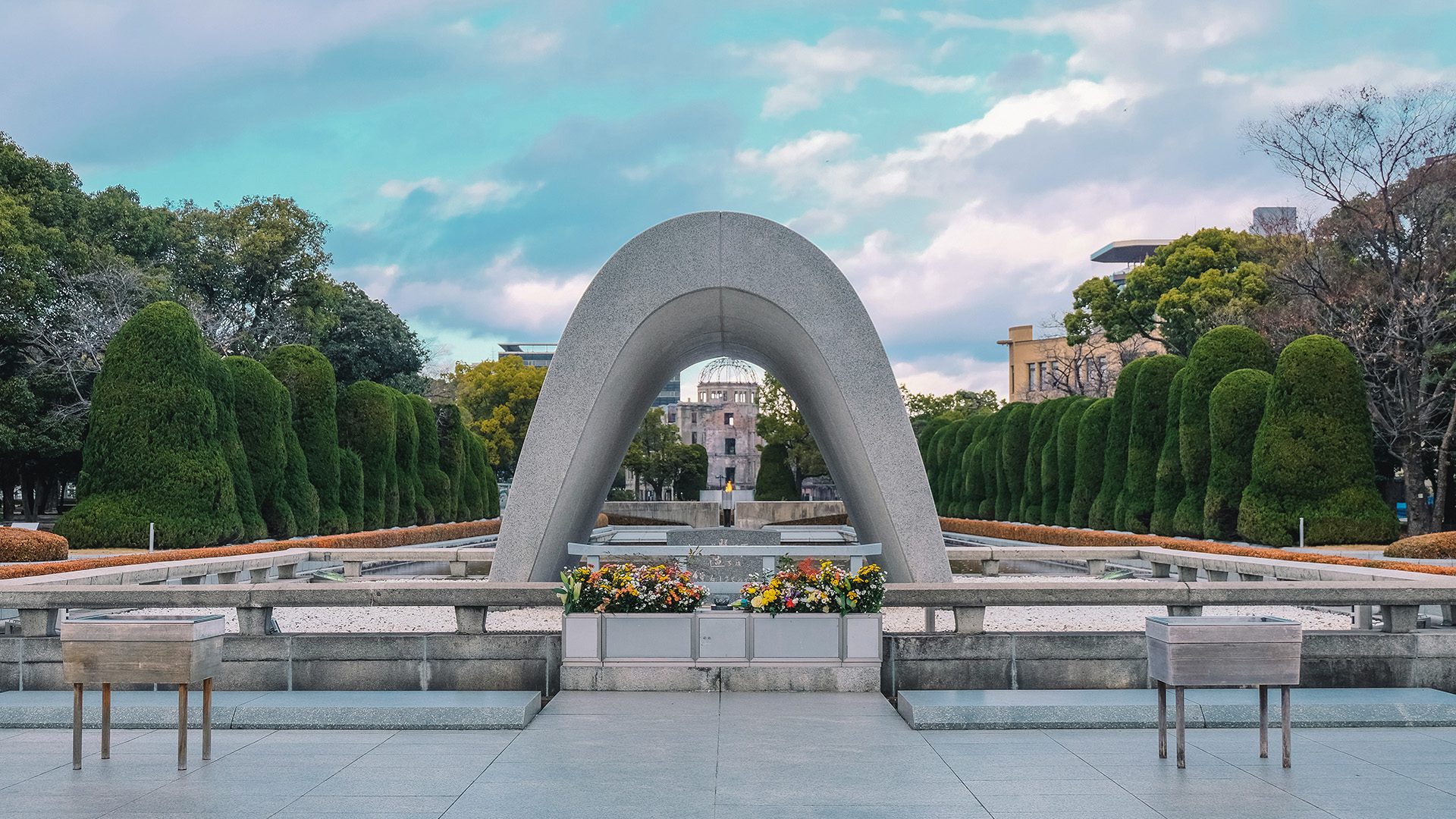
This past August marked the 80th anniversary of the atomic bombings in Japan, and it also brought a baptism Sunday in Hiroshima: Not far from the city’s historic Ground Zero, Michael Creed stood up to preach the gospel—and to tell locals about the Heavenly Father who had brought him all the way here.
It’s a gospel message desperately needed in a country where most people may live and die without ever meeting a Christian.

Pray for the Word of God to be known in Japan
Pray for JapanBut it also means there’s still hope. Because if God can transform an unbelieving teenager from the American south into a preacher of the gospel in the land of his ancestors, what else might he do for Japan if we ask—and act?
A Bombed City and a Broken Land
Hiroshima was the first city the U.S. attacked with a nuclear bomb, but it wasn’t the last. Three days later, on Aug. 9, 1945, Americans dropped another atomic bomb on the Japanese city of Nagasaki, nearly 300 miles south of Hiroshima.
In both cities, those who survived the initial blasts faced the effects of radiation that burned through clothing and skin. Buildings were flattened. The scenes were apocalyptic. One American writer described the bombing as “the day the world ended.”
But life did go on.
After World War II, both cities were rebuilt, though the scars of trauma remained. In Nagasaki, the bomb struck a place that had endured a different trauma centuries before—the region had been the epicenter for the worst Christian persecution in the country’s history.
That era eventually passed, and missionaries eventually returned, but most Japanese never embraced the gospel. To this day, most Japanese claim Shintoism and Buddhism, while loneliness and isolation pervade many parts of society.
Even some of Japan’s most beautiful art points to brokenness—the artform kintsugi involves taking broken pottery and mending the cracks with gold to make the original piece more beautiful than before.
And that’s what happened to Michael Creed more than 60 years after the bombs were dropped on Japan.
A Broken Teenager and a Free Bible
More than 6,000 miles from Hiroshima, Michael Creed was an American teenager with brokenness of his own. His birth father, originally from Hiroshima, had left before Michael was born, and Michael never knew him.
He grew up with a single mom, and with a step-father for a while. Michael was the oldest of six kids, but he didn’t have many friends. So, on a fall day in October 2009, when he met a handful of Christians at a local fair, he was open to conversation.
They told him about Jesus—and he was interested.
Michael took home a New Testament, and that night he started at the beginning. By the time he got to the Sermon on the Mount, Michael dropped to his knees and asked God to be his Father.
By the time he got to the Sermon on the Mount, Michael dropped to his knees and asked God to be his Father.
“To know that this Father in heaven is perfect, and this gospel is right, that he sent his only Son to die on my behalf, that I could have eternal life with him—it was absolutely amazing,” he says.
Michael met more Christians at the University of Georgia during his freshman year of college, and he connected with a local church. As he realized how much God loved him in Christ, he wanted the same thing for other people—including people in Japan.
A New Life and an Old Homeland
Michael had always been interested in Japan, since he was half-Japanese himself. In college, he decided to major in Japanese. He also got involved with a church that hosted a cafe for international students.
“For the first time, I started meeting people from China and Japan and India—people from all over the world,” he says. “Through those friendships and hanging out, I learned they had never heard the gospel before. And that broke my heart.”
I learned they had never heard the gospel before. And that broke my heart.
Meanwhile, Japan was about to be broken again.
On March 11, 2011, a 9.0-magnitude earthquake struck off the coast of northeastern Japan, triggering a massive tsunami that caused massive destruction and killed thousands of people.
Michael packed his bags. For the first time in his life, he left the state of Georgia, and he headed for Japan.
During the short-term trip for disaster relief, Michael sensed a long-term call for gospel ministry. “I really wanted God to allow me to live in Japan for the rest of my life and get the gospel to as many people as possible,” he says.
He eventually returned to Japan with the International Mission Board to serve in a city called Nagoya—where God had another surprise for him.
A Wedding and an Unexpected Invitation
Nagoya is Japan’s fourth largest city, but like most places in the country, it has very few Christians. Michael soon met one who would change his life again.
Yumi had grown up in a traditional Japanese family devoted to Shintoism and Buddhism, but she went to college at the University of Kentucky. For the first time in her life, she met Christians—and she embraced the gospel.
She longed to remain in the U.S., where Christianity flourished, but a session at the Urbana missions conference changed her mind. Yumi was convicted by a sermon about Mordecai’s words to Queen Esther in the Old Testament.
Was Yumi willing to intervene for the spiritual lives of the Japanese people, like Esther intervened for the Jews? What if that’s exactly what God had planned for her? Yumi returned to Japan.
Her family rejected her Chrisitan faith, but Christian friends embraced her. She also met a young American who had come all the way to Japan with a burden similar to her own: Michael and Yumi got married, and they served with a team in Tokyo.
Michael says the Christian community in Tokyo was the closest thing to “a Christian bubble” you could find in Japan, but ministry colleagues soon had a question for him: Would you consider serving in Hiroshima?

Invest in Japan
Invest in JapanA Heart for the 99.9 Percent
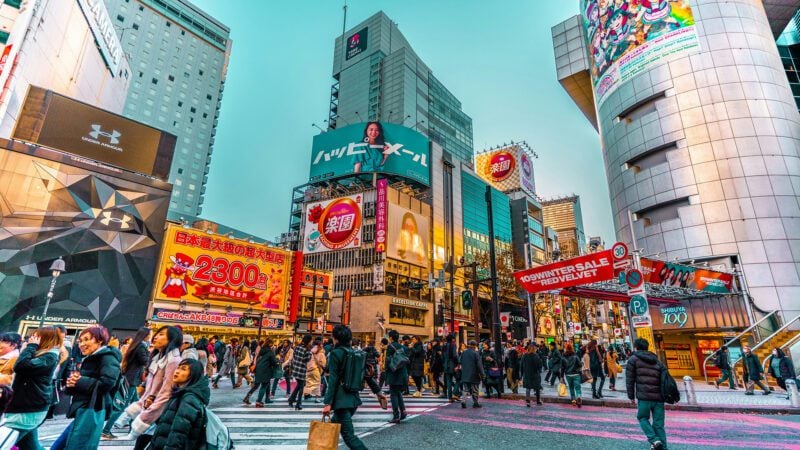
Eighty years after the atomic bombing, Hiroshima is a vibrant city of over a million people, known for its music, its restaurants, and its popular baseball team. Something it’s not known for? Churches.
A handful of churches do exist, but if average church membership in Japan is about 30 people, that means roughly 99.9 percent of the people living in Hiroshima are non-Christians.
It’s actually the perfect place to plant a church—if you’re interested in reaching the lost. “The main idea here is not that most people have heard the gospel and rejected it,” says Michael. “The main idea is that they haven’t heard the gospel—even once.”
So, Michael and Yumi said yes to the call. In 2023, the American with a birth father from Hiroshima led the first worship services of Mustard Seed Christian Church in Hiroshima, Japan.
A New Kind of Peace
In the Japanese Bible, there are two words for “peace.”
First, there’s an external peace—peace between people or nations. Japanese people resonate deeply with this concept: The area that marks Ground Zero for the atomic bomb is now called Hiroshima Peace Memorial Park. There’s a high value on world peace and local peace. The city has little crime and lots of order.
That’s what we want. For everyone to have a chance to hear the good news about Jesus.
But the second kind of peace—internal peace—is much harder to find. Yes, there’s very little murder, but also a high rate of suicide. Very few public conflicts, but many people live in isolation and loneliness.
This gives Michael a way to speak about gospel peace: He definitely agrees with the importance of peace between nations, but he tells people in Hiroshima, “God’s vision of peace is so much bigger.”
It’s the peace that comes from recognizing the sin in our own hearts that separates us from God, and embracing the peace that comes through Christ’s death on the cross for our sins. That’s ultimately the only way to true peace with God and others.
It’s the kind of peace that took Michael from the land of his birth to the land of the family he’s never met— in hopes of inviting people into the family of God. “That’s what we want,” he says. “For everyone to have a chance to hear the good news about Jesus.”
Slowly, like the growth of a mustard seed, the message is reaching people. Not long after the 80th anniversary of the bombings, Michael’s church baptized new members. “Alleujah!” he wrote. “Excitement is in the air.”
Michael doesn’t know what the future holds, but he’s hopeful, and he’s sure of this: “God definitely loves people in Hiroshima.”
You can watch an interview with Michael and Yumi filmed on location in Hiroshima for a segment in our Hard to Reach: Japan series.